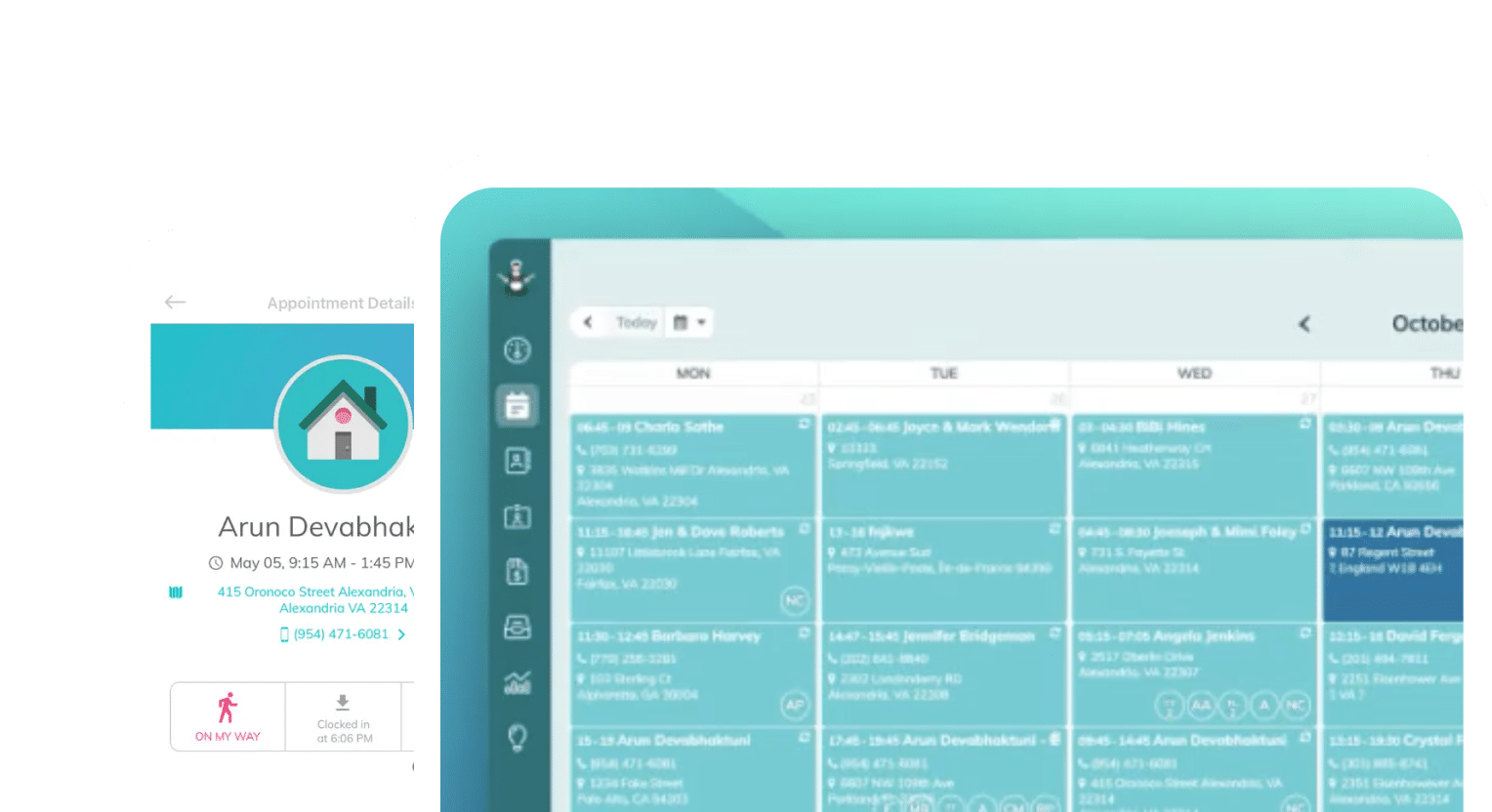
Frustrated with your scheduling? Try the easiest-to-use calendar app, made by and for maid service owners.

Welcome to ZenMaid’s guide to starting a cleaning business. Whether you’re dreaming of starting a cleaning business or looking for more ways to grow, you’re in the right place.
This is the ultimate step-by-step guide to starting a cleaning business, built from expert advice and real-world experience from cleaning business owners.
We’ll walk through choosing your services, setting prices, budgeting, licensing, hiring, marketing, and the systems successful cleaning businesses use to scale.
Table of contents
- TL;DR: How to Start a Cleaning Business
- Take Our Quiz: Are You Ready to Start a Cleaning Business?
- Step 1: Start the Right Cleaning Business for You
- Step 2: Decide on Your Cleaning Company Name
- Step 3: Set Your Business Budget
- Step 4: Set Up Proper Licensing for Your Cleaning Business
- Step 5: Decide What Cleaning Equipment and Supplies to Purchase
- Step 6: Decide on Your Pricing Structure
- Step 7: Hire and Train Professional Cleaners
- Step 8: Automate With Cleaning Business Software
- Step 9: Market Your Cleaning Services
- Step 10: Generate Referrals and Reviews
- How to Start a Cleaning Business — FAQs
- Have more questions about starting or growing a residential cleaning business?
TL;DR: How to Start a Cleaning Business
ITL;DR: How to Start a Cleaning Business
Here’s the quick start guide for starting a successful cleaning business:
- Start the Right Cleaning Business for You: Decide upfront whether you’ll serve residential or commercial clients. This shapes everything from licensing to pricing; starting narrow is recommended.
- Decide on Your Name: Choose a name that’s unique, legally available, and trademark-clear before filing any business registrations.
- Set Your Business Budget: Adopt a profit-first mindset (Sales – Profit = Expenses) and set clear income goals, targeting roughly 20% profit margins.
- Set Up Proper Licensing for Your Cleaning Business: Register your business, obtain the necessary licenses and tax IDs, and secure liability insurance — requirements vary by location.
- Decide What Cleaning Equipment and Supplies to Purchase: Buy supplies suited to your specific service type, and invest in quality equipment upfront to avoid costly replacements later.
- Decide on Your Pricing Structure: Choose between hourly, flat-rate, or hybrid pricing models, and track real job times to set accurate, profitable rates.
- Hire and Train Professional Cleaners: Build a structured onboarding and training program — ideally seven to 10 days — to ensure quality, reduce turnover, and create reliable brand representatives.
- Automate With Cleaning Business Software: Implement scheduling, booking, and payment software early to prevent operational breakdowns as your client and cleaner roster grows.
- Market Your Cleaning Services: Use lifecycle marketing to attract, capture, nurture, and convert leads while keeping existing clients engaged and upselling over time.
- Generate Referrals and Reviews: Leverage happy clients by automating review requests and running referral reward programs to fuel sustainable growth.
Take Our Quiz: Are You Ready to Start a Cleaning Business?
To make the most of this article, take a quick, free quiz to see where you stand. It’ll help you understand where to focus, and more importantly, what you need most from this guide.
How Ready Are You to Start a Cleaning Business?
Answer 10 quick questions to find out where you stand — and what to focus on next.
Step 1: Start the Right Cleaning Business for You
When you set out to start a cleaning business, you have to answer a few critical questions: what services are you actually going to offer, and to whom? Are the services you provide really worth your time?
Say you plan to provide residential cleaning services, and within a month of announcing your business, your calendar is booked solid with monthly recurring clients.
You think you’re ready. You’ve hired a team of rockstar cleaners, you’ve invested in training them well, and you’ve bought the best cleaning equipment available. But when you review your finances at the end of the month, you realize you’ve lost money — like, a lot of it.
Avoid this by thinking strategically about a few things in advance:
- Your target market
- Your service types
- Your frequency of cleanings
What’s the difference between residential and commercial cleaning businesses?
A residential cleaning business typically cleans homes and apartments, focusing on floors, bedrooms, kitchens, and bathrooms.
A commercial cleaning business handles offices, hospitals, schools, retail spaces, and other commercial facilities.
Your local market will also help you determine whether there’s higher demand for commercial or residential cleaning services.
The choice of business you create will affect the business from end-to-end, including training requirements, licensing and insurance, pricing structure, and profit potential.
Our recommendation is to start narrow. You can expand later, but running both from day one is hard.
Step 2: Decide on Your Cleaning Company Name
Your cleaning business name must be:
- Unique
- Available in your state
- Legally usable
In the US, you can use tools like Trademark.io to check whether a name is already trademarked. This matters because using another business’s name, even unintentionally, can create costly legal issues.
You’ll need your business name before filing a DBA (“doing business as”) or registering your cleaning business.
If you don’t have a name yet, start by researching businesses online and checking availability. You can also use our free Cleaning Business Name Generator — and read more about choosing your name in our guide.
Step 3: Set Your Business Budget
Budgeting is overwhelming, no matter where you are in your cleaning business. But it all comes back to mindset, even when it comes to money.
Before numbers, start with the right money mindset:
- Understand your WHY: Why are you starting this cleaning business? To make money. Sure, you want to offer cleaning services and hire employees, but you started a business to profit from it. Don’t let that goal fall by the wayside.
- Define your income goals: Look at your current financial situation and set a realistic target for your business. Income should more than cover your operating expenses — and as the owner, your profits should cover your monthly personal expenses plus about 30%. For example, if your personal monthly expenses are around $4,000, your profit target should be about $5,200 to include savings.
- Decide what you’re willing to sacrifice: Your time, energy, money, and sanity are limited resources. Decide what you’re willing to spend on a good day, and what you’re willing to spend or sacrifice to get through a bad one. Those limits will show you where you need to grow.
- Understand all levels of your business: No matter whether you’re a cleaner-turned-owner or a remote cleaning business owner, you need to know everything that happens day-to-day. That knowledge is what keeps you afloat when trouble arises.
- Use systems to improve profitability: Automations are worth investing in. Systems keep your business running without you, even when you’re sick or on vacation. Building systems and backing them with software means fewer headaches, less time spent on routine maintenance, and more time for growing your business.
Many owners mistakenly believe that your profits come after you pay out your expenses:
Sales – Expenses = Profit
But the reality is that you need to think about it in the opposite way:
Sales – Profit = Expenses
This is what makes your business profitable for you and gives you more leeway to reinvest in growth and development. Healthy cleaning businesses often aim for these margins:
- ~55% cost of goods sold (payroll)
- ~25% operating expenses (software, cleaning supplies, marketing)
- ~20% profit
Step 4: Set Up Proper Licensing for Your Cleaning Business
Yes, you do need a cleaning business license. Requirements vary by state, city, and county, so always verify what you need in your local area.
As a baseline, most cleaning businesses must:
- Register their business with the Secretary of State
- Obtain a business license
- Register for federal, state, and local taxes
- Apply for an EIN from the IRS
- Carry liability insurance and bonding
There are different types of legal business structures to consider: sole proprietor/DBA, partnership, corporation, and LLC. Most cleaning business owners choose an LLC for flexibility and protection, but always consult a professional if you’re unsure. Refer to the U.S. Small Business Administration website to determine what business license you need.
You’ll also need to look into any insurance and bonding required in the state where you operate. Take a look at our full guide on licensing your cleaning business.
Step 5: Decide What Cleaning Equipment and Supplies to Purchase
Your supplies depend on the services you offer — eco-friendly cleaning, carpet cleaning, residential, or commercial work all require different tools.
Take a look at our full cleaning business supply guide to get a sense of what you need based on the type of business you’ll build.
Our best recommendation: invest in quality equipment. Cheap tools cost more in the long run through inefficiency and replacement, so spend money on good supplies early.
As with all things, do additional research to meet the needs of your unique business. For example, we get a lot of questions about vacuums — so we made a guide to finding the best vacuum for your cleaning services and budget.
Step 6: Decide on Your Pricing Structure
Aside from purchasing vacuums, pricing is by far the most frequently asked question we hear from new owners.
We have a separate guide about pricing here, but here’s the short version. There are three common pricing structures:
- Hourly pricing (simple and protective): This is best early on or for first-time/move-in cleans. You charge for time worked, which protects you while you’re still learning how long jobs take.
- Flat-rate pricing (best for scaling): Clients pay one set price per job. This model rewards efficiency — as your team gets faster, your profit grows. The trade-off: you must define scope tightly so extra tasks don’t erode your profit margins.
- Hybrid (hourly + flat) — Use hourly for initial cleans and transition to flat rate for recurring jobs once you’ve confirmed average job times. This balances protection with scalability.
Pro tip: Offer limited-hour cleans to win clients who hesitate on a big flat rate.
Here’s a table to put them all side-by-side:
| Pricing Model | Best For | Key Pros | Key Risks |
| Hourly | New businesses, first-time cleans | Easy to explain, protects you when jobs take longer than expected | Limits profit as your team gets faster |
| Flat-Rate | Growing & scaling businesses | Higher profit potential, simple for clients | Requires tight scope control to avoid underpricing |
| Hybrid | Most cleaning businesses | Protection early + scalability later | Requires tracking job times to transition correctly |
Know your production rates
Beyond pricing models, knowing your production rate matters even more. Whatever model you choose, track how long your team actually takes to complete jobs. Use those real times to refine pricing, and don’t rely on estimates.
ZenMaid makes it easy for cleaners to track job times in the app they use to review and complete cleaning checklists. Over time, that real-time data helps you define tighter pricing rules and maximize profit per job.
Step 7: Hire and Train Professional Cleaners
Even if you plan to start as a solopreneur, you’ll reach a point where you’ll want or need to hire additional staff. If you want to grow, you will eventually need a team.
Make it easy on your future self by thinking now about what kind of employees you want to hire and where they’ll have the greatest impact.
Strong cleaning businesses focus on providing:
- A strong, consistent onboarding experience: Your professionalism during onboarding makes new cleaners feel like they’re in good hands. Consistency means long-term employees can help with onboarding once they’re fully trained, which makes them extra valuable both on the job and in the office.
- Clear training processes: Train well and train often in the beginning. Give clear feedback and make suggestions for improvement while staying encouraging. Most people will respond well to constructive feedback, which builds trust in your instincts as a leader.
- Hands-on learning combined with documentation: Make sure your cleaners feel confident and independent, with documentation as a fallback. Doing is one part of learning; reviewing is the other.
Many cleaning business owners find that a 7–10-day structured training plan creates better long-term results. Rushing or skipping cleaner training leads to low-quality work and high turnover.
Think about your cleaners as extensions of your brand: they should feel equipped and ready to handle any situation with the same confidence you would as the owner.
QUICK TIP FROM THE AUTHOR
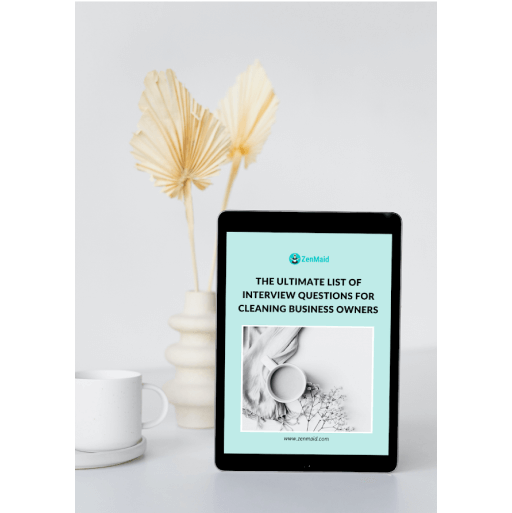
Nail your next hire with the ultimate interview question list
Get the go-to guide for cleaning business owners to make sure you’re asking the right questions every time.
- What to avoid asking (and why!)
- Questions for hiring virtual assistants
- How to gauge a candidate's work ethic and values
Step 8: Automate With Cleaning Business Software
Starting your cleaning business is just one part of the work. Now you have to run it.
As you grow and take on more cleaners, clients, and jobs, your manual systems will break. You’ll see cracks emerge under the pressure of new demands: appointments aren’t rescheduled, cancellation fees aren’t collected, and you’re spending more time reconciling payroll and expenses at the end of each month than ever before.
Don’t let things get out of control. Most successful owners implement software earlier than they expected, even from day one of their business.
Cleaning business software helps you keep up with demand and makes room for more growth than manual processes ever could. This includes:
- Booking and quote forms
- Scheduling and work orders
- Client and job details
- Appointment reminders
- Contracts and payments
Need a recommendation? Look no further than ZenMaid.
Why ZenMaid is the #1 choice for cleaning businesses
ZenMaid is purpose-built cleaning business software — not a generic CRM adapted for cleaning.
Cleaning business owners choose ZenMaid because it:
- Centralizes scheduling, clients, and cleaners
- Automates reminders to reduce no-shows
- Simplifies booking, quotes, and contracts
- Scales as your business grows
And the best part? It’s affordable and comes with a two-week free trial. But don’t take our word for it — over 3,000 cleaning businesses use ZenMaid to run their daily operations.
If you’re interested, check out a free ZenMaid demo here.
Step 9: Market Your Cleaning Services
Marketing can feel like a complicated beast to tackle. You know you need it, but it’s overwhelming to figure out where to start.
To cut through the noise, start with lifecycle marketing as your roadmap. This will help you find marketing opportunities at many different points throughout your client’s journey:
- Attracting interest: Branding, local awareness, and recognition are important to build early. You want potential clients to think of you first when they need cleaning services.
- Capturing leads: Once you’ve caught someone’s interest, you need to get their contact information. These are called leads, and you can store them in a CRM tool (customer relationship management tool).
- Nurturing prospects: Some leads book right away, while others need more time. Build their trust with a nurture program — newsletters that showcase your work, client testimonials, or a peek into your operations.
- Converting sales: Once you’ve turned a lead into a client, capture their payment information and encourage them to rebook. New clients are great, but recurring clients will mean more to you over time.
- Delivering and satisfying clients: It’s appointment time! Now it’s on you (or your cleaner) to prove that your services are worth the price. This is where solid training pays off — your cleaners need to live up to what you’ve marketed.
- Upselling clients: Upselling is a great way to increase revenue — but it’s often overlooked because it’s awkward to ask for more. As you build your business and provide a better experience, costs will rise. Give your clients good reasons for the upsell and make sure they feel like they get something out of it, too.
- Getting referrals: Happy clients beget happy clients! Automate your requests for referrals, reviews, and testimonials — it’s essential for keeping your reputation strong and trustworthy.
This is an in-depth strategy and too much to cover here. Take a look at our full lifecycle marketing guide for more information and detailed instructions.
Step 10: Generate Referrals and Reviews
Your best sales team is often your existing customers.
Strong cleaning businesses:
- Ask for referrals directly
- Use referral rewards programs
- Automate review requests after cleanings
Make referrals and reviews easy! Friction kills momentum, but good reviews can be reused and repurposed for years to come.
Referrals take a little more time to gather, and you can read more about setting up a referral rewards program that works here.
These are our 10 steps for starting a cleaning business, the ultimate guide written by business owners who have done it. And if you need specific advice for the state you’re in, we have a list of resources below:
How to Start a Cleaning Business — FAQs
Still have some questions after reading the article? We’ve got answers!
Getting Started
How much money do I need to start a cleaning business?
We wrote a whole article about this. But the short answer is that it takes between $2,000 and $10,000 to start a cleaning business. The lower end applies to residential cleaning businesses, and the higher end applies to commercial cleaning businesses.
Can I start a cleaning business with no experience?
Yes. Our only recommendation is to work with a cleaning consultant or experienced professional. Having someone you can rely on for expert questions is invaluable and will help you appear more professional and prepared to both employees and clients.
Should I start solo or hire employees right away?
There is no right answer — it depends on your goals for the business and whether you want to be doing the cleaning yourself or outsource it while you focus on running your business.
Legal & Licensing
Do I need a separate license for each city or county I work in?
In many areas, you’ll need a basic business license and/or local registration to operate legally. Some places are more lenient, others stricter. While there’s no “house cleaning license,” you’ll usually need to be registered as a business and comply with local rules. See our full guide on licensing requirements here.
What’s the difference between bonding and liability insurance — do I need both?
Yes, you need both. Bonding protects you, your client, and your employee from mistakes or legal failures. Liability insurance protects your business against claims of bodily injury, property damage, or negligence. Read more here in our licensing guide.
Is an LLC always the best business structure, or does it depend on my situation?
It depends. An LLC offers the lowest level of personal liability protection — it shields you financially from legal repercussions and losses. But as your business grows, an S-Corp may suit your needs better.
Pricing
How do I know what competitors in my area are charging?
Check their website for a ballpark. They may not publish everything, but you can at least get an idea. If you know a client who’s worked with another company, consider asking them about their experience.
What’s a reasonable rate to charge for a first-time deep clean vs. a recurring clean?
Start with your numbers: how long a first-time deep clean usually takes, how many cleaners you’ll need, and what supplies will cost are important factors. Add in your profit and operating expenses, and you’ll have a starting point.
Recurring cleanings are often discounted from first-time or solo-appointment clients, which gives them the feeling of savings while guaranteeing you recurring income.
How do I handle clients who push back on price increases?
We hear this a lot, and luckily, have a lot to say on the matter. Generally speaking, you need to clearly reinforce the value that you provide. Take a look at how Debbie Sardone views it here in her talk from the 2025 ZenMaid Maid Summit.
Marketing
How do I get my first clients when I have no reviews or reputation yet?
Ask your friends and family to refer their friends to your business; personal connections convert well. Paid advertising also works, though you’ll need to invest a bit upfront in designing and placing ads.
Which marketing channels work best for a local cleaning business?
Location-based marketing channels like Google Business, Nextdoor, and Yelp require different effort from social media channels like Facebook and Instagram. You’ll want to be on every location-based channel, but pick only one or two social media channels and post consistently.
How much should I budget for marketing as a new business?
About 10% of your overall budget should be spent on marketing. Where and how you choose to spend this is up to your strategy.
Software & Tools
What if I can’t afford cleaning business software right away — what’s a good free alternative to start?
Google Sheets, Docs, Forms, and Drive can sometimes fill in for more expensive software like QuickBooks, Square, and Jobber. ZenMaid also has a low-cost tier that gives you access to most features like client booking, payroll management, and automated communications.
How do I handle online payments and invoicing?
Use ZenMaid. We roll payment processing and client management into one place — handle credit card processing and invoicing alongside cleaner pay, so you always have a clear picture of money coming in and going out.
Have more questions about starting or growing a residential cleaning business?
Join our free ZenMaid Mastermind Facebook group of 10,000+ cleaning business owners like you. Ask questions, make connections, and get advice.