Frustrated with your scheduling? Try the easiest-to-use calendar app, made by and for maid service owners.
Brought to you by expert cleaning business owners

Tips and advice shared here have helped us grow our own maid services. The ZenMaid team currently has 5+ current and former cleaning business owners on our team, including our Founder and CEO, Amar. We’ve been in the maid service industry for 10+ years and counting.
We partner with amazing leaders in the cleaning industry, including Debbie Sardone, Stephanie Pipkin, Angela Brown, Chris Schwab, and many more — all to provide you with the latest industry insights.
We’ve built the easiest-to-use, comprehensive cleaning business software, built specifically for the industry!
Starting a cleaning business is one of the more accessible entry points into entrepreneurship. The demand for cleaning services is steady across both residential and commercial markets, the skills are learnable, and you can start small and scale up at your own pace. But “accessible” doesn’t mean free — and knowing what you’re actually getting into financially before you launch is one of the most important things you can do.
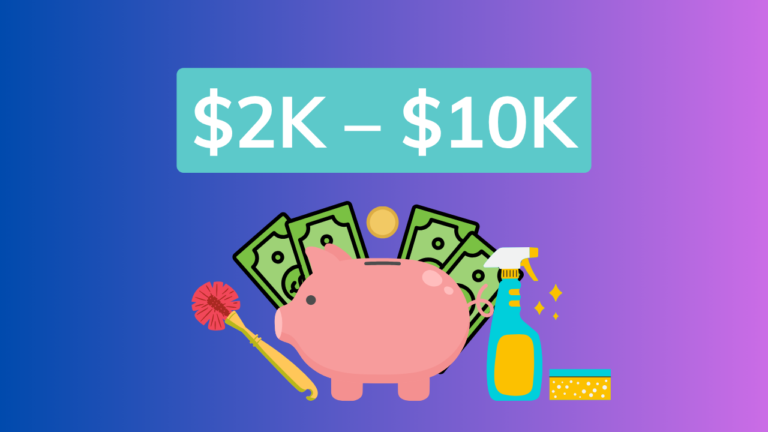
So what does it actually cost? Most new cleaning businesses spend somewhere between $2,000 and $10,000 to get off the ground, though the real number for your business depends on factors like whether you focus on residential or commercial clients, how many employees you’re starting with, what equipment you already own, and how aggressively you plan to market yourself from day one.
What follows is a category-by-category breakdown of nearly every cost you should anticipate — not just the obvious ones like mops and vacuums, but the administrative, operational, and contingency expenses that catch many new owners off guard.
Table of contents
- Establishing Your Business: $100–$500
- Seeking and Retaining Legal Counsel: $500–$1,000
- Creating Administrative Systems: $300–$1,200
- Insuring Your Business and Employees: $500–$1,500 Annually
- Cleaning Supplies and Equipment: $750–$3,000
- Marketing and Advertising: $300–$1,000 to Start
- Transportation: $10,000 and Up
- Uniforms: $75–$100 per employee
- Professional Training: $100–$500
- Save 3 Months of Operating Funds
- How to Keep Startup Costs Under Control
- The True Cost of Starting A Cleaning Business
Establishing Your Business: $100–$500
The first step toward starting your business is forming an LLC, which offers you personal liability separation from your business. If your business fails or you or an employee face legal trouble, an LLC ensures that you are not held personally liable for bankruptcy or legal costs. Instead, the business bears that responsibility.
Depending on the state or municipality in which you create your business, you may also need to obtain a license or permit to operate. The fees associated with creating your LLC and obtaining your license are usually modest and range from $100 to $500 to get everything on file.
Seeking and Retaining Legal Counsel: $500–$1,000
In some cases, it’s a good idea to budget for an initial consultation with a lawyer or accountant to make sure your business is set up correctly from the start. It’s always a good practice to have standard client contracts drafted or reviewed by a professional, to ensure they protect you when and if disputes arise over scope, pricing, or damage claims.
If you plan to hire cleaners or office staff, or if you’re looking to grow your business quickly, having employment lawyers review your contracts and accountants review your business structure will help you make sure you’re ready to meet the needs of a bigger business.
Though retaining an attorney can add $500-$1,000 to your initial starting costs, getting this right early can save you from expensive corrections later.
Creating Administrative Systems: $300–$1,200
A key part of building a successful cleaning business is establishing systems to support it. The operations and administrative side of your business requires more than a mop and a schedule!
Your administrative infrastructure should count as a separate startup cost because of this. It’s important to get the following things in order earlier rather than later, to ensure you’re ready for whatever comes once you’re up and running.
- Technology: Paper systems don’t scale. You’ll need a laptop or computer for bookkeeping, scheduling, and client communication. If you don’t already own one suitable for business use, budget accordingly. A proper laptop — not a Chromebook or tablet — will be necessary for running the software and digital systems that will support your business
- Software: Basic scheduling and bookkeeping software helps you stay organized from the start, but other, more expansive platforms tailored specifically to the cleaning business also exist, like ZenMaid, and include payment processing and customer relationship management that help grow your business
- Phone and internet: Separating your business from your personal life will help you maintain healthy boundaries during the stressful startup time. A new business phone, office phone, phone number, and internet plan are all important startup costs to cover. If you’re operating from home, your existing internet service likely covers you
- Banking setup: A dedicated business bank account will make taxes easy, and is essential if you ever face an audit or a legal dispute. Some business accounts include setup fees, the cost of printed checks, or electronic transfer access
- Hiring and employee screening: If you’re hiring, background checks are non-negotiable. Clients are inviting your team into their homes, and your ability to vouch for your employees is part of what they’re paying for
Insuring Your Business and Employees: $500–$1,500 Annually
The cleaning business is highly sensitive by nature. You and your employees will be operating inside people’s homes, offices, and workplaces. You may be using their equipment and accessing a space while they’re not present. It’s essential that you’re insured against potential damage or accidents.
Two types of coverage are essential:
- General liability insurance: This protects you if something goes wrong on the job — a broken vase, a scratched floor, or an injury to a client or visitor. Without it, one incident could wipe out months of revenue
- Workers’ compensation insurance: This becomes necessary as soon as you bring on employees. It covers medical expenses and lost wages for workers injured on the job, and in most states, it’s legally required the moment you hire anyone
Annual premiums typically run $500–$1,500, depending on your coverage limits, the size of your business, and the number of employees you have. These expenses add to overhead, but the cost of being able to operate confidently is priceless when you’re properly covered.
Cleaning Supplies and Equipment: $750–$3,000
Getting down to the actual business, you’ll need supplies and equipment. This includes three categories: consumable cleaning supplies, personal protective equipment (PPE), and tools.
We include a full list of cleaning supplies you should consider keeping in stock elsewhere in the magazine and discuss how to manage inventory, but generally speaking, you need:
| Cleaning Supplies | PPE | Tools |
| — Cleaning agents for different surfaces: Bathrooms, kitchens, floors, stainless steel appliances, ovens — All-purpose cleaners — Degreasers — Disinfectants — Trash bags |
— Reusable nitrile or latex gloves — Face masks, like N95s — Uniforms or aprons — Knee pads — Safety goggles — Shoe covers |
— Scrub brushes — Brooms — Mops — Vacuum cleaners — Microfiber cloths — Extension dusters — Buckets — Sponges — Step stools |
You’ll save on these costs by buying in bulk from a cleaning supply distributor. Your relationship with your suppliers and distributors is important for negotiating prices, sourcing materials in a pinch, and building routines or systems into your purchasing habits. Many distributors will negotiate pricing for ongoing accounts.
Start by buying enough supplies and PPE to keep you in operation for three months. After a while of steady operation, you’ll have a better sense of your usage and purchasing patterns, and you can adjust what and how much you buy at a time.
Employee supply audits are also a good business practice for regularly checking in about supply usage and the difficulty of their cleaning clients. For example, if someone on your team has recently used a lot of oven cleaner, a quick audit may uncover that a client has been asking an employee to regularly clean their oven.
If you notice additional cleans adding time to their cleaning schedule you hadn’t anticipated, uncovering this could mean bringing in a few more dollars per account. Both your operating costs and your rates should escalate if you begin offering specialty services.
Some, like oven cleaning, may be easier to add, but services like carpet cleaning and laundry add up fast. Professional carpet cleaning machines, floor polishers, and commercial-grade pressure washers can each run into the thousands.
Our advice for new owners is to start with the essentials and serve your first clients well. As your business grows and you gain confidence, reinvest a portion of your revenue into equipment expansions once you’ve confirmed demand for specialty services.
Marketing and Advertising: $300–$1,000 to Start
Marketing is very important for new cleaning businesses. Between local competitors and market saturation, you’ll need to budget time and money toward differentiating your offer to potential clients and translating your strengths into a strong brand.
Set aside some money to ensure you get the word out about your new cleaning business. At a minimum, you should budget for:
- Photography and Graphic Design: Your brand colors, photos, and business name are what will stick in people’s minds. From business cards, door hangers, and flyers to your website and social media pages, your brand will be everywhere. Branding your business is essential to communicating your values, quality, and reputation as well, so it’s important to invest a bit into looking professional and organized
- Professional Business Website: You need a website with your own domain name — this could mean purchasing a domain from an IT service manager, like SquareSpace, or creating your own. Even a simple, well-designed site with your services, service area, and contact information gives you credibility and helps direct traffic to your business
- A Google Business Profile: Google Business profiles are free and essential for local visibility. When someone searches “cleaning service near me,” your profile is what comes up. Invest some time, not money, into optimizing your profile
- Social Media Pages and Ads: It’s free to create profiles on platforms like Facebook, Instagram, and Nextdoor, and gives you a place to post before-and-after photos, share reviews, and engage with your local community. Building good pages on these platforms also gives you another option besides your website to direct traffic from digital advertising
- Association Memberships: Joining your local chamber of commerce, for example, can provide networking opportunities that generate referrals, which you’ll especially appreciate in your first year
Most new cleaning businesses are well-served by starting lean with DIY digital marketing, then reinvesting in paid advertising once revenue flows consistently. Larger advertising budgets as well as strategic spend in high-return campaigns can be successful, but you’ll want to experiment with different plans and strategies until you understand what works for you.
Transportation: $10,000 and Up
Every job requires transportation. When it’s just you during your startup phase, your own vehicle might work if it’s reliable and has sufficient cargo space — just ensure it’s well-maintained, since it will be working harder than before.
If you need to purchase a vehicle, costs vary widely depending on whether you buy new or used, and whether you finance, lease, or buy outright. A used van or large SUV can be found for around $12,000, while a newer commercial vehicle runs considerably more.
Fuel costs are another important but often overlooked aspect of startup costs. Gas is a recurring line item that adds up quickly when you’re driving to multiple job sites per day.
For multi-person operations, multiple vehicles may be needed from day one, and with rising fuel and vehicle prices, you may want to set up a contingency budget to avoid surprises.
Uniforms: $75–$100 per employee
Uniforms serve a real business function: they make your team look professional and consistent, they signal to clients that staff are trained, and they protect employees’ personal clothing from cleaning product damage.
Basic branded uniforms — polo shirts, aprons, or matching workwear with a logo — are generally affordable, especially when ordered in bulk. Keep in mind that comfortable, breathable clothes are important for physical jobs, and fabric is important. Higher-quality clothes may cost more upfront but last longer; stain-resistant fabrics are a great example of this.
Laundry is another aspect to consider. Budget for at least three sets per employee so they always have a clean option available.
Make it clear whether you plan to allow employees to wash uniforms at work or if they must do laundry at home, as this may impact your monthly water and power costs. This may be something you wait to offer employees until your revenue is steady.
Professional Training: $100–$500
Tuition for local professional programs, online courses, or trade associate certifications also counts as startup costs. Training yourself and your employees before you put them in front of clients on your behalf will pay dividends in quality, consistency, client satisfaction, and referrals.
Receiving training or proper education in your field — even cleaning — can bolster your reputation. For specialty services like carpet cleaning, mold remediation, or post-construction cleanup, formal certification can both sharpen your skills and justify premium pricing.
Save 3 Months of Operating Funds
Startups are notoriously unstable. You’ll thank yourself for putting a few months of operating funds in reserve when something goes unplanned in your first few months.
A financial cushion to carry you through the period between when you open and when you’re generating consistent, reliable revenue means fewer sleepless nights and more balance. You’ll be busy enough building your client base, refining your operations, and encountering expenses you didn’t anticipate, so having a “help” fund will build your confidence as a financial decision maker.
Without this buffer, one slow week or one unexpected repair can create a cash crisis. As a double backup, we recommend creating a separate contingency beyond your three-month operating buffer for genuinely unexpected expenses. This could include:
- Broken equipment
- Vehicle repairs
- An early client dispute
- An employee quitting
How much you need depends on your personal expenses and the fixed costs of your business, but having two to three months of runway gives you breathing room to grow steadily rather than desperately. When you price your services, always add a line for savings and reinvestment opportunities into your calculation.
How to Keep Startup Costs Under Control
You can meaningfully reduce what you spend on startup costs before your first client pays an invoice. Starting small is always the best option, so long as you stay nimble and ready to grow.
Here are some ideas for how to keep costs low in your early months:
- Start from home: There’s no need for an office when you’re your only employee! Until you have multiple employees who need to access supplies and office space regularly, an office won’t likely make sense as an operating cost
- Buy used equipment: Buy quality used vacuums, mops, and other gear at a significant discount. Your Facebook profile becomes your friend here because you can use it to search Facebook Marketplace for gently used supplies and equipment that are often discounted and sometimes free
- Buy supplies in bulk: Like we said, wholesale pricing from cleaning supply distributors can cut your per-unit costs considerably. Long-term relationships may also offer you additional pricing flexibility, so don’t be afraid to commit if things are going well
- Be your own marketing team: Digital and social media marketing is free. With a Google Business Profile, a social media page or two, and posts on local community boards can generate real traction without a big ad budget
The True Cost of Starting A Cleaning Business
All in all, starting a cleaning business costs between roughly $2,000 on the lean end to $10,000 or more for a more fully-equipped, multi-service business. The exact number depends on how large you’re starting, what you already own, and how much financial cushion you build in from the beginning.
What we hope the numbers (and this article) make clear is that thoughtful preparation is what separates the businesses that survive their first year from those that struggle. Supporting your business with the right systems, routines, and management structures for your business will help you manage your costs carefully and position you to build something that grows.
QUICK TIP FROM THE AUTHOR
Simplify and enjoy your scheduling with a scheduling software made for maid services
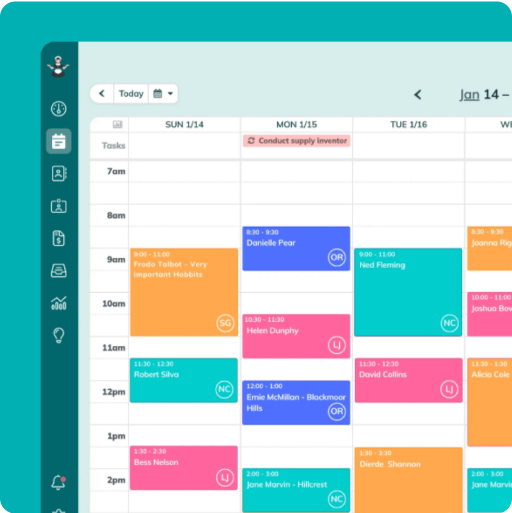
- Have a beautiful calendar that's full but never stressful.
- Make your cleaners happy and provide all the information they need at their fingertips.
- Convert more website visitors into leads and get new cleanings in your inbox with high-converting booking forms.
- Become part of a community of 8000+ cheering maid service owners just like you.
Start your FREE ZenMaid trial today and discover the freedom and clarity that ZenMaid can bring to your maid service! Start your FREE trial today