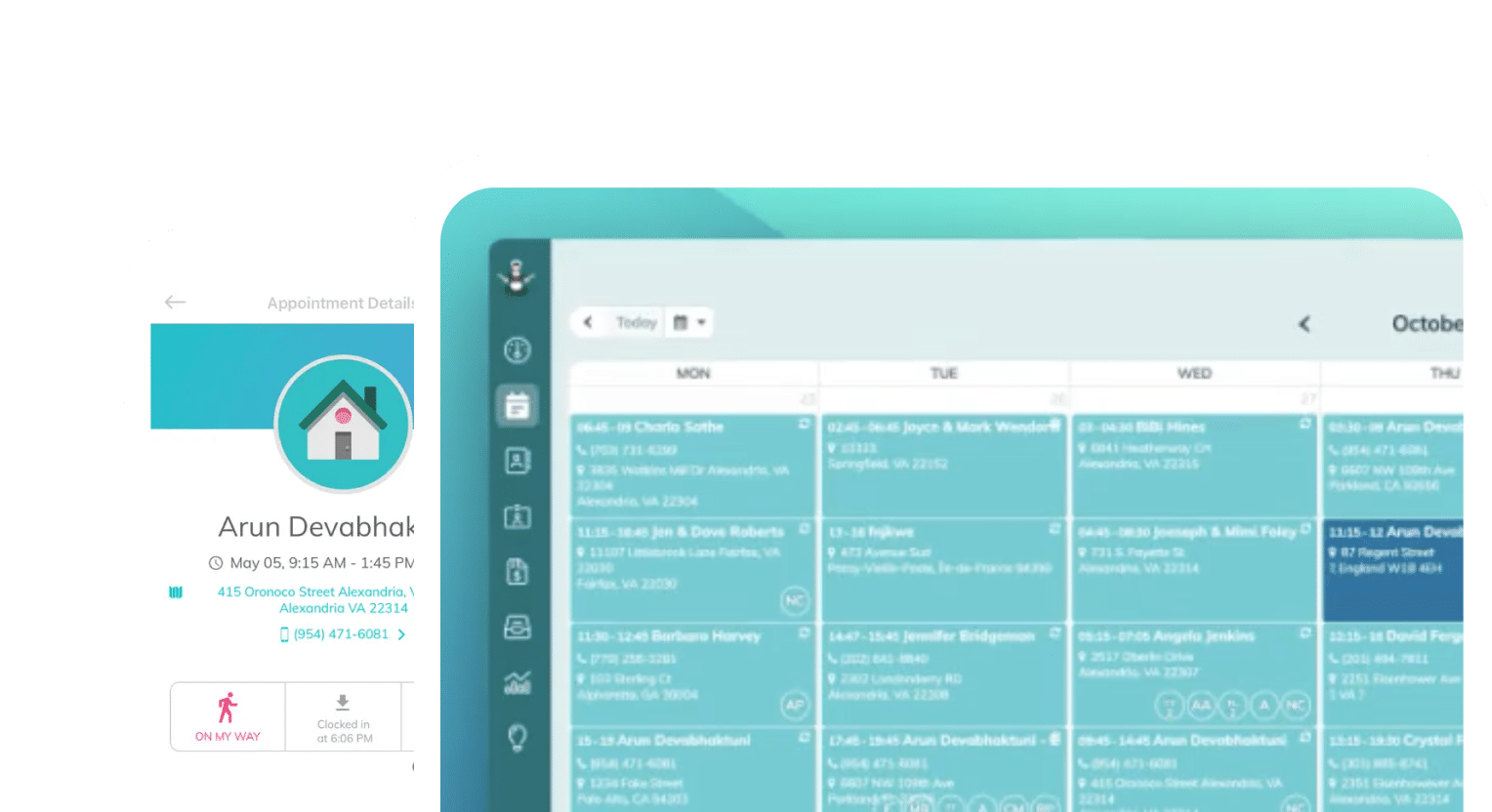
Frustrated with your scheduling? Try the easiest-to-use calendar app, made by and for maid service owners.

Brought to you by expert cleaning business owners

Tips and advice shared here have helped us grow our own maid services. The ZenMaid team currently has 5+ current and former cleaning business owners on our team, including our Founder and CEO, Amar. We’ve been in the maid service industry for 10+ years and counting.
We partner with amazing leaders in the cleaning industry, including Debbie Sardone, Stephanie Pipkin, Angela Brown, Chris Schwab, and many more — all to provide you with the latest industry insights.
We’ve built the easiest-to-use, comprehensive cleaning business software, built specifically for the industry!
Your service quality is the most important factor clients use when deciding whether to rebook with your cleaning business. But especially as you scale and hire new cleaners, you’ll need to ensure service quality remains high to encourage client retention.
Here are seven key metrics cleaning business owners can use to keep staff well-trained, expectations high, and clients satisfied. Keep in mind that these metrics will be easiest to capture and most useful to you if you are already sending a post-appointment follow-up survey to each client after each visit.
Table of contents
1. CSAT Scores
CSAT = customer satisfaction. Your clients’ happiness is your clearest indicator of service quality.
Ask directly whether appointments met their expectations in your follow-up survey. You can even ask about specific rooms, cleaners, or practices.
Try to ask these questions after every appointment. Offer a number scale, such as 1–5, to make it easy to gather and track data over time.
2. Your Net Promoter Score (NPS)
Your NPS tells you how likely your clients are to recommend your cleaning business to friends or family. It’s another way of asking clients how they feel about your business, your cleaning, and your customer service.
Outside of your follow-up survey, you can also ask clients to rate your business on your Google Business Profile and track your average star rating there. Having a strong NPS on such a public page is a great way to show prospective customers that you’re well-regarded in your area.
PRO TIP: Automating your follow-up surveys means you’ll gather more results with more consistency. ZenMaid automates all client messaging, from the first booking to your follow-up, while still letting you customize your messages to your brand.
3. Client Retention vs. Attrition Rate
How many recurring clients do you have? If you’re only tracking this in terms of recurring revenue, you’re missing a key metric for cleaning quality.
Your recurring clients are almost always going to be your happiest clients. They recognize the quality of your services, like their cleaners’ work, and stick with your business as a result.
If your retention rate is high, anywhere over 70% for residential cleaning businesses, you’re likely delivering a high-quality clean. If you’re seeing a 1–4% attrition rate, that’s a reason to look more closely at your service quality.
4. Complaint Response Time
How quickly you respond to client complaints is a key indicator of your care, service quality, and professionalism. The speed at which you address problems is also a good way to show your accountability as a business owner in the operations of your staff.
Most businesses aim to respond to complaints within the same business day or 24 hours. If this seems difficult to achieve, consider your options for improving this metric: hiring someone to respond to complaints or manage quality control, or blocking time on your calendar to address complaints.
When it comes to complaints on public review sites, address them quickly and honestly. Take a look at our guide for responding to complaints professionally.
5. Complaint Rate vs. Re-clean Rate
Clients’ complaints are helpful signals that quality is slipping. Track how many you receive regularly — such as weekly, monthly, or quarterly. More complaints generally mean lower quality.
The content of each complaint is also worth noting. It can indicate where you need to retrain an employee or solve a recurring problem. If someone is routinely getting flagged for the same issue, they either need additional training or support to complete their tasks properly.
Re-clean requests are also an important indicator of service quality. You don’t want to have to return to a client location — especially not more than once. Too many re-cleans signal a serious quality issue that needs to be addressed.
6. Recurring Training Completion Rate
Training your team should be an ongoing activity, not just something you do at the time of hiring. Long-term employees will also need encouragement and skill refreshers, too.
Your team will always have room to improve, whether that means creating training programs from scratch, adopting new work systems, or seeking out continuing education. It’s worth identifying your weaker areas and training specifically to strengthen your and your staff’s skills.
Once you identify training opportunities, decide how often you’ll train your staff. Knowing you want to complete four training sessions in a fiscal year, for example, helps you plan financially and for scheduling.
It may be easier to hold separate sessions for smaller groups. If you do alternate-week training, track attendance and task completion for both groups.
Not all training requires in-person sessions. If you’re sharing new regulations via email or an employee portal, track who opens and reads the documents, and follow up with anyone who doesn’t.
7. Employee Quality Audit Scores
Auditing each employee’s performance should be a part of your regular employee retention strategy, but you may not be incorporating client feedback yet.
Every so often, review your client reviews and complaints for employee names. Pull lists of reviews from clients served by the same employee and read through them, looking for any themes, consistent praise, or consistent misses.
In some cases, you can assign a number similar to your CSAT score to individual employees. This is a simple, if reductive, way to see which of your employees is performing well (and might be due for a raise) and who isn’t, and may need more training.
Aim for high employee quality scores, and don’t be afraid to have high standards for retention.
Automate Your Metrics Gathering and Analysis with ZenMaid
Make it easy to gather information about your business, client expectations, satisfaction, and employee training quality with ZenMaid, a software purpose-built for cleaning business owners. Build the systems that work for you with helpful automations and complete visibility into the operations of your business.
ZenMaid can help you measure service quality from all angles, including employee management, service ratings, and customer relationship management. With complete visibility, you can keep an eye on your business without the hours of administrative work you used to do.