Frustrated with your scheduling? Try the easiest-to-use calendar app, made by and for maid service owners.

Brought to you by expert maid service owners
Listen on: Apple Podcasts, Spotify or YouTube
Introduction
Stephanie: Hello, everyone. Welcome or welcome back to the Filthy Rich Cleaners podcast. I am your host, Stephanie from Serene Clean. I hope everybody had a great Thanksgiving weekend, regardless if you celebrate Thanksgiving or not. For all of us in America, it’s oftentimes a long weekend, and I know my team certainly appreciated it. I ate my weight in pumpkin pie and deviled eggs. So leave it in the comments below. Guys, what is your favorite Thanksgiving food? I would love to hear it. And the reason I’m asking you a question like that is it segues into our topic today, which is the importance of team meetings regardless of the size of your cleaning business.
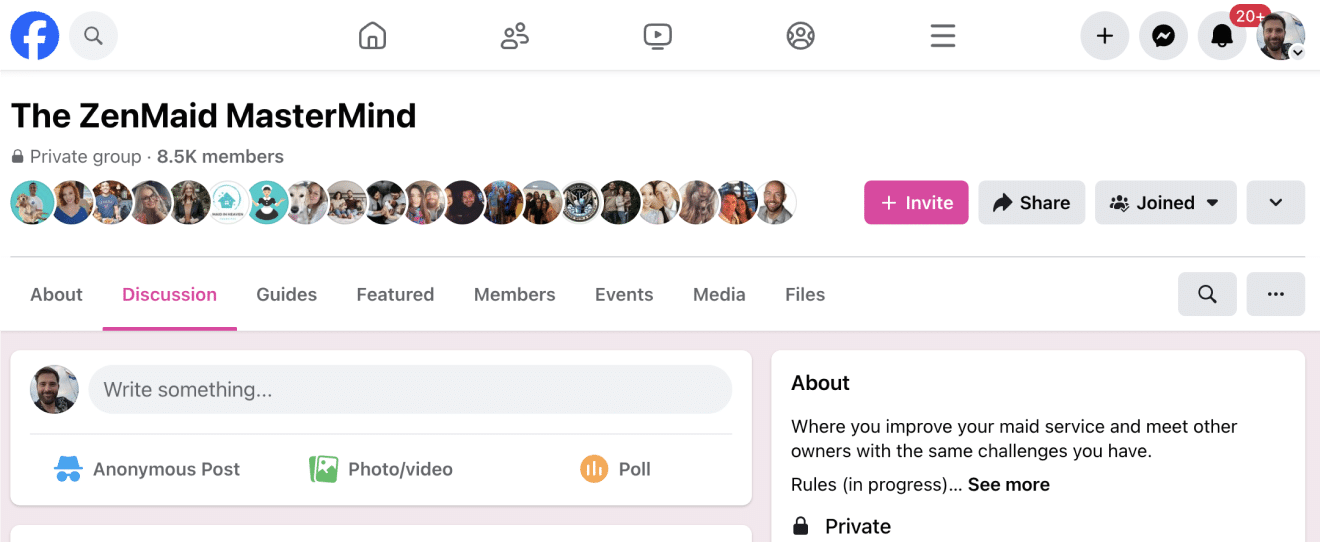
And I wanted to talk about this today because I realized I’ve never actually done an episode dedicated to having a team meeting on a regular basis. And I saw in the ZenMaid mastermind, go join if you are not a member of the ZenMaid mastermind. I saw in the mastermind, somebody asked about what to have in their team meetings, and they have, I think, three cleaners. And so I was like, oh my gosh, I’ve never done an episode on this, and team meetings are such an integral part of Serene Clean’s culture, and I really and truly believe that it is something we all should be doing in our cleaning businesses, regardless of the size.
Perhaps if it’s just you, you don’t need to do a team meeting, but as soon as you start adding cleaning techs, I think it is so important for culture and really setting the tone for the week. And so that may suggest to you, Serene Clean does weekly team meetings every single Monday morning. Today is Monday, while I’m recording this actually. And so this morning I had our team meeting, and I led it from Georgia here, and it was in Wisconsin. And so I want to get into the nitty gritty of the hows and the whys of a team meeting.
Table of contents
Why Team Meetings Matter
Stephanie: So the first thing I want to talk about is, why should we do a team meeting? And especially when we’re smaller, it may feel as if this is unnecessary or a waste of valuable cleaning time, and I wish I had implemented team meetings much earlier than when I did. I believe we were in probably a year and a half before I started doing regular team meetings. And I really kind of dug in my heels on this topic, because I’m like, is this really even necessary? I can just let them know the things that they need to know when they need to know them via text or whatever, and I was kind of really missing the plot of team meetings.
So it is truly about communicating policies, procedures, information to the techs. Yes, of course, that is the logical reason to do this is so that we can communicate new things to the cleaners that need to be said, and the whole team is on the same page, right? That is number one reason why we’re doing this, but number two reason is for culture, being that we are in a company where all of our employees are most likely not seeing each other very often. Even if you run teams, they’re not all coming together on a regular basis. That’s very rarely happening, and it is so important for the culture of our business that we are able to touch base as a team regularly and connect with each other.
It’s so important for everybody feeling like we’re on the same page and really just getting to know your coworkers. Because in a traditional workplace setting, I know that some people are like, I don’t want to know my coworkers, that’s not important to me. But for most of my team, they really like to get to know the people that they’re working with. And it just makes it feel like we’re all, coming back to my boat analogy, we’re all rowing in the same direction, and we’re all connecting and seeing each other, and feeling seen at work is so important for everybody to want to get up and do the damn thing, right?
And know that we’re cleaning day in and day out, and it just feels good to be seen by your coworkers, to connect on that level, before you go out and clean independently. And as you guys know, we run individual cleaners 99% of the time, so the only time that our cleaners are working together is a training situation, or it’s a first time clean or move out clean where it’s going to take longer than eight labor hours to get a job done. And so we’re going to put multiple cleaners on it.
So in our case, it’s even more important, because they’re really not seeing each other, in comparison to those of you that run teams. But even so, it’s only them seeing each other on those teams, right? It’s not the entire company coming together collectively at the same time. So I just, it’s so important, and I saw such an improvement in my culture of my business once I started doing regular team meetings. And I think weekly is the correct cadence, right? I don’t think monthly is enough. I think that we need to be connecting consistently and frequently, because otherwise people start to drift, right? It’s very common when it feels very remote, even though it’s not remote work, right? But it kind of feels like that. It’s very independent from each other.
So how can we create a solid workplace culture in an environment where it’s not very conducive? Well, we have to really be aware and force it almost in the form of regular team meetings.
Scheduling Your Team Meeting
Stephanie: So for us, how I did this, how I implemented this from a scheduling perspective, is all of our residential cleaning start at 8:30, or first appointments of the day, I should say, not all of them, obviously, our first appointments of the day are going to typically start at 8:30am and so I knew that that is not enough time where we would have to force people to get up really early in order to fit in a meeting prior to that first appointment on Mondays. And that’s just a lot to ask, and it’s unreasonable, right? So we made the decision to shift all of our cleanings on Mondays to start later on those days. And it did sacrifice a little bit of productivity, of course, but I think it’s well worth it actually. I know it’s well worth it just based off of the fruits of having the team meeting.
So we push all of our cleaning times to start either at nine or 9:15 in order to accommodate this team meeting. So for us, it is from 8:15 to 9am Central every single Monday for years and years and years. This is when our weekly team meeting is happening. And I will say not everybody comes to it, because a lot of our cleaners’ availability is not during that time. So we do not force somebody to come to a meeting when they’re not even available during that time to work for us. All of our commercial cleaners that are in the evening or our cleaners that start later in the day, so they are only required to come to the meeting, either in person or virtually, if they were already available during that time, from their static availability standpoint. However, I’ll get into exactly how we handle it with everybody else in just a moment.
But what it looks like for us, logistically speaking, before I get into what we cover in the meeting, I want to explain the how. Now we just did the why. Now we do the how, okay? And so obviously it’s not going to work out for everybody to come to our Black River Falls office, which is exactly where the team meeting’s happening every Monday morning. But as you guys know, we are a multi location business, and it would not make sense logistically to have everybody drive there for a 45 minute meeting and then go to their appointments that are close to them, close to their home, or whatever. It just, it’s not going to make sense, so only if it makes sense logistically, will they come in person to the meeting, which is typically, honestly, only a handful of people and the managers are going to actually be in person in Black River Falls at the meeting.
So how we actually manage it so that as many people can come as possible, is there is a virtual component, which, of course, there has to be for me to be involved. Because, as you guys know, I’m a remote owner, and I am the one running the meetings. Oh, say that five times fast, I’m the one running the meeting. That’s funny. I actually said it. Well, I’m pretty impressed with myself right now. Anyhow, so I’m the one running the meetings, and that means that we need to have a virtual component to it. And so what we do is we have a reoccurring Zoom meeting that happens every single Monday. We have the zoom link to join, it’s just added to the ZenMaid appointment. So we have an appointment for the weekly cleaning tech meeting that everybody is clocking into and clocking out of so that they’re getting paid for it. We must pay them, of course, guys, for anything work related. So they’re going to clock in and clock out. They’re going to click the join link there, and that’s how they’re doing it on their phones or whatever.
So they can either choose to come in person, or, most likely, they’re joining virtually, and they could indeed be joining while they’re driving, or if they are at an appointment that starts earlier, or whatever, because that still does sometimes happen, they can do that. So some of them are literally cleaning while they’re listening, or they are driving while they’re listening and they’re just doing it hands free, through their Bluetooth, so that is very common. Or they’re just at home, right? And they’re calling in from home. So keep that in mind that it doesn’t have to be all in person. And we honestly have not had, I don’t think there’s a lot of negatives to having them join virtually. I think in our specific type of business, it’s really the only practical way as your business continues to grow.
I mean, a lot of you guys do have your techs all come to the office beforehand. So if that is the situation for you, you could make this work. That’s just not how it works at Serene Clean, and everybody’s schedules are so scattered and staggered. I don’t think that there is any way to practically do an in person for everybody without just a lot of unnecessary driving. So I think this is the best way to have longevity to this is having a kind of hybrid virtual and in person. So in our office in Black River, we literally have a TV on the wall, which is where the Zoom is pulled up, and then there’s a camera on top, so that everybody virtually can see the room and everybody can see each other.
So yeah, that’s how we handle it in the how of it all, right? So it honestly has worked beautifully for years now. And yeah, I think that it’s just such a cornerstone of our behavior every single week to have that touch point, and it’s okay if somebody can’t even speak, that they’re listening, right? And so now, how does everybody else who does not come to the meeting still stay in the know of what’s going on? So for us, it is a policy that they must review the team meeting summary every single week, and they clock in and clock out still of that team meeting appointment while they’re reviewing it, right? And so that may only take them five to ten minutes to review it, but it is something that we do enforce.
So by Thursday of every single week, because the meeting is on Monday morning, by Thursday, everybody who did not come to the meeting based on their own scheduling or whatever, they are expected and required to review, clock in and clock out, and they will be docked and be penalized when it comes to all of our pay and raise guidelines that I’ve gone over in a previous episode thoroughly. So if you’re interested in hearing our raise and wage guidelines, you can go listen to that episode, and that would be something that they are actually breaking the policy portion of. They’re not following policy, and policy is they must review this every single week, and it literally takes them five to 10 minutes. They’re getting paid to skim through something, right? So it’s bare minimum behavior. They’re not even cleaning and they’re getting paid. So if they can’t do that, that’s very frustrating, because it’s like, yes, you can. You’re just choosing not to.
So I am okay with kind of bringing the hammer down, because it’s like, this is how we communicate new information, and it’s very important that everybody is on the same page. And that’s one of the big reasons, as you grow, it’s very important to figure out your communication. There’s an episode with Chelsea coming out probably next week or the week after, and we talk about Slack and how important and integral that is in our business for communication. And so big fan of Slack, one, because it’s great to put out information to your team collectively, in combination with the team meeting. And as you grow, dispersing information in an efficient manner to everybody on the team is going to be a struggle if you guys are still texting everybody individually. You’re going to forget and it’s so inefficient. We need to make sure that when something happens in the business that everybody is aware, we’re making sure that all of the team members cannot say, well, I didn’t know, right?
We never want people to be able to say, I didn’t know that, and for them to have a leg to stand on and say, yeah, well, of course they didn’t know because I didn’t tell them. Or, of course they didn’t know because of XYZ, and it wasn’t communicated effectively. So how can we get information across the board to everybody as efficiently as possible? That’s going to look like utilizing something like Slack and team meetings. Okay, so big fan of team meetings, as I’m making an entire episode about it, obviously.
What to Cover in Your Team Meeting
Stephanie: So that being said, that is the how, that is the why. Now let’s get into the nitty gritty of the what. So I know it can seem like what am I going to talk about every single week? But truly, we have a template for everything at Serene Clean, including team meeting agendas, right? So I follow the same exact meeting template every single week for years and years and years, and sometimes we’ve added things, sometimes we’ve taken away things, but for the most part, it’s kind of broken up into a few sections.
So the first section is going to be wins and KPIs that I want to share with the team. The next section is going to be kind of complaints and housekeeping as well as any positive feedback. And then the final section is going to be basically connection time, where we are connecting with every single team member that is virtual or in person live in that moment. Okay, so let me break it down further.
So let’s get into the first section, which is going to be wins and KPIs. I think it is fantastic to share KPIs or key performance indicators with your team judiciously, because they feel very respected when we share certain types of information with them. So I am not suggesting that you share revenue with your team or anything like that. You certainly can. A lot of people would argue, yes, you should do that. I do not feel comfortable with that. I don’t know if I ever will feel comfortable with that, honestly, but there is certain things financially that I will share with them, because I think it is important.
So the first thing we’re going to share is going to be if we have any new employees starting and we’ll welcome them. We will share if there is any employees that are leaving that we are aware of, right? Somebody that’s given their notice, or when somebody’s last day is going to be, we will share that, of course. And then we are going to share any employee anniversary so that we can celebrate that. And obviously, we celebrate anniversaries in a myriad of ways, as well as you could do birthdays too. Is somebody’s birthday coming up? So people can, give your team opportunities to celebrate each other. They can’t celebrate each other if they don’t know. So anything we can do to encourage that by sharing information is a great win.
And side note in ZenMaid, if you are a ZenMaid user, it is going to have your cleaners’ anniversaries and birthdays pop up automatically for you, which is awesome, and so you’re never forgetting anything. It’s gonna pop up on your calendar. So that is a super nifty feature that they just released this year, and I absolutely love it, because it makes sure we never forget if somebody’s birthday is happening or somebody’s anniversary is happening, because that feels poopy when your employer does not remember your birthday. And I know some of you are like, that’s stupid, we’re adults, it doesn’t matter. And I’m like, may I suggest some joy? May I suggest some sparkle and zest in your life by celebrating birthdays? It’s fun. Okay, just tell somebody happy birthday. Don’t, get over yourself. Okay, tell your cleaners happy birthday. It’s important. It’s important. They’re gonna feel seen, and it’s such a small thing that feels good. All right, so why not do it? Don’t be a curmudgeon.
We’re going to talk about any celebration things related to that. We are then going to go over number of reviews at each of our locations, because we have three locations. So we’re going to say we have 100 and some reviews on this, 150 here, blah, blah, blah, and then Facebook reviews as well. So wherever you guys get public reviews, you know some of you maybe are using Yelp for some ungodly reason, share those numbers, because this is something that we are encouraging them to get, because these KPIs are something that affect them. They all get rewarded when they get Google reviews. And so we want to keep them aware of what those numbers are. And then it’s like a game, you know, every week we want those numbers to be going up, right?
We also then share how many tips we got last week. And so I don’t say individually how many tips, of course, but I say collectively, we made $357 in paycheck tips last week. And then year to date, we have made $30,200 in paycheck tips, right? And so again, sharing numbers that they are affected by directly, and that makes it, it’s exciting to hear that number every single week go up of oh my gosh, this year, you guys have made this, and it helps them. I feel like it makes it seem more positive, because when you’re just getting $5 here or $10 here, it doesn’t feel like anything, but when you hear as a team, we’ve made this much in tips, meaning them, obviously not me, but they have made that much in tips, that’s very exciting to them. And it just is kind of a positive feedback and enforcement of oh, this is a good thing. We make a lot of money here, right?
The next financial thing that I’m going to share is about retirement. And so many of you may know Serene Clean does have a 401k with company match, and that’s very exciting. It’s one of our most requested benefits that we had before we implemented it. And so I want to remind them and encourage them to save for their retirement, because that’s something that is very important to me. It’s important to them, and it turns us more into a career, instead of just a job, with that benefit particularly.
So what I tell them when it comes to the 401k is, this week, we have put in this much money to the 401k. The employee portion of the 401k was this much, and the employer match was this much, bringing our total contributions for 2025 up to $40,000 in retirement, or whatever it is. And that’s, literally, I should have pulled the numbers, because I did the team meeting literally today. But we are $40,000 into our 401ks this year, which is really exciting. And so saying these numbers, it’s an amazing metric to be able to share with the team, and there’s no negative, in my opinion, to sharing that financial metric.
So you guys may not be able to do anything, you could do the tips for sure, but you have to have a system in order to do this. So for us, we literally just run a report in QuickBooks, and we can see how much was in tips the previous week. And then same with Gusto, which is where we do our 401k. Well, technically, Guideline is the software that we use to offer a 401k, but they are owned by Gusto, which is our payroll software, and that integrates all beautifully together. So we just pull a report, and I’m able to pull those numbers every single week.
So what I would love to encourage you guys to think about is, what kind of financial metrics are you comfortable sharing with your team? Is there something that we could do? You could also do, perhaps, first time cleans this month. That could be something that you share from a metric perspective, or how many new customers did we gain? You’re trying to showcase to them, hey, I trust you with a little bit of the business information, but it also is going to bolster them of oh, you know what you’re doing. You’re building the business, right? So there’s a lot of positives to sharing these types of KPIs to showcase to your team they can trust you with the health of their job, right? This company is growing, and it’s exciting. And I’ve heard from my cleaners, they love hearing this type of stuff, because it makes them confident the business is growing and going in good directions, which is only going to help them, because they know that as the business grows, so do their benefits, so does their income, all of that good stuff. So it is a really positive thing to share KPIs whenever you can.
And then the final kind of KPI things that we are sharing are going to be the number of appointments last week. That’s also another great one that you guys can easily share. So I just pull those from ZenMaid. We also talk about our charitable contribution for the month. So I’ll say November, Chasing Daylight Animal Shelter chosen by Amber. And that way, we are reminding them one that is something we do every single month, and it also highlights for that particular employee what they care about. Because clearly, Amber chose the animal shelter because she cares about animals. So it’s good to remind them that we are doing that every month and just showcases where their labor is going, that their labor is contributing directly to us donating to local nonprofits, which is something that’s very important to me at Serene Clean.
So hopefully I’m also giving you guys some ideas of things to potentially strive for, if these are things that are important to you, and remember, it doesn’t have to be this crazy big thing. You could donate 25 bucks a month, right? If that’s all you can afford, that’s what I started out with. So the point being is we’re highlighting to the team what is happening behind the scenes that is benefiting them or benefiting our community, to bring back to the why of why their work is very meaningful. And so I’m always trying to look for ways to remind my team that their work is incredibly meaningful and it’s affecting not only them and their livelihood, but they’re helping their clients out, and they’re helping their community out by performing their everyday work, right?
Finally, when it comes to KPIs, kind of KPIs is, I’m going to ask Katie, who is my customer relations manager, if we have any new commercial accounts or new potential bids to submit, so she will then share with the team, oh, I did this walk through here and here and here to showcase again, we’re growing the business, and we are doing everything we can in our power to make this a successful business. And it’s, again, I don’t think that there’s any negatives to show, because it’s just showing, hey, we’re getting opportunities and that the business is growing. So I think it’s a positive thing to kind of have them peek behind the curtain in very specific ways. And so those are the ways that I like to showcase to them what the heck’s going on in the business.
Sharing Reviews, Feedback, and Complaints
Stephanie: We then move on into reviews and comments. So any positive feedback that we have gotten over the past week, we are going to be sharing that. So that could be a Google review, that could be a Facebook review, that could be a phone call, an email, a text, a service rating from the ZenMaid feedback that goes out. There’s multiple ways that we could be getting positive feedback, and we are sharing that feedback as soon as it comes in on the team chat in Slack, but then collectively, we’re making sure that this is going on the meeting agenda and hitting it again, calling out that team member for their work, and really showering them with some love and affection, and highlighting their fantastic work. And anytime that they get feedback, we then also take that feedback, turn that into graphics that you guys will see on our Serene Clean Facebook, on the Google My Business, on the website, that type of stuff. We’re going to use those graphics everywhere. So it is very important that we are collecting that positive feedback, we’re sharing it, and then we’re utilizing it to the fullest across all of our different platforms. So just squeeze every drop of juice out of that positive feedback that you can.
Then we go through complaints, guys. And so last week, we didn’t have any complaints. Whoo, and we can celebrate that. So if you didn’t have any complaints, celebrate it. Don’t just let that opportunity to celebrate your team and their hard work go away. We want to highlight, hey, that’s pretty awesome. And so now every time we go weeks at a time without complaints, okay, we’re two weeks, three weeks, four weeks without complaints. That’s really exciting. So, but if we do get a complaint, we are sharing that almost 99% of the time, we are going to be sharing that. The only reason we wouldn’t is if we still haven’t had time to talk to the cleaner individually about it. Like, let’s say a complaint came in over the weekend from a Friday cleaning or something, and it’s now Monday morning. We’re not going to go over that complaint because we haven’t had a chance to talk one on one with the cleaner that is related to that complaint, or cleaning team that’s related to the complaint. So we want to make sure that we talk to them and get the full scoop and understand so that then we can give the context to that complaint to the entire team.
And we never are going to share who the complaint is on, but it is important to me that it is part of our company culture, of we are learning collectively from all of our mistakes, you know. So if I got a complaint on my work, you bet your ass hypothetically, if that were to happen, because, you know, I’m a killer cleaner, just kidding. I have gotten one complaint, I think, and I still burn over it. So I’m like, that wasn’t valid, Jeff. It was for a client named Jeff, and I don’t believe that it was true. But whatever, I mean, I’m over it, right? That only happened five years ago. I’m totally over it, guys.
But it is really important that we are utilizing that feedback as a team, collectively, because if you get a complaint on something, and your other cleaners are also doing that thing by not sharing that feedback, well, you might get a complaint on that same topic, right? So it could be a great reminder to your team or something that they didn’t know. And a lot of times, that’s exactly what it is, is when a complaint comes in, it’s on us because we didn’t train effectively, or we did not communicate, or they didn’t have the right notes, or all of these things. And we want to make sure that we are humble and share if it’s our fault, and truly, I believe all complaints are kind of our fault, because there’s something wrong with training then or we’re not communicating effectively, right? We want to take that accountability where we can, but it is really important that we have a culture that accepts constructive feedback and can talk about it without getting really defensive, right?
So by the time we’ve talked about it with the actual cleaner and gotten to the bottom of it, they know that we’re going to share this in the team, and it’s going to be private, meaning it’s going to be anonymous. They’re not going to know who it’s about. When we’re talking about the complaint, it’s not to shame the cleaner at all. It’s to say, okay, this is a great learning lesson for all of us. This happened, and how can we prevent this? Or what do we need to be reminded of? So don’t let those opportunities go to the wayside. I think that it’s not wrong to do this again. We’re not shaming our cleaners for having a complaint. Every single staff member, at some point is going to have a complaint. So therefore, how can we all as a team grow and get better because of that complaint? And I believe that sharing it, talking about it as a team, and saying, how can we avoid this in the future? Or troubleshooting, or maybe another cleaner has some great advice related to it, or saying, oh my gosh, I have that happen too. Whoever this happened to, don’t feel bad. This is how I avoided this in the future, right?
So it’s a great connection opportunity, actually, despite it seeming like something that you should shy away from. And so I’ve had very little negative repercussions. Only positive things have come from sharing the complaints. So I highly encourage you guys to do so and just to let your cleaners know that this is just normal here. And I had a new person start today. Her name is Rachel, and she heard that we didn’t have any complaints, but it would have been her very first day hearing if we did have a complaint, us talking about it as a team and just being introduced that from the get go of this is how Serene Clean handles things. We don’t brush things under the rug. We talk about it, we work and problem solve head on as a team, and there is no shaming. It’s just, hey, this happens to all of us at some point. How can we avoid this collectively in the future?
Hannah’s Happenings: Quality Control Updates
Stephanie: Together, we then specifically go through Hannah’s happenings. And Hannah is my quality controller and lead trainer, as you guys know, and so she’s going to go through any reminders based on things that she saw in the field the previous week. So Hannah is going to be training, she’s also going to be doing a ton of quality checks every single week on all of the cleaners. So she’s not checking all of the cleaners, but she is checking the commercial accounts. She is checking the cleaners on a regular basis. So all cleaners are getting checked on a regular basis, but not all cleaners are getting checked every week. Of course, that would totally be unreasonable and impossible to do.
So what she’s going to list is, for example, I’ll read the reminder from this past week. As a reminder, for residential homes, we should not be climbing on bunk beds to make them. We should only be using our one foot step stool to reach and do what we can. Please note that for vacation rentals, we must make the beds thoroughly so that doesn’t apply in those cleanings, right? So we’re just doing a lot of reminders. Hannah’s doing reminders of things that she is seeing by going out in the field and observing cleaners or seeing what’s happening in houses, right?
She is then going to go over her quality checks. So that week, she did number of residential quality checks, three, number of commercial quality checks, 14. And then she’s going to call out each person that she quality checked, something that they did, as well as any improvements that they needed to make. So she called out all of the cleaners that she did QCs on, and all of the work that they did was great. And anything that she saw collectively that she’s like, oh, the only thing we need to work on is, I noticed that corners of floors are getting neglected. So make sure you guys get into that with the vacuum wand or the broom or whatever. So that’s kind of what that’s going to look like.
So if you guys are seeing things, whether that be through your training or through quality checking, this is a great opportunity to share that collectively. And again, give some positive feedback and say, hey, I QC’d these teams or these cleaners, and you guys did great on this, this and this, and it’s gonna feel really good for them. And then again, anonymously just say, collectively, these were the things that I noticed. I’d love to see us focus on this next coming week, these particular details, right?
And then finally, she’s gonna go over any products and processes. So she said here lots of streaky or fingerprints on glass doors. Try to use damp, not wet, glass rags. It can be harder to see sometimes when cleaning at night, if we’re cleaning commercial or the sun is down, right, so it’s harder to see the glass. Please change garbage bags when they are visibly soiled or have garbage still stuck to them. Otherwise, it is okay to consolidate into a larger receptacle, right? Some of our commercial accounts, they may have food on them, or gum or whatever, so we try to consolidate and use as few garbage bags as possible. Save everybody money, of course, because mostly the customers are supplying the garbage bags. However, if there’s food coated all over them, you need to be changing the bag.
So that’s kind of what Hannah’s section is going to look like. And you guys can extrapolate that and use this as lessons or things that you saw in the previous week. And this is, for me, before we had Hannah, it was anytime we were getting questions or things like that from the cleaners all throughout the week, we’re going to just consolidate that and put it in there. And that’s kind of where we would call that general housekeeping, which we still have, but now Hannah has kind of taken on that role.
So this is a great opportunity for you guys to say, okay, look through your messages from the past week. That’s what I would do when I was doing the team meeting agenda. Veronica, my executive assistant, now preps the team meeting agenda, which is awesome. But when I was still doing it, I would just comb through the chat from the previous week to see if there’s anything I’m like, oh yeah, this happened with Ashley. I want to make sure we call this out because she struggled with this, or she had this question on this, and I’ll even call out, Ashley had this great question. I want to make sure that we cover this, right? And so that’s why, again, it’s really nice to have all of that messaging in one place, meaning Slack. And I can just skim through where for you guys, it might be tough if you’re texting everybody individually, but that can be a great resource for you guys. If you’re like, what the hell do I cover in this team meeting? Well, look at what’s happened in the past week. What issues did you have? That’s what we’re going to cover in this next week, right? And obviously I’m giving you a lot of other stuff to cover too, but that can be a great place to start.
General Housekeeping
Stephanie: For us, then general housekeeping, we’re going to go over anything collectively that’s kind of happening in the business that we need to cover, or if there’s a new policy. This could cover a lot of things, is pretty much everything else that could possibly be talked about. We’re going to talk about that. So for example, for us, Holiday Food Drive. This year, we’re supporting the Sparta Area Chamber of Commerce’s Holiday Food Drive. So this Friday, December 5, is the last day that clients can leave a labeled bag marked food drive for pickup during a scheduled cleaning. If your client leaves a donation, please relay the pickup in your manager chat and drop the items off at the nearest office when you’re able to, right? So we’re doing this thing for the holiday food drive. We want to remind the cleaners how to do it. And then also, I sent out our newsletter, and I reminded our clients that this is how we’re doing this food drive. So if you want to contribute, this is how you do it.
And then the next thing is our Christmas party details. So you know the date, time, any details about when our Christmas party is coming up in a couple weeks, actually end of next week, because I’ll be going up to Wisconsin. So exciting stuff.
The Best Part: Connection and Culture Building
Stephanie: And then finally, after we get through all of that stuff, which is all actual work stuff, we get into the fun part, which actually takes most of the meeting. And that is coming back to the question I asked you guys of, what’s your favorite Thanksgiving food? That would be an example of a question that we’re going to ask. So every single week, we have this week’s question, and then we are also going to ask them about something that they’re excited about or grateful for, right? So every single person that is in the meeting takes a turn at saying something that they’re excited about or grateful for, which usually devolves into them talking about their weekend, oh, I had a great weekend. I did this, this and this, I’m grateful for this. And then they answer, oh, I love pumpkin pie or X, Y, Z, right?
So this week’s question is, were you a Black Friday shopper when it was still a crazy in person experience, and when do you get all of your Christmas shopping done by? Right? And it was really fun to hear everybody’s experiences. And stories always come out of it, right? And that’s where we connect, is over stories and hearing, oh yeah, I never Black Friday shopped because I was super traumatized, because I used to be a retail worker during Black Friday and I saw this fight break out and blah, blah, blah, and it’s just that’s exactly the kind of conversation that connects us and really gets to know each other more, especially again, when new people are coming in, now that they’re hearing things from their coworkers who have been here for years, and that’s sometimes hard and intimidating to break into that when you’re a new person, so it gives them something to know and share about themselves. They can share how much they’re comfortable with. And it just, it really creates this really cool sense of camaraderie, that tough word, camaraderie.
And it just, it’s really beautiful to see everybody connecting over that stuff and laughing and sharing stories. And I literally, we’re just looking up questions on the internet, or if something pops up, and usually it’s timely, like this, right? If there’s a holiday, we’re going to talk about that and ask questions about that. Or it’s just something random, right? Or it could be cleaning related, for sure, and we do that sometimes, but oftentimes it’s just talk about your life. Tell us about this. What do you think of this? What was a memory about this? And it’s just, it’s really cool, and honestly, this is my favorite part of the meeting. That’s what everybody looks forward to, is they get the opportunity to share about what’s going on in their life and if they’re having a hard time, and they tell us that is a really beautiful, vulnerable thing. And I love being in a workplace where that is encouraged, and that we get to facilitate that vulnerability for people, because that’s truly how you connect with your coworkers, I find.
And again, you don’t have to share anything you don’t want to. That’s the beautiful thing is, if somebody’s like, yeah, you know, had a great weekend, did this, and this is my answer, and even if they don’t want to talk, they don’t have to, right? Because sometimes people are having a crappy day and they’re like, look, I just want to listen. Don’t really want to answer this week, and they don’t have to, that’s totally fine. But the ones, it just, honestly, I can’t speak enough about how this final portion of the meeting is so integral for this culture building, right? So everything else was kind of work stuff. But honestly, this probably takes about, that was 20 minutes. Typically, this is going to take the remainder. Well, it’s a 45 minute meeting. That doesn’t make sense. The first part is 10 minutes. The rest is literally us, because we’re a big team now, and I ask questions.
And so this is where I’m going to highly encourage you guys, as the owner and leader, ask follow up questions if they seem like there’s an opportunity to do so, right? So for example, it’s deer hunting season in Wisconsin. Well, probably across the country, but hunting is a big part of the culture in Wisconsin and rural Wisconsin. And I know for my city listeners, you’re probably like, what? But yes, it’s a big thing. And so several of my employees today mentioned getting deer, or that their children got deer. So I started asking follow up questions, oh, do you hunt on your own land? What, how do you do this? Blah, blah, blah, blah, blah, adding anecdotal stuff from my own life, right? I am engaging. I try very hard to as much as possible engage and be very, very interested, which I am, but to show that interest in every single team member and asking follow up questions wherever it’s appropriate to do so, because it makes them feel good that their boss, who is across the country, is paying attention to them and asking and genuinely wanting to know about their lives, which is 100% true. This is authentic. I want to know them, and this is truly the only opportunity, typically, every week, for me to do this and show them that attention verbally, right?
Obviously, I can message and text and stuff. I can heart react to their work when they’re sending before and afters. I can give atta girls and attaboys when positive feedback is showing up in the Slack. And I can support them that way. But this is the time when it’s like, hey, in front of everybody, I am interested in you, and I want to know about you and your life and what you think, right? So that’s really, really important. I think it’s so important. And how many of us have ever gotten that? A lot of us have never experienced that. So one of my favorite things about being a boss is I can give people something that I never got, right? It’s just like when people become parents and they’re like, I can give my kids something that I’ve never had, or right, parenting that I never received, or a life that I never had, right? I almost see it in that way of, I’ve had some really shitty workplace experiences, and I want to be and give my employees something completely different, and I hope that they’ve had that positive experience at previous workplaces, but most likely not. All right, I’ve heard a lot of shitty experiences that my team has had, and so it’s really important to me that they feel seen, that they feel heard, and it’s just, yeah, it’s a great time in order to connect, before we get into the hustle and bustle.
And just encourage them. You know, I kind of wrap up, if anybody has any questions, if you guys need anything, we’re always here for you, and just let us know what we can do for you to make the week go more smoothly. And it’s just, it’s just a great way to start the week and set the tone. And that’s why I’m a big fan of doing this on Monday mornings. I get that that may not be feasible for everybody. Maybe you could do it at the end of the week, and you could bring pizza or donuts or something. I definitely encourage you guys, if you can bring some food, that’s always great too. More coffee. If it’s in the morning, it’s just it really does set the tone for a great week, and just allows a lot of opportunity for connection that otherwise doesn’t exist.
And I feel, I know that I was noticing a certain drift and separation amongst everybody before I started doing this, because I already had a team of seven to 10 by the time I implemented these team meetings. And a lot, you know, all of them part time, of course. And it was already, I was already noticing, gosh, I’m really struggling to have everybody connect. Because how could they, right? So I think, outside of having a group chat in some flavor, again, Slack, coming back to that is fantastic, but this is, it’s so integral to a culture, especially as you grow, guys. So I would highly encourage you to implement this sooner rather than later, and just make this part of your everyday week and culture.
Wrapping Up
Stephanie: And I will be sharing a template for this meeting agenda as a little freebie for you guys. So if you’re like, oh my gosh, I can’t remember everything she said, or I don’t want to go look at the transcript, we will link that in the description. There will be a template for you guys as a thank you for listening to this episode and being our loyal listeners, of course, where you can just download that Google Doc or whatever and make a copy and edit it yourself, so that it gives you something to work off of.
So please let me know if you guys do team meetings now, and what your favorite part of it is. Is there anything that you would add to this? Obviously, safety and training and stuff like that, we will go over that. That’s kind of under that housekeeping umbrella or procedures, that type of thing, if we need to remind about that. But a lot of this is just simply about that connection and culture. So I’d love to hear how you guys run your team meetings. If there’s anything that I’ve missed that you would add, because I’m always looking for ideas to add to my team meetings. And just would love to hear how you guys handle this, and if, from this episode, you are going to actually consider implementing team meetings, because that would make me really happy to hear that you’re doing this and your cleaners are really going to love it.
So let me know in the comments, guys. If you listened all the way through, leave a snowflake, because Wisconsin just got a bunch of snow dumped on it, and we have had a lot of poor driving situations happening already. So please give me a little snowflake in the comment. Hit that like, hit that subscribe. If you’re not already subscribed, we’d love to have you so that you are always abreast of what’s going on in ZenMaid and listening to all these fabulous tips and stories that our guests have, and I will see you guys in the next episode of Filthy Rich Cleaners.
Note: This transcript has been edited for clarity and readability.
Resources Mentioned in This Episode
- ZenMaid Mastermind
- ZenMaid
- Slack
- QuickBooks
- Gusto
- Guideline
- Team Meeting Agenda Template: https://docs.google.com/document/d/1ko80z5SaurwA9nx1WN6J5Cj32xmqCb1MuDUsOvPZINs/edit?usp=sharing
QUICK TIP FROM THE AUTHOR
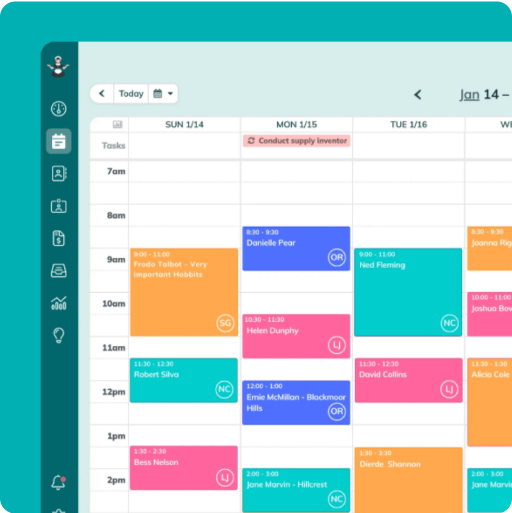
Simplify and enjoy your scheduling with a scheduling software made for maid services
- Have a beautiful calendar that's full but never stressful.
- Make your cleaners happy and provide all the information they need at their fingertips.
- Convert more website visitors into leads and get new cleanings in your inbox with high-converting booking forms.
- Become part of a community of 8000+ cheering maid service owners just like you.
Start your FREE ZenMaid trial today and discover the freedom and clarity that ZenMaid can bring to your maid service! Start your FREE trial today