Frustrated with your scheduling? Try the easiest-to-use calendar app, made by and for maid service owners.


Brought to you by expert maid service owners
Listen on: Apple Podcasts, Spotify or YouTube
Introduction
Stephanie: Hello everyone, welcome or welcome back to the Filthy Rich Cleaners podcast. I am your host, Stephanie from Serene Clean, and today’s amazing guest is my friend Chelsey Withers here all the way from Louisiana. Chelsey is quite the impressive woman. She is a very new business owner, but has really just skyrocketed in so many ways, both from a systematized kind of side of things, as well as just being a big part of the community. You guys may have seen her in the ZenMaid Mastermind. She’s very active, and I’m so excited for you all to hear her story. So Chelsey, thank you for agreeing to be on the podcast. I really appreciate it.
Chelsey: Yes, I am so excited. I love this podcast. I’ve been watching literally since the day it started, and I have learned so much. So it’s really surreal to be here.
Stephanie: You know how much I love having listeners be guests because I really, one thing I love is highlighting people at all different stages of their business to showcase just one, the fact that being successful can happen at every stage, right? It’s not like you just make it, right? You have learned so much just in the short time that you’ve been in business. And something I love about you is the reasons why you opened your cleaning business. So can you share for the class, why did you open your business?
Chelsey: It’s kind of, you know, similar to a lot of people’s story where you start cleaning because you can and you need to make some money. So necessity was definitely part of my story, but my love of cleaning goes back through my entire life. I’ve always been that person. If somebody in my life experienced something like a death in the family or a new baby or, you know, just something where they needed a little bit of help, I’ve always wanted to show my support in a way of showing up at their house to help clean or whatever that looks like. But in a way, it’s my love language.
So whenever I was, I think on my third year of being a stay at home mom, I was just kind of done with being at home. If I’m being honest, looking back at it, that’s really what it was. It’s like I need to do something. And cleaning was just the way to go. So I set up a plan and I started just doing it like a lot of people do. I got my plan together. I set everything up and I just got to cleaning houses. And I loved it. I loved the work that I was doing. I loved being out of the house, kind of feeling like myself again.
I struggled with postpartum depression, rage, anxiety, all of the things that you can struggle with after having a baby, a lot after I had my son. So getting that autonomy back and getting out of my house really helped me mentally, not to mention the leading up and getting my own house in order was a huge catalyst to my mental health and my healing journey, essentially. So I wanted to provide that for other people, especially moms, but really just anyone in general who feels that weight of their environment and their home. And it weighs on you mentally, whether you are somebody who would, you would consider yourself a neat freak, or if you know, you’re just a regular person, it has an effect on us.
So I got to work and at first I kind of thought, you know, I was ambitious and I thought, you know, maybe this will become something big one day, but I didn’t have a hard set goal for anything specific. But there came a point around four months in where I think it was my first $1,000 month that I had. And I sat down with myself and I was like, you know, this is lucrative. It is a lot of work. I need to make a decision right now. And I made the decision that this wasn’t going to be a little thing that I was doing and I was going to take it seriously. And so from that point forward, I believe it was actually a year ago around this range, somewhere November, December, I put my boots on the ground, as I say, and I got to work. I started systemizing everything, being serious, really focusing on my client journey and setting goals for what I wanted this to look like next year and years from now.
Table of contents
- Introduction
- Balancing Motherhood and Business
- The ADHD Advantage in Building Systems
- Systems Evolution as the Business Grows
- The Mirror of Hiring
- The Power of Extreme Ownership
- Implementing Software and Systems
- Investing in Software and Tools
- Pricing Strategy and the Hybrid Model
- Tracking and Data Collection
- Scaling the Walkthrough Process
- The Client Journey and Customer Experience
- Branding and the Power of Connection
- A Heartwarming Story
- Team Culture and Impact
- Money Mindset and Prosperity Thinking
- Where to Find Chelsey
Balancing Motherhood and Business
Stephanie: Well, that’s really one, incredible that you kind of used your struggles to inspire this new journey and path for you. And I think a lot of our listeners can probably relate to that because so many folks that I talk to are coming from either being a stay at home mom or just even being a single parent, all of these different factors when it comes to being somebody with a family, which is a very different path than I have. You know, I didn’t have kids when I opened the business. So I’d love to hear, how did you balance that, especially in the beginning, being that you had, you know, your child, how many kids do you have?
Chelsey: Just one, just one.
Stephanie: Okay, so you had your son and done. Talk to me about what that looked like within that first year, even when it was like, were you still primary caregiver? Or how did you handle that?
Chelsey: Before we get into that, I actually wanted to say to you that I am actually so impressed by how you did it all without having a kid, honestly, because my son and my family life and everything was, as you would say, and as I would say, the fire under my ass. It was what kept me going. So you did that so young and without that fire. I don’t think I could have ever done that. Honestly, my son, even though it is harder as a parent to manage things, manage home life and business life and get things done, whenever you become a parent, you get this additional gear into your box of gears. And you can work yourself up a gear. And I don’t know how it works. It’s magic as far as I know, but that really helps me. That’s why I am where I am today is because I had that fire under my ass. And it wasn’t easy.
So in the beginning, I really tried my hardest not to bring my son to cleans, but that’s life and it did happen. And I’m very lucky for the clients that I had from the very beginning who I still have today, which is just incredible. And I’m so grateful for, they graciously allowed me to take my son with me into their homes while I cleaned. I’m also very lucky to have a son who is mild mannered. So he wasn’t destroying everything as I was doing it, thankfully. I mean, of course we had our hard days, but during the day, whenever I had him and we were at home, I would do as much work on Google docs and spreadsheets and watching YouTube videos while I cooked or cleaned at the house and just putting everything together. And then as soon as he went to sleep for a nap, or as soon as he went to sleep at nighttime, it was go time. And I got to work building those things that I was kind of processing in my brain during the day. And yeah, man, I just thought through it honestly. I think a lot of moms can relate to that. You just kind of do what you got to do.
Stephanie: Yeah, I really feel that that is so true just based on the mothers in my life. My best friend, she’s got twin baby boys who are a year and a half old. All of my managers are mothers. And they describe exactly what you’re talking about of there’s something about when you become a mom that it’s a new gear is unleashed of I’m like, how the F are you doing this? You know, and it’s just it just all of a sudden unlocks this capability that you just don’t have access to, I feel, until you experience that. So I totally can relate to just seeing that kind of gear unlocked in mothers specifically. And you guys just make it happen because there is no other option. It’s the whole burn the boats kind of conversation or topic. And it really seems that that’s exactly what happens when I talk to female business owners who are also mothers. It’s just pretty incredible what you’re able to do.
And what I also wanted to highlight too is you mentioning as an individual cleaner, you were bringing your baby to cleanings when necessary. And I feel like that is something, obviously, it is technically not ideal, right?
Chelsey: No, not at all.
Stephanie: But it’s so many people’s stories. And it’s not something to be ashamed of. It’s just something to be aware of, of this can’t be for forever, but you got to do what you got to do. And if you have clients that are open to it, you know, it just, I would say, do whatever you need to do and get out of that when you can, because obviously from a liability standpoint, it’s not great. But I’m glad that you mentioned it because I think a lot of people are probably like, oh my gosh, I have to do this right now and do what you got to do. You’re a working mom. They know that they agreed to it, right? So just keep that in mind that it’s not for forever.
The ADHD Advantage in Building Systems
Stephanie: So I would love to hear, you know, you already had such a brain for, you keep mentioning systems and processes. And it seems like you just have a really good brain for that. Were there resources that kind of made you think that way? Were you listening to books? Or how is it that you already were so focused on that from such an early moment in the business? Is there something that influenced that for you?
Chelsey: Yeah, so that would be ADHD, you know. I know you know by watching your podcast. I am an ADHD girly, and I have been my entire life, and I did not like being medicated. So in my early 20s, I think I really just admitted to myself, I don’t want to be medicated. I’m winging this. And my life plummeted. So I had to figure out how to live as a person with this condition, if you say. Honestly, it’s a superpower in some ways. So I learned a lot in my 20s. I’m currently 29, so I learned a lot these last 10 years of how to operate as a human while your brain doesn’t want to focus, doesn’t want to cooperate whenever it needs to cooperate.
And I started building systems, and that goes from small things like a laundry system, because I would have laundry piling up and piling up, and it would never get done. I was wearing dirty clothes, so I had to fix it. And through building all of those minuscule systems, I really got a knack for, okay, a system for building systems, if you say. I learned how to do it. And whenever it came to the business and all of the free resources that there are with the podcast and the books and just people posting videos on YouTube, I was able to see, okay, wait, that sounds familiar. That sounds like I can systemize that. So then I would test things out, and I would try them and I would fail. But once you try something out, you have the groundwork for something. So all you have to do from that point is tweak it.
And that’s what I did. That’s just what I’ve been doing this entire year and a half that I’ve been in business. I started with a system that somebody else created, systems that you’ve put on the podcast, and they worked in some ways and they didn’t work in other ways. And I tweaked it until it was perfect for what I was doing. And I will say, we’re a year and a half in. I now have three cleaners with me. Those systems that I built, we’re outgrowing them now. So I am in a phase where I’m having to do that again. I kind of had a second to breathe, and then it was like, nope, time to get back to work. So I’m still building systems, still tweaking things and going hard.
Systems Evolution as the Business Grows
Stephanie: Yeah, and that’s such a great point to be had, is all parts of the business are kind of like a living, breathing entity that will continue to evolve over time as the business grows. What made what got us to three cleaners is not what’s going to get us to 10, right? That foundation is going to be there, right? Like, you’re not a wipe down service, just like Serene Clean is not. We literally use those words when we’re selling, of we’re not a wipe down service, we’re going to be very detailed. And I know that that’s how you sell as well. And then building a system around that. And so what kind of things were working for you when it was just you cleaning versus things that have been tweaked to get you to this three cleaners that now you’re, you know, and these might be two separate questions, what worked for you from nothing to three that is now not working and that you have to revamp?
Chelsey: So one thing that I didn’t do while I was solo that I absolutely needed, and I put off for way too long, was a standardized checklist leaving in the homes. And I know that’s something you talk about a lot, and we actually had a meeting, and you—
Stephanie: Oh yeah, I saw your beautiful checklist. I was like, that looks familiar. And I was like, oh—
Chelsey: Yeah, no, I literally, because I am not, I don’t have time to learn Canva. It’s too complicated. So I was like, well, let me just change the colors here, added a few things, took some things away to, you know, make it reflect what we’re doing over here. But yeah, having that checklist is just honestly life changing. It’s the communication with the client that’s something that’s very important to me, but also keeping everybody on the same page in general. It’s just communication. It’s so important and being able to stay on track. So that was one thing from solo to having cleaners that needed to change. And honestly, I should have had it while it was solo too. I just that was not a priority at the time.
Stephanie: But getting it in place now is, that’s so fantastic, because it just is just, yeah, that foundation. There’s a reason I hammer it so much, because it’s just the core.
Chelsey: Foundation, to hammer it. Yes, get one, do it, even if it’s crappy. That’s another thing that held me back as whenever I went from solo to having cleaners, is while I was solo, it was just me, it was just my time that I really had to manage and worry about an inconvenience. So whenever I started getting help and cleaners, I realized that I didn’t have time to make everything perfect before I put it into play, and I just had to do things. And I realized that that was holding me back while I was solo, actually. So even if you don’t have a pretty checklist, just write something down and put it into work. And like I said, that’s the foundation, and you can tweak it as you go. You’ll get there. It will be pretty one day. You’ll figure it out. Just do something and get it done and then go from there.
Stephanie: So true. And I think that that’s something that actually is kind of positive and negative, even about this podcast, for example, of when you’re hearing people who have been in business and have, you know, lots of employees, and you’re seeing what’s been built up there, I think for a lot of our listeners, that gives them this analysis paralysis of, I want it to be as perfect as what they have. But it’s like, it’s taken us six years to get to this level. And I think I’m so happy what you’re saying is just pull the trigger, because good and done is better than perfect and not done, right? So just do the thing you can and tweak, right? We need to take action instead of getting stuck of, it’s not perfect, it’s not perfect, right?
Chelsey: And as a perfectionist, I totally get that analysis paralysis by analysis situation that happens a lot to me. It’s kind of like how you build confidence in life. You just have to do things and see how it goes. You just have to have that proof to yourself, just like we have to have social proof to show to our clients. We have to do things to have social proof for ourselves. So I did something, okay? I did it. It’s over. Let me move on to the next thing. And you just gotta, you gotta feel the pain. Sometimes you gotta mess up. You can’t avoid it. You cannot delay pain. Pain will always be there. So just do it. I mean, Nike got it right.
Stephanie: Right. And pain is such a good teacher because it’s telling us what needs to be fixed. And you know, especially in the beginning, where you are, you’re wearing all of the hats, right? You’re cleaning, you’re doing everything. And that can go on for quite a while, honestly, because we don’t have enough money to hire any admin help. So it is a recipe for disaster to expect that everything is going to be perfect, because it can’t be. And you’re just going to be beating yourself up where it’s like, just removing the emotion out of it. Like, oh, fucked up there. Let’s learn, let’s readjust, kind of thing. So it sounds like you have a very healthy relationship now, or you’ve learned that very quickly of it can’t be, learned the hard way. It needs to get done because otherwise we’re not going to progress and move forward.
Chelsey: Absolutely, yep, you just got to do it.
The Mirror of Hiring
Stephanie: So talk to me about hiring then. So what did that look like in the beginning? How have you kind of adjusted that over time now as you continue to grow? Any horror stories, any bad hires so far? I know it’s still early for you.
Chelsey: Thankfully, nothing horrible yet. So whenever I admitted to myself that I was going to hire was actually earlier this year, in March, and I went ahead, I set up some janky Google Form application, just put it out there, and I got some applicants, and I hired somebody. And I’m so grateful that I did that. At the time, I wasn’t sure if I was ready to hire, and I wasn’t ready to hire, but I did it anyways. And I’m so glad that I did that because by hiring that person, it was a mirror. It was a mirror to everything that I needed to do. It showed me everything, all the holes everywhere that I needed to improve, where I wasn’t ready, where I was over ready and I could kind of scale back my energy on. And my cleaner at that time was actually, she was newly pregnant. She was early in her pregnancy, so she wasn’t going to be with me for a long time anyways. And that ended up working out perfectly. I am a believer that everything happens when it’s supposed to happen, and I think that happened perfectly.
So she was with me for a while, and she went off and did something else because she was progressing in her pregnancy. And that gave me time. I didn’t hire again after that. I took time, and I worked on all of those things that I saw that I needed to work on. And I did get caught up in that need to make it perfect. And I waited too long, a little bit, but eventually I was like, you know what? I’ve worked on it enough. I’ve touched it enough. It’s time to give it another go. And I gave it another go, and it’s been going great.
Stephanie: Oh my gosh. You just dropped so many wonderful nuggets right there. I love that you said that it is a mirror to show you what you need to work on and that that mindset around this person in front of me is supposed to be teaching me something. And I’m totally of the same, whatever is supposed to happen happens exactly when it’s supposed to be happening. I’m the same way because my entire life has been proof of that concept. It feels absolutely so I resonate so strongly with that. Of one, you tried the thing, you collected the data that needed to be collected, and then you made the changes, and then gave it another go. So what were some of those examples of I was not ready? What did she show you? What did that mirror show you?
Chelsey: So I had no idea how I was going to train this person. I just kind of fell into I was like, I know what to do. So it’s going to come out one way or another. I guess training—
Stephanie: Is the worst thing ever in the beginning.
Chelsey: Yeah, it’s hard. It is very hard to train somebody. It came out like a fire hydrant. And I just info dumped on this poor girl. And I was like, well, here you go. Good luck. I was there with her the whole time, but I did need her assistance. I needed her to take over certain areas so I could work on other areas. And I just, I didn’t set her up for success, and I learned exactly what that meant. I needed to have SOPs. I needed to have written down SOPs with natural language, not over complicating things. And another thing that I learned whenever I hired her, but also whenever I hired for the second time, is that all of those little things, all of those little details will fall in place as they come. You don’t have to completely offload on somebody as soon as you get to talk to them. That’s kind of my problem. I am an info dumper, 1,000%. And I overwhelm people. So that’s kind of what I learned about myself is I’m too much. I need to basically make a second brain so that people can sit and go through the process slowly where they can absorb things instead of me just kind of relieving myself of all of this information and screwing them over, ultimately.
The Power of Extreme Ownership
Stephanie: And that’s a common trait with ADHD, I know, at least for myself, over explaining. Because I want to make sure that I’m not misunderstood, that’s a huge fear of mine. And I want to give context around anything, everything. So I was the same exact way of, let me just tell you everything that’s in here. And that is absolutely a recipe for disaster because it’s so overwhelming for the other person, right? And even, I think, you know, how we do training, how many days or how many hours we’re putting them through in the beginning, it’s just a lot. Not everybody is just going to get it right away either, and that can be very frustrating too. Was she pretty, so what was that experience like? Did she give you any feedback? I’m just curious of, hey, too much. Or in reflection, you just realized that now?
Chelsey: She was very nice. She wasn’t going to tell me, yeah, but I could tell by the times that I was repeating myself, and I’m not a huge fan of repeating myself. So I was like, okay, why am I repeating myself? And I’m big on self reflection. I’ve been to therapy, so I’ve learned some tools on how to look at myself and assess. And that’s kind of what I did in that situation was, okay, here’s what’s going on. One thing that I have done since the first time I hired is I have the mindset of everything is my fault. There is nothing that is not my fault. And that sounds brutal, and it is in a way, but truly, it is so liberating because if everything is my fault, then everything is within my control.
Of course, everything isn’t within my control, but I have some play in how things happen and how things will go. So with her and with the results that I was seeing was, okay, so how is this my fault? Where do I play into this? And whenever I identified my role in everything that I was seeing, then I was able to make changes in myself, and immediately I could see the differences. So slowing down whenever I was going through things, I didn’t get to make those changes with her, but I made them with my second employee, and I went room by room. Instead of taking them, I didn’t take them to a deep clean for the first time they come, you know. So just those tweaks of, here’s where I messed up, here’s what I’m going to change, and then observe the results. So it’s basically data collection. KPIs are super important for that reason too, of keeping notes. What I did is I kept notes of how I did things, and I just compared and tweaked those, and then said, okay, this is what I changed, and this is the end result that changed. So that worked.
Stephanie: Yeah, with that, using everything as kind of a science experiment where we’re just tweaking one variable at a time. And for those of you that maybe just had an emotional response to what Chelsey just said when it’s like everything is our fault, it truly is a liberating thing. And if you have not read the book Extreme Ownership by Jocko Willink, that goes into this concept in depth. That’s the entire premise of that book of Extreme Ownership to the point of as leaders, it is our fault, it’s our responsibility, and that allows us to take action. And one of the concepts in that book is the longer that we spend trying to point blame and like, whose fault is this situation? We got to put somebody, and that is just an entire waste of time. Where it’s like, if we take the blame, it immediately jumps into problem solving mode of, okay, why did this happen, and how can I prevent it in the future?
And it just, it is kind of a waste of time too because even if it 100% factually was our cleaner messed up, they didn’t do this, they didn’t do this, all right, as a leader, it’s our ultimate responsibility that that happened poorly, whether that be a quality issue, okay, is it a training thing? Is it a communication thing? There’s so many things that, because like you said, once we put on that, it was our fault, our responsibility, it is really liberating because now I can be, I can fix this. I’m in control. And I think that, you know, even so often, you know, what are the repeated things in our industry? Nobody wants to work. I can’t find anybody. Good customers don’t want to pay my prices. They don’t see our worth. All of those things, even if they’re true, how the fuck does that help us solve anything, right? That doesn’t do anything with that. It’s not helpful. So I love that your mindset from an early stage is that way. And it’s so true that, you know, therapy can help us take ownership. And I think that that’s probably one of the core, accountability is one of the—
Stephanie: Therapy, get ready to go therapy.
Stephanie: But taking accountability for every aspect of our business, instead of it being, you know, shackles, it’s very liberating because it’s, yeah, I have, here’s my locus of control, and I have full control over this situation, even if actually that’s not true.
Chelsey: Yeah, and what you said, I really like that. You said that it’s a waste of time. That’s a big part of it that I never even thought about is you do, before you take that Extreme Ownership, which I’m going to have to read, that book that sounds like an awesome book, you do waste a lot of time trying to figure out your own brain. Was that my fault? Was that their fault? Where did they mess up? Whereas even if it was their fault, if you, okay, it’s my fault, you just saved all that time debating in your brain, and you can immediately get to the point and figure out what happened and how it’s not going to happen again. And then it’s over. And it’s just, okay, that could have taken so much, not only physical time, but emotional and mental labor, which you need to conserve that as a business owner because you’re going to be dealing with a lot. And you need to cut out all the fluff, all of the stuff that doesn’t matter, and that doesn’t matter.
Implementing Software and Systems
Stephanie: Yeah, and it really does help you make decisions of even really extrapolating that to coming back to systems, because I find that that concept is so important throughout of, okay, you know, the client, they canceled last minute, you know, because I forgot to manually send out the text reminder or whatever, how, you know, how so many small owners handle all of that stuff, or, you know, I double booked things or whatever. And that comes to, okay, we could eradicate this all together by having a software in place, right? And obviously, you’re a ZenMaid user since the beginning, right, of your business, or pretty close?
Chelsey: Yeah, I was actually with Housecall Pro for the very, very beginning, but it just wasn’t geared toward our industry, and I was having to do a lot of workarounds to make it work. No hate to Housecall Pro. Great for electricians, plumbers, HVAC, awesome. But having something that knew what was going on, knew what to expect in this industry was a game changer. And I think it was about four, maybe four to six months, and we switched to ZenMaid, and immediately, huge difference.
Stephanie: Yeah, I would think I’ve never used Housecall Pro. I know a lot of the softwares are geared towards more one off appointments, where obviously the nature of our business is recurring. Was that one of the areas that you had to just make all of the appointments one offs? Or how did that work for you?
Chelsey: I don’t even remember. It was a lot of very professional stuff for, I say more male centered, the communication was more male centered in my opinion. Having things like checklists wasn’t as easy to put in. I think that was a main driver of just the organization of a cleaner sitting in on my way text. They did have reminders and things, but it just wasn’t a good fit for somebody, in my opinion, for somebody in the cleaning industry. ZenMaid would be a better fit.
Stephanie: Yeah, I agree with that 100%. And obviously it’s very niche for a reason, so that we can focus completely on features that only are relevant to cleaning businesses. Christians couldn’t use ZenMaid. I mean, I would love to see that.
Stephanie: Right, beautiful. I would like that. It is, yeah, I do enjoy the more feminine aesthetic a little bit.
Chelsey: Yeah, me too. I do. I like living in a girl’s world.
Stephanie: Same, same, very, very girly over here. So what other things did you put in place? I’m just curious, kind of software wise. What other things do you use in your business as you continue to grow?
Chelsey: Currently, we use Slack, ZenMaid, Wave, and I think that’s my big three right now. I haven’t gotten too much into the automation side. I think in 2026 I’m going to start focusing on automating more, just so I can have more time to do community work and on the ground work, meeting people and stuff like that. Instead of being an admin all of the time, I’m not quite ready to hire an assistant or anything like that. But ZenMaid is a big one with the reminders, eliminating all of those hours of work of admin for me. And then Wave allows me to send automatic invoices for my recurring clients. It’s very easy to use, and it’s also bookkeeping. Big bookkeeping is a good one too. That’s a two in one for me.
And then Slack is something that we’ve started using, I would say two, yeah, two months ago we started using Slack, and I’m loving it. It’s really helped me organize what I need to do, because as a business owner and managing other people, you’re managing everything that everybody has to do, and it kind of gets difficult to see, okay, what’s my job here? So with Slack, I’ve set up different chats for different things. There’s a restock chat. So in our end of the clean procedure, which is another great system that you should have, they have to go through their supplies as they’re packing up their supplies and say, okay, I need more of this. I need more dusters. And they have to send that list into the restock chat. So that on my end, all I have to do is, whenever it’s time to up their supplies and gather their supplies that they need for their caddies, I just have to go into that chat, and it’s all there. Everything that I need to prep is there.
Another thing is a completed checklist chat. So whenever we’re done with the cleans, they take a picture of the front, back of the checklist, send it to the completed checklist chat. That’s just so I can double check that they’re doing what they’re doing, or at least they’re saying what they’ve done, and compare. So I don’t do quality checks all of the time, obviously. So it’s just a way to stay accountable, and it keeps the communication clear, so I’m not having to go through our general chat and find all of this stuff. It’s all right there and ready to go.
Stephanie: I am so happy you brought up Slack. That is something that we put into place this year. Early this year, we finally, literally, for five years we’re using Facebook Messenger for the business, for all of the staff members, which I will say is better than just texting, because the point was being, you know, we could do groups. And the reason I kind of want to go into a little bit of detail, because a lot of our listeners are most likely individually texting their cleaners, or they have a group chat in a text messaging app. And what that means is when somebody leaves or you add somebody, you’re making new chats all the time, and it is just a nightmare. Also, it’s harder to do it from a computer, right? Where Slack, if you guys are not familiar, it is literally just a communication software, I suppose, that’s going to take place of texting or anything like that for your cleaners.
And also, like Chelsey is kind of explaining, it kind of allows you to be very creative in how you handle that. So for us, you know, we have a social chat where a lot of our, you know, previously in our Facebook Messenger group, it was all work stuff, but it was also just us being social and chit chatting or sharing whatever. And that kind of muddies the water when you are trying to find out work stuff. So it’s like, okay, the crew social chat. This is where, this is the only place where we share all of that stuff and build that culture. But it’s not muddying the waters of the main crew chat, where you can also have dashboards and link to resources and all sorts. There’s so many uses for it as well as, you know, alluding to automations a little bit. There’s some really wonderful automations that you can definitely explore in the next year as you continue to get more automated. But I definitely, highly recommend if I could go back and wave my magic wand, I would absolutely have had Slack from the start. I just didn’t even—
Chelsey: Know what it was. Yeah, I don’t think I knew what it was until three months ago, a month before we did it. And I either heard it from you or I heard it from a friend in a networking group, and immediately I just jumped on it because I was sending the text messages like you were saying, and it was so much work. It was so much to keep up with. Because when you’re sending text messages, I mean, I have the business number and everything, but it muddies the water, like you said. I need to see that clear line. This is here. That’s there. Have everything, have its own avenues so that you could just go in and find what you need to find, because that’s right there, even though it seems minuscule and not like a big deal, it’s a huge time suck.
Stephanie: It is. And it also separates texting with customers and talking to your cleaners, right? This is the only place that cleaners are communicating with you. This is where customers are communicating with you. So your mind is just so jumbled in the beginning, well, really even now, but roughly in the beginning. So it’s, how can we make small improvements? And this is something that is actually a huge improvement because I see how overwhelmed people are with communicating with their staff. And for us, we actually have an individual chat with each, each cleaner has their own chat with the managers. And so it just, if you look at our Slack, it seems like a lot, but truly it’s the only way to stay organized on all of that stuff. And I think the reason why so many of us have never heard of it is because Slack is usually used in a professional kind of workplace where it’s just knowledge work, where, you know, coming into basically the physical labor type of, we’re a physical service. And so I love if we can influence anybody listening right now, yes, you have to pay for it, but it—
Chelsey: You don’t have to pay for it. I don’t pay for it. I wonder—
Stephanie: If there’s a certain size because I’m curious. That’s amazing. Why?
Chelsey: Yeah, I wonder. We have four people in our Slack, so we don’t have to pay for it.
Stephanie: Yeah, so anybody under that, definitely go do it.
Chelsey: I see a lot of cool things in there with the paid version, like with the AI response bot, and I’ve heard you talk about it too. That sounds awesome. So I believe we are definitely going to be paying for it someday soon.
Investing in Software and Tools
Stephanie: And I think people get really huffy, or they want free everything. And it’s like, look, guys, the amount of time and mistakes. I get it, we’re all broke in the beginning. I understand there is no money, but there are certain things that I would absolutely pay for in the beginning, and some of those are going to be softwares. I think it’s well worth it. And, you know, save your money on Google ads. They’re probably not going to work for you.
Chelsey: And that’s another thing with spending money and knowing what’s an investment and what’s not an investment where those perfectionists, like we were talking about earlier, can mess up and slow themselves down is trying to find the perfect way to invest or doing too much research, research to a fault. Just do something. Maybe you waste a little bit of money, maybe you go into a little bit of debt. I went into debt to be in a business, and it’s working out great. So do what you got to do. You know, weigh the pros and the cons. Make smart decisions, but don’t get caught up in, is this going to be the perfect thing for me? I’ve switched so many times through this journey, and they worked in that era that we were in, and they didn’t work now, and you just move on up. And sometimes you just waste money outright. That’s okay. That’s going to happen. That’s just part of the culture of owning a business. But don’t let that hold you back. You’re not going to get everything for free, and if you do, you’re going to pay for it in a different way.
Stephanie: No, it’s so, it’s like you’re going to pay for it in time or headaches or whatever. It’s, yeah, technically, the free thing would be to use Google Calendar, right? That is totally free to you to manage your schedule in that way. But it’s the amount of time that’s going to be spent fixing mistakes or just, it’s so much administrative labor that you’re spending and mental energy as well, because you’re just adding to the plate that’s already overflowing. And I also love the fact that you pointed out it’s, yeah, sometimes you are going to waste money, but you’re learning from it. And I would just, you know, make suggestions of, don’t sign up for year long contracts. If you can do something month a month while you’re playing with it. I mentioned the past couple solo episodes, basically, you know, the smaller you are, that’s the time to experiment, right? That’s the time to see, how do I want to charge? How do I want to pay? How do I want to clean? All of these things. You are in the prime experimentation. So it’s, take risks, try a bunch of stuff. I mean, how do you charge now versus, is that how you did it in the beginning? Are you flat rate? Are you hourly? Are you hybrid? How do you handle that?
Pricing Strategy and the Hybrid Model
Chelsey: Yeah, so we are hybrid. And in the beginning we were also hybrid, but I did go straight to flat rate for a section of time where I did flat rate for deep cleans too. We do hourly for deep cleans, and then flat rate for maintenance cleans. I cannot, I don’t know how anybody estimates how long a deep clean, that’s impossible from my perspective. And I tried it, and I lost a lot of money. And a lot of time. So I like the hybrid model. I think it’s very fair to ask people to pay you for your time during a deep clean. What I always tell people whenever I go to a client’s home, and I still do walkthroughs, I tell them, you know, we do charge hourly for the deep clean. We are very efficient. We have our systems. You know, we’re not going to be sitting around laying on your leg, wasting our time, but we don’t know what we’re getting into until our hands get dirty. We do not know what can of worms we’re opening until we’re there. So it’s just to cover us. And it also in a way covers them because I could flat rate you right now, and I could overestimate it, and then you’re still going to have to pay that price where it only took us eight hours instead of 10. Or you get that savings if that’s there. I’ll be honest, most of the times it’s not, but it’s a possible perk at times.
But covering your labor as somebody who is putting in blood, sweat and tears to get these jobs done, you need to be paid like that. You need, if you’re someone who’s thinking, if you’re struggling with your worth and charging people and saying, oh, well, I really enjoy cleaning and I really want to help people, that is great. You will not help people for long if you don’t get paid. So you need to be charging what it takes to continue to help people. That’s not doing them a disservice. That’s doing everybody a disservice to not charge what you need to be charging.
Stephanie: The way I see it is, if you’re going to have staff members especially, it’s that’s disrespectful to them if you don’t charge high enough to pay them what they’re worth, right? So it’s, you want, if that’s a core value of yours is I want to be a great boss, I want to pay people well, well, that means you need to charge high in order to do that, or charge as much as the market will bear. And I think that people are still in the assumption that, especially even just as a smaller outfit, or even an individual cleaner, you have to be charging $25 or $30 an hour. That is not the case anymore, guys. Individual cleaners are getting $40, $50 plus an hour. I’ve seen that in the group. So it can be done. And that comes into marketing and branding. And, you know, if you don’t mind, where were you starting out approximately hourly, and have you increased prices since then? I know you were charging flat rate, but on average, do you feel like you were way too low actually?
Chelsey: Well, yes, but the reason was because while I was doing flat rate, I was not estimating correctly. I’ve been at $50 per labor hour since the beginning, and I’m so glad that I have. But of course, I still lost money. Yeah, so I haven’t had to do a price increase yet, but I’m sure that’s coming in 2026. But where I messed up was just, I wouldn’t, I would be afraid to say, okay, this took longer than I told you it might take, and I’m just going to eat the costs. And I did that a lot, and I still do that sometimes depending on the situation. I’m not even going to lie to you. So that is an ongoing lesson that I think we all learn is just knowing to stand our ground, to know our worth, and to be confident within ourselves of what we charge. But technically I’ve been at the same rate the whole time, but I’ve made my mistakes, no doubt.
Stephanie: And I love that. The point being is you’re learning from it. Okay, that first time, the past several first times I’ve had to go over what I estimated even charging hourly, well, then I need to estimate higher because clearly we’re slower than I thought. And that’s exactly what I had to do of, I kept underestimating on first time cleans. I was thinking we were more in the 200 to 250 square foot per hour on a first time clean. And it really is more like 150 on a home that people are living in. It’s just no matter what we think in our head of, oh, this is how fast it should be, the data doesn’t lie. And I love that you brought up KPIs and tracking, and that that has been an integral part of smoothly growing, or as smoothly as you can grow, is tracking and looking at the information for what it is and not just what we want it to be, right? So what kind of areas have you tracked from the beginning? What have you added recently to tracking? And can you describe what that actually looks like? Because I know I say the word tracking, and people are like, deer in the headlights of, I don’t want to touch a spreadsheet. Talk to me about your tracking.
Tracking and Data Collection
Chelsey: Okay, so right there, I don’t want to touch a spreadsheet. If you’re at the beginning of this, and you really want to do this, go on YouTube and just start watching videos on how to use Google Sheets, because that’s your life now. Just learn it. Just get it over with.
Stephanie: But life. I have 7,000. That’s just my life this morning.
Chelsey: We do morning team meetings on Mondays, and in the morning chat that I sent before the meeting started, I was, I made a new spreadsheet. I can’t wait to show y’all. So it really has to become your life. But one thing that I’ve tracked from the very beginning was a production rate. It’s morphed over time of how I was tracking production. But while I was by myself, I was doing the square footage of the house, or an approximate square footage, because most people usually do leave areas off, and it kind of complicates things, especially when you’re first starting and you don’t know how to gauge those things. You just have to learn, do it more and get better at it. And then I tried doing per room, and then I did both. And I have this real complicated spreadsheet which tells me how long a room will take, how long just floors will take, and all this stuff. And I love it, but that was one of those things that I grew out of whenever I got a team. That was way too complicated to track with a team.
So right now we’re just doing the square footage and certain aspects about a home, like how many people live there, how many pets are there? Is it a long hair dog, is a short hair dog? Those types of details being attached to the information that we get of how long the appointments take. And I’m not going to lie to you, I’m still figuring it out. I still haven’t figured it out whenever it comes to having a team, but having just a minuscule amount of an idea of what to expect is worth its weight in gold, in my opinion. That helps a lot with that analysis paralysis syndrome. Just having a launch point of, okay, well, it might take this much, and I have something that gives me a little bit of confidence to think that. So then you can go forth and just do it.
Stephanie: And yeah, just always learning and adjusting. And do you do in person walkthroughs?
Scaling the Walkthrough Process
Chelsey: Yeah, I am still doing in person walkthroughs. I am getting to a point where I want to start phasing out of in person walkthroughs. I never want to get rid of them, though. I hate to say that I love doing walkthroughs.
Stephanie: No, hey, girl. You guys all know how I feel about that for my business, but it’s just it’s an opportunity cost. If you continue to do that, something else has to be, you know, your time in that, that’s an investment. And so I don’t think it’s bad. I just think it’s a choice, you know what I mean? Like, so many—
Chelsey: Yeah, things are, well, it’s definitely not very scalable. That’s just the facts. It’s a hard pill for me to swallow is that if I want to go to the places that I want to go, that’s something that just isn’t scalable. That’s another thing where we were talking about is having a mirror up to you and saying, okay, well, what’s going on here, and where’s my role in it? So putting a mirror up to that process. Why? Why do I not want to get rid of this? Because I really love connecting with those people. And I love getting to chat and getting to know people’s pain points and saying, we can help you. And just being there for that moment is very special to me. So it’s not impossible to have that same connection in other ways. It’s just a matter of adjusting it and figuring out how to do that in a more scalable way.
So I think going forward, right now I’m still doing basically 100% walkthroughs for every new lead that we get. I’m going to start going forth, I actually made a really good friend through networking locally, and she gave me an awesome tip for the booking form is to have a qualifying question. So I added a qualifying question to my booking form on ZenMaid that asks, okay, so how urgent is this? How quickly are you looking to book? And if they answer that in a way that’s urgent, then they’re getting a walkthrough. Or it depends, actually. They may get a walkthrough immediately if I have the time, but if it’s so urgent, I might just say, okay, let’s have a conversation. Let’s learn some more about your home. And then I can work up a quote and just send it to you since you’re in a rush. So that kind of helps me gauge when I have to show up in person and when I can, you know, relax, maybe spend my time elsewhere, spend my time with my employees, spend my time working on systems, so on, so forth. So I think going forth, we’re going to be moving more towards figuring out a system that allows us that connection, but also is more realistic whenever it comes to time and energy and resources.
The Client Journey and Customer Experience
Stephanie: I am so happy that you just brought up the mirror concept again and really delving into, why is it that I am struggling letting this go? Because what you just brought up is something I hear so many times when people are, I really love that, that’s my favorite part. And why I opened this business is to connect and help people. And if I don’t do those in person walkthroughs, it feels like I am losing out on that ability. And so analyzing that and saying, okay, what I actually really love about the walkthrough, it’s not actually about giving accurate pricing, right? Because that can be done because, I mean, thousands of businesses are able to accomplish it. So clearly I can as well. That’s not the holdup. It’s I love to connect with my customers. I love, like you said, that moment of, and so how can we replicate that without necessarily all of this time investment? And there’s multiple ways that we can, you know, create connection points, or even if that is a phone call or something that just isn’t so time consuming as walkthroughs, because as you scale and continue to get more estimate requests, you might get 10, 20 in a week. Okay, that, we can’t do that, right? It’s, you’re going to be pulling your hair out.
So I love the idea of the qualifying question and bringing up the booking forms of, you know, we constantly tweak our booking forms as well as we adjust and, okay, we’re still not getting the information that we really are looking for. For us, we ask one of the questions is, what areas of your home are the most stressful? What’s what’s bothering you the most? So that we can have that connection point, and it’s easier to sell when you can connect to somebody, right? So talk to me more. I know you had mentioned, you know, something that you’ve tweaked and continued to systematize is the customer journey. So can you describe what that looks like today? What areas you’re still looking to improve in that?
Chelsey: Yeah, so the customer journey and the client experience is something that I’m personally really passionate about. I actually heard a tip early on whenever I finally made that commitment that I was going to go big with this, that you need to document your customer journey. And I was like, what the hell is a customer journey? A me, a little baby business owner, I know nothing. So I watched some YouTube videos. YouTube University. Y’all get free resources. There’s so much information. Just I’ve watched every single ZenMaid, what is it called, the Maid Summit? I’ve watched every single Maid Summit video that there is, and it may have been from one of those videos, honestly, about the client journey.
And whenever I heard that video and I documented the client journey, I had nothing to put on there. I didn’t know what I was doing, first of all. Second of all, I hadn’t built any of this stuff yet, and that was totally okay. That was my launching point. And from there, I have added so much. Now our client journey is so seamless and beautiful and full of good feelings. And that wouldn’t have happened today without doing that in the beginning. So just having, even if it’s embarrassing, even if you feel embarrassed to write down that you have nothing, write down nothing, document it, know where you’re at right now, so that you can plug things into it. And it will, you will grow. If you’re passionate about this and you want to keep going, it will happen for you.
So the first thing that I started once I had an idea of where I was at is with the communication with the clients. So I wasn’t doing any kind of email communication besides a one off email here whenever people would ask for things. So I standardized that process. I standardize a welcome email that people can have so they can learn about our business and what we’re about straight from the jump. So they’re not, all those questions that they’re having in the beginning is, okay, is this person going to have the things that I need? Are they going to do the things that I’m looking for? Because every cleaning business is different. So to send them that welcome email with our checklist and with a fit guide and with our policies even, so that they can look through that before they’re scheduled for their walkthrough and have a good feeling in their gut of, okay, this is what to expect from these people, was game changing. People really appreciate knowing that right off the bat that we’re not gatekeeping anything.
And then also with ZenMaid, the communication with the automatic reminders. I was sending reminders manually for a long time. Having that, that our clients can rely on, there’s no question that they’re going to get their reminder on time. And having cancellation communication when they would cancel, they know, okay, it did actually get canceled. I’m not going to be invoiced or anything like that. And adding those things in with your CRM, but also on the back end with Google Forms, another thing that we do that I really love is after we get a lead to become a client and they book their first cleaning, we send over a form. It’s just on Google Forms. It’s just a simple form, and it asks them all of the questions about how to enter and exit, but it also asks questions, where’s your trash bags and all of these things. And the whole message of that form is that we want this to be a seamless experience for you. We don’t want to be bothering you on cleaning day. We want you to go get a massage and not have to worry about what’s going on at your house and then come home and feel relaxed and at home and you just worry about the things you want to worry about from then on, because all of the dirty stuff has been taken care of, anticipating our clients’ needs and systematizing that. And really just that is my passion on the business side of things. Connection.
Stephanie: I relate so strongly to that of how they experience you right away, and that first interaction is really going to dictate how they expect to interact with you throughout the entire customer relationship. So, you know, say even if you do have a booking form or whatever, and they fill it out and then they don’t hear from you for days, right? And I know that that’s a tough pill to swallow for our owner operators that are still cleaning. I know it sucks. You’re in the trenches, man, when you are having to clean and do all the admin stuff. I’m sorry, but that is just how it is. You have to be prompt, or even just saying, sending them a text being, hey, got your information. We’ll get you this by this time, right? Or whatever of, working with the fact, I get it, you’re in the field, but we have to showcase to them, hey, we are going to be reliable. We’re going to be communicative if you don’t hear back from us for days when you are actively seeking out to spend money with me. How does that showcase to them that you’re going to be prompt in the actual relationship and get back to them in a timely basis? And it’s just, it’s something that we have to grapple with as young owners, meaning young in our business ownership, is we have to have that great communication because that’s teaching them or showing them what it’s going to be like to work with us.
And I also love the fact that you talked about your intake form for basically being a new client, and you’re asking these types of questions, and we’re the same way. We ask all of these different questions. And I know to some it may seem like a lot, but I love that you brought up of we are trying to make it so on cleaning day, we’re not having to pester you, right? So if you only ask the basics of, what’s the address and, you know, the bare bones, but then you get there and your cleaners are constantly, they’re texting you or the owner or calling them, and it’s not fun anymore. We’re trying to relieve stress, not add all of this additional, you know, mental labor onto them, because now they got to manage the cleaners, if you will. So it’s, do it all on the front end, so on the back end when the cleanings actually happen, it’s just this beautiful experience for them, right?
Chelsey: Yes, yes. That’s why people reach out to us. They need relief. I always say that we don’t sell cleanings. We sell relief. We are marketing relief. People need that breath of fresh air. They need to know that things are taken care of. So having that client journey and plugging those things in, finding the holes where you can provide more relief will pay dividends, honestly.
Branding and the Power of Connection
Stephanie: Oh, I love that. And I think that you have a really good mind for branding, and you have a very clear view of what your brand is. And I think I again, I can just relate to you in so many ways, because the language you’re using is exactly how we all should be communicating our value as house cleaning companies is that it’s not just we’re not just selling cleaning. We are selling an experience. And the more that we can lean into that of, we are selling them an emotional feeling of stress relief, of calm. And coming all the way back to the beginning of our conversation of what your personal story is with postpartum depression and all of these things, what does our environment do to us, and that we can have a real impact on people’s mental health and their lives in general. So the more we can lean into that, the more people are going to really resonate. And I’m sure that you use your story plenty. And for your team too, because that makes you, you know, relatable and a great leader as well.
A Heartwarming Story
Chelsey: Yes, I have a great team. I’m so grateful for my team. One thing that I did is whenever I hired the second time, I hired for values and vibe, I guess, to find people who really cared about other people. So doing that, you know, you could teach anybody how to clean really, but you can’t teach people how to care. So our employees are very caring. They really do, they put their best foot forward. They care about the results.
We actually just had a deep clean last week, magical. So this lady reached out to me through our booking form, and I went out. She was actually a little bit out of our service range, but for some reason, I just was, you know what? I’m going to go do it. I’m going to do a walkthrough and go meet her. And did the walkthrough. I found out she was eight months pregnant. She was about to have a baby, and she was looking to have her house deep clean. She has dogs that have long hair, you know, it piles up quickly, and she didn’t feel like doing it. I mean, nobody feels like doing it. You got a baby in your belly. No, screw that. Let somebody else do it.
And we actually do, we offer a slight discount hourly for deep cleans for expecting and postpartum mothers for that, that goes into the whole reason why I started this. So we got her set up for her deep clean. And she was, you know, I have a few weeks, and maybe we could do it next week, or we could do it the week after that. And I was, you know what? I don’t know, let’s just do it next week, just to be safe. And we got her scheduled. We were doing her clean. We talked to her and her husband before they left out. They had a baby appointment that day when we showed up and I was talking to her, I was, oh, you got your car seat ready. Everything’s good, you know, just making that nice connection. She was so sweet.
And about three quarters of the way through the clean, the husband comes back home and the wife isn’t with him. And we’re, oh, how’d the appointment go? And he just looks at me and he goes, she’s in the hospital. And I was, oh my God, what do you mean? And he’s, she’s getting induced. They said today’s the day. And I was, what? We’re having a baby? All of a sudden we’re all having a baby. Everybody came to the room. We’re all, oh my God. And it was just a beautiful, beautiful moment of connection. And we got to be a small part of their journey coming into parenthood just by being there. And they got to come home to a fresh home where all they had to do is come home with their new beautiful baby and worry about him. And they didn’t have to worry about all the dog hair everywhere or the nasty countertops or the stove top whenever they need to warm up a bottle or anything like that.
So that is really what I’m in it for. That is the beautifulness in this industry for me, and I think for a lot of other people too, as we, it’s not about the cleaning. It is, it’s important, but it’s about that connection and being there for people, improving people’s—
Stephanie: Lives exactly what it represents. And yeah, I totally agree that I would say the majority of people get into this industry for, it’s not just, obviously, yeah, we’re trying to make a living. We’re trying to do all of these things financially for sure, but at the end of the day, if we did not have the passion for the people that we are serving, we simply wouldn’t be able to push through all of the challenges. Owning a business, any business, is very challenging, but a cleaning business in particular, it is so physically demanding. You’re dealing with a lot. You are dealing with a lot. Everybody listening is dealing with a lot, but the love of the service that we provide that helps just power us through of, we know the impact. Those are the types of stories that you hear, and it just gives you chills of, oh, God, I helped those people. You made those people’s lives so much better. And they’re going to remember that.
Team Culture and Impact
Chelsey: Yeah, and to have a team who cares about that makes a huge difference. To have those people who are standing by you and they know, and for them to benefit from that feeling, it powers them on that next thing that they’re doing the day after that. They got a pep in their step. They’re feeling good about themselves, and it’ll power them for a long time because we do that every day, especially when we get new clients. We can see through the progress of their maintenance visits that they’re getting better. Maybe they weren’t bad off, but you can see the difference that you’re making in people’s lives, and it’s extraordinary.
Stephanie: And why it’s so important to be sharing that positive feedback with our team members. And just even as a team, don’t just share it individually, one on one. Coming back to Slack, if we get positive feedback in any shape or form, it’s going in the group chat so everybody can get the warm fuzzies of, oh my gosh, look. And just the power that we have, because it’s not just one of us. The more we can have such an impact, the bigger we grow our team. And that’s why, just coming back to, why is it important to systematize? Why is it important to get these things in place? Well, that means that we can grow, which means we can hire more people, which means we can help more people. It really is like laying it out of, the why of it all is, this is why we want to make our businesses better, guys, so we can help more people and have more stories like that, right? Because it just feels—
Chelsey: Freaking good. It does. And you’re not just helping your clients, you’re also, the more you grow, the more people you’re hiring, the more you’re connecting your community together. You can become the glue in your community where people who want to serve are getting to serve in a place that, if you’re being a good employer, they’re being appreciated, they’re being taken care of. And then those people who are being poured into, your employees, are pouring into your clients. So it creates this beautiful cycle in your community. There’s no lose. It’s a win, win, win.
Money Mindset and Prosperity Thinking
Stephanie: I know that it really is this beautiful butterfly effect of, yeah, there is something just really, really incredible about owning a business because of the effect that we can have is so much bigger. There’s actually a great book called Thou Shall Prosper. And it talks about kind of how we view money. And highly recommend. It’s written by a rabbi, actually. And it just talks, I’m a big, can you tell me, very early, early on in the business, and it really, what we just described, it kind of alludes to that whole concept of, I think that people see money as bad or being successful as bad. I always kind of thought to myself of, okay, people like me and my community now, where’s the point where all of a sudden, now I’m making too much money that now I’m the bad guy, right? And why does that happen? Which, you know, there’s a lot of reasons for that. We won’t go into that, but I think that it’s people like you and me and like all of our listeners, of we see money as a tool. We see business as an incredible lever for positive impact and change, and we can be the ones that help change the way people view what business is, and that it isn’t always this evil thing. It can be the most beautiful thing, because we can impact people way more than any one person because of the abilities that we have because of more people, right?
Chelsey: Yeah, I actually was someone who really struggled to get on the abundance, you know, prosperity mindset. And I did see money and prosperity as kind of this scary, evil thing. I didn’t grow up with a lot at all. So penny pinching is my culture. And within this last six months, really, that has changed for me. I’ve been able to see through this business that that is just not true. It can be true if you make it true, but it doesn’t have to be true, and it’s not the inherent truth either. It’s not what automatically happens when you get money.
So I really think that that growth mindset, that prosperity mindset is a game changer, and you don’t have to have it to start with, but you do need to be open to adjusting to having it because once you get it, there’s no going back. You will see the beauty of it all and how much good you can do. And it’s life changing for you, and it’s life changing for everybody around you. Because the way I see money now is it’s not something, it’s obviously not something that we should hold on to forever. It’s got to go around. And the more rounds it makes, the more good it does. So get the money and spend the money and put it out into the community and do good things with it. And it’ll come right back, and it’ll come back more the more you do that.
Stephanie: Yeah, having that, you know, I had a mentor one time say basically when you hold on to your money in a tight fist, you can’t let any more in. And so I’ve always kept that in mind of my open hand is going to make it come back. And I’ve experienced that firsthand of being very generous or even just building in, you know, I’ve mentioned before, every month we have an employee take a turn of choosing a local nonprofit that the business donates to. And that’s been how we’ve been doing it for six years, right? Literally. I love that. It was $25 in the beginning. It was $25 a month. So it’s not because I didn’t have any money, right? But the point was of, this is something that is going to be a core tenant of the business is that we give no matter what small little percentage. It is a habit that we do this.
And then as the business grows, so can that giving. And so I want to press everybody and challenge everybody to say, listen, can this be part of it? Because once you start giving it freely, it really does, it creates this, it multiplies and multiplies in this positive mindset around, the more I make, the more I can do that, right? Or, you know, giving bonuses or whatever it is that you want to do with your money. It is a really good thing. Obviously, there’s a reason this is called Filthy Rich Cleaners, right? There’s a reason I want all of us to make as much as we want, but not just for so we can sit on a big pile of gold like Scrooge or something. That’s not the point of it at all. It’s literally so we can do what we’re talking about. Because there is, oh, it really, really feels good. And that may sound selfish of giving to feel good, but it feels human nature.
Chelsey: It is human nature.
Stephanie: And I think we’re supposed to do exactly. And so yeah, I just, I love seeing such a new owner already grasping those concepts and just see, I’m so excited to see where you’re going to be in a year, Chelsey. I just know it’s going to be sickening how much you grow because you have worked so much on mindset. You’re working so much on systems, and you are rapidly learning. You’re learning every single day, which is what all of us should be aspiring of, okay, how can I learn? How can that mirror be held up to me? And so yeah, this has been an incredible conversation. I’m super motivated feeling right now. So you motivate me. I’m just like, oh my God, what’s in the mirror right now? I need to look at myself.
Chelsey: I know. I’m ready to go do something after this. We actually, we’re doing our first community event this weekend, and this pumped me up. I’m ready to go. I’m a little nervous about talking to people in mass. No, I got to get out there and do it. Now it’s my duty.
Where to Find Chelsey
Stephanie: Oh, hell yeah. Hell yeah. I love that. And honestly, you’re a wonderful communicator. So that is another thing I will attribute is you communicate really, really well. And that is such a skill to be proud of and to continue to build. Because the better we can communicate, the better we can lead, the better we can sell all of the things, right? So where can the people find you, Chelsey, if they want to follow along with you and your business journey?
Chelsey: Well, if you want to go follow the Facebook page for the business is usually where you’ll find a lot of the business side of things. On my personal Facebook, I’m not too active. I’m mostly sharing the business on my personal Facebook, but it’s Mindful Methods Cleaning LLC on Facebook. And we haven’t ventured out to Instagram yet. That’s on my 2026 to do list, but Facebook, Facebook’s got the money. So I mean, exactly. That’s where we stick to as well. Yeah, follow me over there. If you want to send me a message, if you want to send me an email, you have any questions, I’m an open book. I’m not a gatekeeper. I’ve already made these things. I’m not trying to be a coach or anything. So if you want to send me an email at chelsey@mindfulmethodscleaning.com and you have questions, I’ll send you what I have. I’m happy to share.
Stephanie: Absolutely. And like I mentioned in the beginning, guys, Chelsey is a member of the ZenMaid Mastermind. You do not need to be a customer of ZenMaid to join the Mastermind. It’s completely free. It’s a great group where you can go post questions, comment on other stuff, and just make those connections. Because that is such a wonderful thing about this community is we’re all very like minded when it comes to the people, very loving people in this community. So definitely reach out and say hello in there. And thank you, Chelsey. This has been incredible. I’m so happy we had this conversation. Everybody, please give her a like, leave some love in the comments. Yes, of course. Of course. Yes. Subscribe guys. If you haven’t subscribed, what the hell are you doing here? So hit that subscribe, hit that like. And we’ll see you in the next episode of Filthy Rich Cleaners. Bye guys.
Note: This transcript has been edited for clarity and readability.
Resources Mentioned in This Episode
- ZenMaid
- ZenMaid Mastermind
- Slack
- Wave
- Mindful Methods Cleaning LLC Facebook
- Extreme Ownership by Jocko Willink
- Atomic Habits by James Clear
- Thou Shall Prosper by Rabbi Daniel Lapin
QUICK TIP FROM THE AUTHOR
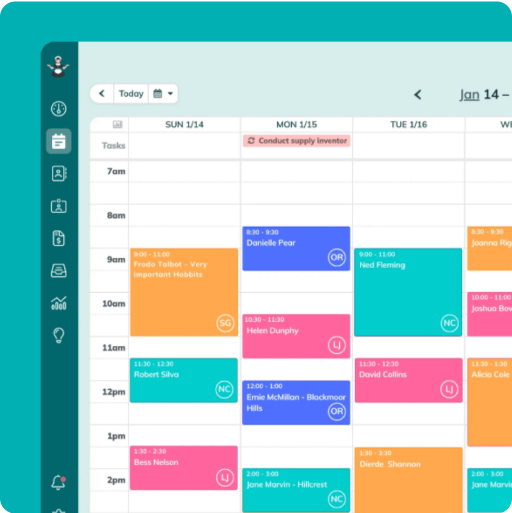
Simplify and enjoy your scheduling with a scheduling software made for maid services
- Have a beautiful calendar that's full but never stressful.
- Make your cleaners happy and provide all the information they need at their fingertips.
- Convert more website visitors into leads and get new cleanings in your inbox with high-converting booking forms.
- Become part of a community of 8000+ cheering maid service owners just like you.
Start your FREE ZenMaid trial today and discover the freedom and clarity that ZenMaid can bring to your maid service! Start your FREE trial today