Frustrated with your scheduling? Try the easiest-to-use calendar app, made by and for maid service owners.


Brought to you by expert maid service owners
Listen on: Apple Podcasts, Spotify or YouTube
The Problem with Timing and Estimating
Stephanie: Hello, everyone. Welcome or welcome back to the Filthy Rich Cleaners podcast. I’m your host, Stephanie from Serene Clean. Today’s solo episode is inspired by a pattern of questions I have been receiving in consulting calls as well as a post that I saw in the ZenMaid Mastermind on Facebook recently. As a reminder, if you are not a member of the Mastermind, I highly recommend you join it. You do not need to be a customer of ZenMaid to be a member. It’s a great place to ask questions, get advice, and just see what other cleaning businesses are doing, as well as just a great community to be involved with so you don’t feel so dang alone in this business ownership journey.
This topic is all about timing and estimating related to cleaners going over time and everything that has to do with the timing of appointments. I had a recent consult call where they were basically having situations at first time cleans, especially, where they lost their ass on a variety of first time cleans. I want to touch on that. I also want to just read off the post I saw in the Mastermind that inspired this idea.
Earlier this year, Made Believable posted: “We pay our cleaners hourly. How do you handle when cleaners go to a house and spend as long as they want with no explanation and not reporting it? This has made them late for jobs and customers start calling the office. We obviously have to pay for all labor hours, but there has to be a limit. Does anyone pay a flat rate or anything like that, or put a clause into how you pay them that if they choose to clean for free and not report it, they will only get paid for what the house is supposed to take. We want to be fair and honest to all employees, but there are some that take advantage. We do have a point system for bonuses, but it’s still new. Any advice is appreciated.”
Great question from Made Believable. This is a multifaceted problem that we need to solve. I’m going to touch on all of the different areas in this episode that we need to address. Anytime we’re talking about timing being off or cleaners not taking what you expect or anything like that, we need to address all of the different heads of the hydra and chop them off all at once.
Table of contents
- The Problem with Timing and Estimating
- Estimating Correctly First
- Understanding Your Production Rates
- Adjusting for Recently Maintained Homes
- Making Sure Cleaners Know the Approved Time
- The Communication Check-In Process
- Addressing the Problem Quickly and Disciplinary Steps
- Working on Cleaner Speed and Efficiency
- Enforcing Communication and Rewarding the Right Behavior
- Switching to Hourly and Closing Thoughts
Estimating Correctly First
Stephanie: First and foremost, let’s start with making sure that you are estimating correctly in the first place. This can happen oftentimes with newer owners, but can happen to all of us, especially if you charge flat rate on first time cleans. This problem is universal regardless of how you charge the client, because it really is just about estimating correctly — how much time is this cleaning going to take?
I know many of you are so gun shy about this and continue to do in-person walkthroughs and estimates. There is definitely a place for that, especially if you are a newer owner. However, you’ll still run into this problem. I’ve heard from many owners who still do in-person walkthroughs and the estimate of time is still off — meaning their cleaners are going to take longer than what they expected during the walkthrough process.
This is not a problem that is only specific to people who go into houses sight unseen or estimate without going to see the house. As a reminder, Serene Clean has not done in-person walkthroughs for residential homes since 2019 when we opened. I did that the first maybe month or so, and even then not all of them — most of the houses I still was not doing this. It is completely possible to estimate correctly without going to a house and seeing it.
This is where charging hourly or flat rate comes into play. Let’s put a stop on that for a moment and just talk about the actual estimating process.
Understanding Your Production Rates
Stephanie: What this means — and you guys know I’ve beaten this dead horse — is you need to understand your production rates. We are setting our cleaners up for success because the first layer here is: are cleaners taking too long, or did you estimate incorrectly on this initial clean or on these maintenance cleans? We always have to remember that that very well could be the situation we’re dealing with. It may not be the cleaners. It may be us.
There are a couple of hints that would suggest it may be a “me problem.” The biggest one is: is this happening often? Is a large percentage of your initial cleans going over? I know a lot of people are like, “Yeah, this happens a lot, but it’s okay, we’ll make it up on maintenance cleans.” No, no, no. We need to be adjusting our estimating tools to reflect what is the actual reality of your production rates.
Production rates is simply how fast does your team clean on average in a typical home. We want to make sure we have production rates for multiple types of cleans, depending on what you offer. At Serene Clean, we have production rates for three types of cleans: initial cleans of homes that are occupied (the typical residential home), cleanings of vacant homes — so move-out cleans, because those homes are empty and we’re also doing deep cleanings — and then maintenance cleans. Maintenance clean production rates can vary a bit depending on how people live, the circumstances of the home, how many pets, how many kids, how they keep up with the house, that type of thing.
What we’re really looking for is averages, and this is simply based off of your data. Right now, most likely you have a pile of information and data that you could pull from and do a little audit to reflect the actual reality of your production rates. We need to make sure that we are scheduling and pricing enough time for the appointment in the first place before we jump to “oh, our cleaners are moving too slow.” That very well could be the case, but we need to do our due diligence to ensure that we are setting them up for success and scheduling enough time.
This absolutely happened multiple times when I first opened Serene Clean. I thought our production rates were going to be faster than what they are, because I knew how fast I could clean and I was pretty quick back in the day. Once I started hiring people and realizing how fast they were actually cleaning, I had to adjust my estimating.
As I’ve always said, I’ve always done hourly. How we do it is we always give a range to the client — two hours, for example — just to give them an idea of what we believe it’s going to take based on the information that they provide. We use a lot of protective language in our estimating process to say this is based on the home’s typical condition and the size of yours, and the price may need to be adjusted based on things taking longer, buildup, etc. We’re going to communicate that to you along the way. That’s going to solve the problem later in the episode — the cleaners not communicating — but I digress.
We always give a range based on what they provide in that initial booking form — the ZenMaid booking form they fill out on our website. We base that off of all of the data we have from our previous appointments where we’ve calculated how long it takes for us to clean a first time clean and how long it takes to clean a maintenance home. You can literally just create a spreadsheet and start doing the math and you’ll start to see patterns and averages.
I used to think our initial cleans of occupied homes would be around 250 square feet per hour. All I would do is take the square footage of the home, divide that by the production rate of 250, and there’s your hours — then give them a range. We consistently kept getting to the point where cleaners would get through the approved amount of time and it wasn’t enough. That was the clue. It wasn’t the cleaners moving too slow. Our production rates were not accurate or reflective of what we could actually get done in that time based on our scope of work.
As a reminder, everybody does different tasks in homes. You may follow the same exact task list or you may have a completely different package system — this is very bespoke to your business. That’s why it’s so important that you run your numbers and see what is typical in your home. For us, we realized that initial cleans of occupied homes are actually around 150 square feet per hour. That allows us to estimate enough time, set our cleaners up for success, and not have to continually ask for more time at an appointment. It does happen, but it’s very few and far between.
In the beginning, especially if you’re within the first couple years of your business or just getting other cleaners, you need to be checking these numbers often to really hone in on what that actually looks like for a first time clean or maintenance cleans as well. If you are consistently not having enough time for your cleaners — and it’s across the board, across the company — then you are estimating too low. All you need to do is: the next first time clean that comes your way, bump 250, try 200. Divide the square footage of the house by 200 and there’s your hours.
Remember, if you charge flat rate for first times, this concept works too. No matter what, you need to know how many hours to schedule on the schedule for scheduling purposes, regardless of whether you charge flat rate or hourly. You still need to know how many hours you think it’s going to take, and that is what you’re going off of for your profit as well.
So that is the first thing I want everybody to consider: are my production rates accurate? When is the last time I did a little audit and looked at what our actual production rates in homes are? And especially if you have a decent-sized clientele for maintenance cleans, this is super useful. You can start to see patterns — these clients all have dogs and we move a little bit slower because of that. On your intake process you’re taking all this information in and you can look at patterns of behavior in your previous houses.
There are some great pricing tools and calculators out there. If you charge flat rate, I believe Rescue My Maid Service has a pricing calculator. I know a lot of people create their own, and now with AI it is so easy to create pricing tools or just a pricing chat in ChatGPT or Claude or whoever you use to help you create a calculator. Or you could literally just tell it to make you a calculator in Google Sheets. It’ll be using your numbers and your data, so highly recommend just bootstrapping this yourself and making it your own.
Adjusting for Recently Maintained Homes
Stephanie: One other thing I want to address is something I ran into recently where a consulting client was losing a lot of first time cleans because the client had recently had a cleaner and was switching. If your client just recently had their home cleaned and has had a regular cleaner, we do take that into account for the initial clean and we will bump down the estimated time if it has been maintained.
We all know we have all walked into a home that has apparently been getting maintenance cleans and needs a full initial clean — we’ve had that happen, of course. But more often than not, it is at least some semblance of maintenance level if we’re just picking up the routine they left off.
We like to give still a buffer. So if they said their normal cleaners always took four hours, at that initial clean I would still suggest scheduling for six hours, just in case there are details and things that we want to bring up to our high level of standard. We are new to your home. So instead of giving them an initial clean price of 20 labor hours and having them say, “My house is clean, what are you talking about?”, you can adjust it. It doesn’t need to be a hard and fast rule. There’s a reason you’re switching, and if it’s quality related, it is going to take us longer to clean because they were not cleaning up to standard.
Making Sure Cleaners Know the Approved Time
Stephanie: All of that said, we want to make sure that we are scheduling enough time for our cleaners to actually be able to get the job done. This transitions into point number two: making sure your cleaners are aware of how much time is approved for this appointment.
One of the mistakes I used to make with maintenance cleans is I would not put in the notes that this job should be done by this time. We would have situations where cleaners would hit the scheduled end time, wouldn’t be done with the house, and then they would basically tell us at the end what they were able to get through. They would leave. We would find out after the fact, and it’s like, well, that home was supposed to get done. Now we’re going to have a pissed off client because you left.
It’s almost like the flip side of the coin — they’re like, “Oh, I knew it was only approved for four hours so I stopped cleaning at four hours,” instead of us being able to interject. Because of lack of communication, we were not able to adjust the situation. What we would have done is said, no, finish the home. We will talk about this after you get the house done, but you need to get that house done. If it’s been a maintenance clean for six months and cleaners have always gotten it done in four hours, stay the extra 20 minutes and get it done. We will not charge the client the difference, but then we will address it with the cleaner after the fact.
I want to make sure that you guys are making it clear to your staff what the appointment is approved for, and not just by what is on the calendar. A lot of times, especially at maintenance cleans, we have multiple cleaners on it. Whatever is on the schedule in ZenMaid — say the cleaning is from eight to two and we have multiple cleaners — we explicitly say in the notes on the appointment: “Tina from eight to two, Sally from eight to noon,” because maybe Sally’s got another appointment she’s got to get to. We are adding cleaners up to the approved man hours so that we can get to that approved man hour.
Some of you, I’ve seen your ZenMaids — you are literally just putting in a half an hour cleaning and not having it actually reflect the true appointment length. If we have multiple cleaners and a lot of different things going on, we want to always spell out: this person is here for this many hours, this person is here for this many hours, this job is approved for 16 hours and is scheduled for 16 hours.
No matter what, all cleaners need to explicitly know what they are approved for on time, regardless of whether you charge hourly or flat rate, regardless of how you pay them. We need to make sure they understand this is what the job is supposed to take, and if it’s going to go over, they need to communicate that.
The Communication Check-In Process
Stephanie: When it comes to the communication side, you need to have some type of check-in process halfway through the clean. This is going to be reflective of any clean — whether this is an initial clean, a move-out clean, or a maintenance clean. They are supposed to check in if necessary, meaning they don’t think they are going to get through the home in the scheduled approved amount of time.
Regardless of what the clean is, they are instructed to always start in the kitchen and the bathrooms. Once they’re done with those, take a second and think: look around the house and ask, do I have enough time to get through the rest of the house in the approved amount of time? The reason we do it at this point and not at the end is so that we in the office can make adjustments if necessary. That may mean we need to reschedule something in the afternoon because it’s going to take longer. It may mean having another cleaner show up. It may mean reaching out to the client if we need to get more money out of them because the cleaning is taking longer for an approved reason — not because the cleaner is super slow because they’re newer, in which case we’re going to eat it.
We need them to check in at this midpoint so that we have time to adjust, and it’s also not a nasty surprise at the end of the day when we can’t get ahold of the client because they’re at work or in meetings. We need time to communicate because they may not be at our beck and call.
So for the situation of cleaners going to a house and spending as long as they want with no explanation and not reporting it, this would address that. Halfway through the allotted approved time, whether it’s a maintenance clean or a first time clean, have them check in with you. If it’s scheduled for four hours, eight to noon, right at 10 a.m. they should be checking in and letting you know, “Yep, we’re on track, all good to go.”
If you are having cleaners where this is a problem right now, that is something that you could introduce as a mandatory rule across the board for a time until the problem is solved, or on certain cleaners you could just put this on. This may not be a problem you have with some of your cleaners, so you don’t have to do an across-the-board rule. But if you have a kind of bad egg when it comes to timing, you could put a rule in place: halfway through the scheduled clean, you need to check in.
You could provide them some tools to do that. Tell them when they clock in on ZenMaid — or however you have them clock in — have them set a timer for the halfway point of that scheduled clean. If they get to the job at 8 a.m. and clock in, they set an alarm on their phone for 10 a.m. At 10 a.m. it goes off and they think: am I halfway through the house? Am I going to be done by noon? That is something I would put in place if you’re having a problem child when it comes to consistently going over.
I know it sounds administratively heavy, but the check-in is really only happening if they don’t think they have enough time. Especially if you have a newer cleaner, it’s good to just say: check in no matter what, how are you feeling, how is it going? But for us it’s more of a mental stopping point — am I good? Can I move on to the next areas without needing more time?
Addressing the Problem Quickly and Disciplinary Steps
Stephanie: You also need to be quick about addressing the problem. What I mean is a very fast feedback loop. If this is happening on a Thursday, you don’t wait until Monday to talk about it. You literally address it on Thursday after it happens. Say “hey, this needs to be — in the future, be sure to do this, this, and this.” Then maybe put in a timer or whatever you want to do there. But you need to address things in a quick manner, and the faster we can close that feedback loop — thing happens, we address it, we provide the feedback — the better opportunity they have to learn because it’s happening right now in real time.
If we wait until next week to sit them down and explain it, that can oftentimes be too late. In that same situation, you’d send a message that same day — Thursday — and it may not even be in person. It most likely isn’t going to be in person. It’s going to be a message like, “Hey, can you explain to us why you didn’t communicate this? This is the expectation.” They say whatever they say. “Okay, going forward, be sure to do this.” And then at your Monday team meeting, you address it. This is something you’ll continually have to address. They’re going to forget, and especially as you’re bringing new team members on, this is going to have to happen often.
This problem is going to be, of course, much more common when you pay hourly. If you pay percentage or flat rate, this is not a problem you’re going to run into as much because you’re incentivizing them to haul ass. As I’ve mentioned in previous episodes, you have to think about it like putting up protective barriers or bowling alley bumpers to protect from the ball going into the gutter. Whatever the situation is of how you pay and how you charge is going to determine what you’re putting the bumpers up for. When you pay hourly, the bumpers you put up are for cleaners moving too slow. When you pay flat rate or percentage, the bumpers you put up are for cleaners moving too fast and quality dropping.
We need to put bumpers in place for both of those situations. When you pay hourly, we make sure we have the approved amount of time listed. We make sure we have a very fast feedback loop if they do not communicate. They will get disciplined. They will get written warnings for this and they will get their potential raises docked because of this — because of lack of communication. For us, this is just a policy infringement. They’re expected to check in halfway through and let us know ahead of time that they are going over. If somebody goes over and does not communicate that to us, they are going to get in trouble for that because it affects everything, it literally affects everything.
And then for us on the quality side, as you guys know, we have a policy in place that if we get a call back and we have to send a cleaner to fix something because the first cleaner did not have good quality, the first cleaner is going to get docked to minimum wage for the time it takes to fix those mistakes. So if I have to send another cleaner for two hours to re-clean, the first cleaner gets docked to minimum wage for two hours on their original appointment price. That is how we protect the quality side of things.
For Made Believable’s question about putting a clause where if they choose to clean for free and not report it, they will only get paid for what the house is supposed to take — I don’t think that’s legal for W-2 employees. I could be wrong, don’t quote me here. But I do not believe that even if the employee is in the wrong, if they are working, you can’t not pay them for that. You could certainly have a clause where anything over the approved time is bumped to minimum wage, but they have to be making at least minimum wage. And for some of you listening, your minimum wage is very high. For us in Wisconsin, it’s super low — which I’m not saying is a good thing — but for incentivizing the behavior we want, it sure is. If there’s a big gap between what your minimum wage is in your state and what you pay your typical hourly rate, that can be a good incentivization tool.
No matter what, even if you are an at-will state, you need to have them sign off on anything that affects their pay. For us, that quality re-clean pay situation — they sign off and agree to that when they come on board. If you’re going to do something like that for going over approved time, when they come on board they need to sign off on it.
Working on Cleaner Speed and Efficiency
Stephanie: If it truly is the cleaner — they’re not moving fast enough and not communicating — that is where you start disciplining. Lack of communication is a consistent problem I have seen over years of business. This is something you’re going to have to reiterate time and again.
And honestly, it’s about helping them remember to do this. A lot of times they’re just in the zone when they’re cleaning. If we’re having a cleaner really struggle with timing, we’re going to send them back through training and we’re going to be timing them in rooms. Our training process, towards the latter half, has them cleaning independently with a trainer in the house. Each of them has a stopwatch that goes off every 30 minutes. The trainer is checking in and checking on pace. It’s obviously checking on quality too, but: “This room should take this long. The goal for this bathroom is 45 minutes. Let’s see if you can hit that.”
If this is an issue with your cleaner’s speed, you could address it in certain areas of the home — maybe they take too long in bathrooms or kitchens — or maybe they’re just generally moving at a glacial pace. We can work on speed. We can work on that with a trainer or a seasoned cleaner observing and giving them goals. Sometimes it’s very useful to have them with another cleaner or independently, telling them: this is what these rooms should take. A lot of times it can also just be: stop listening to audiobooks, they make you move slow. Put on some EDM and let’s go. For me, anytime I had a full cleaning, you bet I’m putting on really fast-paced music — it just makes me go faster. If I’m in a hurry, I can’t listen to audiobooks or podcasts; I need fast music.
It can also just be looking at efficiency and watching them clean. Are they doing something inefficient? Are they working in the most efficient manner? This should have been caught in training, but sometimes people skirt out of training and you have to re-watch them. A lot of times it’s simply that they’re just moving slow — not necessarily an efficiency problem, they’re just kind of slow.
Giving them estimated times per room is helpful. In our cleaners’ little binders, they do have a sheet with the estimated amount of time for rooms in general. A first time clean of this type of space should take this long — that is obviously a generality. We’ve had ensuite bathrooms, master bathrooms, where they take an hour and a half every time because of a huge walk-in shower, giant tub, multiple vanities — these bathrooms are bigger than kitchens. So that’s an exception to the rule, but in general we do have expectations for spaces: half baths, full baths, kitchens on first times, kitchens on maintenance cleans. I’ll try to remember to link that down in the show notes for you guys as a little freebie, just to give you an idea. And again, remember this is in general — a lot of homes don’t fall within it, but it’s something for them to aim for.
Also, go to AI. Go to AI and ask what is expected, or just post in the Mastermind: “How long does it take you guys to do X, Y, Z?” And again, it really depends on what you include in your package versus what I include in my cleaning checklist. We’re super thorough, so maybe our times take a little bit longer. That’s where production rate audits really come into play.
Enforcing Communication and Rewarding the Right Behavior
Stephanie: This problem can be solved mostly by enforcing the communication that you would like to see, rewarding the behavior that you want, and not rewarding the behavior you don’t want. There are so many things we need to just hit time and again because people forget and get a little lazy.
As you bring new staff on, you’re going to be dealing with this. For us, this communication problem is almost always with newer staff, and it often tends to be with younger folks too. If this is one of their first jobs, they do not communicate very well. You may have to be a lot more proactive.
Something I’ve seen as a pattern for us is we’ll gripe about it as a management team but then not address it immediately with the cleaner. We’ll be like, “Oh, they did this again,” and then say nothing. A lot of this has to do with: are you saying something as quickly as possible immediately after the appointment? If you’re seeing a pattern and clocking it, set reminders for yourself. If Sally’s at this house and she should be halfway through, and she hasn’t checked in with you by noon, reach out to her. Instead of waiting for the problem to happen, you can catch it. Do that once, then let her do it herself the next appointment. You’re training them. You’re trying to make them successful and teaching them the skill of communication.
Keep pestering them, keep reminding them. When they don’t do it, then we can start looking at write-ups and affecting their future pay. Keep talking about why this is so important in your team meetings. That’s why I’m such a fan of regular team meetings — so we can address this kind of thing. That’s also why I’m a fan of having a full team chat in some flavor, not just talking individually to cleaners when they have issues, but reiterating just as general housekeeping on a regular basis these types of issues and why they’re so important.
The biggest thing is just that quick feedback loop immediately, right after the appointment. I am not at all dismissing the difficulty of what I am suggesting when you yourself are in the field or you are the only admin person — it is much more difficult. This is a hard thing to nip in the bud when you’re going crazy. But I’m such a big fan of looking at the schedule at the beginning of the day, pulling up your phone and setting alarms: check on Cleaner A, check on Cleaner B. Especially if you have first times.
Also, if you run teams — this is something where if a team goes over by half an hour and you’re paying hourly, all of a sudden that’s an hour’s pay between the two of them. Things start to add up very quickly with teams and they can tumble out of control. So whatever systems or requirements you need to put in place, do so. It may just be temporary until they remember and get the habit down.
We’re keeping an eye on it during the day and checking halfway through. They are supposed to be checking in with us, but if it’s past halfway, we will reach out. We don’t wait until the end. We really want to nail that first time clean especially. But for maintenance cleans, if this is happening and pushing back the next cleans of the day, of course this is a big deal.
A little caveat there: we do not promise our next cleans — the second or potentially third appointments of the day — a particular start time because we give them a wide window, unless the client requires it. That makes it more challenging. If somebody requires a specific start time, we prefer them to be the first client of the day because we’re going to be there right at 8:30. Anything faster than about half an hour, we ask the client if we can go earlier, because they may not be home and there are a lot of things. We like to over-communicate, both on the tech and the client side, so that nobody is upset. We’ve had clients upset because we don’t let them know we’re going to be hours early — and that typically happens because the first client of the day cancels.
As you can see, proper communication on all levels really is one of the most challenging aspects as you continue to grow your business. I would say that overarchingly, half of our stress on a day-to-day basis would be solved if everybody just communicated effectively — proactively, instead of waiting until after the fact or just not saying anything at all.
Switching to Hourly and Closing Thoughts
Stephanie: I want you to address the problem and put something into place that will protect you, whether that be bonuses that they will see on the next check, or that they will get docked. Check the laws in your state as to what is legal. No matter what, even if you are an at-will state, you need to have them sign off on anything that affects their pay.
Don’t be afraid to switch to hourly, at least for the time being for initial cleans, until you get your production rates to an accurate level. You can always go back to flat rate if you want, but for the time being, why not do hourly for a bit, at least for initial cleans so that you’re not losing your ass and you’re able to check your times. You can always add more time and more hours or ask for that approval from the client.
For us, if we don’t get an initial clean done, it’s not as painful to the client as it would be if we charged flat rate, because we’re not necessarily promising the job done — we’re promising we will work for 16 labor hours. And obviously we want to get done and we hope we’ve done our due diligence and our estimating is correct. But it does protect us in that situation where the job is going longer than expected and we have reasons. If you charge flat rate and you have actual reasons of like, “Hey, this is beyond what is typical,” you can ask the client for more money. But I’ve found that it feels a little ickier to them than if you charge hourly and just say, “This is the time it’s going to take to get these tasks done because of XYZ,” or, “We can leave off these areas and get to them at the first maintenance clean.”
I really like hourly for first times. You can also do a hybrid method — hourly for the first time, maybe hourly for the first maintenance, and then go into a flat rate model because you’ve confirmed what the maintenance clean price is going to be. There are a lot of ways to be creative with pricing. It doesn’t need to be all flat rate and it doesn’t need to be all hourly. I would just suggest not pricing by square footage — I’ve done a whole episode on the pros and cons of different pricing types. Every square foot is different in every type of house, so that’s why I don’t like it.
I hope that this has been helpful to you guys. Let me know any further questions down in the comments. If you have made it this far, thank you so much. Leave me a little black heart emoji down in the comments because I am wearing black and white today. Give this a like and please subscribe if you have not done so. If you’re interested in meeting with me, that’s serene-clean.com/consulting-services, and my bundles are there as well. I have many different documents available for purchase.
We have 100-plus episodes of hours and hours of free content for you guys to learn from, with a lot of great guests. We’d love to have you as a subscriber. And as a reminder, the Mastermind community is there for you on Facebook too. Definitely give the newsletter a subscribe — that’ll be linked down below. ZenMaid puts out some fantastic email newsletters every single week with tons of educational content, completely free. You don’t have to be a ZenMaid customer. So great place to learn is this community, and I’m happy to have you here. I’ll see you on the next episode of Filthy Rich Cleaners. Thanks, guys.
Note: This transcript has been edited for clarity and readability.
Resources Mentioned in This Episode
- ZenMaid
- ZenMaid Mastermind on Facebook
- Rescue My Maid Service Pricing Calculator
- Serene Clean Consulting Services
- ZenMaid Newsletter
QUICK TIP FROM THE AUTHOR
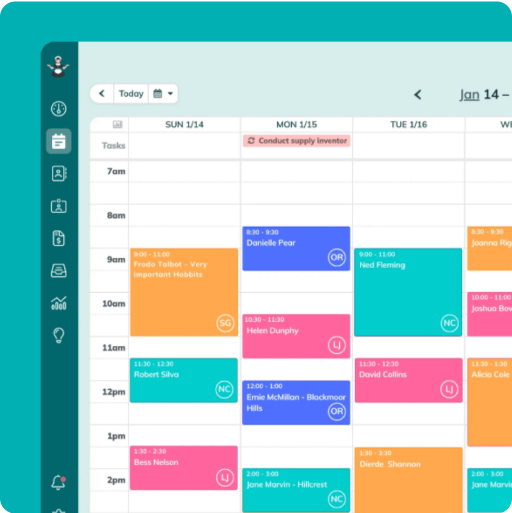
Simplify and enjoy your scheduling with a scheduling software made for maid services
- Have a beautiful calendar that's full but never stressful.
- Make your cleaners happy and provide all the information they need at their fingertips.
- Convert more website visitors into leads and get new cleanings in your inbox with high-converting booking forms.
- Become part of a community of 8000+ cheering maid service owners just like you.
Start your FREE ZenMaid trial today and discover the freedom and clarity that ZenMaid can bring to your maid service! Start your FREE trial today