Frustrated with your scheduling? Try the easiest-to-use calendar app, made by and for maid service owners.


Brought to you by expert maid service owners
Listen on: Apple Podcasts, Spotify or YouTube
Introduction
Hello everyone, welcome or welcome back to the Filthy Rich Cleaners podcast. I am your host, Stephanie from Serene Clean. And today’s episode should be going live on New Year’s Day, 2026. So a very happy new year to all of you. I hope you had a wonderful holiday season and it wasn’t too chaotic for you. I know for all of us cleaning business owners, it typically means a lot of chaos trying to fit in the same amount of appointments into less time slots because obviously Christmas Day, New Year’s Day, if we’re not cleaning those days, which most of us are not, we got to push all the appointments and smush them together. So a lot of long days for a lot of us. And I hope that you guys were able to rest and recuperate as well as do some reflection.
And that is what this episode is going to be about because in last solo episode, which was the 100th episode, I did a timeline, kind of storytime-esque style of episode going through the cluster that was 2025, the highs, the lows, the craziness that occurred, unprecedented chaos I would say when it comes to the situations that we were given.
Table of contents
- Introduction
- Setting the Stage for a Proactive 2026
- Serene Clean’s Revenue History
- The Reality of 2025
- Using Data Analysis to Understand What Happened
- Setting Goals for 2026
- The Data Sources
- A Note About Feeling Overwhelmed
- QuickBooks Revenue Data
- ClickUp Client Status Tracking
- Residential Conversion Data
- Commercial Operations Data
- Gusto Payroll Data
- ZenMaid Appointment Data
- Operational Assumptions
- Key Findings from the Data Analysis
- The Management Team Meeting
- The Report: What Actually Happened in 2025
- Understanding What We Were Already Tracking
- Transitioning to What We’re Doing with the Data
- The PTO Policy Problem
- Weekly Operations Meetings
- The Specific Goals
- Looking Forward, Not Backward
- Commercial Account Goals
- Protecting Availability and Hiring Strategy
- The Missing Metric: Monthly Recurring Revenue (MRR)
- Why MRR Matters
- Converting First Times to Recurring Clients
- Stephanie’s Role in Sales
- Commercial Account Procurement
- Additional Metrics We’re Tracking
- Understanding the Lead Data
- Water Cooler Time with Management
- Leadership Reflection
- Stephanie’s Strengths: Sales and Marketing
- Using AI and Therapy for Reflection
- Personal Finance Goals
- Closing Thoughts and Community
Setting the Stage for a Proactive 2026
And I didn’t want to just leave it at that. That felt like there were some stones unturned because over the past couple of weeks, I have been deep within the data and going over exactly what happened in 2025, setting realistic goals for 2026 and focusing on the systems and metrics that are going to make us hit the goal that I have set.
And so to put it out there, because you know I like to be upfront with you guys, I don’t like to just talk about fluff or just be aspirational or inspirational and be very vague about things. I want to actually talk about numbers and metrics and data and showcase to you guys it’s not always rainbows and butterflies. I think you understand that from the last one that we did. It’s not all just fantastic. And this year we shrunk, we shrunk a significant amount, $120,000 to be exact, less than what we brought in last year.
And so saying that it can really feel like a failure when framed as, “Oh no, this just happened to me, woe is me. I guess this is just what it is and move on.” Whereas I really wanted to take the opportunity to fully grasp and understand exactly what happened and why it happened so that we can game plan and make sure that it doesn’t happen again. Rather, we completely turn the ship around and start growing Serene Clean again.
Serene Clean’s Revenue History
So what I’d like to do first is just a quick, brief little section reminding everybody the revenue levels of each year since Serene Clean opened, so you can understand kind of the trajectory that we were on that really went awry this year. And I am going to explain why it happened, what happened, all of that good stuff. But let’s just go over the numbers as a reminder to keep everybody refreshed.
So I opened in April of 2019 and so we finished out that partial year at $58,385 in revenue. So not too shabby for less than a year. The second year, 2020, COVID hit in March of 2020, yet we still managed to grow the business quite significantly to $339,000 in revenue.
Now, 2021, we leapt up a crazy amount and we actually hit $1,510,000 in revenue. And I know you might be thinking, what the heck Stephanie, how did you hit $1.5 million by year three? And that is because we had that really large once-in-a-lifetime military contracting job that occurred for six months. And it spanned half of 2020 and partial of 2021. Well, not half, but six months was this project and it crossed 2020 and 2021 calendar years.
So that really, of course, not artificially inflated. That money happened. That job happened. I was there. Yet it’s not actually what I like to base, you know, Serene Clean’s true trajectory or growth because it’s not something that I can replicate. It’s not something that I’m thinking, oh, we’re going to keep doing that year over year. I mean, that is the goal, of course, but I didn’t hold us to that in, say, 2023 after that job was complete.
So the job finished in February of 2022, so that meant that that year’s revenue was also high. So we ended 2022 at $1,558,000. So actually a decent amount still higher than 2021, so $1,510,000 to $1,558,000. So still a good jump from the previous year, despite not having as many months at that job. So we had great growth in the normal side of Serene Clean as well.
So from 2022 to 2023, we dropped, but I don’t consider that it wasn’t actually a business drop because the normal side of Serene Clean grew significantly as well. And I didn’t break down without that big contracting job, but we ended up going on in 2023, we hit $1,264,000. So that was true blue, all right, this is now where we’re at and we’re going to keep growing from there.
So then last year, we grew to $1,386,000. So from 2023 to 2024, we added about $120,000 in revenue. That’s a great amount of growth, very pleased with that. And so my goal coming into 2025 was to hit $1.5 million. I thought we had it in the bag. I thought considering the previous year’s growth, there’s no way we don’t hit $1.5 million because we would just have to add another $120,000 and we did that the previous year. So I was thinking if we just have that same amount of growth that we had the previous year, we’re going to be golden, we’re going to hit $1.5 million.
The Reality of 2025
And boy, was I wrong. Not only did we not hit it, we actually went backwards $120,000 and we are going to be ending the year at pretty much the same place we were at in 2023, $1.26 million. So we are a couple, we got a couple more days of the year still when I’m recording this, of course, because I don’t record this the same day that this goes live. But that is where we are going to end up is right around that $1.26 million. So literally went backwards the same amount that we grew from 2023 to 2024.
And in January and February of 2025, I really was thinking we are on track, we’re adding commercial accounts, we’re having big leaps, everything just felt beautiful and wonderful. And who was that naive girl back there just being hopeful and optimistic? How dare she? Because what then occurred, as you guys know, was the biggest cluster I have ever experienced in a year. Just crazy situations, just unprecedented, unfortunately unprecedented leads, the highest leads we’d ever experienced, meaning the sheer number of leads. Just so many leads and nowhere to put them. We couldn’t book any of them hardly because of the insane amount of turnover.
So that is where we are at for 2025 is we shrunk a lot. It was quite disappointing when I’m just looking at the numbers. However, if I really zoom out and look at what was accomplished this year, literally record lows of complaints. I mean, we had 0.03% complaints, I believe. I think we had 30 total in the year. And you know, obviously that was, gosh, I should have pulled the numbers for that for you guys, of course I didn’t. But insane quality, fantastic quality. Our training program was great. So we were not dealing with a big mess when it came to quality. So that was such a relief because I think we would have all just jumped off a bridge if we had to deal with that too. But we did not, so that is a good thing.
We learned a lot this year and we realized that we no longer could operate in a lot of areas the same way that we had previously done. And not only that, I think that we really went into survival mode and we did the best we possibly could given the circumstances. And now reflecting, of course, there’s things that I would have done differently personally. I feel that we were being incredibly reactive, which makes all sense because a lot of crazy things were thrown at us. But now I want to turn and be a lot more proactive in 2026.
Using Data Analysis to Understand What Happened
And I’m going to explain exactly what that means. But the first thing that I want to go over with, how did I really analyze all of this information? And where was I pulling from to understand fully what the heck was going on? And so, of course, I turned to ChatGPT. But I did not just say, ChatGPT, what happened? I think this happened, or I felt this happened, right? I wanted to provide as much raw data as possible so that it could help me understand because I truly felt that I felt very disjointed with the data that was available to me, meaning okay, I’m seeing the numbers here in QuickBooks. I’m seeing things here in ZenMaid. I’m seeing things here in ClickUp. I’m seeing things here in Gusto, right? All of these different places that we have all of this data about what’s going on.
And as you guys know, you know, I have for years and years and years, a lot of different metrics. And each year I continue to add more metrics. And I have discovered that there has been some key metrics that I have not been tracking. And I knew I wasn’t tracking one of them, but I didn’t realize the true impact of not tracking that one until just this past month. This past month is when I really realized once I started actually tracking it, oh shit, this was important. I should have been tracking this all but I wasn’t and being kind of blinded to truly how much the business was shrinking, specifically because we continued our large revenue federal account that we’ve had now for a couple of years.
And once the government shutdown happened, and that revenue was taken away, it really showed me, whoa, the normal business shrunk without that large account, kind of camouflaging that shrink, we really shrunk. And I just didn’t really realize it until we hit such low revenue. Let’s see, that would have been November. November was $85,000 in revenue, which because we could not invoice that $11,000 or $12,000 account, the shades were ripped out in front of me. And I could see clearly, holy crap, we have shrunk a lot, what is going on.
Setting Goals for 2026
So that really, I guess, lit a fire under my ass to start digging in and understanding exactly what happened. So I first want to tell you guys the types of reports that I was feeding to ChatGPT so you can kind of understand how I went about this data analysis. So first and foremost, we always want to prompt our AI with what exactly we are expecting of them. So I told ChatGPT, I started a new project called Serene Clean Data Analysis. And I said, you are a world-class data analysis and your task is to figure out exactly why it is that Serene Clean shrunk so significantly. I want to understand the reasons for this to make it very clear as to what we need to do going forward to prevent this and in fact reverse it and grow back to where I want us to be.
And spoiler alert, my goal for 2026 is to, by the end of the year, be at $125,000 a month in revenue, right? So I’m not expecting that right now. So on average, so that you guys know, our average revenue for 2025 each month was $105,000 in revenue. And so that is significantly under, it’s $20,000 less on average per month, what we need to be to hit $1.5 million in revenue, because to hit $1.5 million, we need to be at $125,000 a month. So there’s a $20,000 gap, right?
And at the beginning of the year, we were starting out strong. We were growing towards that the first couple months and then things started to plummet. We lost several key commercial accounts and I’ll talk about that. But that is the numbers that I’m looking at. That is my goal for 2026 is not that we hit $1.5 million in 2026. I think that that is a bit unrealistic coming from $1.26 million. If we’re at $1.386 like we were in 2024, now with the knowledge that I’m going to be sharing with you guys and the things that I’m going to be tracking and watching and the actions that I’m going to be taking in 2026, I think we could hit $1.5 million.
Really, my goal is to build our revenue up over the year of 2026 so that by December, we are at $125,000 a month. And hopefully we hit that much sooner than December, but that is the end goal. And I will be tickled pink if we hit that. And anything over that is going to be icing on the cake. So I do not expect us to hit $1.5 million. The goal is to get our revenue to the point that in 2027, we will hit or surpass $1.5 million, right? So that is what I am looking for, for our goal.
The Data Sources
And this is first we’re going to go over what I fed ChatGPT to understand why the heck we shrunk. And then we’re going to go over what I’m going to do in order to make this goal happen. Okay, so the data that I was pulling was from multiple places. And so first and foremost, I hope this lesson, the lessons that I’m talking about here, just reiterates and hammers home for you guys that you have to be using different softwares or at least spreadsheets, tracking different metrics, just the basics, right?
And when we are accepting payment from all over the place, or we are accepting cash here, or anything along that line, it’s going to make it so difficult in the future to look back and do any data analysis to understand what the heck is going on, because it’s not clear and you can’t easily give it to AI. If I didn’t have all of this organized in the way that I’m describing to you and had these systems in place for years, then I wouldn’t have been able to understand this because I wouldn’t have had it compiled even to give them a raw report, right?
So that is why you want to have a bookkeeping software, or at least, you know, Square or Stripe somewhere that you are invoicing or receiving the money, right? We don’t want to be receiving the money all over the place, because it’s going to be really hard to understand. So if you cannot easily pull a report somewhere and understand how much revenue you are bringing in each month and each week, each day, it’s going to be really difficult for you guys to do any high level analysis of what’s going on and strategize because we don’t even know how much money we’re making. We don’t know how much money we’re spending potentially.
A Note About Feeling Overwhelmed
So that needs to be the first goal. So I’m going to just first and foremost say this episode may be very overwhelming and that is not my goal at all. What I am trying to showcase to you guys, also Jenny’s shadow is so ominous. It looks like I got a demon over there. Oh, no, just a cat. Just a cat, not demons. I mean, I got demons inside of me, but we’re not talking about those today.
Okay, so point being, this may be overwhelming, because I was overwhelmed looking at all of this stuff, and I’m trying to describe it in a way that is as clear as possible and not overwhelm you guys, but I want you guys to understand where my mind is at and what I am trying to do to take Serene Clean to the next level. And you guys can take whatever lessons that you can from this, of course, and know that Rome was not built in a day. I am six and a half years in and I am just doing a lot of this analysis now. And I’m adding certain KPIs that I never tracked before that I was totally blind to. And it takes years. So it’s don’t expect perfection out of you guys, because perfection does not exist. All we’re trying to do is learn and do better.
Okay, just like I mentioned, our revenue numbers, I am not sitting here complaining that I had a $1.26 million cleaning business in 2025. I am not complaining about that. What I am doing, I’m comparing me to me. I’m comparing what I was last year to what I was this year and what my business and what was happening in my house. All right, so it’s not that I’m ungrateful for this. It’s more so I want to push myself to my and I want to push my business to its potential. And so I know what its potential is. And now I wanted to understand why the hell it didn’t hit that. Not only did it not hit that, it reverse unoed me, right? So why the heck this happened? Back to the data. What data did I give to ChatGPT?
QuickBooks Revenue Data
All right, so first and foremost, I started pulling things from QuickBooks. So we invoice all of our customers in QuickBooks, which makes this very easy. Again, if you just do this in one place, whether that be Square, Stripe, however you want to invoice, I don’t care. We just have always done it in QuickBooks. So I pulled the income by customer summary for 2024 and 2025 so that it could break down and see the money of each customer as well as which customers did we not bill in 2025 that we billed in 2024.
I also specifically pulled August of 2024 because that was our highest revenue month to date outside of years ago with that big Fort McCoy job. So 2024 in August, we hit, I think, $123,000. And so that to me was peak. I was like, this is when we were doing really great. So I wanted to make sure I had that data to understand, what is it that we were doing so well in 2024 in August specifically that we are not doing in 2025?
I also showcase the invoice tagging by customer type and frequency for 2025. So April, my amazing payroll manager and accounts manager, she tags all of our invoices in QuickBooks by the customer type. So that is going to be residential, first timer, reoccurring, commercial, vacation rental, and then gift certificates, which are so minimal, hardly even count them, right? And so she already is doing that.
What we added in December so that we can understand even more nuance is going to be the frequency tag. So frequency of that customer’s appointments, whether that is a weekly residential, a biweekly residential, a monthly residential, or sporadic residential, and of course, a one time. So that could be a move out or a first time, right? Or if it’s commercial, what is the frequency of that? And the reason that we’re starting to tag that as well as one, it just takes a minute. And then even if I don’t know exactly what I’m going to do with that data, I would rather have the data than have to go back and re-tag months and months and months of invoices.
But really what we’re trying to understand is, okay, last month, how much of the revenue was from monthly reoccurring? And then, okay, we know we had X amount of clients that were monthly. Well, now we know our average monthly, you know, reoccurring residential revenue. So that data is very important. Like how much money does each client bring in, right? So that is a tagging that we are adding in addition to our type. We are also adding frequency.
ClickUp Client Status Tracking
In ClickUp, we looked at client status tracking. So our active clients, meaning active, reoccurring, residential and commercial, our sporadic, and our former clients. So clients that we had lost. And we have dates associated in ClickUp to all of those client details so that it can see exactly when we lost the client, when we gained that client, et cetera, et cetera. So we use ClickUp like our CRM, or it is our CRM. It’s not like our CRM. It is our CRM. And specifically, this is where we’re going to be adding a lot more reporting to understand going forward. But I don’t want to jump ahead too far on that.
Residential Conversion Data
So residential conversion data, we also showcase in ClickUp. So how many had a first time clean that had a second time clean? And then how many second cleans actually went to reoccurring? And so there’s a lot of money that was left on the line because a lot of people had second cleans that we did not have availability to even push and pursue them to become a reoccurring client, right? So lots of one times, lots of second times, but not a lot of reoccurring going from that. So there was a huge gap there.
Commercial Operations Data
We also provided commercial operations data. So as you guys know, commercial revenue is 50% of Serene Clean’s business. So it was important that it understood our account audit, which is just an internal Google Drive spreadsheet where we have all of our commercial accounts, the service frequency, the duration, and their scheduling requirements, like this has to be done on Mondays at this time, et cetera, et cetera. And so then it could understand our typical commercial accounts, how long they take, et cetera. Because I just wasn’t sure if it needed this, but I just wanted to make sure I provided that since commercial is so heavy and it wasn’t just thinking about residential, right?
Gusto Payroll Data
The next thing that I was pulling was going to be from Gusto, our payroll software. So this is where all of our new hires and employees are managed when it comes to the payroll side of things. So I ran a custom employee report for 2024 to 2025, showcasing the hire dates, termination dates, employment status of all of the staff. And so this was used to identify the fact that we had increased early attrition in 2025, meaning a lot quicker turnover. We hired people and then they would quit very quickly or were fired very quickly. It also showcased that we just in general had shortened tenure in 2025. People just did not stay as long. And then it also showcased when people were leaving and that those were during very specific revenue loss periods, right? So in the spring and fall.
ZenMaid Appointment Data
Finally, the final data that I provided to ChatGPT to analyze everything was going to be an appointment export from ZenMaid. So we utilize, I guess, fake appointments in order to understand or see our availability for our cleaners very easily. So we have a fake client named available for additional appointments. We also have a custom status for available for additional appointments so that we can very quickly see on the calendar. All we do is just switch to that status and boom, I can see the exact time slots that we have available. So it makes booking things a lot easier.
So we just ran an export. We exported all of those for 2025. And so this was used to analyze unused but fragmented capacity. So this distinguished between growth grade availability, which is going to be a four hour or more available time block versus fragmented availability, which is going to be one to two hour time blocks, because we really can’t do much with an availability time block of one to two hours. We certainly can’t fit a first time in and we most likely can’t fit a maintenance clean in, especially if it’s just one cleaner who has two hours availability. We might be able to pair a couple together, but the likelihood of another cleaner also having that same time is very unlikely and in the same service area.
Because remember, Serene Clean has three locations, but it’s a regional business. So we can pull cleaners from each location and send them to different areas. However, that is going to be less efficient because they’re going to have more drive time, ergo less cleaning time. So it’s not ideal. And that does add a lot of complexity. Whereas if you guys have a concentrated service area, it’s a little bit easier to do this. Or if you have teams and things like that, it can work a little bit better.
But what this showcased was our inability to onboard new reoccurring clients despite apparent availability. So, well, we had 20 hours of availability, but it was all broken up across, you know, 12 different cleaners. That doesn’t help me very much, right? If all of those time blocks are two hours, it’s really hard to fit a one time in or a first time, I should say, to get a new client in. So that was very useful to actually give it all of that appointment data. And it made it so easy.
Operational Assumptions
And then I did provide it with just some operational assumptions so it can understand the financial aspects of things. So average billable rate of our new clients is going to be $55 an hour. For a first time clean, to be able to be scheduled, we need at minimum 8 to 10 labor hours together, right? We don’t need four cleaners that are all available for two hours each, right? That’s not ideal because in chunked across the day, that’s not great. Or across multiple days, ideally, we’re going to have one or two cleaners available for larger chunks of time, four to five hours each, or if it’s an even larger house, because a lot of times our first time cleans go well above, this is the minimum to get a first time of a smaller-ish home in, in a reasonable condition, right? So we need to have those larger chunks of availability all at once on just a few cleaners in order to practically schedule a first time clean, right?
We also wanted to make sure that ChatGPT understood that a full-time cleaner is not 40 hours of availability. It truly is 30 to 32 hours of cleanable time per week because of the traveling time. And because not everybody is having eight hours of cleaning a day. That’s very rare, as you guys know, for a full-time cleaner to actually work eight hours of cleaning a day. Very unlikely. And so it was important that ChatGPT understood that. So when it was providing me suggestions on how many cleaners I need to hire a month to hit my goal, it wasn’t, yeah, you need this because it’s actually going to be eight to 10 hours less of money I can get out of that cleaner or billable time, I should say, out of that cleaner than maybe what it would think if I just said full time, it’s going to assume 40 hours.
So it’s very important when you are speaking to any AI that you don’t allow any common assumptions to just go unsaid. You have to say this is how we do it in our business. If it is unusual, or if it’s an industry thing that it may not just know, right?
And then I wanted to let it know that my goal is to book an initial clean that reaches out within 14 days or less of when they reach out. So I would like to book our first time cleans within two weeks. And the reason for that is that is when our clients if they could choose, that is when they want, they want it as soon as possible, or within two weeks. And I’ve mentioned multiple times on this podcast that it is not a bad thing to have a waitlist and it’s not something to be ashamed of. However, for us, that concept far surpassed whatever anybody could suggest was ideal because we were losing clients slowly at normal, you know, normal churn, and we were not replacing that revenue at that same pace. So not only were we not staying the same, we’re actually going down, right? So that is why that, you know, that long of a waitlist, it just doesn’t work. It doesn’t work for us.
And honestly, we weren’t even offering dates at all. We were just not trying to book them at all, because we couldn’t do anything with them. So we provided all of this data for ChatGPT to analyze and start seeing the patterns of things.
Key Findings from the Data Analysis
So I’ve already alluded to several of these things. And as you guys already know, this came down to availability, we simply could not keep up with demand. And we could not even stay the same size, we lost certain high revenue commercial accounts, which I mentioned in the 2025 100 episode overview, I didn’t mention that we lost a large commercial account, which was I think $5,000 a month. And okay, that’s huge, right? $5,000 a month times 12 is $60,000 of revenue lost a year, which could have been just one cleaner that we had working that account, right? And we just couldn’t get the dang thing staffed and we underbid it as well. So it wasn’t really great money anyway, we would have had to up it. And you know, there’s multiple reasons why that got dropped. But the effect of that is that revenue, right? We lost $60,000 in revenue there.
I mean, so we only ended up having that account for two months, two billable months, I believe. And then we lost it. So there was money right there on the table that would have been growth that we didn’t have. So that would have pushed us higher. But we dropped that. And then we also lost, I think, two other key commercial accounts, one of them being a car dealership. And they actually gave the, it was a three night a week account that we had had for years. And one of their internal employees was low on funds and asked if they could clean. So they actually moved it in-house cheaper for them. And they were very happy with our services.
So, you know, you start losing things like that. And, you know, as we know, commercial is a beautiful thing. It’s wonderful because when it’s on the opposite end and you’re gaining it, you start just growing, growing, growing really fast. But you lose one commercial or two commercial and all of a sudden shit starts to go down in a hurry. And it’s very hard to keep up with that loss and replace that loss at the same rate, right? Especially if you’re not doing a lot to do any of the replacement. If you’re not pursuing leads, you’re not doing any marketing, you’re not doing any sales of commercial to continue to grow and potentially replace ones that you lose.
So in which, of course, we weren’t doing that we were organically getting our commercial, we weren’t really trying over the past couple years to get any commercial, they were just coming to us because luckily, due to all of our branding, building and our reviews and our word of mouth and things like that, commercial just kind of organically comes to us. And we weren’t trying to really push for growth on that necessarily. It was just happening very organically. These people were just reaching out to us. And at the beginning of the year, I think I even mentioned in one of the early podcasts, we got three commercial accounts and two of them backed out. And one of them was that large school that we lost, right?
So it started out so good with commercial and then shit hit the fan. So it really showcased to us how large it would affect. And again, I was kind of blunted to that because I was just saying, oh, we lost an account. We lost a customer, right? But we really just were not understanding the revenue effects, even though it’s like I know that, I can just verbally say that. But until you actually start tracking how much money every time you lose or gain a customer, what that actually means for monthly reoccurring revenue, then you don’t really start to understand the effects.
The Management Team Meeting
And so I had ChatGPT, analyzed all of this. I went back and forth, gave it more data. And then I had to put together basically a report for me to showcase to my management team. And we had literally a four hour operations meeting while I was up in Wisconsin with my entire management team where we discussed this. I opened it to every single department and we talked about what needs to change, what support that they need, their thoughts, anything that they felt was missing for context as to what exactly happened. And how everybody was feeling about actually hitting the goals that I had set.
The Report: What Actually Happened in 2025
So the report put together what actually happened in 2025. Revenue decline was concentrated, not random. The $120,000 revenue decline was not evenly spread. Losses clustered around key instability periods in spring and fall. These periods align with higher staff turnover, paid time off or time off compression, call out compression and reduced onboarding capacity. So this indicates a systems constraint, not a market issue.
Residential number two, residential conversion collapse due to availability key reality, Serene Clean could not book first-time cleans within an acceptable time frame. First-time cleans require eight to ten hours minimum. Ideal booking window is within two weeks. In 2025 this window frequently could not be met. Results, fewer second cleans booked, lower conversion to reoccurring, delayed or lost monthly reoccurring revenue that compounded over the year. This is not a sales problem, it is a capacity problem.
Number three, staffing instability was the primary constraint. Staffing data shows higher earlier attrition, shorter average tenure, frequent schedule rebuilds. The operational impact, the schedule was constantly rebalanced, routes could not stabilize, and capacity became fragmented because all of a sudden we are covering the schedule any way that we can. Not in the most efficient, well, in the most efficient way that we could given the circumstances, but not in the ideal. We’re pulling cleaners from all over the place to cover whatever they had to cover. They’re driving further. We’re not getting as much out of each day on each cleaners. Cleaners, you know, we’re paying farther drive times. Everything about it was not ideal.
We were not being as efficient as we could be with the schedule if in an ideal situation where we had enough cleaners in each of their respective areas. So this directly reduced the company’s ability to onboard new reoccurring clients, maintain consistent weekly availability, and protect growth grade time blocks, meaning those four hour or more time blocks of availability.
And then number four, our PTO policy created invisible capacity loss. So our current time off rule was pretty much if we can cover current appointments, we approve time off. So the unintended consequence was time off was approved without protecting future onboarding capacity, meaning ability to book first-time cleans. Overlapping time off removed buffer time and schedulers could technically cover the week, which was killing growth. This explains why schedules looked full, revenue still declined, and conversion fell. Coverage did not equal growth capacity.
Number five, the ZenMaid availability data confirms that fragmentation. So analysis of all 2025 available for additional appointment blocks show what we saw was majority of open blocks were one to two hours, often midday or end of day, rare inconsistent four plus hour blocks that were not booked. What this means was capacity existed, but it was not bookable for growth. First time cleans and new reoccurring clients could not be supported. This disproves the idea that the issue was under booking or lack of effort.
So the true root cause is all evidence points to one conclusion. Serene Clean outgrew informal capacity rules. The business was operating as if capacity would naturally flex. Time off could be approved reactively and growth would resume once things, quote unquote, settled down. Instead, instability compounded, conversion stalled and revenue shrank despite demand.
Understanding What We Were Already Tracking
So what all of this data showcased was several blind spots that we had, as well as a lot of communication issues within the scheduling side of things interdepartment. And I’ll go into that in a little bit of what actually I mean by that. But it just highlighted that we were not actually looking at certain things that we needed to be looking at.
So some of the things that I was already tracking with was number of leads, how many we converted, how many we had on the wait list, and how many first time cleans did we add every month or have every month. And so I could see that that was stagnant. We were barely having any first time cleans every single month because we didn’t have anywhere to put them because of the turnover.
Again, I described the turnover in the hundredth episode of what was going on, but we had never seen anything like this. We simply couldn’t keep up. I mean, we hired, I think 10 cleaners in a row and we had, you know, just continually replaced, continually replaced. Because we just, not only was it the new, we had a lot of great new staff members who didn’t make it, who are still with us today. But we were dealing with turnover of more seasoned cleaners, right? Three or four or five years in that turned over this year.
And so that makes it very difficult to keep up with that and, you know, train the new people, make sure that they’re okay. And of course, it’s just a higher turnover type of industry. So we did our best, we did have a lot of great hiring success in 2025. It’s just we had so much turnover on top of that, we simply could not keep up. And you know, you can’t always necessarily put a first time clean on somebody who is a fresh, fresh new hire. And we like to have them with a more seasoned cleaner to make sure it goes okay, so that we are not dealing with a complaint after the fact or a cleaner quitting because they’re overwhelmed by being put on a first time by themselves, right? So there’s a lot of things that go into that.
So I was already tracking that stuff. We were also tracking the time off as well as the call out rates for every single month. But that felt very now looking back, we were just looking at the data as it happened, instead of looking forward into the future and saying, okay, can we approve this? Is there enough protected time available? Not just, okay, all of the appointments that currently exist are covered. Therefore, we can approve this time off, right, which is kind of how we handled it.
Transitioning to What We’re Doing with the Data
And so what I want to do now is move into transition into what this data means and what we are going to be doing with the data. What I talked about in my management meeting, it was a really great meeting for a lot of reasons. We were able to talk about a lot of things. Something that became very clear during the meeting was the fact that scheduling was challenging because we have multiple fingers in the pot of scheduling. And that is going to continue to be the case.
And what I mean by that is how we have Serene Clean structured is I have my HR manager and I have my customer relations manager. And then I have my payroll manager. And then I have my, I guess, field manager, we could call Hannah. Field development, quality assurance specialist is her actual title. But for all intents and purposes, a field manager, right?
And so the HR director and the customer relations manager are both touching the schedule. Because Krystal, my HR manager, is the one who is dealing with all of the time off requests. She is also the one who is updating the availability when we’re bringing on new staff or if somebody has an availability change, say they can’t work Tuesdays anymore. Krystal is the one handling that. Whereas Katie is the one, my customer relations manager, who is handling all of the new sales and leads and booking of new clients.
The PTO Policy Problem
So a lot of times what would happen is, you know, Krystal is looking at the schedule and it’s okay, we can approve this time off request that is coming in. We can cover the appointments. And it is all, you know, family first, integrity, grateful and positive attitude are our core values. So for us, family first means making it happen as much as possible so that people can have life balance and this can be a job that works for them, right?
So for us, it was okay, we want to keep our employees happy if they request time off and we are able to accommodate that and all of our current appointments are covered we are taking the availability away then from Katie’s ability to book any appointments so technically appointments are covered yet we are stagnant, right? And so one of the things that we really hashed out is how can we fix this issue which I guess it’s more we just need to be more communicative about the next month of availability. What kind of time off requests are Krystal getting? And how much availability do we have in the coming weeks, like two to four weeks out, right?
Because next week, obviously, if we have availability, literally next week, well, that is short term availability. And that’s a different kind of strategy of what we need to go on. But if we’re talking about adding first time cleans, as I mentioned, we need to have these larger chunks of availability. And if we start eating away at that, because we’re approving all of the time off requests, just to the point of we’re covering all of our current appointments, then Katie cannot book in new clients, and we are not going to grow that monthly reoccurring revenue.
Weekly Operations Meetings
So what we are going to do going forward and all of our Wednesday operations meetings is we are going to be looking at the rolling availability for the following four weeks. And that is going to tell us do we have enough protected availability. So for us, if we want to get to our goal so that you guys, let me break down our little goals here into what that actually means. Okay, because I hadn’t said this yet.
The Specific Goals
To hit our goal of $125,000 a month by end of the year, that’s going to be adding $20,000 a month. We need to net an average of two to three more residential clients a month that are reoccurring. So this means we need to be able to fit in at minimum six first-time cleans a month. Because if we are going off of conservatively, half of them book reoccurring. Obviously, the ideal is we book as many as possible at reoccurring. That means that we will get that three residential average clients a month. And of course, if it’s a weekly residential versus a monthly, we’re going to get more money out of that weekly most likely, but we’re just going off of our average residential client, right?
We are going to need to add two to three residential clients a month. So that’s very, we can do that. That’s absolutely can be done. But that means we need to have the space to fit in that six to eight first time cleans a month, depending on the size of them. So that means we need to protect our availability. So if we only have 10 hours of available time to book next week, no more time off requests are going to be approved or in two weeks, let’s say. If it was next week, it’s yeah, okay, we’ll do that, right? Especially if it’s just little chunks of time, that’s fine because we can’t really book a first time necessarily next week. It’s already too late. And by that, I mean, hopefully the ideal is we have very little time slots to book in the next week because we’ve done our job and booked the first times. We already booked the one or two first time cleans that week. And so if somebody does do a time off request for an afternoon or something, yeah, sure, we can get that approved because we already hit our goal of getting those first times in, right?
So point being, the whole point of that is we need to protect our availability more and not allow time off to eat away at Katie’s ability to get first times booked in for us to continually do it, right? So what was happening this year is not only were we approving time off in this way, then when somebody would quit, it would take any other availability that we had down to even more bare bones. So we literally could not book any first times. It was cover the appointments, cover our current clients, make sure our current clients appointments get covered. That was the goal, survive, right?
Looking Forward, Not Backward
And so now it’s going to be a lot more intentional of looking forward, not just looking backwards at what happened last month, because I really think that that was one of my biggest issues was this entire year 2025. I just was looking backwards. What happened last month? What happened last month? What happened last month. Instead of looking forward and being like, okay, we don’t have the availability, no more time off requests are going to be getting approved because we can’t fit any first time. So therefore, we can’t be approving any more time off requests. And we need to encourage people to get them in earlier, right? So and especially if somebody quits or whatever. So we’re just going to be looking at that every single week and having that conversation every single week.
Commercial Account Goals
In addition to the two to three residential reoccurring clients that we need to add a month, we also need to also add one average commercial account every six to eight weeks. Also very manageable, meaning every two to two and a half months, we need to be adding a commercial account, which is very reasonable for us. And so remember, this could be just this, what I just said with commercial versus residential, that may look in totally different ways. Next month, we could get a giant commercial account and that completely pushes us ahead of this, right?
So I am just going off of what is average, meaning 50% residential, 50% commercial. So we really, it’s adding $10,000 a month in residential, $10,000 a month in commercial. This is what that split would look like. But of course it may look a little different. We may add a bunch of residential and not add any commercial, right? But that is kind of the pace if we are going to go off of what has happened in the past for Serene Clean, this is what needs to happen in the future. So that would look like adding about $1,500 per month each month of revenue. So that is the goal.
Protecting Availability and Hiring Strategy
So a lot of this is going to be protecting availability. That is going to be the biggest thing that we need to do and making sure that it’s not just disjointed availabilities, not just small chunks. And then secondarily, this means that we need to add at least one full-time cleaner a month minimum. If nobody quits, we need to add a full-time cleaner a month to keep up with this because that is what it’s going to look like if we’re adding several clients a month, residential versus commercial.
And again, full-time to bigger part-time. So what I mean by that is maybe 25 to 40 hours of availability a week. So most likely it’s going to be two part-timers just going off of what we usually get. And that will protect us when people quit as well. And it will allow us to do the time off accommodations, right? So if we were to add one person every month to every six weeks, that will help us keep up with typical turnover, as well as keeping this availability protected.
So no matter what, even if it doesn’t seem like we need it, it’s going to be a weird feeling because we’re going to be looking ahead and being like, we have so much availability. Why are we hiring? Well, that’s the sales side of thing’s problem, right? That is what we know needs to happen so that we can push and add this number of clients every single month. So that’s what needs to happen operationally in order to hit our goal.
The Missing Metric: Monthly Recurring Revenue (MRR)
So when it comes to the things that I am going to do to help ensure that this happens and the metrics that we are actually going to be tracking. So the one thing I have, I’ve mentioned several times already in this conversation, the biggest thing that we never tracked, which is a huge metric that I can’t believe I never tracked, especially because I, you know, work with ZenMaid and I see that this is what they track and that they’re always mentioning it. Monthly reoccurring revenue, MRR, right?
So what is it that we are bringing in month over month based on people who are on a reoccurring schedule, not just first times, not just one-offs, not post constructions, not big jobs, right? What is it that we are gaining and we are losing per month? Because what I was tracking was our churn of number of customers. I was our churn rate is really low. It’s super low. This is excellent. So the problem with that is I was not tracking how much money we were gaining or losing each customer. So I was not realizing what the heck was actually going on financially. I was just seeing raw number of clients.
And so if I go to our dashboard here in ClickUp, I went through and I added the MRR gained and lost in 2025. So all of our customers that we brought on and all of our customers that we lost, how much average monthly reoccurring revenue did we lose or we gain? And so on average, so January was $2,476 positive. February was $5,364. Did I say thousand already? Oh God, I can’t speak. I’m delusional because I usually don’t do all these metrics and numbers on the podcast like this, guys. So I’m not trying to throw you off.
But that’s when things started going really south is after February. After February, we had very few positive MRR months. So our average MRR, so our average adding or subtracting of MRR for the year was negative $473 a month. That was our average was negative $473. So on average, we were losing $473 of reoccurring revenue every single month in 2025.
Why MRR Matters
So this is the metric that truly matters. Are we building our base reoccurring revenue? And what this allows us to do is also if we have two leads come in, and one of them is interested in a reoccurring service, and one of them is move out. It behooves us to book the one who is interested in reoccurring, not just get that juicy one-off move out, right? Ideally, we book them both, of course, but if we have to prioritize, that is what we are going to prioritize because that is what matters is monthly reoccurring revenue going up.
So that is the metric that I’m going to be paying attention to closely. The past week, I have been going through all of our clients, our hundreds of clients and adding their average monthly recurring revenue to one of my columns in ClickUp so that I can start to look at this data and see what it is. And of course, in QuickBooks, we’re going to be able to do this across the board. But in ClickUp is really where the data and where we manage that kind of client level information where it’s just the financial side of things in QuickBooks.
So I do have to add this all and that’s what I’ve been working on is plotting through all of our current clients. And then I will go through all of our former clients, which is going to take so many hours of data entry and logging to see, okay, over the history of Serene Clean, what has this MRR behavior looked like, right? So I am going to be looking at this very closely.
Converting First Times to Recurring Clients
And this is what we are going to be paying attention to, are we actually converting first times to second times to reoccurring, right? And so one of the things I noticed, as I mentioned earlier, was that we had a lot of first time cleans, not a lot, but the first time cleans that we were able to fit in, not all of them had a second time clean and very few of them went to reoccurring because we just didn’t pursue them. We were literally just so in the zone of get the appointments covered and absolute crisis mode and dealing with all of this chaos with staffing and all those other stuff that we had, you know, lawsuits and all of this. It was just a really stressful year and very overwhelming.
And so our heads were very in the sand of pursuing because it’s we don’t have anywhere to put them anyway. We can’t put them anywhere. So why bother following up and seeing if they want to switch to reoccurring, right? So that is one of the things that I am going to be doing is every single Friday morning, I myself personally, I’m going to be setting time aside and looking at the ones who did not convert to third time cleans or reoccurring cleans for us.
And for us, because we have an offer on our second clean, book your first clean, get your second 50% off. We look at that. But then for us, their third clean is the start of their reoccurring service technically. So that’s what I’m going to be digging into on Fridays, making sure that we are reaching out. And of course, I have a customer relations manager that is Katie, but Katie has a lot of shit to do, right? She is dealing with all of the incoming estimate requests. She’s dealing with all of the commercial bidding. And then she is also dealing with all of the emailing of clients when they have issues in sometimes dealing with the cleaners too, schedule changes and just lots of stuff related to that, right?
Stephanie’s Role in Sales
So I am going to be stepping in at least for the time being and being part of this sales process, meaning looking at, okay, if we have cleaned for you before, why the heck are we not cleaning for you now, right? What is missing there? And so that is going to be one of the first orders of business is just making sure that we are reaching out and if there’s any automations or processes in place I need to put in to make sure that we are hammering into those particular people who have had us before.
Because this is what I say to you guys all the time. And I wasn’t doing it, right? I wasn’t doing it. I wasn’t following up when it comes to the ones who had had us before, maybe even a couple times, but then fell off, right? Because that is where all of the money is, because they’ve already used us, they were already happy to, especially if they didn’t complain, they just didn’t rebook. That’s where we really need to dig into. And so I’m going to be doing a lot of work there and seeing what can be done.
Commercial Account Procurement
I’m also going to headline the commercial account procurement. And I know you guys would love to see more commercial. I’ve seen comments talking about that of you want me to talk more about commercial. So I am going to do that going forward in the future as well. So I will describe some of the processes that I’m going to be doing in order to procure and attract more commercial leads so that we can really hit this revenue goal. Because if we can get a couple of good commercial accounts, that far puts us ahead of where we need to be, meaning adding the $1,500 per month each month. If I can get a commercial account that’s $2,000 a month, well, boom, we’re already ahead.
I’m really hoping that literally at the end of 2026, I am beaming at you guys and saying we far surpassed my goal. That is what I want. But I feel like this is realistic. This is attainable and we are going to have clear understanding of where we’re at in the future, not just looking back and being like, dang, that sucked, that sucked. What happened this month, right?
So for us, it really is about protecting availability, making sure that we are hiring at the correct pace, not just when it feels like we need to, but understanding in order to keep up with growth in two or three months from now, we need to be hiring now, right? Because somebody could quit. And even if nobody does quit, we still need to be able to fit in these new clients. So yeah, I know that maybe none of this is particularly groundbreaking. Oh, you need to hire more people and book in more reoccurring clients, truly groundbreaking, right?
Additional Metrics We’re Tracking
But it was just more so understanding, we were not tracking our monthly reoccurring revenue at all, at all. It was just total revenue or breaking down the revenue by type, meaning this was residential, this was commercial, this was vacation rental, but not how much each of those clients meant when we gained them or we lost them.
So I’m of course tracking our active reoccurring clients, tracking our hours called out, our approved time off. So one of the other areas that we are adding is tracking our static availability, meaning if all of our cleaners were available, all of our cleaners are booked out to their full capacity in a perfect world, what would that availability look like each week?
And then I’m also tracking unbooked available hours each week. And so what I ran was, okay, what was our unbooked available hours for December broken down by week? And what is it in January so far? So obviously that’s, you know, because we have lots of space to book, which is good. So, you know, unbooked available hours total for the week of January 11th is 147. January 18th is 169. January 25th, 195. And February 1st is 209. That’s as of today. I just ran that report today, which today is Sunday, December 28th, right?
So that’s a good thing. That means that we can book first time cleans, right? So every single week, I’m going to be updating those numbers because the goal is that last week, as the week passes, we have very little unbooked available hours. And of course we have a full time, you know, Hannah is technically our on call person as well. So if somebody calls out, we want that unbooked available hours to be as small as possible. Static availability, we want to see that raising as we add more cleaners, right? We want to make sure that that number is continuing to go up. So that is why we are looking at that.
And then instead of just looking at first time cleans by month, that’s how I previously had it set up in ClickUp. So it’s, okay, we in December, we had six first time cleans scheduled, which is awesome. That is our highest month compared to I think February of this year, because I think February we had seven first time cleans. So we’re back up to where we need to be in December. So I’m feeling really hopeful. We’re already on the right path, guys. We are on the right path. We had the number of first times that we needed it and a ton of them converted to reoccurring. Of course, I don’t have that data in front of me right now, but a ton of them, just trust me.
So now instead of looking at it by month, I’m breaking it down by week because again, it’s okay, we need to have one or two a week, right? So looking at first time cleans by week, we have one scheduled for the week of January 4th, zero for January 11th, one for January 18th and one for January 25th. So, so far we have three first time clean scheduled for January. We would like to have at least three more, right? So it makes it very clear of what do I need to do? Okay.
And as for leads, you know, and marketing and things like that, you’re, okay, all of this is well and good, Stephanie, but I don’t have any leads coming in. Well, that is a marketing problem, right? As opposed to a sales problem or availability problem. And I can, you know, I’ve discussed marketing and a lot of episodes of what that looks like, especially a lot of guest episodes. So I highly recommend you guys looking into that of how are they bringing in the leads? And there, you know, there’s going to be a lot of discussion as to how I’m going to be doing that exactly, of course.
But we, for example, in May, I think we had 90 leads come in. Actually, I have the data right here. So when it comes to number of leads in December, we had 40 leads come in. In November, we had 40. October, 53. September, 39. August, 52. July, 58. June, 86. May 88, April 38, March 28, February 26, and January 27.
Understanding the Lead Data
So we are ending the year with even more leads than we started out with. In the months, we had peak in the summertime, which is typical because of all of the move outs and move ins, of course. But we are at a very good place of, okay, 40 leads a month, we can work those right now we’re actually going to pursuing them heavily, which we just, we haven’t pursued anybody heavily, because we just were we don’t have anywhere to put them. We don’t have anywhere to put them.
And I know what a problem for, I’m sure the ones of you, those of you that are struggling to get leads right now, I know you’re probably sucks to suck, Stephanie, right? This is just every single one of us are going to have either one of two issues, we’re not going to have enough leads in business, or we’re not going to have enough cleaners. And typically, we’re going to vacillate between the two, okay, that the pendulum swings, right? And currently, that has been our issue is too many customers, not enough staff, right?
And so now we’re getting on top of that, we’re protecting our availability. And now I’m going to be looking at how do we make sure that we are actually booking these cleans and following up and pursuing them. So it’s switching gears and actually pursuing customers for the first time in literally a year. So it will be interesting. And that’s why I wanted to set aside time every week to make sure, okay, have we booked everything that we possibly can for next week, looking at next week, looking at the following week, is there anything else that needs to be done to make sure we are milking every single hour of cleaning out of the next week that we possibly can, as well as protecting our availability.
Water Cooler Time with Management
Another final thing that I am adding that we really noticed was just from a leadership perspective, I want to connect with my management team more, because it really felt like we all just really had our heads down. And on Wednesdays, we would do this big, long operations meeting, which we’re going to continue to do. But there was no time to really connect outside of that because, you know, they know I’m busy with all of my other kind of extracurriculars that I do and in my freelance work that I do. So they felt like they didn’t want to bother me.
And why I am about to do what I am describing to you guys is because when I was up in Wisconsin and I was working in the office there, there was multiple situations that occurred either with a cleaner or with a client. And I was working on my computer and I was listening to my managers discussing the situation. And I was able to hop in, provide guidance of what I think they should do and help lower the amount of time to make a decision because there was just a lot of back and forth and discussion. And in my mind, I’m why is this taking so long? And I realized that there was a lot of lack of confidence on their part to make decisions sometimes because what they needed was a leader to say, this is how we’re going to handle this. This is what we need to do instead of them hemming and hawing. And then them also just feeling like this is not big enough to bother me with or hop on a call or whatever.
So what I want to do is create space and time for them every few, at least a couple of times a week, dedicated time, water cooler time is what I’m calling it. So that not only can they ask me these questions so they’re not hemming and hawing, it’s also going to just give us time to connect as people, right? Because I love my managers, they’re dear friends to me. And of course I’m in Slack with them every day messaging back and forth, but it’s not the same.
So what we are going to do is multiple times a week, I think we’re going to do this on Tuesdays, Thursdays and Fridays, we’re going to have what I have labeled as Serene Clean water cooler time. And so we’re just going to have a Zoom meeting going on in the mornings for half an hour to an hour each of those days, where I’m just in the room with them. And that’s when they’re dealing with things. That’s when situations are happening. And what I’m just going to be doing my work, we’re going to just talk because usually in the morning, I’m just catching up on admin or communication stuff or doing my makeup, or whatever, right?
So we’re going to use that time to have connection, talk about, you know, our personal lives, just all the things that I miss, because I am a remote owner, right? So how can we create a bit more bonding there, making sure I feel connected to them, they feel connected to me, and they feel empowered to ask me about situations so that I can give my guidance and clarity, because it just made me realize these are the little things that I’m missing, that they are spending a lot of mental energy on, because they do not have me stepping in and this is how we’re going to handle it.
And obviously, they’re very smart. They’re incredibly intelligent, capable people that make decisions all day long. But that decision fatigue definitely wears. Of course it does. So by the end of the day, it’s super overwhelming if they had all of these things that they needed to make decisions on. Where I’m a very decisive person, of course, impulsive. That means that a lot of times I can just cut right through and be this is what we’re going to do. And this is why I think this is how we’re going to do it, especially with these little situations.
And what that does is it teaches them how I think. And why and what it empowers them to make those decisions in the future, because they’re this is what Stephanie would do in this situation. And again, I don’t want a bunch of mindless robots, not at all. But a lot of times when we’re hemming and hawing, it’s to me, there’s a clear answer of what we should do. And they sometimes just need me to step in and say, this is how we’re going to handle it.
Leadership Reflection
And there’s been probably a million opportunities this past year, that that did not happen. And that’s totally on me. That is absolutely a leadership weakness on my part, because of a lot of reasons. I can give you lots of quote unquote valid excuses for that. But at the end of the day, it doesn’t matter. It wasn’t getting done. So what I’m actually building it in to the schedule, non-negotiable to make sure that they have the space and to give them that confidence.
Because one of the things I talked about in that leadership meeting a couple weeks ago was just that general lack of confidence from all of us that I was feeling in a sense of timidness of, we are all just afraid because we were all scarred by what happened and also feeling really downtrodden of did we fail? Are we failures now? Because look what happened. Do we even know what the fuck we’re doing anymore?
And so this was just, it gave us such clarity, reviewing the numbers and understanding, it all made us feel a lot better. It made us feel a lot better. The data just made us feel so much better of knowing what happened. And it allowed us to realize we can control so many things. We just need to be more proactive. And there’s very concrete things that we can track and look at. And there’s behaviors that we can do in order to turn the ship around, not only turn it around, but thrive.
And so I know that that’s what’s going to happen. But I also know that they also need a leader, they need somebody that boosts their confidence and not just say, hey, yeah, make that decision, I believe in you. But they need me to be a bit more active. And so that is what I’m going to do. And this is just a reminder that it’s, you know, remote ownership is great, but there is definite weaknesses. And there’s things that you have to watch for. And this is one of them. And so did they make any bad decisions? No, I think they did the best that they could given the situation. But I’m just realizing how much more involvement I should have at this point, especially as this happened this past year happened, right?
Stephanie’s Strengths: Sales and Marketing
So I need to be a great leader, I need to step in and get my hands dirty, not cleaning. I’m not cleaning. Of course, when I’m in Wisconsin, I’ll do that, but get my hands dirty in the sense of all right, I’m going to dedicate time to the sales and marketing because it’s like, all right, if they’re protecting availability and they’re doing their job, I need to make sure that I’m pushing this train forward because frankly, that is what I love. I’m really good at sales, marketing, branding. That is what I am very good at. That is what built the business.
If you’re wondering why the heck we went, you know, from what were the numbers again? All right, $58,000 the first year to $339,000 the second year to $1.5 million the third year, Stephanie’s sales and marketing and branding and working her butt off, right? And obviously finding great people along the way that are still with me today, yes, of course. But I’m a good saleswoman and sales is the lifeblood of the business. And so I need to step in at least for a time and get back into that to make sure, all right, if they’re doing everything that they can to make sure that we have the availability and the cleaners and everything’s locked in and those cleaners are ready to go, I got to make sure they got hours, right?
And so I’m going to get in there and make sure that that’s happening and no stone goes unturned, no potential client goes unturned. And so I’m really excited to do that. And I’ll of course describe that more in detail as I do it for you guys. So I’m really excited about that. I feel like I have such clarity now. And yeah, I just feel such a renewed sense of purpose. I’m really excited for 2026 guys, just professionally and personally. I feel like this is going to be a fantastic year. I have a lot of large personal goals as well.
Using AI and Therapy for Reflection
And I just feel, you know, I did a lot of reflection over the past couple days with the time off that we had with Serene Clean as well as ZenMaid. And it just allowed me to, again, I used ChatGPT a lot to just analyze every area of my life. And of course, I’m in therapy too, guys, you can’t replace a human with AI. I know, you know, some of you may have AI partners by this time, you know, things are getting crazy out there. So no judgment from me, it’s your life.
But I will say AI is very good at understanding patterns and systems if you provide it with the right information. And so I don’t ever want to be coddled by AI, I don’t want it to be thinking for me. But I want it to help me understand trajectory, systems, why mistakes are being repeated, what patterns have existed in my life that I no longer want, that type of thing, you know, values, all sorts of things. It can be really amazing at understanding yourself and help you actually put into place actions, habits, systems to hit the goals, right? Because if I just say I want to hit $125,000 a month by the end of the year but then I don’t do any of the other things, I’m not tracking the data, then how can I do anything about it, right?
So this is why it’s so important to understand the numbers and we can actually look at those and then do something about it, right? Because otherwise it just feels like you’re throwing spaghetti at the wall and seeing what sticks and things will stick. But then it’s well, how do I replicate that noodle right there instead of just flinging things randomly, right? So now it’s just very clear what we need to care about, what we need to work on. And that’s very exciting.
Personal Finance Goals
Just like, you know, I’ve budgeted my finances personally for years using Every Dollar. I don’t know if you guys have ever heard of that app, it’s great, whatever budgeting app. It’s like, so what did I do? I audited what was I spending. It’s oh my gosh, if you guys knew how much I was spending on restaurants every single month on average, you would all vomit. It’s disgusting. Savannah’s great for restaurants, but not good for the budget or the waistband. So all right, now I know what that is. I’m going to cut that in half, right? That’s the goal. Cut my restaurant spending in half at least every single month and put that money elsewhere. And also, you know, eat healthier and take care of myself. That’s going to be a huge part of my personal goals is taking care of my body better because this past couple of years has not been a great priority of mine.
And so if you don’t take care of the meat sack, guys, you’re not going to do so hot everywhere else. So there’s just a lot of things that I’m going to be tracking in a lot of areas and not a psycho thing, but more of a, hey, I’m noticing this and these are the habits that I’m trying to impart. So, you know, and I’m just mentioning this at the end right now, not as a ramble, I mean, everything’s a little bit rambly, but just to showcase that it’s like our personal lives and our businesses cannot be separate. You know, oftentimes they’re one and the same. So we have to make them mesh well together. And when one is hurting, it’s going to hurt the other most likely. So how can we make sure we’re taking care of both, right?
And I can, of course, talk more in detail of all that stuff if you guys are interested. If you’re not, just be Stephanie, don’t ever talk about personal life again, we don’t give a shit about that stuff, we want to know the business stuff. And that’s okay.
Closing Thoughts and Community
Let me know what goals you guys have down below in the comments. Do you have specific financial goals that you’re trying to hit with your business? Do you have specific things in place, systems that you’re trying to build or restructure? Anything that you guys are working on in the new year, I would love to see it. I would love to cheer you on, of course, in the ZenMaid Mastermind. If you want to talk about them more there, would love to hear them. But yeah, let’s all cheer each other on. I know we can hit our goals, but we just have to be very specific. And then we have to take action related to the goals. We can’t just throw that out and manifest it existing, right? We have to actually take action on that goal, put things in place to make it happen and be very consistent with our efforts and not allow our emotions to dictate what our actions are, right guys.
So hopefully this has been useful to you. I’m so excited for another fantastic year of episodes. We’re going to have so many great guests, guys. I just can’t wait to see what this new year brings for myself, for Serene Clean, for all of you, all of our Filthy Rich Cleaners community, because it’s just going to be a great year, guys. I’m feeling it. And the reason I’m feeling it is because I’m seeing it already happen. And I know it’s not even technically the new year, but things are turning around because we are taking action. We’re digging in, we’re doing what needs to be done. And that’s what I want for all of you guys in the new year.
So hit that like, hit that subscribe. If you’re not already subscribed, what the heck are you doing? New episodes every Tuesday and Thursday. And yeah, guys, we’re going to kill it this year. I’m so excited to see you along the way. We’ll see you in the next episode of Filthy Rich Cleaners. Bye.
Note: This transcript has been edited for clarity and readability.
Resources Mentioned in This Episode
QUICK TIP FROM THE AUTHOR
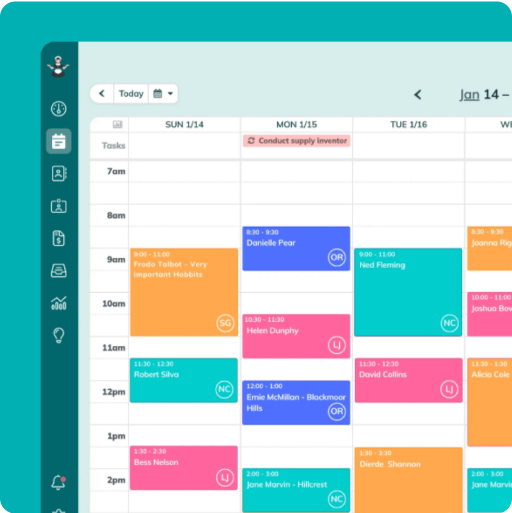
Simplify and enjoy your scheduling with a scheduling software made for maid services
- Have a beautiful calendar that's full but never stressful.
- Make your cleaners happy and provide all the information they need at their fingertips.
- Convert more website visitors into leads and get new cleanings in your inbox with high-converting booking forms.
- Become part of a community of 8000+ cheering maid service owners just like you.
Start your FREE ZenMaid trial today and discover the freedom and clarity that ZenMaid can bring to your maid service! Start your FREE trial today