Frustrated with your scheduling? Try the easiest-to-use calendar app, made by and for maid service owners.

A lot of owners daydream about it.
The team’s out cleaning. The schedule’s full. You’re at home or in another city, running the whole thing from a laptop instead of driving from quote to quote.
That’s the promise of a remote cleaning business. Not a fantasy where you never work again, but a setup where the company no longer depends on you being inside every home, every day.
The good news is that it is possible to run a cleaning business remotely. Hundreds of owners in the ZenMaid community have done it. Chris Schwab built and scaled a remote maid service with teams in another country. Neel Parekh grew his residential cleaning company into a franchise without being the one in the field.
They’ll be the first to tell you this model isn’t passive. It’s structured. You trade “I do everything myself” for clear systems, local teammates, and a different kind of responsibility.
In this guide, we’ll break down what remote ownership actually looks like day to day, where it shines, where it gets hard, and the steps that make it doable, shaped by what Chris and Neel have learned building their own remote-first companies.
Table of contents
- 1. What “Remote” Ownership Means in a Cleaning Business
- 2. Core Principles of a Successful Remote Cleaning Business
- 3. The Role of a Virtual Assistant or Remote Office Manager
- 4. How to Manage a Team When You’re Not On-Site
- 5. Tools That Support Remote Operations
- 6. A Realistic Roadmap to Transition Into Remote Ownership
- 7. Common Problems That Slow Remote Owners Down
- So… Are You Ready to Step Back a Little?
1. What “Remote” Ownership Means in a Cleaning Business
Running a remote cleaning business doesn’t mean disappearing while cleaners magically handle the rest. It means you design your company so that operations, communication, and quality can run without you being physically present in the field.
You still need humans on the ground
Every successful remote maid service has at least one person who lives where the clients live. That might be:
- A field manager who does quality checks and walkthroughs
- A team lead who opens and closes jobs and handles lockouts or issues
- A senior cleaner who takes responsibility for standards on site
You can work from another city or country, but your business can’t. Someone local still needs to:
- Inspect work from time to time
- Drop off supplies or keys when needed
- Handle the rare situation that can’t be solved over the phone
Remote doesn’t remove this need. It just means that person isn’t you.
You step out of the day-to-day, not out of the business
Chris teaches remote ownership as “building yourself out of a role, not out of the company.” At first, most owners are:
- Selling the jobs
- Scheduling the teams
- Answering the phone
- Handling complaints
- Cleaning when someone calls out
A remote structure asks a different question:
“What would this look like if I did none of that, but the work still happened?”
In practice, that usually means virtual or in-house office staff who handle calls, quotes, and scheduling, local cleaners or teams who follow clear checklists, a defined process for issues, refunds, and complaints, and a tool like ZenMaid that keeps schedules, notes, and client details in one place.
You’re still responsible for the company’s direction and health. You’re just not the one reacting to every text and doorbell.
Remote is common in other industries, newer in residential cleaning
Plenty of businesses already operate this way. Think of franchise owners who live in another state from their stores, short-term rental owners who use local property managers, or agencies that serve clients worldwide with fully remote teams.
Residential cleaning’s been slower to adopt the model, partly because it feels so personal. You’re in people’s homes, around their kids and pets. Many owners assume that means they must always be nearby.
Chris and Neel show that’s not always true. With careful hiring, clear expectations, consistent communication, and the right software, you can run a cleaning business remotely and still deliver reliable, local service.
Who remote ownership works well for
This setup isn’t for everyone. It tends to work best for owners who like systems, are willing to write things down, can let go of some control, and want to grow beyond one or two teams or have more location flexibility. It’s harder for owners who want to approve every small decision, resist documenting anything, would rather clean than manage, or aren’t ready to invest in staff or software.
None of that’s right or wrong. It just means the remote model is a better fit once you’re ready to treat the cleaning business as an asset you’re building, not only a job you do yourself.
If you see yourself in that first group, the rest of this guide will help you map out what needs to be in place so you can step back from the day-to-day and still feel confident that the work’s getting done the way you promised your clients.
2. Core Principles of a Successful Remote Cleaning Business
Once you remove yourself from the day-to-day, your cleaning business only works if the structure underneath it is solid. Chris and Neel approach remote operations differently, but their foundations overlap in five core principles. These principles are the reason remote ownership feels calm and predictable instead of chaotic.
Principle 1: Documented systems
A remote cleaning business only runs smoothly when everyone knows how things should be done. That means writing down the steps, not keeping them in your head.
That usually includes things like cleaning checklists for every service type, simple SOPs for scheduling and customer communication, and troubleshooting guidelines so cleaners know what to do when something goes wrong.
The point isn’t to create a giant manual no one reads. It’s to reduce surprises. When your team knows how to handle a lockout, what to do if a client requests an add-on, or how to document damage, you get fewer emergencies, and your business becomes easier to manage from anywhere.
Principle 2: Strong communication loops
If you want to run a cleaning business remotely, communication can’t be optional or inconsistent. It needs to happen the same way, every day, without you chasing people.
A typical loop includes quick cleaner check-ins before they start, confirmation when a job’s finished, and a simple process for reporting anything unusual. Your admin team or VA needs their own loop too, so questions don’t pile up and clients aren’t left waiting.
The goal is alignment. Cleaners, office staff, and clients stay on the same page even when you’re not physically present. When communication flows well, remote ownership feels a lot less remote.
Principle 3: Hiring for reliability above everything
Every remote cleaning business owner will agree on this fact: you can train skill, but you can’t train reliability. You don’t need “perfect” cleaners to run a remote maid service, but you do need people who show up, communicate, and care about doing the job right.
Remote-friendly training helps too. Short video walkthroughs, clear expectations, and checklists that show what “done” looks like give cleaners the confidence to work independently. When your team is reliable, remote operations become doable instead of stressful.
Principle 4: Technology that keeps information moving
Running a cleaning business remotely means you’re not standing in the client’s kitchen or checking in on every job. So you rely on tools that carry the information for you.
Scheduling, messaging, work orders, job notes, photos, client preferences. All of it needs to live in one place. This is the backbone of both Chris’s and Neel’s frameworks. Without a central hub, you end up chasing screenshots across five different apps.
Luckily, a tool like ZenMaid supports this workflow naturally, since it keeps schedules, notes, communication, and cleaner updates in one system. The fewer gaps you have between tools, the smoother remote operations become.
Principle 5: Removing the owner as the bottleneck
The biggest shift in running a remote cleaning business isn’t physical. It’s mental. Your job stops being “the person who answers everything” and becomes “the person who makes sure the system works.”
So instead of jumping into last-minute cleans, you oversee quality. Instead of answering every client message, you build templates and train your admin team. Instead of fixing problems as they appear, you create processes that prevent them.
This is the anchor of the entire remote model. You’re still leading the business, but you’re no longer the one holding everything together by sheer force of will.
3. The Role of a Virtual Assistant or Remote Office Manager
If you want to run a cleaning business remotely, a reliable virtual assistant or remote office manager becomes the center of your operations. They’re the person who keeps communication flowing, supports cleaners in real time, and makes sure clients always feel taken care of.
This role is what makes a remote cleaning business feel stable instead of chaotic.
Why this role matters
When you’re not physically nearby, little gaps can turn into real problems. A missed message becomes a missed appointment. A confused cleaner turns into a refund. A delayed reply makes a client question your professionalism.
But a strong VA prevents most of those problems before they escalate. They handle the daily coordination that used to fall on you.
What your VA should own
The VA takes over the work that requires speed, clarity, and consistency, not physical presence. That often includes:
- Scheduling and rescheduling
- Sending reminders to clients and cleaners
- Managing callouts or last-minute changes
- Updating job notes and client preferences
- Handling everyday customer questions
- Following up on issues and confirming resolutions
They become the person who makes sure the day runs the way it’s supposed to.
How they support cleaners
A remote model still depends on well-supported cleaners. Your VA provides that support by:
- Confirming schedules each morning
- Sending special instructions before each job
- Handling lockouts or timing changes
- Receiving job-complete updates and photos
- Logging issues so patterns don’t get missed
This creates consistency across your teams, even when you’re not there to oversee it.
How they talk to clients
Your VA becomes the voice of your company to most clients. That means they need to communicate clearly and with a tone that reflects your brand.
Strong client communication from a VA usually looks like:
- Quick, direct responses
- Clear explanations about schedules or policies
- Early communication about any changes
- Warm, respectful handling of concerns
- A balance of empathy and boundaries
Clients care most about feeling informed and supported. Your VA makes that possible at scale.
How to onboard someone for this role
Your VA can only be effective if they understand how your company works. A good onboarding process usually includes:
- Training in your scheduling software
- A walkthrough of services, policies, and common scenarios
- Scripts or examples for responding to tricky situations
- A clear system for escalating bigger issues to a field lead or to you
- Regular check-ins during the first few weeks
This structure helps them build confidence quickly instead of relying on guesswork.
What to automate vs what the VA handles
Automation should take care of the repetitive parts of the job:
- Booking forms
- Appointment reminders
- Payment confirmations
- Review requests
- Standard follow-ups
Your VA handles the human side:
- Solving scheduling conflicts
- Supporting cleaners when issues pop up
- Calming frustrated clients
- Gathering details that help you improve operations
- Managing day-to-day communication
How to scale the role as you grow
As your remote cleaning business gets bigger, you may eventually separate responsibilities so no one person gets overloaded. Many remote-first companies grow into a structure where:
- One person focuses on scheduling and cleaner coordination
- One person handles customer communication and sales calls
This keeps tasks manageable and helps you maintain a consistent experience as your client list and team expand.
4. How to Manage a Team When You’re Not On-Site
Managing cleaners remotely comes down to predictable processes, clear expectations, and a system your team can rely on when you’re not physically there to answer every question.
Strong remote teams aren’t built through micromanagement. They’re built through consistency.
Build an onboarding process that sets people up to win
A remote-friendly onboarding process teaches cleaners how the business runs and how success is measured, not just how to clean. That usually includes:
- A walkthrough of your cleaning checklists
- Instructions on how to communicate before, during, and after jobs
- Examples of the photo documentation you expect
- A clear explanation of policies, timing standards, and what to do when something goes wrong
When onboarding is predictable, new hires feel supported, and you avoid the “I didn’t know that” issues that derail remote operations.
Set expectations early and repeat them often
Remote management works best when your team always knows what “good work” looks like. That means being specific about:
- Arrival windows
- How to handle cancellations or delays
- The order they should follow inside a home
- When and how to reach your office staff or VA
- What requires an urgent update vs what can wait
You don’t need to hover if your team knows the rules of the road.
Use photos and checklists as your eyes
You can’t walk through every job in person, but you can still verify quality without being on-site.
A simple system works well:
- Cleaners send a set of photos after each job.
- They check off the checklist they completed.
- Your office team reviews anything that looks off or inconsistent.
This removes guesswork. It also gives you documentation for training, customer support, and recognizing great work.
Maintain accountability without micromanaging
The goal isn’t to track every move. It’s to create patterns you can measure and trust. Over time, you’ll see which cleaners consistently finish strong and which ones need more coaching.
Quality checks, even if occasional, help as well. A local field lead or senior cleaner can visit homes periodically so you get independent confirmation of how things look in person. You don’t need weekly checkups. You just need enough visibility to keep standards steady.
How remote-first teams keep quality high
Owners who operate remotely often rely on the same handful of practices:
- They hire people who communicate well.
- They give those people clear systems instead of vague instructions.
- They keep feedback loops tight so no issue sits unresolved.
- They build trust by staying consistent, not by calling all day.
This is why remote cleaning businesses can run smoothly. The structure does most of the heavy lifting. The owner steps in only when something truly needs their attention.
5. Tools That Support Remote Operations
A remote cleaning business runs on information. The right tools make that flow easier. The wrong tools add noise, confusion, and extra steps your team won’t stick to.
You don’t need a giant tech stack to run a cleaning business remotely. You need a small set of tools that help your team stay aligned without you being physically present.
- A scheduling and CRM system that keeps everything in one place
This is the backbone of any remote cleaning business. A good CRM handles scheduling, reminders, job notes, client details, and payments. When you’re not in the field, you can’t afford scattered spreadsheets or text-message scheduling.
ZenMaid works especially well here because it was built for residential cleaning companies, not general service businesses. Owners use it to:
- Capture new leads with booking forms
- Assign cleaners
- Track recurring clients
- Store notes, photos, and instructions
- Standardize communication
- Avoid double-booking or missing jobs
The key benefit is that everyone sees the same information. That’s what makes remote operations possible.
- A cleaner mobile app your team will actually use
If your team can’t access what they need from their phone, they’ll guess. And guessing is where quality slips.
A good mobile app should let cleaners:
- See their schedule
- Read client notes and entry details
- Check off tasks
- Upload photos
- Communicate job updates
Once this becomes part of your process, you don’t have to nag. The system guides them.
QUICK TIP FROM THE AUTHOR
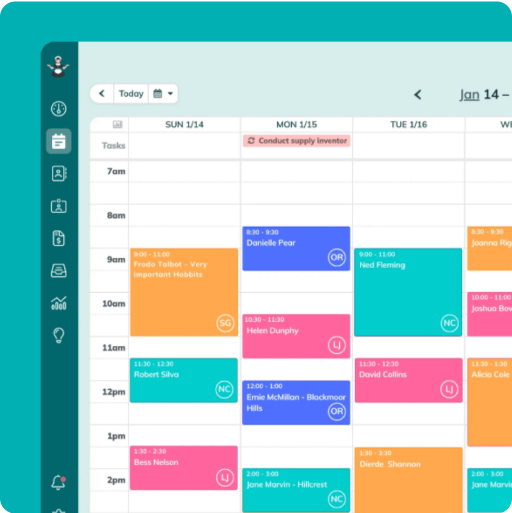
Simplify and enjoy your scheduling with a scheduling software made for maid services
- Have a beautiful calendar that's full but never stressful.
- Make your cleaners happy and provide all the information they need at their fingertips.
- Convert more website visitors into leads and get new cleanings in your inbox with high-converting booking forms.
- Become part of a community of 8000+ cheering maid service owners just like you.
Start your FREE ZenMaid trial today and discover the freedom and clarity that ZenMaid can bring to your maid service! Start your FREE trial today
- A client communication hub that keeps messages consistent
When you’re remote, communication can’t depend on your personal phone. A centralized messaging system keeps the tone consistent and prevents things from slipping through the cracks.
Most cleaning businesses use:
- Automated reminders
- Follow-up messaging
- Review requests
- A shared inbox your VA or office staff can manage
This gives clients a reliable experience without you personally answering every text.
- A simple place to store SOPs and documents
Your team needs easy access to the way your business runs. That usually means:
Google Drive
Notion
Or, Dropbox
Nothing fancy. Just one shared place where cleaners and office staff can quickly find checklists, onboarding documents, troubleshooting steps, and company policies. Remote operations fall apart when information lives in people’s heads.
- A light internal communication tool
This isn’t required, but it makes life easier. Many teams choose something like:
- Slack
- Voxer
- Messenger
The goal is quick communication, not another layer of complexity. Pick the tool people already use and keep expectations simple.
Automations that reduce noise without removing human judgment
Automation helps, but only in the right places. Most owners find value in automating:
- Appointment reminders
- Review requests
- Payment follow-ups
- Thank-you messages
- Basic client updates
What usually shouldn’t be automated is anything that needs empathy or judgment. Complaints, reschedules, damaged items, and cleaner conflicts all need a human.
A useful rule: automate the things that repeat. Keep a person in charge of anything personal.
6. A Realistic Roadmap to Transition Into Remote Ownership
Remember… running a cleaning business remotely is rarely a “move to Bali next month” situation. It’s a series of small steps that build stability, then structure, then freedom. Chris and Neel both teach this in slightly different ways, but the core idea is the same: earn your way out of the day-to-day by proving the business can run without you in short, controlled intervals.
Here’s what that process usually looks like.
Phase 1: Stabilize operations locally
Before you step back, the business needs to function predictably while you’re still in the same city. That means consistent scheduling, reliable cleaners, clear expectations, and a dependable customer experience. If things feel chaotic when you’re physically present, they’ll fall apart fast once you’re not.
This is the phase where you tighten up communication, handle issues more proactively, and get honest about where the weak spots are.
Phase 2: Build and test your systems
Once the wheels stop wobbling, you document how things should run. This includes:
- How jobs are booked
- How cleaners check in
- What happens when someone calls out
- How complaints are handled
- What “good” looks like for each service
Then you test those systems while you’re still local. You let cleaners follow the steps without you jumping in. You let your office staff handle problems while you watch instead of fix. This is where most owners realize where the gaps are and refine things further.
Phase 3: Hire and train your support team
At this point, you bring in the people who will replace your daily involvement. Some owners start with a part-time VA. Others hire a local team lead or senior cleaner who becomes the on-the-ground point person. What matters is that someone other than you becomes the first line of support.
You train them slowly, letting them shadow the decisions you make, then take over small categories of work until they can handle the majority of the daily flow.
Phase 4: Start operating remotely in small bursts
This is the phase where you test reality. You work from home for half a day. You take a weekend trip without checking your phone. You step out of scheduling for a full week. You see how your systems and team respond when you’re not the safety net.
Most owners cycle through several rounds of this. Each time, the business gets steadier and you get clearer about what still needs adjusting.
Phase 5: Gradually remove yourself from daily decisions
Remote ownership doesn’t happen in a single leap. It’s a slow reduction of responsibilities. First you stop doing scheduling. Then you stop handling complaints. Then you stop being the “backup cleaner.” Eventually your role shifts into oversight, quality management, and strategic planning instead of firefighting.
This is the point where you can confidently run a cleaning business remotely. The systems carry the weight. Your team handles the day to day. You protect the standards and steer the company forward.
7. Common Problems That Slow Remote Owners Down
Most owners run into the same handful of roadblocks when they shift to remote operations. These issues are easy to fix once you know what to look for, and calling them out helps you move faster with fewer surprises.
#1: Undocumented processes
When expectations live in your head instead of in a checklist or SOP, your team has to guess what “done right” means. That creates inconsistency and constant back-and-forth. Writing things down feels slow, but it saves you hours every week.
#2: Hiring too quickly
It’s tempting to fill roles fast when you’re overwhelmed, but remote operations only work when you can trust your team. Reliability matters more than experience, speed, or availability.
#3: No clear communication channel
If cleaners don’t know where to report issues or ask questions, everything lands on your phone. A structured place for updates keeps the team aligned and reduces the pressure on you.
#4: Relying on text messages to run the business
Texting works with one team. It breaks as soon as you grow. A central system for notes, photos, and job details keeps information organized and easy to reference.
#5: Waiting too long to hire a VA or office manager
Owners often think they need to reach a certain size before bringing in support. In reality, remote operations become possible much earlier when someone else handles scheduling, client communication, and day-to-day admin.
#6: Expecting the business to be hands off too soon
Remote ownership still requires leadership. You can step out of daily decisions, but only once your systems, staff, and communication loops are steady. Trying to disappear too early usually pulls you right back in.
These issues are normal and fixable. Addressing them early gives you a smoother path toward true remote ownership.
So… Are You Ready to Step Back a Little?
When your team has clear systems, your communication stays consistent, your tools carry the daily load, and the business starts working without you at the center of every problem.
Most owners don’t get there overnight. They test, adjust, and take small steps until one day they realize they’ve gone a full morning, a full day, or even a full week without rushing in to fix something. That’s the real milestone. Not perfection. Not “set it and forget it.” Just more space to lead instead of react.
If you’re building toward that level of freedom, start with the basics in this guide and strengthen one piece at a time. Your future remote cleaning business will thank you for it.