Frustrated with your scheduling? Try the easiest-to-use calendar app, made by and for maid service owners.


Brought to you by expert maid service owners
Listen on: Apple Podcasts, Spotify or YouTube
Introduction
Stephanie: Hello, everyone. Welcome or welcome back to the Filthy Rich Cleaners podcast. I am your host, Stephanie from Serene Clean. And in today’s solo episode, we are going to be talking about pricing, and specifically pricing at Serene Clean, and my mental hang-ups that I have had, ironically enough, about raising prices. This is the second time I’m trying to record it, because these two right here, there was a horrific fight that occurred. So I had to run out and break up that kerfuffle. And so everybody’s being monitored. Gosh dang freaking pets, man. I know it’s probably nothing compared to kids fighting or whatever, but that was pretty intense. I was like, you know what? Let’s just start this over, because that was wild. So pets aside, guys, let’s talk about pricing.
Table of contents
- Introduction
- The Inspiration Behind This Episode
- Calling Myself Out on Pricing
- My Pricing Journey
- Understanding the Fear
- When to Raise Prices
- Identifying Your Fears
- Last Year’s Approach
- Running the Numbers
- The Math at $60 Per Hour
- Challenging My Assumptions
- Taking the Emotion Out
- The New Pricing Structure
- Why This Makes Sense
- Early Results
- Future Experimentation
- Giving Customers Options
- When Price Isn’t the Problem
- The Importance of Social Proof
- Internal Work and Mindset
- Flat Rate Pricing
- Moving Forward
The Inspiration Behind This Episode
Where this topic is coming from and inspired from is from Stephen and Anna, who I had on the podcast, and I believe their episode should be live by the time this one goes live. And Stephen has written a book that is absolutely amazing, and he asked me to read it so I could write the foreword for it. That was awesome. And it’s how to build and grow a $1 million cleaning business. So it was an amazing book, and it really made me think, and this is what I would suggest. When you guys read a book, make sure you actually think about what it’s saying. Don’t just move on to the next, which we oftentimes do. We use it as inspiration porn. Sometimes when we’re listening to business podcasts or books or whatever, it’s oh, that’s interesting, and then we never implement anything. So I actually listened to the book, and I really thought about it, and it really just hit me how I have to call myself out on my bullshit.
Calling Myself Out on Pricing
Basically because of the book, I had to say we have not increased prices at all for a year and a half because I have been telling myself and my staff and all of you guys a story that has no basis in reality, and that story is that $55 per man hour is the ceiling in our market, and I have zero reason to say that. I have zero proof. I have zero evidence that this statement is true, but fear 100% has been limiting me around this topic, and it’s just so ironic, because how many times have I told you guys to not be afraid to raise your prices, and here I am being exactly that, afraid to raise my prices.
And it’s crazy, because I also have evidence of being wrong every single time, I have 100% wrongness when it comes to that statement, XYZ is the ceiling in our market. I’ve said that time and time again, and have proven myself wrong time and time again. So it’s funny that here we are at this point in the business, and I still am hitting this wall, and so I want to share this with you guys, so that you know that if you have a certain emotional response or fear about raising prices, I too have those fears, I too have those feelings, and I’ve had them time and time again, and apparently it just takes me a long time to learn from it.
My Pricing Journey
So why am I struggling to learn this concept? As you guys know, I started the business at $30 per man hour, and I remember being terrified at that price and thinking, ain’t no way in hell anybody gonna pay $30 for cleaning. And that was obviously in 2019. We all know that people will pay far and above that, and that is far below the going rate, especially for companies. So I was doing price increases over the years, $3 an hour more, $5 an hour more, to bring us up to our current $55 per man hour. And every single time, I was just terrified to do it. I was afraid. I just didn’t think anybody would ever pay this. And then you’d get a customer who would pay it, and then you get another customer who’d pay it, and you’d be like, oh, okay, I guess people will pay that. And I think a lot of this just has to do with how we value our own services, or how we value cleaning services, which is so crazy because I put such a high value on what we do. So it’s interesting that I myself just have this hang up of going any higher and it’s really funny to see this pattern playing out in real time.
Understanding the Fear
That’s why I want to talk about this. Because it’s like, you think me, of all people would be able to do this and not get stuck on this, but for probably the past six months, it’s been nagging in my head of, okay, we should go higher, but me just kind of shooting it down because I’m like, no, that’s too high. It’s too high. $60 per man hour is too high. And so I think we have these fears of raising prices for a lot of reasons, so one of them being the value thing. But I think realistically, it comes down to fear of losing clients, fear of upsetting staff, stability, meaning, am I going to have hours for my staff? Am I about to lose a bunch of clients because of this? Fear of rocking the boat when things already feel hard, and especially coming off of our tough year this past year, I think I really just wanted stability. I was craving any sense of stability, considering all of the wild things that happened last year. And so on top of that, I was not going to throw in a price increase, which is crazy.
When to Raise Prices
Because oftentimes the time to do a price increase is when you’re having staffing troubles, meaning we have zero availability. That is the exact time to try new prices, meaning higher prices, because you need to milk as much money as you can out of every single opening that you have. So if I only have 20 cleaning openings, for example, and we cannot fit any more cleanings in because we are struggling with staffing, we need to have those 20 cleanings be paying as high as possible so that we can get more money out of it. Because remember, there’s only a couple different levers that we can pull. We can add number of appointments, or we could increase prices and get more money per appointment. And ideally it’s both. But sometimes we can’t do both. And so it really is fascinating that I was being really illogical around this past year. But I understand why it’s happened.
Identifying Your Fears
So I would love for you guys, when you’re thinking about doing price increases, I’d love for you to name what are you afraid of specifically? And of course, there’s certain things that we can do to mitigate the effects. Because yes, oftentimes when you do a price increase on our current clients, we do lose clients. And so one of the ways to balance that out so it doesn’t freak you out and make you think you’ve done the wrong decision, is do it in smaller batches. This is what we’ve done every time, except last year’s price increase when we were bringing up all of our $45 an hour to $50 an hour and 50 to 55. When we did that exchange, that was the first time we never did it in batches, because I had always done it in batches so that it would blunt the effect if we did lose a lot of clients.
But honestly, because we knew we didn’t have any availability, we’re like, it’s okay if we drop clients, because we can fill that spot with a higher paying client. So we were not afraid of losing clients at all. And honestly, we lost very few clients from it, as it typically happens. But for you guys, if you are afraid of rocking the boat in this way, do it in batches. Take all of your clients, depending on how many clients, do it in four. Do pricing increases on this chunk this month, this chunk the next month. So if you do lose some, even one or two, then you can fill that spot with a higher paying client, because all of your new clients that you are quoting should be at the higher price. So that is one way that you can help protect yourself from losing a bunch if that’s going to happen, and scrambling to fill them, especially if you have staff. I totally understand that stress.
Last Year’s Approach
This past year was the first time that we did not do that, and it worked out great. It was totally fine, and it was just easier to manage to just blanket do it all at once. And that was, I believe, in April. So now, going forward, we are probably going to continue to do price increases at just that blanketed all at one type of thing. So that is one thing to consider.
Running the Numbers
Reading Stephen’s book really made me look at our numbers, frankly, of what is it that we’re charging versus what we are paying. And so looking at our pay rates, I’ll actually run the numbers for you on this envelope that I wrote on last week when I was thinking about this. So if we are at $55 an hour, and we pay, our starting wage is $16 an hour, and our top wage is $25 an hour. And remember, not many, I don’t think any of our cleaners are really at $25 an hour, because it takes so long to get there with our pay and raise schedule, which I made a whole episode on.
But so at $55 an hour, if we are paying $16 the starting wage, that is 29% of what we are charging the client. At the top range, it is 45% what we are charging the client. Because $25 an hour is 45% of $55. And so going off of Stephen’s guidelines and just what he was suggesting, which is 30 to 40% of what you’re charging the client should be the end pay. But for us, there’s a lot more costs associated with people because of all of the benefits that we provide. Those things are very expensive. So for us, even if our cleaners getting paid $25 an hour, that being 45% of what we’re charging the client, that’s way too low what we’re charging. So again, it doesn’t happen much, but cleaners are going to make it at that. So inevitably, we have to do a price increase to keep up with cleaners wages increasing over time, which is going to continue happening.
The Math at $60 Per Hour
So running the numbers at $60, if we are paying $16 an hour and charging $60, that is 26%. And remember, people don’t stay at $16 long. That’s starting wage. So don’t think that we’re underpaying people or anything like that. And if they get to $25 an hour, which, if they’re starting out at $16 and going on our raise schedule, that would take nine years, they are going to be at 41% of what we’re charging. And nine years from now, we are going to have to do a price increase by then too.
So all of that to be said, $60 financially makes way more sense and is in line with healthy margins. And that was really what it came down to is the brass tax of it, of our margins are not what they need to be if we are going to be paying these higher wages, giving better benefits, doing all of these wonderful things that we do, it just doesn’t make sense. And the reason that we’re able to be profitable is because we have such high volume. However, our profit margins were very low last year because of all of these different things that happened. And so keeping that in mind, I was like, no, this is the time to do this.
Challenging My Assumptions
And I really wanted to delve into why am I assuming this is the max and really thinking, what happens if I’m wrong? If I am wrong, and we continue to go off the assumption that $55 is the max, how much money potential are we losing, how much margin are we losing? And so I really realize the concept that beliefs feel like facts if we keep saying them enough. And I’m sure you guys can apply this to so many areas of our life. If we just keep repeating the same things over and over to ourselves, it starts to feel true, does it not? Or if somebody else tells us something over and over again, it starts to feel true, regardless if it is or not.
So for me, in this particular example, I thought this was the truth and that it was a fact where there really is no basis. I had just been repeating it so much that I just started to believe it. So truly, the reframe that needed to happen, which is funny, because I’ve had this frame of reference, I say it all the time to you guys, treat it like an experiment, an experiment that can be reversed. This is not getting a tattoo here. This is not birthing a child. It’s an experiment. It can go backwards.
And so I wanted to look at it that way of, not that we’re raising prices forever, but what happens if we try this? What data do we get and what do we learn? So it’s interesting that we treat everything else in the business like that experiment, because I have a good mental framework for that of, this is an experiment. We’re going to try this for marketing, we’re going to try this for hiring. We’re going to try this for this system. But I think it’s because pricing feels really emotional to me. And I think there comes that whole value and what we are worth. That’s why I was feeling so emotional about it, where everything else didn’t feel emotional at all.
Taking the Emotion Out
So really, the point is I needed to take the emotion out of this experiment and just treat it like I have every other time we’ve done a price increase, which is we can always go back if nobody books at this. And so I encourage you guys to also remember that you need to give this the old college try here and actually see if your assumptions are correct or if it’s just a story that you’re telling yourself. So I want to tell you guys exactly what we’re doing for pricing, what we implemented, to try this out. And I want you to remember, if you are, if you go, if you’ve been listening to the solo episodes recently, you know that one of our big goals is to increase our monthly recurring revenue.
Going back to our 2026 goal is that by the end of the year, we are at $125,000 in revenue per month. That’s our goal, and we need to add $1,500 minimum of recurring revenue in order to make that happen, on top of all the one offs and move outs and all that stuff, as well as commercial. So for residential, we need to add $1,500 of recurring revenue.
The New Pricing Structure
And so in order to do that, we want to incentivize people to make the decision that we want them to make, which is book recurring services. That is something we heavily want people, that’s the one thing that is what we want them to do. We don’t want them just to have a one off. So the thought process here for what I’m about to lay out is we wanted to treat recurring service as a reward, which is $55 per hour.
All right, so we are keeping, at this moment, recurring services at $55 an hour, but what we are going to implement is a gap between recurring and one offs financially, so that those people do feel incentivized, and it makes more sense for them, oh yeah, I’m going to go with recurring because of this financial reward. So what that looks like is first time cleans, and any clean that is not on a recurring service is going to be at $60 per man hour, and anything that is on a recurring service of a month or more frequent, so a monthly, bi weekly or weekly cleanings, that is going to be at $55 an hour.
Why This Makes Sense
So why this makes sense, and it’s again, funny enough, I have seen this question asked, and I have been asked this question myself, why don’t we charge one offs and move out cleans, move ins at a higher rate. And I just kind of brushed it off as, oh, we don’t need to do that. We don’t need to make more money. What? Again, where is the sense, where’s the logic. Stephanie, so I’ve literally seen this in the ZenMaid mastermind before, this topic before, and I just, I was like, that’s a good idea, and then I didn’t implement it.
So as we all know, first time cleans and one offs are more labor intensive. They’re harder on our cleaners. There is more supplies, and there’s more unpredictability, where maintenance cleans are very predictable, typically less administrative labor as well. So recurring clients are more efficient. They are easier on the body. We don’t have to use as many supplies. And the biggest thing is this behavior is what we want. So we want to create a gap financially to make choosing recurring service as the logical choice. We need to incentivize people, and this is the reward. It’s cheaper.
But here’s the crux of it, $55 an hour is what we want to be making anyway. We’re already making that. So we’re just going to increase the margin on the more labor intensive ones and hopefully make people book more recurring because of that.
Early Results
So we don’t have obviously any long term data, because we literally just implemented this one week ago. So last Monday, I talked to my managers, and I was like, listen, I really think that we need to try this. And there was no pushback, of course, from them, because they’re like, yeah, that makes sense. So it was me. This was me. I’m the problem. Hello, it’s me. And so basically, all we had to do was just tweak our estimate process a little bit to reflect the verbiage and to have that incentivization of doing this recurring model.
So what we do is we lay out the pricing and just tell them, this is what it’s going to be for recurring, this is one off cleans or anything that’s not on a recurring service, to show them that value. So far, it’s been one week, and so far already we’ve had somebody say yes. So there’s our proof. It is possible. It can be done. Actually, we’ve had multiple people, but the one lady, she had a gift certificate, so I don’t think she gave a fuck at all because she had a gift certificate. But we do have one client so far who has said yes, and obviously we’re still following up on everybody else that we have sent estimates out to in the past week.
So yeah, what is there to lose? If people say no or say that’s above my budget, we can always come back and be like, look, in order to get you on the schedule, we really want your business. How about we bump that first time clean down to $55 so that we can always pull that lever if we need to. Because again, they are valuable to us. Because if we can get them in and I have to slash prices to what we are already making, it’s good, because that recurring revenue that we’re going to get from them for the year is going to be, who knows how much? $1,500 at least, minimum for a monthly client, I think, and depending on the size of the house, we’re talking thousands of dollars for sure from this client if they become recurring. So it gives us some wiggle room so that we can bargain a little bit if people do ask for that.
Future Experimentation
I don’t really encourage that necessarily, but I’m willing to do that if it means they’re going to become recurring. And again, we’re happy with $55 an hour. The point is to dip our toe into this. And the thing is, we very well could, in two months, be like, oh, people are closing at this. Let’s try higher and make it so that the recurring client is at $60 an hour, and let’s go for $65 for the first times. But we have to take this baby step and see where it is, where’s the limit. That’s really what we’re trying to figure out is, what will the market bear?
Additionally, another thing that I could see us doing is incentivizing because, again, the more frequent they have, as we all know, the more frequent they have those cleanings, the more we’re going to be making off the most likely. A weekly client on a monthly basis is going to be bringing in more than bi weekly. And a bi weekly client is going to be bringing in more than monthly, typically on a regular client. So what we could do in the next kind of experimentation step is going to be giving them kind of, I know a lot of you guys that charge flat rate do this where it’s, here’s your weekly appointment price, here’s your bi weekly and here’s your monthly, basically giving them a discount, a frequency discount.
And so we could do the same thing for hourly, and do, okay, one offs will be at, let’s say $65 if we pull that lever, let’s go one offs are $65 and then if you go to monthly, it’s $63, if you go to bi weekly, it’s $60, if you are a weekly client, it’s whatever, $58 or something. I’m just pulling numbers out of my ass. But we could do that again to further incentivize higher frequency, since that’s important as well, to try to get as much money as possible out of every single client. Of course, we don’t want to encourage somebody to get more frequent cleanings than they need, but that’s on them to make that decision. Not us.
Giving Customers Options
But the point being is, psychologically, people like to have options. And so it kind of reminds me of Amanda Stovall’s first episode, where we talk about the book, What Should We Do? And people like to have that choice. They like to, and a lot of times they’ll go for the middle package. So if the cheapest package is weekly, and the most expensive package is a one off, well maybe they’re going to go for bi weekly instead of a monthly visit, which over the length of a year, or the length of that relationship with the client, we could be talking about hundreds or thousands of dollars worth of difference. So it is nice to give people those options, and just it allows people to have a choice in the matter.
Instead of for us, we’ve always just been like, yep, here’s your hourly rate, and it’s always stayed the same and been constant. So that will be the next step to do that. But first we’re going to get our confidence with this.
When Price Isn’t the Problem
And one thing to remember, too, is if you guys do a price increase and nobody’s booking, remember, it might not be the price. It might be everything around the price. I want to encourage you guys to look at the estimate email, to look at how you are engaging with these people or how are you speaking to them on the phone. When you give the price, are you following a call script? Are these calls recorded? Where can you hear that the hesitation is happening?
Because a lot of times when I do consulting calls with you guys, and I ask you, walk me through this when you’re like, nobody’s booking. Well, walk me through what this process looks like, and you show me how you’re sending over the pricing, and you’re literally just saying this is the price. You’re not doing anything to build up the value and explain and that’s why you guys know I love cleaning checklists. We’re sending the cleaning checklist with them so that they can see it. We’re explaining our value, what sets us apart, what they can expect with working for us. And it’s just all very professional and beautifully done. We have our Frequently Asked Questions video in that email.
So all of this is to showcase why we are valuable and why we are worth the price that we are asking for, in addition to all of the social proof that they’ve already interacted with if they found us on Google or Facebook. So if people aren’t booking at a certain price, it might not be the price, it might be how you are handling presenting the price, or it also might be you don’t have enough social proof.
The Importance of Social Proof
And that’s something that Stephen talked about in his book, too, is so many people, because they have hundreds of five star reviews. So many people are like, whatever the price is, you’re clearly the company to use because of that huge amount of social proof. So all of that to be said, we are able to charge higher prices when we have that social proof, guys. So just keeping diligent about getting that, get your reviews, getting video testimonials, doing whatever you need to do to get that social proof, so that people are like, okay, they are worth it, and it makes sense why they are higher priced.
And being the cheapest option is never a good thing in any way, shape or form. So all of that to be said, we made that change last week, and I’m really excited to see what comes from it, and I’m hoping then we’ll take the next step to do what I just described with some of these other experiments.
And for me, it’s more just doing this faster. It’s like I had to give myself permission again, and I want to state it right here, so that I hold myself accountable, because now it’s public, if people start saying yes, let’s push it to $65. Let’s do that faster than a year from now. It’s like I’ve been holding myself back from thinking that that is greedy. I think it’s greedy. Or it’s inappropriately fast amount of time where it’s like, those clients don’t know. The new client that’s going to reach out tomorrow doesn’t know that the price we’re giving them is $5 an hour more per hour than the person I gave to yesterday. They don’t know.
Internal Work and Mindset
So I think it’s just there’s a lot of internal work that still needs to be done, I guess about doing that, and just take my emotion out of this. This is truly, what is the market gonna bear? And stop telling yourself a damn story that’s not true. And so I highly encourage you guys check out Stephen’s book. I’ll link it down below, but really think critically about your pricing and why? Why are you at what you’re at? Have you done any type of market research? Have you pushed the limit and seeing what happens? You need the data.
How many people closed at this price versus this price, and have we done everything to make sure at this new price that it’s not necessarily the price holding them back, it is everything around it, and maybe it is the price, maybe it is too high. But we don’t know until we try and really pay attention to what happens and making sure, are we following up like maniacs? Because maybe it’s a follow up problem. A lot of times it’s that too. So don’t just jump to, oh my gosh, I’m way too high. And that’s what it is. It very well could not be that. And most likely it’s not, if you’re anywhere in the range of $45 an hour to $80 an hour.
Flat Rate Pricing
I know some of you guys, especially flat raters, you are, that’s funny, flat raters. It makes it sound like I’m Flat Earthers. So not flat earthers. We don’t support that here, but my flat raters out there, for you guys, a lot of you guys are making bank. And you know how I feel, flat rate can be great. It is great. We still charge hourly for the reasons that we do, but flat rate is a fabulous thing. And you can get very, very profitable on that as well.
Moving Forward
So all of that to be said, yeah, just calling myself out here, as I’ve been doing this year. I’m just self flagellating here and whipping myself publicly for you guys, but it’s all good. I’m feeling just happy that I’ve had this realization. No need to feel ashamed. It’s just funny coming from me that I was having this issue. And so here we are. We live and we learn. And I will keep you guys posted as to how this goes and how this has affected our close rate, if at all. And then we’ll keep going, and we’ll try it again.
And this year, I will be sure, call me out, guys, if it’s six months from now, from this recording, and I have not tried $65 an hour, everybody start shit talking me and calling me names. Because sometimes I need that. I need tomatoes thrown at me. Sometimes it works very well.
All of that to be said, guys, leave me down below, let’s see, what could you leave me? I don’t know, maybe a little broom. Find a broom icon. Let me know that you listened all the way through. Hit that like. Hit that subscribe. If you are not subscribed, subscribe. I would really appreciate that if you did it. Join the ZenMaid mastermind. If you have not done so yet, it is completely free to join. You don’t need to be a ZenMaid customer. And lots of great stuff over there as well. So I will see you guys in the next episode. Have a great week. Bye, guys, bye.
Note: This transcript has been edited for clarity and readability.
Resources Mentioned in This Episode
- ZenMaid
- ZenMaid Mastermind
- Watch Stephen and Anna Rodriguez’s episode: Filthy Rich Cleaners — E104: Scaling a Cleaning Business as a Husband-and-Wife Team
- How to Build a Million Dollar Cleaning Business by Stephen Rodriguez
QUICK TIP FROM THE AUTHOR
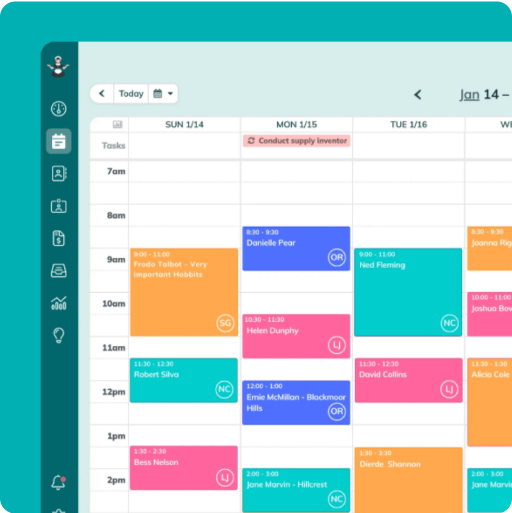
Simplify and enjoy your scheduling with a scheduling software made for maid services
- Have a beautiful calendar that's full but never stressful.
- Make your cleaners happy and provide all the information they need at their fingertips.
- Convert more website visitors into leads and get new cleanings in your inbox with high-converting booking forms.
- Become part of a community of 8000+ cheering maid service owners just like you.
Start your FREE ZenMaid trial today and discover the freedom and clarity that ZenMaid can bring to your maid service! Start your FREE trial today