Frustrated with your scheduling? Try the easiest-to-use calendar app, made by and for maid service owners.

Brought to you by expert cleaning business owners

Tips and advice shared here have helped us grow our own maid services. The ZenMaid team currently has 5+ current and former cleaning business owners on our team, including our Founder and CEO, Amar. We’ve been in the maid service industry for 10+ years and counting.
We partner with amazing leaders in the cleaning industry, including Debbie Sardone, Stephanie Pipkin, Angela Brown, Chris Schwab, and many more — all to provide you with the latest industry insights.
We’ve built the easiest-to-use, comprehensive cleaning business software, built specifically for the industry!
Listen on: Apple Podcasts, Spotify or YouTube
Introduction
Hello, everyone. Welcome or welcome back to the Filthy Rich Cleaners podcast. I am your host, Stephanie from Serene Clean. And in today’s solo episode, I will be answering a listener question submitted by one of our fabulous listeners, Sunny, all the way from Australia. So I am so excited to be answering this. And actually, I’m turning this into a full episode because I think it’s such a complex topic, and I want to dedicate a full episode to it to give it the attention that it deserves.
Now, if you are wondering how I’m answering Sunny’s question and not your questions, well, you got to submit it by being a subscriber to the ZenMaid newsletter. So as long as you are subscribed to the ZenMaid newsletter, you can respond to any of them and submit a question for me to answer. And what I’m going to be doing is answering a listener question at the end of the solo episodes of Filthy Rich Cleaners, or in this case, I’m going to make it an entire episode if I feel that it needs more thorough attention given to it. So that is what we are doing today. So Sunny, thank you so much for submitting.
And without further ado, let’s get into this question, guys, because I think it’s going to be very relevant to many of you listening.
Table of contents
- Introduction
- Sunny’s Question
- Understanding “Always Be Hiring”
- Managing Large Service Areas
- Hiring Cadence and Training Cycles
- Zoning Your Service Area
- Restructuring Your Business Model
- Understanding Fair Travel Pay
- Hiring Part-Timers for Flexibility
- Addressing Travel Costs
- Implementing Travel Fees
- Our Tiered Mileage System
- Systematic Changes to Consider
- Final Thoughts on Complexity
- Practical Tools and Solutions
- Closing Thoughts
Sunny’s Question
So Sunny says, hi there. Firstly, I absolutely love the emails, YouTube clips, insights, and help from ZenMaid along with the podcast. Thank you. You have been a wealth of knowledge. Thank you, Sunny. And thank you to the entire ZenMaid team who does so much work on the marketing and education side. There is a lot that goes into it, as well as customer support. That entire team is fabulous. Great job, everybody.
I have a question for Filthy Rich Cleaners. I run a small residential cleaning business in Australia, and I feel I’m constantly chasing my tail. Our service area spans over 80 kilometers, and I seem to be stuck in a loop. Either I’m turning down work because I don’t have enough cleaners, or I hire a cleaner and then feel intense pressure to quickly find enough clients for them so that they don’t leave.
I often hear that the solution to expanding is to quote, always be hiring, but I genuinely struggle to understand how that works in practice. How do you hire when you don’t yet have the clients? And how do you find cleaners who are willing to wait a few weeks or even a month for their schedule to fill?
In Australia, travel costs add another layer of complexity. We pay per kilometer, around a dollar per kilometer, plus travel time. So clients really need to be geographically close. When onboarding a new cleaner or a new client, I often end up sending cleaners all over the place just to give them enough hours so they don’t leave, which becomes extremely expensive very quickly. I then have to rework schedules repeatedly to try and make it viable.
Is there a more effective or structured way to handle this? How do other businesses manage hiring, client acquisition, and scheduling without upsetting clients or cleaners or losing money and sleep in the process? Any insight would be greatly appreciated. Warm regards, Sunny.
Fantastic question. And we are going to break it all down, Sunny. Side note, your name is fabulous. You must, with that name, you have to be just the coolest person ever. Just you have no choice because your name’s Sunny. So cool. And we’re going to dig through this because you bring up so many great points. And I have a lot of thoughts and suggestions for you. And for any of our listeners who have ran into any of these areas, you’re going to run into this. It’s pretty much inevitable that you are going to be running into this, especially the whole chicken or egg thing with hiring, balancing new clients, new cleaners, and making sure that everybody is happy. It definitely is a huge challenge. So let’s talk about it.
Understanding “Always Be Hiring”
Okay, so let’s start from the top with the concept of always be hiring. This is something that you have heard from me and so many else in the industry is that you always need to be hiring, but really let me clarify what we mean. It’s not literally every single week actually hire somebody, actually onboard. What we mean by this is always have candidates in the pipeline. So you need to be doing hiring activities at all times, but not necessarily actually offering jobs to everybody every single week. That’s certainly not what we do in Serene Clean.
I’ll give you an example. I’m recording this at the end of January and we have not hired a single person in January. Maybe have we offered one job perhaps? Yeah, I think we might have one person starting in February. Point being though, we have been doing interviews every single week. We still have job listings going that are active and we are getting candidates who apply every single week. So when we do need to hire for whatever reason, I want to clarify that we are not bringing somebody new on every single week or anything like that. Some companies, if you’re at a giant scale and you are just a machine, yes, of course that makes sense. But for most of us, that’s not the case unless we’re having extreme turnover, which is not ideal.
So the point is we have candidates that we are considering, that we are interested in and that we can come back to at a moment’s notice when we need to. So when somebody quits or puts their two weeks in or you need to fire, you already have somebody in mind who could take their place because we have to be prepared to do that. So that’s the first thing I want to just clarify is we are not actually always literally onboarding new staff. We are always hiring regardless of if I have a position open or not. So that’s what that means.
And don’t feel bad when it comes to the candidate side of things, because very likely we are going to have an opening. We just don’t know whose opening it’s going to be, or is it going to be because of increased demand or somebody leaving? We don’t know, but we need to be prepared for when it happens, not if it happens. Because if we just pause everything and don’t interview except when we legitimately need somebody today or in two weeks, it’s too late.
So that’s what we mean by that is just always be interviewing, always have a list of candidates that you were interested in. And then when something does happen, even if somebody interviewed with you two months ago, reach out to them. You don’t know what their situation is. Maybe they took another job and they don’t like that one. And then now they’re hopping. It doesn’t really matter. The point is that you have somebody in mind. You’re not starting from point zero or the ground. You’re not starting from zero. From day one here, we’re starting up the mountain a little bit of the struggle of hiring. So that’s the point.
So that is point number one, we are not always hiring. We are always recruiting.
Managing Large Service Areas
As for your service area, so you have an 80 kilometer service area. So for our Americans and myself, that is going to be, what is that, a 40 to 50 mile range? So that’s a pretty big service area for sure. It’s very spread out. It kind of is similar to how large Serene Clean service area is because we serve three towns and then 30 miles from each of those locations. So that’s pretty widespread. So I feel I have particular knowledge and experience with this particular area. Take a shot every time I use the word particular.
So our service area spans over 80 kilometers and I seem to be stuck in a loop. Either I’m turning down work because I don’t have enough cleaners or I hire a cleaner and then feel intense pressure to quickly find enough clients for them so that they don’t leave.
Okay, so for us, we make it very clear on the get-go in the hiring process that the expectation is that the cleaner could be required to drive as far as 60 miles one direction. And most likely they’re not going to, but that is at the top that might have to happen because of what you’re describing of scheduling changes and things like that. But that is not ideal for anybody. It’s not ideal for the cleaner. It’s certainly not ideal for you because you’re going to have to pay that out. So we need to make sure that the cleaner knows that that could happen and make that clear from the get-go.
And it sounds, I think that you probably are doing that, but just for anybody else, make sure that the cleaners know what the worst case scenario is for traveling and driving just so that they can’t say, I didn’t sign up for this. Yes, they did sign up for this because you were very clear about what the expectations are. Of course, we do not want that situation happening very much. That is last resort because from a profit side, that is super duper not great to be doing that.
Hiring Cadence and Training Cycles
So when it comes to cadence of hiring and how you handle that with demand, basically what you’re talking about and the big crux of this issue outside of the travel stuff, which we’ll get to in a minute, is balancing supply and demand when the folks who are your supply, your staff, also have to be taken care of when it comes to their income expectations. So that adds a layer of complexity when we don’t necessarily perfectly balance demand. We can’t know that. We also don’t necessarily know the cadence of demand.
However, there’s several things that I can guide you on here. So the first and foremost thing is going to be when do I hire the next one? And that totally depends on one, how much you have in the pipeline for applicants. But two, what does your training cycle look like? How long does training take for you? So if I were to hire somebody today, when could I appropriately and confidently give them clients by themselves and that they are good to go?
So for us, that is going to be most likely 10 business days. They are going to be good to go. We might obviously be quality checking and everything, but if they started today in 10 days, they are going to be able to take on clients. And if they had to give a two weeks notice, well, all of a sudden that is three to four weeks out until we can say that they’re going to be good to go.
So if I know that from offering somebody a job to them being able to take clients on by themselves and make me money, that that is going to be a three-week thing for Serene Clean, well, that helps guide me into what is going to be my hiring cadence. So then what you need to look at is your current staff and how much capacity they have for more clients as well as your demand.
So if you know, and this is why it’s so important to track this stuff, guys, what is your average demand? And obviously it fluctuates wildly depending on time of year for many of us. But if I know, and you can do this by month, it doesn’t have to be we hire every single month and it’s set in stone. No, you look at the past, you look at what you know to be your demand. Okay, I know summertime, super busy with move outs and the demand just spikes in the summertime. That’s how it is for Serene Clean. So I know that the demand coming up may exceed my current hiring cadence. So I may need to hire more often because my current cleaners are going to fill up.
So this is very dependent on your business and your data. So you can’t just blanket statement say you need to be hiring somebody every single month. That is absolutely not the case. And I can’t tell you that. And you can’t tell me what mine is. I know my numbers. I know what the cadence needs to be. I can see how much my current capacity is at. And what I mean by that is how many openings do you still have to fill with your current staff?
And so our thought process is when our current cleaners or the most recent hire, I should say, is at 75% capacity, meaning they only have a couple openings to fill regular cleaning openings, or say they’re at 75% capacity of what they want to be at, I know that we are probably going to fill that then in the next coming weeks. So then we should be looking at hiring because I need, I am three weeks out from the new person having capacity.
So that would be a general guideline, I would say, because then obviously demand is going to keep coming in. We’re going to have new leads coming in, new bookings coming in. So that is what I would be going off of is how full is my last hire at? And if they are probably a couple weeks away from being completely full and at capacity, well, then we need to be hiring because of how long training takes. And again, this is dependent on you.
So what I want you to answer for yourself is one, how long does it take for you to onboard and hire? And keep in mind two weeks notices and things like that. And that may, it just depends on the candidate. If they have to do that, are they even working right now? Then they may be able to start tomorrow. We don’t know. But point being, you need to look at each candidate of who are you considering and look at your current staff and how full they are. And that will determine, okay, looking forward, we’re going to have them filled up.
And I get it, it’s not a perfect science because your demand and your close rates may adjust and shift. But that is kind of a general guideline is we need to be looking at what are we at with capacity for Serene Clean? And what kind of lead time are we looking at for new hires getting in and actually in the field? So these are the things that you need to look at.
Zoning Your Service Area
And also in your service area, so this is where things get more complicated is when you have a large service area like you do, then it complicates things with, well, we want to hire where the demand is. And so for us, we are looking at where are the leads coming in the most or where are we adding clients? And also which cleaners in which areas are full?
So I’ll use Serene Clean because I don’t know the towns that you service, so I’m just going to use Serene Clean. So to give you guys backstory, we are a regional business. Our locations are in Black River Falls, which is one town, Sparta, which is another town, and then La Crosse, or I should say Onalaska, which is another town. So three towns, and we hire cleaners out of those locations.
Now, that region is still within driving distance so that if we have to pull somebody whose home base is Onalaska to do a Black River Falls cleaning to cover, we will do that, but that is not ideal. So what we’re going to look at is demand and where are the leads coming in? Where are we closing most people?
So if all of my Black River Falls cleaners are full, their schedules are full, and so by my blanket logic, oh, we should hire Black River Falls. But if demand, we’re not getting a lot of leads in Black River Falls, which is true because Black River Falls is our smallest town. It’s 5,000 people. Sparta and the neighboring towns is bigger, and we get a lot of demand there. We also get a lot of demand in Onalaska. Because Black River Falls is our oldest location, so it has the least amount of demand from residential because we’re pretty saturated in that market. There’s not more to pull.
So what I would like you to do is consider, is there certain areas that have high demand? And this can shift. So right now, in what area are you getting the most leads from and closing the most leads? Well, by that logic, we should be hiring in that area. So for us on Indeed, we have job postings for the different towns. So then my HR manager, Crystal, is looking at that. All right, all of our Sparta cleaners are almost to capacity and we’re getting demand in Sparta. Ergo, Sparta is the next place to hire.
And that’s how we kind of hone in when we have such a large service area. Now, it doesn’t mean that we’re not going to potentially have to send a Sparta cleaner to Black River. It doesn’t mean that on a daily basis, the schedule isn’t going to change. But as a rule of where should we hire next? That is the logic that we are using is based off of the demand and looking at where the leads are coming from, as well as are we having any concerns with our staffing in that particular area? If that area is maybe more hard to staff, we might hire more in that area because we know maybe turnover is more high or something like that.
So there’s a lot of conditions or things to consider when it comes to where do we hire? But that is one of the things I want to ask you to think about, Sunny, is are you hiring people to cover the entire service area? Or could you section off your service areas a little bit? Which you might already be doing. You might be doing this already. But could you, instead of thinking, I’m hiring people who need to cover all of this, could you break it into three?
And say, because you have this hiring method. So for us, we may be interviewing people in all of our service areas. But the next hiring decision is based on current day demand. So I’m going to suggest to you is you are interviewing people in all of the areas, your big service area that you have. You’re interviewing people who live in different parts of those. And again, I don’t know what that looks like terrain wise for you. If you’re getting all of your applicants in one city or things like that, but you need to look at where your clientele are, where the demand is.
And then when you’re interviewing, if you’ve got two candidates that you’re like, okay, now you get this pipeline of people that you’re interested in, these candidates, and now you need to hire again. Well, logically, you should hire somebody who lives in proximity to the demand of your clients.
Restructuring Your Business Model
And so this, and you might be wondering, but they all have to come to the office anyway. You may need to restructure how you do business to be as profitable as possible in this situation. So when I say we have three locations for Serene Clean, those are not locations that customers go to. Two out of three of those locations. We have offices in Sparta and Onalaska. And the reason we have those offices are for two reasons. To show up on Google and for cleaners to replenish their supplies. Those are not for clients to go to and those are not where office staff go to.
So for you, and again, this is an expense, but could we look at storage units? Could we look at the kind of remote cleaning model where they’re coming to the office once a week for you or something along those lines? Because if you are having everybody come to the office every day, and I’m not saying you do, but I know some people have that rule is cleaners have to come and get all of their supplies every single day and then go from there. Well, you have to pay them from the office, from the office to that first cleaning. Because now all of a sudden this is their work time. They’re driving for work purposes. It’s not their normal commute.
So if we can cut that down, if that’s a thing, that’s fantastic. So for us, a cleaner that is hired out of the Onalaska office, regardless of where they live, they are going to be paid commuting from the Onalaska office to wherever the job is. So we are then only sending them to jobs, ideally, that are close to that office. Same with Sparta, same with Black River. And that way, so they are assigned a home base. So these are our Onalaska cleaners. These are our Black River cleaners. And these are our Sparta cleaners.
And so when they do have to get pulled further away, they are not paid from the closest office to that client. They are paid from their home base. That’s the only way that we’ve been able to do it in a way that doesn’t make us want to pull our hair out. And this way, they can drive from their house if they have their supplies and stuff. It doesn’t matter. It’s how could we possibly scale this? They are paid from whatever is their home-based office. It’s simple, it is very static, and this way there is no confusion. That’s how they are paid. And sometimes we win, sometimes we lose, but this way, it’s across the board, this is the rule.
So what you might want to consider, Sunny, is having, splitting up your service area into regions and reconsider where is the home base. And before I had an office, we literally, I made city hall the home base and you are paid as if you were driving from city hall. Because otherwise there was just no rhyme or reason. How am I going to do this?
So if you want to have storage units or something like that for supplies that could work. Otherwise if they are, of course you actually have to, you know, if you’re still making them drive to the office, well then they have to do that. They have to get paid from the office. But could you have them drive from somewhere else? Could you handle the tools and supplies in a different manner?
And there’s also, you know, I’m sure there’s lots of logistical things coming up in your mind. If you leave those in the comments, I’ll be happy to clarify anything, but I’m just trying to do an overview here. So I don’t get too in the weeds.
Understanding Fair Travel Pay
So that is one thing I would consider is how are, where are you calculating their drive time from when it comes to the start and the end of the day. And for all of you that are only paying in between client houses, check your legality. Because their commute, and the reason I’ve mentioned this, and I know there’s maybe some bristling going on, if you say that your cleaner’s drive time is only paid between houses and not from quote unquote office location to house and then at the end of the day, house to office location or last appointment of the day, whatever it is kind of cleaning that you do, murky water there.
And the reason is because if you’re like, no, that’s their commute, well, it changes every day. They’re not going to a static location. Like if I worked in an office building, I was an accountant, and I go to my accountant office location that I work and I go home, you don’t get paid for that commute. That’s what you signed up for. However, our office location, i.e. where the cleaners work every day, it changes. So that’s not fair because one day it might be 20 minutes. The next day it might be 30 minutes. How is that fair to the cleaner that they are not getting paid for that? It’s not fair. You wouldn’t like that. You wouldn’t sign up for that, especially wear and tear on the vehicle.
So whether you’re supplying vehicles or not, their time. And then of course, gas and all of that stuff too. So for us, that is why we set this rule of they are paid as if they went from the office to the first house and from the final house back to the office flat. This is the rule. This is how it’s done, because sometimes they may go directly from their house. But this way, if they didn’t and they want to do something else, like if they got done with the house and then they wanted to stop at Walmart and grab some groceries and they did all errands and stuff like that. Well, that gets complicated. This way they can do whatever they want. This is what it should have taken. And so this is what you’re getting paid. Regardless of what you actually did, it just makes it a lot easier as a rule.
I know I just went into a lot of detail there, but I don’t think it’s right to not pay your cleaners when they are driving for work purposes and it is not their commute. Their commute would be to the office. So sometimes you win, sometimes you lose on this, but it’s just not fair, I don’t think. So that’s my thoughts and I feel like there’s some legal basis there as well because the rule is you need to be paying them for work purposes. If they’re driving for work purposes, you need to be paying them for that time. So think about that and we’ll get into charging for travel fees and stuff like that to accommodate.
So that is one thing for Sunny to consider is breaking up your service area into locations, even if you don’t call it that to the client, but internally you’re like, okay, this region, this region, this region. So it’s not like you’re just hiring for people to cover the entire region.
And you don’t want to ever take on a client that only works for you if you have a cleaner there. And what I mean by that is if you start getting any further out and now that cleaner leaves and it’s really hard to staff that area for you, that is not a great business decision I have found. And just from experience. Like we took on a large commercial account that was an hour and a half away and it was a nightmare to staff. And once we finally got somebody in there, we allowed a lot of shitty behavior because we could not get him replaced. And we couldn’t cover it either because of the manager, it was so far.
So once you start getting further away, there are some areas that are probably just harder to hire in. So consider that when you’re taking on any more clients, I certainly would not expand that region unless you have some type of lean cleaner or fill in who can cover when shit hits the fan in that particular area. That is one of the reasons I would say for many of you who are like, can I open other locations? What are you going to do in worst case scenario? How are you going to cover those cleanings? And if you can’t answer that, then maybe don’t open that location yet because you’re not ready. The infrastructure is not there to handle the reputation hit of that. It’s going to be a big deal if that can’t happen.
So, okay, that is how I would suggest when it comes to hiring and regions.
Hiring Part-Timers for Flexibility
Okay, so how do you find cleaners who are willing to wait a few weeks or even a month for their schedule to fill? This is where hiring part-timers is coming in clutch, as the kids say. I don’t know if they say that anymore, but it does come in clutch. We are attracted to people who are open to a range of hours and are not beholden to, I need 40 hours of work a week guaranteed, or this is not going to work for me.
We do not hire people who have that mentality, not even that mentality. It’s not a bad thing. It’s their requirement and it does not fit for us. Like if you need a straight 40 every single week financially, or it’s not going to work for you, most likely we are not going to hire them unless we know in that area, our demand is sickening and we can definitely fulfill that.
So we want to make sure at least that they’re okay with as few as 35 hours. Like 35 to 40, just so we have some wiggle room because it’s very hard to actually do 40 hours fixed for cleaning and because of the travel time. It just changes things. The only instance where that could maybe work, I suppose, is if you paid a flat rate or pay for performance, so it doesn’t really matter. But if you’re paying hourly, it’s really, really hard to actually hit 40 hours. You can get close. But if you don’t want to get into overtime territory, which we do not want to do as much as possible, there’s going to be some fluctuation, even just a couple hours under 40.
So what I would suggest for you is consider posting the jobs as 30 to 40 hours a week or whatever, 35 to 40, if you’re looking for full-timers. Or for us, we just have a full range and we interview all sorts of people. So if somebody comes to us and they apply and they’re like, well, I’m really looking for 25 hours a week. Great. We would hire them and fill them up to that. It’s not this static thing where we only hire Monday through Friday, eight to four full-time people. If somebody interviews and they’re looking for 25 to 30 hours a week, that is perfect. Because they have some flexibility so that we can build them up to that. And if somebody cancels, we’re not freaking out or rearranging the schedule in order to do that. And obviously, you know, if it falls way beneath, that’s a problem still. But this allows you to have that flexibility.
And also you can then gauge it by what is the demand in that area. And during the interview process, we make it very clear that they will not hit their full availability ceiling right away out of training. And we explain that because it’s, we don’t want to load you up on clients until you get through your training and make sure that it is indeed a good fit. And this is why the hiring cadence is important for you. Okay, I know that my last hire is at 75% capacity. So I need to hire somebody else, fill that person up to capacity or close, where they don’t have that many spots. This new person is training and then all new clients in that area are going to go on that cleaner.
But again, you just communicate to them, hey, you don’t get those full hours right away. Now, what you could do with that person in the meantime, you could do free cleaning giveaways and use them as a marketing tool. You could see if anybody else wants days off or times off or things like that. But for us, typically, you know, we have a bit of, we’re hiring because we have maybe a little bit of a waitlist in that area, or we know that the demand is there. And then every single client that we get in that area, they’re going to go on that cleaner.
So a lot of our, we have multiple cleaners who have openings still, but because they were hired with the expectation of a range of hours, nobody was guaranteed 40 hours. So you’re not disappointing expectations because the correct expectation was set. So I would suggest hiring people who are okay with a range. And that it just allows for a lot of flexibility because the schedule does have to change. Somebody calls in. They know that it’s going to be adjusted so that there is a range there.
So I would say, are you hiring too fast potentially when it comes to how do you find cleaners who are willing to wait a few weeks or even a month for their schedule to fill? We just make it clear that you’re not going to have full-time hours when we are literally in the interview process, that that is most likely not going to happen unless somebody quits unexpectedly. Then somebody, we hand off the schedule. But very rarely does that happen. So we just make it very clear from the get-go that that is the expectation.
And you might just have, you know, lots of parents, lots of people, maybe students, those types of people who are okay with just, yeah, I’m all right with the range. That’s okay. And as time goes on, you can ask if they want an increase. Do they want, and just, we play it by ear with each staff member of what they’re looking for. And if they are looking for, I want 40 hours. Well, you know what? If somebody quits or puts their two weeks in, okay, then that’s the person. Or if we’re having a huge demand in an area that we know we can fill, we just say, yeah, we’re going to get you up to close to 40 hours, but it’s going to take some time. Because we don’t just have that waiting for you. We’re going to build you up over time.
So I think a lot of this just comes to clear expectations explained from the get-go so that they understand that. And also it’s like, if you’re not able to supply that on a regular basis, one, you’re either hiring too frequently or you’re just hiring people who want more hours than you can for sure supply. So maybe start hiring way more part-time, see the demand, and then you’re like, all right, next time I can hire somebody who’s more 35 to 40 hours because our demand is increasing in that area.
So I know that that’s all very convoluted, but the point being is we’re looking at the current situation at all times. Okay, you know, this person was hired for 20 hours a week, they are on average at 15 so we can probably fit in one more client per week on them that’ll bring, you know, if it’s a four hour clean or whatever. So they’re almost full. We should be looking at the next person. And if the next candidate that we like is 40 hours a week, well then we just explain it’s going to be a little bit longer, you know, 35 to 40 hours a week we’re going to explain to them it’s going to take you a little bit longer to get full. Is that okay? Are you financially all right with that? And just have that blunt conversation because we always want to make sure that the finances make sense for the cleaner.
So that is what I would do when it comes to finding cleaners who are available for that is just clear communication.
Addressing Travel Costs
All right, Sunny, this comes to the last part, which is going to be your travel cost question. And I’m going to be pretty blunt here. I think that this is something that needs to be potentially restructured because if we, okay, let me remind everybody, we pay per kilometer around a dollar per kilometer plus travel time. So whatever their hourly wage is plus basically a gas or mileage reimbursement. So clients really need to be geographically close. When onboarding a new cleaner or a new client, I often end up sending cleaners all over the place just to give them enough hours so they don’t leave, which becomes extremely expensive very quickly. I then have to rework schedules repeatedly to try and make it viable.
Okay, a dollar per kilometer is a dollar for around every half mile. That is very, very, very high. And so I don’t know what the hiring climate or what is normal in your area. I would look at what the competition does for paying mileage or travel. I don’t know if that is what you have to do in order to get anybody to work for you, but I literally could not fathom paying that much.
When I start giving examples or whatever in my mind, if a cleaner were to drive a 40 kilometer round trip, that is $40 plus their travel time hourly wage. So that single appointment could easily add, you know, 60 to $90 of non-billable labor costs if I am understanding this correctly. Now I could be misunderstanding or doing math wrong, but that’s insane because that just is not viable at all, at all.
So I am wondering about why the driving policy is set to that. And if it is not possible to bring that down in some way or restructure it, then we need to look at increasing prices drastically to accommodate that. Because there’s just no, if somebody calls out and you have to send another cleaner and that’s going to cost you that, there goes the profit for that job if you’re pulling from the regions.
Implementing Travel Fees
And so for us what this looks like. Okay. Let me explain how we do this for us. Any house that is more than 10 miles away from any of our locations, we have a travel fee tier that we charge. So for homes in this town, there is a $20 travel fee because it’s this far away from one of our locations. So this helps one because it’s costing us obviously because we are paying our cleaners, we do their time and then a mileage or gas stipend and I’ll explain how we do that. But much like you, yes, the further away the more it’s going to cost.
So that would be one thing I would consider is even if you charge flat rate you need to build that in. So taking a look at these houses and not just being like yeah a house, you know, a 1200 square foot house, the price is this and not even considering the location or not just saying well I have to eat it. No you don’t. No you don’t. If it is further away from whatever your home bases are, even if you say you serve that area, you can still charge travel fees. I know it may seem wild but we’ve done this from the beginning and we’ve just explained we have to pay our cleaners while they drive. You’re further away so where is that going to give? You know, some people push back on it. I get it. But we have to make it make sense.
So that helps in some capacity. So I would definitely say start charging travel fees. Just figure out what that rule is for your business and your locations and what makes sense for you. And everybody else listening, don’t be afraid to do this. Don’t just drive two hours for a job just because it’s a job. That doesn’t make any sense. And the opportunity cost of that is a job that’s a half mile down the road from you that you’re making the same amount of money. So don’t be afraid to charge travel fees.
So for us, again, we literally, you know, pull up Google Maps and start drawing circles. And we literally have a printed off sheet on our wall in the office of town or houses in this town, houses in this town. And we just have it listed off for easy access when we are sending estimates or talking on the phone with a customer. Yep, houses in this town, there’s going to be this travel fee. Okay and we just, that’s what it is. And they can grumble or they can find somebody closer. I understand that but we have to make it make sense for us.
Or again, you can just build it into the price. So instead of telling them a price of $150, okay it’s a 30 minute drive, tell them a price of $180. I don’t know whatever makes sense for you, but don’t be afraid to do that first and foremost. So that will help with this. But the real problem I think is just the dollar per kilometer just seems really, really high when you’re also paying for that time. And I just, I don’t know if that is normal in Australia.
Our Tiered Mileage System
So for us, obviously in America, there is a standard kind of mileage pay. We’ve thrown that all out the window because again, coming back to how cleaners behave, what if they want to stop for lunch? What if they want to run errands? What if, what if, what if? This way we don’t have to worry about that at all. We’re literally going off of what Google Maps says it should be taking them. So we pay them for their time and that time is what Google Maps says it should take between two houses. So if they’re going from house A to house B, how long should it have taken them based on maps? That is their hourly rate.
And then we have a mileage stipend when they’re not using a work vehicle, because we do have a couple of work vehicles, but when they’re using the personal vehicle, which is pretty much everybody, they’re going to be paid on a tiered model. So our mileage tiers are as follows. When they drive zero to 10 miles for work, they get $5 a day, 11 to 20 miles for work, $10 a day, 21 to 35 miles for work, $15 per day, 36 to 50 miles is $20 a day and more than 51 miles for work purposes, they’re getting $25 a day.
So obviously, we do not want them driving far. In any scenario, we don’t want that. But this is fair. This is fair. And we used to have more widespread tiers. We’ve nuanced it down. So it’s actually just, it feels fair to everybody. Everybody really likes this.
So for you, could you do a tiered system instead of paying per kilometer? That might make a little bit more sense. I mean, there’s not much difference for sure, but the amount just seems outrageous to me of paying that much. So could we adjust that potentially?
Obviously when you have to rearrange the schedule sometimes because somebody calls out or somebody quits and that’s a temporary thing, then you need to do what you have to do there. For us, when somebody calls out, we are trying to look at who is the most reasonable person to send in their place. Who has the availability or is there anything that we could do to rearrange the schedule in order to make it as logical as possible from a drive time perspective? Or, you know, we have Hannah who is on call and she is the one who is going to be filling in. We’re trying to get everybody hours as much as possible. But sometimes it makes most sense to send Hannah, which is our, I guess you could call our field manager or something like that.
So we just look at every single day and every single scenario. So yes, we are constantly rearranging schedules when it comes to the last minute call outs. And just the schedule is never just a static thing. It’s constantly living and breathing and adjusting to be as logical as possible. But sometimes when we hire somebody on, yeah, we’re taking from other cleaners and rearranging because it makes most sense because this cleaner is currently driving further. So give them that. And it’s just this constant Jenga puzzle for sure to make it as efficient as possible.
So that is one thing I would consider is maybe doing a tiered system for your kilometers that might be a little bit easier for you. And then just, yeah, revisit is, do you have to pay that high? Because it just seems so, so, so high. And if you, you need to be pretty strict about the travel fees and you need to start adding those travel fees. And yeah, then, and also looking at can you move clients to another day so that there’s a cleaner already in that area and just really look critically at every situation and scenario of how can we reduce those travel costs as much as possible is what I would be doing.
Systematic Changes to Consider
Because yeah, it just, it is, it’s so much harder when you have a large service area, you need to be looking at that. But again, if you added, okay, these three cleaners, you guys are paid off of travel from here, this location in the middle of you guys. And then all of a sudden they’re not being paid. Because your region is so big, I would imagine all your cleaners kind of live all over the place. So could you pick three locations in there and it’s like, you’re paid off of this city hall driving here and just make sure that the supplies make sense. So they’re not actually having to come to the main office.
So like our Onalaska cleaners, they never, ever are seen in person by our managers. Hardly ever. They work out of the Onalaska office. They get their supplies out of the Onalaska office. They don’t see the managers. Other than what I suppose their performance reviews, they would drive potentially to come and do that in person. But even that we could do over Zoom.
So I want you to really think critically about how could you make it so that, I think you need an entire system shift potentially and readjustment on how this is handled. And then, you know, looking at this travel pay thing of could you do it in a different way? And maybe you do it differently for all new staff that you hire and you have to grandfather in the ones you currently pay in the manner that you do. This is the hard part about looking at things is once we start monkeying with people’s pay, say you go to pay for performance from hourly or vice versa, you might have a bit of an overhaul on staff because they don’t like when you monkey with this.
So, you know, start running some scenarios and examples. And then also if you need to start adding some travel fees to the further out clients, I would do so. And for us, when it comes to hiring, if we have cleaners who are currently getting pulled in an area to another area and I’m having to pay a lot of travel fees, that is the hiring priority is to get somebody closer to those clients or that service area, I should say, so that we can reduce travel fees. And that’s always the goal is in the next hiring, the next person that we hire ideally is going to help us reduce travel charges or travel pay, I should say. We’re going to still charge those clients regardless of who’s going there. But the travel pay is going to be reduced. We’re driving less, everybody’s a win-win.
And the problem is, yeah, when you have people call out, which is going to happen, then that day is going to be less efficient most likely. So ideally you would just have some wiggle room in the schedule or you’re able to rearrange, push. And when it comes to on-call or availability, we like to leave it more towards the end of the week, ideally. So we will book people up and then on Fridays or Thursdays, we want to have some open availability so we can push clients and be intelligent with our rescheduling. Because every single week people are going to have to be rescheduled.
So on any given day, we have some availability. If I look at our availability this week, every single day has chunks here and there of availability because all of the cleaners are hired knowing that they are not guaranteed 40 hours. So that gives us some flexibility on everybody’s schedule and it just works out pretty well.
Final Thoughts on Complexity
But I’m not going to lie to you, this is not an easy problem. It definitely is complicated to balance this, to balance the chicken and egg of demand and supply. It’s not an easy problem. I totally understand where the frustration is coming from. And there are things that you can do to mitigate it and that is going to be everything that I’ve talked about today, but it’s not easy.
I would also love to hear any other owner’s thoughts or how you guys handle this down in the comments below. Is there anything that I didn’t touch on today that you want to add to the conversation of how you handle this?
Yeah, it’s definitely not easy. Obviously, and if you do teams, that’s another layer of complexity where you maybe have one driver and the other people are getting paid just for their time. There’s lots of different ways to do that when it comes to teams. I’m going off of individual cleaners. But either way, if you are having to pay for two people to sit in a car, that time still, if it takes half an hour to drive somewhere and now you have to pay two people’s travel times for that and one person’s mileage, all of a sudden it’s even worse.
So that’s one of the reasons in a larger service area, I like individual cleaners because I’m either paying for one person’s drive time or two people’s drive time. And when we are driving further, that costs me more money. So this is one of the benefits and why I like the individual cleaner route when we have larger service areas. Where if you have smaller ones, teams oftentimes make a lot of sense. So things to consider.
Practical Tools and Solutions
I know I didn’t necessarily give any particular easy answers here. I would suggest, you know, the map view in ZenMaid. If you are, Sunny, I’m assuming you’re a ZenMaid user. Maybe I shouldn’t assume, but I’m assuming. The map view is helpful to start seeing where clients lie and how you can reroute potentially in a more intelligent manner.
But yeah, it just, it has a lot to do, I think, with zoning your service range and area and hiring where the demand is and where your current availability is in each of those areas, putting in some travel fees in place and potentially restructuring your travel pay altogether. Because I just think that’s super duper high. And also if you are paying the same hourly rate when they’re cleaning versus when they’re driving. That’s another thing I didn’t mention.
Our cleaners are paid a lower rate while they are driving versus when they are cleaning. And again, that’s all in the hiring process. We make that very clear. There is no gotcha moments or anything like that. They’re paid $12 an hour while they’re driving and they are paid their much higher hourly rate while they are cleaning. So it’s one of the reasons, obviously we want to intelligently schedule so that they are paid as high as possible during that.
Again, maybe that’s not going to fly in your market. Maybe you’re like, no, the market dictates that I cannot do that. So I would take a look at what your competitors are doing. What is their pay like? What do you actually have to do in order to be a competitive employer when it comes to the travel side of things? Is there anything that you could address?
And I would go to ChatGPT and bounce ideas off and see if there’s anything else and just do some competitive analysis upon how everybody is paying that. And it doesn’t mean that how they pay is what you should do. It’s just, what does the market demand for that type of thing? That would be something that I would take a look at.
And then definitely start charging travel fees if you are not doing it. And then additionally, when it comes to client acquisition, I really want you to think critically about is your service range, does it make sense? Is there enough clients and lowering the service range potentially so that it is more concentrated and easier for you on this? Just question everything is what I’m suggesting. Question, why do we have this big of a service range? Is it necessary to do that?
And if it is necessary, for us, I would say it’s necessary. Well, we did it in this zoned way and with the travel pays being off of each of those locations. So you may want to reconsider how you structure that, or just ask the question, does it even need to be this big for my business to be the way it is? Or could I just go harder on advertising as close as possible to the biggest meccas for you, whatever that may be?
So for us it’s, okay, Sparta, can I go harder on advertising or client procurement there? And just, I want, we want clients as concentrated as possible. But in a rural area or your area, just it sounds like you have to open that up because people live further out, but then we need to put some protections in place like the travel fees or hiring in those areas as much as possible for it to make sense financially for us.
Closing Thoughts
So I hope this was helpful, Sunny. Let me know what you think or any other clarifying. If you have more questions related to this, put it down in the comments below. I’ll be sure to watch for that and get back to you. Anybody else have thoughts, put it down in the comments below. Give Sunny some love for such an awesome question. This was really, really a fantastic question that I hope answered some things for everybody here.
And if you guys want me to answer your questions specifically in an episode, definitely be subscribed to the newsletter. We are going to leave the link below in the show notes so that you guys can easily subscribe. You don’t need to be a ZenMaid customer to be subscribed to the newsletter. It’s lots of helpful stuff that is put out every single week there for free. And you can respond to any of the emails asking me a question and I will get to them in due time.
All right, guys, leave me a little snowman emoji because there was a lot of snow dumped on all of the US. So leave me a little snowman down in the comments if you got that far. Hit that like, hit that subscribe. If you are not subscribed, we have new episodes every single week, twice a week, in fact. Who else can say such things? We got these episodes going on for you guys. And I will see you in the next episode of Filthy Rich Cleaners. Bye-bye.
Note: This transcript has been edited for clarity and readability.
Resources Mentioned in This Episode
QUICK TIP FROM THE AUTHOR
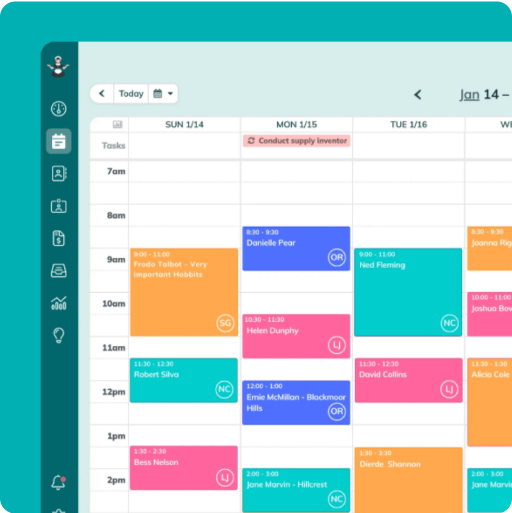
Simplify and enjoy your scheduling with a scheduling software made for maid services
- Have a beautiful calendar that's full but never stressful.
- Make your cleaners happy and provide all the information they need at their fingertips.
- Convert more website visitors into leads and get new cleanings in your inbox with high-converting booking forms.
- Become part of a community of 8000+ cheering maid service owners just like you.
Start your FREE ZenMaid trial today and discover the freedom and clarity that ZenMaid can bring to your maid service! Start your FREE trial today