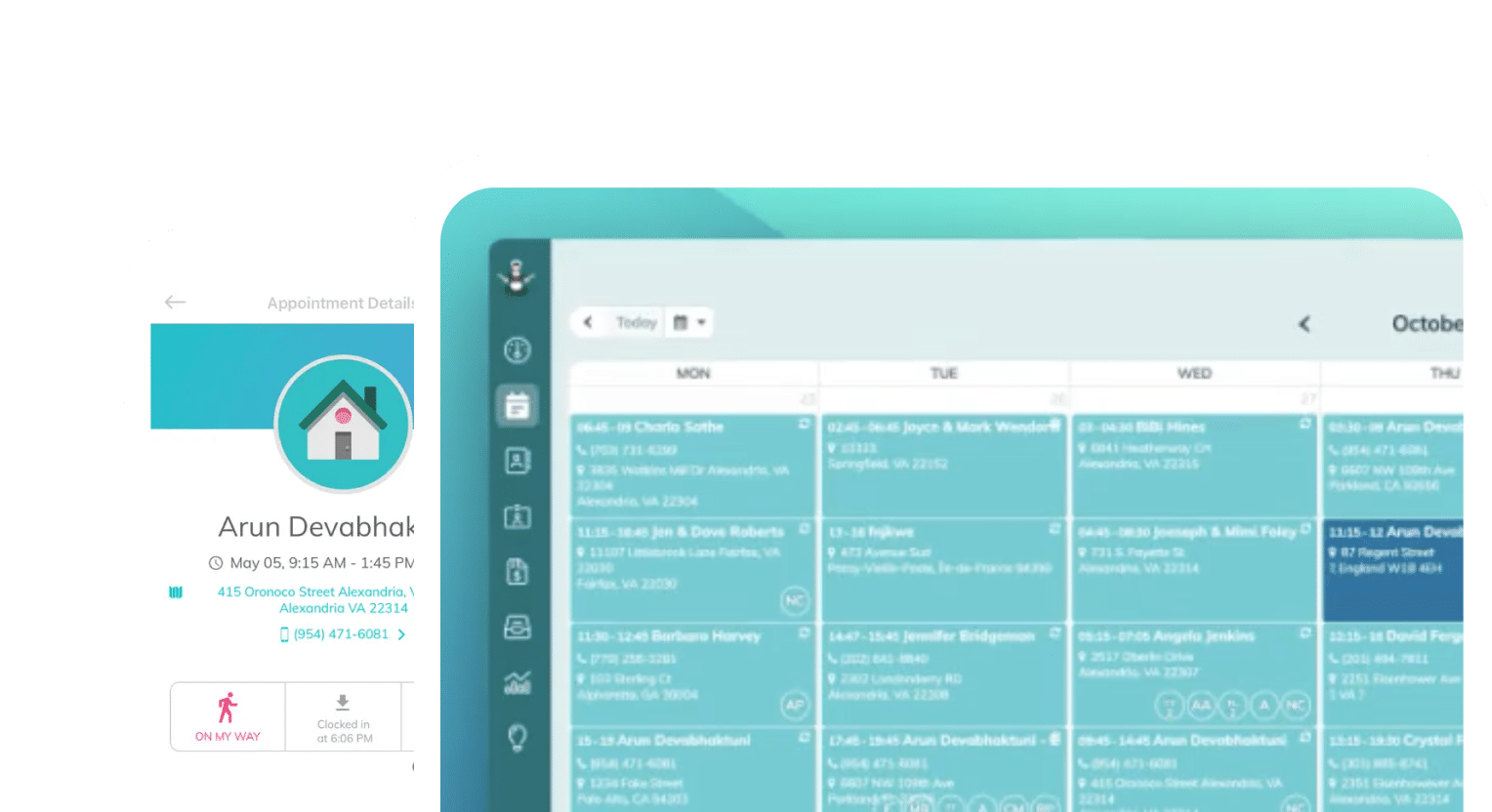
Frustrated with your scheduling? Try the easiest-to-use calendar app, made by and for maid service owners.

Brought to you by expert maid service owners
Listen on: Apple Podcasts, Spotify or YouTube
Introduction
Stephanie: Hello, everyone. Welcome or welcome back to the Filthy Rich Cleaners podcast. I am your host, Stephanie from Serene Clean. And today’s amazing guest is Victor Mijangos from The Mighty Maids in San Diego, California. And Victor has an incredibly inspiring story. He has built his business very quickly from the ground up. Only eight years ago did he open, and now he has quite the operation, and I cannot wait for you guys to hear his story. He’s also a fellow listener, which is really cool. Victor, thank you so much for joining me today. I really appreciate it.
Victor: Thank you, Stephanie, for having me on your show.
Stephanie: Yeah, absolutely. So tell me, how did you get into the cleaning business? I know that it was kind of inspired by your mom, right?
Table of contents
- Introduction
- From Summer Job to Business Opportunity
- Building a Team from Day One
- Training Process and Team Culture
- Creating a Unique Client Experience
- The Value of Mystery Shopping
- From Lead to First Cleaning
- Pricing Without In-Person Walkthroughs
- Leadership Growth and Development
- Protecting Your Team from Difficult Clients
- Emotional Detachment and Management Layers
- Team Structure and Call Out Management
- Encouraging Self-Care for Employees
- Managing Individual Cleaners vs Teams
- Multiple Locations and Expansion
- Scheduling and Consistency
- Tools and Software for Business Management
- The Power of Google and Reviews
- Reaching 600 Five-Star Reviews
- Expanding to Multiple Locations
- Commercial vs Residential Focus
- Staying True to Your Focus
- Understanding Your Why
- Finding Balance Between Ambition and Contentment
- Advice to Your Younger Self
From Summer Job to Business Opportunity
Victor: Yeah, it’s one of those stories where growing up summer, it was during the summer is the thing to do, right? So we got to San Diego, migrated here from Ensenada, which is where I’m currently doing the podcast from. And during the summer, she would just ask you to go with her. And while we clean these houses, it wasn’t really my calling. I think it was really difficult for as being a teenager before that, just to go out there and help her clean and all these tasks. But it started from there. I started seeing how she was able to provide for me, cleaning houses, right? And just seeing how, I guess I was inspired by the work that she would put in, and being able to take me to college and being in sports teams and just providing for me and my sister at that time.
It wasn’t until I went to college in Long Beach, where during towards the end of my senior year, I was thinking of, what can I do with my business degree? So I just started conversating with her and seeing the possibilities. And I gave it a go for a full year to test it out, test The Mighty Maids out, and how the market was in San Diego. And after that full year, I was really blown away. It was really successful and it was something empowering for the first time, to play the boss role, the CEO, the one who has now that ability to hire and talk to my clients. And just one of the things that really stuck out to me was the gratitude that most clients have, right, and that kind of relationship and feedback that we get when we go to their houses. That’s what I did at the beginning, and now The Mighty Maids is established company in San Diego, one of the highest rated and very proud to continue doing what we do.
Building a Team from Day One
Stephanie: That is so incredible. And what an inspiring beginning and motivating factor for you, from seeing your mom do the work you not necessarily loving it, but then seeing the reward from the clients. And I think that’s a lot of what draws many owners to this work, or makes us stick to it, is that gratification of seeing how we’re affecting our lives, not only from the clients side, but from the employee side. So I’d love to hear about what the beginning stages of hiring looked like. Any particular challenges. Obviously, you’re in San Diego, that’s a huge city. My business is in rural Wisconsin, so I would love to hear what it’s like to hire there. Was turnover a huge problem for you as well? Or were you able to get some really key people right away? What did that experience look like?
Victor: That experience at the very beginning, it came as an offer. Hey, if you want to try this out, I have a couple of girls on my team that are willing to, are looking to do extra work, right? That’s how I was really I guess that seed was implanted as to, okay, let’s see what I could do, right? And so from there, I started doing my own marketing, looking at different channels and getting those calls. I would get those calls after the information, bedrooms, bathrooms, all these details that allow us to give her a quote. I would then call my mother to get some feedback, and then from there, I would call the clients and then present them in the best possible way. That estimate I would take the girls, which was at that one, at that point, was only one or two that she had left over, and I would drive them to the client’s house. And I would do that walk in that interaction. And that’s where I really learned a lot, that first year of being inside their house and kind of just talking, talking to them and hearing their main reason as to why they would hire a maid service.
That’s how it started. Eventually, after we started getting more busier than in house was the way to go. We’ve been blessed with having employees ever since that come from larger families. And so it would happen that they would invite somebody that they knew, right, a friend, a family, if they had to maybe take some time off, they would make sure that they would recommend, cover. Yeah, recommend somebody, and that’s how initially started. Now we are currently at, I think, 19 girls, 19 employees.
Stephanie: Yeah, wow. That’s incredible. So I love that you mentioned that a lot of your staff are basically bringing other staff in and I’ve previously mentioned on the show before that we actually have a no immediate family rules, because we got burned so much. So it sounds like you’ve kind of had the opposite experiences, that it’s been a huge benefit to have this network of cleaners that are working with their families. How have you navigated that? If there has been issues.
Victor: Well, there has been, right? It’s part of it, I think. And I was just listening to one of your most recent episodes where when you were younger, you kind of have that you really don’t know that much, and so you trust a lot, right? And so, and because you just transparent and honest with them. You assume that it’s always going to be the same way from them to you, and so I had my few shares of bad experiences, and it just makes you better. As far as the scheduling process that you have, that we have, the methods of interviewing, onboarding and, yeah, that’s the way so far, that it’s worked for us.
Training Process and Team Culture
Stephanie: What does training look like for you guys? I’m curious.
Victor: So we have training for us. I am lucky to have two my first girls that started with me from year one up until today. So we always taking care of them. And one of the, really, one of the, I guess, one, our relationship is really that they know that if I’m bringing more people on is because we want to grow, we have a higher demand at that point, and so I pair them up with them, and they just do clients houses. They train with them for about two weeks, is usually the period that I have, and from there really determine if they’re going to be a good fit for our model, our current culture that we have. And of course, they were able to learn the way that we’d like to clean these our clients house, right?
Stephanie: I gotcha. So is it pretty clear right away when somebody starts that yes, they’re going to be great? Or how long do you typically give if you do make a bad hire, I guess, meaning they’re not going to work out? Are your trainers very quick to notice that? Or is it typically a good fit, pretty much from your guys’s interview process?
Victor: So far, I think it’s been pretty obvious. I think from from a few days in, you could tell attitude, the work ethic that they have, and the results that came in, and then also what I mean by attitude, the first few days, you’re always going to get corrections, and you’re going to somebody’s going to come in with a certain experience, right, a way that they like to do things, and then eventually we try to mold them into how we’d like to provide these details to our clients, right? We’d like to really offer our clients a very unique experience for them, and not just a very generic learning and so at that point where you have the attitude, how fast they adapt, and we are normally able to determine if they are good hires by the end of week two.
Creating a Unique Client Experience
Stephanie: Okay, yeah, that makes sense. Of you know, they either have it or they don’t. And I’m so glad that you highlighted the attitude, because it’s like, that is the number one thing, if they can’t take feedback, if they can’t stay positive, if they get sassy, all of these things, it’s long term that’s not going to work out. So if you see that stuff right away, when they’re supposed to be on their best behavior, right? They just got this job, then it’s definitely not going to work out. Talk to me about you just mentioned that you want to give your clients a unique experience. Can you tell me a little bit more what you mean by that? What do you do to make that happen?
Victor: Absolutely. So this is my approach, or the way that I perceive my company, and how we approach the cleaning industry. When it comes to residential cleaning, which is the majority of the business that we do, residential very quickly I was able to, my first year, I did a lot of mystery shopping as well, right? And so I wouldn’t, I would actually pay for my friends houses or family members houses to be clean.
Stephanie: From your company or from other companies, your competition?
Victor: From other companies. Okay, got it. Got it. Okay. And so I would study the whole onboarding, the questions, the conversation, how they provide these quotes, how they present themselves. And then after hiring, maybe I don’t know, 10, 12 companies that are locally, that are locally in San Diego, then I would kind of study what, where I stand, where I where I believe that there was more room to to focus on. And my experience of that at that point still today is, is there’s a lot of very generic companies that just want to get the foot in the door and just provide you a quote, and if it sticks, then, then we get the job. My approach is really more on asking these, making the client feel heard more than anything, right? There’s a reason why they’re reaching out to us last minute, or they really just want to get these off, get the cleaning off their hands, off their shorts. And so the way that I would approach it is really just to listen to to to their needs, asking them the right questions, to provide them something details, and just follow up with them before, during the process and afterwards, just to make sure that they got the the the experience they were looking for.
The Value of Mystery Shopping
Stephanie: So what kind of things doing the secret shop? I think that’s a fantastic tip. And I think I think some of our listeners probably maybe feel a little bit icky doing that, like they’re doing something unethical or shady. So what would you say to those listeners who are having those feelings right now about secret shopping?
Victor: I mean, to me, it’s totally the opposite. I know that big companies, they benchmark their competition consistently, so it’s more than and it also think it has to be on your background, right? There’s a lot of a lot of viewers that we have that there, they actually do the cleaning themselves, and they did it for many years. I myself have actually never cleaned a house, right? I started really with the with the business approach that I’ve learned in school, and kind of having the people that are the the experts and doing this, and kind of talking to them, making sure we have a conversation with the client, and trying to see if we’re how we match everything together to provide that client with that with that experience. I would say not to feel that way, because you learn a lot from what’s going on around you and where you see your company. You’re not just going to call any cleaning company or any solo cleaner, you’re actually going to call the people who are showing up on top in your city. And so you may learn something, you may see that you standing behind or feel just just one step behind them, or you’re ahead. And you want to double down on that. For me specifically, was the way that the phones were answered, the way that the conversation was really more informational and not so more not so pushy. Let me get the sale. Yep, and then also follow ups. I think they were also very great. That’s not an experience that I’ve had. It was very automatic, very yeah, automatic text, emails, and not so much of a of a personal touch, when when it came to working with these other companies.
From Lead to First Cleaning
Stephanie: Yeah, and I totally agree that it’s this is just learning. And I mean, you’re paying for the service. And the fact is, any body at any time could be opening a cleaning business. So any of their customers could also be doing the same thing. So there’s nothing wrong with it. We have certainly done the same thing of our competitors for the exact reason of what are what are people experiencing over there? What are they doing better? What can we learn? Because you know, all is fair in love or in business and there’s nothing wrong with with doing that, and all it’s done is given you information to provide the best service possible for your clients. And do you think that because you’re you were doing this on the more established companies that have gone from the sounds of it more automated with the communications and things? So can you talk to me from from you received the lead to their first cleaning. What does that look like? I’d love to hear that broken down a little bit more.
Victor: At the moment that I received the lead, we get our VAs on the phone, right? I think that’s number one. When you get that lead, you have very little margin to reach out to them and be the first one to get them on the phone, get them to talk right, to feel heard, and I think that’s very important, to get them to feel heard. What is it that they need before and then being able to provide a quote right there and then. If it’s not, if we’re not able to reach them on the phone, we always follow up by text. We get their information that they submitted online, and just try to provide them with a very, let’s say, accurate code, low side, a high side of the estimate. Once they are in agreement, and they pick a day and a time, then we send them the ZenMaid booking form, which has worked wonders for us, and just add them on the system. Make sure that they get their confirmation email there. We follow up with them 24 hours before, just to make sure everything’s still as we plan, right? On the day of we notify them 30 minutes before we arrive, and then we get to the house. Once we get to the to the actual house, we do this walk through with them, where we also allow them to see who they’re working with, allow them to show us their house and what their main pain points are, and then just let them feel confident that we’re going to take care of it, right? And so at the end of the service, well, at the beginning of the service, we’ll tell them exactly how much time we’re going to be there for. So clear expectations that didn’t go a long way. This is what we’re going to do, is how long we’re going to be here for. This is the results you should expect. And at the end, we offer them to do a final inspection of their present, or my team will also document the work at the after results of the work, and then just just go to the next make them recurring.
Pricing Without In-Person Walkthroughs
Stephanie: Yeah, would love to hear because many of our listeners are still still doing in person walk throughs to give pricing and feel pretty, you know, attached to that because so and the reason I want to bring this up is because you love connection. You love having that personal touch with your clients. And I’ve had even just this week, conversations of folks who are like, I really love that connection, and I feel that if I give up in person walkthroughs, I’m giving up that ability to do that. And one, would love to hear your thoughts on that just generally. And two, how do you guys handle because, you know, we go into houses sight unseen as well, right? We do not do in person walk throughs. We haven’t for years, and it doesn’t sound like you do as well. So what happens, or what’s the conversation look like, practically speaking, if what you are seeing in person does not jive with what was described during that? How do you actually handle that? Are your cleaners, the ones who are discussing that? Or do they call you and say, hey, and then you take it from there when it comes to the pricing and stuff? Can you talk to me specifically what that looks like?
Victor: Absolutely, I love to extend more on that. Starting off with that, with the last part that you mentioned. In the case, we go to a house, first, we give an estimate, a low side and a high side based on the square footage, number of rooms, the information that they’ve given us in the rating from one to five, let’s say where they say where they would they would say that the houses right, one being the cleanest, five being that it needs the most work. It needs to be planning. So then we base our estimates on that, because we’ve been doing this for eight years now, hundreds, thousands of houses per house in the last eight years. Then we are able to find the data and provide them a very accurate information. And the case that we get to a house, and so it happens very common. It’s very often right, you did not tell me it was going to be in this condition. And so we’re very transparent with them. Yes, our cleaners would communicate that to our VA, and our VAs would have that conversation with them at that point, before we start. We want to make sure that we do this at the beginning, once we do the walkthrough, before we start the cleaning, so that the client knows that we’re actually in the best interest to provide them honest information. This house typically takes us three hours, because A, B and C, it’s going to take us five hours. This is your initial quote as we offer the service that hourly rate, and it’s going to be now this quote, do you allow us to start, or should we just stick to the estimate that we have previously talked about? And do the most that we can in that set amount of time. That has been my approach, and also one, I guess, step above is just really, if possible, asking for pictures or videos before we arrive, right? If I’m, if I’m listening or my VA so listening to my clients where they’re telling us, it sounds like it’s going to be a lot of work. It’s a deep cleaning, right? And it’s a big house. Let’s say we try to ask for these for this information, and if they present it, they’re very likely to then be that client who is willing to work with you and be able to share this information, feels confident, you’ve now gained the trust, and so it’s our best interest to provide them with accurate information.
Stephanie: That makes a lot of sense. What about the connection side of things? Obviously, that’s important to you, going away from in person walk throughs. How do you make sure that you can still you’re still getting what you want out of this? Meaning, emotionally, right?
Victor: Well, I think in person estimates does very good, right? When you’re when you’re a smaller operation, when it’s just you, and maybe I don’t know, four, six later, right? But after that, realistically, how are you going to, this is my thought. How are you going to go to all these houses, especially in San Diego? It’s a big city, as you mentioned, beginning, you cannot go and drive to these houses just to provide an estimate, where you could really, I guess, work on your skills when it comes to asking these questions, right? And try to identify before having to go out there. Even if somebody asked, ask you or ask us, hey, can you stop by for an estimate? We tell them, unless it’s commercial, we probably won’t, right? Unless it’s a really huge house, which happens then a two bed, two bath is going to be the same, right? It’s only going to take us this much time or that much time, and so hasn’t really been a major problem. I think that the more you grow, especially in residential, you’re not going to have the time to go to these houses, even though the connection might be stronger, but that’s why we teach our VAs to have these conversations with them and see we get a hey, we get there and the job is twice as long and it costs you twice as much, and you don’t want to go through with it, then we try to see if we can work out something with them at that point, which is easier than having to drive to every house. That means an estimate beforehand.
Leadership Growth and Development
Stephanie: Yeah, absolutely. And as you know, as you scale and grow, obviously, you guys get so many leads every single week, I imagine it’s simply not practical. And you kind of alluded of in the beginning, when you the owner, are the one managing everything it does. It feels good, for sure, but sometimes we have to put what feels good on the wayside of okay, what is my highest and best use of my time as as the leader, as the the CEO. And you know, I know that for you, you have, you’ve evolved a lot since the beginning of the business, specifically in leadership and and your kind of traits. So I’d love to hear more about that. Of you know, you started this eight years ago. I don’t know how old you are. You look young. How have you changed as a man, as a leader, because of the business, specifically over the years?
Victor: That’s a very good question. So I thank you for for for asking that. My approach from the very beginning, and I had this vision with my company, to always be learning not only what’s working in the company, but also what’s working for my team, right? What’s given them a good experience, what tools they’re using, what approach, what methods, what they prefer for us to handle and to for them to have specific notes to follow when they go to a client style. And what I mean by this is just having consistent feedback, if it’s daily, if it’s weekly, then transform that, gather that, and be able to present that to them on a monthly basis, talk to them, what’s working for them. What do they see in my company that needs adjustment, that needs improvement, right? And and really more than for my clients I work for for them, so that they feel motivated, they feel backed up and confident that they are being employed by somebody who really cares about them and has and makes this job, it’s already heavy as it is. It’s always it’s heavy work as it is, so to make a little bit more pleasant and more respectable for for them and for the and for the company.
Protecting Your Team from Difficult Clients
Stephanie: Just really focusing on the employee experience. Because, yeah, it is. It’s very physically demanding work. It’s hard. It’s typically, you know, not respected in so so many ways. So it is our responsibility as leaders to help protect them from, you know, frankly, shitty, shitty people. And I mean, have you had any particularly harrowing experiences with a customer where you had to cut services, or maybe they accused your cleaners of something that you that comes to mind?
Victor: Yeah, of course, of course, you have a horror story.
Stephanie: I mean, you’ve been in business for eight years. You probably have 100 because I certainly do.
Victor: Yeah, it’s crazy. I think I’m also a little bit like, these are the things that I always wonder, how do other yeah, establish cleaning companies, their leader, the person who’s in charge or who has to ultimately take a decision, how do they become better at handling the situations? I came to this, the to the podcast, to the conversation, a little bit already disturbed by a previous conversation that we had earlier. There’s just examples, weird examples, of people who just, I don’t know, I stopped really thinking about it too much as to why they, why they behave the way that they do, right? We had a, we had a situation recently where we walk in, it’s an apartment, but it’s just, it’s just that, you know, it’s just everything’s everywhere, wraps, the food and cups and things just on the floor. And so we are asked to, let’s say, clean a fridge. For example, when you open up the fridge, it’s just bad, you know, there’s everything’s stuck in there, so you don’t know what. So they ask you, hey, please remove A, B and C. You do this, you throw it away, sanitary. You clean the fridge. Then they come back and they’re like, hey, but you threw this, this and this, and so then now they, they try to put a part where, why I’m not gonna pay you. You threw hundreds of thousands of dollars out of my fridge, so now you owe me. It’s things like that at the beginning, I was also impressed by it happened only my first couple of years. It never really happened after that, though, people would accuse those my my golden ring and my necklace diamonds and all these things are gone. And so we’re like, we call immediately, and we know we haven’t left the place for more than 5, 10 minutes. We show up ourselves, and we even invite them, hey, we’re going to be there. We could, I mean, this is serious accusation, so I know, I know we didn’t. So we’re going to show up all together, right? We’re going to, if needed, we’re going to call law enforcement so they’re present while we have this conversation, because we want to be transparent with you. There’s no need for me or for cleaners to take a necklace when we’re here to clean, not to do anything else. And people just go silent, right? People just go silent. They don’t really respond back. They don’t show up. You’re there, and nobody’s answering the call or text or the door anymore. So it’s just one of those things that are part of it, right? And no matter how good we get and how much experience we will get throughout the years, these are the things that you just become better at handling. I remember being very emotional the beginning about this situation. There was, how are you going to how are you going to withhold $400 of service? Because whatever, just accusations, right? And at that point it’s it hurts, because it’s just your work and you’re paying your cleaners and materials and your time. But eventually, I mean this, there’s not so much we can do. So I just really try to let flying go to the next one.
Emotional Detachment and Management Layers
Stephanie: So you feel that one of the traits that you’ve kind of established is being able to be a bit more emotionally removed from the situation.
Victor: Geez, I guess, yeah, then having VAs in place helps a lot, right?
Stephanie: Oh yeah, a layer of management to keep you away because it’s hard not to take it personally when it’s yours right, where it’s, it’s not their company. This is just their job, even though, of course, they care and they care and they want to give the customers a great experience. When it’s you or me answering the phone and dealing with this problem, it’s way harder when people are lying, or, you know, trying to get money out of you, basically, it’s frustrating.
Victor: Yeah, and you’re right, when it comes to you, you feel it personal, I guess, especially in your first few years, and and then you see that your reactions are not the best sometimes, right? And so it only could happen to you a few times where situation now escalated, because you can’t really argue with this. Can’t really argue at all, really when you there’s an argument, there’s nobody that that’s that’s gonna and that’s gonna win. So being less involved in that part, delegating that so that we have filters, one, two filters before that, before the that then escalates to us, and we now have to take a decision and allow our VAs to do their part.
Team Structure and Call Out Management
Stephanie: You mentioned VA several times, and I’d love to hear kind of your management structure, what exactly is your responsibility day to day. And also, just side note, it sounds like you run teams for your cleaners, right? Is that how you guys structure the schedule?
Victor: Yes, teams of two, teams of two. Okay, got it.
Stephanie: That makes a lot of sense. And obviously, you know, I’ve talked about, we run individuals, mostly. What do you love about running teams? For those that are considering both options?
Victor: Well, that has been my, my, my only experience is working in teams up to I think it’s I like it a lot, because it allows for for us to take on more work. Where you could do one single cleaner, could do one or two houses per day. Sometimes you could do three or maybe four recurring, four recurring clients, houses on the same day. When it comes to teams I see on the also on the safety side, I feel more confident, and I think they might, my girls do as well when it comes to being accompanied by somebody during the while being in these houses, the case of an injury or any miscommunication, anything like that, that makes them feel unsafe. So that has been my approach from from the very beginning, teams up to the driver, then the co pilot, who’s really communicating with me, or my VAs when they’re going to arrive, if they have any questions, any anything came up while they were cleaning. And from what I see, really, from what I see every time I see my girls, I see a strong connection, a strong bond with them, where they could laugh and they could joke and they and that feels very good to know that that that we’ve created, or allowed for that to be created in our company.
Stephanie: Yeah, totally, totally agree in that safety, I think, is one of the biggest benefits, of course, of running teams and not having having individual cleaners out in the field. So something to be aware of for our listeners, of choosing that path, of yeah, something to consider. I buy all my cleaners, pepper spray, and try to be cognizant. Obviously, safety is a huge concern for all of us, or it should be. What do you do? So say you have a team and one of them is out sick. What if it’s the driver? These are the kinds of things that I think about when running teams. How do you handle that? Because I’m sure that happens every week. You know, it certainly does in our business.
Victor: Yeah, I’ll answer that, and then I’ll ask you a question, because I’m also curious as to how you do it with with single cleaners. How you approach that? Maybe a lot of us who will be hearing or watching this get learn, identify team versus solo cleaners. What do I do if somebody calls out? Well, we always have additional cleaners on on call or available on call. Yes, yes. So we have a list, right? We have a list of cleaners who provide their availability, let’s say, a day today, somebody were to call me last night because they started feeling sick, or, I don’t know, late hours of the night or early morning their car didn’t start, or something like this. Honestly, it hasn’t really happened so much in eight years where I see or identify this as an issue that we have to call out and somebody else has to come in. But luckily, because we have the this, I guess I have the support to either quickly call somebody that’s on on call, yep, on call, sorry, yeah, on call, or both of my VAs be able to work something that we pair teams, because now we have four, now only three should have, and we kind of arranged yes, and so that’s the way that I’ve done it so far. Can’t really complain or have or can tell you that I have major issues not completing a certain job or a certain day or and became a bigger issue because somebody didn’t show up because it happened.
Stephanie: Yeah, absolutely. I’m curious, just because you’re in San Diego, and demographically speaking, are most of your cleaners Hispanic? Or do you have yeah, I assume so. Just based on where you are in the country, I feel like Hispanic cleaners don’t call out ever, compared to I have so many call outs every week. You would be stunned. I will not want to experience that.
Stephanie: Yeah, yeah, no. So I am envious of you, because, yeah, every single day at this point there’s somebody calling sick. So maybe I just hire a bunch of softies, I don’t know, but they all got kids, and they’re all getting sick all the time. But yeah, I’m curious, what do you want to know about running individual cleaners?
Encouraging Self-Care for Employees
Victor: So again, before I ask that, that that question is to answer your question, the comment here, geographically, we are located in a very sweet spot right. San Diego is literally minutes away from the from the border that we have a lot of workforce available, right? And so one of the things that I should say though, even though they again, they might not feel well and they don’t really call out, I always like to let let them know that if you don’t feel 100% we’re not going to be mad. It’s best that you take the day off, whether if it’s whatever sickness or the flu or family, or even mental really, a mental health day, right? It’s very important, because that’s how they’re going to show up. And energy, energy can be transferred contagious that way, where you just feel down, and maybe their results are not going to be there, and my and our clients are going to are going to feel that. So we now have that where they can feel confident too.
Stephanie: Yeah, such a good leadership trait of encouraging that of listen, we want you to take care of yourself. You don’t need to run yourself into the ground. And I think maybe a lot of people who have have worked elsewhere, they’re afraid to do that, because there’s gonna they think that there’s going to be, you know, revenge or or ramifications because they were taking care of themselves. So I think that that’s an excellent trait to have as a leader, for sure, to encourage that.
Victor: Thank you. Can one question that I had for you that I can’t really wrap my head around it, let’s say somebody calls us right now, calls our us. They’re like, I need a deep I need a move out cleaning. And it’s a four bedroom bat. It’s 1850 square feet, typically for us, that would probably take us, I mean, four to five hours between two ladies. How does one single cleaner? Or how do you approach that? One single cleaner to?
Managing Individual Cleaners vs Teams
Stephanie: First time? Yeah, for time clean, move outs. Those are all going to be teams. So we will run teams anytime a job is going to take longer than eight labor hours, that’s where we start to do that. But that’s really the only situation that we will do that. So and then one of those cleaners is going to be that client’s regular cleaner, most likely, that’s the goal, right? Because then they’ve been there. So, so people are working together on occasion, but I would say 90% of the time they’re working as an individual cleaner, and only in those situations are we pulling teams. I feel almost that teams make more sense in cities. I don’t know why I feel that way, but I just feel that way. And you know, because I think that even thinking about traffic, and just you said, getting as much out of the day as possible, it’s just it’s such a different scenario that that you’re running. What kind of challenges do you guys face being in such a populated city? Obviously, you just said one of the benefits is you have a huge workforce to be pulling staff from potentially. What kind of challenges are there? Specifically do you feel from from being in a city?
Victor: The challenge is probably going to be the the logistics side of it, right? I think the logistics is always one where we we’ve improved in creating and those and creating their how do you say the route? Yeah, the route before we actually start the day right. Once we have a full schedule, then we kind of create the route to optimize the drive time and spend less time driving and more time working. But you always get hit with when you’re going from your second to your third service, if you have to hop on a freeway traffic, right? Things like that. That’s definitely one of the biggest ones. And I think as as the last, I don’t know, six to 12 months, we’ve been getting more. More attention, more demand on the northern side of San Diego, and instead of driving up there, we recently just started operating the second location in a northern area to cover more ground and be able to spend less time driving in more time actually in these segmented areas.
Multiple Locations and Expansion
Stephanie: That makes a lot of sense. So when you say a second location, do you strictly mean you have a physical place for them to go get supplies? Or what does that practically look like? Meaning the cleaners go to that place to get supplies and then just stick in that area. Or how do you handle that part of things?
Victor: No, the second location is fairly new, and it’s, it’s, there is, there’s, there’s not an office, per se, but there is a location where we have somebody that’s overseeing inventory, making sure that everything is being provided for that the products, the materials that we provide our cleaners with, are actually up to standard clean and so that is, that is where we’re currently at. We do and very excited to have a second office in that location, which I think inevitably it will be necessary for the time being, we don’t have a second office in the northern area of San Diego.
Stephanie: That makes sense, yeah. And honestly, for us, we have three locations, but only one where the office staff actually, it’s manned, right? So the other ones are simply, you know, places the cleaners can go to get their supplies and that area. Excuse me, so you kind of alluded to with the routing topic. I’m thinking how are you guys just literally looking at the cleaners you have available and assigning jobs, same day? Or are you keeping the same teams on the same houses? I know that obviously you use ZenMaid. So what do you mean by that? When you’re saying, oh, we’re looking at the day and figuring out, every single day, you’re figuring out who gets what, or?
Scheduling and Consistency
Victor: As far as for jobs, continuing the same cleaners with the same clients, yeah, we make sure that they are there and the client is today. We have flying eggs and they and they request to my cleaners. We make sure that at least, you mentioned, one of them is present, which is so yes, with ZenMaid, we’ve always kept the record of who’s going right, and so when the cleaner then that now it becomes recurring, and they will always communicate. I want them to as my preferred cleaners, and that’s the way to go, and that’s how we also create some consistency and clarity. Because if you have a group of cleaners, you’ll see quickly who are the who is a small group that always gets requested, right? And so it’s interesting, because you get to a point where these players are so good that they just can’t they cannot be in two different clients houses at the same time. And so we then have a secondary team of cleaners that the mayor we try out for them in the case that, hey, she’s not available. They’re not available today, then we always have them. Or if you’d like to maybe push the day one day your appointment, one day before, one day after. But that’s also something that, really, I came to learn after a few years, how much the client values that consistency, the feeling safe, and they trust the same team in their house without them having to be there seeing them, right? But they just want to make sure that the same team or single or or lead cleaner that’s going to be in charge of their account, yeah.
Stephanie: That’s definitely one of the areas that clients get the most frustrated with. And there’s, you know, turnover happens. There’s only so much that you can do. But in even if you’re hitting the same standard, it’s just psychologically, they like to have the same person as much as possible. It puts them at ease. Because, yeah, it is such an intimate thing that you’re trusting somebody with is your home, especially if you’re not home, right? So I love to hear that you guys try to focus on that consistency of personnel as much as possible. That made me just think of something else. So I’m curious, when did you implement using ZenMaid? Has that been since the beginning? Or when did you put that into place? And what kind of positive changes have you seen by having a scheduling software?
Victor: Yeah, that was put into place by probably mid or by the end of my first year, which was really the first year a trial run.
Stephanie: Yeah, I’m curious, how did you handle the schedule before?
Victor: The schedule before? Not having so much work on the first year, right? It was only one or two teams at most throughout that, throughout that that year, a lot of pen and paper, a lot of pen and paper, and a lot of Excel and Google Docs, is what I use. And it’s funny, because sometimes, I don’t know, start cleaning the house, and you look at your closet or a storage unit, and you and I find these, first year recorded the phone number and the estimate that we gave them and the number and the client’s name and the address and all these things. That was how I did it. First it was pen and paper, Google Docs and Excel. And again, I was very lucky to find ZenMaid at that time. And I just felt it was very easy and practical to use up until today. It is.
Tools and Software for Business Management
Stephanie: Yeah, no, it is. And I just can’t imagine growing, especially thinking about, okay, you said you have, what, 19 people, managing, managing that many people’s schedule. Any other way would just be, be insane. So I love to hear that you guys utilize that, that software. What kind of other softwares do you use in the business?
Victor: Other softwares for any of the areas?
Stephanie: What do you use for bookkeeping? What do you use for payroll? How do you how do you handle marketing, that type of stuff? I’d love to hear that.
Victor: For payroll, we always use Square. Oh, okay, and it works for us, because I think it’s also, I think it’s very simple to use and to send estimates, send invoices, reminders of his invoices. It’s also a good database, because all the clients that have paid with a card from day one till today, their information gets stored, and then you could remark it to them using their email marketing tool.
Stephanie: I didn’t know Square had email marketing. That’s awesome to hear how cool.
Victor: Yeah, at first it was between that and was it MailChimp? MailChimp, yeah. And I thought, why am I using at that time, that was my, my thought process. Why am I using these two different ones, if it’s already capturing all the clients who have already purchased our services, I’ve talked to them, or our team has talked to them. We’ve been in their house, and it gives you very simple template to use and suggestions. And now with AI being integrated, it just makes it more interesting and easier to to navigate, as far as marketing. And this is so I think this is one of the hot topics. Forever will be one of the hot topics, and in our industry, where at the beginning, it was really mostly Yelp. And at that time, Yelp did wonders, they just brought so much traction, and I started playing the review game. I think that was one of the things that sucked in, before I even knew how to manage or create this cleaning company. It was what I saw that stuck out, which was, oh, the reviews, right? And so we started really focusing on that a lot from day one, which up until today, I think, has been a key factor for the consistent leads people calling and telling us, you need to sell yourselves, because it’s social proof is here, right? And then and then that, once identifying that, always having a system where it’s easier for our VAs to follow up and stay on top of these reviews, whether it be something negative, where we could find a before it gets there, try to find remediation, and if it’s positive, to just, you know, follow up. A lot of what we do right now, a lot of it is mostly on Google, and Google ads is, in my experience, where anywhere else really, it’s, it’s, it’s not really effective. And the way to respond to these leads are not I just it’s just too much, too much work. I think, when it comes to really getting quality leads elsewhere and and maybe I should also ask, what do you use? What do you suggest, or has worked for you, or currently is for getting your company in front of people?
The Power of Google and Reviews
Stephanie: It’s definitely going to be Google is king for us. It always has been, and I’m so glad to hear you know, for our listeners, just if you’re hearing over and over and you’re so sick of hearing us talk about reviews, but it’s it truly is the lifeblood of the business, because if people are searching, and they’re looking at your competitors, and they’re comparing you, it’s that could make or break you, not just sheer number, but quality of it. How recent are these reviews and obviously everything else around the Google business profile, right? Making sure that you’re adding photos using the updates, all just anything related to that, I think is going to be still number one for us, you know, adding video testimonials to our business profile, they’ll sell for us for years and years, you know. And so that’s always going to be king. Of course. Word of mouth is still quite, quite prevalent of where, you know, our current customers are getting us more customers. And then finally, Facebook is kind of a tertiary important branding. Is Facebook. A lot of people window shop on Facebook, or they’re just getting awareness, and then they go and Google, right? And then, so where are they coming from? Well, they interacted with us on Facebook, most likely. But being such a small town, maybe that has something to do with it. But the nice thing is, in a city, there’s plenty of communities. There’s community pages, that type of thing, where people are asking for recommendations that that sort of thing. But I truly feel Google is is still and always will be king, because every single review that we get there is going to work for from now till the end of time, right for the business. The reviews that I got six years ago, they are culminating for this mountain of proof, right? So, yeah, totally, my experience as well.
Reaching 600 Five-Star Reviews
Victor: I wanted to ask you something. Maybe it’ll be, I’ll hand it over to you. I think this is going to be great for, first of all, with the reviews part, right? You get to a certain point just last week, I think two weeks ago, I uploaded a video where I was just very excited, because we passed the 600 five-star review mark. That’s amazing. And so when I saw I was like, geez, this is amazing, because, as you mentioned, once the company, cleaning company, gets to that point, it’s here to stay right. If you’ve managed to brought it to this point, you work a certain way, you operate a certain way, you have certain habits that you now implement, and your company works a certain way that we can only get better from here. We are better now than what we were last year. I’m sure you were better now than when you were two years ago. And you know more things. And so as time progresses, that’s going to be there, right? Those reviews are not going to go anywhere. And you get to 600 and get to 700, and eventually get to 1000 a few, a couple years from now, and it’s just there’s no way that you’re not going to be seen, right? Yeah, but my question to you is for, I guess, for, for, for the viewers who get to a point where they’re generating 50, 60, 70, 80,000 and they are in that lingo where, okay, it feels like either, how do we get to that next point? Because, but you don’t have these kind of you feel confident you have the answers as to how you actually get there. In your case, I’m very impressed where you now have you had three locations, yeah.
Expanding to Multiple Locations
Stephanie: Yeah, all regional in Wisconsin, though. So they’re all within driving distance of each other.
Victor: They are a driving distance. Okay, so how do you then, how do you then jump from one to two and two to three? And I guess the main reason why they’re all it’s sort of driving distance. What’s the your approach to that? Or, if you can share a little?
Stephanie: Yeah, and the reason for us is because, or the reason I have stuck to regional basically, and we have not moved to, you know, even still within the state of Wisconsin, moved to a location a couple hours away, right? So, for example, the capital Wisconsin is Madison, right? We could open a Serene Clean in Madison or Milwaukee, but logistically speaking, and operationally speaking, I know the can of worms that that is about to open, and I would not feel comfortable without having an in person manager at that location in order to cover what I know is going to happen, which is call outs, fight the biggest limiting factor is going to be staffing. Most likely it’s not going to be marketing. It’s not going to be that. So that is the logical reason why we’ve stayed regional so that we can pull from each of the locations, any of the staff are expected to drive to any of our service area if need be. If we have to pull somebody from one location, that’s that’s their typical service range, we will do that. It’s not ideal, but it allows us to cover and get more flexible with that, whereas that is not possible if we open further away. So if, when we do that, because I could absolutely see, you know, it’s still young, it’s only six years old, right? I’m, no way would I do that right now, but maybe in two years, you know, we’re, yeah, let’s open up in Madison, right? That would be, for me, I would, I would feel most comfortable having some type of field manager that is doing because we’re W2 right? So training is another thing. So I would have a field manager there that I hire to do all of the training, cover the cleanings when necessary, get supplies, all of the kind of field stuff, operationally, yeah, all of the phones, all of the back end management would still be done out of our main office. Truly would be about the field management. That’s why I would do that. And then if we are going to get into the commercial side of things and have to do walkthroughs, that person would also be responsible for that. So if I would take that next step, that’s how I would do it. And then, yeah, all of them, everything is exactly the same, right? When it comes to the back end stuff that cannot be done anywhere, literally, from anywhere the marketing and stuff can be done from anywhere in person. Networking could also be something that that field manager would be responsible for, because obviously, hitting the ground can be very useful when you’re getting into a new market and making those connections. So it can be done. It maybe will be done someday for Serene Clean, but honestly, we’re still just, there’s still so much untapped potential in our in our little towns. I truly feel, we haven’t even came close to hitting our potential in our third location, specifically, which only has 50,000 people in that city. And I’m, oh, we’ve got years still to because we do some, you know, commercial. We have doubled our you guys don’t do any commercial, right? Are you all residential?
Commercial vs Residential Focus
Victor: We have, we were maybe 10% commercial, okay, and a lot of them. And also, that’s interesting, I’ve heard you a lot say how the first few commercial accounts came into your into your life, right? They came calling you. A lot of our commercial accounts end up being from professionals that we work with, realtors, property managers, people who home builders, post construction, but also mostly the commercial accounts that we get are referrals from our residential clients. So yeah, I guess. How do you? How do you now approach new commercial accounts that don’t necessarily come to you calling for help? Yeah?
Stephanie: You know, I got a lot of our commercial from cold calling, cold emailing and and just doing drop offs, you know, literally having my grandma take donuts with with sales sheets and dropping off, or me doing that, and making that in person connection and getting past that gatekeeper, meaning that administrative person who does not want to see salespeople, that’s why you bring the donuts. So that was very, very fruitful for us, and especially during COVID. I remember how many commercial I got from, from cold calling, cold emailing, excuse me. If I were to do it again, meaning, you know, right now, we are not pushing for commercial growth at all. This year has been horrific with turnover and all of these things. But when I am ready to push for commercial there is a software called Cohesive AI, which is specifically used for, excuse me, let me die real quick. Oh my gosh. It’s been so annoying. Podcasting and being sick, it’s very frustrating. Cohesive AI is used for procuring or going after leads for services like us local services. So that is a AI software that I would definitely use. I’ve seen a lot of owner friends who have had success in a particular franchise that I work with, they use that software. So that’s what I would do for going after commercial. But yeah, there’s just it’s it’s much harder to get commercial. Of course, it is so much harder to get commercial, but once you get it, it’s so sticky and huge jumps in revenue, of course. So it’s attractive for a lot of reasons. Absolutely sorry. I’m so sorry. The editors will have to work harder on this picture, more so, more so than usual. But is that something that you ever foresee you’re you going after is bigger commercial, or do you really feel bread and butter for you is going to be residential?
Staying True to Your Focus
Victor: Okay, so I’m going to open up on that part because I’ve always seen every time we go to different cleaning, let’s say events, mixers, Issa or anything that happens around year year round, I see that there’s a lot of potential in commercial, right? And so you hear that part where revenue is a huge influencer, right? You want to make sure that your company grows and that you have steady work, whereas residential, it’s, it’s a lot of seasonal, right? So sometimes you’re right in the way we’re very, very happy because your schedule is full now you quickly have to look for for additional help to to for the demand that’s currently going in. And then you have these, these moments where you’re wondering, where’s the word? How come people are not really calling that much, or where are my clients taking pauses, things like that? And so I’ve tried it, I haven’t really dived in full to it, because, as you mentioned, it’s just a lot of going back and forth and being in person and trying to jump over the gatekeeper, and now that these, that there are these softwares that you mentioned, AI that could really help with, with the cold emails and approach, I never, I never closed the door to it. And look to learn from others in our industry who have made switch or or are doing a little bit of both, but ultimately, to be real with myself, I think that residential is something that that, let’s say, motivates me a lot. I feel more I feel more in control. I feel more that I know this industry then, and so that ultimately wins for me. I see this, okay, let’s try to get commercial but I see that it’s just, I don’t know, just for me, it works so much better to the residential but the way that I am, I think ultimately there will be a point in time where, where I get commercial accounts, and I started laying the ropes there. And I start seeing the the whole art of, kind of going back and forth and talking great and getting more. I think it has to do a lot with with with being networking, right? And getting to know people, to actually get your foot in the door. So that’s we’re currently at, and maybe about 90% residential, 10% commercial.
Stephanie: Well, and obviously it’s working for you. And that’s the thing is, don’t, don’t always quite if something’s going really well, then it’s why do we need to change anything? Right? And you said, only when things are going not so well, or leads are stagnating, or what have you. But always asking, why do I want to do this? And is that? Why worth the cost of what it’s going to take in order to make that happen, or meaning you’re going to be less focused on residential potentially? And that’s where some of our guests have absolutely said, do not do both. Stick to one. Stick to one, because you’re going to you’re going to lose focus. And that’s absolutely it’s it. There has been many, many challenges by trying to juggle both, and they can be incredibly overwhelming at times. And it also has made us it’s forced us to, you know, make decisions of not every most commercial is probably not going to be for us, because it’s going to be in the late evenings, right? So we’re not going to do whole different specific types of industries, because it’s this is evening work, and we’re not really wanting to take any late evening on. We’ll take early evening on or whatever. But it’s just it’s harder to staff when things go wrong or those cleaners call out. It adds a lot of complexity that you simply don’t have to deal with if all of your cleanings are happening during the day. So it’s something to consider, for sure that the the juice can be worth the squeeze, but it just depends what you’re willing to sacrifice or willing to pay to have that coverage. Right now, you have to have maybe a nighttime on call or or what have you. So a lot of things to consider. It’s not just I know I talk about it all the time on the podcast, because it’s just been a part of the Serene Clean story. Is a ton of commercial, but it doesn’t mean it’s for everybody, so not everybody needs to jump into it necessarily.
Understanding Your Why
Victor: You mentioned, I think, very important. What you mentioned is the why, right? Think about it. Are we chasing really just a number and a higher income and really going to become that, become that person, whatever it takes to get those commercial accounts. What’s your why? And I think that’s what brings me down and centers me once I get to the tool. Am I doing both? Am I doing this? Am I sticking to residential? I think we should really ask, why are we doing this? And to not forget, I mean the reason why we’re in business, and why we decided to change our lives, from employees to now creating jobs, the responsibility that comes with it, how many hours we actually work, when, and how much we think about it, so much about our business and and what we need to do to nurture it and become bigger and better year after year. Really ask yourself, why you’re doing this. Is it for time? Is it to, I don’t know, to just have more, more time to enjoy doing the things that you love to do, which I think ultimately that’s that’s the main price in life, to get a chance to do the things that we love the most, absolutely.
Stephanie: And I think that that even just saying that of, oh, why haven’t we opened more locations in Wisconsin? It’s well, that would take up more of my time for maybe, if the only gain is financial, I don’t really care about that anymore. I used to or I’m very comfortable. So that comfort has been, oh, do I really want to do that? Is that really what I want to do? Or is this my ego saying I want it to be really big?
Victor: Exactly what you said is, exactly what, what, what I’m sure a lot of us have gone through, will go through and currently going through, and governs our mind a lot. But you put it perfectly. Is it, is it really just for financial and is it really what I want, or okay to be comfortable and to really dominate, dominate your, your, your area?
Finding Balance Between Ambition and Contentment
Stephanie: Yeah, yeah. And there’s, there’s so much pride and just building something truly great, right? That is, or one could say, mighty perhaps, you know, growing something very mighty is a fantastic feeling. And it’s, you know, it’s our pride and joy, right? But not getting too wrapped up in more, more, more. And that’s a tough, where is that, right? Especially when you have this entrepreneurial drive. I needed to be obsessed and psychotic in the beginning years. This is relaxed Stephanie, you don’t, you don’t know that person. She was an insane nut bag, because she had to be.
Victor: In order to right, in order for you to be selfish and grow and do what you do now. And I think it’s amazing what you do, because it just you, a voice to a lot of people, right? It’s so much it’s something that you started and you were that way for a reason. You were a different version of yourself, same person, different version, different stages. But now it’s dude, people listen to you from all over the country. Some type of reassurance and to learn and to just know that they’re not in it by themselves, which is something that happens a lot, right? Being a business owner, I think we can only talk about it for the in the bit in the cleaning industry, how sometimes it just feels not only overwhelming, but you feel that you’re alone in this because you don’t work with other bosses. You’re, you are the one who has to take this decision. So I congratulate you on on everything that you’ve done and what you continue to the value that you bring to our community.
Advice to Your Younger Self
Stephanie: Oh, well, thank you, Victor. That’s so sweet. And I just love, I love connecting with fellow owners, and also, even just this conversation, conversation showcasing the the myriad of different paths that we can take to all get to the same thing, right? You built this from nothing, just like pretty much everybody listening right now is building theirs from nothing, and you don’t know where it’s going to be in five, 10 years. And that’s really exciting, and as difficult as it may be for whatever is going on, for everybody listening, it’s this can be a really incredible thing, and you just don’t know, you just have to keep going, right? So I’m sure tenacity and perseverance has been a huge, huge reason that you have been successful. And you know, if you were, if you were to talk to your younger self, who was a year in, what would you say to him?
Victor: Dude, if I were to talk to my I’m a very, I’m a person who really just wants results fast, and can’t really see that the what’s going to happen for years from now. But if I could talk to myself, just let I would tell me to relax and focus and enjoy the process. Enjoy the process so that you’re not really feeling that. Oh my god, the next what I did, I need to do next and just really enjoy the process and to have that reassurance that things will go well, because that’s just how they do.
Stephanie: Yeah, thank you, Victor. Where can our listeners find you or follow you if they want to follow The Mighty Maids journey?
Victor: The Mighty Maids is in all platforms, TikTok, Instagram, Facebook, under just The Mighty Maids name.
Stephanie: Well, we’ll definitely link that below. Thank you so much for your time today. This has been so wonderful getting to know you, hearing your story, and everybody listening. Leave Victor some love in the comments. Hit the like. Hit the subscribe. Join the ZenMaid mastermind. If you haven’t already, we’d love to see you there, and we’ll see on the next episode of Filthy Rich Cleaners. Bye bye, everyone. Thank you.
Note: This transcript has been edited for clarity and readability.
Resources Mentioned in This Episode
- ZenMaid
- Square
- Cohesive AI
- The Mighty Maids on Instagram
- The Mighty Maids on Facebook
- The Mighty Maids on TikTok
- ZenMaid Mastermind
QUICK TIP FROM THE AUTHOR
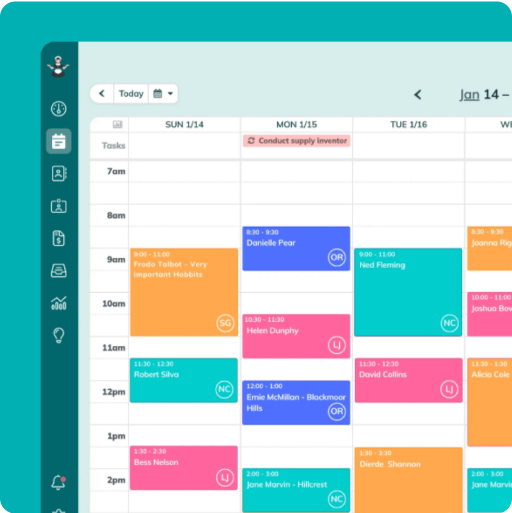
Simplify and enjoy your scheduling with a scheduling software made for maid services
- Have a beautiful calendar that's full but never stressful.
- Make your cleaners happy and provide all the information they need at their fingertips.
- Convert more website visitors into leads and get new cleanings in your inbox with high-converting booking forms.
- Become part of a community of 8000+ cheering maid service owners just like you.
Start your FREE ZenMaid trial today and discover the freedom and clarity that ZenMaid can bring to your maid service! Start your FREE trial today