Frustrated with your scheduling? Try the easiest-to-use calendar app, made by and for maid service owners.

Brought to you by expert maid service owners
Listen on: Apple Podcasts, Spotify or YouTube
Introduction
Hello everyone, welcome or welcome back to the Filthy Rich Cleaners podcast! I am your host, Stephanie from Serene Clean, and I am so incredibly excited about this conversation today, guys. If you want to know about commercial, you are in the right place because I have Juan and Regina and they own Bright Corners Cleaning Service in Ocala, Florida. They are literal experts at commercial. They have been in this game for what, 15 years now. So they’ve seen the trials and tribulations of commercial and I am so excited to hear all about it and to pick your guys’s brain because I’m always trying to learn about commercial as well. So guys, thank you so much for joining me. I really appreciate your time.
Juan: No, thank you, Stephanie, for having us. Thank you so much for the invitation.
Regina: I know we’re so excited, Stephanie. Thank you. It was so great to meet you, to finally meet you. So thank you for having us here.
Stephanie: Absolutely, guys. And I would love to hear you guys’ backstory. What were you doing before you opened your cleaning business? It’s not an easy, just hop right in and you just got business falling out of the sky, right? So let’s talk about the humble beginning, shall we?
Table of contents
- Introduction
- The Beginning of Bright Corners
- Getting Those First Commercial Accounts
- Current Marketing and Outreach Strategies
- The Walkthrough Process
- Managing Different Types of Facilities
- Staffing and Operations
- Tools, Supplies, and Equipment
- Identifying Red Flags and Ideal Clients
- Pricing Strategies and Profitability
- Empowering the Latino Community in Business
The Beginning of Bright Corners
Regina: Not at all. You know what? The funny thing is that we didn’t start off as commercial. We started off with residential and it wasn’t what we wanted because what we initially wanted was to start off right away with commercial and residential was started coming. And we were like, oh no, we don’t want residential. But you know what? God works in mysterious ways. And to this day, I’m grateful that we started off with residential because I got to love that side and that side, I call it our university. It’s what taught us how to go on to commercial really. And that’s how we started. We started opening our business when our third baby came and Juan was in corporate for almost 20 something years. I was a stay-at-home mom. Our third baby came and we were like, okay, we need to do something.
Juan: You’re going to hear different versions. I have my own version and Regina has her own. So it happens with all married couples that work together. But my story is and to make it short, if not, we’ll stay here for a while. So when that third baby came, I said, okay, let’s do something. Why not open our cleaning business? How difficult can that be?
Regina: How hard could it be? And I said, all right, let’s do it. I didn’t want to. I didn’t want to because I was thinking, okay, I have to go. I’m pregnant. I’m going to have a baby. I have to take care of this and a brand new business and all that. And then Juan is already working full time. But you know what? We were so grateful that we had my mother-in-law on board and my sister and my neighbors. So we right away when we started, we started with people, you know, that was working with us. So that was a big help.
Juan: Yeah, it was. And so we started back in 2011. A lot of people think that, hey, you know, just go knock on some commercial doors and it’s going to open for you right away. It took us six months for us to get our first commercial client. I want to be straightforward with you. There was a lot of times where I told Regina, I don’t think that’s going to be good for us. I mean, I don’t think that we’re going to be able to get that commercial client. And like Regina was saying, you know, the residential kept coming in, kept coming in, kept coming in. And yeah, it’s a good school. We learned from the residential side, the system, the operations, the cash flow. I love the cash flow on the residential side. But yeah, it took us six months to get our first client.
Stephanie: And I’m sure that there was a lot of doubt during that six months, as you mentioned, of is this even the right path? And what kept you guys going? Why did you keep trying for commercial if residential was coming so easily? Because I know a lot of people would just be like, screw it, go the easier route. Why were you so drawn to commercial?
Regina: Honestly, it was family. It was family. We wanted to make it in the commercial side. We wanted to grow a business. We wanted to have some freedom also from Juan’s job. And that’s been our push. That’s been, you know, what helped us wake up every morning for the family.
Juan: And then right from the beginning, I said, hey, if we’re going to create something, let’s do it the right way. We, you know, from day one said, okay, we’re not going to create this company just to stay low. And that’s usually what we see. It’s hard to say this, but usually in our Latino community, we tend to, when we build a cleaning company, we tend to, hey, we’re going to just open a cleaning business and we’re going to have a few residential customers and then we’re going to keep it that way. I’m happy the way I am. No, from day one, that’s already, if we’re going to create this, we’re going to make it different. We’re going to make it sexy. Let’s make it fun, right? Because if you don’t love what you’re going to be doing, might as well go ahead and turn the lights off and find something else, right? And then so we have always in our mind, hey, our end and our main goal was to be in the commercial side, right? So straight, you know, just let’s shoot for our commercial customers, let’s target our commercial customers, and let’s learn how to run a commercial janitorial business because it’s a whole different ballgame compared to residential.
Stephanie: Oh, yeah. Well, speaking of sexy, I was drooling over your guys’ website. Oh, my gosh. You have the nicest websites I have ever seen. We’ll link their website in the bio, guys. You have to go look at this website. It’s stunning and so well thought out. I love an intentional website.
Regina: Thank you.
Juan: Oh, that’s awesome. Thank you.
Stephanie: I’m like, damn, I need to steal this idea. This is good. It’s fabulous. And I just love that you guys had that tenacity in the beginning when it was so tough, because, you know, it is, it’s hard to get into commercial. You know, some of us may have it fall into our laps right where it’s like, I wasn’t going to do this, but then they came a knocking, right? But you are in a very, very different market than rural Western Wisconsin. You are an incredibly competitive market where they’re probably a lot of cheap competition as well. So during that process of door knocking, can you describe literally what were you guys doing and how does that differ from now for procuring customers? Because obviously, we’re going to talk about operations here. We’re going to talk about training. We’re going to talk about all these things. Let’s start with procuring. How did you used to do it? And how has that evolved over time when it comes to getting new commercial accounts?
Getting Those First Commercial Accounts
Regina: 14, 15 years ago, which is when we opened our business. This year is going to be 15 years, right? It was totally different from now. I started, we started literally going door to door, knocking. I was pregnant, big belly, you know, kind of taking advantage of the big belly. So I was knocking on doors of, you know, medical offices. We targeted medical offices. We targeted everything that we thought would give us an opportunity to the commercial side. We did that, you know, day in, day out for a couple of weeks and months and things like that. We didn’t do much advertising at the moment. There was no budget for that. It was just door knocking and cold calling. So that’s how it came. And then started the word of mouth, you know thing. So, you know, we live in a small town, small city. And I guess that was the perks of living in a small town at the time. So right now you have all these different options that you can find customers. Back then it was just door knocking.
Juan: And I would say up to this day. I think I mean, for the people that are thinking of opening a commercial janitorial business, you need to go and knock on people’s doors. That’s the only way, because the truth is you don’t have the budget to spend all this kind of money marketing and, you know, all the things that involves into the marketing side, right? So you have to physically go out there and knock on people’s doors and find those customers. That’s the only way that you’re going to find the customers.
Regina: Yeah. One thing is true is that even if you do have the budget right now to do that, just don’t leave that side of being in touch with the client in the commercial side, just because it’s not residential. In residential, you get to see your customer and things like that, so you kind of build that close relationship. But with the commercial, you could do the same. You know, you have to be in touch with the client.
Stephanie: Yeah, I think a lot of people forget that commercial accounts are just made up of people, right? And it’s not just this faceless entity. And they want to work with people that they like, that they get to know that type of thing where, you know, I used to pay my grandma because who’s going to turn down a sweet little old lady coming in with donuts, you know, and trying to get that walkthrough. Because really that’s the goal, right? We’re trying to get that walkthrough. And yeah, maybe, you know, everybody get pregnant and just do that, right?
Regina: Absolutely.
Current Marketing and Outreach Strategies
Stephanie: So still to this day, you guys are still doing that kind of traditional outreach, right? Or is there any other ways? Obviously, you mentioned paid advertising, that type of thing. How much of your, I mean, because of your beautiful online presence, I’m assuming you guys get a ton of intake just from people searching, right?
Regina: Right. So there’s a combination. We do marketing, Instagram. I mean, you can follow us on social media. I love social media. You have to be present in social media. People, I think people nowadays tend to watch more of the phone than actually go and watch a movie on a regular TV. So they spend more time on your phone. So if you’re not on social media, your business is not going to be out there, right? So I’m constantly, we are constantly posting, whether it’s me drinking a coffee with the brand out there or we are somewhere in the pool. You’re constantly going to see our brand or our logo or something that involves our company. Because the more you do it, the more you’re going to be beneficial for your company, right?
Juan: So it’s a mix a little bit of what we do now. We target all social media, Google ads, cold calling, emails, campaigns and of course the old school, you got to go visit those clients and knock on people’s doors. I mean, it’s easy. I mean, like you’re saying it’s just regular people. It’s you having a conversation with the office manager. You’re having a conversation with the doctor, the front desk people, right? We love to on Friday stop by and drop out some empanadas. Say, hey, happy Friday. There you go. How was your week? And then we have it and we’ll start a conversation, right? So I’d say, hey, by the way, if you guys need anything, we are local. We are here for you guys. So it’s just, it’s just a normal, it’s normal people. It’s just having a conversation, you know, with the people that you have close, you know, close in town.
Stephanie: Well, I would love if you guys don’t mind, pretend that, you know, I would love to actually see in real time. Let’s say you’re cold walking into a new business that you want to work with. What does that conversation, I think people get frozen in fear at, what do I say to this person who clearly doesn’t want me here, right? Can you guys run through that real quick?
Regina: Yeah, sure. So I love to do this. This is my favorite part. You know, and I find it sometimes when I’m kind of down and I’m having a bad day, but as soon as I go into an office and I visit either an existing client or prospect, it just makes my day. So I usually go about, whether I take cookies or donuts, which are a big thing, both of them and empanadas, I’ll just go big smile. I’m a smiler. I’m always laughing. So that’s going to be the icebreaker. I’ll go in and say, hey, how are you? You know, my name is Regina. I’m here in the neighborhood. And I was just wondering if you had somebody taking care of the cleaning for you, you know. And that’s one of the things I do. I got some cookies for you. Let me know if I can do something for you in your office, if you have somebody already or, you know, if you’re interested in a free walkthrough, you know, different things. So it’s just, I don’t stick to a script. It’s just really, you know, I’ve been doing this for a while that it’s just whatever I want to say at the moment or however.
Juan: You also have to see the environment. I was going to touch into that. You need to pay attention to what’s around your surroundings. So for instance, if you see the office manager loves football or soccer, which I love soccer, right? And I see kind of things that say, hey, this guy loves football. Hey, by the way, did you watch the game? How was the game? So it’s a, I, you know, you need to just relax, have a conversation and pay attention to what’s going on in your surroundings, right? So the easier that you’ll be able to handle the conversation, the easier will go throughout the whole entire, you know, walkthrough, I would say, right.
Regina: Yeah. So, and the other thing is, something else that we do is our best days to do, to knock on doors are Mondays and Fridays.
Stephanie: Mondays. Really? I would think that’s really busy. We typically try to aim for Friday. So why do you say Monday?
Juan: So usually Mondays. A lot of people ask us, why Mondays? Mondays usually people go in and, holy cow, we got to, here we go, typical Monday. But Mondays for the janitorial industry are the perfect days because usually if they have a cleaning company, right, and that cleaning company is messing up, especially Fridays, they’re not going to be doing a good job on that Friday night, right? So the office manager says, holy cow. How many times I got to tell my cleaning company that they didn’t do a good job. That’s your perfect day for you guys to go into these offices. I say, hey, we’re here, and if the office manager had a problem with the current vendor, they’re going to say, yes, please. Do I have this problem? How can you help me? So Mondays are the way to go. And then Fridays.
Stephanie: Yeah, because you’re really, they’re most likely to be feeling the pain on Mondays, like you said, because, yeah, weekend cleanings. That is when things go to shit, typically, if it’s going to go to shit. So I love that strategy. That’s so, I mean, do you find mornings, afternoons, how strategic should we get here when timing?
Juan: Monday mornings, because you want to get those that, it’s hard to say this, but if a cleaning company is not doing their job, especially on a Friday night, that’s when the office manager or the doctor, whoever is in charge of that building, is going to see, okay, the bathrooms were not cleaned properly, we have a problem, right? And it didn’t happen just once. It’s been happening often, right? So, and then here you go, your company is going to go and walk into this building and you’re going to notice that the office manager is going to need some help, right? So it’s all about having a conversation. How can we help you? What do you guys need? Just to have a normal conversation with the office manager.
Regina: For me, I drive around a lot. If I see a place that, you know, I haven’t been there before, it’s somewhere new, you know, if I have five to 10 minutes, because really that’s what it would take, I’ll just park my car, get off, and introduce myself. And I do that a lot. And if not, if I’m driving down and I don’t have the time or I have to get somewhere, you know, I’ll make sure I write down the information and then you better believe we’re going to tackle that the next day.
Juan: And something else, Stephanie, that we didn’t mention is networking. You have to network. You have to network and again, have a conversation with the people, just the normal people, right? So the more that you show up to these meetings and network events and promote your business, it’s not just about you selling the company, just having a conversation. They say, hey, this is me. And if they want to ask you, what do you do? Tell me a little bit more, then you get into it. If not, then it’s just building that relationship with the potential customer.
Stephanie: Right, getting to know people. So true. And you’re right. It’s not always with the motive necessarily. But the thing is, what they’re going to remember when they are feeling pain of who is that nice couple who did janitorial, you know what I mean, of just that brand awareness, like you mentioned with social media, calling back to that. A lot of times it’s not in that moment, they’re going to be like, oh my gosh, I need you, but they’re going to think about that later on down the road when they do have that pain point. Because I know for us, we’ve had to do drop-offs at some places four or five times and that’s six months or a year later, and they’re finally pissed off enough. And they’re like, all right, now’s the time, but you have to hit them. So do you guys have a particular cadence with how often do you do outreach? Or does that depend on how cold or warm you perceive this lead to be?
Juan: So definitely how cold or warm really. So I, I just tried, how cold or warm really on my end is follow-ups. If you don’t follow up with customers, whether it’s cold, warm, whatever, you constantly, unless the customer tells you, you know, Juan, I’m sorry. I’m about to hear, I don’t want to see, I don’t want to hear from you guys. I’m done. Then at that point, I’m done with that customer. But if I see that there’s some kind of, you know, something going on, I’m going to be on top of you. I’m going to whether send you a text, a call, email. I’m going to pass by, drop you some empanadas, cookies, whatever. So I’m going to be present because the more you follow up with that potential customer, the more chances are that you’re going to be closing that deal.
The Walkthrough Process
Stephanie: Okay. Now let’s move into the walkthrough. Say you get a walkthrough. All right. Obviously, there is a million different types of businesses that you could be cleaning for. First thing I’d love to ask, is there any no-goes for you? Like for us, we won’t do kitchens, restaurants, that type of thing. Yeah. So there’s certain things that I’m like, we’re not touching this and we’ve chosen that route. How about you guys? What don’t you do?
Regina: The same thing for us, kitchen is a no. If it comes by and I see that it’s something that maybe I can help somebody out and connect, because that’s another thing. We’ve built a community, the network community of other cleaning companies where, you know, I can just connect them and we can work out that way, then I’ll do that. But for us, kitchens are definitely a no.
Stephanie: So I’m curious when it comes to, if you’re speaking to somebody who wants to get into commercial, they have no commercial experience. And right now they’re noticing that people are just, they want the cheapest and they don’t have any social proof that you obviously, you guys have robust social proof now. So you, we can charge higher when we have that proof, right? Like, we’re worth it. So say somebody’s never done commercial before and they have really nothing to stand on to showcase. Do you suggest in the beginning taking on, going the cheaper side? Or would you just be, what would the strategy be? Like, looking back at your guys’ experiences, do you regret going cheaper? Do you, is there, or you’re like, what would be the advice?
Juan: That’s one of the questions we get a lot from from the Latino community. They say, hey, what would be the best way? So my answer to that would be start on the residential side. Residential side is the best school, is the best way to go for a couple of reasons. Number one, you get to know the industry, or that side of the industry, right? So you get to learn operation, systems, how to manage people, right? How to run a business. It’s a whole different ballgame when you’re doing solo, when you yourself, you and your wife cleaning, you know, a couple houses here and there versus when you have, you know, your first employee, your first field manager, right? So starting on the residential side is the best way to go, right. And then the cash flow on the residential side is, I will say, I don’t like residential right now as a thing really much here.
Regina: The same thing. The only thing that we love from the residential side is the cash flow, right?
Juan: But on the commercial side, if you want to just say, Juan, I want to start just on the commercial side, I don’t want to do any residential, if that customer, if that contract will pay for your employee, right, your people, and it gives you a little bit of profit, I will say go ahead and take it, right? Why? Because you’re going to learn from that. You need to learn how to manage different types of buildings. It’s different to clean a medical building versus a courthouse, right? Or a gym or a car dealer, right? There’s different types of scenarios, right? So the more you go out there and start exploring, you know, what’s the way, what’s the proper way to clean a medical building, how to manage that medical building, how to do all these different types of commercial buildings out there, the more you get into that, the faster you’ll be able to grow. In our case, there were times where I remember one customer in specific that it was a gym, right? And they called us and said, hey, I want you guys to submit a proposal for our gym. I said, yes, definitely. So Regina and I, we worked on the proposal. We sent it out, we sent the proposal out, and very first thing in the morning on the following day, we got a call. Hey, I mean, like, literally at six o’clock in the morning. Hey, very interesting on you guys. Why don’t you guys come in? Let’s sign the contracts. I told Regina, oops. I think we messed up on this.
Stephanie: Yeah, it’s always a bad reaction when they go, they chomp at it and it’s like, oh, we’re underpriced, that means.
Juan: And so we didn’t earn any that type of money. It was not a good contract for us, but we learned from the contract, right? We were able to put every all the numbers together, right? How do you clean this type of showers? How much time does it take to clean the showers? What type of equipment, right? So even though we were not able to profit our company with that specific contract, it was the perfect school for us because now we’d be able to bid on something similar or a different type of, you know, customer, right?
Regina: For me, I would say stick to your prices. Stick to your prices as long as they are fair. Because when you’re first starting and you don’t know how to price a job, you know, you either tend to go underbid or you tend to overprice. Just make sure you know the numbers and then you stick to it.
Stephanie: Yeah, I definitely, my first big account that got, you know, very early on, literally within a couple months of opening, and I didn’t even have staff. I, so I asked them, well, how long does it take your janitors to do this? And they’re like, well, we have two full-time janitors. And I was like, oh, okay, so it takes 80 hours a week. And so then I bid what it would cost for 80 hours a week. And obviously they’re like, no. And then they were like, just do the offices. I’m like, okay, cool. But point being, you can’t go off of necessarily what their on-staff janitors are taking because they’re going to dawdle. Of course, they’re going to take as long as they can. So, yeah, you just, you learn so rapidly with every new type of account, everything. And so I’m sure for everybody listening, they’re like, that’s great. How do I not avoid messing up too badly when I’ve never done this before. So coming back to the walkthrough. All right. Run me through the walkthrough process. I’m curious, do you guys take measurements? Because we do not take measurements. I’m curious considering you guys are so robust at this and I’m assuming you have software and things like that. I would love to hear how you guys handle accurately pricing.
Regina: So walkthroughs, I mean, everything that has to do with visiting a client, onboarding a client, and getting a client, walkthroughs are my thing. I mean, that’s, I love that. I love the connection, the first connection that I make with the client. So during the walkthrough, we do take measurements. I make sure I have one of those digital measurement things. I don’t know what you call them, but I make sure I have one of those. And I take my notes. I take my iPad. We do use software where I can input all the measurements of the building.
Stephanie: Do you mind me asking? Because, I mean, we don’t use any software for this. It sounds, I’m thinking of some of our giant facilities. I’m like, that would take hours.
Regina: Yeah, and that’s why you also want to make sure before the walkthrough. So there’s a few processes. Once you get a client and that prospect gives you the information, you make sure you go and do your homework. You can just Google the address. And you know, sometimes it comes out right away, the square footage of the building. If not, you have to do a little digging. And if you, once you talk to that client, ask them right away, do you know the square footage of your building? Most of the time they do, most of the time they don’t. So that’s when you’ll have to do your homework. When they do, hey, good for you. But when they don’t, you have to find the information yourself. And if not, the last resource is for you to measure. It is going to take a little while. And when I know it’s a big building that it’s going to take me a long time for me to do by myself, I make sure I have backup. When there’s a lot of flooring and things like that, I like to take one or whoever is available and they take notes. And that also gives me that chance to have more of a one-on-one with the client versus me having to stop. Hey, I’m sorry. I have to, you know, take me some time and measure. You know, I could just be talking to the client and I already have somebody taking care of all the areas. And that will save me time.
Juan: And something else I want to add to that, Regina, is the blueprints, right? So you need to just feel free to ask the office manager, whoever’s in charge of that building, that facility director, hey, do you have a set of blueprints of the building? Most of the time they do have a set of blueprints. Blueprints, it gives you a perfect idea of, you know, measurements, rooms, how many bathrooms and all that.
Stephanie: I never thought to ask that, honestly, because my next follow-up question, of course, is, well, cleanable space versus facility space are two different things. So just looking up the square footage, I’m like, that hasn’t felt particularly helpful to us because that oftentimes is two different numbers. So blueprints, that’s a great idea.
Juan: Yes, right. And just, you know, the square footage is just one of the factors that you’re going to use to price the building. So when you do mention cleanable space and, you know, versus the whole entire facility, there is going to be a difference. But it is important to have your square footage to know really the type of floors, whether it’s VCT flooring, LVT, carpet, right? So does it involve more mopping, sweeping versus just vacuuming, right? So all those items, you need to write the things down, take pictures, because by the time you get to the office, you’re going to forget. So more documentation.
Regina: Yes, yeah. And, you know, sometimes we don’t have to get complicated. If you don’t have a software, it’s fine. And let’s just be real, when you’re starting off, you don’t have the budget to be using all softwares and stuff, but just take your, even your, if it’s your phone and a pen and paper, just write down. For us, the big thing, like Juan said, is pictures. I’ll take pictures of an area. And because sometimes if I don’t have the time to write down, oh, this office has carpet and that other office has floor, you know, I can always go back to the picture and it just refreshes my memory right away. So pictures are a big thing.
Stephanie: Yeah, I’m curious. I have so many questions, you guys. You’re going to be here for an hour because my mind is going right now. So for us, you know, we’re doing pictures, we’re doing all of these things, et cetera. At the end of the day when we’re looking at a room or, say you’re starting out, right, we know typically how long things take, but it’s a lot of educated guessing if it’s a new type of facility of how long do we think this is going to take and then just extrapolate that. Would you say that is a method that you guys had to use as well?
Regina: Educated guessing? Oh, definitely. Hey, whoever tells you otherwise.
Stephanie: That makes me feel so much better because we’re always, are we, is this the way?
Regina: Yeah, you know. And as you start getting commercial buildings, then you and you start seeing the different offices inside and sizes, you start comparing, hey, because this, this is what happened, what happened to us in the beginning, you know, we’ll get a contract. Of course, we didn’t know, we’re learning, right? And so at the beginning we were like, oh, such and such office looks like such and such office. But that helped us out a lot. And but once you start growing, yeah, you’ll start getting down exactly how long does it take you to mop 1,000 square feet of an area.
Juan: And once you get to know the business, right, the commercial side, you got to use what we have nowadays, all these apps, right? So you have to use software that will help you to systemize and process the proposals, you know, quicker, and not just quicker, but you’re right on target, right? So you know your numbers. But if you don’t know your numbers at the beginning, it’s going to be hard because you have no clue. We went through that like Regina was saying, hey, this office kind of looks similar, you know, similar to this one. I think we’re going to be able to put these numbers, you know, that side. But once you get to know your, you know, your commercial side and you have all these tools, all the software that you guys are going to be using, it’s going to be a lot easier for you.
Managing Different Types of Facilities
Stephanie: Gotcha. Do you guys have, I’m curious, I’m assuming you guys know your production rates for spaces. However, when we talk about, where I get kind of stuck when people ask, oh, what’s your commercial production rates? My problem is, is that every commercial space is different, even to the point of, okay, office, let’s take offices or cubicles. Some places you may just be grabbing the garbage. Other place, you may be dusting every office. Everybody wants different things. So it almost feels like not even an accurate question in the beginning, but we also need to know production rates. So how do we, how do we manage these discrepancies?
Regina: Like you said, not every office is the same. You don’t have the same task in every place. You do have to take into account exactly. If you have an office space that is just five desks, if you have an office space of the same size that has a whole bunch of cubicles that you could fit even 20 cubicles, that’s that’s going to be different. If that office space has flooring or if that office space has carpet, your production rate, your time rate is going to change. It’s going to vary. So definitely they’re not the same.
Juan: So one size does not fit all, at least for us. There’s not a secret formula that will tell you, if you follow this, this is going to be your number. Now, there’s a lot of errors, right? So it depends on the contract, what the customer needs, right? We have some customers that, hey, you have to be very detailed, meaning that you got to touch every single item within that specific office. Usually happens in the medical side, right? So, and we have some customers that say, hey, we’re just here to pick up the garbage, sweep, vacuum and clean up the bathrooms, and that’s it. So it varies a lot.
Stephanie: That makes me think of, I know some companies go through and they literally kind of rank the cleanliness that is desired, this is a one versus a five or whatever. So for me, where I get stuck on doing something like that, where we’ve kind of just blanketed, clean them all the same, right? It should all be at the same high level. But I know, obviously, that is not, you know, some of our fab shops that are just, you know, make sure they put lipstick on a pig. This place is filthy, right? Versus, yeah, a medical facility. The expectation is different. So, but how do you, how do you train your cleaners that? Because I just hate leaving it up to the discretion of the cleaner because they’ll go, how do you handle these different levels and expectations at different types of facilities?
Regina: All right, so that’s my side. One of the things is that when we started back a few years back, we used to have so many chemicals, so many products, a product for this and a product, kind of following what we used to do on the residential side, right? This little chemical for this and this little chemical for that and this and that. And then I remember at one point we used to have so many chemicals and the technician, it was hard for us to train our technicians, right? So now the first thing that I would say, hey, let’s simplify things. We’re going to use just four chemicals and commercial products. And that way it’s a lot easier for you to train your people. So on the chemical side, we put it all into four chemicals.
Stephanie: So disinfectant, degreaser, what are we using here?
Regina: So we have disinfectant, one chemical commercial that will clean all the restrooms, toilets, urinals, anything that has to be inside the restroom, the glass window cleaner, right? And then the chemical for your floor, your pH, a floor cleaner and degreaser, and degreaser.
Stephanie: Are you guys using, sorry, I know. I’m just going to cut you off so many times. Are you using a product or are you guys buying it ready made?
Regina: It’s ready to dilute in water. So the technician, they don’t have any confusion, or have, you know, what’s the proper measurements and stuff like that. How I’m going to mix this chemical to the water? Everything is just very easy to do. Small packets, right? You just pour into your spray bottle, fill it up with water, and you have a chemical right there. So that’s number one. There was the chemicals.
Juan: The second thing that we changed is the process, right? What’s the process of going into an office, right? So if you’re a normal cleaning, you pick up the garbage, you dust, you sweep, vacuum or mopping, right? So the process of how you clean your entire commercial building. And the last thing is communication, right? So anything that we do, every office that we have in our system is written up. That’s the only way we’re thinking that we are only able to manage the amount of offices that we have. Every office that we have has very detailed explanation of what we do in this office. How do we, you know, alarm systems, access doors, anything I think I’m missing on that side. The technicians, they document the process, right? You know, every single night they have to document how they clean the bathroom, how they clean the kitchen, how they clean. And if they notice anything different, they also document the process. So we tend to simplify things for the technician because, let’s be realistic, we don’t work for NASA. I mean, it’s a cleaning company, right? So the more difficult that you put that in front of a technician, the more difficult for you it’s going to be able to manage and operate that company.
Stephanie: Keeping it as simple as possible, but also having that robust documentation. So specifically, is that completed work orders at the end of each shift, at the end of each facility? Or for us, you know, we create a custom checklist for every commercial account and they are to follow that. But right now we don’t have them, on the residential side, they fill out the checklist and leave it behind for the client. Currently, we’re not doing that with commercial. And honestly, a software would probably be the best way to do that, I would imagine. But what does that look like for you guys? Are they taking pictures? How far do you take this?
Regina: So pictures, definitely the app. What we started doing is that using the app, the app has to tell me a story. And the way I like to explain it is this. The technician, once the technician gets to an office, he needs to document it by taking a picture of the janitorial closet. That will show me how he found it and also, you know, the time where he took it, even though our app has a sign-in and GPS location, so we’ll know what time he gets there. Once he takes that picture, we’ll know what time he’s there and how he found the closet. And at the end of the shift, we also want another picture of the janitorial closet. Throughout the shift, he’s taking pictures. Once he’s done, for example, once he finishes the bathroom, he’ll take the picture, make sure he’ll take a picture and show whether he refilled the toilet paper, the soap or the hand paper, the hand towel. So it tells me a story throughout the night. And that kind of works like a checklist for us. So we don’t leave an actual paper checklist for the client because, like Juan said, we want to make things simple. And an office person is not going to check on every night, every morning, you know, what they did. They won’t.
Stephanie: Example, bathrooms or literally every bathroom they have to?
Regina: Literally every single bathroom, every office, every hallway.
Juan: Because when you manage one or two offices, three offices, five offices, we used to create, we used to have, you know, WhatsApp groups, right? And, hey, just document a couple of processes, a couple of pictures in there. And that’s good to go. But when you start growing, right, and you go from 10 to 20 to 20 to 50, 50 to 100, then that’s when it gets a little bit more complicated because now it’s how am I going to manage my company, how am I going to oversee the whole entire company, every location, right? So one of the things that, one of the biggest things that we get from our customers is, hey, what happened to this bathroom, for instance, or why this, it kind of, it looks like the floor wasn’t mopped properly. So for us to have in that app and for us to have the documentation and the photos, not to wait until at the end of the day to talk to Jose or Maria, Maria, what happened last night, we already see, we already have the documentation right there and we’re able to copy and paste the documentation and send that email. There’s nothing better for us to send, you know, when we have proof, let’s say our technician, they are, it’s not our end, it’s something happening on your end, right? Maybe an employee from your building walked in, you know, overnight, right? So it’s the way we kind of cover our backs, right? So it’s a process that we do in our company. And it only takes a couple of seconds for a technician to document the process.
Staffing and Operations
Stephanie: I’m curious, do you guys, you know, kind of jumping forward, I want to come back to supplies and tools. But when you said that, you know, do you pay your cleaners a flat rate, or are they paid hourly?
Juan: Hourly. They’re paid hourly.
Stephanie: Okay, gotcha. So are you pretty much, this account should take X amount of time, or what does that kind of look like for approval?
Juan: So once we do a walkthrough, we already know how much, you know, what’s the labor cost is going to, you know, how many hours we’re going to spend on that building. But just to be very, so we have the numbers right on point. The very first time that we clean that specific office, we send our field manager and our lead tech to clean that specific office, right? So at that point, it will tell us exactly how much time is going to, you know, take us for us to clean that building. So once, whether it’s the office, I mean, the field manager or the lead tech goes out there and cleans that specific building, then we have an app that we put all the, you know, how many hours this building is going to take. And then at that point we either hire a new technician or we add that specific building to the route to another technician. So it depends how far, where that specific building is located.
Stephanie: Okay. That makes a lot of sense. And the reason I ask, you know, we pay hourly across the board, and I know a lot of people are interested in paying for performance or paying a flat rate per account or anything. Is there a reason you guys haven’t? Did you ever experiment with that over the past 15 years?
Juan: We have, we have. And that tends when you’re paying by a rate. Let’s say, for instance, if I pay you, I’m going to pay Maria three hours, right, for that specific building. The technicians tend to, I’m going to do this in 45 minutes. And we know it’s a two and a half hour building or a three hour building. So now things are going to, it’s not going to get done properly, right? So when you do that, it tends to happen more often, right? I’m not going to say it happens all the time, but it tends to happen a lot. So that was the main reason.
Stephanie: Because obviously the side effects of each is, okay, you’re going to have a pokier cleaner potentially if you pay hourly. You’re going to have a sloppy cleaner if you pay per job, right? So you guys have chosen the potentially pokier, but then you just watch those, you watch the times be like, hey, that’s too slow, or whatever. Do you ever have instances where, you know, I suppose that would just come back to training because obviously it sounds like every single new account you’re having your lead tech and the field manager clean, so you know what the times should be. How much variation do you allow between techs? Is it, no, this is how fast you will clean? I mean, if it’s 15 minutes over, do you care? Because these are the questions I get all the time. So that’s why I’m leaning into this of how much wiggle room? Because for us, again, paying hourly, our cleaners clean at different speeds. You know, there is some variety there.
Regina: So if a building, and let’s say we calculate for two hours, we add an extra half an hour per day or per shift, right? So that gives us a little bit room where there’s so many things could happen on a daily basis on the commercial side, especially during the holiday season, Christmas, decorations, parties and stuff like that. So that will allow us to, hey, well, let’s put at least an extra half an hour within our budget and that will cover that section.
Stephanie: Yeah, you have some extra wiggle room.
Tools, Supplies, and Equipment
Stephanie: I gotcha. Okay, okay. Coming back to tools and supplies. This is top of mind because, you know, depending on the account, they may already have certain things, right? They may have dust mops. They may have a janitorial cart. They may have all these things in their janitor’s closet or it may have belonged to the previous client. You could be running into any scenario, right, when it comes to who has what and do they even have a closet depending on how small or large. Is there a cutoff for you guys of, okay, if it’s three nights a week, we’re going to buy stuff and keep it there? Or talk through the variables with tools and supplies. Who provides it? How do you make that decision?
Regina: Well, most of our accounts, I would say 99.9% of our accounts, we provide all of our supplies and all of our equipment, unless we are asked by the customer that we can use their supplies and things like that. And if we find that those equipments or supplies are, you know, are good for us to use, if I find a mop bucket that is just not working, no, we’ll go ahead and we’ll put one. If there is a vacuum they have and it’s just not to our standards, then no. So most of the time, we have our own equipment and our stuff and we keep track of inventory. We’ll make sure we’ll know exactly what was taken into that office. And we’ll just check on regularly what the equipment shape and maintenance and things like that.
Stephanie: Laundering, dust mop heads and things, mop heads, that type of thing, are you guys doing that in office or do you have a service for that?
Regina: We have a service for that, and honestly, I would like to change it. So we’re in the process of changing that and having that in-house. But we have a service that comes in regularly, we’ll say weekly, and takes care of that for us.
Stephanie: This is what, literally today, this was coming up. All right. We are bidding currently a what used to be an old school but has been turned into an apartment building, right? So all the, yeah, so it’s kind of interesting. So obviously hallways galore, all of this stuff. So anytime we’ve had a large commercial account like that, or typically they already have, you know, we only have one account that we actually use a floor machine at, right? Because that’s, it’s out of our comfort zone and wheelhouse right now. So, you know, this discussion was, all right, do we bid it? They don’t have a floor machine. Do we bid it what it would take to hand mop this place? You know what I mean, mop by hand, mopping, yep. And we’re thinking the option is, tell them, you guys can either buy a floor machine and we will use it, or we can buy a floor machine, which we don’t want to because then we have to maintain a floor machine. And this is just also new to us. So I mean, do most of your, if you’re using floor machines, I know that you guys offer floor care and that type of thing. How do we handle that with these larger accounts? Like, we’re, this is, today I was discussing this with my managers and we’re all, this is uncomfortable for us because we’ve never done this before.
Juan: So it all depends on the contract, on the terms, how many years, right? So if you say, hey, Juan, I’m just going to have this contract for a year, my tip to you, do not buy equipment because that’s going to be another expense for you, for the company. Rent it out, right? Lease it, lease it. And they’ll take care of the maintenance for you. It’s in the lease.
Regina: Correct.
Juan: And if it breaks on site, they’ll pick it up. They’ll drop a new one. That’s the easiest way to go. Now, again, it all depends on the term of the contract. So if you have a contract for five years, I will say go ahead and invest on, you know, the right equipment, the right tools, and then put that equipment right on the bill and it’s going to be yours, right? So it all depends on the contractor.
Stephanie: Wow, you just blew my mind. The leasing, I didn’t even, didn’t even think about that, honestly. What about, do you guys use backpack vacuums? Is that what you always use in commercial?
Regina: No, we have backpacks and then the regular floor stands, like commercial grade.
Stephanie: What are the other, is it depends on the scenario? And what would that scenario be that you choose to go with an upright? Because this is a heated debate in the cleaning industry.
Regina: So really for us, the backpack for us gives us more time, gives us less time in an office. The upright, it just takes a little longer. For the technician, the technician will tell you the upright, it’s more manageable, it’s easier than the backpack. But, you know, once you know how to use it and put it on tight and all that, you know, it’s good. My preference, I love a backpack.
Juan: So, and then something else to consider is the type of building that you’re going to be cleaning, right? So I’m not going to put a backpack, $500, $600 vacuum, yes, on a once a week commercial building, right? I am going to use that backpack, for instance, on a five story building with Monday through Friday, right? So it all depends on the type of commercial cleaning building that you’re going to be cleaning, right? So we used to have a courthouse. It was six, seven floors, something like that. Backpack was the best, right? Because it allows you to be, to clean those office spaces a lot quicker and your labor rate is going to be lower. So yeah, it depends on the type of building that you’re going to be cleaning.
Stephanie: Any suggestions on how to do stairwells faster? Because my managers didn’t think my leaf blower suggestion was funny today when I suggested that. How do you guys do stairs as fast as possible?
Regina: Definitely the vacuum backpack. It’s going to save you time. It’s going to go quicker and that’s it. But if you have to, if some stairs you have to mop, I mean, there’s no way to get around that. I mean, you do them, right? But there’s also that thing. For example, we had a school and those stairs needed to be clean all the time and they need to look good. So just the vacuum wasn’t going to cut it. So we put in a maintenance, I think was it once a year, every six months, something like that, every six months we’ll scrub with a machine, scrub, small machine, scrub the stairs. And it looked really good. So you can maintain it with the mopping and the thing and just add some extra maintenance to it.
Juan: So Stephanie, that’s a really good point to talk about because, you know, those are the areas that you kind of put to the side, right, when you put, when you bid it into a contract. All the stairs, I don’t think that’s going to take too much time. Wrong. That’s going to, that’s going to take time for you. So you got to be, you got to know how to put those numbers together, right? Because those, that specific area is going to eat up your time on that bill.
Stephanie: Yeah, so true. And that really is that walkthrough process. I know for me, before I was really confident in walkthroughs, a lot of times the person we’re meeting with, they’re frazzled, they’re a little, you know, they got a lot of stuff going on and they’re kind of zooming through because this is their workplace. They know it, you know, it’s just, it’s second nature to them. Where for us, it’s the first time we’re seeing it, right? So, you know, for us, we typically will be, great, now our last step is we’re going to take a video of everything we just saw. You don’t need to join me. So we have that backup because otherwise, like you said, you’re going to forget everything. I mean, have you had any instances where you feel like you’ve ever had to go back to a facility to see a space again because you just maybe didn’t see, maybe this was earlier on before you had all these processes, or you totally forgot about a space when you were bidding it? Has that ever happened?
Regina: Oh yeah, it has happened. I can just quickly remember one building. We quoted that building with carpet. So and then at some point that building changed all the carpet throughout to mopping. So we had to go back and remeasure everything because it was just not the same production rate. You know, it’s just different vacuuming than sweeping and mopping, double. We had to go back. And then one building, talking about stairs, we didn’t take into account that it had two sets of stairs on the two ends of the building. We completely missed the second one, which was in the back of the building. So, yes.
Stephanie: Yeah. All the little details. And that’s where it legitimately, it is a lot, guys, to bid, you know. You have to be very detailed and it is, it’s time consuming. But the payoff is what’s so worth it, of course. And, yeah, it really is. Commercial is amazing, right? And I’m, I’m so grateful, especially when residential takes a little bit of a downturn or whatever, you have that backbone of commercial. So now I’m curious operationally, I want to kind of dive into that. Do you guys strictly run teams? Does it depend? Where is it? Does it vary depending on size of account? Or how do you handle the management of the staff now?
Juan: It all depends on the size of the building, on the account. Usually it’s about anywhere between one and two technicians per building, right? We do have some buildings that we have five technicians. Yeah, so it all depends on the size. When we are training that specific technician, we put that, whether it’s with the lead tech or the field manager. So usually two people working with that new technician, with that new tech.
Stephanie: What is the response? You’re using this phrase, you know, everybody uses different titles in their cleaning business. What is a lead tech versus a field manager to you guys?
Juan: The lead tech is the floater. So something else that we learned is, especially on the commercial side, that you have to be very detailed how much money this is, how much money you’re calculating that, right? Overtime is going to kill that contract. So if you have technicians eating overtime left and right, you’re not going to make money. So your technician, your lead tech, is going to be able to fulfill these areas where if Maria calls in sick, right, so we go ahead and send the lead tech out. Like a floater, it floats, right? So usually the lead tech works anywhere from between 30 to 35 hours a week. So it flows around and will help the manager to whether to train, whether to do a specific detailed task, you know, like floor care, carpet care, right, window washing, right? So if we don’t have, if everybody is working on their buildings and we don’t have anybody to train at this, you know, on this specific week, then the field manager will say, hey, Jose, go out there and let’s do a touch up on the window blinds, right, or the window seals. So we only have that 30 to 35 hour window for the lead technicians to work.
Stephanie: I got you. So how many, this could be either, I’m curious if it’s how many staff per field manager, or is it how many accounts per field manager, or is it some combination?
Juan: So a field manager usually runs anywhere between 50 and 60 buildings average. But then again, it depends on the area, right? So if you have a field manager, you know, driving 45 minutes, an hour, two hours from one point to the other, that’s not going to work out, right? So something else that we started in our end since we are growing in different cities in the state of Florida is we use subcontract model, right? So instead of having us a field manager in that specific area, we subcontract that work to another company.
Stephanie: How has that been? What challenges, perhaps expected or unexpected, have you faced using that model?
Regina: Oh, my goodness. It’s been a change. I, you know, I find that I love hate. Exactly, yeah. Yes. You know, I love it because that subcontractor is going to take care of that building like if it was, you know, their own. Really, I don’t have to train, even though I want to.
Juan: Yeah, for me, it’s the control, man.
Regina: Yes, yes. That’s what it is, you know. I’m a control freak. I think we both are. We’re control freaks. And, you know, you guys have been able to do what you’ve done, you know, you have a very high standard, right? And this is our baby, you know. It was, it’s been very hard for me to let go to, you know, to delegate. It’s just been very hard, you know. I find myself many times even wanting to just scoop over this side and trying to figure out what he’s doing. I’m like, what’s going on with this? He’s like, take care of your side. I’ll take care of mine. But it’s just that control freak and that just, you know, wanting to be in control of everything. So when it comes to subcontractors, you know, there’s a line, there’s laws and there’s things that you have to follow. So that’s been a learning process. What I don’t like is that, you know, that training part, because I like to get close and show them the things how you want and things like that. So that part has just been really hard and letting go, just trusting them that they know what we’re doing. But, you know, we’ve come up with certain processes and things like that where if they’re a subcontractor, then they have to know what they’re doing and that’s why they’re here. If not, we won’t even waste the time.
Stephanie: Yeah, what’s the benefit if, you know, if you’re still having to deal with all that stuff, right? So that makes a lot of sense.
Identifying Red Flags and Ideal Clients
Stephanie: And I would love to hear operationally, what does, and I really like to learn about, I mean, you guys have a huge company, right? And so you don’t have to describe all of this to me. I’m sure it would take a while. But the management structure and as you guys grew, what, at what stage were you adding what, right? Because at first it was just you guys. What was that first hire? And kind of, I just, I’d love to hear the evolution of managing the business. And also what do each of you still hold?
Regina: You know, one will take that side. But I want to tell you, when we started with residential, we right away had hires because remember I was pregnant, so I, we, you know, we had along all these people which was our family, our immediate family. So, so that was good. When we started commercial, then we wanted to start the things ourselves. And we did have help right away. But for a while, for a long time, we wanted to do things ourselves and learn also ourselves. You know, the first time Juan went to clean the first office, he’ll tell you the story. He took all night because we wanted to learn and he thought he was cleaning our house or something. But the hard part came when, you know, we moved into a building, when we had to have managers and things like that.
Juan: You go, you take it. Yeah. So, yeah. So it’s, it was me at the beginning. It was me going out there, you know, working our normal corporate job from, you know, from eight to five, right? So, and then from there go with my people, my good friend of mine and my neighbor, go out there and clean the buildings, right? So it gets to, you’re going to see, it gets to a point where as you’re growing, I say, okay, it’s time for me to let go of my eight to five job, right? Whether I leave it now and build my company and grow my company, or I’m just happy where I have a few accounts and I’m going to continue doing what I’m doing, right? So you have to make a decision at that point, right? So that’s what I did. I said, okay, after 22 years working for this company, I say, it’s time for me to let go and grow our company. And then our company kept, you know, kept growing, kept growing, kept growing. One of the questions that we get asked the most is, when is it that you realize that you need to hire your first manager, right? Is when you’re running Monday through Friday and you’re getting home at two or three o’clock in the morning and I say, okay, it’s time for me to need, you know, to get some help. So how can I be able to hire my first manager not knowing if the company is going to be able to support that, that, you know, that payroll? So the simplest way that I do is, let’s say, for instance, if the manager is going to cost me $2,000 a month in payroll, guess what? Juan and Regina, we need to go find a $2,000 account so that account will pay for that field manager, right? And that’s pretty much the same strategy that we’ve been using, right, as we grow, as we continue growing. So if we hire, we need to hire an operations manager, if we need to hire a systems manager, if we need to hire more lead techs, all right, so we start doing the math. How many more accounts do we need to hire and go get for us to be able to pay that?
Stephanie: What’s the smallest account you guys will take on?
Regina: We’ll take everything.
Juan: Yeah, but not every customer is the right customer.
Regina: Right. We’ll take anything, but not everybody.
Stephanie: That’s a really good way to say that. What are the red flags? Where you’re like, nope, during, and I’m assuming it’s during the walkthrough that you are discerning these red flags, or is it during the sales process? What would you be like, nope, we’re not working with Stephanie. What would I have to do?
Regina: Now in the commercial, it’s really during the walkthrough. You’ll know, you know, what kind of customer that and right away, a red flag for me is once they’re going back and forth with the pricing and then right away they want to know how much it is. Can you give me a discount? Or if you give me a discount, I got more jobs for you guys coming in. You know, that’s a big one. So it’s not every customer is the right customer. Yes, we go do the walkthrough. Yes, we go talk to the customer. Yes, we want to learn from that customer. But at the end of the day, it’s if they’re willing to pay our service, right? So because we’re not going to get a contract just to have another account in our books and it’s going to become a headache.
Juan: Correct. Definitely. Right. And that customer turns out to be a big headache for us in the office, then it’s going to turn out to be a big headache for the technician. And then the technician is not going to love going there.
Stephanie: And no, I bet you guys have a million stories. For me, when it’s a female dominated office and they have a lot of downtime, all these women are going to be bitching at us all the time because they do. They sit there and they nitpick for us. Dentist offices, man, we just hate. Oh my God.
Regina: The stories are crazy. I mean, you know, we joke around. We say we got to, we have to write a book about all this crazy story that we’ve had. We had crazy, I mean, sad stories and we had crazy, funny stories. I mean, you won’t believe. It’s just, it’s just fun to sit around.
Stephanie: Tell me at least one story of something insane. Because for us in commercial, it’s like, why are grown adult men in factories rubbing poop on the walls? Why is this happening?
Regina: Oh, my God, yes, we’ve had some of those. And then it was funny. We had a technician call us. Remember? And it’s every time I come here, I find a toilet like this. And I’m like, it’s a toilet. That’s what we’re there for. But one of the funny stories, I don’t know if you remember, we had one of our technicians very dearly to our heart. She passed away. So this is one of my favorite stories to honor her, remember her by. But she didn’t speak Spanish, I mean, she didn’t speak English. And then we had, she was a day porter. So they were cleaning a huge office building during the day. And there was, we had a team of two. It was her and another lady. Now my, she didn’t speak English and the other one didn’t speak Spanish. I don’t know how they communicated. I remember it was just one day that we had to work, but the office staff was not there because it was a holiday, a federal holiday, whatever it was. And but they were there in the building. It was just them and the security staff. So the huge office building was empty. They each went to one floor and the other floor. When they found each other, she was looking for her and she couldn’t tell her what was happening. The other lady just looked at her, it’s like, what happened? What happened? And she’s like, Casper, Casper. She just said Casper. So the other one, the thing was that she had gone into a place and she got spooked by a ghost. All she could come up with was Casper. I mean, that was just the funniest thing ever. And I always tell that story every time.
Stephanie: Was there a ghost?
Regina: I mean, yes.
Juan: Yes.
Stephanie: From that building?
Regina: Yes. Huge old building. Of course there was. I mean, that was just one instance. Then we’ll find, you know, faucets turned on by itself and it wasn’t the automatic faucet. Or will you go into a restroom and you say, hey, if you hear, make up a noise or do something? And definitely you hear something. You know, toilets flushing and stuff like that, doors opening. It was just crazy.
Stephanie: I mean, what if your cleaners don’t want to go to that?
Regina: Oh no, we’ve had, we’ve had one, one guy.
Juan: So that was, that was one, that was our second building, right? I think it was our second building ever. Was that ever at the beginning?
Regina: It was right at the beginning.
Juan: Right at the beginning. So it was our second commercial building. It was a medical building. So when I went in and as I was cleaning the building by myself, I started noticing, you know, different things here and there, you know, weird things. Like, for instance, you pick up a trash can and then you come back and then you see the trash can just flipped over completely. What the heck? So little things here and there. So then I, you know, it was time for me to hire my first technician on that specific building, right? So I hired this Cuban guy and I didn’t say anything to him about what was going on in that building and, you know, related to the building. The second week that I went on to, you know, just pass by, see how things are going, I see the Cuban guy say, hey, Juan, dude, bro, I don’t know what’s going on because I see the guy wearing a big, a big chain with a saint on it.
Regina: Yes, with an image.
Juan: I said, so I say, hey, what’s going on? I say, bro, there’s something going on in this building. Well, yeah, he quit. You know, he didn’t last not even two weeks or something. But then I need to hire a second one, a third one until I guess.
Stephanie: Yeah, you warned him, hey, just by the way, this place is haunted.
Juan: Nope, no, no, I was not going to say that. Not for business.
Regina: Yeah, that building was, we still got this building. Today?
Stephanie: You still have it?
Regina: Yes, to this day, yes.
Juan: Yeah.
Stephanie: Oh my gosh. What did you just have all made friends with the ghosts or, every now and then you hear something. I say, hey, I’m here. I’m just going to clean your building.
Regina: Yeah, after 14, 15 years, it got used to us, I guess.
Stephanie: Oh my gosh. That’s amazing. Okay, I know that was a total aside, but I, I’m so happy I asked about that because those are some crazy ghost stories. We haven’t had any ghost stories on this podcast yet. So that’s over 100 episodes in and we finally have a ghost story. So I’m going to have to start. So, you know, you said, obviously hemming and hawing over price or discounts, that kind of made me wonder, how do you guys see commercial pricing in comparison to residential? Do you believe it’s always going to lag behind when it comes to, okay, in residential, we know hourly we can get XYZ. In commercial, it is across the board said, well, commercial is always going to be cheaper, right? Like, if you do the math, you’re going to be making 40 an hour in commercial versus maybe whatever 60 in residential. What is your guys’ experience been like when it comes to that?
Pricing Strategies and Profitability
Regina: Well, the market has changed really, definitely. So we have that on our side ever since, you know, that time we were getting sick a lot. Yeah, that, you know, that just gave us an advantage, you know. We were important. We, what is that word they use, we’re essential. We’re essential business. So I think that just gave us, gave us a high value at that time. And here in Florida, what’s helping out is that the salary is going up. So we have, we have some support, you know, when it comes to pricing. Different cities in Florida are, you know, we’re not the same in South Florida and Central Florida. Prices and rates are totally different. Totally different. So it’s never going to be the same. And when it comes to residential versus commercial, yeah, there’s, I think there is always going to be that.
Juan: So that’s, you know, it depends a lot on the type of accounts that you have within your portfolio, right? So in the commercial side, you know, if you have a small account, let’s say, that we service once a week, right, compared to residential accounts, yeah, if you have just a good amount of small accounts, you need to have a hell of a volume for you to be able to be profit, right? But when you learn the business on the commercial side and you’ll be able to see that you can send a proposal for a government contract, which is very, very valuable, right? So there’s a lot of money into the commercial, on the government contracts, or when you’re participating on, for instance, a school or a private school, right? Those types of contracts tend to give you anywhere between 20 to 25% of profit margin. So compared to residential side where, you know, let’s say, for instance, especially here in Ocala, the regular home would be anywhere between $150 to $200 per clean. And then if you have your labor, your overhead and all that, the profit margin is way, way too low. So it depends, it all depends on the contract, right? It all depends on the type of accounts that you have on your portfolio. One of the things I always tell my people is, do not put all the eggs in one basket, right? Learn the business. Learn the commercial side. Send the proposal, as many proposals as you can, because when you participate in these bids, right, you get to see the numbers from all these companies and you start learning, right, the industry.
Stephanie: Yeah, especially for the government bids. And, you know, obviously it’s very competitive to get a government contract. We got very lucky and got one actually. All these companies reached out asking us to bid this. So we ended up bidding it technically 11 times against ourself apparently. But, you know, I’d love to hear just in general, if you could blanket statement, of the industries that you guys serve, top five versus lowest five. And what I mean by this is profitability or they have, quote unquote, they got the money, right? So for me, daycares is in the low. They never have the money, right, which is understandable. They don’t have any money. So what are your guys’, boom, rapid fire, top and bottom?
Juan: Definitely the medical side, Monday through Friday services. The bigger the building, the better. Anything that has to be related with treatment, cancer, operating rooms, anything of that nature, on that specific side of the medical side, those are very profitable contracts. Anything related with private schools. Private schools are huge on contracts. Car dealers. Usually car dealers are Monday, seven days a week. So those contracts are very, very good. And the lowest, I would say, your typical mom and pop company that have a mechanical shop out there or a dental office that we do once a week.
Stephanie: Yeah, I don’t know why, but dentists are just very cheap. We hate them. I know. Literally, we almost don’t even bid them sometimes because we’re like, they’re going to be really nitpicky and they’re very price sensitive, interestingly enough.
Juan: Yes.
Regina: Dental offices are definitely daycares. We’ve had daycares. And that just goes in the very low and your typical mom and pop shops, right? So, hey, I’ve just got a once a week service. So those are on the lowest profit margin.
Stephanie: I got you. That’s awesome. Super insightful. Oh my goodness.
Empowering the Latino Community in Business
Stephanie: So you mentioned, obviously, you know, you guys early on in the conversation, you talked about how in the Latino community specifically, it tends or there is a tendency to think small and stay small. Where do you think that comes from number one, and how are you guys helping empower the community?
Regina: Number one thing, it has to be culture. When we migrate and we come here, we just, we just think we’re going to come and do labor, you know, and just be employees. And it’s not the case. You know, we have to come here with big dreams. So it’s about mindset. We, you know, we’re trying to change. We’re trying to change that and just, they already, we already know we’re coming to a land of opportunity. We were both migrants. We were born in Colombia. We were just raised here. We just came here when we were kids. But this is a land of opportunity and we have to change the mindset. So that, for me, has to be number one. Once you change your mindset that you’re just not an employee, that you can make it and you can make it big here, that’s a big change.
Juan: And I want to add to that is fear, fear not knowing how to run a business, right? Fear of what people are going to think about me. Let’s be honest. You know, so a lot of people, you know, they’re more into, hey, I got, I’m afraid to tell my friends that I own a cleaning company. I’m afraid to tell my family that I own a cleaning company. What they’re going to think, what they’re going to say about me, that I, you know, that what I do for a living is to clean toilets, right? So that mindset has to change, right? So we are here to build companies. We already know how to do the work, labor, right? So now we just need to switch our minds and say, hey, let’s, number one, let’s learn, right? Let’s learn how to build a company. Let’s learn how to create a company. Let’s learn how to be a better leader, right? And then that’s what we do in our end, to switch that mentality of our Latino community, especially, I’m sorry, in our industry where we tend to see that, hey, I’m just going to create a cleaning company. Usually it’s your typical Maria team service. Why not go big? I mean, what’s going to stop, what’s stopping you from going and creating something big?
Stephanie: Do you feel like emphasis on staying humble or not being too big for your britches in the Latino community? Where, because for me, as a white American, I’m like, yeah, of course, big business, right? Whereas, do you feel it is frowned upon more to be like, or you’re seen as arrogant or something? Do you think there is anything there?
Regina: It might be, but it is humbleness. And it’s also, you know, lack of knowledge, definitely lack of knowledge. You know, the Hispanic, the Latino community that’s here, you know, used to be so, how do you call it, so closed up, you know. They were afraid to reach out and to learn about a business. I mean, they’re always there. They’re always ready to learn a trade, you know, flooring, plumbing, cleaning. But they weren’t just open to learn about managing a business. So there was always that gap and that lack of knowledge. Now, with everything that’s at your hand, I mean, you have all these opportunities and you can learn how to manage that trade that you learned. The flooring, you now, you can learn how to open a business and not just be the flooring tech. You know, you could just make your own business.
Stephanie: Gosh, that makes a ton of sense, ton of sense. And I know that this topic is obviously something you guys are very passionate about and you want to make an impact in that area specifically. So is there anything to our listeners where they can reach out to you if they have questions about this or what can our listeners do with this information?
Juan: So we started a Facebook group. It’s growing. Holy cow, it’s growing. Every day I see, you know, 20, 50 people joining that group.
Regina: You can follow us. Can a gringa join?
Juan: Yes. So the group that we have on Facebook is Emprendiendo La Limpieza. You can follow us on Facebook, which has now created our website, emprendiendolalimpieza.com. And yeah, we are here to, you know, elevate our Latino community, right? So to be able to share our story, right, to be able to say, hey, if you guys can do it, you know, you guys can make and create a big company, right? If we did it, it’s not that we have the biggest company. Yes, we are going to have one of the biggest companies in the state of Florida, but you can do it too, right? You can start from this and start working your way up, right. Don’t just stay low, right? Especially in the cleaning industry. You see so many cleaning companies out there that, I mean, the other day, a friend of ours, I don’t know if you recall, this lady came to us and she still cleans her own accounts after 10 years. And I’m thinking to myself, I said, you know, this is, this is why we created Emprendiendo La Limpieza. You know, why you, you know, after 10 years, you’re still cleaning those accounts yourself, right? So why don’t you change the mentality and create a company instead of doing it yourself? So, yes, we can do it. Yes, we are able to do it. We know how to do it. We know how to do labor. It’s just learning how to do it properly.
Stephanie: That’s amazing. Oh my gosh, guys. This has been, I mean, no offense to all my other podcast guests. This has been one of my favorites because it’s just, you are, you’re so far ahead of anything I could ever fathom for Serene Clean on the commercial side. I mean, how many accounts do you guys have?
Juan: We are close to 90-something accounts, roughly, and we are going to double that. That’s one of our goals that we have for this year is to double our size in our company.
Stephanie: Oh yeah. Hell yeah. All right. Part two will be next year and we’ll see it. You guys got to go do it. Awesome.
Regina: We’ll be happy to come back and do also a ghost session here.
Juan: Not just a ghost session. It’s how to manage a company where couples are involved. That’s a whole different ballgame.
Stephanie: Oh my gosh. And that’s the thing. Because, holy cow, every time I talk to, usually we dive into that. But on it, with couples that I have on, but I was like, there’s too much I want to ask selfishly for commercial. So yes, I would love to have you guys on again. Guys in the comments below, if you want them on again, let me know. I don’t care what you really think because I’m going to have them on, but I’d also like to get some support from the audience. This has been amazing. If people want to find your cleaning business website or your social medias, where can that be?
Regina: We’re everywhere. You can follow us on Facebook, Instagram, TikTok, LinkedIn. Our company is Bright Corners. And then for our Latino community, if you want to learn our business, how to process all that, Emprendiendo La Limpieza on Facebook.
Stephanie: Oh my gosh, guys. Juan, Regina, you guys are spectacular. Thank you so much for your time. And I would love to have you on again, like I said. So I’ll see you next time. Everybody, give them some love in the comments. Hit that like, hit that subscribe. We’ll see you next episode. Bye guys.
Note: This transcript has been edited for clarity and readability.
Resources Mentioned in This Episode
- Bright Corners Cleaning Service
- Emprendiendo La Limpieza Facebook Group
- Emprendiendo La Limpieza Website
- ZenMaid
QUICK TIP FROM THE AUTHOR
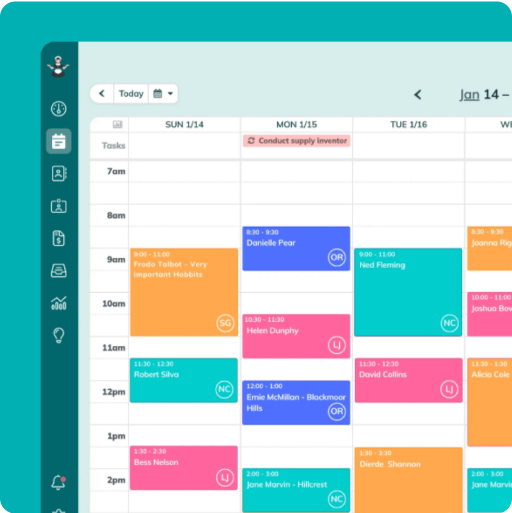
Simplify and enjoy your scheduling with a scheduling software made for maid services
- Have a beautiful calendar that's full but never stressful.
- Make your cleaners happy and provide all the information they need at their fingertips.
- Convert more website visitors into leads and get new cleanings in your inbox with high-converting booking forms.
- Become part of a community of 8000+ cheering maid service owners just like you.
Start your FREE ZenMaid trial today and discover the freedom and clarity that ZenMaid can bring to your maid service! Start your FREE trial today