Frustrated with your scheduling? Try the easiest-to-use calendar app, made by and for maid service owners.

Owning a service-based business comes with huge liabilities, and it’s more important than ever to PYA (protect your a**!).
That’s why understanding cleaning business insurance and bonding is your first step to protecting your business from potential risks. Further, many clients want to be assured that businesses they hire have the correct insurance and will not give their money or time to those who don’t have the proper insurance in place.
The second step is buying policies for your cleaning business to become bonded and insured.
Table of contents
- What is the difference between bonding and insurance?
- Section 1: Business Insurance
- Do You Have to Get Insurance?
- What Does Cleaning Business Insurance Cover?
- Costs for Cleaning Business Insurance (2026 Estimates)
- Step-by-Step: How to Get Insurance Coverage
- Best Insurance Providers for Cleaning Businesses (Updated for 2026)
- Best Insurance Providers for Cleaning Businesses: Comparison Table
- How to Vet an Insurance Provider Properly
- Links to Every State + DC (Workers’ Comp + Insurance Department)
- Section 2: Bonding
- How to Get Your Cleaning Business Bonded
- Best Providers for Cleaning Business Bonding
- Best Bonding Providers for Cleaning Businesses: Comparison Table
- Final Thoughts
What is the difference between bonding and insurance?
Bonding is a type of guarantee that protects your clients from financial loss if you fail to complete a job as agreed upon in your contract. For example, if a cleaning business is bonded, their client is protected if the cleaning business fails to complete the job as agreed or causes damage to the client’s property. The bond acts as a third-party guarantee, with the bond issuer guaranteeing payment to the client if a claim is made.
Insurance is a type of financial protection that protects a business from potential losses. For example, liability insurance protects a cleaning business from financial loss if they are found responsible for damaging a client’s property. Workers’ compensation insurance protects a cleaning business from financial loss if an employee is injured on the job.
It is recommended that cleaning businesses have both bonding and insurance in place to provide comprehensive protection for their business and clients, and that you state your status of being bonded and licensed on your public-facing platforms (i.e., your website).
Section 1: Business Insurance
Do You Have to Get Insurance?
Technically, no, you don’t. There is no single federal law that forces cleaning businesses to get general insurance, but in most states, if you have employees, you’re required to carry workers’ compensation and often commercial auto.
Who’s required to get insurance?
- You hire at least one employee → Usually workers’ comp is required
- You use a vehicle for business → Commercial auto is required
- You bid on government or large commercial contracts (this is only applicable to businesses that also do commercial cleaning) → Proof of insurance is often required
- Clients ask for a Certificate of Insurance (COI) before signing a contract with you
A lot of owners assume that “sole proprietor” means you don’t need insurance. That’s false. You need liability insurance, at a minimum, if you want clients and protection for you and your business.
Further, remember that clients are trusting you (a stranger) with their home and items. Proof of insurance is one of the few initial ways they have to vet your legitimacy before they agree to do business with you.
What Does Cleaning Business Insurance Cover?
Below are the types of insurance that most cleaning businesses think about getting:
General liability insurance
Covers third-party bodily injury and property damage (e.g., someone slips after cleaning or breaks an item in the client’s home). It often includes legal defense costs.
Commercial auto insurance
Your personal auto policy won’t cover business use, so you need commercial auto insurance if you have company vehicles. This insurance covers accidents with these vehicles specifically.
Workers’ compensation insurance
Pays for medical bills and wages if an employee is injured on the job. This is required in most states.
Professional liability (errors & omissions)
Covers claims like failure to deliver agreed-upon results or negligent service.
Business Owners Policy (BOP)
Bundles property + liability + interruption coverage at a lower cost than buying separately.
Hired & non-owned auto
Protects your business if your employees use their vehicles for work.
Bonding (Surety Bonds)
Not technically insurance, but we’ll get into this later. This is a guarantee to clients that you’ll fulfill obligations, which is often required for theft or contract performance.
Optional Add-ons
Additional insurance add-ons include equipment breakdown, cyber liability (for digital booking systems), and umbrella insurance (extra liability).
Costs for Cleaning Business Insurance (2026 Estimates)
We offer guide on How to Price Your Cleaning Business but note that costs vary widely by state, claim history, number of employees, coverage limits, and property types served, but this is a general estimate for 2026:
| Coverage | Typical Annual Cost (US) |
| General Liability | $400 – $1,500+ |
| Workers’ Compensation | $1 – $2 per $100 of payroll |
| Commercial Auto | $1,500 – $3,000+ |
| BOP Bundle | ~$500 average |
| Janitorial Bond | $100 – $250+ |
QUICK TIP FROM THE AUTHOR
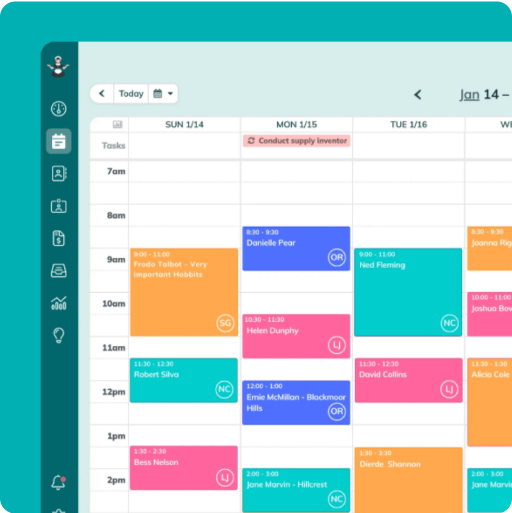
Simplify and enjoy your scheduling with a scheduling software made for maid services
- Have a beautiful calendar that's full but never stressful.
- Make your cleaners happy and provide all the information they need at their fingertips.
- Convert more website visitors into leads and get new cleanings in your inbox with high-converting booking forms.
- Become part of a community of 8000+ cheering maid service owners just like you.
Start your FREE ZenMaid trial today and discover the freedom and clarity that ZenMaid can bring to your maid service! Start your FREE trial today
Step-by-Step: How to Get Insurance Coverage
1. Assess Your Risks
Determine the services you offer, whether you are going to have company vehicle use, employees, and equipment value. Tie insurance risk assessment to operational checklists for a natural cleaners flow.
2. Decide on the minimum required policies
Start with general liability + workers’ comp (if applicable), and then assess what you need to add on from there.
3. Get multiple quotes
Don’t just go with the first quote you receive. Use online aggregators + independent brokers to compare options.
4. Understand COIs & limits
Clients may require $1M+ per occurrence and aggregate limits.
5. Buy & download your certifications immediately
Digital COIs help you close contracts faster. List on your website and social accounts that you are licensed and insured, and that you can provide proof upon request.
6. Review annually
Update if you add clients, vehicles, or staff.t
Best Insurance Providers for Cleaning Businesses (Updated for 2026)
There is no single “best” insurance provider for every cleaning business. The right choice depends on how you operate, whether you have employees or vehicles, and whether you want bonding as well.
Below is a list of the most reliable and frequently cited insurance options for cleaning businesses in 2026, including digital-first insurers, traditional carriers, and comparison marketplaces.
Simply Business — Best Site for Comparing Multiple Insurance Quotes

First, if you want to compare options, we recommend Simply Business, which is an insurance marketplace rather than a carrier. The platform connects cleaning businesses with multiple insurers, allowing side-by-side quote comparisons.
Remember that they’re not a direct insurer, but this is a good place to start to see all of your options in one place with updated rates. Coverage quality depends on the carrier
Insurance Canopy — Best for Janitorial & Residential Cleaning Businesses
Best for: Solo cleaners, janitorial services, carpet cleaners, and businesses that need bonds and fast proof of insurance
Insurance Canopy is a top choice in 2026 for cleaning businesses that want simple, affordable coverage without dealing with agents. It provides General Liability, Equipment Protection, and Janitorial Bonds, which are commonly required by residential and commercial clients. Coverage can be purchased entirely online, with instant access to certificates of insurance and optional website credibility badges.
Pros
- Fully online setup with instant COIs
- Competitive pricing, often starting around $39/month
- Includes janitorial and fidelity bonds
- Strong reputation among service-based businesses
Cons
- Limited options for complex operations
- No built-in commercial auto or workers’ compensation
NEXT Insurance — Best All-Around Option for Small Cleaning Businesses

Best for: Growing cleaning businesses, employers, and LLCs
NEXT provides General Liability, Workers’ Compensation, Professional Liability (E&O), and Tools & Equipment Insurance, all managed through a digital dashboard. Policies are easy to customize as your team and revenue grow.
Pros
- Fast online quotes and policy activation
- Workers’ comp available (this is essential once you hire)
- Includes E&O options
- Easy policy and COI management
Cons
- Does not offer janitorial or fidelity bonds

Nationwide — Best for Bonding and Agent-Led Coverage
Best for: Established businesses that want service bonds and hands-on support
Nationwide remains a strong option for cleaning businesses that prioritize financial stability and agent guidance. It offers traditional business insurance policies along with business service (fidelity) bonds and optional equipment breakdown coverage. Policies are customized through licensed agents.
Pros
- Offers fidelity and service bonds
- Strong financial ratings
- Equipment breakdown coverage available
Cons
- Not fully digital
- COIs are not instantly accessible
- Slower setup compared to online-first providers

Huckleberry — Best for Fast Quotes and Comparison Shopping
Best for: Owners who want to compare prices quickly
Huckleberry acts as a digital insurance broker, helping cleaning businesses compare quotes from multiple carriers in minutes. Most customers receive instant quotes, and policies are paperless. Coverage depends on the underwriting carrier.
Pros
- Very fast quote process
- Free online COI access
- Useful for price comparisons
Cons
- No janitorial bonds
- Claims handled by third-party carriers

Hiscox — Best for Customized Policies and BOPs
Best for: Cleaning businesses that want tailored coverage or a Business Owner’s Policy
Hiscox is known for flexible, service-business-friendly policies and strong customer satisfaction. It provides General Liability, Professional Liability, Commercial Crime, and BOPs, with online purchasing available.
Pros
- Buy a BOP online
- Commercial crime insurance add-ons
- Clear and efficient claims process
Cons
- No in-house commercial auto insurance

Acuity — Best for Claims Experience and Long-Term Stability
Best for: Businesses that value claims handling and risk management support
Acuity is a long-standing insurer with strong financial ratings and excellent claims satisfaction. It provides general business insurance along with loss control services, safety resources, and a nurse helpline.
Pros
- High financial strength ratings
- Competitive premiums for small businesses
- Strong claims satisfaction
Cons
- Not fully digital
- No employee benefits coverage
Travelers — Best for Larger Teams and Complex Operations

Best for: Commercial cleaning companies with multiple employees or locations
Travelers offers one of the broadest coverage portfolios in the market, with General Liability, Workers’ Compensation, Cyber Insurance, and Management & Professional Liability. Some BOPs include employee theft coverage.
Pros
- Exceptional financial stability
- Broad, enterprise-level coverage
- BOPs may include theft protection
Cons
- Higher average premiums
- More workers’ comp complaints than competitors
Progressive Commercial — Best for Vehicle-Heavy Cleaning Businesses

Best for: Cleaning businesses with vans, fleets, or mobile crews
Progressive Commercial is one of the most recognized providers for commercial auto insurance. It specializes in commercial auto coverage and offers BOP options that pair well with vehicle-heavy operations.
Pros
- Strong commercial auto expertise
- Online quotes available
- Good for fleet-based businesses
Cons
- Limited focus beyond vehicle-related coverage
Thimble — Best for Short-Term or Contract Cleaning Work

Best for: Independent contractors and one-off cleaning jobs
Thimble caters to businesses that don’t want annual policies. It provides short-term General Liability and E&O coverage, allowing cleaners to pay by the job, day, or month.
Pros
- Pay-as-you-go coverage
- Instant online proof of insurance
- Ideal for contract or temporary work
Cons
- Not suited for full-time, growing businesses
Best Insurance Providers for Cleaning Businesses: Comparison Table
| Provider | Best For | Key Coverages | Bonds Available | Pricing Style | Main Con |
| Insurance Canopy | Janitorial & residential cleaners | GL, equipment, janitorial bonds | ✅ Yes | Low, predictable | Limited advanced coverage |
| NEXT Insurance | Small to mid-sized businesses | GL, workers’ comp, E&O, tools | ❌ No | Scales with payroll | No bonds |
| Nationwide | Bonding & agent support | GL, bonds, equipment breakdown | ✅ Yes | Custom quotes | Slow, not digital |
| Huckleberry | Fast quotes & comparison | Varies by carrier | ❌ No | Quote-based | Third-party claims |
| Hiscox | Custom policies & BOPs | GL, E&O, BOP, crime | ❌ No | Mid-range | No commercial auto |
| Acuity | Claims experience | GL, workers’ comp, risk services | ❌ No | Competitive | Agent required |
| Travelers | Large teams & enterprise | GL, workers’ comp, cyber, BOP | ⚠️ Limited | Higher-end | Higher premiums |
| Progressive Commercial | Vehicle-heavy ops | Commercial auto, BOP | ❌ No | Vehicle-driven | Limited non-auto |
| Thimble | Contractors & short-term work | GL, E&O (short-term) | ❌ No | Pay-as-you-go | Not scalable |
How to Vet an Insurance Provider Properly
Before committing to a policy, take a few extra steps to protect yourself:
- Check the insurer’s financial strength rating through organizations like A.M. Best
- Review customer feedback and claim experiences
- Look up the company’s complaint record through your state insurance department
- Compare multiple quotes side by side — coverage matters more than price alone
Doing this upfront helps avoid costly surprises later.
Links to Every State + DC (Workers’ Comp + Insurance Department)
If you’re looking for your specific state’s rules on insurance, here’s a quick and easy table to get you where you need to go:
Section 2: Bonding
How to Get Your Cleaning Business Bonded
Cleaning business owners can get bonded through an insurance agent, broker, or bonding company. These professionals can help you understand the bonding process and find a bonding solution that fits your business’s needs.
Bonding is typically purchased as a separate policy from business insurance. While some insurance providers may offer bonding as part of a broader business insurance package, it’s important to understand that bonding and business insurance serve different purposes and protect against different risks.
When looking for a bonding solution, it’s important to consider factors such as the type and amount of bond you need, the cost of the bond, and the underwriting criteria of the bonding company. An insurance agent, broker, or bonding company can help you understand these factors and find a bonding solution that fits your business’s needs and budget.
Best Providers for Cleaning Business Bonding
Many insurance providers now offer bonding as an add-on to business insurance policies. If your provider includes janitorial or fidelity bonds, bundling can simplify billing and paperwork.
That said, not all insurance companies offer bonds — and some cleaning businesses need specialized or state-specific bonds. In those cases, working directly with a surety bond specialist is often faster and more cost-effective.
Below are reputable bonding providers frequently used by cleaning businesses in 2026:

Surety Solutions Insurance Services — Best All-Around Bond Marketplace
Best for: Cleaning businesses that want fast quotes and broad bond options
Surety Solutions Insurance Services (a Gallagher company) offers a streamlined way to secure surety bonds without friction. You select your state, bond type, and bond amount, and receive instant, no-obligation quotes.
They provide a wide range of bonds relevant to cleaning businesses, including fidelity bonds, license and permit bonds, and contractor bonds. By partnering with established surety carriers such as The Hartford and The Hanover, they deliver competitive pricing and flexible options.
Why it works for cleaning businesses:
- Instant online quotes by state
- Broad selection of bond types
- Backed by nationally recognized surety carriers
- Strong customer reputation with hundreds of five-star reviews

ProSure Group — Best for State-Specific and Fidelity Bonds
Best for: Businesses that need guidance + state-compliant bonding
ProSure Group specializes in matching businesses with the exact bonds required by their state or contracts. This is especially valuable for cleaning businesses navigating licensing, permitting, or commercial contracts.
ProSure offers fidelity bonds (to protect against employee dishonesty), license and permit bonds, and payment and performance bonds. Their platform allows online applications and payments, while experienced advisors are available to walk you through the requirements.
Why it works for cleaning businesses:
- Identifies bonds required by your state
- Online application and payment
- Strong focus on fidelity and compliance bonds
- Advisor support for complex requirements

Contractors Bonding and Insurance Company (CBIC) — Best for Established or Growing Businesses
Best for: Cleaning businesses that want a long-term bonding partner
CBIC is a long-standing surety specialist with a focus on surety and fidelity bonds for small and mid-sized businesses. CBIC offers surety bonds, fidelity bonds, and broader insurance solutions. Their underwriters work closely with businesses that are scaling or taking on larger commercial contracts.
Why it works for cleaning businesses:
- Strong financial backing and stability
- Specialized surety and fidelity bond expertise
- Suitable for growing teams and larger contracts
Best Bonding Providers for Cleaning Businesses: Comparison Table
| Provider | Best For | Bond Types Offered | Online Quotes | State-Specific Bonds | Ideal Business Size |
| Surety Solutions Insurance Services | Fast, all-around bonding | Fidelity, license & permit, contractor, court bonds | ✅ Yes | ✅ Yes | Solo to mid-sized |
| ProSure Group | Compliance & guidance | Fidelity, license & permit, payment & performance bonds | ✅ Yes | ✅ Yes | Small to growing |
| Contractors Bonding and Insurance Company (CBIC) | Long-term bonding partner | Surety bonds, fidelity bonds | ⚠️ Limited | ✅ Yes | Growing to established |
Final Thoughts
Insurance is a safeguard for everything you’re building, and is reassurance to your clients that you’re serious about what you do.
When something goes wrong — and eventually, something will — you’ll be glad you chose protection over shortcuts.
ZenMaid is the simple scheduling software that will help you save 30+ hours in your cleaning business, every week. Join thousands of other cleaning business owners who now have time to take a nap, spend time with their family, and take vacations! Start your free 14-day trial today to discover how many hours you can get back in your week.