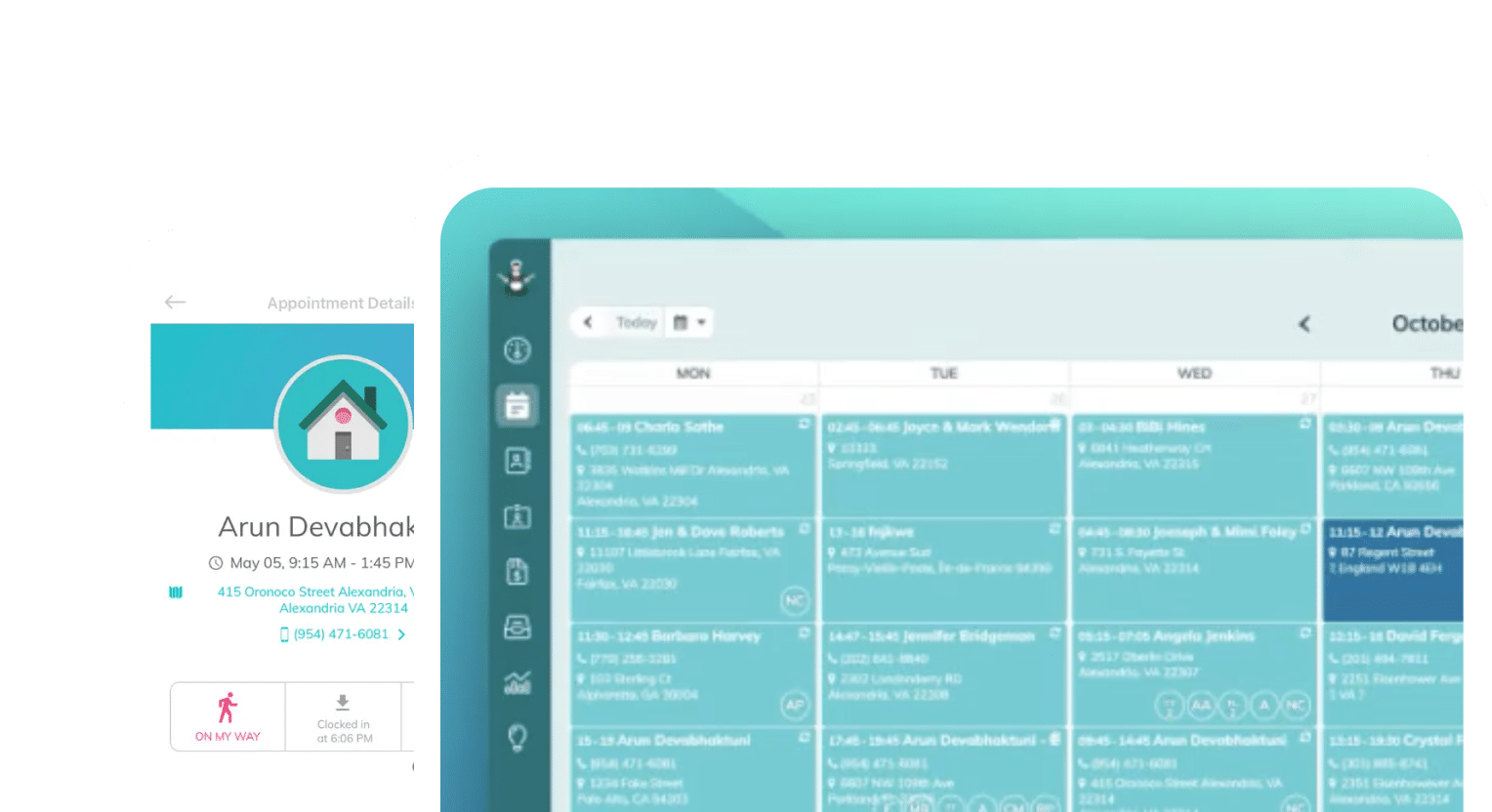
Frustrated with your scheduling? Try the easiest-to-use calendar app, made by and for maid service owners.

Creating a clear pricing structure is important for many reasons. Clients use prices to determine whether they’ll use your services; cleaners use prices to reverse-engineer how they’ll be paid; and you need to understand your prices to know whether you’re making money or losing it.
Your pricing structure is what keeps you profitable and running efficiently. If you’re charging too little, you’re losing money with every clean. If you’re charging too much, you’re losing out on potential clients.
But if you’re charging the wrong way — using low flat-rate pricing instead of hourly, for example — you could be leaving money on the table despite managing everything else.
In this guide, we’ll walk through how to craft your service price list to communicate clearly and maximize profit per job every time.
Table of contents
Understand Your Costs Before Setting Prices
The first step in setting prices is to ensure your earnings cover your business expenses. We go into more detail about this in our full guide to pricing in 2026, but here are the basics:
- Calculate your labor costs, including wages, payroll taxes, and benefits
- Add up the cost of supplies and equipment
- Calculate your overhead, including insurance, transportation, marketing, and software
Together, this number becomes your break-even point, or the point at which you neither lose nor make money when operating your business. This is the minimum you must make every month.
On top of this, you need to build in profit margins. Your personal finances are a separate task to estimate, and it’s important to know how much you need to make to cover your life when setting your price point.
You can also use ZenMaid’s custom pricing calculator to total your costs and ideal profit margin.
Choose a Pricing Model
As we said at the top, how you price your services matters a lot to your bottom line. We go into more detail about this in an episode of our podcast, Filthy Rich Cleaners, but there are five primary types of pricing models in the cleaning industry:
- Hourly pricing: Hourly pricing protects your time and ensures you are paid for it, but also makes it difficult to give clients time estimates. Pricing hourly also limits how much money you can make per day because time is a limited resource. This is a good strategy for getting started and building your client list.
- Flat-rate/per-job pricing: Per-job pricing or flat-rate pricing works best when you know your production rate, or how long it takes you to complete tasks on average. This piece of information helps you calculate your profitable flat rate, in a way that accounts for labor intensity and the size of the job.
- Per-square-foot pricing: Square-foot pricing works well in commercial cleaning, where spaces are typically used for specific purposes and get dirty in predictable ways. But every home is different, and square-foot pricing can’t account for things like pets, children, or the number of bathrooms in a home, which make jobs take longer.
- Per-room pricing: Like flat-rate or per-job pricing, per-room pricing is dependent on your production rate and is usually used as an add-on to other cleaning services, like deep-cleaning or carpet cleaning.
- Tiered package pricing: Packages combine different services or bundle them together for a discounted rate. Your discount should never eat into your profitability, so you still need to know your costs, production rate, and labor hours estimate for each package, add in profits, and then set a higher price per individual job, so you can discount each bundle.
When it comes to figuring out which model fits your business best, you’ll need to pay close attention to profits, payroll, and client uptake. If you change prices and bookings increase, you might need to revisit pricing soon to offset the limits on your availability for new clients. If you want to offer your staff benefits, you may need to raise prices to cover the increase in your labor costs.
Not every model will work for every business. Many cleaning business owners revisit pricing annually to make sure they remain profitable against inflation, competitive within their markets, and able to pay cleaners equitably.
Stay flexible with your pricing model, but keep in mind that changing prices often may drive clients away, either due to higher prices or annoyance. Always consider your timing when making pricing decisions.
Research Your Market
Your business exists in the context of a larger market, including the area you live in, the area your business operates in, the state and local taxes you pay, and the prices other businesses charge for similar services. All of these factors should help you nail down a number or a helpful range when setting your prices.
Take a look at what your competitors charge for services you want to offer or already offer. Setting competitive prices is one way to draw clients away from other cleaning businesses.
Your marketing and positioning are other ways to set your business apart from others and open you up to more pricing options. If you want to attract luxury clients, your branding can help you justify a higher price point alongside the quality of your services and reliability of your staff.
Clients in high cost-of-living areas are also more likely to accept higher prices. Cost-of-living varies a lot from region to region, and serving nearby higher cost-of-living areas may mean you make a higher profit and live a better lifestyle in a slightly cheaper borough.
On the other hand, it may mean that you can offer a more competitive price in an expensive area without risking your own profitability.
Factor in Job-Specific Variables
We previously discussed some job-specific variables you should consider when using per-job or flat-rate pricing in our section on pricing models. To get more specific, we’ll break down the kinds of things to look for when setting prices, and how this should affect your ultimate price.
Property type (residential vs. commercial)
As we said above, residential cleanings tend to be less predictable than commercial cleanings overall. Rooms change more and are subject to harder use at home than they are in office spaces, for example, and homes with children, pets, or many bathrooms are going to take more time to clean.
Your price should reflect the effort required to bring rooms to standard, the space you clean, and the frequency of cleaning. But you can also feel free to consider property type when you offer things like recurring appointments, the ease of paying flat-rate bills per month, and how often you raise prices. Commercial accounts may be more likely to accept annual price increases than residential ones.
Property size
The size of a property in square feet matters. Our full guide to square-foot pricing covers everything you need to know about maximizing your profits at a reasonable price point.
Cleaning frequency and depth
How often you clean a place should factor into your pricing model. A regularly cleaned kitchen will take much less time to clean than one that hasn’t been cleaned in months. Same goes for new clients: if you’re unfamiliar with a space, charge more to include the time and effort it will take you to learn it.
Prices should also change based on the level of cleaning you or your team provides. Standard cleanings should be less expensive than deep cleans, which should be less expensive than move-in or move-out cleanings. Short-term rentals are often priced higher than standard cleanings because different people make different messes in places they’re visiting than they do at home.
Condition of the space
A dirty home you make spotless should cost much more than the one you only need to dust weekly. In time, effort, and supply costs alone, this makes sense — but you also want to reward cleaners who take on difficult jobs and pay them well, yourself included!
This is also why discounts for recurring cleaning appointments are attractive to customers. Cleaner homes take less work to maintain, which makes both cleaners and clients happy. Lower efforts don’t mean being paid less than you’re worth, though.
Add-on services
Add-on services, such as window, appliance, and carpet cleaning, typically cost more because you have to bring additional equipment or supplies to the site. Sometimes these add-ons also require more staff.
You have a lot of flexibility when pricing add-ons, but try not to needlessly complicate your prices. Limit add-on costs to three different tiers based on supply, labor, and production rate.
Build Your Price List
Now that we’ve laid everything out, it’s time to build your price list! Start with finding your minimum price, or the lowest amount you can charge while covering your costs, expenses, and profit margin. This is called your base price.
Nothing should be priced below your base price. Use this number as a foundation for the rest of your services.
Now, figure out what your lowest-priced service should be. If a standard weekly recurring clean is the most frequent offering you have, price that service at or just above your base price.
If you plan to show your standard weekly recurring cleaning service as being discounted, you want to reverse engineer your discount to get your standard biweekly or monthly service price.
Let’s say a standard weekly service costs $50. You want to display these on your website as being discounted by 5% from your monthly cleans. This means your monthly service price is $52.63.
Write out all of your standard, add-on, or special service options, and price them using your base price as a guide. Software can help you store these options in a booking form or client questionnaire so that they appear as usable options when clients make appointments.
You can also offer custom quoting for jobs that may fall outside of your usual offerings.
Present Your Pricing Professionally
When you’re done setting prices, format a clear, easy-to-read price list. You want to be transparent about prices, rather than asking potential clients to contact you for a quote. Not every job needs to be individually priced — and it would be a waste of your time to try doing that.
This also saves you time answering questions from clients who are quote shopping. They can instead look at your website and decide in minutes if they want to book with you or not.
On this same note, make pricing easy to find. Your website should contain your full price list and service menu, as well as a place to book appointments. Other tools like your Google Business Profile can also be set up to contain this information, and while you will have to update it twice when you make pricing changes, the SEO value of pricing information on multiple pages is worth the extra labor.
Review and Adjust Over Time
Reviewing your pricing structure and tinkering with it is an essential part of getting your pricing right. Raising prices can seem intimidating at first, but with the right strategy and communication, it becomes a routine part of running your business just like anything else.
You can read our full guide to raising prices with confidence, but here are the highlights:
- Let clients know about price increases around 30 days before they go into effect
- Don’t overshare; notify them about the increase and leave it at that
- Keep track of which clients churn after a price increase
- Note any lost revenue as a result of a price increase
- Track how many new clients come in after a price increase
Sometimes, you need time to see which of your services are popular with your clientele. Seasonality also affects clients’ choices — holiday prep might mean they book a deep cleaning on top of their regular cleaning.
Using software to track your clients’ booking habits is a great way to track your profitability over time and by job type. This way, you can figure out how to optimize your staff’s time, when to hire new part-timers for coverage, and where to focus your efforts when converting or upselling existing clients.
If one job type becomes more profitable than others, you may also want to put more of your marketing budget toward promoting that specific service. If carpet cleaning becomes a popular deep cleaning add-on, you can also add that to the basic deep cleaning service and raise your price accordingly.
Keeping a close eye on your prices, how to change them, and when to share details with clients will improve your understanding of trends, seasonality, and client behavior. It will also help you figure out how to budget for slower periods and prepare in advance for busy ones.
Conclusion
When setting your prices, make sure that you understand your base price, stay flexible about how you implement different pricing models, and know your market. Get comfortable with the landscape in which you’re operating your business.
Once you figure it out, your price list should be clean and easily accessible. Save your own time and set expectations with clients upfront with online price menus and service descriptions. And use this time to refine your pricing as you get more information!
If you want some help organizing your pricing model, client data, or communications about pricing, try ZenMaid. Software like ZenMaid is purpose-built to help maid service owners run strong, effective, profitable cleaning businesses. The 14-day free trial gives you plenty of time to build out your price list and start sharing it with clients. Give it a try!