Frustrated with your scheduling? Try the easiest-to-use calendar app, made by and for maid service owners.

Brought to you by expert maid service owners
Listen on: Apple Podcasts, Spotify or YouTube
Introduction
Stephanie: Hello, everyone. Welcome or welcome back to the Filthy Rich Cleaners podcast. I am your host, Stephanie from Serene Clean. In today’s solo episode, I want to do a deep dive into orientation — why it is important, why we implemented a very robust orientation program at Serene Clean, and the many ways it has improved our onboarding process for Serene Clean.
This topic was brought up because over at ZenMaid, they just revamped an article about having an onboarding process for your staff members. It made me realize that I’ve never done an episode that really lays out exactly what orientation looks like for us. Of course, I mentioned it in my Maid Summit talk this past year when I went through our training program, but I never actually went super into detail as to what our orientation entails other than saying it’s like six hours long.
You may hear that and be like, “Oh my gosh, six hours. What the heck could you possibly talk about for six hours?” Well, when it comes to why we spend our precious time with a brand new staff member for that long, sitting them in front of a computer, clearly there’s a reason we think it’s that valuable — and it has proven to be incredibly valuable. I’d love to break down in this episode exactly what is in our orientation and literally tell you exactly what we cover to give you ideas on ways you could implement an orientation program.
Table of contents
- Introduction
- What It Was Like Before Orientation at Serene Clean
- Why Orientation Matters
- Where and How to Build Your Orientation
- Section 1: All About Us
- Section 2: Core Values and Company Culture
- Section 3: Locations, Management Team, and Training Timeline
- Section 4: Software Walkthrough
- Section 5: Communication
- Section 6: Monday Team Meetings
- Section 7: Pay, Bonuses, and Benefits
- Section 8: Safety
- Section 9: Code of Conduct, Keys, and Cleaning Services
- Section 10: Checklists, Kit and Supplies, and At the Clean
- Section 11: Finishing the Clean and Ongoing Training
What It Was Like Before Orientation at Serene Clean
Stephanie: First and foremost, I want to talk about what it was like before this at Serene Clean — and it wasn’t pretty. There really was no orientation. It was: hire somebody, get them added to the systems, get their W-2 and I-9, their tax information, basically get a couple forms of ID on file, explain to them very briefly what this is all going to look like, and then we literally just sent them to training in the field. Go be free, go shadow somebody, and off you go. Our training program in conjunction with the lack of orientation was also very chaotic and not ideal.
Everything I’m about to go into today is years and years of experience that has led us to this point. I want to caveat, as I do in all of my episodes where I dig into our more complex systems or more time-consuming things to set up: Rome was not built in a day. This orientation program outline took a long, long time. It took a lot of work, a lot of thought, and a lot of experience to know what was relevant and what was not — what do we need to cover, what is left for training, and so on.
The reason I’m saying that is to not discourage you for what I’m about to go through and to make you feel like you’re a failure because you don’t have this. I grew my business to over a million a year without this. That is 100% possible. So much of what we do at Serene Clean now is about optimization — making things the best they can be within that area, not just passable, but so it really sets us up for success in that particular area.
So this caveat is just to say: don’t feel bad and don’t feel defeated before you even get started on creating an orientation program, because what I’m about to lay out is a lot. You eat an elephant one bite at a time. You can absolutely walk away from this episode and make a bare-bones version, or just take chunks and pieces and start putting something together. It does not have to be perfect before you actually implement an orientation program. It’s something you can continue to improve upon over time and change as things change and evolve in your business.
Why Orientation Matters
Stephanie: The whole reason this is important — why did we spend so much time and effort putting this very robust orientation into place? We saw the amount of overwhelm and chaos that not having a really great orientation program was causing for our new staff members. Even when you have a stellar new employee with rock star potential, wouldn’t it be great if we could set them up for even more success? That’s truly what orientation is supposed to do — educate them, put them at ease, and prepare them for what it’s going to be like to work here.
As I go through all of these different categories, you’ll notice it’s not just nitty-gritty “this is this, this is how we do this” content. It’s a lot of teaching them what it’s like in the culture of the business. This is really after they’ve had their interview and you’ve hired them. You have their undivided attention. This is your opportunity to teach them what you believe in, what your business stands for, and what they can expect working here.
I think one of the biggest things, as I mentioned, is it puts them at ease — especially if they’ve never professionally cleaned before. Regardless of what kind of job someone is going into, as we’ve all had jobs before, it can be nerve-wracking. You don’t even know what you don’t know. How can we answer the questions they haven’t even thought of yet?
I really see it as — we’ve heard on the podcast before — our employees are our internal customers. We are trying to sell them that this is a good place to work and that they should invest their time and energy into being a member of this team. Think of orientation as the sales and education process, but to your internal customer. This is their first day of work with your company. How can we showcase that we know what we’re talking about — especially if it sometimes feels like we don’t? This helps iron out a lot of questions, like: we don’t have a policy about this, or how do we feel about this?
As I go through this, you’re probably going to have a lot of moments of, “Oh crap, I don’t have anything in place around that particular topic.” But that’s a good thing. Take this episode as an opportunity to realize where you have areas that need improvement or that you need to create altogether.
What I love about this orientation is it forced us to really eradicate gray areas in the business and spell out exactly what is expected — even for things like the dress code. It made us realize where there was gray area and allowed us to eliminate it. The more clear we can be with a new staff member, the better they’re going to perform because their mind isn’t racing about 7,000 unknowns. We’re trying to eradicate unknowns as much as possible so they can just focus on learning their new skills.
This is not just about enforcing policies — it’s to teach them why we’re a great place to work. We explain all the benefits, the workplace culture, all of those things. Spoiler alert: this has been one of the most important things we have implemented at Serene Clean. The reason I say that is because of the overwhelming positive feedback we’ve gotten from new staff members. We have two buckets of people — those who have worked at many places before, and those for whom this is their first job. When we’re getting positive feedback from both archetypes, we know we’ve done our job. I’ve even had HR professionals tell me this is the best orientation they’ve ever seen — which is a big pat on my entire management team’s back. We’ve put a lot of time and effort into this.
We even had one person, during orientation, go to the bathroom, look themselves in the mirror, and have a full identity crisis — realizing they hadn’t been working to their potential and wanting to open a cleaning business and move to Florida. That happened during orientation. So orientation makes people feel things. If inspiring people is the goal, even if not to open their own cleaning businesses, it makes people feel things.
It really has been such a valuable use of our time. As things continue to change and evolve at Serene Clean, we just keep it updated. It’s a living, breathing document, as is everything at Serene Clean.
Where and How to Build Your Orientation
Stephanie: How or where do we make this orientation? For most of you, a simple Google Slides presentation is more than sufficient — or a Canva presentation, wherever you like to make presentations. I’d suggest not PowerPoint unless it’s the online version, because I’m a big fan of internet-based things so that no matter where you are or where your management team is, you can access it and you’re not dealing with an obsolete version of something. That’s why I’m a fan of Google Drive for all of our documentation — it’s always the most up-to-date version.
A Google Slides presentation is what we did for the first year before we invested in the program I’m about to mention. For 99% of you, that is going to be just fine.
For the 1% that is getting big — maybe your business is looking at 25-plus staff, or you’re well above a million — you might consider investing in a program called Trainual. That is the online software we use that houses our orientation program as well as many of our SOPs. Trainual is an amazing program. It’s incredibly robust, beautiful, and it is used for training people and making your bespoke business’s training documentation and processes. The app is great for our techs. As we continue to scale, it really is fantastic for documentation purposes, assigning different roles different documentation, ongoing education, and quizzes. It’s expensive, as I’ve mentioned, and I think it was well worth it for us. But again, I just don’t think it’s necessary for most of you. What you can certainly do is look at what Trainual has to offer and duplicate it in a simpler way in your Google Drive.
If you’re going to be doing a lot of videos in your orientation — which we do — whatever is going to be easiest for you to include video content is the way to go. I think for most of us, Loom is going to be a great program to record videos, or Canva, depending on what you prefer. Pretty much every single area of the orientation has videos in conjunction with what we’re about to go through.
There will also be a transcript of this podcast in the show notes so that you can go through and pick and choose what you like. If you’re listening right now, that will be a resource for you so you don’t have to come back and re-listen — although I would suggest re-listening, of course. And while you’re at it, why don’t you hit that like? Are you subscribed yet to the ZenMaid YouTube channel? If not, what the heck — you’re just watching these and not subscribed. Give us a subscribe, please hit that like, and let me know what day you’re listening to this right now. What day of the week is it? Put that in the comments below so we get a little engagement.
Section 1: All About Us
Stephanie: First and foremost, we go through all about us. The way we have this structured is in pages — of course you could just have different slides or however you want to organize this. We go through our origin story, which is a video I created a few years ago that is the history of the company. Then we go through a welcome to our team page.
Section 2: Core Values and Company Culture
Stephanie: The next section is core values and company culture. This is a half-hour video I created that explains our three different core values, as well as why those things are important to me, what we do with the business — our giving initiatives, all of the good things we do, the donations, free cleanings, really everything about what’s important to me and how I use the business as a vessel for these things that are very important to me.
I think it’s important to introduce this at the beginning so they start drinking the Kool-Aid — rowing the boat in the same direction, if you want a slightly less culty type of analogy. I want them to understand why everything that is about to be shown and told to them is important, and why I hold ourselves to such a high level of excellence and why we’re so neurotic about things — because what we do is so important. So I want their first dip into the business to really have them feeling why it’s so important to me and what this means, and that it’s not just cleaning. If they can hear from the founder that passion and earnestness of why I believe what we’re doing is so important, I think it really just sets the tone for the rest of the orientation so that they have more buy-in: “Wow, the owner really cares about this.”
Our three core values are family first, integrity, and grateful and positive attitude. We give examples in each of these. Then we specifically share about our giving initiative, the Fresh Start Project, and what that looks like when it comes to free cleanings.
Section 3: Locations, Management Team, and Training Timeline
Stephanie: The next section we go into is our three locations. We explain what each location is and literally just show a video of how to get into those locations and where they are located within their respective buildings.
The next section is going through our management team and what each manager does. The managers share their stories in it — a video of all of the managers explaining who they are, what they do, their history at the business. We also have a picture of the office doggies.
The next section is the training timeline — to set them up for what is about to occur so they can understand the typical standard training schedule. Of course that adjusts depending on their specific availability. If somebody is only available part-time, say Monday through Wednesday, training is going to take longer than somebody available Monday through Friday. We just lay out what is typical, knowing there is room for adjustments, and that communication is key to ensure they are ready to be cleaning independently. That is about a five-minute video.
Section 4: Software Walkthrough
Stephanie: The next section covers the software we use at Serene Clean that the cleaners are going to have access to. For example, we use QuickBooks bookkeeping software, but the cleaner doesn’t get exposed to that because there’s no reason for them to be. Orientation is really giving them plentiful information, but only information that’s relevant from their perspective. We’re trying to be thorough without creating information overload.
The first software we explain is Trainual — the software they’re currently in and using. We cover what we utilize it for: orientation, ongoing education and quizzes, and documenting the SOPs of Serene Clean. It’s going to be their best resource to review any topics they have questions about, including their kit and supply contents.
Then we explain ZenMaid. At this point we have them download the app. This is a 14-minute video that explains and showcases, from their perspective, the mobile app — how they are to be using ZenMaid, how to look at the notes, what it’s going to be like to clock in and clock out, how to attach photos, sending the on-my-way text, and when to do that. So ZenMaid is used for seeing your schedule, clocking in and out, seeing notes about each appointment, and seeing who you’ll be working with.
The next software is Gusto Payroll software, which is of course how our cleaners get paid. That is also where they request their time off and see almost all of their benefits. Gusto is used for payroll, benefits, time off, employee documentation, and performance evaluation documentation. We have a six-minute video explaining and showing that. This is where we have them stop and set up their Gusto profile. As you can see with these softwares, during orientation we’re walking them through setting those things up — that means a manager isn’t having to sit there and do that. We’re there for questions if they have them, but if questions are popping up, we add that to the orientation so that question gets answered and they can help themselves to the answer.
The next section covers Google Forms and what we use that for — quality check documentation and employee recognition documentation. A short two-minute video shows when they’ll be using it.
Finally, the software we use is Slack. I’ve mentioned Slack throughout the podcast, but we explain to the techs what this looks like. I created a 25-minute tutorial for them on how to use Slack specifically for them — only the relevant information for the cleaning tech. I was very proud of this little tutorial because I was concerned when we transitioned to Slack that it would be overwhelming. But through this tutorial and orientation process, it really has set them all up for success. It walks them through joining, downloading the app, teaches them to set their notification settings correctly, and has them send a practice message during the orientation itself. As managers, we can see that their notification settings are correct and that they’re practicing in Slack during orientation.
Section 5: Communication
Stephanie: The next section explains communication and what that looks like. A five-minute video explains that communication is key at Serene Clean, gives them their manager’s phone numbers to add to their phones at that time — just in case they have an issue with the messaging app within ZenMaid and need to call — and explains how to call in. It also makes clear that they are expected to have their phone on at all times while at work, turned on to ensure they can hear notifications. If they have no service at a home, they can ask the client for their Wi-Fi password. If not, let us know and we can try to get that info. It is very important that we can reach each other while they’re at the job site — their safety is our number one priority.
Because we serve such a rural area in Wisconsin, it’s not uncommon for clients to be total dead zones. That is obviously incredibly unsafe for our cleaning techs. It is a non-negotiable that we can reach our cleaners. If there’s bad reception, we need that Wi-Fi — otherwise we’re not comfortable sending someone into that home. What if something happened? They need to be able to reach their managers and 911 if something really crazy occurred or they got hurt. Something you may have never thought of before: asking clients for their Wi-Fi information. We do that during our client onboarding process before we ever step foot into a home.
The next section covers resources — where to find video walkthroughs and checklists. We explain how to do the employee recognition survey, which is sent every Friday at 3:30 within the crew chat in Slack via an auto-response. If something happened this past week that they want to recognize a coworker for, they go ahead and fill that out. We also explain here how to handle an on-the-job injury and what is to happen if someone gets hurt. We go through this in the safety part as well, but we first introduce it here at the communication level.
Section 6: Monday Team Meetings
Stephanie: The next section explains our Monday team meetings. Our weekly cleaning tech meetings last approximately 30 to 45 minutes. We review last week’s stats — numbers of appointments, retirement contribution tips, any changes in employees, complaints, positive recognition, and any other updates we find necessary for all staff to be aware of. The meeting is held in our Black River Falls office. If it makes sense for you to attend physically, great. If it doesn’t make sense to drive to the Black River office, there’s a standing link within the appointment on ZenMaid so you can join virtually and still be a part of the meeting.
We also explain what to do if they are not able to make the meeting. It is required that they look over the meeting agenda and notes. They are expected to clock in and do that from home. If any policy was updated or something was changed, they should know because they reviewed the meeting. We’ve had to call out cleaners before who clocked in and clocked out but were not acting on something said in the meeting — so we can hold them accountable to that.
Right here in the orientation we literally build in a break: take five to ten minutes to stand up, stretch, walk around, have a snack. We’re building that into the orientation since it is long, and they should be a couple hours into it at this point.
Section 7: Pay, Bonuses, and Benefits
Stephanie: The next section is all about pay and bonuses, and it explicitly explains every single aspect of that.
The first part is payroll, payday, and pay advances. Just explaining the general info — Serene Clean does not do pay advances. Payday is every Friday via direct deposit. The payroll work week is Monday through Sunday of the previous week. We lay out all the basics because anytime we think something is just common horse sense, we should question that. Not every workplace has payday on Friday. Not every workplace has a payroll work week of Monday through Sunday. Don’t assume anything — just explain it all, as if this person has never worked a day in their life. The point is, this is supposed to help future you. All of this work you’re putting into orientation is answering questions that haven’t come up yet.
The next part covers when to clock in and out, what to do if you forget to punch in, when you clock in at the job site, when you clock out, always having your GPS on when you clock in and out, and what to do if you forgot to clock in and out or didn’t have service.
The next section covers travel pay — how it works and how they’ll get paid. We literally show them a map and a short two-minute video with examples of how travel pay is calculated.
Then gas stipends — how they’re paid depending on how far they drive. As a reminder, if you haven’t listened to the travel pay or travel-related podcast that just went live in the past couple of weeks: we pay both time for travel and a gas stipend. From zero to 51-plus miles, there are five different tiers of payment. We want it to be as clear as possible to the cleaning tech exactly how they’re going to get paid.
The next section covers pay raises. This is a perfect example of something you may not have explicitly thought through — how raises are going to happen, or if you’re just giving raises on vibes. We do have a full solo episode dedicated to Serene Clean’s compensation timeline and how we do our raises, so we’ll try to link that in the show notes. We pay hourly, so if you pay for performance it will be different, but this is just how we do it at Serene Clean. We explain what raises are based on — the three parts: quality of work, company policy compliance, and attendance and punctuality — and exactly how it’s going to happen. That is an eight-minute video where Crystal is literally showing the Serene Clean Performance Review and Wage Guidelines document and walking through it. Once you have all of these SOPs created, a lot of this video is just going to be showing that document and walking through it in the orientation.
The next section covers quality recleans — what that looks like for their pay when they have to go reclean or someone else has to reclean an area that was not done up to standard.
Then we go through referrals and social media bonuses and tips. If they refer an applicant who completes three months of employment and is in good standing, they get $250. They get $5 for Google or Facebook reviews. Then we explain tips — how tips happen if you’re training, how tips happen if you’re working with other staff members, and that if a tip is left when the client pays their bill it will be added to their next paycheck. We remind them that tips on their paycheck get taxes deducted so they know to expect that.
The next section covers smoking — no smoking or vaping at job sites at all, in no uncertain terms. And finally, carpooling — how we suggest going about carpooling respectfully, such as not smoking in a co-worker’s car if they don’t want that.
For benefits, we explain each one. Our benefits are: a company vehicle and how it is expected to be utilized; a retirement fund — a 401k with company match, which explains the program it’s through (Guideline, owned by Gusto); medical insurance; vision and dental; paid time off, which is a tiered benefit; bereavement leave; holiday rescheduling availability and pay; our spin the wheel benefit — where we have a big wheel in the office with a bunch of prizes that techs qualify for with their good behavior, they get to spin it, and it’s calculated on a quarterly basis (everybody really loves that); employee lunches, where we take staff members out to eat with the management team; a car care benefit, where they can submit bills for reimbursement related to their vehicle expenses up to a certain amount; the employee assistance program, which is free mental health services for all staff members and their direct immediate family (very, very popular); and our final new one, the Record and Reward Program — an incentive program to help collect short client video reviews, introduced about two weeks ago. Our previous incentives were clearly not enough because a cleaning tech had never gotten a video review on their own, so we completely revamped and reintroduced this program. I might make a whole episode just about video reviews in general — how to get them and how to incentivize your staff — but I want to see the results first before sharing about it.
If you do not have any benefits, I would highly recommend PTO as your first one, having it go into place after a year of employment. Most of your staff members are not going to make it to a year. So if they do make it to a year, give them some PTO — it most likely is not going to be utilized all at once. People don’t typically take their entire PTO all at once; it’s usually one or two days at a time. You can afford it. And it’s a good way to dip your toe that’s not going to cost you anything right now, deferring it to when you are hopefully bigger.
Section 8: Safety
Stephanie: The next section is safety, and this is one of our longest sections. We go through everything individually and want to be as OSHA compliant as possible with the most extensive safety program we can have, because safety covers so many things — it’s not just “don’t fall off a ladder.”
The first thing is our staff safety reminders printout that is actually in all of their kits, laminated. It covers: be alert, pay attention to your surroundings; lock yourself in whenever possible; do not answer the door at appointments; and listen to your intuition and gut instinct.
Then we show a video for practical situational awareness. This video is about 20 minutes long and is about being situationally aware — not being blind to the world because you have your earbuds in going between a house and the driveway. Teaching them the skill of situational awareness, because a lot of us can go throughout the world with our blinders on and that makes us very vulnerable. As owners and leaders, it is our responsibility to think about these things and give our cleaners the tools to protect themselves. This is a beautiful time to do that, and it highlights that we really care about them.
Then we go over self-defense tools. Yes, in our orientation we talk about self-defense tools. Our cleaners are welcome to carry any self-defense tools that make them feel safe at work. We will provide pepper gel and a safety alarm if they’d like, and we have them complete a next steps form to complete the training for that. There is safety education about pepper gel and how to use it, as well as how to use their personal alarm — three different YouTube videos are linked for that if they’ve opted into having pepper gel.
Then we cover the SOS button in ZenMaid, which is something I’m very proud of because we had a hand in the creation of that feature. ZenMaid heard the stories I and others in the industry shared and pushed it to the top of the priority list — something having to do with our cleaner safety. It was really incredible how quickly they did that. It’s the first of its kind in scheduling software that I’m aware of, and I don’t think anybody has even replicated it yet. Highly recommend educating your cleaners on how to use the SOS button in ZenMaid — I think that should be part of your orientation or onboarding process.
Then we go into personal questions from clients and what is appropriate and what is not. We tell them: do not share where you live with clients. Indicate which office you work out of, and you can say it’s company policy not to share this information — giving them the verbiage to use in case they’re uncomfortable.
Then we explain what OSHA compliance is and how we remain OSHA compliant — specifically with SDS sheets and secondary labels being appropriately labeled. Then PPE: safety glasses, gloves, closed-toed shoes, and shoe covers, which some of our commercial accounts require. Then hand hygiene — explaining how to wash hands. Then bodily fluids — we literally show pictures of toilets and explain what is expected versus what is out of the realm of what kind of cleaning we do. At no time ever are they required to clean up pet or human bodily fluid or waste outside of a toilet. This includes any used tampons, pads, puppy pads, etc. I’m sure many of you have come across houses where things like that happen. You have to teach your cleaners ahead of time what is expected and be very explicit about what is their responsibility and what is not. Because you’ll have a lot of cleaning techs who will just clean it up and say nothing, then quit because it’s outside of what they want to do. If that’s happening, we need to know about it so we can take it from there as the management team and communicate to the client that it’s not acceptable.
Then infestations — what is expected, and exactly what to do with supplies if there was one, like placing them in a garbage bag so as not to contaminate their vehicle. Then smoking in homes — we do not service homes being smoked in, so we explain what that looks like, the signs, and how to document it. Then earbuds and headphones — both at residential and commercial locations, and from a safety perspective, having just one earbud out so they can hear what’s going on around them. Then injuries — exactly what to do if they get hurt. Then animals — what is expected from clients and what they can do if they feel unsafe around any animals. And then: if they feel uncomfortable for any reason, step outside or get to a safe place and contact management immediately, which of course links back to the SOS button. We have no problem firing a client for being inappropriate — we’ve done it before and we’ll do it anytime it’s necessary. We want to reiterate from day one: we’ve got their back, we are here for them, and we’re never going to choose a client over their comfort.
Then we go through unsafe weather conditions. My business is in rural western Wisconsin — they got about a foot of snow on Friday — and we obviously had cancellations and cleaners who could not travel safely. So we explain what that’s going to look like when there are unsafe weather conditions.
Then another break is built in for them.
Section 9: Code of Conduct, Keys, and Cleaning Services
Stephanie: The next section after safety is the code of conduct — how to receive feedback, what is expected when taking constructive criticism, how quality checks are performed, and how you should be expected to behave if a quality check is occurring on you. We talk about confidentiality here and also cover the dress code — exactly what is approved and not approved, even down to the color.
Then we cover keys — how you get keys, how to behave with them, and when keys are expected to be returned. We do not hold keys for any new residential clients or commercial clients. This covers how to behave with keys even if they are kept at the facility, and making sure they’re always on your person and not left on your cart. Horror story: I got locked out of a bank because I left the keys on the janitor’s cart — and I had my phone in there too. And we also had a car stolen with those same bank keys in the car — one of my employees. I can share that story at some point because it was super duper embarrassing.
Then we get into actual cleaning things. We go over the types of residential cleanings we offer: standard cleaning, basic cleaning, and deep cleaning. We also explain what it looks like when a client has a priority list or has some custom cleaning occurring — things outside of the norm. This is where we explain what kind of services we offer on the residential side, because we do have a commercial orientation as well that is separate. This residential orientation covers everything residential and the business side. The commercial orientation is only shown to people who will be expected to do commercial at some point.
Section 10: Checklists, Kit and Supplies, and At the Clean
Stephanie: The next section goes over the cleaning checklist. We have our standard cleaning checklist, deep cleaning checklist, vacation rental checklist, and commercial cleaning checklist. We explain and show all of them — what makes them different and unique — because all of our cleaning techs are going to be using them. The checklist is seriously the foundation of the cleaning for us. We want to explain from day one what these checklists are, when to use one versus another. This is also a good opportunity for you to clarify exactly what is included — and if you can’t explain it in a very simple way, it may be too convoluted, which opens you up for potential confusion and then complaints because your techs are confused about what’s included in that particular cleaning.
Then: the kit and supplies. We explain how to carry products, the caddies and bags, as well as the clipboard contents. We run through all the supplies in their kit and explain what each is used for.
Then: at the clean. This is literally a video of me at a house running through things. We cover start procedures, professional behavior, order of operations. We have a page that says “spray down that oven” — get that oven soaking as soon as possible, because cleaning ovens is challenging when you only have a couple hours at a house, so we need the product working as long as possible.
We cover home layouts and tips associated with that, litter boxes and pet areas and what is expected of them with those, cleaning windows, team cleaning procedures, cluttered spaces, before and after content and how to take that and what it’s used for, bathroom breaks, cleaning occupied rooms, video and audio recording potentially happening, phone usage, sitting down at the job, and getting sick or injured on the job. Literally everything that happens at houses, or has happened in the past.
Do we have video tutorials showing how to clean a toilet? That is not something we do at Serene Clean — I’m not saying in the future it might not be something we introduce, but at this time we don’t. That is for in-field training. But as you can see, everything else is included in orientation. And the point is we are trying to introduce them to these concepts before they step into the field. They’ve seen it, they’ve read it, and they’ve been exposed to these ideas. Then it gets reiterated in the field — so instead of just when they’re physically expected to be doing the work or observing their trainer, these concepts have already been introduced. In the field it’s just a reiteration process and practicing and honing the skill with their trainer.
For example — cleaning occupied rooms. A lot of our more timid cleaners feel awkward and don’t know how to handle being in a room with someone in it. We’re supposed to be the confident leaders of the cleaning. If a cleaner says “they were in the room” and then the client complains the room wasn’t cleaned, “they were in the room” is not a valid response from our cleaner. Did you ask if they wanted it cleaned? We walk them through exactly what to do.
If you want me to do a whole video going deeper on any particular section, let me know in the comments below — I’d be happy to go in depth on anything I’m discussing. I’m touching on things briefly here; clearly we have detailed content about every single topic I’m going over. I just want to give you an overview of what to include in your orientation.
Section 11: Finishing the Clean and Ongoing Training
Stephanie: Finally, we have finishing the clean — the final walkthrough, the safety checklist, when to fill out checklists, getting reviews, handling garbages, water and power, preparing to leave, and end procedures and how to behave. Literally everything is spelled out.
Things like water and power — we’ve had some crazy scenarios happen there. And handling garbages — explaining what to expect for that. All of this is going to be reiterated and shown day after day in the actual cleaning training that occurs after orientation, but this is the first introduction.
The next section covers ongoing training and evaluations — what ongoing training completion, staff education, and performance evaluations look like so they know what to expect in the future.
That is our orientation. And I’ve just zoomed through that very quickly and this episode is still an hour — so that’s without me going into barely any detail compared to what’s actually included. The point is: you can start to educate your staff before they even touch a cleaning product, before they step inside a home. You can start introducing them to what’s going to be expected and how they should conduct themselves at your company.
For us, they have access to this orientation at all times because they have the Trainual app. For you, if you want them to have access, it might be pinning it in whatever messaging app you use. If you use Slack, you’d have it linked in your bulletin board, or whatever way works for you. And whenever they ask a question, we just say, “Hey, that’s in Trainual.” We’re teaching them to go find the answer themselves. That helps alleviate the pressure on you to be at their beck and call to answer every question ever. We only want to be answering questions from techs while they’re at jobs on things that are super time-sensitive. If they want to ask how to do PTO again, it’s like: that was in orientation, that policy can be found here. This gives your cleaning techs the ability to answer their own questions.
The reason orientation can feel really overwhelming is it forces you to answer questions you’ve been avoiding because you know it’s a lot of work. It’s like pulling a thread on a sweater that keeps unraveling — all of those threads are areas of your business where you’ve never explicitly laid out the rules. But that’s what I love about it. It really forces you to get your stuff together in all of these different areas because if you can’t explain it to a staff member, it means it’s not good enough or it’s just totally hazy, or there is nothing — no policy in place at all.
And when a situation happens with a tech who’s been here for three years, once we add that to orientation, every single new staff member who walks through that door from then on is going to be exposed to the answer to that situation. If something crazy happens tomorrow that’s never happened before and we haven’t thought about it, that situation is now going to be learned from and put into orientation. That’s what I love so much about orientation compared to just verbally passing things down — because if the trainer is the only one who remembers to pass something along, that’s not very scalable.
Was this a lot? Absolutely. It was so much work. It took us a long, long time as a management team, adjusting and tweaking, and we continue to adjust and tweak as new things come up. But that’s the beautiful thing — as a living, breathing document, it keeps improving.
I hope you guys found this useful. If you’re like, “Stephanie, I want your orientation,” that would be included in my training bundle — we will link that down below. You get access to it, you get to see all of this, watch all the videos, and replicate them. I unfortunately cannot make the videos for you because I don’t know what your policies are — you may not have even thought of your policies yet. But you can copy to your heart’s content if you’re interested.
And if you don’t want to pay for that, that’s fine. You can just listen to everything I said and start building it brick by brick. I think it will be well worth the effort. We will also link the onboarding article that just got updated at ZenMaid in the show notes if you’re interested in that too.
I hope this has been helpful. Let me know in the comments any questions you have or any areas you would like another episode on — and I would be happy to do that. We’ll see you on the next episode of Filthy Rich Cleaners. Bye.
If you enjoyed this episode of the Filthy Rich Cleaners podcast, please be sure to leave us a five-star review so we can reach more cleaners like you. Until next time, keep your work clean and your business filthy rich.
Note: This transcript has been edited for clarity and readability.
Resources Mentioned in This Episode
QUICK TIP FROM THE AUTHOR
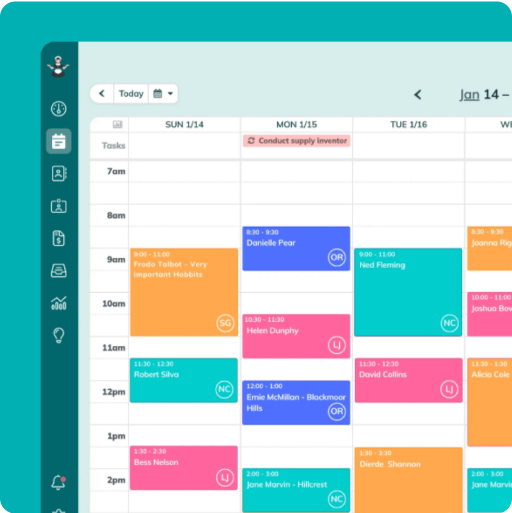
Simplify and enjoy your scheduling with a scheduling software made for maid services
- Have a beautiful calendar that's full but never stressful.
- Make your cleaners happy and provide all the information they need at their fingertips.
- Convert more website visitors into leads and get new cleanings in your inbox with high-converting booking forms.
- Become part of a community of 8000+ cheering maid service owners just like you.
Start your FREE ZenMaid trial today and discover the freedom and clarity that ZenMaid can bring to your maid service! Start your FREE trial today