Frustrated with your scheduling? Try the easiest-to-use calendar app, made by and for maid service owners.


Brought to you by expert maid service owners
Introduction
Stephanie: Hello, everyone. Welcome or welcome back to the Filthy Rich Cleaners podcast. I am your host, Stephanie from Serene Clean, and today’s guest is one of my consulting clients that I really wanted on the podcast for you guys because he has such a unique path and perspective when it comes to his cleaning business, Manic Maids in Chicago, Illinois. Marko, welcome.
Marko: Thank you so much.
Stephanie: I’m not going to try to pronounce your last name. Can you say it for me?
Marko: Yeah, it’s Marko Lazarevic.
Stephanie: Okay. Yeah, European last name. Okay, I got you. Yeah, I would have butchered that. I’m sorry. And Marko came to me probably what, eight months ago or something, and you were just about to acquire Manic Maids, right?
Marko: Yes, you were one of my big diligence calls while I was in the process of acquiring it.
Stephanie: And it’s a very unique thing. Not many people buy cleaning services that are so well established, because how long has Manic Maids been in business?
Marko: So it’s been around since 1990.
Stephanie: Yeah, which is crazy. And honestly, a lot of infrastructure just hadn’t seemed to have changed since the 90s from what you were describing to me. And how many cleaners came with this purchase?
Marko: Yes, there are about 25 cleaners and two office staff.
Stephanie: Yeah, so zero to 100 real fast for you.
Table of contents
- Introduction
- Marko’s Background and Path to Acquisition
- Finding the Opportunity
- Due Diligence Process
- The Transition Process
- Implementing Price Increases
- Building Culture and Trust
- Administrative Operations
- Understanding Incentives
- Choosing the Right Customers
- Operational Structure
- Tying Growth to Employee Benefits
- Pricing and Payment Models
- Operations and Service Delivery
- Training and Personal Growth
- Connecting with Marko
Marko’s Background and Path to Acquisition
Stephanie: So tell our listeners, what were you doing prior to this? How did you even come to the decision that you want to do this? And I just kind of want to dig into the acquisition process because I think a lot of people go about buying cleaning businesses altogether wrong, or they pay too much, or just a variety of things can go really wrong in this process. And then obviously we’ll talk about actually becoming the owner and integrating. So let’s start from the beginning, shall we?
Marko: Yeah, good question. So I’ll start with my background and kind of give you my entrepreneurial odyssey and how I got here because it was not a linear path. So my background is I was in finance. So I spent the first 10, 15 years of my career as an investor looking at stocks and researching stocks for a mutual fund company. It was a great job, great career, great people, feel very fortunate. But the path itself was not very durable. You’d see people get let go. They have one bad year and they get let go. I had a firm earlier in my career that ended up going from 50 people to closing down. And so it was a volatile business. It’s just the nature of the beast, nothing wrong with it. But it kind of got me thinking, okay, I’m 30. Am I going to be doing this when I’m 60? And how do I create a path where I have more control and can be more durable? And certainly that kind of got me on the path of thinking about business ownership, and certainly nothing has more control than owning your own business. So I thought a lot about that. And I think when I initially started on kind of the entrepreneurial side, I didn’t want to acquire something, wanted to start something. And the idea was, well, I don’t know how to manage people. I’m going to just start from scratch, which probably a lot of people listening to this, that’s what they’re doing, right? They’ve started from scratch. And so I actually started in the online business industry. So an affiliate marketing kind of SEO model. This was five years ago. So I think COVID, this was really when that was booming too. And got a chance to go from zero to, let’s say four VAs, was able to take a website up to 100,000 organic visitors a month on SEO. And so I had some success and had a lot of fun. And it was, oh, I really enjoy this, building a team, hiring people. But it’s funny, I ran into the same problem with affiliate marketing as I did with my prior career of, it wasn’t very durable, right? When you’re just an online model, nothing’s recurring. It’s really hard to build a brand. You’re super aligned to the platforms. And I’m starting from scratch. So everything is so new. And so that kind of got me on the thought of, can I get something that’s a little more durable? Again, same idea. And I was, well, I’d love to have something that had a customer base, a recurring customer base that was already there. And I had a finance background, I had money saved up. And so that helped me kind of think, well, I can, I know I can do an acquisition if I can find a good business. So that kind of got me down the acquisition path, which eventually led to Manic Maids that I was able to acquire about eight months ago.
Finding the Opportunity
Stephanie: So how did you find this opportunity?
Marko: So yeah, so I think going through the acquisition process, sourcing is a big one. I’d say finding a good business is the challenge in a private market deal. So this one actually came on BizBuySell. So anyone listening from BizBuySell.com, it’s really the, I call it the Craigslist of business acquisition.
Stephanie: Yeah, it sounds like a scam, I’m not going to lie.
Marko: Yeah, you’ll see, I mean, I found my business there. You’ll see a lot of just self-listed businesses. It can say anything. You can name any price. But it’s a great way to just get started. If you’re really looking, if people are listening and they’re in the cleaning business, I would tell you, every one of your competitors is for sale at some point. So if you’re in the business, you can even reach out. And I did some of that of just sending letters in the mail to 50 competitors and asking, if you’re interested, if you’re ready to retire, I’m here. We can put a deal together. It’s a lot more flexible when you’re trying to buy a private business than buy a house, let’s say.
Stephanie: Interesting.
Due Diligence Process
Stephanie: And so when you and I met, we were kind of running through a lot of, I was just asking a lot of due diligence questions, and we were kind of just going back and forth. What were some of the things that you initially looked at, and then after our conversation, you dug into more further, if you can recall that?
Marko: Yeah, no, it’s a really good question. And something too, if you’re looking at businesses, I always tell people, you’re not buying a house. It’s not, oh, this is a three bed, two bath, and this many square feet, and the neighbor sold for this amount. So I can kind of get it. It’s there’s employees, there’s customers, it’s a really dynamic entity. Things are really variable. And so the diligence, you have to be really thoughtful about that. And you have to also get to the point where you’re actually kind of getting to that diligence part too, which requires kind of building a relationship. But I think for me, the diligence, it really focused on two things, are your customers stable and are your employees stable? That was the main thing. That was really it that I spent a lot of time on.
Stephanie: And this customer base was probably very stable, I would imagine, right?
Marko: Yes. And so I think when I did the diligence, it took time to actually get the general ledger and go through it, thousands of rows. And I found that I think it was 75% of the revenue had been there for three years or longer. So 75% of the customers were there three years or longer. You can imagine the average customer was probably five years or longer.
Stephanie: Yeah, which is awesome. And it is mostly a residential business, right?
Marko: Yes, we’re about 70% to 75% residential. And the rest is a mix of small commercial and then common areas are actually a pretty big business for us.
Stephanie: And honestly, that retention is pretty impressive for residential, especially in such a competitive market like Chicago. Because for me, whenever I thought about throwing around the idea of buying a business, it was always on the commercial side. So I’m like, that’s way stickier. Residential is so, they can leave so easily, right? Obviously, commercial can leave as well, but they’re less likely to, right? So that is quite attractive. And it makes a lot of sense where you’re like, oh, this is something here. And what about the staff? How long, I mean, was there typical turnover for the industry? Or what did that look like that made you feel like, okay, this is a sound idea?
Marko: Yeah, so I found that the turnover of staff was probably 30%. So it was pretty low. And if anything, it was probably better than that because a lot of the turnover happens with the new hires who may just kind of come and go. I think our average tenure was probably over five years.
Stephanie: Yeah, which is very impressive.
Marko: Yeah, I think we have a couple of cleaners that are 15 years and several that are over 10 years who have just been with us a long time. And you know what I’ve learned about cleaning now that I’m in it is sticky customers and sticky employees are tied at the hip, right? If you have stable employees and you keep them happy, they’re going to keep the customers happy. The customers get really used to their cleaning time. It kind of works out that way.
Stephanie: Yeah, no, they really are very symbiotic and work together in that manner. So I remember from our first call, you kind of mentioning once you started digging in and looking at the systems and stuff, you’re like, all right, this business has been able to operate for this long, basically with this level of inefficiency, no offense to the former owner or anything. But there was a lot of, there was pretty much very little technological anything, right? It was very, I would say manual, a lot of infrastructure things that were just, oh my gosh, and no advertising really either, right? If I’m recalling, it was what, bus benches or something?
Marko: We still have the bus benches. It was really, it was classic. And I mean, to credit to the owner, I mean, she did a great job building and her story is kind of a classic one of she started out living in Chicago, a young person, I think she was working jobs and started cleaning homes to get good daytime hours, got really busy, started hiring some techs, got so busy she needed an office staff and fast forward, 35 years, and she’s ready to retire. And she’s, I’m ready to retire, no kids, want to keep staff happy. But she didn’t really have a formal business education. She wasn’t, had no real, the internet didn’t really exist when she started it. So you can imagine, there’s obviously financial debt, and then there’s technical debt. And so I kind of had to inherit it. And it was kind of obvious in diligence, we talked, okay, I’m gonna start changing these things. They had a CRM. But kind of after that, there really wasn’t much. And so that’s been a lot of what I’ve been doing in the last year. And it was kind of the opportunity, but also the challenge. Fixing these things, it takes a lot of work. But when you have a mind for that, it’s really fun of improving efficiencies is really fun as lame as that sounds because, oh, this is going so much more smoothly.
The Transition Process
Stephanie: So obviously, you guys agreed upon a price and then it was time for the transition when it comes to ownership. So I know this varies wildly between every single acquisition. But can you describe what the previous owner’s role was in making this transition seamless to you being the owner?
Marko: Yeah, that’s a good question. I think just an important point with acquisitions is, first off to start, the owner was not very involved in the business. So when we did our diligence, for example, she was on vacation the whole time. We did a whole month of diligence, the most intense part of the deal. And she was, I’m in Hawaii, guys.
Stephanie: But that’s a good sign that she’s able to do that.
Marko: It is a good sign. And I would tell people too if you’re looking at deals, kind of getting the financials and multiples, but really ask yourself, are you buying a business or are you buying a job? And if the owner is cleaning houses, him or herself, and doesn’t have any office staff, they might be making great profit, quote quote, but it’s really just a nice salary. So I would just be mindful of that. And I think in this case, she was really not involved. And that was nice. And it made the transition better. And she had been the founder. And so she was pretty committed to making sure this went well. She did really believe in her employees. So she was really helpful. And that helped a lot to the transition.
Stephanie: Oh, that’s awesome. And now looking back, is there anything that you feel if you could redo it all over again? Is there anything that you’re like, I wish I would have known this before the deal went through or before we started the transition? Does anything stand out to you, even if it’s small?
Marko: Yeah, I mean, I think, I feel like I knew, but I knew very well that there was a lot of change I needed to do. But like I said earlier, change is hard. It takes time. It takes effort and there’s real reward. But now that I’m trying to work on things every day, you’re realizing that. I think another thing I did realize in diligence that we talked about is the prices were pretty low. She wasn’t charging that much and it was something that helped the stickiness, but it also kind of hurt the unit economics of the business. And so now we’ve kind of been in this journey of, same with kind of changing old technology. It seems so obvious. It’ll help you so much, but it’s not as easy when you start doing it. I’d say the same with pricing. We’ve been dealing with low-priced customers and slowly working through that while trying to also take care of the customers, make sure they’re getting good value. But it’s not that easy of, well, market is here. We’re here. Let’s just change it and everything goes in my pocket. It’s, no, this is going to be a multi-year journey for us.
Implementing Price Increases
Stephanie: Yeah. Okay. Well, let’s dig into that because price increases is something that absolutely terrifies most listeners. And even when you know you need to do it, that terror of, especially when we’re talking about long term clients, them dropping, or them throwing a fuss or pushing back, can you dig into that a little bit? And how have you guys tactically actually implemented? And what kind of jumps are we talking? If you could say, across the board, is it a percentage that you’ve been kind of aiming for? You haven’t just jumped straight to market? Has it been this transition? How have you batched this? I’m just thinking how we’ve done it before. Can you describe this to me?
Marko: Steadily, steadily and carefully is the short answer. To give some context, I think when I looked at their average dollar per hour build in 2024, so the year before I bought the business, they were billed about $34 to $35 per hour.
Stephanie: That’s super cheap for, especially Chicago. Oh my God.
Marko: Yeah. Yeah. That’s essentially an independent lady that’s not paying any taxes with no overhead, right?
Stephanie: We’re now probably close to 40, which is actually still fairly low.
Marko: Yeah. And I think what we’ve done is, really kind of think piece by piece. When I came in the business, everyone kind of got the same, every new customer got the same hourly rate. And we’re here right in the middle of summer, and we’re getting all these calls for move and move outs, which as you know, those are difficult. Those are difficult one-time customers, has to be done on the 31st or the first. And we’re, why are we charging someone who wants a weekly cleaning the same as a one-time move out. And so it’s, let’s just raise the prices for move outs. And we did it and we just changed it. Let’s just go to $50 an hour. There, we don’t, let’s just see. And sure enough, it was the phone kept ringing. Hey, our rates are $50 an hour. Sure. I need it done. And I was, okay, let’s now it’s, let’s change this for all new customers. Let’s go to that. Now let’s, the problem too with our pricing is we had a lot of customers that have been there 20 years and maybe just didn’t get a price increase for reasons unknown. And it’s, okay, let’s find people who are really low and let’s just have a one-on-one conversation. Say, hey, so-and-so, you’ve been a great customer. We love you, but you’re just way below our other customers. Can we raise you close to our other customers? And sure enough, if you’re delivering a good service, you have a great cleaning tech and you let them know very honestly, they are okay with that. And so it was really just kind of, this gives you good examples of focus on the most important things first, we’ll try to treat the core base the same. And at the same time too, I’d add, something I told the employees, this kind of gets a transition, but also pricing is, I told all the employees, the goal with me taking over is to help grow. And if we grow, you’re going to get paid more. And so pretty much every time we were able to do price increases, there was either a new bonus, a new benefit, or a wage increase. So that also, I think, I told that to customers too. Hey, we’re putting these together. And I bet you, I wouldn’t be surprised if customers asked employees, hey, is this a new owner? What is he doing? And so you kind of have to merge all these things together to make sure it goes off well. Because if I just, yeah, if I just came and said, yeah, everybody, we’re just going to raise your price. I’m sure there’d be a lot of churn. And so it’s a matter of being steadily thoughtful, focusing on the most important first.
Stephanie: Did you have any drop off or what’s your drop off been like when it comes to these price increases or because of the diligence?
Marko: It’s been very low. It’s been quite low.
Stephanie: That’s awesome. That’s awesome to hear. And I love what you just said is attacking it from both sides of tying it to employee wages and benefits and then making sure you follow through on that. And obviously culturally, then that gives them buy into you as the new owner that, oh, you’re making their life better by coming in, especially when there’s probably insane loyalty to the previous owner, I would imagine. So I love that. That’s fantastic to hear that the price increases have gotten lots of great tips right there. So thank you for digging into that.
Building Culture and Trust
Stephanie: So I’d love to talk and not kind of transitioning into the culture of it. All right. Here you are new owner. I have talked to other folks who have bought businesses before and they’ve had to do a bit of a, sometimes a cleansing of staff because it’s, it just doesn’t go well, right? Especially once you start doing changes and new rules and policies or new softwares or whatever, that’s when you start hitting some stubbornness. So talk to me about that. What have been the good, bad and ugly when it comes to culture?
Marko: Yeah. So fortunately, this is where I think I just got lucky. It’s very hard at diligence culture. It’s very, you’re not going to be talking to every employee one-on-one and get a list of, okay, here’s what I’m going to keep or not. And so I was very fortunate that she had just built a good business and, I kind of, I relied a lot on that retention. The employees have been here this long and the customers have been here this long. They’re doing something right. It was kind of just the obvious point and that turned out to be true. And so I was fortunate that I didn’t have a lot of bad apples that I needed to get rid of. And same with pricing, just being really steady with people. I told them day one, everyone was, are you gonna move my regular clients? I’m, no, we are not going to change your schedules, very clear about that, a simple thing that you would easily think, oh, let’s optimize the schedule a little bit and move some things around, maybe pack someone’s schedule. It’s, that can really anger people if you take away their regular Tuesday client because you thought it might be better for, I can increase my margins of percentage point. So, it sounds simple as an outsider, but then you realize, no, I run the business, right? It’s, they really care about that. And so keeping things stable, and then just like pricing, finding little ways to help people, little ways. I think I told you an example, Stephanie, of, we have a CRM, but it was kind of barely used. And it was not used to the point that we would send schedules to cleaning techs manually every afternoon. Here’s your jobs for tomorrow.
Stephanie: I literally, when you said that, my mouth dropped open. I’m, what? Which I know some of our listeners are still doing that. Get ZenMaid. What is going on here?
Marko: Yeah it’s funny and, it’s funny, I asked the owner and she’s, yeah we used to have to record it on a voicemail. You know back in the day you have to call your extension and get your schedule. How crazy is that?
Stephanie: I love talking to people who ran cleaning businesses before the internet because I’m just, how the fuck did you do this? It blows my mind how that was even possible. But obviously we have it so much easier in comparison.
Marko: Yeah and then the example here is, well, hey, we have a CRM, it’s Service Fusion. So it’s not ZenMaid, but there is a mobile app. Why don’t we just give everyone mobile access? And initially it was kind of, I don’t know, we’ve never done that. Do they really know how to use their phones? Do they know how to use a cell phone? We tried it. And admittedly, there is login issues. And we pretty much have to set the email to our email address. We control the password. So we did that. Again, and the lesson I keep learning is, you don’t have to do this huge change overnight, but you have to make little changes and, okay, we’ll just set the email to ourselves. We’ll just, we won’t have them. We’ll set their passwords. We’ll tell it to them. And lo and behold, within a week, everyone’s, wow, I can actually see the whole week. And like, and then, it helps us because they start to ask us things, I noticed my schedule’s empty on Thursday. Do you mind if I take that day off? Oh, great. I’m glad you’re telling us three days in advance. That helps me a lot. And I’m glad it can help you too. So you can start to see how the trust just builds very quickly. Just seemingly simple things, seemingly obvious things. It makes a difference.
Stephanie: Oh, absolutely.
Administrative Operations
Stephanie: So what about the admin side of things? How many admin staff came with this? And what are you handling versus what are they handling currently?
Marko: That’s a good question. So I came with two. Now I have one that stayed with us. And I’ve been pretty involved. I’ve been really involved. I’ve been, I’ve been willing to jump on any employee call and talk to any employee, any employee when they call, I’ve been willing to drive out to a job site if needed. I’ve tried to actually put myself out there and go with the cleaners.
Stephanie: Intentionally.
Marko: Intentionally I did it. We’re having a busy day and it’s, we could send someone, yeah, it’s good for morale. I’m, and it gives me a lot of respect for techs, right? I go out there and I always joke with our cleaning techs, I’m, you don’t want to train with me because I don’t know what I’m doing. We kind of make jokes about that.
Stephanie: I’m, you know how to sweep Marko, but you got to really learn how to scrub the shower.
Marko: I’m, yeah, I got to get better. So, it’s just one of those that’s kind of funny, but also it helps me learn the job. And so I have been very involved intentionally and it’s also shown me all these little things. Why do we do this? Oh, that’s how we’ve done it. Well, let’s work on this. Would this save you time? Yes, it would. And so we’ve actually probably been as productive with one office staff than two, which by definition, we’ve gotten pretty much double as productive. And I’ve still taken days off. And the other office manager has been fine. So it goes to show you, fixing these things, it can really add a lot of efficiency and it’s kind of given us a chance to grow now.
Stephanie: Yeah. Do you feel that not knowing the industry was one of your biggest, I guess, weaknesses? And do you feel like that’s been improved? Or maybe it wasn’t that big of a deal? Because it’s business is business? Or where has that growth led you when it comes to learning the business, going out and cleaning that type of stuff? How important? Because there’s a lot of people who listen who are interested in a remote cleaning business, right? Or running ICs or all of these things. I’d love to hear your perspective coming into this. How important?
Marko: A little bit of both. If you’re an excellent cleaner and know your production rate down cold, that’s going to help you a lot to scaling a business and hiring and recruiting. At the same time, if your only skill is cleaning homes really quickly, that’s not going to translate to necessarily recruiting techs or really not building technology and systems. So I think a little bit of both. I would love to continue to get better at cleaning and spend more time with the techs. It’s definitely a goal of mine to do that. It does help. There’s no substitute for being in the field, I think, and really cleaning, five, 10 homes a week and seeing what that’s like. At the other hand, it’s absolutely not necessary. And one of the reasons I wanted to get into the cleaning industry, I kind of felt I looked at a lot of industries and acquiring was, cleaning, I would say that the two things that can’t be understated is one, it’s really simple. And two, it’s recurring.
Stephanie: Yep. Hard to beat those things.
Marko: It’s so attractive for that. And again, obviously, I own a cleaning business, this is no shade to our industry, but it’s comparative to other things, the skill required when it comes to training as well as equipment, it really is so attractive in comparison to even something like window cleaning, right? And we’re talking ladders and insurance for that type of thing. So, yeah, it’s to me, it’s one of the most attractive recurring businesses out there.
Stephanie: I agree. I mean, one of the early businesses I looked at seriously was a commercial HVAC business. And you can imagine, a factory with 50,000 square feet and the AC systems on the roof and the owner is showing me a picture of a helicopter lifting the new AC system.
Marko: He was talking about the BTUs and other systems really nicely sized for this kind of building. And you got to be careful of the plumbing because that can affect the temperature. So you can imagine, yeah, meanwhile here, it’s we’re cleaning toilets, right? It’s a very different scope for better and for worse. But as an outsider, yeah, it is something that you can pick up.
Understanding Incentives
Stephanie: Is there anything that really surprised you coming into this that really stands out to you of, oh, I did not expect this to be a sticking point for us, whether that be on the staff side or the actual work itself or clients, how they behave? Is anything, oh, didn’t expect that?
Marko: I mean, every day is something new. I feel like that is something. I think you think that’s, if you’re listening to this and thinking of acquiring and you’re not in the kind of owner business or the trades, you realize how many little things happen every day. You don’t have big stresses of, I have a big project in corporate to get done, but you do have little stresses of every day. Someone couldn’t get into the house and somebody called off. So there’s that. I think in terms, to answer your question directly, something I wrote down here in my notes was, your incentives really matter. And that’s something that I’ve been really learning and working on in real time. And by that, I mean, think really hard about how you pay people and why you pay people what they do. Because I’ve just found right away, for example, we all know absenteeism is a big issue in our industry. We all know there’s call offs. And we’re talking about it one day. And we’re, man, they’re just, I wish they would just tell us in advance. And it’s, I was, let’s just start paying bonuses on this. Every month that you have perfect attendance, you get a bonus. And if you actually just tell us in advance and have three days or less, you’ll get a smaller bonus. And instantly, it got better. It was just, it’s, wow. It’s, lo and behold, if you give people money, they will, they’ll behave better. And the other example I gave you too, which is really fascinating is it’s actually applied to the customer side. Before I bought the business, we really never charged the cancellation policy. It was $30 for within 24 hours and it was pretty much never enforced.
Stephanie: Yep. Never enforced.
Marko: And honestly, today we still rarely enforce it. It’s not, I don’t want to make a business of charging nuisance fees on regular clients, but we did. I noticed right away in the office staff would be, oh, yeah, so and so they always cancel the same day. I’m, wow, that’s, and I remember getting on the phone with a client just saying, hey, we have to charge a fee here. And they were, I can’t believe you’re gonna charge this.
Stephanie: How dare you?
Marko: You know what, I’ll waive it, you have been with us a long time. But this is really important to us because you know, the clean techs lose your wages. And lo and behold, they never had an issue again. And it’s just an example of, the incentive or in this case, kind of negative incentive, it makes a difference if you just tell people and work on it, you can really change behavior.
Stephanie: No, so true. And I think people are very afraid to, especially with long-term clients, some of our listeners, they’re just, they may have had their business for 10 years and now all of a sudden they’re trying to put policies in place. And, all right, I’m ready to hire and start doing these things. And all of a sudden, yeah, clients will act very almost personally offended when you try to do that. And I know I, for one have lost clients when we’ve tried to enforce policies for the first time. And it’s, I think, hopefully that doesn’t happen. But you have to be willing, I think, to stand your ground and be, look, this isn’t okay. And we’re doing business here. And just knowing, at the end of the day, it would suck to lose a customer, but it would also suck to continue to be walked all over or in your example, continually have a tech who doesn’t have a job last minute. And now what?
Choosing the Right Customers
Marko: You know, I agree. And I think, it gets another broader learning I’ve had is, we talk a lot about choosing the right employees, but I actually think choosing the right customers is really important too. And I’ve noticed too, some customers, they’re just, they’re just great. They’re just great people. You ask, do you mind moving a day? So-and-so’s sick, or they’ll even, like I said, the cold weather, they’ll be, I put out extra coffee. It’s, oh, they’re just great people. I’m really fortunate that we have a lot of those. And, I think we all know their customers are kind of the opposite. And it’s just, they just always have an issue or they always reschedule and nothing personal, but as an owner or something I’ve told my team is, if you’re not happy with a customer and they’re being difficult, that’s actually a disservice to our other customers, because I’m losing energy for the great customer who’s so friendly, so receptive, has a great cleaning tech. We treat them so well. And, but I can’t, I can’t treat them. So it’s deal with so-and-so who just, who knows the grumpy Gus, you know? And it’s just, it’s just, just go to that customer and just, don’t take them. And same with new leads, if we have a new lead and it’s, you can tell the first call is just really difficult. They’re asking for a lot. It’s out of scope. You try and explain, they’re still not, they’re, oh, I guess I’ll take it. But I really wish it was half the cost. It’s, dear sir, respectfully, you might want to go with someone else. I don’t think we’re a good fit. And it’s just, it saves you a lot of time. And so that’s been a learning that I’ve had to pretty quickly. And it’s, you cut the 2% of difficult customers and it’s 70% of your issues.
Stephanie: Yeah, I know for us, even you said, during the lead process of, I’ve seen notes before from my managers where it’s, they said this, this and this during the call. Don’t think it’s a good fit because they’re just, for us, we don’t really do housekeeping, I would say, dishes and laundry and that type of thing. And when they’re really asking for that, no problem for other companies to do it. We’ve just chosen not that route. And so it’s, we’re already kind of disappointing them, even though it’s not our fault. It’s just this is clearly not a good fit. And I really like what you brought up about the energy for the good customer. And it applies for employees too, is just every single employee where if I look back on the past three months, I’ve spent hours communicating with my management team and we’re talking about the same person again and again. And for some reason, it’s, there’s always, there being a problem child. And it’s, yes, it’s going to temporarily hurt when they’re gone. But the we’re talking about opportunity costs, including our energy, right, of how much time and energy are we putting into this one customer or this one employee where if they were just not in the picture, alive, but not interacting with our business, of course, then we could give that energy to everybody else. Right. And it’s so worth it. That little blip of revenue loss, you’re going to get that back tenfold. Right.
Marko: Exactly. The second you’re just not worrying about that bad person, you can spend more time on getting more good people. And I try and also have an abundance mindset with the team of, as long as we’re getting a lot more leads, then that can cure a lot of problems.
Stephanie: And you’re not just leads, but recruiting, always be recruiting. I would say if someone calls us and they’re interested in a job, and ask a couple of questions on the phone, see if they want to come in, just have them come in. Set times early afternoon, don’t let them come in in the morning. Don’t let them come in at the end of the day, set times, let them come in though, if they want to chat, especially if they’re a referral, it’s, yeah, let’s chat with them. Because you never know. And I think you’ve talked about keeping your pipelines full on customers and employees, it allows you the opportunity to then just focus on the best. It really gives you a lot of power in the situation instead of being kind of at the mercy of other people. Because no matter what, we can’t control what other people are going to act like, all we can try to do is prepare for worse or best case scenario, right? The best case scenario is a bunch of customers come your way and you have to hire. Worst is you need to fire somebody and now you’re not being held hostage by a bad employee. And you just touched on it, when it comes to leads.
Operational Structure
Stephanie: So I’d love to dig into just operationally, just to get some metrics or how you guys operate. So number one, W-2 employees, I assume, right?
Marko: Yes.
Stephanie: Is there any use of independent contractors at all or VAs for your office staff or what does that look like?
Marko: I do have a VA. I do. That’s actually the recent hire. So we do have a VA that helps us with invoicing. Independent contractors, I mean, very infrequently, if we have someone that may be a partner of somebody else, we might say, okay, you can, when we get busy, we’re happy to take you on for a little bit, but we really try to avoid the independent contractors.
Stephanie: I gotcha. And what is your, or how did you find your VA? Just out of curiosity.
Marko: Yeah. So I, she’s in the Philippines. She’s been excellent. OnlineJobs.ph is the job board in the Philippines. And so I’ve hired her directly. Like I said, I had an affiliate marketing business. So it was kind of all remote. So I kind of learned how to do that right away. And yeah, I would highly recommend it. That’s the kind of job board people use, OnlineJobs.ph.
Stephanie: Okay. And any tips for a successful VA integration?
Marko: So, like any business, you need lots of systems and processes. But when the person’s remote and they’re 5,000 miles away, you need even more systems and processes. So just really being clear about their role. I’ve created kind of 10 video trainings for her before she got started. She had a really clearly defined role in invoicing. Yeah, so that was ramping steadily. I think in the recruiting process too, I think the interviews are, they’re kind of crapshoot anyway. But when you’re hiring someone offshore and their English is not their first language, is really hard. So I did kind of a longer application, and then an interview and I did a paid test, paid test and reference checks. And so you can create that paid test. And that can help a lot. So I just gave them frankly, samples of the work and said do this and you’ll be paid. And that’s a really good check.
Stephanie: What were those? I’m curious, what tasks did you have them do?
Marko: So they’re there, the VA’s role is mostly invoicing. So I try to take a batch of jobs, and I added some errors in the jobs. And I was, okay, here’s 100 jobs, can you find the ones that have errors? And I kind of gave some hints of how I would audit the jobs. Here’s our list of customers in our daily confirmation texts, we said, again, made some errors in the spelling, the names, change the names a little bit, change the times from 8am to 8pm. Can you find the errors? Just really attention to detail. And can you sort a spreadsheet and see these things? So yeah, that helped a lot.
Stephanie: That is a really good tactical tip right there. Because I think if you make it too easy on them, you can’t see how they problem solve, right? Because that’s really what we’re looking for when it comes to any type of admin staff is, when things aren’t perfect, do they short circuit? Or are they able to figure it out, right? Because there’s got to be problems, right?
Marko: Yeah, exactly. And making it a little hard, making it very related to their role, right? I’m not going to have them record a new sales call, right? My office staff, I might want to talk about, do I really care that they’re a master of Excel? No, but do I care that they can write a good reply to a customer? I probably do more writing in that situation. So, making sure it’s related to the role, making sure, yeah, it’s a little difficult and then paying them too. Otherwise you’re just going to get adversely selected, I feel. So I always pay them for the task.
Stephanie: Yeah. Okay. And literally, how did they complete this for you? What, I mean, did you have them record their screen or just, do these, you just sent them an email and be, this is what I need you to do? I’m just trying to think, if I wanted to implement this, how would I do this?
Marko: You know, it’s all, Google, here’s a Google folder. There’s instructions and here’s the three Excel sheets. Please make a copy of this with kind of your answers on that. Send it back to me.
Stephanie: Got it. Okay. Awesome. And how many people did you have it narrowed down to before you made your decision?
Marko: Gosh, I think, I mean, if you recruit remote, you can get a lot of candidates. I probably got 100 candidates, did 10 interviews. And then I think I did three got the test.
Stephanie: Wow. That’s awesome. And I know I’m just asking a lot of questions, but I know a lot of people. So, how do you pay them? How does that look?
Marko: Wise. So W-I-S-E, Wise, it’s kind of like the more modern version of PayPal and the cross border fees are really low. So it’s a very good exchange rate. So people in the Philippines strongly prefer that. It’s like setting up PayPal, connect your bank account and pay them. And again, it’s up to you to set the wage, but whatever the wage you think is appropriate. And so I have a salary for her.
Stephanie: Okay. That’s the next question I was going to ask is hourly versus salary. And how did you make that decision? Which way to go?
Marko: Yeah, good question. This is kind of a broader discussion because I am becoming very opposed to hourly pay for anybody. I just think it is the worst incentive.
Stephanie: Yeah, it is the worst.
Marko: Yes, exactly. Go slower, take your time, don’t get better at things, waste time during the day. I loathe it so much. And so I did salary. But look, similar to flat rate pricing, how do you come with a flat rate price? Well, how many hours should it take? What’s your hourly rate? And so I try to think, how many hours should your job take? What’s your hourly rate? And here’s the salary. And then, I kind of made a comment there, as you get better, you can get paid more per hour, and I’m not, it’s in with offshore, it’s pretty much impossible. I’m not gonna, you can do kind of computer screen tracking. I’ve seen people do that to me. It’s, hey, just do this. And if it is hourly, we’ll just tell you an hourly rate and rough hours, a special project, for example, but setting a salary that’s at a reasonable pay is the best.
Stephanie: Yeah, I definitely, I’m literally, yeah, dealing with that right now of, the hard part is knowing, well, how long should this take? And that’s where I really get stuck on salary. And I’ve even had that discussion with all of my management team of, I’m not, do you guys, would you prefer this? And they’re, well, and then having that discussion of, what is better salary versus hourly? And your cleaning techs, I assume are all hourly, right? Or are they flat rate?
Marko: They are hourly. I think we had a discussion before about working on this. And it is something that I’m kind of determined we are going to move there, we’re going to find a system for this, it probably will take some time. But, I’m pretty determined to get there, flat, flat, flat pay per job.
Stephanie: I mean, and that, yeah, obviously, the consistency of what your cost is, is going to be incredible. There’s so many benefits, right? But the complexity of making that transition will be, it’s gonna be tough, at your size at what 25 people, yeah, there’s gonna be, I don’t envy you. There’s a reason I would never do this. Not because it’s not a good idea. Because I’m, fuck that.
Marko: Yeah, and it is one of these where, kind of welcome to the game, right? You’re still growing. And if you want to go from 1 million to 2 million, you kind of need a whole different set of systems in place. And so that’s just part of the game, right? Your first job hiring cleaning techs, you got to learn how to manage, your first job hiring office techs. And now it’s, you want to double, you got to get really scalable. You got to create really even better systems. And so, I kind of tell the team, I make a joke of, yeah, be nice. Everything was really stable. But I’m, in a year, we’re going to grow. We’re just going to be, we’re going to have a new set of problems. So, it’s just something we got to get used to. But look, it reminded people again, the more we grow, the more money that comes in, the more we can invest, the more we can pay. So just kind of really reinforcing that of, I know there’s change. I know it takes time, but this is going to be good for everyone. You want us to be bigger, everyone should want us to be bigger. And I will continue to make it clear monetarily that being bigger and being busier is better for everyone.
Tying Growth to Employee Benefits
Stephanie: I love the point you’re making right now that I want everybody to really hone in on is that, you need to tie things that are uncomfortable to them to positive effects on them, which is going to be financial, it’s going to be benefits. It’s going to be doing their job is just easier because they have the information. There’s less frustration. We have to tie the things that we want to happen and to accomplish, which is the business growing, of course, to things that are going to benefit them. And not just thinking, yeah, I’m going to increase techs wages when I do this, but don’t be afraid to say those things. Maybe not spell out because your mind might change how that may look, but more so you’re going to be rewarded or things like bonuses, right? For me, I implemented Christmas in July bonuses, I think three years ago. And it’s something we’ve done since then. That’s totally unnecessary. But it’s to literally cement to that because yeah, we’ve become a lot more corporate, which I know the cleaners get a little frustrated with sometimes. But it’s, because we’re at the scale, we got to have this more stiff environment, I would say than the lackadaisicalness that we used to have. And especially if they’ve been here for a long time, it’s uncomfortable. But it’s, but here’s some money to make it less uncomfortable.
Marko: Yeah, I agree. Like I said earlier, incentives work. They really do. And I am big on more bonuses, tying it to work. So tying it to, if you get new clients, if you get reviews, if your schedule is full every week, if you’re here every day, those are all things that we can track easily and should directly tie to your pay. And, I have the same as you said, I actually try to spell it out as clear to my employees as possible knowing, and I only put the caveat of, look, there’s a lot of work to get here. So, just again, remind them, it’s not guaranteed, but I’m going to try and make this as clear as possible and make your life easier. You know, and kind of going back to just transition to and building trust, little things. And I think back to people saying, hey, we don’t have any spray bottles here. And, me driving to Home Depot midday and buying 10 spray bottles and handing to them, those little things also make a difference too.
Stephanie: Yeah, I just, I just want, I don’t know if you’ve ever seen the show Ted Lasso. I’m obsessed with it. But it’s really good. But anyway, one of the first things he does is he fixes the shower, the shower pressure in the locker room or whatever, because it’s they complained about it. And then he fixed it the next day. And even though they didn’t have buy in on him yet, it was just very much, oh, he fixed it. He did the thing that we complained about. And I think that’s, yeah, it’s just all those little examples of, oh, they listened to me. And being heard is I think one of those really insidious, you don’t think about that as, oh, this is what the cleaners need. We just think yeah, it’s money, it’s all of these things. But it’s being heard. It’s a form of respect, right? And seeing them as a person. I think that that is something that people oftentimes overlook is being really, really important for them to have job satisfaction.
Marko: I agree. I don’t, I think it’s, it’s not either or, it’s both. And I see that in a sense of, you can’t just, I’ll pay you a bunch of money, or I’ll make this a family for you. It’s kind of has to be, you have to have a good place to work. And you have to pay competitively.
Stephanie: Yeah, absolutely.
Pricing and Payment Models
Stephanie: And so, okay, so W2 employees, mostly, mostly you have VAs, talk to me then about charging clients because you mentioned okay move outs we’re doing at $50 an hour. Are you charging flat rate for all current recurring clients or what does that look like if we’re looking to transition to flat rate pay? Do you charge everybody flat rate?
Marko: Yes, we do. We’re not there yet. I kind of say the joke, we’re at quasi flat rate because you think about it, we have all these long-term clients, it takes the same amount of time every time. Right. And I think there’s even kind of an understanding between kind of all sides, the employee, the customer and us that, sometimes it might go a little faster. Sometimes it might go a little bit longer. I can tell our employees, they report the same time. Sometimes it might take longer. The clean tech will tell us we won’t charge the customer. We try and do these things to be fair. But like I said, that’s kind of why I’m already leaning towards flat rate. We have all these customers. We’re pretty much there. We all know we’re there. They’re seeing the same charge on their credit card every month. We might as well make this official and tell the techs, hey, you can actually get incentivized to being faster.
Stephanie: Yep, exactly. And you really are highlighted. I’m glad we’re kind of going into the nuance of this because we are highlighting the pros and cons of how you charge right here. And it’s everybody knows listening that Stephanie charges hourly. You know that, but I am never going to say that that is superior to flat rate. There are pros and cons, right? And simplicity is one of the pros for sure, but profit and incentivizing to move faster. Well, because, obviously if you charge hourly and you are most likely paying hourly, they kind of go hand in hand, just like if you charge flat rate, you’re going to pay flat rate. And so, yeah, I’m never going to be pigheaded and say that hourly is the wisest thing with both. It’s just that was the easiest thing at the time. And yeah, I definitely will be flirting with the idea of experimenting with flat rate. Because, yeah, right. Sometimes, yeah, you go over or under and it’s, what do you do with this long term client? Because this cleaner was pokey today, you’re eating it anyway, right? You’re basically flat rate.
Marko: Exactly. And I think it’s, you’re not going to change your entire business model overnight, but you do have to make changes every day and you can’t let inertia control you. And I think that happens. And I think it actually gets worse when you’re 25 cleaning techs. Everything is, oh, I can’t change this for everybody. It’s going to take so much time. Let’s just not do anything. It’s just so easy to say that. And I’m, guys, let’s just find the people that are already there. Let’s just have a conversation with them and have a conversation with the techs. And meanwhile, a move in, move out, I will probably never go flat rate. Why would I go flat rate there? You know, it’s going to be, it can vary so much. And you tell the clients it varies so much. So, there you go. We don’t have to be one thing. We don’t have to change everything overnight to one way. We can have both depending on what works for people.
Stephanie: And I think what you’re highlighting right here is something as the owner that we are we’re blind to is that we think that it has to be all one way of pricing because otherwise somehow the customers are all going to know that there’s no consistency amongst you. Your customers are not going to know that you charge half of them in a flat rate model and the other half hourly as you transition. Like maybe don’t, whatever makes sense for that individual client. And so, it’s okay to have, as long as your notes are, how do you charge this person? Right. And as long as for the cleaner, it makes sense on that end of what the expectation is. And if you start moving towards flat rate, then it’s, well, faster, that’s the answer. Right. And so, yeah, that’s a really good point to be made that it’s, it doesn’t have to be overnight. Like, boom, we’re this way now. It does honestly probably at this size for either of us, that’s not really possible. That would be crazy to try to implement all overnight. Right?
Marko: Yeah, I agree. And you, you might never change, but in some people might be grandfathered in and some people might not like it, but, just being transparent with people always. I always tell clients and employees, I’m just trying to do the right thing. You know, always having that as your north star of doing what’s fair to people and being transparent and communicating at all times is something that I’ve always tried to do. And so, as long as you’re doing that, I think you’re doing the right thing. And, I also tell my team, look, if we start transitioning and we’re to flat rate, we realize it’s a disaster. We’ll just go back. We’ll just go back. We’ll lose some clients and we’ll just say, look, it didn’t work guys. We tried. We really meant the best. Yeah.
Stephanie: It’s not a tattoo, right? We can reverse this. And even that can be painfully reversed. It’s okay.
Operations and Service Delivery
Stephanie: So, okay. So that’s how we charge. Operationally, do you have everybody come to the office every day? How do supplies work number one and then number two talk to me about is it teams versus individuals and does everybody have to have their own vehicle? Because I just kind of want to hammer into all of the, everybody operates differently in these areas.
Marko: Yeah, so we’re a little unique in that we actually encourage clients provide supplies.
Stephanie: Oh, interesting.
Marko: Most of our clients do and that’s because we’re in Chicago. It’s a very dense area. We have cleaning techs who take public transit and so for them to carry a vacuum is difficult. And even that is something we’re changing. We’re kind of giving everyone backup supplies. I give them liquids so they can carry liquids and rags and just really encourage clients to just do a vacuum them off. That’s the hardest stuff. And those things are a pain for anybody. So we don’t pay for transportation. We have them go directly to jobs, which I think is a great quality of life benefit to just report to your jobs directly, especially when so many are long-term clients. So yeah, so report to jobs. Solo teams generally, some two-person, I think similar to you if it’s a long job, two-person teams, but try and keep it to solo. I feel like that’s another one that both sides tend to prefer.
Stephanie: I love that. So talk to me about, and the reason I’m about to ask, I’ve had consulting clients who they are working in New York City and there’s high rises, right? And we’re talking flights and flights of stairs, or it’s just, we’re adding just strain to our cleaners basically because of the logistics of the client’s home or apartment. Is there any scenarios that you have that kind of are like that where it’s, this is that you consider when you’re pricing?
Marko: Yeah, good question. So our service area is actually really tight because of that. So if you look at Chicago, you don’t see the map. There’s a downtown here in the center of the lake on the east. We only cover the north side. And not only do we only cover the north side, we don’t go downtown. So we will avoid the central business district and River North, which is another kind of more central area. So we’re covering, I want to look up the square miles. But, it might be a double digit square, 20 square miles or something we’re covering. Yeah, and that’s for your reason. To have someone drive into the city and find a parking garage, it’s difficult. So we really just try to avoid that problem because we’re in a big enough service area that you don’t need that much.
Stephanie: Yeah, it’s so, it’s so densely populated. So what is the max size on the places that you’re cleaning, they can’t be that big, right? Or are they, what’s this?
Marko: Well, there’s a big range because, we’re based in Logan Square, which is northwest side of the city. And you know, you have a lot of actually old historic homes. There are people who have single family homes or, our classic is the three flat. It’s a three story, three units and you have a three bed, three bath in each. And so you’re cleaning those three bed, three bath, 1200 square feet. And those are pretty easy to get street parking, pretty easy to get in. Yeah, those are kind of our classic units. So it’s a mix, though.
Stephanie: I gotcha. Okay, that makes a lot of sense.
Training and Personal Growth
Stephanie: Talk to me about training. What does that look like for you guys?
Marko: Something we need to work on is a short answer. It’s really because the techs have been so tenured that, it really hasn’t been much of a thought and the business has been so stable. Now, as we’re working on more growth, it’s something we really need to work on. We really need to work on it. It’s something I’ve talked with you about of, getting better checklists, getting better training. But what we do now is, have the new techs go with seasoned techs in the field, spend two full weeks only training with a team and, getting feedback every single day from the trainers so we really know how it’s going. And then even after that, having them work on just customers that we know kind of as needed customers and they have a rotating tech, or even, my house or a client’s house, a test house. So we’ll have them do test houses first, too. So really kind of a gradual process of two weeks of really a training period, then kind of clients we really trust. So we’ll even ask for feedback on before they really are on their own.
Stephanie: Yeah, that that makes a lot of sense. Okay, yeah, I know I’ve just kind of been drilling because I just want to understand the operational side. But overall, I mean, for you, what do you think your biggest growth has come from this whole thing as you as a person, Marko?
Marko: Oh, as a person, just really learning how to work with people, right? You gotta lead. And it’s an everyday thing. You’re one day really fatigued, you’ve had a really busy schedule. And then you see there’s an issue with the clean tech. And you’re, it’s the third time that’s happened. And you just want to not deal with that. But you have to. You have to sit down with that person, have a talk with them. And the flip side too, it’s, someone’s birthday, we’re really busy, it’s easy to forget. It’s, you got to send a message, happy, come in and get a gift card. We’re gonna have it waiting for you. Don’t forget those things too. So yeah, so I think that’s just being in there and getting better at compartmentalizing that. So, whether it’s a good day or a bad day, you can be pretty even keeled with people and fair with people every time. That’s pretty important.
Stephanie: Yeah, absolutely. Well, it really is impressive how you’ve been able to do all of this in such a short amount of time. And I just know that it’s just gonna keep growing for you. I’m really excited to see how this really stable, long term business is about to explode and grow just with you at the helm. So it’s pretty amazing. You should be proud of yourself.
Marko: Yeah, thank you, Stephanie. Yeah, I appreciate your help. Because I remember a year ago, I was one of the first and still one of the main diligence calls I had that just gave me a lot of insight of what to look for and what to think about.
Stephanie: Yeah, absolutely.
Connecting with Marko
Stephanie: So if our listeners want to connect with you, Marko, or check out your business, where can they find you?
Marko: Yeah, so you can find our business Manic Maids. So manicmaids.com. You’ll see us based in Chicago. If you want to reach out to me, you can find me on LinkedIn and Marko Lazarevic, difficult last name, but you’ll find it. It’ll pop up. There’s not that many of us out there. Or you can also just email me directly, marko at manicmaids.com.
Stephanie: Awesome. We’ll definitely link all of that in the show notes. Marko, thank you so much for joining me today. I’m so happy you agreed because it’s such an interesting and unique perspective we have not had on the podcast at all. So I really hope everybody enjoyed this conversation. Leave Marko some love in the comments. Hit that like, hit that subscribe guys, and we will see you on the next episode of Filthy Rich Cleaners.
Note: This transcript has been edited for clarity and readability.
Resources Mentioned in This Episode
QUICK TIP FROM THE AUTHOR
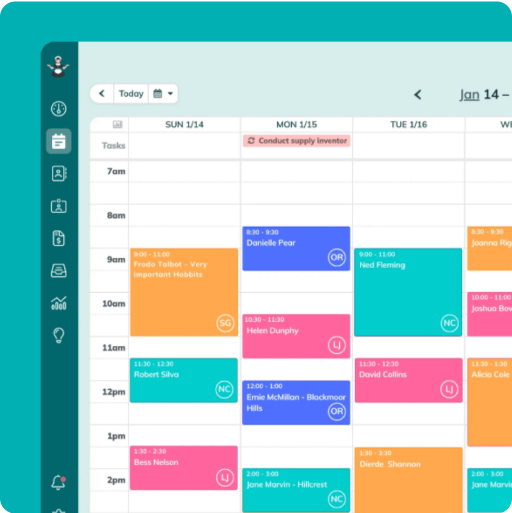
Simplify and enjoy your scheduling with a scheduling software made for maid services
- Have a beautiful calendar that's full but never stressful.
- Make your cleaners happy and provide all the information they need at their fingertips.
- Convert more website visitors into leads and get new cleanings in your inbox with high-converting booking forms.
- Become part of a community of 8000+ cheering maid service owners just like you.
Start your FREE ZenMaid trial today and discover the freedom and clarity that ZenMaid can bring to your maid service! Start your FREE trial today