Frustrated with your scheduling? Try the easiest-to-use calendar app, made by and for maid service owners.


Brought to you by expert maid service owners
Introduction
Stephanie: Hello, everyone. Welcome or welcome back to the Filthy Rich Cleaners podcast. I am your host, Stephanie from Serene Clean, and I am so excited to introduce today’s guest. We have Ms. Julia Callahan, and she is the owner and founder of Jubilee Cleaning Co. She has had an absolutely insane growth trajectory, and we connected — gosh, I don’t know how long it’s been, Julia, since we originally connected — but as soon as you reached out recently and told me how much you’ve grown since the last time, I thought we have to get you on the podcast. This is insane. So thank you for joining me. I’m so appreciative of your time today.
Julia: Yes, very glad to be here. It’s surreal.
Stephanie: Well, tell the people — how long ago did you open? Literally two years ago, right?
Julia: Not even. Yeah, so August 2024 was our first full month. I quit my six-figure medical sales job in July and decided to clean toilets. This was a whole ego thing for me, but that’s how your character is built — when you follow a dream and say yes, even when it’s terrifying and humbling. I had always wanted to own my own business and never really knew what that would look like. I felt like I had all of these adjacent skills but wasn’t sure how to put them together and what service to provide. I listened to one of your podcasts and I listened to Cody Sanchez. I was listening to all these things about boring businesses that can grow and scale. I don’t know anything about window washing, and I don’t have any money to buy a laundromat. My Bubba taught me how to clean really well, so I thought I can do that. That’s really how it started. I started walking around a neighborhood and knocking on doors, and I got three clients that way. I literally was in shorts and a little tank top, had a notebook, would write down my phone number, and handed it out to people. I was doing that in the evenings while also working full time. My husband finally got to the point where he was like, we can’t do this anymore — you’ve got to choose. So it was terrifying, but I chose to quit my job and jump in. And it just grew quickly. It just grew very quickly.
Table of contents
- Introduction
- Leaving a Six-Figure Job and Facing Doubt
- Hiring W2 Employees From the Start
- Jubilee’s Location and Growth
- Hitting $100K in a Month: The Growth Story
- Holding the Line: Accountability and Letting Go
- The Attendance Incentive System
- Getting Into Commercial Cleaning
- Move-Outs, Pricing, and Team Structures
- Revenue Share and the Five-Star Review Bonus
- What Julia Would Do Differently and Filling the Schedule
- Sales Skills, Scripts, and Pricing
- Software Stack and Marketing
- Goals for 2026 and Closing Thoughts
Leaving a Six-Figure Job and Facing Doubt
Stephanie: Our stories are so similar, it’s wild. Obviously you had an incredibly high-paying and very secure job in sales. So what was that like — your husband was clearly supportive, but was anybody like, “What are you doing, Julia?”
Julia: Yes, everyone. It was just like, “What — you left your job? How are you ever going to make money?” I think the hardest thing was the comments that were like, “Oh, that’s a nice hobby. I’m so glad that you found that. That’s so nice for you.” The condescending comments.
Stephanie: The condescending comments, yes.
Julia: So much condescension. And like, “Oh, you’re going to be a cleaning lady now” — just all of these demeaning things. I remember going on a walk with my husband that summer and I just said, “I have a master’s degree and ten years of sales experience. Am I really going to go do this?” It was very humbling for me. It made me see my own arrogance.
Stephanie: That’s the ego. I can totally relate to what you’re saying. It still gets me. I always feel like I need to explain — when I tell people what I do, they’re most likely assuming, “Oh, you clean yourself,” and obviously that’s where we started. But I have this need to prove myself to strangers. And I think it really is just that societal view — like, that is beneath people. Who would willingly choose to go clean? And I think that’s something we just have to continue to work on and showcase. Being loud and proud about it — yeah, we do this, and we probably make more money than you are making.
Hiring W2 Employees From the Start
Stephanie: So obviously it grew really fast. I’m assuming you started hiring right away, right?
Julia: Yeah, I hired right away. I was not solo for very long at all. I started and was really unsure if I should go with 1099 or W2. I remember letting that take up so much mental space, which was so dumb. Why didn’t I just hire W2 from the beginning? I was so concerned about how expensive it would be.
Stephanie: And what were some of those preconceived notions or fears that you discovered were unfounded? Because I get emails like that all the time — “I don’t know how to budget for this” or “How do I afford that?” It’s kind of the wrong way to look at it. So how did you work through that?
Julia: It wasn’t like a math equation where I sat down and did all the math. I just had to do it. Money follows action. You just have to take action, make a decision, and go with it. And if it fails, you fix it. I also had a very unique privilege — it wasn’t my livelihood. My husband has a job, and we could hardly survive on his job alone. I needed to bring in some income, but it wasn’t my only source of income. I realized that’s not everyone’s situation. So I had the freedom to figure it out, the freedom to kind of play, and I realized a lot of people don’t have that. I don’t take that lightly. But I had to just jump in. I’ve heard this phrase that the people that get you to a certain point are many times not the people that get you to the next level. I started with a 1099, and she was not the person that got me to the next level. I had to hire W2s. She left — she didn’t want to be an employee. She wanted to do her own thing, and I respected that. I said, “This is the direction we’re going. I need to be able to train you, and I can’t train you legally if you’re a 1099. I need to have standards. I need to give you a uniform.” She didn’t want any of that. Quality control was really important to me. Those conversations were really hard because it was a peer relationship in some sense — I was cleaning right next to her. It surfaced very quickly to me how important it was to get out of cleaning. The only way you can grow is to get out of cleaning as quickly as possible. It’s very hard to lead when you are in the field right next to people doing the same job.
Stephanie: I agree. It’s wonderful that they know you’re willing to do the work and get your hands dirty — that’s fantastic for team morale. But it’s almost like you’re co-workers instead of the boss, and that dynamic is difficult to navigate. I’m so happy you made this revelation early on. Because if anybody listening is thinking, “I’ll just switch to W2 down the road” — the bigger you get, the harder it is to switch, because very likely the whole team is going to leave or most of them are. Going from independent contractor to W2 feels very painful for somebody because their paycheck is most likely going to change since you’re taking taxes out. It sounds like you made this shift early on, and looking back, it probably was the right time to do it.
Julia: Yes, absolutely. And there is a sense of trust that’s broken — it’s like, “Oh, you want to control me and make me your employee.” It’s like, no, this is just the direction that we’re building, and I want what’s best for you. In that moment in time, that decision felt so huge. Now the decisions I have to deal with are so much bigger. Two years looking back, I’m like, “I lost sleep over that?” You just grow with every next step.
Stephanie: It’s like building muscles — you’re flexing the skill of being able to make decisions. And the things that would keep me up at night years ago, my Oura ring wouldn’t even trigger as stress now.
Jubilee’s Location and Growth
Stephanie: Obviously you just have this insane trajectory. Tell the people — where is your business located?
Julia: We’re in Beaver Falls, Pennsylvania, about 40 minutes north of Pittsburgh. Our service area is just in that town — we service up to 38 minutes from Beaver Falls. We don’t go into Pittsburgh. Hopefully, location number two is North Pittsburgh — Jubilee North. But right now, it’s very suburban, very rural, a lot of farms. Our population is about 180,000 in Beaver County, so it’s not huge. I remember being so encouraged listening to one of your podcasts, Stephanie, where you said you’re able to build a million-dollar cleaning company in a tiny Wisconsin town. I was like, “Oh my gosh, I can do this.” You’re the only thing limiting you is your beliefs. If you think your location is too small, it’s just not true.
Stephanie: I totally agree. And there are so many benefits to being on the smaller side — typically less competition, or certainly less competent competition sometimes, because the franchises overlook those small areas a lot of the time. So it’s very attractive for a variety of reasons. And you got your first houses by literally knocking on doors, which is amazing and encouraging. For those of you that are struggling right now — it is the slow season for the majority of our businesses — that literally can work. What did you say to those few houses when you knocked on the door?
Julia: I still have one of those clients — they’re still clients of ours. I said something like, “Hi, my name’s Julia. I’m actually your neighbor. I was just curious if you’re looking for house cleaning. I’d like to start my own business, and I have three kids and I live right around the corner.” It was very much like, “Hey, we’re neighbors and I’m not some weirdo and I don’t want to steal all your stuff.” This sweet, sweet couple — I won’t say their names, but they’re still clients of ours. They invited me in, sat me down, and gave me a cup of tea. They said they would love to have me. I came that week, and then he started telling me that he actually owned his own cleaning company in New York for 30 years. I was like, “Oh no, this is terrible — he’s going to see how bad I am, because I have no idea what I’m doing.” But they were so kind, and he gave me so much encouragement. They were this older couple. When I asked her why they wanted cleaning, she said, “My husband was just recently diagnosed with late-stage Parkinson’s, and I know I don’t have a lot of time left with him.” She pointed to her back porch and said, “That’s where I want to spend it — sitting on the back porch, listening to the birds with my husband, because I know I don’t have that much more time.” And I was like, “I can get behind this.”
Stephanie: That’s why we do what we do right there. Oh my gosh, what a tearjerker. I hope that’s on your website somewhere.
Julia: I tell it on every single new hire orientation. I tell it to our team. It’s like, the stories are who we are, and the lives touched are who we are. We’re in it for the stories. I say that all the time to our team: “Tell me the stories that you get to hear. You guys are on the front lines. You get to know what’s going on in these people’s lives. Share it with each other so we can remember the value and the beauty and the sacred honor it is to be let into people’s homes to serve them at their most vulnerable times.”
Stephanie: It’s so true, and our job is so special for that. We have access to their most intimate space — their home where they sleep, where their families and their pets are, all of their belongings. We just got a review over the weekend for a new client that my cleaner McKenna took care of. They said, “As a disabled person, I was very uncomfortable with the thought of a cleaner — I just felt bad about it. McKenna put me at ease.” And McKenna today during our team meeting was talking about how she talked to the lady the whole time, and the lady shared, “I just can’t get out much, so if you don’t mind me talking to you while you clean.” McKenna said of course, and it was just this really wonderful experience. We’re almost part therapists sometimes as cleaners. We really do help people who maybe don’t get a lot of social interaction. So it’s so important to hire people who care deeply about people. Keep telling the stories because they reinvigorate everybody on the team. If a person hears that and says, “I don’t care” — maybe they’re not the right person for the team. You know, some people might hear this and say, “Oh, you’re so lucky you got that particular client.” But that right there showcases how what people call luck is really just you going out and creating an opportunity for yourself, and the right one was there for you to take. And with your sales background, I can only imagine that has led to so much success, because sales is such a huge part of what we do.
Julia: Yeah. It never gets less scary. It’s always scary. I have this thought that I’ll just wait until I don’t feel so terrified. But you never feel less terrified. You just do it. Do it scared, because it doesn’t get easier.
Stephanie: It really doesn’t. You just get better at feeling that and still doing it — not letting the feeling dictate your action. Just doing the thing anyway, regardless.
Hitting $100K in a Month: The Growth Story
Stephanie: So if you don’t mind me sharing — you just had your first $100,000 month, which is, excuse my French, f*cking incredible. That is some wild growth in less than two years. I’m sure I just got everybody’s attention, because many of our listeners have been in business for years and would love to be at that size. I would love to dig into exactly how this happened and what you attribute to this level of growth so quickly. I’d love to just give you the floor — how did this happen?
Julia: I think it was a combination of the favor of God — the Lord is so good, so all glory to God. Also, I said yes to commercial cleaning before I was ready to. That was a lot because of you. I purchased your administrative bundle, and that was one of the things in there — how to price and how to do walkthroughs. I really studied that. I was so afraid because I had no idea. A good friend of mine was like, “You’ve got to do it. You have to go for it. All they can say is no, just go for it.” And so I did that. I got two commercial contracts in November. So I started in August, September, October, November — I got two commercial contracts. By that point, we were doing about $20,000 a month in four months, and then after that, it just continued to snowball. I would say the biggest thing is I’m in a coaching group — Million Dollar Home Cleaning coaching with Logan and Katie Manzanares — and that has been extremely instrumental in my growth, because I started with them from the beginning. I didn’t have to shift my whole business and change everything to fit the system — I built my business with the system. There are four pillars: hiring, sales, fulfillment, and marketing. Just focus on those four things and do them better, do more of it, and do better. Not be afraid of spending money on advertising, learning the skill of sales, training cleaners, incentivizing them to stay. Retention is so important and it’s very hard. We have a couple cleaners that have been with us for over a year, which is amazing. But turnover is real and it’s expensive. Sales is probably the biggest thing that has helped me — just a relentless pursuit of sales. When you don’t know what to do in the middle of the day and you feel overwhelmed, ask yourself: is what I’m doing right now generating revenue? If it’s not, stop doing that. It’s so easy to slip back into what feels productive, because busyness is a trap. I can hire somebody else to do this. I need to do revenue-generating activity, and then I need to train somebody else to do revenue-generating activity. Not getting distracted with shiny objects, not making spreadsheets and presentations and stuff that’s not going to make money — get on the phone, talk to real people, book the clean.
Stephanie: I totally agree. Sales is the lifeblood of the business. A lot of people, because they don’t feel like they’re good at it, kick that can and putter around with other things. And as you know, you and I are probably both very KPI-oriented, but that can be used as a procrastination tactic to avoid doing the things we know we need to do, which could be hopping on the phone. Did anything really have to shift with your sales skills for this business?
Julia: I need so many skills. I’m so deficient in so many skills. I think the biggest skill I was and still am deficient in is just leadership and people. Learning to lead people is really hard. It’s really hard to lead people well, to lead with vision and integrity, and to make the right decision when there are lots of ways to make the right decision. When you make a decision and other people don’t understand, being okay with being misunderstood and knowing that you have to do what’s right for the business — because your decision impacts the 25 people underneath you. If you don’t make that right decision, it could impact everybody else. Learning that skill is so hard, so emotional, and it requires so much growth and humility. I have so much to learn.
Stephanie: Leadership isn’t just one skill — it’s about 50 different things that fall under that umbrella. That’s overwhelming. But honestly, I like that, because it’s like, okay, I need to learn to not be so reactive. That’s a skill under leadership. I can work on that. Or making the hard decisions — I know in your intake form you gave an example where you had to let somebody go because they did not take accountability for their actions. Would you mind sharing that story?
Holding the Line: Accountability and Letting Go
Julia: We had a clean that went sideways. It was a deep clean, and I didn’t know at the time it was a contractor’s house, so this is like custom everything. Our cleaners allegedly damaged the kitchen cabinets. There was no proof — no before and after pictures. I didn’t really know how to handle the situation, but the client came to me and said their cabinets were ruined. These are custom cherry cabinets — this is a $100,000 kitchen. I just started crying. Our policy is that we go back and do corrections — we do correction cleans whenever we make a mistake. At that time, we didn’t know it was damaged. It looked like there was a film left on these cabinets.
Stephanie: What could they have used on them, out of curiosity?
Julia: We literally used Dawn dish soap and a microfiber towel. It’s impossible. I don’t even know. So we agreed to go back and reclean, because it looked like there was a sheen of product left on it. I said, “We will absolutely come back.” And the cleaner just said, “I can’t do anything differently than I did the first time. I don’t know what you want me to do — I’m not going to go back.” I said, “Accountability is one of our core values. This is the expectation for everybody on the team, especially a trainer.” She was a trainer, and she refused. I just said, “This is an off point for us.” It was really hard because our team was really tight at that point — only six or seven cleaners. I feel like that was a golden age of our company, when it’s still small, under ten cleaners. It’s like we’re all family, we all love each other, and there’s very little drama. We still had meetings in my living room. So to let a core person go was very disruptive. That was my first time having to choose — if I let this go, my word really means nothing. I just had to choose to keep my word to myself and to my people. It was very painful.
Stephanie: Talk to me about the aftermath. What was that like in the room?
Julia: There were a lot of questions. When I explained the situation, I just said, “We all are accountable to going back and doing corrections. I have done a correction before. You’ve done a correction before. Every single person in this room has done a correction clean. None of us are above that, especially trainers.” It was sad and hard, but it was right — it was the right thing to do. And then we had to consult with a lawyer, and I’m cutting a $10,000 check to fix this guy’s cabinets. That’s what it is.
Stephanie: I can only assume that your team respected you more because you were able to stick to your guns. Even though it was difficult — that right there told them we will fire people we don’t want to, but we will do what we need to do for the team. What are your company’s core values? Have there been other instances where you’ve had to make tough calls based on them?
Julia: We have company values — freedom, integrity, service, and hospitality. That’s kind of who we are as a company. And then we have our employee core values, which are our STAR values: service, teamwork, accountability, and reliability. I would say reliability — that’s the weeding ground. You are, or you’re not. You have to come to work.
The Attendance Incentive System
Stephanie: Tell me, how do you balance it? Because obviously everybody’s perking up — I struggle with this one.
Julia: Our compensation structure is built so that you have a base pay of a commission share at 30%. And then if you have perfect attendance, you are highly incentivized — your weekly percentage raises 8% just by having perfect attendance. So if you don’t have perfect attendance, you’re at base pay. And it’s like, “Oh, I don’t want to be docked because I threw up and can’t come to work.” I’m like, you’re not docked. You’re just highly incentivized to show up to work. After four weeks of perfect attendance, they can bump up to 39%, and then on the fifth week, they can bump up to 40%, and they hold that 40% until they have a call-off. I have tons of cleaners at 40% right now. They’ll slack me in the middle of the day: “I have a stomach ache — if I call off for my second clean, is that a call-off?” And I just send them the policy. Anytime you are not available between the hours of 8 to 5 to be scheduled, that is considered a call-off. Do you have requested time off? And they figure it out, or they don’t. A lot of times people’s pay is impacted because of their attendance, and they realize this isn’t going to be a good long-term fit because they’re not making enough money. And I’m like, come to work and you’ll make a lot more money. Either they do or they don’t, and so the standard does its job in that way.
Stephanie: That’s incredible. I love that utilization of incentive for getting the behavior that you want. Some people may hear that and think it’s not flexible enough — but Julia probably can grow very fast because of that. That is one of the reasons we don’t grow as fast, because we’re super flexible on that, and it definitely hurts us. I love to hear an example of being very rigorous with that. And you’re not docking them — it’s just very black and white. This is a bonus, and bonuses are not something you have a right to. It’s something you earn.
Julia: Well, we do have a couple cleaners that are part-time with a pre-agreed-upon schedule. The most important thing is we have a consistent, pre-agreed-upon availability. If there’s any fluctuation in that, we just require two weeks’ notice. I require a two-week notice of any appointment changes so we can block the schedule. But anything day-before or morning-of — we still have call-offs. We have three on Friday and two today. But we don’t have five a day. We’ve had weeks where we’ve had none, and it’s amazing. We celebrate and I’m like, “Oh my gosh, everybody got the bonus this week!” Every week in our team meetings, we celebrate perfect attendance. We show how many people are at 38, 39, 40%, and people want that 40%. We show the path of how they can earn it.
Stephanie: From an actual tactics standpoint and how you implement this tracking — how do you keep track of all of this? Is this in your payroll software? Is it a spreadsheet? You use ZenMaid, so how does it all work together?
Julia: It’s manual. It’s terrible. You have to duplicate your payroll sheet every single week and then look at where everybody was last week and bump them up next week if they had perfect attendance. I have a VA that does it. It sucks.
Stephanie: That’s where things got really complicated for us too when we first did attendance bonuses based on monthly figures with quality and stuff. It got complicated very quickly. I like that you mentioned what we call static availability — agreed-upon availability — that’s how you make it work with part-timers and still have these types of rules.
Getting Into Commercial Cleaning
Stephanie: You mentioned commercial being a huge reason for your growth. I’d love to circle back to that — you mentioned you got two accounts very early on. How did that happen so fast?
Julia: Again, it was word of mouth. We got a daytime client who owns tons of businesses and buildings. Once we started cleaning for them during the day, they asked if we did commercial. I said yes — we did not, but I just said yes. Then I went there and did a walkthrough. And another friend of mine owns a finance business and his building’s cleaning company — it’s just amazing to see how many people are unsatisfied with their cleaning and just live with it. The opportunity is all around you. You just have to ask: “Are you happy with the cleanliness of your building?” 80% of people are going to say no. The bar is low. You just have to go for it. We asked and they said yes, and we started those contracts.
I think what has worked really well for us — a lot of people say you need to either be 100% residential or 100% commercial, and I disagree. When we have night call-offs, which are very rare, my daytime people want more hours. That is way easier than scrubbing a shower on your hands and knees. My daytime people love our commercial cleans. And we have a few commercial cleaners who have swing availability during the day. So if we have a daytime call-off, a lot of times I can call my night cleaners and they’ll fill in, and I give them a bonus for that. It has been a really nice complement to have both branches of the business. I would love to grow our commercial more. My attention is just limited right now because I need more office staff. Once I can hire more office staff, I would really love to grow our commercial branch, because there is so much opportunity there. There are less problems, less complaints, less call-offs, less showers — there are no showers.
Stephanie: I’m so happy you’re touching on this, because a lot of people would say you’re downright stupid if you go for both — you can’t do both successfully. And I just don’t agree with being hard-line on anything like that, because like, how do you explain what’s been happening for us? We’re doing it, so therefore it can work. Is it more challenging at times? Absolutely. What would you say are the drawbacks in your business to having evening work right now?
Julia: The drawbacks are — I don’t want to say you have less trusted people, that sounds bad — but when you hire someone who is only doing a night job, you just have less face time with them. You know them from an interview, you train them, and you hope that they do a good job. I’ve been really lucky to have really great, reliable nighttime cleaners. But as that would grow, you just don’t know. If you have a daytime person, this is their full-time job — there is a little bit more skin in the game. But you could also argue that a nighttime cleaner, since it’s just a part-time gig, they’re much less likely to call off. It’s not like they have a sick kid from school and have to stay home. I would say the biggest drawbacks would be staffing — staffing is tricky — and having really good directions so that when you need to sub in, it can be as flawless as possible. But I’ve never had to go to a nighttime clean for an emergency. Never. I’ve trained them and they’re fine. Something I found that is also really helpful is to schedule on Tuesdays and Fridays. If your nighttime cleaner on Tuesday can’t be there, a lot of times you can push it to Wednesday and it still works. Or Friday — as long as it’s done before Monday, it still works. But if you do Wednesday, Thursday is kind of too late. There are ways to make it work. And the revenue foundation it builds to allow you to scale and write stuff off for daytime cleans — it is worth it.
Stephanie: I totally agree. Growing fast off of purely residential I would find incredibly challenging. There’s no way we could have without being half commercial. I think people are so afraid of commercial because it feels so unknown and different. What do you have to say to people who are hesitant about going after commercial?
Julia: You have to know what might be something you’re not ready to take on. For me, a manufacturing plant — that’s out of my ballpark right now. But if it’s a law office, this is so easy. You need a vacuum, you need floors, you need a mop. It’s not hard to do. Whenever you just eliminate the limiting beliefs — “I don’t know how to do this, I can’t do this” — think about what it would cost you to invest two weeks to be there, to train somebody, to learn how to do it, so you could then replicate it. Then people talk, and the employees of the building will see how much nicer things look and they’re going to talk to their friends. All of our commercials have been word of mouth — we have not pursued any outbound, everything has been inbound. It can snowball pretty quickly. We don’t have — I don’t know off the top of my head — maybe $15,000 a month in commercial accounts, everything else is residential. It’s not huge, which I’m thankful for, because if you lose one of those it’s a huge blow. So I’m thankful that we have diversity, but the foundation is strong.
Move-Outs, Pricing, and Team Structures
Stephanie: Do you do move-outs? Some people have a no-move-out rule. Do you guys do them?
Julia: Absolutely, yes. We love them. They’re the best. My cleaners love them — they charge the most for them.
Stephanie: Do you charge flat rate or hourly?
Julia: Kind of both. We have a quote calculator that pulls up how long we think it will take, and then we tell the client, “This is estimated for up to 12 cleaning hours, which is three people for four hours, and this is going to be this price.” If for some reason we get to about 75% of the way and realize we’re going to need more time, we would call and ask permission, or we’d turn it into a priority clean so we know how to use our time wisely. That can get really tricky, especially when you have new cleaners who aren’t great at time management. At some point you just have to tell the cleaners, “This is on you — you’ve got to finish this, because it should not take you two hours to clean this bathroom.” And if it takes longer, that’s on you. There is a training aspect to it, but sometimes you’re going to have to just send cleaners back and eat the cost to make the client happy. That’s just the cost of doing business.
Stephanie: Do you do all teams, or a hybrid — some individual cleaning, some teams?
Julia: Anything. And I also have limiting beliefs on this. Right now anything four hours or more is a team clean. But we’ve been in a pinch where we’ve had to put one cleaner on a solo clean of five and a half, six hours and she crushed it. She actually got done faster than she would have if it were two people splitting the time. It really rewrote my beliefs and my expectations. I find that solo cleaners are more efficient than they are when there’s a team.
Stephanie: There’s a reason I like my solo cleaners. For us, it’s anything estimated over about eight hours, we’d rather have a cleaner team up. But for all first times we’re going to do a team because it very likely will take long and it’s just physically a lot. It’s interesting how a lot of cleaners, when they first start out and you have them on teams only, they dig their heels in and say, “I don’t want to do an entire house by myself.” Did you have any pushback on that from the cleaners you experimented with?
Julia: I’ve only tried it a handful of times, only when it’s been necessary, and I’ve only given the opportunity to my best cleaners. I phrase it like that: “This is an opportunity.” And because we do revenue share, they make twice as much. Then they’re like, “Oh, I want to do that all the time — I could do that house by myself and make twice as much, and I can probably get it done in five hours by myself when it takes me three and a half with somebody else.” The thing I hesitate with is scheduling — if you have a call-off and you have one person booked for that whole five-hour clean, how do you fill that? I have these protection mechanisms that I need to let go of, because you can’t grow if you’re trying to protect yourself all the time.
Stephanie: But the beautiful thing is it can be both — it really is whatever the schedule needs. It can be a very malleable thing. When you say revenue share, do you mean the percentage they get paid, or is there a separate bonus?
Revenue Share and the Five-Star Review Bonus
Julia: We do commission-based revenue share in ZenMaid — you can choose rev share or hourly. Trainees are paid hourly. They have a week of training, then they graduate and are paid revenue share. We also do five-star review bonuses. For every five-star review a cleaner earns from a clean they’re on when they’re graduated — trainees don’t count — they earn a $10 bonus from the company. And every ten five-star reviews, they earn another $100 bonus. We call it their $1,000 new employment bonus, and that’s how they earn it. We have cleaners that will work two cleans a day, five days a week, and if they hit their five-star review bonus, they can make $35 an hour. It’s insane — they make great money. I love paying this bonus because we have over 42 five-star reviews because we have aligned our cleaners to be incentivized with the same thing I am incentivized on as a business owner. I want a five-star experience. If they get paid the same way I get paid, it’s great.
Stephanie: I love the idea of that pot building. We’re experimenting with this for video reviews since we really want more video reviews. I love the idea of doing a really big pot — they hit X and they get this really big amount. So you’re touching on reviews — how much do you think Google reviews and online reviews has impacted your growth?
Julia: Google runs the world, whether you like it or not. That’s the world we live in. You either play the game or you get rolled over by the steam engine. Having a system to generate five-star reviews, having a standardized experience for your cleaners to deliver a five-star experience, holding the standard. We also offer a 10% discount to clients — if they leave us a five-star review, they get 10% off their next clean as a thank you. So there’s an incentive both ways, to the client and to the cleaner. And we tell the cleaners and train them a little bit in sales. “Hey, whenever you leave your five-star review, what does that sound like?” We have little cards they leave behind with a QR code, and we practice this in onboarding. This does not come naturally to cleaners, but I will tell you, Stephanie — watching these women grow and blossom in their confidence. Our one trainer, Jasmine — when I hired her, we did working interviews and I remember her making my bed in my house. I remember thinking, “This girl cannot talk to anybody. She can’t even talk to me. This is not going to go well — I’ll give her a shot, but…” She has been with us for over a year. She’s trained all of our cleaners. She’s responsible for 53 five-star reviews. She’s amazing. And I almost passed on her because I didn’t see it in the beginning. It’s like, let people prove you wrong. Let them prove you wrong and show them how they can grow. Coach them so they can have the skills. And you get to be on the sidelines watching somebody blossom and grow. There’s no greater joy.
Stephanie: That’s so true. Some of my favorite moments as a business owner are not any revenue number, but seeing the transformation of a staff member — they feel so empowered. And that’s why holding them to that standard is so important, because you are saying, “Hey, I believe you can do this, and that’s why I’m holding you to this.” Letting them get away with stuff is not only bad for you — it’s bad for them.
Julia: And it’s painful. I’m not a people pleaser, but I’m a very connected person. I love connecting with people. I tend to want to be people’s friend, and that makes it hard to have these hard conversations, because I’m afraid I’m going to hurt people’s feelings. I’m afraid they can’t handle it. But I need to let them handle it, because that’s how they grow. I can’t shield them from it. I need to grow as a leader. And I’ve realized my limitations, and my team will be limited in so far as I am limited. Your business is a mirror — it is a mirror to show you where you are deficient and where you need to grow. The degree that you are willing to make yourself uncomfortable is the degree that your business will reflect the growth.
Stephanie: Absolutely. Easy to see, but sometimes very difficult to put into place.
What Julia Would Do Differently and Filling the Schedule
Stephanie: Looking back — you’ve learned a million things, but if you could implement something earlier that would have made you grow even faster, what would those things be?
Julia: Booking recurring clients more quickly. I was hesitant to do that — I felt like I wanted to prove ourselves to them first. If I would have pushed recurring bookings earlier instead of doing a one-time booking and then asking if they wanted recurring, that would have been better. Now we just do it right off the bat. It’s assumed. People are incentivized to book recurring — our pricing model is structured so that if you only do a one-time clean, it’s a lot more expensive than if you book recurring. We give a significant discount if you become a recurring client. There are a lot of incentives for you to commit to us, and we commit to you with our best pricing structure.
I also wish I would have hired faster. I would hesitate to hire because I was like, “I cannot fill these schedules.” I used to freak out if I had three openings in the schedule. You want to know how many openings I have next week? I have 44. The things I used to not be able to tolerate, I wish I would have tolerated earlier, because I would have grown even faster.
Stephanie: I’m curious — right now we were shockingly fully staffed and we have openings, which we’ve never really had before. How do you handle a ton of openings? What methods do you use to fill them?
Julia: We hammer our lead list. We call our lead list twice a day, every day for 14 days, and then they get moved to a different pipeline stage. We send text messages asking if they need their house cleaned. And then we follow up with our recurring clients and ask if they want to add on any deep clean items. I did that two weeks ago and added $3,000 to the schedule in a day just by themselves. Adding these deep clean bundles to people who are already on the schedule — send them a text and say, “Do you want to add a deep clean bundle of your inside appliances plus your windows? Normally $380, we’re offering it for $259 this week.” I had like 15 people book that. And now those other cleaners had full schedules from recurring clients who are already your best clients.
Stephanie: BRB, that’s what I’m doing after this call. Think of the things that you don’t normally do on a maintenance clean — baseboards, windows, door frames, all the stuff cleaners don’t normally do. Find something to fill the time for three more hours, add another cleaner to it, and now you can charge more.
Julia: But I feel like, how many times can you do that a month? I just did that two weeks ago.
Stephanie: Right, right. It’s a great tactic, especially when you’re going through a temporary slump. And I love that you said you’ll clean for your cleaners.
Julia: Yeah, we’re like — why don’t we throw that out there too? If anybody wants, because right now it’s nice out — maybe somebody does want off and time with their kids. You just can’t assume that’s not a perk somebody would want.
Stephanie: I want to hear more about this lead hammering. How do you handle that volume? How many VAs do you have?
Julia: It’s the office — we don’t have VAs calling. I’ve considered what it would be like to have VAs do sales, but that’s just not what we do right now. Ideally we have two people in the office. Right now we only have one. I was in interviews all day — I have another interview after this trying to hire number two. Their primary role is to fill schedules — that is the number one thing. We have leads that come in. We do Facebook and Google LSA — those are our only two lead sources. We spend about $1,000 a week in marketing and close anywhere from $6,000 to $8,000 in new money. Then we convert those clients into recurring clients — our goal is $1,000 to $2,000 of new recurring client money a week. Sometimes we’re negative. Sometimes we just have a net loss. So we call leads all day, every day. We’re on quote calls all day, every day. But the primary goal of the office is sales.
Sales Skills, Scripts, and Pricing
Stephanie: That’s a really good way to phrase it — the primary focus needs to be sales. And what did the training process look like? Because a lot of owners listening right now are the ones doing this and they do not feel comfortable. Can you give some tactical tips for improving that skill?
Julia: I am a huge believer in a script. You need to have a script, and you need to know the flow of the call. Once you have that figured out, you need to listen to your phone calls and have somebody else listen to your phone calls. This is a shameless plug for coaching — when you’re in a mastermind, you have people that will help you. You’re all doing the same thing. Finding someone and investing in a skill that will yield dividends is the best money you can invest. If you pay somebody to help coach you to learn the skill of sales, what could that do for you in the next year of your life, the next year of your business? It could completely transform your business. Saying “this isn’t a skill set I’m good at” — get over it, get better. Practice.
Stephanie: Don’t have a fixed mindset around it or really around anything. Literally anything can be taught. Getting another set of ears and eyes on it — that could literally be AI if you don’t have the resources to hire somebody right now. Upload your call transcripts or the recordings and ask, “Where did I go wrong and what do I need to improve on?” And really just treat it like an experiment. Tweak the script. Also prepare for objections — in our call script, we literally have a list of the objections, and it’s probably going to be price. What do you have to say to the people about pricing?
Julia: After discounts, our average man hour is about $57 to $60. That could range anywhere from a $1,200 deep clean to $165 initial clean for a disabled person. It really does run the gamut. In terms of overcoming objections with price — strongly recommend: address the price. If people are concerned about the price, ask them, “What were you hoping to pay for the service?” Whenever they tell you, “I was hoping to pay like 90 bucks” — I can’t help you. I’m not the service for you. But if I quote you $700 and somebody says, “Oh, I need to talk to my husband,” I say, “Great, sure. Did you have a price point in mind?” And they say, “I was hoping to be closer to $400.” I can play ball with that. Let’s figure out a solution. Let’s take some value off of this. “How important are those bedrooms?” Not that important? Great, let’s take that off. “How important are your baseboards in your basement?” Not that important? Great, let’s take that off. “How important are your inside appliances? What if we take off the inside oven and put that on your first maintenance clean?” And they say, “Great, perfect.” Guess where we’re at — we’re at $425. That’s right within your range. How does Wednesday sound? Find a solution for your people.
Stephanie: I love that. For us in Serene Clean, our maintenance cleans include baseboards, ceiling fans, all of that. But for those who do things like add-ons at baseboards — with people who charge flat rate, the baseboards of one house versus another are going to take wildly different amounts of time. Does your baseboard price scale per room?
Julia: I think I have it estimated at about 15 minutes a room. Our deep clean calculator assumes that every room is going to take longer because we are hands and knees wiping every single baseboard. On a maintenance clean, we’re dry dusting it, assuming we have already done that. So it’s being dry dusted — it’s not being missed — but it’s not taking 15 minutes because we’re not going all around the room. That’s kind of how I would piece that out. Same thing with doors and door frames. Honestly, sometimes you just have to knock the price down and estimate it. Get them in the door.
Software Stack and Marketing
Stephanie: Software must have been a huge component of your success and growth. What’s your stack?
Julia: Go High Level and ZenMaid. We’re missing a huge opportunity with email marketing — we don’t do email blasts right now. We don’t nurture our leads. We text them, but we’re not doing any type of newsletters or email promotionals. I have this huge email list and I’m not using it. Once I can get out of the operations and really build the next level, that’s where I want to go. There’s just so much opportunity there. But yeah, Go High Level and ZenMaid.
Stephanie: Do you manage all of your advertisement stuff yourself, or do you pay somebody to do that?
Julia: I do it all myself. It’s very simple. We have one Facebook campaign with a few different ads — the exact same wording on all of them, the same copy, and we just rotate the pictures. We’ve done some internal competitions with our team — “Best Facebook picture, and we’ll get a $50 Amazon gift card.” Our Slack will blow up. Our cleaners get really into it, so we have a lot of media we can rotate in. That’s been a skill I’ve had to learn — marketing. I didn’t know how to do Facebook marketing. I had to teach myself. It was very expensive, but it works.
Stephanie: And then LSA — if the lead closes, that’s how it gets charged, right?
Julia: You get charged if they click. LSA leads are expensive, but they’re very good leads. The close rate is high. An LSA lead is someone who searched for cleaning and then reached out to you — a Facebook lead is someone who was interrupted while they were scrolling. An LSA lead was someone who intentionally is searching for the service. It’s a hot inbound lead. There are people all over the mastermind Facebook group saying, “LSA is a waste of money,” and I’m just like, no, it’s not.
Stephanie: The Google leads are very hot — they’re ready, they’re very heavily invested in buying. Take their money. Totally worth it.
Goals for 2026 and Closing Thoughts
Stephanie: What’s the goal for 2026? Do you have specific ones you want to hit?
Julia: My biggest goal is that I am out of the daily operations and not doing sales anymore. I realize I’m limiting my ability to lead and grow when I’m doing everything. I’m willing to go backwards to do that — and I say that to hold myself accountable. I can’t jump in and save, because that doesn’t teach my people that I trust them or believe in them. My number one goal is to get the office stable and the company stable so that I can lead and grow. I’d also love to have a second location north of Pittsburgh — Jubilee North. I have no idea how I would even do that, but I’ll book a coaching session.
Stephanie: I can tell you exactly how to do it. Well, Julia, I am number one so proud of you. That is really incredible. It’s amazing to hear what you’ve been able to accomplish in such a short time. And clearly you are made for this, literally. You should feel very proud of yourself, and also know that you are inspiring a lot of people with your story. If anybody wants to connect with you, where can they find you?
Julia: I’m on Facebook. I’m on Instagram. Jubilee Cleaning Co — JubileeCleaning.co. And you’re such a huge part of my story, Stephanie. This started with me binging your YouTube videos and I was like, “Who is this girl? She’s amazing. I want to be like her.”
Stephanie: Thank you. I’m so grateful to hear that. And it’s crazy what the internet makes possible — I get blown away all the time. This wouldn’t even exist without that. Anybody who wants to connect with Julia — leave her some love in the comments, hit that like, hit that subscribe, and tell her what an inspiration she is to you. I hope this conversation has given you guys a lot to think about. Literally, I have action items churning in my mind right now. Clearly, because this woman is the queen of sales. Thank you for the ideas. All right, guys, we’ll see you in the next episode of Filthy Rich Cleaners.
Resources Mentioned in This Episode
- Jubilee Cleaning Co.
- Jubilee Cleaning Co. on Instagram
- ZenMaid
- Go High Level
- Million Dollar Home Cleaning Coaching with Logan and Katie Manzanares
- Codie Sanchez – Contrarian Thinking
QUICK TIP FROM THE AUTHOR

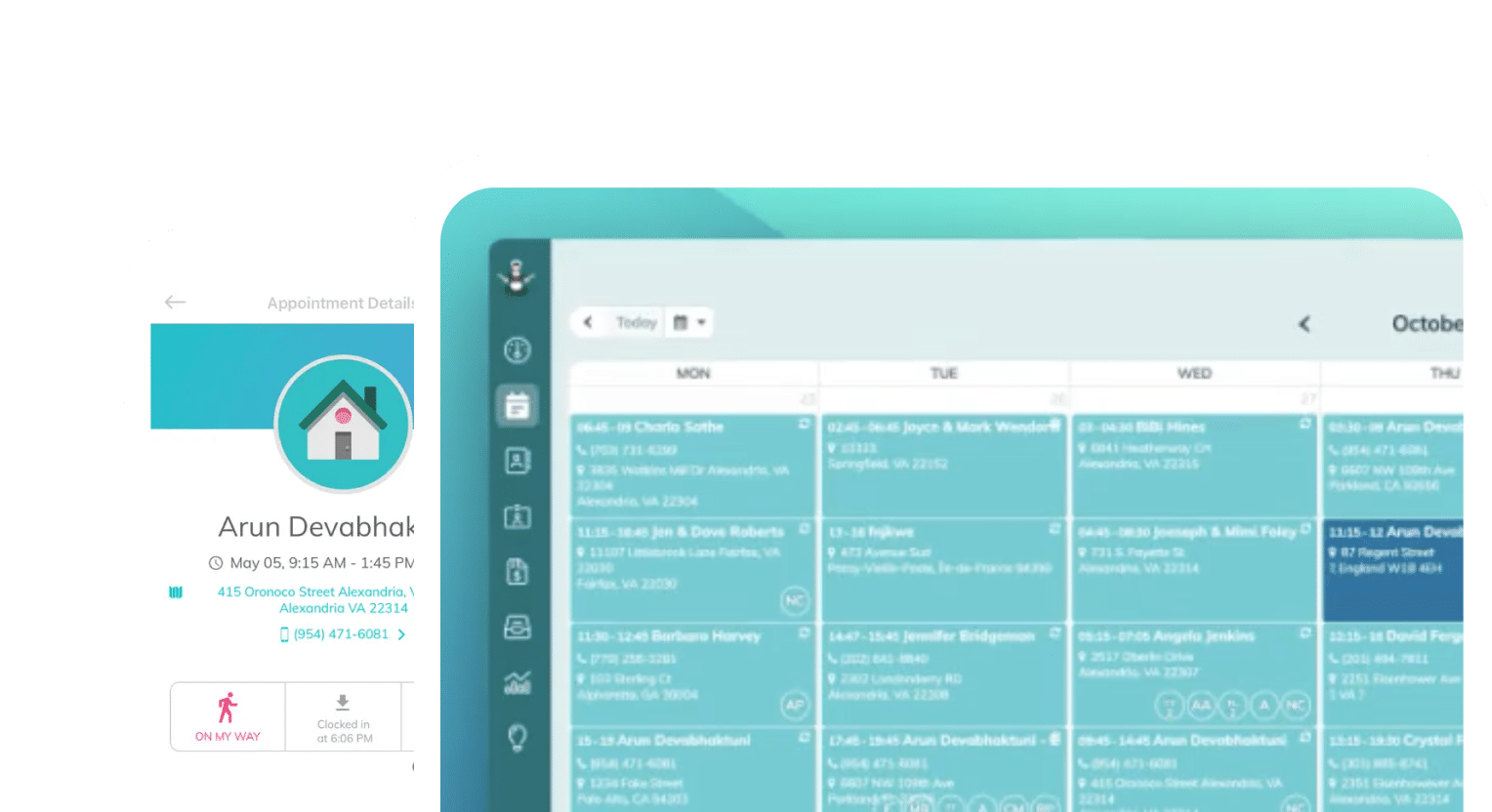
Simplify and enjoy your scheduling with a scheduling software made for maid services
- Have a beautiful calendar that's full but never stressful.
- Make your cleaners happy and provide all the information they need at their fingertips.
- Convert more website visitors into leads and get new cleanings in your inbox with high-converting booking forms.
- Become part of a community of 8000+ cheering maid service owners just like you.
Start your FREE ZenMaid trial today and discover the freedom and clarity that ZenMaid can bring to your maid service! Start your FREE trial today