Frustrated with your scheduling? Try the easiest-to-use calendar app, made by and for maid service owners.


Brought to you by expert maid service owners
Introduction
Hello, everyone. Welcome or welcome back to the Filthy Rich Cleaners podcast. I am your host, Stephanie from Serene Clean. And in today’s solo episode, I want to highlight the wins from January of 2026 for you guys, because obviously I did a ton of episodes about reflection on 2025 and what we’re going to do differently in 2026 in order to achieve our goals.
So for a little bit of context, just to remind you guys, our goal, of course, is growth and specifically really focusing on adding monthly reoccurring revenue to every single month. And so our lowest goal, what we want to hit is at least $1,500 added to our monthly reoccurring revenue every single month. And I am very happy to say that we far surpassed this, we were at I believe $2,400 added to MRR this month.
And I want to dive into all of the other wins that I saw and let you guys know exactly what it is that we changed in order to accomplish this goal so far. And obviously, it’s still very early in the year. But I just want you guys to hear it from me that we are indeed doing things differently. And I’m just again, so happy that I did a lot of reflection and deep diving into the data. And it really indicated exactly what we needed to be doing at Serene Clean.
Table of contents
- Introduction
- January 2026 Success Metrics
- Understanding Revenue Fluctuations
- The Close Rate Reality
- Old Follow-Up Behaviors vs. New Approach
- Changing the Mindset Around Follow-Up
- The New Contact Strategy
- The Ongoing Contact System
- Silence is Not a No
- A $5,000 Success Story
- The Power of Persistent Follow-Up
- Working Existing Leads Instead of Generating New Ones
- Leading Indicators vs. Lagging Indicators
- Adjusting Our Offer Language
- Daily Tracking and Team Focus
- The Importance of Tracking Data
- No Paid Marketing Needed
- Questions to Ask Yourself
- Using Systems for Follow-Up
- Viewer Question: Production Rate Issues
- Serene Clean’s Production Rates
- Addressing Production Rate Problems
- Solutions for Slow Cleaners
- Aligning Payment Structure With Pricing
January 2026 Success Metrics
So overall, this definitely was not luck. It was very concerted effort from the entire management team. And I will say one of the biggest wins, of course, is going to be that we had zero complaints. And in fact, at the time of this recording, which I’m recording this February 2nd, we have had 11 weeks of no complaints. So it’s been since November, since our last complaint, which is knock on wood, pretty darn amazing.
And as you guys know, this is not the first time or the last time that these long streaks of complaint-free times has happened. And I just want to mention this because it truly is the foundation and backbone of Serene Clean at this point is that we have these super low complaint rates. And I will attest that fully, of course, to our training program and our very robust quality control system. So staff, we are hitting this. And so that means overall, we’re just not dealing with the stress of any complaints really rolling in. And obviously they do on occasion, it’s just we are going on a really long streak right now. Again, at the time of recording right now, 11 weeks strong of no complaints, which is pretty darn amazing when you are at a staff of whatever we’re at right now, 27, 28 people. So very pleased with that. So I wanted to highlight that at first.
But when it comes to some of the stats from January, we added, obviously we hit our monthly reoccurring revenue goal. We had 12 first time cleans, which is insane in comparison to December 2025. We had five first time cleans in December. So we over doubled that. And in fact, compared to last January, where we had eight first time cleans, we had four more. So that is super exciting that we were able to successfully have so many first time cleans. So 50% increase year over year compared to last year. So that is a huge win. And that simply comes down to capacity and having the ability to fit in first time cleans because they are such significant amounts of time to schedule. So that’s a huge win. And I’m just so excited to finally have the availability to do that, right?
Other wins, we had zero reoccurring client loss, and we ended up adding significant amounts of reoccurring clients. And that looks like adding seven reoccurring clients and losing zero, right? So that is very significant too. So those are huge wins. Additionally, at the time of recording, we’ve already added $1,200 to February’s reoccurring revenue. And so we’re calculating that MRR added based on when the reoccurring service begins. So all of that to be said, that’s how we’re calculating that. So we’re already almost at our goal for February. So apparently I did not set high enough goals on this monthly reoccurring revenue. The goal is to be at $125,000 per month by December 2026. And so we need to add this much in MRR every single month, and meaning net, right? So our net means what did we add subtracted from what did we lose when we lose recurring. So thus far, we have not lost any MRR in January and thus far none in February either. So I am just so pleased. This is so exciting and such an insane win.
Understanding Revenue Fluctuations
I will say, however, our revenue was down from December. And there’s a couple different reasons for that. And this is why the data analysis with ChatGPT has been so useful. Obviously, I could have slogged through this information manually. But why do that when we have AI? So I want to note that from December, we are down, I think we were down like 10,000, maybe even more. And the reason is our largest federal account, we did a one off invoice for some carpet cleaning that we do there. Yes, we do carpet cleaning there and window cleaning that we do there as well. That is part of our bid, the five-year bid that we got there. And we have to invoice that separately. So that occurred. So that was a one off of, I think, 6,000.
And then we sold several thousand dollars worth of gift certificates in December. So that is a significant increase. Usually we don’t sell any gift certificates. They are not a high source of revenue for us. So because of, of course, it’s a holiday season, people are gifting, that is most likely the highest time we’ll have gift certificate sales. So we didn’t have any of that in January as well. So there is a couple jumps there. We also had several one-off clients who had big cleans in December that have not rebooked yet, or they just wanted an occasional clean because of the holidays. So that accounted for the difference there for the most part.
But what I’m really more concerned about is, are we adding reoccurring revenue, right? Not just are there big one offs, that type of thing. However, we of course had a nice injection of revenue because of all of these first times being scheduled. Those are big cleans, and that is significant. So super excited about that.
The Close Rate Reality
So I wanted to mention specifically some data that makes this really interesting, and is going to highlight the whole topic of this conversation today is our close rate for January and December were not particularly impressive. Now, caveat, we’re still closing on leads that came in in December and that came in in January, of course. So these close rates that I’m about to say, they are not set in stone. We’re going to continue to work them, obviously, which, spoiler, is the whole point of this episode is working leads more. But at the time of this recording, December, we had 20 leads come in and we closed four of them. So only a 20% close rate. January, we had 22 leads and we only closed five so far. So 23%. So nothing spectacular.
We also have not wildly improved on our close rate yet we have this big spike in adding monthly reoccurring revenue. And we have all of these first time cleans. So you would think that how does all of this go together, right? Like if our close rate is kind of not great, you know, arguably, yeah, 20 to 23%, that’s not fabulous close rate as of yet. I want to talk about how did this happen if we didn’t have these crazy close rates yet for those months.
Old Follow-Up Behaviors vs. New Approach
So I want to remind you guys of the old behaviors that we were having last year, that, you know, I’ve beaten this dead horse as to why those old behaviors were occurring, right? But it’s something that we needed to change. So the old behavior was we would do a few follow ups, the follow ups were spread out across a few days, meaning we would give them a couple days in between follow ups. And this had a lot to do with our capacity to actually do the follow up process. And if we didn’t get a response after I believe three or four attempts, or three or four contact attempts, I should say, then we move them to dead leads in ClickUp, right? That’s where we do our lead management. But however you guys manage your leads, we move them to what we call dead leads. And we just stopped contacting them other than through our, I guess, passive email marketing when it came to the monthly newsletter that I do through MailChimp. Or if we had any opening emails that we would send out, they would get that if they hadn’t unsubscribed. But overall, we were not texting them, we weren’t calling them, we weren’t specifically reaching out to them, offering them anything, they were a dead lead all of a sudden, right?
So the new behavior that we have started doing in January has been incredibly fruitful. And it is just more, more, more output on reaching out and nobody is ever going to be a dead lead until they tell us that they are not interested, right? Do not leave them alone until they give you a response of some kind and a response saying, no, I’m not interested. I’m good. Thanks. Move on. Right? Like that’s what we need to hear. Otherwise we simply are not going to stop.
Changing the Mindset Around Follow-Up
And if you guys recall Drew Larison’s episode, I know I’ve referenced that before, but it really made impact on me of we need to assume that people are not annoyed with us, but in fact, are going to be happy that we continue to pursue them because they’re the ones who said that they were interested. And they’re busy, right? They’re busy people, just like we’re busy. So we cannot assume that we’re bothering them or pestering them until they tell us to stop, right? So come at it from that angle and that mindset of they reached out, they want information. And until they tell you, please stop contacting me, we simply don’t know what their intention is. They may be so grateful that you reached out for the sixth time because that was the time that they happened to be in front of their phone or their computer and they had the bandwidth to think this through and actually make a decision, right? So we need to not assume where they’re at mentally unless they specifically tell us, right?
So our new behavior is basically much faster and more frequent and more variety in the ways that we’re contacting them. So previously we were not calling at all because we just simply did not have the capacity, nor did it feel like it was necessary based on our close rates because we just didn’t have anywhere to put people. So it’s like, why bother calling and spending that time to do so? So now new behavior is going to be day one, two, and three. There is contact that is occurring. And within that first week of when they reach out to us, like they fill out the booking form, the ZenMaid booking form on our website, they get contacted many, many more times.
The New Contact Strategy
All right, so we’re going to send them the estimate email. We’re going to text them immediately that day that we sent it for them to check their email. We’re also going to be calling them and texting them and emailing them multiple times in that first week. They will always get the estimate email first because we want them to have that information before we call them. And they may not have had a chance to look over the information yet, but the point being is they can reference that while you are having them on the phone. I much prefer that so that they can see the cleaning checklist. They can see it all spelled out. They can mull it over, hopefully, and also have some time to think about and work through that sticker shock if it’s more than they expected, right? So that way, it’s not like we’re saying the number on the phone immediately. They’re having some time to marinate on it and come up with some logical reasoning as to what they want to do.
So I prefer still that we are sending that estimate over email and then we call them. But now it’s not a couple days or no call at all. It’s literally same day or next day call, depending on what time of day we’re sending that estimate out. So that has really helped to get people on the phone again. And I know I for years said we don’t answer the phones, right? Which we’re still not answering the phone. So we’re calling people back and just so that the right person who can answer their questions, depending on what the question is, can get back to them. Or if we recognize the number, because now that we use OpenPhone, it’s really nice, you can save the contact number. So if we called and left a voicemail for Sally Smith, and then we see Sally Smith calling us back because we labeled her as Sally Smith, we’re going to answer, of course, because we know what this is in reference to.
So that still is an efficiency thing of what exactly does that person need and making sure that that particular person is available, meaning is this a sales question, an invoicing question, a scheduling question, so that the right person is available. And again, we’re not playing phone tag or having to call back multiple times. We are being as concentrated as possible with our phone time to make it efficient. So all of that being said, I think adding the phone calls is going to be quite the game changer to increase the close rate because people just feel more cared for, of course. And I’ve always known that. It’s just, again, we just haven’t really had to do that. So now I’m adding that behavior back in.
The Ongoing Contact System
So the first week of follow-up is just incredibly aggressive in comparison to what we were doing last year. And so after week one is done, instead of moving them into dead leads, which is what we were doing before, we would reach out, I think it was a total of they would have four contacts, and then we would move them into dead leads. No more. That is done. Now they are being moved into a new status called ongoing contact. And for us, ongoing contact means that every single week, once a week, once they’re moved to that status, the due date shifts to one week from now. And you’re going to rotate through the different types of contact, email, phone call and text. And so we just leave ourself a note of what was the last contact, set the due date for a week from there, and then we do that in a week. And we just keep reaching out every single week until they move.
And of course, this is brand new, right? So this may get adjusted. But so far, this is the hypothesis and experiment that we’re working on is that we’re going to do the ongoing contact once a week until we get an answer out of them. Weekly rotation contact is going to happen indefinitely. And again, I might change this, but right now this is what we’re doing. And then after 30 days, very important, we are introducing a one hour free offer to see if that is enticing enough to get them to actually close and give us a try on that first time clean.
Silence is Not a No
So this is the thing. Most people are not saying no, they’re saying nothing. And if they are saying nothing, that is not a no. All right. And in this context is the only time that that rule works. All right. That is nothing to do with consent in general. But in this context, if they don’t say anything, it’s not a no. Okay. So do not fret and just keep asking, keep reaching out because we simply don’t know where they’re at. And if they haven’t said anything, how can we possibly know that they’re not interested and that it’s not just they’re really busy right now or your emails are going to spam or you have the wrong number or something like that. Right. There’s so many things that could be causing that to happen. That’s not just they’re not interested. Right. Or the price is too high. All of these stories we tell ourselves because we’re filling in the blanks when, in fact, they could just be super busy. Right. Which oftentimes is the case based on the feedback that we get.
A $5,000 Success Story
So one story I want to tell you guys, I pulled an example. All right, I want to tell you guys a story that makes everything really come together nicely, proof of concept when it comes to the follow-up and also the offer thing. So as a little reminder, I was very against doing any type of offers or coupons or discount codes outside of our ongoing offer of book your first cleaning, get your second 50% off, has always been our ongoing offer. And I wasn’t interested, I was quite resistant to doing any type of discounting or anything like that, because I thought it would cheapen the brand of Serene Clean. If we’re just giving discounts and coupons and things like that, I was like, no, I want to be seen as a luxury brand. And I was very hoity-toity about that. And I do agree, we don’t want to cheapen our brand by constantly having a race to the bottom, right? But if we’re higher price, which we are, which is the goal, then I think this is again, Drew’s conversation really changed a lot of things for me of you have to be enticing for people to give you a try. This is not just buying a sandwich, right? This is potentially getting a customer that’s going to make you thousands of dollars every single year because it’s reoccurring. And this story highlights it.
All right. So we got a lead in September. And at the time, because of the size of their house, we sent them basically a message saying we are at capacity right now. Like we’ll reach back in a month if we have any space, right? And nothing came of that. They didn’t respond. End of December, we reached out. And at this time, we were asking for them to provide us three dates that would work for them. We didn’t get a response from that either. All right, now introducing the follow up. And so now this person is a dead lead, this is where we have them labeled.
So I have been backlogged working through our dead leads. And I’ve been working from most recent and I’m going backwards, right? So as you can see, I’ve made it to the ones who started in September, right? And I’m just working every single week, I’m going back a month and a month and a month and reaching out to all of the leads that have been moved to dead leads, because we have so many because of last year, which again, I’m not going to beat that dead horse. But as I said, there’s a lot of leads to be worked that we moved to dead leads because we didn’t have capacity. And we also didn’t have this ongoing contact status of what this lead should truly have happening to them.
So this gentleman, I reached out on January 23, and I sent a text to him, and I sent a text that said, you know, if you book, you get one hour free. So an offer. And guess what? Three days later, he booked. And not only did he book, he already set up reoccurring cleans of every four weeks. So his initial clean is 17 to 19 hours. And that’s happening this week is the initial clean. So that is going to be $990 ish of first time revenue because he was booked at $55 an hour because we’re honoring the pricing that we gave him and not doing the $60, which again, this is fine because he’s booking reoccurring, all good.
And we are estimating that his monthly reoccurring or every four weeks recurring, sorry, revenue is going to be $330. And of course, this is the caveat of him not canceling, not dropping for any reason, right? But we have to go off of the assumption that this is what it’s going to be and not just that he’s going to drop the next month. And if our quality is there and everything’s there and it’s not a financial thing on his side, that means that that is going to be nearly $4,300 a year in reoccurring revenue, right? And because of the first time, that first year value is $5,280. I am going to make $5,000 because I sent one text offering $55 off. Is that not insane, right? That’s totally insane and amazing.
The Power of Persistent Follow-Up
It just proves the point of we were not doing enough follow-up. We also were not providing an enticing offer. And really my experiment was what is going to entice people to give us a try, right? And if you’re telling me that I only have to pay $55 to get somebody to try us the first time, and then obviously, we have to work that lead and get them to sign up for reoccurring. But in this instance, this lead came in months ago, months ago, and we had potentially lost out on that money because we’d moved them to dead leads and we stopped pursuing the lead.
And that is the whole takeaway that I want you guys to have from this episode is you are not pursuing them enough. I was not pursuing them enough, not aggressively enough, not frequently enough. And I need to not give up on them just like you guys need to not give up on them until they tell you to leave me alone, right? So this is just so exciting to see that literally come to fruition within the first month of the year. And this is just really motivating and empowering us to keep going and pursue even more heavily when it comes to leads and make sure that we’re not dropping the ball there, right?
So there’s been a lot of changes in ClickUp where, you know, all of our automations kind of had to change, not all of them, but had to be adjusted in order to reflect this higher frequency and these new statuses. And so it’s very exciting. We’re also going to be having to look at the follow up after the first time cleans and after the second time cleans to ensure that those are robust enough because we realize now that we did all of this for people who had never booked yet, and we’re going to be pursuing them heavily. Well, we are also looking at all of the first time cleans and second time cleans that did not convert to reoccurring in 2025. Well, we barely did any follow up on them. So there’s opportunity there as well of that’s not a lead. That’s a former client, right? That just never booked reoccurring. There were just one off or two off, I suppose. So again, this is really exciting because this does not mean increasing the amount of leads that we’re getting, right?
Working Existing Leads Instead of Generating New Ones
Look how many, how few leads I got in January. Look how few leads that we closed in January. And look what’s happening, right? Because we’re actually following up in the way that we should have been the whole time. But you know, when’s the best time to plant a tree, right? So this is super exciting. And it’s like, oh my gosh, especially considering January is usually the slowest month of the year for us. And again, the revenue wasn’t particularly impressive. I think we were just shy of 100k a month, not great. So less than December. But point being, all of this data is supporting that we are right on track and that we are going in the direction that we need to be doing and doing the right things.
Because instead of it being like, did we pass or fail because of the revenue, like total revenue, it’s more like our behavior is exactly contributing to our goals. And that’s really exciting, because we can control our behavior. It’s truly the only thing we can control is our behavior. So I’m super excited.
Leading Indicators vs. Lagging Indicators
Also, as I mentioned in one of the previous solo episodes of one of my mistakes that I made in 2025 was only looking at lagging indicators instead of leading indicators. So me only looking at January revenue total. Well, if I only looked at that in comparison to December, I would have been like, wow, we failed, right? Where in fact, January was such a win because of the leading indicators, right? January 2025, we had eight first time cleans. January 2026, we had 12, right? So in December, we over doubled it, right? Five to 12, we over doubled our first time cleans. That is a smashing success, right?
And because first time cleans, and I broke it down by week, and we were looking at every single week and pushing like, do we have any first time cleans next week? If no, there’s a problem, right? And just focusing on it week to week, all of a sudden, boom, it increased, right? And not because we increased the amount of leads. We increased our sales and pursuit behavior of leads that we already had and just needed to work more, right? So it really is just so incredible to see these results so quickly. I’m just so excited.
Adjusting Our Offer Language
All right, one of the other things that I wanted to mention that we adjusted is our verbiage around our offer that is ongoing. Book your first clean, get your second 50% off as long as you book it within one month of the first clean. Now, saying it like that makes it sound like, and which is exactly what was happening, is everybody benefits from this. You don’t have to be on a reoccurring cleaning schedule to benefit from this offer. You can get those two cleans and then boom, that’s it, right?
Now, the way we phrase it is explicitly a reward for committing to reoccurring. We made the desired behavior clearer. So what I want you guys to think about is how can we reward the desired behavior of both clients and employees, right? We’re not talking about employees really at all in this episode, but this is a perfect showcase of we need to reward the behavior that we desire. And my desire is for people to be on a reoccurring cleaning schedule, right? So psychologically, we need to create a gap between one time and reoccurring pricing. We need a reason for them to commit to reoccurring and it’s a rewarding structure. So we aligned our language to that goal.
So now we say, you know, book your first cleaning, get your second 50% off when you book a reoccurring service. So we adjusted what the offer means. And we really don’t have to adjust anything else because one could say we interpret our sentence in that manner. Meaning if you book your first cleaning, your second is 50% off when it’s a reoccurring schedule, right? We’re the ones who gets to dictate what the offer is, right? So that is how we tweak that just a little bit. But all of a sudden it’s like, oh, okay. Instead of saying have your second and then what do you think? Do you want to get on reoccurring? It’s like, no, your second cleaning is your first reoccurring service, right? And I know some of you guys might be like, that’s so dumb. Like, why wouldn’t you do that? But for some reason, we always had it as book your first cleaning and then have your second. We’re rewarding the second cleaning behavior. And then we’re like, so do you want us a third time, which is going to be your reoccurring where no, the second clean should be your first reoccurring service. And I get it’s subtle, but all of a sudden, we’re making people behave the way we want to faster and with a higher frequency as well. So I’m very excited about that.
Daily Tracking and Team Focus
Again, coming back to the leading indicator kind of awakening that I had. You know, before I was just reviewing last month, I was reacting to bad months, just continually saying, we’ll get through it. So we were not protecting our availability. And now what the behavior of the entire office is, we are daily looking at our dashboard in ClickUp to make sure we are on track, right? We’re doing our follow-up behaviors. We’re checking the close rates. We are really looking at first-time cleans. Because remember, our close rates, it could be close rates from months ago, right? That September guy I told you about, that’s adding to the close rate to September, right? We just closed one more from September.
And so that’s easy to miss because for us, we track our lead close rates based on the month that they came in because otherwise it’s just going to get messy, right? Because it’s just hard to track it otherwise. So all of that to be said, when I say our close rate right now for February, of course, that’s most likely going to go up as we continue to pursue them, right? So I’m constantly looking now back at the previous six months or however far back I am and going through dead leads because that guy, he came from going after a dead lead from September, right? So those months are going to continue to gradually climb, hopefully with all of this lead procurement behavior that we’re going to be doing in pursuit. So I’m very excited about that.
And we’re watching our first time cleans two to three weeks out. We’re watching our follow-up volume of how much are we following up? And that’s truly the behavior that we want. Additionally, we took off customer relations behavior off of Katie for the time being so that she can just focus on sales and just being an absolute machine with all of this follow-up behavior. Because previously, Katie was doing customer relations. So answering all of the emails of our current customers and also responsible for sales where it’s like, okay, no, sales is the main focus right now. And this is the thing that is the top priority, right?
Not saying customer relations isn’t important, but the other managers have capacity to take on those things. So they’re going to do that so that she can do number one priority. First thing in the morning for the first half of the day, it’s sales, sales, sales. And then in the afternoon, if there’s any more customer relations things, which again, is going to be answering basically emails, texts from current clients and handling them like customer support, as opposed to sales behavior, we’re shifting so that her priority can be this. So we can really just hone in and make sure all of that behavior is getting done. Because otherwise, there’s just so much on her to be able to do all of these important need to happen right now things in the morning. And that’s very overwhelming. So some slight adjustment in the office, actually, when it comes to the administrative workload of how we are spreading that out amongst all of us.
The Importance of Tracking Data
We’re watching our MRR additions weekly. And every single week, we’re all watching that, right? And it’s very exciting. It feels like a jolt of dopamine every time we see that go up. So this is why it’s so important, guys, to be tracking your data, because not only for you to know when things are going wrong, but when things are going right, so you can celebrate, and it makes the effort feel worth it. And of course, some weeks, no matter how hard you try, it’s not going to show in the results. But that doesn’t mean we have to stop, of course. But it may give you the information that you need that something needs to change, right? Like this isn’t working. And one bad week does not mean you need to change everything. In fact, I would very much highly suggest that you don’t be switching things up all the time, you need time to see is this thing working. But then we need to tweak and pull different levers and see what needs to be adjusted.
And the only way we can actually know what’s going on is if we are tracking the results and the behavior that we are doing in order to make the changes that we want to see happen, happen. So again, coming back to just the lesson here is switching from the lagging to the leading indicators, not saying I’m not looking and I’m not analyzing the previous month, but it’s much more balanced now. I’m looking at both. Instead of just looking backwards, I’m looking backwards and forwards now. So I think that that’s a huge win and I would highly recommend that you guys start looking at okay, how many first time cleans do we have scheduled next month? What about in two weeks? What about next week, right?
No Paid Marketing Needed
And I would love more leads. That would be great. I’m not currently spending a dime on marketing. Not a dime, right? So right now, the focus is on doing all of this backlog work and getting all of the, we have like a thousand dead leads to work through over the lifetime of the business, right? Where we’re going to specifically text and email and call them to see where are they at, right? Like maybe they got a different cleaner two years ago and they are terrible and they’re ready to switch, right? And all they needed to be enticed was a $55 offer, right?
This morning, when I was looking at our inbox, there was several texts back from dead leads that I had messaged last week that were like, yep, one, thank you for continuing to follow up. Two, yes, we’re ready to do this now, you know, because of the offer, right? So it is working. Apparently that is the amount. And right now that is working. So one hour free is working. And of course, if you charge flat rate, you can come up with a different offer. And I’m not even necessarily suggesting you have to do this. Right now, all I’m doing is sharing with you guys in real time what the results are of our behavior this past month. And so take what you will from it. And maybe you don’t try any of these things. But I’m just really excited that in real time, we are seeing the effects of our changed behavior. And that’s really exciting. It’s rewarding.
Questions to Ask Yourself
So it’s just a wonderful thing to be tracking and it just gives you so much clarity. So anything that you guys can do to track one extra thing, right? So obviously you’ve heard what I think are the right things to track. If you have more other metrics that you think are important, of course, track to your heart’s content. And we track a million different things across all of the departments. But I think honestly, just sales behavior and leads is one of the biggest weaknesses for most every single person that I talk to when I’m doing consulting or just getting emails from you guys. So I would just highly recommend tracking that and then just following up like a mad person to make sure that you are not losing them because of just information overload on their end, right?
So don’t be afraid and don’t be bashful if it has been a couple months. That’s what I’m doing right now is I’m literally texting people that reached out months ago, right? And you may think, gosh, doesn’t that feel awkward? No, not at all. Is it awkward to send a text to somebody who reached out? No, it’s not. It’s okay. If they say, no, I’m not interested, cool. Don’t get emotional about this. Don’t feel bashful at all. So all of that to say, yeah, I’d love more leads. That’d be great. But right now we don’t really need them necessarily because we are just working the ones that we already had. And I’m also interested to see in a month, what is January’s close rate actually going to be based on ones that are going to close in February? It’ll be really interesting.
So I want you guys to really think about not just asking, well, how do I get more leads? But how many follow-ups did I send last week? How many old leads did I reactivate? How quickly am I responding? And do I treat silence as a no? Also, am I tracking leading indicators daily? So really looking at these things. And I know it’s very hard to do this in the hustle and bustle of managing your staff or when you’re out cleaning, right? But can you dedicate half an hour, maybe get up earlier? On the weekends, I don’t know what to tell you, right? We all got the same 24 hours. When are you actually looking at the data or bringing in maybe an admin, part-time admin person or VA that helps you wrangle all of this stuff?
But all I will just emphasize is you need to be tracking the leads. You need to be following up more. That’s the big lesson here. And this is the proof is in the pudding. I’m seeing it in real time. And it’s not like I did not know this. I have known this since day one of the business, but I got away from the heavy pursuit because of 2025. We got into the habit of not doing that and kind of doing bare minimum follow-up, which Stephanie’s bare minimum may be more than your maximum when it comes to follow-up. I don’t know. You have your context there, but could you, what would it look like for you to double the follow-up? What would that look like for you? Why can’t you do that? And is there something that you can do to put systems in place?
Using Systems for Follow-Up
For us, you know, these are all tasks for us in ClickUp, right? We’re creating tasks based on what needs to happen. And there are a lot of systems in place that you can do it. There’s lots of CRMs that you can use for task management or for putting people in the funnel and doing things with them, marketing to them, reaching out to them, right? So there’s a lot of different softwares that can help you with this. I just have personally used ClickUp because it’s the system that we really enjoy. And we’re actually really leaning heavier into ClickUp and having all of my management staff start to add all of their tasks and move away from the Outlook reminder calendars and stuff because pretty much half my management team is in ClickUp, the other half is not. So we’re bringing them all in and we are all going to be managing our workloads in ClickUp, which is very exciting.
So overall, I’m just really excited and feeling very encouraged that the results are showcasing already in real time. And that just shows me what we were lacking in. And it’s very clear, this isn’t complicated. It’s very simple and straightforward. And that adding that offer as well is showcasing that it’s not cheapening our brand whatsoever. By offering that, it’s actually enticing people to give us a try. And that can translate to thousands and thousands of dollars a year in revenue from one customer because I sent one text giving them $55 off, right? Like that is some ROI if you ask me.
So all of that to be said, guys, I hope that you found this interesting. And let’s hop into this week’s viewer question of the week.
Viewer Question: Production Rate Issues
All right, guys, as a reminder, if you want me to answer your questions, you just have to respond to any of these ZenMaid newsletters that are sent by email every single week. You don’t have to be a ZenMaid user. You just have to subscribe. We’ll have the link down below in the show notes. And this question comes from Kendra from Afterglow Cleaning.
So Kendra asks, hello, Stephanie. First off, I want to say I am a huge fan of yours. I’ve listened to every single one of your podcasts and pretty much implemented every single thing you’ve said into my business. That’s amazing. I use ZenMaid, thanks to you. Also amazing. And I actually use your checklist, specifically the maintenance cleaning checklist. I do not charge hourly like you do. Instead, I charge a flat rate based on square foot. I also try to guesstimate how long this clean might take. We run a solo cleaner model unless the home is more than 2000 square foot. I have been running into a huge problem with how long it’s taking majority of my staff to clean the homes. Your checklist is very detailed. So I was wondering how long it takes your staff to clean 1,000 square foot based on your checklist. To give you my most recent example, a staff member took four hours to clean an 1,800 square foot home yesterday. To me, this seems really long. Best, Kendra.
Thank you so much, Kendra, for the question. This is an excellent question. And so a couple of things here. As you guys know, flat rate is totally fine by me. Hourly is totally fine by me. Many ways to skin the cat on pricing. So I also try to guesstimate how long the clean might take. Now, this is one of the first things I would suggest is you need to do production rate audits, right? You are alluding to a production rate problem. And you’re wondering if this is taking too long. Spoiler, it is taking too long for them. And there’s a couple ways to solve this. But the first thing that you need to do is start doing a production rate audit on a couple different types of cleans. You need to do a production rate audit on your initial cleans, on your maintenance cleans and your move out cleans.
Serene Clean’s Production Rates
That’s the audits that we do because those three types of cleans for Serene Clean take different amounts of times. Our production rates are different. Our cleaners clean faster in maintenance cleans than they do an initial clean. They clean faster at an initial clean than they would clean at a deep clean, right? And so these words mean different things to different cleaning companies, right? And depending on what is included in your packages could wildly change how fast your cleaners can get through a home because we’re doing different tasks, right?
Now, Kendra here, she’s using my maintenance clean checklist, which is very detailed. We sell on detail, which means we’re going to be slower than other companies for sure. But we’re not a wipe down service. It’s really what we sell on is a highly detailed cleaning. We do baseboards every single time. We do ceiling fans every single time. That is our standard cleaning checklist. That’s our maintenance cleaning is all of that stuff gets done every single time. Where other companies that is add-ons. So if you do add-ons, that is going to mean that your production rates are probably different than what I’m about to verbalize.
All right. So at Serene Clean for a deep clean, and a deep clean is a home that is vacant, and it means we are doing the interior of cabinets, we’re doing the interior of closets, we’re doing the interior of all appliances as well as all of the window tracks and windows, right? Like it’s super interior. Deep clean production rate is 100 square foot per labor hour at Serene Clean. We clean 100 square foot per labor hour for a deep clean. Because think about how much you have to do when you’re doing the interiors of all that stuff in window tracks. Window tracks alone, my goodness, right? So that is on average 100 square foot. So that’s as slow as we get.
Now, initial cleans of a lived-in home, right? The first time we come to a house, on average, is taking 150 square foot per labor hour. So we’re faster than a deep clean, but still pretty darn slow, right? Because it’s never been cleaned. Now, if a home has been maintained or professionally cleaned actually well recently, then of course, we’re going to go faster. And because we charge hourly, we only charge the actual time used. For you, if you’re charging flat rate, even on the first time cleans, then that’s just profit in your pocket. That’s great. That’s fantastic. But on average, in a typical home, typical first time where it’s pretty bad buildup, that kind of stuff, 150 square foot per hour.
Now, maintenance cleans can vary drastically based on how the people live, right? So on average, that could be anywhere from 650 to 750, 800 at a really clean house square foot per hour. So for us, if we were cleaning an 1,800 square foot home, that is typical condition, typical pets, all of that good stuff, typical clutter levels are mostly picked up, which is a typical home for us, I would divide 1,800 by let’s say 650. And that’s going to be 2.7 hours, right? So I would estimate that that house should take two and a half to three and a half hours, three and a half is pushing it. Honestly, I would say two and a half to three is really what that house should most likely be scheduled for.
Addressing Production Rate Problems
So I think that given only that I know the square footage and not that they have seven dogs and three kids, right, that changes things. And then all of a sudden that house now that’s an appropriate production rate for how they live. So you need to take that into consideration, of course. But if that is not the case, and this is just normal level of cleaning, yeah, that’s too slow. That’s too slow. And so there’s a couple different things that you could do, of course, is you can put in the ZenMaid notes how long this house is approved for. And anytime after that, you have it in your employee guidelines that they’re going to be paid minimum wage, or they’re not going to get their production rate bonus or speed bonus or whatever you want to do there. You can put different types of barriers or bumpers, as I like to call them in order to enforce the behavior or de-incentivize the behavior that you don’t want.
So I guess we are talking, I said in the beginning of the episode, we’re talking about rewarding behavior on both the client and employee side. And this right here is one of the employee side things, right? So this house and all houses that you clean should have in the notes how long it is approved for or how long is it expected to take. So if this house you have done before, especially and other cleaners have been able to get through faster, and this cleaner specifically is not able to get through it at that speed, then this cleaner is the issue. But if every single one of your cleaners is struggling to get through a home in the approved time based off of what you estimated, well, then there’s a problem with what you estimated, right? For whatever reason, whether it is your production rates that you’re using are off. And if you’re still guesstimating, it sounds like you don’t necessarily have a formula that you’re using.
Because I’m still using square footage. And then we’re adjusting based on the details of their home, how many children, how many pets, and as long as it’s average, a couple pets, and a couple kids or something like that, then we’re going to go off of those estimates, right? Like the 650 to 750 for production rates. But if they live outside of that or have extreme clutter or something like that, then of course that’s going to adjust it. But all of that being said, I think that your cleaner took too long for sure.
Solutions for Slow Cleaners
And the first thing is making sure that the cleaner knows how long it is approved for. And if they’re going to go over, they must communicate that with us before they go over. Because for us, we charge hourly, right? For you, it’s just eating into your profit. But we need to get that approval or we need to make that decision. Are we going to eat this for whatever reason, right? If it’s a newer cleaner, right? If they just started working for you two months ago, okay, I’m going to have more leniency on that. They’re going to be a bit slower. But the expectation is that they start getting faster. Or is this a new client and this is the first maintenance clean and, you know, it may be you underbid it for some reason.
So there’s a couple different things to look at here as to why are they taking so long or is it the condition of the house? What is it specifically about this house? But I’m probably going to say just based on the information that your cleaner is cleaning too slow. So they need to pick up the pace. What you can also do for us, if we have a particularly slow cleaner, we’re going to have Hannah, our lead trainer and quality controller, go with them and shadow and see what’s going on. Are they moving at a glacial pace? You know, Zootopia, the sloth scene, right? It just, oh gosh, I can’t hardly watch it. It’s so irritating to me. Zootopia is one of my favorite animated movies. And that sloth scene is just so triggering because I’ve seen cleaners move like that, right?
And so do you got a sloth on your hands and you just don’t know it because they are getting paid hourly, right? And so one of the things that you could consider is pay for performance or paying a flat rate per the house or paying for approved hours. Like you are going to get paid for three hours of work, right? Because this house is approved for three. If you get done faster, great. But then you have to put the bumper in place on quality, right? And make sure that there’s ramifications if they have quality issues, of course, to protect yourself on this side.
Aligning Payment Structure With Pricing
So right now, if you are charging a flat rate and paying hourly, that is a recipe for potential disaster if you don’t put bumpers in place to protect yourself. That’s just like me charging hourly and paying flat rate. That doesn’t really make sense either because then I’m incentivizing my cleaners to haul ass, but I’m charging hourly, right? Which means I’m making money the longer that they take, right? So you have to think about how you are charging and how you are paying. What is that incentivizing, just structurally speaking? And how do you protect yourself from the factors that are going to come into play because of what you’re incentivizing or de-incentivizing? So we have to think about that, right?
So you need to put some things in place when it comes to how long your cleaners are approved. If you are paying them hourly, that might be the problem here. She might just be a little pokey or the clock milker. So there could be some things there as well. But yes, long story long, your production rate audit needs to happen and that cleaner took too long, most likely.
All right, hopefully that’s helpful to you, Kendra. Let me know in the comments below if that was helpful. If you have any more questions, and of course, my inbox is always open at Stephanie at serene-clean as well. And that’s all you guys too. So definitely subscribe to the newsletter if you want me to answer your question. And otherwise, give me a like, guys. Give me a subscribe. Please, please do that for me. Leave me a little flower emoji down below. These are ginkgo leaves. You guys know I love ginkgo leaves. They’re one of my favorite plants. But I don’t think there’s a ginkgo leaf emoji. So leave me a little flower, whichever one you like, down in the comments below. And I’ll see you in the next episode of Filthy Rich Cleaners. Bye, guys.
Note: This transcript has been edited for clarity and readability.
Resources Mentioned in This Episode
- ZenMaid
- ClickUp
- OpenPhone
- MailChimp
- ChatGPT
- Watch the episode featuring Drew Larison: Filthy Rich Cleaners — E106: Drew Larison’s Take on Google vs. Facebook Ads for Cleaners
QUICK TIP FROM THE AUTHOR
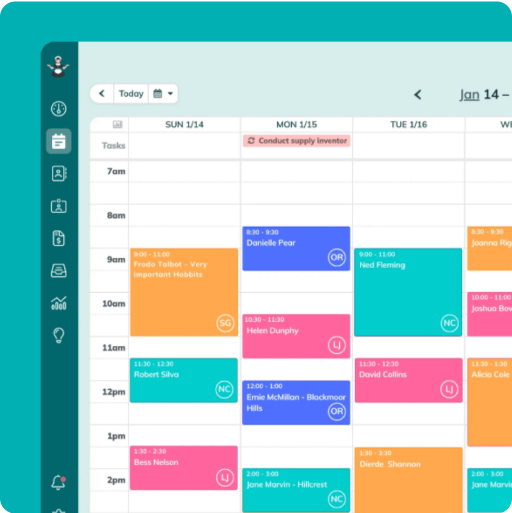
Simplify and enjoy your scheduling with a scheduling software made for maid services
- Have a beautiful calendar that's full but never stressful.
- Make your cleaners happy and provide all the information they need at their fingertips.
- Convert more website visitors into leads and get new cleanings in your inbox with high-converting booking forms.
- Become part of a community of 8000+ cheering maid service owners just like you.
Start your FREE ZenMaid trial today and discover the freedom and clarity that ZenMaid can bring to your maid service! Start your FREE trial today