Frustrated with your scheduling? Try the easiest-to-use calendar app, made by and for maid service owners.


Brought to you by expert maid service owners
Listen on: Apple Podcasts, Spotify or YouTube
Introduction
Hello, everyone. Welcome or welcome back to the Filthy Rich Cleaners podcast. I am your host, Stephanie from Serene Clean. And today’s wonderful guest is Mr. Drew Larison from Five Doors Media. And I have been so looking forward to this conversation. This is third time’s a charm for me, Mr. Drew. I had the flu, he had kids stuff, and here we are. So we have been fighting tooth and nail to have this conversation for you guys. So Drew, thank you so much for joining me.
Drew: Absolutely. Thank you for having me. This was bound to happen. We did it. I’m really proud of us.
Stephanie: Who knew it would take into the new year to do it, but we did it. Here we are. New year, new us. So for those who have not heard of you, Drew, obviously you’ve been highly involved in the cleaning industry for several years now, but take us back, explain what it is that your company does first and foremost, and then we’ll go through the history. I’d love to hear about that.
Drew: Yeah, a hundred percent. So Five Door Media, we are a full-scale digital marketing agency built for cleaners that really want to grow. You know, we say our entire purpose is to partner with cleaning companies so that together we can increase their impact internally, locally and beyond, because we truly believe that their business has the power to change the world. So we really think cleaning companies do so much more than cleaning. And the work that we get to do for cleaning companies across the country just plays a small role in telling more stories of the impact that this industry has on its customers and on the world. And it’s such a cool thing that we get to be a part of.
Stephanie: That’s awesome. I totally agree. This industry is particularly unique because of how intimate it is truly that we have with our customers, specifically on the residential side. Of course, commercial can have that emotional impact, but I would say residential cleaning is very special because there’s just something about it, obviously, that we’re in people’s houses, we’re in their castles, and allowing them to be able to reach more customers and help more customers is the point of fabulous marketing, of course.
Table of contents
- Introduction
- The Trust Economy
- Starting Five Door Media
- The Five Door Philosophy
- Door One: Platform
- Video Content and Social Media
- Authentic Content Creation
- The Founder as the Face
- Door Two: Creative
- Real Photos vs Stock Images
- Door Three: Targeting
- Facebook Lead Quality
- Door Four: Post Ad Engagement
- Door Five: Sales
- CleanCon Conference
The Trust Economy
Drew: There’s a lot of home service niches that are definitely in that trust economy. But dear me is the cleaning industry probably top of that list, right? Because you’re right. You’re in their bedrooms, right? The lawn and landscape companies can’t say that. The roofing companies can’t say that. The siding companies can’t say that. They’re literally next to their safest space, which is their bedroom and their bed and where they rest at night. And that’s a unique thing to this cleaning industry, and even more so why marketing really matters to help build trust, having good messaging that makes customers confident that you’re the right company to come into their homes, into those safe spaces and make them clean and beautiful.
Stephanie: If the roofer is in my bedroom, there’s a problem.
Drew: Yeah, you’re so right. Yeah, it’s a giant hole in your roof probably, yeah. Exactly.
Starting Five Door Media
Stephanie: So tell us how did you get into your role as CEO? Obviously, you are the founder, correct? So what inspired you to start your business?
Drew: So my wife and I have owned the agency, has owned an agency. It’s actually 10 and a half years now. We celebrated 10 years last year. So we have a legacy agency called Larison Media. And Larison Media was an agency I started out of working at another agency built for small businesses as a whole. So if you were a small business, that’s who we worked with. And as just time went on, we really kind of stumbled into this home service world as a whole. And I was in a mastermind in Nashville, got invited by a friend of mine who owns a cleaning company to come to this mastermind. And my mind was just kind of blown away at this home service world as a whole. And the more we just worked into that home service world, we had thought we had niched down to home service, but we quickly learned it just wasn’t enough. It’s really hard on a marketing agency staff to require your employees to know everything there is about roofing, everything there is to know about lawn and landscape, cleaning. I mean, all the different sub-niches that exist in that home service world, we were kind of putting just way too much on our staff to really know that world well.
So we had a moment where we looked at our client list, and it wasn’t just we had more cleaning clients than other niches. It was cleaning clients because it was actually second when it comes to quantity of clients. But we looked at who are we doing the best work for, what industry really lines up the best for us when it comes to the impact that we can create for their company. And we took a vote and it was almost unanimous cleaning companies. So we really looked at that opportunity to build a separate brand and staff for these cleaning company clients of ours. So that’s where Five Door Media came to be.
The Five Door Philosophy
Drew: And I was just on a kickoff call with a client earlier today and I realized we got through the whole sales process and I never told them what the heck Five Door Media means or stands for. So I’ll take just a minute to tell that, the namesake of our agency. We had this brainstorm one day, and I heard somebody else talk about life is nothing but seeing an opportunity and walking through the door. So I was just thinking about doors and how sentimental doors can be and how they can mean a lot to just life. And I really started thinking about just this customer journey that users of the internet go through. And I really came through the realization that customers have to walk through five doors before they’re a paying customer when it comes to online advertising.
Door one is platform. Are you advertising on the right platform? Are you on Google when you should be looking at Facebook and vice versa? Are you looking at Nextdoor? Are we actually on the right platform, right? That’s the first door.
Second door is creative. Is your creative that you’re posting online stopping people’s scroll? Are you grabbing enough attention of people on these platforms online to where they’re watching your content and not some cute cat video or some new trending video happening on TikTok or Instagram or whatever it is? Is your creative strong enough to stop the scroll?
Third door is targeting. Are we targeting the right people? Are we targeting the right demographics of people, the right income of people? I mean, you guys know the people that are hiring these home service companies are top 10% of earners that have that expendable income to trade time for money, right? To take care of their home. So are we targeting the right people?
Fourth door is what we call post ad engagement. So what happens after they actually engage or click on your ad? So we’re talking forms, we’re talking landing pages. Are people getting stuck because your form’s too long? It’s too complicated. You’re asking for too many details. You’re asking for their blood type, everything. Or is the landing page not making it easy enough for people to find that form, to find the information they need and find the information they want to take that next step?
And the fifth door is sales. They’ve got all the way through these four doors. The lead is now in your inbox. What is that cleaning company doing to close that sale?
So obviously, we’ve had a few situations where it looked like everybody’s going through those four doors pretty quickly. We get to that fifth door. We’re not following up enough. We’re not following up quick enough. We’re not following up in a way that makes sense to that user. So maybe we’re calling when we should be texting. We’re texting when we should be emailing. All those little variables that go into that first touch point to actually get a quote out to somebody. So we’ll look at that for that fifth door too.
But what’s cool is we’ve developed data points and KPIs to look at for each door. So when we look at the analytics of a campaign, we can see which door people are getting stuck at. We’ll tweak that door and hopefully move them along. So that’s where Five Door Media came from. That’s the namesake of our agency. And that’s a strategy we use every single day to diagnose our clients’ ad campaigns. So we’re trying to be as effective and efficient as possible with their paid ad spends.
Door One: Platform
Stephanie: I love that. What a namesake story. And honestly, it just lends me to want to dive in deeper to each level of those. And I would love if you could, let’s go through each door. And obviously that might’ve been a little overwhelming, especially to some newer owners or anybody who hasn’t really, a lot of our listeners, they’ve gotten all of their business from word of mouth. And once that stopped trickling in or is not consistent, or they’re trying to grow and they’re like, all right, I want to, I’m scared to hire because I don’t know if that business is going to come through the door in the way it was previously doing it the way it was, which is literally relying on word of mouth or posting on Facebook or whatever that they’re doing. So if we’re talking to that person, I would love to break down some of the most obvious mistakes or the maybe most common mistakes you see at each door level. Because for me, my immediate go to is number five is typically a dumpster fire when I’m consulting with people, there is no follow up, right. But obviously, every single layer has problematic things that people are doing or not doing. So can we go deeper on each of these?
Drew: Sure, absolutely.
Stephanie: All right, number one. Knock, knock, let’s go.
Drew: Yeah, yeah, yeah, door one. So go back, door one was platform, right? Are we actually advertising on the right platform? So there’s definitely easy ways to find out if you’re on the wrong platform. And it’s kind of, there’s just zero activity happening, right? Where a lot of times we talk about the targeting door too, but if we’re not on the right platform, the right people aren’t on that platform either that you want to be your customer. But I mean, if you’re getting, your ad spend isn’t spending all the way, you’re not getting any engagement on your ads, you’re definitely not getting any leads, you’re not getting any clicks, any likes, or anything, it’s pretty darn easy to tell, this isn’t right for me, right?
And Google has a lot of ways to test if Google ads are a great thing for your company too. There’s a lot of free keyword research tools that Google provides where you can see how many people a month are actually searching for this in my area. Even you can go down to zip code. So there’s pretty darn easy ways to tell if you’re on the right platform or not. But I mean, what we see Google ads and Facebook ads normally across the board do really well in the residential cleaning industry. It’s important to know users on those platforms are different. They’re not all the same. The intent of those users is much different. The intent of someone that is searching for your services on a Google search is definitely much higher than the intent of a Facebook user who is just scrolling and they happen to see your ad simply because they fit the targeting that you set to be shown your ads to. So it’s important to know those things.
And platforms, obviously, they speak different languages too. An Instagram platform is strictly visual. Right. Captions matter a lot less. Words matter a lot less on Instagram. So you have to make sure your content on Instagram is very visually appealing compared to Google. The first thing they see on you is words, you know, is copy for your headlines, for your ads. So just knowing how each platform speaks, knowing the language of those platforms, and then just seeing am I getting any sort of engagement on these platforms that could lead to leads down the road? No pun intended.
Stephanie: Should have been. So I’m curious, obviously, I’m very heavily in the in the Google and Facebook front when it comes to focus as a small business owner, knowing that’s where for us, everything is coming. So obviously we still post on Instagram by posting on Facebook, we post on Instagram. But we have absolutely zero energy put into Instagram, into TikTok, into any of these other platforms. And that is just from an energy perspective of having a success capacity is a ton of work. Right. And so do you see any exceptions to that rule? Have you seen owners who have great success getting actual business from those other platforms, or do you strictly typically suggest Facebook, Google?
Video Content and Social Media
Drew: Yeah. Instagram and TikTok absolutely have their opportunities, but you’re right. It takes more effort. Right. And not just man hour effort, but just creative effort, I think, you know, and you have to, one of the biggest issues is the biggest success I’m seeing from a TikTok or an Instagram, it’s all video based. And some people are terrified of being in front of a camera, right? And we see that a lot where for our clients that we’re doing video ads for on Meta, we actually will help supply scripts for them that they can break up and they can send us the raw footage and we’ll do some editing to make the ad work. We have some clients that want word for word scripts. We have some people that just give me bullet points and I’ll rant and you can edit around it.
But the tough part about those platforms is they are video based and a lot of people are just scared to be on camera and they’re just so much more unfamiliar with what good content looks like from a video standpoint, which they’re not wrong. I mean, it’s different. It really is different. But luckily, I don’t know what I always say and people don’t like this answer because it just takes more work. But if you want to be good at Facebook reels, Instagram reels, TikTok, the first step before you become a creator is to become a consumer. You’re going to have to spend a lot of time just watching content, learning, learning the language of those platforms. You can’t learn the language if you don’t spend time on the platforms.
But the best way to really jump into those platforms organic for organic content purposes is watching content, looking out for trends, which both of those platforms do a really good job on the back end of your creator profile, telling you what is trending, whether it’s a sound or a video trend or something. But then taking that trend, it’s what is my brand’s version of this? Don’t just try to copy it because the people on the internet aren’t dumb. They’ll know it’s not genuine. They’ll know it’s not real. But what is my brand’s version of this trend that’s happening right now? Create that.
And one of my best video tips I give people is starting with, come up with, because we all have FAQs, right? Every cleaning business owner gets asked the same questions that every other one gets asked, right? Write down 25 of your most common FAQs. Set up your phone. You don’t need a crazy camera setup. You don’t need lights. You don’t need a microphone. First step is just pushing record. And this can be on your phone. But take those first 25 FAQs and just answer them. Don’t think you have to be this personality. Don’t think you have to be this character. Answer them the same way you would if you were on a phone call, a sales phone call, or maybe even training your employee that’s asking these questions. Answering them honestly and genuinely.
You might never post these videos, but the practice you’ll get and the comfort you’ll get from just being able to sit in front of a camera, answer questions that you already answer 5,000 times a day that you can answer in your sleep gives you that confidence the camera is just another person. And that’s really what you have to think. The camera is not a technology piece of equipment. It is another human being. And the more that you can connect with those humans on the other side of that camera, the better your content is going to be because it’s more genuine, it’s more authentic. It doesn’t need to be this crazy produced thing.
Actually, when we run Facebook ads for our clients, some of the most successful campaigns we’ve had are campaigns that the owner is literally just selfie style videos sitting in their kitchen talking about the offer. There’s no camera, there’s no lights, there is no tripod, there is nothing fancy. It is the most raw, authentic piece of video content you could create. And here’s why. Because when people are scrolling, people on the internet are not dumb. I think I said it before, they’re not dumb. We get advertised to more than any other time period in a human existence right now, right? We’re seeing more content in front of us more than ever. If you look like you’re selling something, they’re going to scroll. They’re going to scroll past you super quickly, especially on social media platforms, going back to the intent of that user. They didn’t ask for this, right? They didn’t ask to be sold to. They just happened to fit the targeting that we’re putting in front of them for the ads.
But if you make it look just like another piece of content that they’re watching as they’re scrolling, you might get them for that first three to five seconds and then you’ve got them, right? But don’t overproduce it. Don’t overthink it. Don’t think you have to have a $4,500 camera with really nice mics. As I say that, I’m in a studio full of both of those. You don’t need to do these things to get started creating video content. And I, like I said, ironically enough, you don’t need it. And sometimes it just doesn’t work as well. So don’t overthink it. Just start talking to your phone, start with those FAQs, and then you get more comfortable and then you could become a creator. But the first step, like I said, is before you become a creator, you have to become a consumer. You have to learn how these platforms are talking, how they’re engaging, what type of content they’re producing. A lot of people don’t want to put that work in, and that’s fine. But that has to be your first step is learn how these platforms work before you just jump on there and try to get in the middle of the party without knowing how it works.
Authentic Content Creation
Stephanie: Number one, I mean, how dare you, Drew? We both woke up like this. I mean, this is just how we hang out, right? But number two, as all of our listeners know, I can completely attest to what Drew is saying here, because if you go back at literally day one, Serene Clean, April 1st, 2019, there is a video of Stephanie and her two bedroom apartment kitchen on a shitty potato of a phone recording saying, hey, I’m opening a cleaning business. And my instinct to go to video from day one, the fruits of that labor and that instinct have just, I can’t, I mean, it is one of the core tenants of our success and why I was able to grow so quickly was because I connected to my audience, my people in my community and because you said because it was authentic and it was just me being earnest and saying I’m gonna do a great job for you and then even turning things in for us video testimonials are another reason we grew so fast but it’s not some big stage thing it’s just my customer on their couch talking about why they like us. And it’s just, it’s real, right?
Drew: It’s so authentic. It’s real and authentic, but also you’re just speaking the language of the internet currently. I think something happened in 2020 when, what was it? Six weeks to flatten the curve or whatever they said back in the day, the dream of curing COVID in a short amount of time. We were all just kind of stuck at home. And everybody started watching, whether it was either Tiger King on Netflix or it was TikTok. TikTok just kind of blew up that time. And I really think TikTok will never get the credit they deserve. What they really did was reset the expectations of what I call the informational consumer or just internet users as a whole on how they want to consume content. It wasn’t, you know, horizontal, like YouTube has been for forever. You hold your phone up. It is short form vertical video. And that is currently the language of the internet. If you really want to get someone’s attention, you don’t have to flip your phone, record vertically, record something short form vertical content. That is what their expectations have been set to.
BuzzFeed did this forever ago too. They created something called a listicle. Have you heard of that term before?
Stephanie: Yeah.
Drew: So a listicle is a blog or article type where it’s eight ways to do X, Y, and Z or nine vacations you have to take before you die. BuzzFeed really started that trend. And I’m not clicking on a link if there’s not a number of certain things telling me certain things. You know what I mean? They reset our expectations of how we want to consume blog content or article content. I think TikTok did that exact same thing in 2020 when we were all just obsessed with that app. So much so now that Facebook and Instagram reels exist, YouTube shorts exist. All of that is short form vertical content that TikTok really started. So I don’t think they’ll ever fully get the credit they deserve on that, but they’ve really manipulated the minds of informational consumers, this is the type of content I want to consume now. And if it’s not that I’m not paying attention to it.
Stephanie: Yeah, totally. And really, as you kind of alluded to, put yourself, we are consumers, we are consuming content, we are consuming home services. So what would entice you, you know, listener, what would entice you to hire somebody or to stop their pause on an ad? And, you know, coming back to even the frequently asked questions, when people cringe when I say get on camera, right? They’re like, oh, easy for you, Stephanie, you’re so natural. It’s no, go watch those first videos. Oh my god, they’re terrible. But for example, frequently asked questions video, we have that on our website, it’s in our initial sales email is what to expect at your first cleaning and those types of things that you’re getting asked all the time anyway, during a sales process of selling a new lead. Like you said, just record it, because then you can use that and it helps sell. And it really, I find it really impresses a lead of, whoa, they put effort into this. It’s not just, they truly care about this, right?
Drew: Well, they put effort into it, but also, hey, they’re speaking my language. I will watch this because it is filmed in a way that it’s a language that I want to do, you know? So, I mean, it’s, yeah, there’s video is so powerful. Don’t be afraid of starting. Like I said, record those 25 FAQs. Who knows if you’ll post them? That’s not the goal of that exercise, right? The goal of that exercise is just to get more comfortable on camera and realize it is just another tool, like a keyboard is to write content. It’s just another tool to get your story out there to people. It just happens to be the number one way for them to pay attention to it right now.
The Founder as the Face
Stephanie: Side note, because I have strong opinions about this. So I’m curious from a marketing perspective, what you think about it with a small business specifically in our industry, I’m very much the founder should be the face and that connective tool. Obviously, we promote our staff heavily. And that’s a huge just part of our brand is promoting our cleaners. But, you know, my face is on the homepage, the videos are coming from, I’m speaking to our clients, even if I don’t even live with my business is now. So do you feel that that is necessary? Or would you say just recommended? What do you think about that?
Drew: Necessary? No, because it’s been done the other way too. It’s been successfully done the other way. So it is not an end all be all that the founder has to be the face. Now, I think founders in general, just our personality types of people where we don’t mind being the face, you know, we know it’s just something that needs done and we’re willing to step in and do it. But no, I don’t think it’s necessary. It’s definitely recommended for multiple reasons. One, they know you’re the person with the skin on the line, you know, or with all the risk, you know, and, hey, if they’re putting their name behind this and their face behind this, that means something.
Two, it’s risky to make someone else your face because you’re permanent. Anybody else in your business is not. So, I mean, if you have someone on your staff take over and be that face, be in a bunch of content. Staff is fluid. You know what I mean? Employees are fluid. I mean, perfect world. Everybody would love to have nobody resign or quit or even something horrible happens in life. You know what I mean? What if they get sick? What if something, you’re not to get morbid, but life happens. Right. So it’s a riskier thing there, but I will say this too. And this is really important. I think, especially when we’re talking about the video aspect of stuff, there is a, I wish I knew but I should find that out. There is a legitimately scientific fear of public speaking or being on camera. It’s scientifically, there’s a name for it. I forget what it is, but if that is you and you’re the founder, don’t try to be on camera. Cause I keep saying this, but consumers aren’t dumb. Right. And they will sniff out someone is uncomfortable and there’s nothing more awkward than watching someone on camera when they feel like they are crawling out of their skin. It is really hard to hide that on camera. So I mean, if that’s you, I don’t want to mess with your mental health and tell you, you have to be on camera when you legit have a fear. Because it will show, it is very hard to sneak past people watching online when they know you’re uncomfortable and it not look that way as well. So I want to mention that cause that’s important.
But there are ways to hire actors for this. There are ways to hire personalities for it. It’s not necessary. I think it’s the safest bet. But there’s a lot of variables that go into that.
Stephanie: Another avenue of video content that we have done that has served us very well is actually employee interviews asking what it’s like to work at Serene Clean and why they love their job so much and then we can if we’re trying to hire we can boost it for that but it also gets us clients because people are like oh happy cleaners I like that so there’s a lot of different avenues you can attack with video for sure.
Drew: People like to do business with people who treat their employees well so if there is content that shows that yeah I mean that content priority is probably more on the hiring, hey come be a part of our team that kind of thing but it could have other aspects as well.
Stephanie: Yeah. Okay. I remember what door number one is. Oh, platforms. So here we are talking about platforms. And you know, you did mention things like Nextdoor or those types of things. I personally, you know, my business is in very rural Wisconsin. Those types of things are not, you know, even Angie’s list, that type of stuff isn’t really used where my particular business. So I have no actual experience with this. So I would love to hear is there situations that you highly recommend those types of things?
Drew: Kind of what you just said, highly depends on the market, right? Highly depends on the market. And there are ways to test that. I will say Nextdoor and probably, I think it’s the last six months has done a complete overhaul of their ads. And what it looks like, it looks more like a Facebook ad world now that it has in the past, it was kind of a debacle before. So there’s ways to it on there. And with that, you could probably find audience size, estimations, expectations for how many people would actually be seeing this. But yeah, I know people hate that answer, but it very much depends. And there’s a lot of variables that would go into whether Nextdoor would be a good option for you.
I know one thing, Nextdoor is definitely neighborhood focused a lot. So it’s something I would check out. And I was having good conversations with other companies like SendJim the other day. And I know Dope Marketing does stuff like this too, where they’re using a lot of modern day technologies in direct mail. So if you have a neighborhood that your best customers are in, and you’re like, oh, if I could get more Mr. and Mrs. Joneses, my business would be so much better. Nextdoor could be a good way of doing that as well as really targeting those specific neighborhoods that more Mr. and Mrs. Joneses live in. So that’s something to think about too. It doesn’t just have to be citywide. You can get down to specific neighborhoods.
Stephanie: Yeah. I would look into that because I’m like, ooh, Emerald Avenue in Onalaska, Wisconsin. So you know it. Oh, I know. Yeah. And we use neighborhoods a lot for targeting for Facebook ads too. And we’ve got a few clients who have really helped us. They’ll go out in front of the neighborhood sign and record a video for an ad. And we’ll geofence that neighborhood specifically on Facebook. And those perform well, you know? And hey, we’ve got some great clients in this neighborhood, we’re doing this offer for your neighborhood only, really, really intentional and targeted for a higher end neighborhood. Those can work out well.
Stephanie: Oh, how creative. I love that. Any other final mistakes that are glaring when it comes to platforms before we move on to door number two?
Drew: I don’t think so. Platform, like I said, it’s pretty darn easy. If you’re on the wrong platform, you’re going to feel it pretty quickly. If it’s just dead and there’s just no activity going on at all. It’s probably not the best for you, but also do your research ahead of time, use Facebook tools, use Google tools to see what does the audience actually look like before you spend any dollars on paid ads.
Stephanie: I gotcha. Awesome. All right. Door number two, my Lord, what do we got?
Door Two: Creative
Drew: Creative. Yeah. So that’s the art side of marketing. There’s art and science. I’m a big believer in that. And creative is definitely more of that art side. Is your content, is your ad content stopping the scroll is what I like to say. You know, we’ve talked about this a little bit, but people are flooded with content, more content than ever before. Right. And we’ve asked for it because we keep engaging with it and that’s why we get more content. But you have to make sure your content is standing out, is making an impact. And we’ve talked about a lot already, but video is another huge part of that, you know, but posting videos alone isn’t good enough when it comes to paid ads. The first three seconds of a video, people are going to decide whether they’re going to watch the whole thing or not.
So when we use AI tools to come up with video scripts for our clients, we are built it in, hey, I need a crazy good hook for the first three seconds of this video. So that matters a lot is making sure the hook really grabs their attention. Say something just crazy and bonkers and then get into what you actually want to talk about in that hook just to grab their attention and have them keep watching. But also, like I said, don’t make it too fancy either. You know, make it look like another piece of content that they’re going to see as they’re scrolling through the internet.
But video is such a hack right now for just stopping the scroll. Like I said, and it just goes back to TikTok, right? Changed the expectations of what content people want to be consuming. And they’re going to scroll past a graphic so much quicker than they are a vertical video right now. You know, so most of our campaigns we’re running now for clients, easily the video is what’s bringing in the most results, easily, without a doubt.
Usually in our campaigns, we have one or two videos and three to four graphics along with the videos, which I think is just a little tip there in general. Don’t just put a video creative on a campaign. Have some graphics in there as well. Just make sure those graphics tie into that same messaging that the videos did, because you’re probably not going to get somebody to watch your video ad twice. Because once you trick them that it’s an ad, right, they’re not going to go back and watch it again. But if you have some graphics that are coming up the second, third, fourth time they’re seeing that campaign, that might help them push, you know, to fill out that form and become a lead too.
But yeah, creative is important. Obviously, the easy metrics to look for if you’re creative is important is not just leads coming in, but are people sharing the video or the graphics? Are they liking the video? Are they commenting on the video? Because all of that is just engagement that can’t happen unless you actually did make them stop their scroll, right? So make sure to watch out for those engagement markers, not just lead forms, right? Because that could be a third or fourth door. But just engagement numbers, that’s a good way to see is our content stopping to scroll? Are we getting shares? Are we getting likes? Are we getting comments?
Real Photos vs Stock Images
Stephanie: I gotcha. One thing that I really try to recommend to people, and I’m curious your thoughts on this, is not using things like stock images, stuff like that. But even for us on the typical before and after content, something that’s really been beneficial is literally adding the cleaner’s face and a little bubble at the corner. Like this was Britney’s before and after. And that we’ve seen a high level of engagement increase on typically ignored content before just by adding the face of the cleaner. Is there anything else that are, do you have any experience with non-genericness of it all? What are your thoughts on that? Number two, is there anything, little tweaks that people could make that make things more enticing?
Drew: No, I love that. And we’re seeing that data in our ads too. The highest performing ads are either video or when you’re showing off staff, you know, and I think, I mean, in an industry where, I don’t know, this is a derogatory term, but a bunch of trunk slammers are out there, right? And you know, these people, these fly by night solo cleaners really can hurt the reputation of the industry, I think. But if you show, you know, I have a team. We have uniforms, we’re legit, right? And even just throwing that little headshot in the corner of that before and after picture does so much, so much good, you know, compared to just throwing out before and after picture.
Talked a lot about before and after pictures the last few weeks, actually, just conversations I’ve been in. And I think they are getting a little numb. I think they’re getting a little stale unless they’re just crazy before and after pictures. Even the nasty ones can draw off people as well.
Stephanie: Yeah. Yeah.
Drew: Or yeah, for sure. Unless, but unless they’re crazy, you know, but it’s this industry in general has suffered from a long time, you know, every company looks the exact same online.
Stephanie: Yep.
Drew: Right. We all, they all post the same stuff. They all post the same type of stuff. It all ends up looking the same. So anytime you can really, what I think, personify your brand online by adding real people. And I understand that’s harder for some companies to have a photographer come in and get really good staff headshots. And I’ll say it again, you don’t need to hire a photographer. You know, first day. Phones these days are bonkers, you know? And ask one of your nicer clients with a nice home, hey, do you mind if we snap some shots while we’re here? Maybe we’ll do half off your clean today or something like that if you let us come in. That little bit of extra effort to get real photos, your own company stock photos, makes such a big difference, you know? And we saw this in the other home service industries we worked in too before we went all in on cleaning. Real photos make the world of a difference. They really do. And it is an extra effort. It’s worth it though. It really is worth it.
Stephanie: Now, I completely agree. And we’ve definitely seen the fruits of our labor. And it’s just, you know, be a purple cow, right? It’s just, okay, everybody’s, let’s assume that everybody does quality cleaning. We know that that’s not the case, but let’s assume that. How else can we stand out, right? Because people are just going to be numb to it. It’s just, we have to differentiate ourselves somehow and leaning into the people is definitely been our strategy. And it sounds like for you guys as well, it’s worked very well.
Drew: Yeah, yeah. Real people as much as possible. And we try to make it as easy as possible. Just set up a Google Drive folder, dump all your photos into that. We’ll use it for content or, you know, we’ll suggest, hey, a photo of this would be great, you know, or just requesting things like that. It makes the world of a difference. It really does. Because it goes back to one of the first things we said on this podcast, we are in the trust economy, right? And when you throw in your real staff in photos compared to just the same stock photo that every other cleaning company is using with the blue uniforms and the yellow bucket, everybody has used that, right? It makes the world of a difference and adds a layer of trust instantly, right? So I mean, we are legit. We are a company. We have staff. We have uniforms. When you show that, it goes very hard for the emotions and the trust.
Stephanie: Yeah. And just a little tip, because I know many of you guys may be thinking in your mind, but what about turnover? When that person leaves? Number one, make sure that you are getting in the onboarding process of your new staff. They have to sign off and agree to a marketing, that they agree to be in your marketing rights. And they can totally say no. And that’s totally fine, obviously. But we need to get that explicit consent, number one. And number two, we will continue, I mean, if I wouldn’t have any content if I went through and took every staff member that’s not with me anymore off of that. So what I kind of discern it of what were the terms and conditions that they left under? Did this person steal or get accused of that? Maybe let’s take them out of content. But they got a different job. And they said, yes, you can use us. I don’t see the problem. You know what I mean? So logistically speaking, I know you guys are like a turnover. But as long as it didn’t happen, something crazy happened with that person. I say keep using it personally.
Drew: Yeah. And honestly, there are ways to have really good content and the face of the person actually doesn’t need to be shown in the photo too. If you get a really artistic photo of the logo on the uniform and them sweeping or mopping or doing what they’re doing, that’ll work just as fine, you know, cause it’s still not a stock photo. It’s your logo. It’s your company and brand, but you’re right. That can be tricky. We’ve had a few situations where some disgruntled ex staff will comment on that photo and we’ll have to do some banning as quickly as possible or something like that. But I will say it’s rare. It is super rare when something like that happens. It’s not something I’d be worried about too much.
Stephanie: Yeah. It’s I just comment back and be like, yeah, didn’t you steal my kit? Like, don’t you steal? Yeah. Has happened. Okay. That’s door number two for creative. Door number three. What do we got?
Door Three: Targeting
Drew: Door number three is targeting. You know, are we targeting the right people? Which we talked about targeting a little bit earlier, some geofencing stuff. But, you know, targeting is really interesting. And I think this is where a lot of agencies fall short is they set the ads and maybe they’ve got some standard targeting that they do all their ads with or something like that. But there’s just so much opportunity inside of these platforms to do really intensive and intentional targeting that, frankly, just takes more work to do. So people just don’t do it right. Such as life and business. Sometimes the best things just take a little extra work. I mean, the majority of people don’t do the extra work.
But what’s really big to us is we are constantly, and when I hear stories from clients that say, oh, my other agency has never asked that before, we are constantly asking for lead quality feedback. All the time, every call. Had one today, had a call today that I was on with a client and that got brought up. I’m like, well, yeah, we are hearing a few people say this. No problem. There is a solution to that and targeting. We can fix that, right? So, I mean, if you’re hearing a lot of, oh, that’s way too expensive or, oh, that’s way out of my budget. There are ways to set targeting to higher income users on Facebook. A lot of people don’t know that, right? And you can do 50% top earners, 25% top earners, 10% on top earners. So if you’re hearing that quality feedback from those leads over and over, oh, I can’t afford this. There’s a solution to that and targeting, right?
And going back to location targeting, if you’re getting a lot of responses, oh, you’re way out of service area. Highly recommend using zip codes, not just city names for your targeting inside of the ad campaigns, because that’ll be really more specific. Because I mean, one city could have 50 zip codes, you know, or something like that. And you don’t service all of that city, you know, that you might be out of radius. So if we’re hearing those, we can set to zip codes, we can set specific targeting, we can set some negative location targeting too. So it’s a lot of people don’t realize what really is possible with targeting when it comes to digital advertising and paid media.
So ask those questions. Talk about lead quality. Because, I mean, I always say, too, this is something I say on kickoff calls, and cleaning companies can absolutely relate to this. We don’t know what we don’t know, right? So if I’m not getting that feedback from a client saying, well, a bunch of leads were just saying this all the time, well, why didn’t you tell us that? We can fix that. That’s something we can change. That’s something we can tweak. And we’re constantly optimizing our ad campaigns towards that feedback that we’re getting. Same way with cleaners. Well, four months ago, you forgot to make my bed. And I’m just still kind of mad about, why didn’t you say something? We would have came out there in five minutes and made that, you know what I mean? We don’t know what we don’t know.
But I think a lot of companies, they’re not used to agencies wanting that extra information because agencies sometimes we just throw up our hands. Well, hey, you’re getting leads. Sorry, you’re not closing them. That’s your sales problem. You know, and frustrates the heck. I mean, or agencies will just use these things. Well, you just need to spend more. I mean, that might not be true. Sometimes that is, I will say, sometimes an increase in budget is necessary. But a lot of times, there are so many things that can do with door two and creative. All right, let’s make a new video. That one’s not landing. The graphics aren’t working. Door three, let’s change the targeting to this. Let’s add in this detail for targeting to reach these people.
So just make sure you’re being very verbal with the company you’re working for, or if you’re doing internally, talk about those trends you’re hearing back from your sales department or sales team, or if it’s you, I wouldn’t say let’s change targeting if one person said, I can’t afford it. Right. But if you’re starting to hear trends of feedback and that’s consistent, that’s when you can look at targeting and really see, we can tweak this. And I think we could take care of that problem. So if you’re getting a bunch of people over and over to say, oh, it’s too expensive. Oh, I’m out of service area or blah, blah, blah, all those different variables that could be a targeting problem.
Facebook Lead Quality
Stephanie: I really love that you’re highlighting this because a lot of times, or over the years, I have kind of discredited Facebook because it has been so much window shopping, right? Because like you said, the intention is—
Drew: It is. It is window shopping, right? It is. If we’re honest, the intent of that user, it is window shopping, but people still purchase things while window shopping. We can’t discredit the whole platform from that, right?
Stephanie: Yeah, no. And so now you’re really making me think of, okay, maybe I should, obviously we still, it doesn’t change that we still post and build our audience there. But it’s more so I know a Google lead is so much more likely to close, but it doesn’t mean if we just got sheer more in that upper echelon of income specifically, that would, they would be more likely to close. Right. Cause finances isn’t going to be a problem there. Right. So that’s really fascinating to think about.
Drew: That’s just one of the best things about this industry is just that recurring revenue variable of it. Right. I mean, I was talking to a new client today and their lead, their ads just started. I think it was nine days ago or something like that, but they’re already up to 20 Facebook leads. Three or four of them have closed already. And I wanted them to really walk through the math of what this means. So their cost per leader right now is, I think it was $15.65 or something like that on Facebook. You paid $15.65 for a recurring client who is average. I think they’re, I don’t want to lie. I forget their specific details, but probably in that $170 to $200 clean, you know, or something like that, bi-weekly cleanings. So roughly $400 a month and their average cleaning clients stay for two, three years.
We’re looking at potentially $15,000 in revenue that you paid $15 for. Where else can that happen? Right? You know what I mean? So when you really look at the math of what’s possible and you could really optimize and figure out that Facebook target, Facebook is still a really good option. And I think a lot of cleaners have been burnt out over the years from Facebook. And I think the biggest reason is they’ve been stuck at door two and they didn’t realize it. I think they were still advertising on Facebook like it was 2018 where graphics were still killing it or links to the website were still killing it. The language changed, right? And I think when you start doing video, when you start adapting that creative, people are starting to pay attention to you again, and if you can do a really creative video that grabs their attention and there’s a good offer behind it, highly recommend offers on Facebook because these are window shoppers, right? They, by definition, didn’t ask to see this, and that’s okay. People still buy things by seeing the little girl bought the dog, how much is the doggy in the window? That ended up in a sale, right? And there might have been an offer for puppies that day.
But an offer is really important to grab that attention even more because they’re like, oh, well, that’s a good deal. Maybe I am more interested in this. So, I mean, Facebook is still a very viable platform, right? And people are making a lot of money on Facebook ads right now for cleaning companies, right? And don’t count it out. I understand it maybe went through a rough patch and there’s probably a thousand variables on why, but we are having a lot of success with ads for our clients.
Stephanie: I love that. And your point to the lifetime value of that client and really think when you guys get a little tight in the purse strings, because you’re like, oh, this is costing whatever. But it’s, okay, if you can turn that into reoccurring, right, which is kind of then on the owner, right? Then think about the money and the monthly reoccurring revenue. Because as you said, that’s what makes this business so special. And why so many of us can become filthy rich is because it’s monthly reoccurring revenue, we’re not having to sell to new people every single month and start all over, right? We’re building on this mountain of a base and yeah, it’s so juicy.
Drew: So true. And that just gets into why marketing should never be looked at as an expense rather than an investment. You know what I mean? If you really look at the paid ad spend you put in similar to putting some money in the stock market, we’re having the same conversation, right? You’re not going to make 2,000 return the next day, but they’re there for three years. You paid 15 bucks to earn that business. And then you ended up making $15,000 in three years. Show me a stock that could do it. I’ll sign up for it. Right. So, I mean, it really is just such a great example of why marketing is not an expense. It’s an investment. It really, especially when you have long-term clients that are paying you consistently with recurring revenue, it’s an investment. It’s not expense.
Stephanie: I love that. So yeah, door four is what we call that post ad engagement door. That is, so we are on the right platform. Our creative stopped them in their tracks. They are the right customer for us. And they clicked on that ad. Maybe they clicked on the on-app form on Facebook, or maybe they clicked over to our landing page through a Google ad. What happens next? Right? So much work has gone up to this click and we finally got this click, what happens next?
Door Four: Post Ad Engagement
Drew: And a lot of times this is where a lot of people can drop the ball. You know, where a form is you’re asking for too much information. I mentioned this in my rant in the beginning, but some people, I feel like they ask for blood samples or blood types just to clean their homes and they want square footage. They want bedrooms, bathrooms. They want how many pets do you have? And not all that information needs to happen up front. Let’s be honest. We want to get their contact information to get them on a phone call. That’s our goal with a lot of these forms. We can get that information later once we start talking to them on the phone.
Now, some people, those long forms, they really work. And I think those are the cleaning companies that have really strong brands where they’re desirable to, you know, get done the work. But a lot of times I think we overthink those forms and we ask for way too much information, especially on that Facebook side of things. Like I said, they’re window shopping, they’re scrolling quick, right? So to make sure those forms can be as simple and concise as possible, get the other information later. It’s fine.
But then landing pages is also a really important thing too. I think landing pages are something that gets the ball dropped once again, a lot. I think we make it way too hard sometimes to actually find the form that they need to fill out. I think sometimes there’s either way too much information or not enough information. I think one thing people screw up is never make your landing page your homepage. If they clicked on an ad for a specific service, whether it’s residential cleaning, commercial cleaning, window cleaning, whatever it is, take them to a page that talks about that service. Right? If you go to the homepage, it’s almost too overwhelming. Wait, where do I go? I asked for a specific thing. I’m getting thrown everything right now. So that’s it. I hate sending landing page views to a homepage. Your homepage is not a landing page. Your homepage, your homepage.
But also just make sure that form is listed as many times as possible inside that site design. Make it up top, above the fold. Make it middle of the fold. Make it bottom of the fold. Make it easy so when they have made that decision, all right, I’m allowing you to sell to me, right? That’s what a lead form is if we think about it. All right, people, call me. Yes. Fine, right? They’re giving in. Make sure we make it easy for them to actually make they do that action and don’t make it too hard to, wait, where’s the form? Where do I fill out? Everything like that.
So that door four is really important because you’ve done so much work, right? You’ve found the platform. You’ve worked on that creative. You’ve stopped the scroll. You’ve found the right people that are interested, that can afford your services. Door four, don’t drop the ball there. Make sure it’s as easy as possible. Once again, talking about big tech companies that have really changed the expectation of consumers. Look how easy it is to spend money on Amazon. They’ve got that one-click purchase. It’s so freaking easy. How can your website be like the one-click purchase of lead forms, right? Don’t overcomplicate it. Make it as easy as possible for them to give you their information to turn into a lead to hand over to your sales department.
Stephanie: Got it. All right. I won’t touch to, yeah, we’re running out of time. So I want to get to door number five. Talk to us about that.
Door Five: Sales
Drew: Sales. Yeah. I mean, we talked about this a little bit. I could think through the whole podcast conversation, but this is it, right? This is the final door. This is the, you know, counter, this is the moment, right? This is the purpose we do all of this is to get qualified leads to come our way to close them. And I think we’ve talked a little bit just like speed to lead matters so much. Get in contact with these people as quickly as possible. I really think under five minutes is standard or needs to be. I think that needs to be something that’s tracked as well. I think speed to lead needs to be a KPI that your office is tracking to make sure we are doing what we’re supposed to be doing.
But also what’s really important is, I mean, we were talking earlier, lifetime value of these clients, we’re not selling a sandwich, right? We are not selling an inexpensive item. Even a one-time cleaning can be upwards of a thousand dollars, right? So when we’re handling, we’re handing off these sales to people, sometimes they’re selling the same dollar amount that a car could be, right? And think about car dealerships, how much training goes into their sales team. If we think we can just hand off these sales and these leads to the same people that make copies or maybe that does the scheduling inside your office, I feel like that’s a disservice to the marketing dollars that you’re investing in.
I think sales training for the people in your office equally matters just as much as the investment in marketing. You’re spending so much money investing in this marketing, working on the creative, creating all these videos, and you’re going to hand it off to someone who’s not confident or that has never sold anything before. Or you know what I mean? Or just knows how Microsoft Word works. So they were qualified for an office position. That’s not the human that should be doing this because you should not be investing these dollars. That’s like investing in the stock market and your financial advisor doesn’t even know what a stock is. Right. You don’t do that.
So it’s really important to make sure that staff is equipped, knows your company in and out. I’ve had some friends of mine in the industry, Libby DeLucian told me years ago what she does for her staff that are selling. First thing is they work as a cleaner for a week. They are in the field. They see how hard this work is. So if somebody ever shoots back to them in a sales position saying it’s too expensive, you can respond with, you have no idea how hard these people work. This is a deal, right? But then so that happens as well as their home gets deep cleaned so they can experience it from the shoes of the people they’re trying to sell to, how good it feels when you get home exhausted and you come into your home and it smells great, everything’s put away, everything’s organized, everything is clean. That’s just bare bones what we should be doing to these people who are selling cleaning services, right? Because they know personal experience what it’s going to be like for these customers who experience that with the services that you’re trying to sell.
So that’s super important to me is the training of the people that are selling these services should not just be a blip. It needs to be intentional. It needs to be thoughtful. And there also just needs to be a solid follow-up process. And I think you’ve talked about this a little earlier, this is not a one and done. I don’t care if you call them within 30 seconds of that lead coming in. People are busy. I think we’re busier than we’ve ever been. We’re easily distracted more than we’ve ever been. This has to be something that we’re following up until they put a restraining order in front of us. I’m kind of kidding. You have to remember they asked for this. They asked to be contacted.
And I mean, I’ve had situations in my life before where I thought I was one follow-up away from a restraining order. And finally that person answers the call and says, thank you so much for following up with me so many times. I’ve been so busy. My grandma’s been sick. My dog died. My truck broke down. All the things, right? They’ve lived through a country music song, right? And they thank me for following up with them as many times as I did. That is always an opportunity. So do not stop following up. Follow up in multiple different ways. Text, phone, email, carrier pigeon. Whatever you need to do, don’t stop following up until they tell you to. And then just put them on an email list and send them emails every now and then.
Stephanie: Oh, yeah. Oh, absolutely. That’s two or five. Honestly, Drew, we could do a whole nother episode on that particular area because I know everybody listening just went, oh fuck, I suck at all of that part and they’re feeling terrible. So part two will come. You know what I want? I don’t want everybody to feel terrible. It wasn’t my intention. But I’m just saying it is, I think a lot of people think I’m going to hire an agency and everything’s solved. But, oh man, that’s 50% of the puzzle. We can bring in the leads, but you’ve got to have people that know how to treat them and know how to follow up and know how to sell them. And that partnership, that yin and yang is so important.
Honestly, whether you’re working with an agency or not, whether you’re doing marketing internally or however you’re doing it, there’s a hundred ways to do it. That relationship between the sales and marketing department is a 50-50. I’ll call it, it needs to be 100-100, right? Each department needs to be going all in, but you can’t have one without the other.
Stephanie: No, absolutely. And then the reason I say that is just even just listening to you talk, I’m just like, okay, there’s definitely some improvements for us for sales. For us, we have been so understaffed, chronically understaffed, you know, dealing with that’s the hard part. It’s never been the sales side for us has never been a problem. But now it’s, OK, we’re finally able to keep up with staffing at this point. I’m just, all right, we can work on things that so I’m already in my mind. I’m all right, I got shit to work on. Thanks a lot, Drew.
Drew: We’ll just go back to, I mean, it’s definitely a high dollar amount sale that we’re talking about, but it goes back to what we started with. It’s trust. Is your person doing your sales empathetic enough to gain trust from someone over a phone call? Are they just asking how many bedrooms and bathrooms? Here’s how much it is. Are they asking, tell me about your life. Tell me about your family. Tell me about why this matters to you. Tell me how your life is going to be changed. Tell me about what your weekends are now going to look like that you don’t have to clean your house every weekend. You need someone who can pull on those heartstrings and build that trust over a phone call, not someone who can just fill out a form on the other end of the line. Right. And I think there’s so much good happens when you hire for an empath in that sales seat compared to just someone who could make copies.
Stephanie: Love that. Love that.
CleanCon Conference
Stephanie: Last couple of minutes, Drew, talk about CleanCon. I am so excited for this. I will be there. So I’m so excited, so excited. Tell the people, what is CleanCon? What can they expect?
Drew: Yeah. CleanCon is a really cool thing that I’m excited about and terrified, which most of the best things in my life have all started with terror and excitement. So I think we’re on the right track. So my wife and I have partnered up with Holly Moore and Molly Moran to start this thing called CleanCon, which is a conference specifically for the residential cleaning industry. I think there’s a lot of conferences that happen across this country that cleaning is definitely the main topic, but it’s mainly commercial focused. And we just really felt like there needed to be something just for the residential world. And we’ve got a lot of cool ideas and tricks up our sleeve. It’s going to be education. It’s going to be connection with people in your industry through roundtable mastermind tables that we’re really excited about. And we really just hope we build this community of people that do the same thing every day, that can connect with people that do that thing and can learn from each other.
So it’s going to be March 16th to the 18th and beautiful downtown Indianapolis, which is my backyard. I somehow talked to them and they put it in my home state for the first one. Downtown Indy is where it’s going to be. It’s going to be great. I’m really looking forward to it. 16th to the 18th. It actually falls over St. Patrick’s Day. So we’ll probably do some fun stuff around Indy for St. Patrick’s. It’s great. I’m really excited about it. I’m honored to be a part of it. Honestly, as the only owner of it that is not a cleaning business owner, I was asked to be a part of this. And honestly, I’m honored and flattered by that. So it’s gonna be great. I look forward to it. Go to mycleancon.com for tickets. We still have tickets available, still have some vendor spots. We’re almost fully sold out of vendor spots. So that’s great, but it should be good. It should be a really fun event that I’m excited to help provide this value to the industry.
Stephanie: Oh, I’m so looking forward to it, especially the keynote. I mean, as anybody who’s ever listened to a single episode of this episode or this podcast knows, my love for Profit First and everything from Mike is, I mean, I still remember that from day one, we’ve been running the business off of his concepts. And so I was meeting a hero. I’m so excited.
Drew: Yeah, that was all Molly. Molly’s a big fangirl of his. And she really pushed that he needed to be the keynote for this year’s event. And just off of his keynote, we’re talking financials a lot. We’re talking profit. We’re talking money. And we’ve had a lot of people ask us, is it an appropriate event to bring their staff to because of the conversations around money? And we’re 100%. So we’re highly encouraging people to bring their managers, to bring their leadership team. This is not going to be a conference where we just tell you how to make yourself wealthy from the stage and your staff feels awkward. I talked about those monthly or those roundtable masterminds. We are going to have a specific tables for what we call A players. So your managers will be able to connect with other managers who are in cleaning companies across the country as well and create their own network. Because we’ve heard from people all the time, my managers tell me, oh, my gosh, you know, so many people in the industry. I don’t have anybody. I don’t know anybody else that does what I do for a living. So we really wanted to make space for them as well.
So if you’re looking to buy a ticket for yourself, make sure to bring your manager too. We do have a hotel room discount. It’s going to be at a beautiful hotel in downtown Indy. We’re really hoping this is different. Something refreshing for the industry to get everybody together and really connect, be educated, and talk about how we all can help innovate the industry and moving forward.
Stephanie: I’m so excited. And you just, I’m, oh, maybe my man, I’m taking him to Vegas for a Hormozy event in April. So I’m, should we go to Indy?
Drew: Oh, nice. I tell you, Indy is an awesome, easy airport to get to. It’s usually pretty cheap flights. I mean, it’s a great place to visit.
Stephanie: Yeah. Awesome. Well, everybody watching, obviously this is going live before then, go buy your tickets. We would love to see you there. I’m very excited. And overall, Drew, this has been amazing. If anybody wants to reach out to learn more about your work and your agency, where can they find you?
Drew: Yeah. fivedoormedia.com is our website. You can find me on Facebook, pretty responsive there. Just for a long time. Yeah, just reach out into there. Would love to connect. We definitely love having what we call just marketing strategy sessions where we can look at, hey, what’s going on currently? What are some levers we could pull? What are some opportunities for you? Zero cost to that. I just, I spend most of my days sitting down and talking to cleaning business owners about marketing. So it’s one of my favorite things.
Stephanie: Awesome. Well, everybody head on over there. If you are interested in working with Drew or just connecting and learning more from him. This has been a fantastic conversation. Lots of tactical advice for you guys. Leave them some love down in the comments. Hit that like, hit that subscribe, and we will see you on the next episode of Filthy Rich Cleaners. Bye guys.
If you enjoyed this episode of the Filthy Rich Cleaners podcast, please be sure to leave us a five-star review so we can reach more cleaners like you. Until next time, keep your work clean and your business filthy rich.
Note: This transcript has been edited for clarity and readability.
Resources Mentioned in This Episode
- Five Door Media
- CleanCon Conference
- Libby DeLucian
- SendJim
- Dope Marketing
- Profit First by Mike Michalowicz
- ZenMaid
QUICK TIP FROM THE AUTHOR
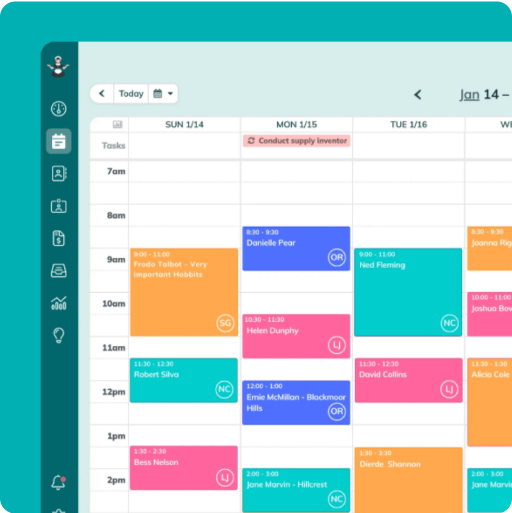
Simplify and enjoy your scheduling with a scheduling software made for maid services
- Have a beautiful calendar that's full but never stressful.
- Make your cleaners happy and provide all the information they need at their fingertips.
- Convert more website visitors into leads and get new cleanings in your inbox with high-converting booking forms.
- Become part of a community of 8000+ cheering maid service owners just like you.
Start your FREE ZenMaid trial today and discover the freedom and clarity that ZenMaid can bring to your maid service! Start your FREE trial today