Frustrated with your scheduling? Try the easiest-to-use calendar app, made by and for maid service owners.


Brought to you by expert maid service owners
Listen on: Apple Podcasts, Spotify or YouTube
Introduction
Hello, everyone. Welcome or welcome back to the Filthy Rich Cleaners podcast. I am your host, Stephanie from Serene Clean. And today’s solo episode, guys, is going to be talking about good old-fashioned boundaries and setting them in place because this past week I have talked to several of you and I’ve just wanted to lovingly shake your body and be like, what the fuck are you doing? And that’s exactly what I say to you guys in the best, nicest way possible. And what I’ve had to say to myself multiple times, what my management team, we’ve said to each other multiple times throughout the years. And I wanted to make an episode about this, because I think it’s something that so many of us struggle with, is being firm and actually standing your ground when bullshit is happening in your business.
And that could be bullshit in multiple directions, because typically in our business, the shit flies from hither and over yonder and all over the place because it’s chaotic, right? And we’re dealing with a lot of people and a lot of situations when we own cleaning businesses. And cleaning businesses in particular, I feel like attract people pleasers as well. And so we just want to help. We just want everybody to like us. We just want people to be happy, right? We are very much in that mindset oftentimes, but that means we can get taken advantage of and trampled on because we don’t have a backbone to stand up for things.
And I’m saying this all to you guys in the most loving manner possible, because that’s exactly what I have dealt with for years and years. And I’ve kind of delegated a lot of my backbone to my management team as well, because I just struggle with this still to this day. I’m the one that is always constantly being, yeah, but they could really use this thing, whether it’s cleaners or clients, whatever the situation is, right? I’m the one that we have to be slapped across the head, not literally. Sometimes I should probably get slapped across the head literally because I’m trying to do something stupid and make an exception to the established rule. And it doesn’t make any sense other than I feel bad or I don’t want to be seen as the bad guy for enforcing the thing, right?
And so do not take offense to any of the things that I’m saying today, guys, because I struggle with this right alongside you. But some of the situations that I was talking about with my consulting clients last week, I was like, oh my gosh, this just reminded me so much of different situations we ran into in Serene Clean. So I want to give you guys some examples of areas where we really struggled with boundaries and standing firm at Serene Clean and hopefully give you guys some ideas of where or perhaps spark some thoughts for you on where you also struggle with these, as well as some of the conversations I had last week.
Table of contents
- Introduction
- The “Yeah, But They’re a Great Cleaner” Trap
- Why We Make Exceptions and Why We Shouldn’t
- The Real Cost of Keeping Problem Employees
- The A-Player Reality Check
- Taking Action and Setting Clear Standards
- Using Policies as Your Backbone
- Employee Policy Examples: Pay Advances
- Client Policy Examples: Cancellations and Communication
- Choosing Your Clients: Smoking Houses
- Employee Policies: Availability and Responsibilities
- Risk Management: Pets and Children
- Scope Creep and Vacation Rentals
- Last-Minute Scheduling and Client Hovering
- Operational Improvements: Kitchen First Policy
- Zero Tolerance for Harassment and Setting Clear Expectations
- The Problem of Unauthorized Extras
- Final Thoughts: Do What You Say You’re Going to Do
The “Yeah, But They’re a Great Cleaner” Trap
So the one that really sparked it for me was a consultant client who had a cleaner who basically ended up getting arrested for theft in some situation, lied. Also had a cleaner who was basically doing cleaning jobs on the side, had a Facebook page for her cleaning business on the side. And the real kicker was using the before and afters from my friend’s cleaning business, the work she was doing at her main job she was posting on the social media of this side business and the big thing was lying about it all then right so time and again and then my friend being, yeah but they’re a great cleaner, they’re a great cleaner right and so that’s kind of where this all came from.
And that right there is a thing that we are all going to deal with probably many times in our businesses over the life of it is saying, yeah, but they’re a great cleaner. Okay. So anytime you need to, you utter those words, usually that should be a red flag of, I am making an exception because in making excuses and allowing behavior I would not ever allow, but I’m allowing it because they’re good at their job, right? And I get that. I’ve also uttered those words so many times.
And so I want you guys to explore, why am I making an exception for inappropriate or downright wrong behavior, unprofessional behavior, or you are moving the goalpost of what is allowed because they do good work, right? And I understand the thought process. I totally do because I’ve been there. I’ve done the same thing. But it only hurts us in the long run because when we allow bad behavior in our business or do not enforce rules or enforce the rules intermittently, meaning we sometimes do and we sometimes don’t depending on the situation or who it is, all that does is undermine your leadership, not only to your staff, which is bad enough, but to yourself, right? Because you know in here that you made that exception. You know that you are not following your own rules and guidelines in your business, right?
Why We Make Exceptions and Why We Shouldn’t
And so we’ve done that before, or I have been very tempted to do this before in many situations because the person was a good cleaner. And a lot of times I remember it would be also, they were acting like a bad person or they were acting unethically. And I would consider keeping them on or keeping them on longer than I should have because it’s, damn, their work is good. They’re good cleaner. And it’s very painful to lose somebody who is a good cleaner, right? If they’re doing shitty work, it’s very easy when they act like a shit bag to be, there’s a door. Don’t let it hit you, you know, on the way out, right? That’s easy. That’s very easy when they’re doing shit work. But when they’re good at cleaning and we all know it’s hard to come by that, it is way more difficult to let them go because you’re, gosh, I’m going to have to replace a good worker.
Their clients, a lot of times clients love them, right? Because the work itself is good. So you know that, but let me just tell you, it never is worth it in the long run. You are just kicking the can down the road of when you’re going to have to deal with this person. And the thing is, all you’re doing is allowing a potentially untrustworthy, morally corrupt person to stay longer in your business and to wreak more havoc and damage, right? And so in that instance, that example that I shared with my consulting client, you know, this cleaner was, the more time that she was spending in my friend’s business here, the longer she was going to be able to make connections with those clients, the longer she was able to get more marketing content, clearly, since that was her intention to do those things. And, you know, all of these other things, these nefarious things that she could do while still in the business.
And at the end of the day, the biggest thing is she knows that you know what she’s up to and you’re not doing anything about it. And that means they don’t respect you, right? They clearly don’t respect you because they’re doing it anyway. But it just is the nail in the coffin of disrespect of, well, are you, God, I don’t even, can I say this? Don’t be a pussy, but you look like a pussy to your staff when you do not stand on business. And that’s a bad look, right? And when challenged, you’re going to back down and allow them to run all over you basically. And we can’t have that, we can’t have that, right?
The Real Cost of Keeping Problem Employees
Point being, when your staff know that you know they’re doing bullshit and you’re not doing what needs to be done and handling it, they know, they know that you’re a pushover. They know that you’re not going to do anything about it, right? And then who’s in charge, right? So it’s very important regardless of, this could be God’s gift to cleaning, right? They’re not, but you feel that in that moment, right? We have that scarcity mindset of, well, shit, if they leave, what am I supposed to do, right? Well, what if they stay and they keep doing the bullshit that they’re doing, guys?
We have to think again, I always come back to the opportunity cost of it all of, okay, they leave, the cost is I have to find somebody to replace them who, you know, hopefully has better morals and behaviors and not just a good cleaner, right? That is the opportunity cost. Maybe I can’t grow as I was hoping this month, right? That’s the opportunity cost. Now, the flip side, the opportunity cost of you keeping them is they’re going to stay, you’re going to have cleanings covered. And always in your mind, you are just going to have that gut instinct that they’re up to some bullshit, right? That is what you are going to have to deal with. And that stress, I’m promising you, it is not worth it, right?
This is why it’s so important to have our hiring systems in place so that we can be in the power seat, right? We’re not held hostage by shitty employees. We don’t want to be in a hostage situation in our own business. And that’s the power of group interviews and having a hiring process in place so that we can make decisions quickly and we don’t have to wait a long time.
And also I do want to iterate, it doesn’t always have to be immediate depending on the severity of the situation. You can also do what I was taught once is called firing them in your mind, being, yep, they’re gone, they’re gone, they did something. Right now, it would be a colossal mess to fire them, depending on how, let’s say they get caught stealing. No, no ifs, or buts, you have to fire them right away. It doesn’t matter what the ramifications or consequences are, you need to fire them right away. But in other scenarios where they’re just, they’re not acting right, or they’re causing a lot of cultural problems or whatever. And obviously, you know, I’m saying all this, you’ve had conversations, you’ve tried to correct all of these things have happened, right? So all of that beside the point, but they are just not going to act right. You fire them in your mind, and you start hiring immediately for it, or you do anything you can to limit risk as much as possible. That may be rearranging schedules to make sure that they are never alone or things to try to mitigate the damage that they’re causing. The ideal is to get them out of that scenario, right?
The A-Player Reality Check
And I asked my consulting client to, you know, because she was just hemming, oh, but she’s such a good cleaner. The clients love her, et cetera, et cetera. And I’m, yeah, but okay. She may be an A plus cleaner, right? What is she as an employee ABC? And she’s, oh, she’s a C or B because of all these other things. And I’m, yeah, right. You’re right. Because our cleaning techs or whatever you call them, we call them cleaning techs at Serene Clean. Our cleaning techs are not just, it’s not just cleaning, right? That’s not what makes somebody a great employee. Being a great cleaner makes you a great cleaner, but that’s not the whole job, right?
As we know, there takes it takes so much more than just the cleaning itself and being able to do that. Obviously, that’s the base, they need to be able to clean, it doesn’t matter how fantastic they are outside of that, they have to be able to do that. But that’s not the only thing that makes somebody a killer employee, an A plus employee is not just about their quality of cleaning, right? That is the base. But that’s not the only thing, right? So it’s, stop getting hung up on just because they can do great cleaning. But if they’ve got a shitty attitude and they’re constantly disrespecting or they’re constantly calling out or they’re constantly causing drama, that’s not worth it just because they’re a good cleaner. Right. Or if they’re lying to you or any of these other things that we deal with with employees, that doesn’t mean that, you know, they’re perfect or that you can’t get rid of them.
Taking Action and Setting Clear Standards
So all of this to say, guys, I think we oftentimes put people on pedestals just because they’re great cleaners. But that doesn’t mean that they’re a great team player. And also, if we’re even having this conversation or even having these thoughts in your head, you know what they’re doing. That is dragging them down from an A player status. Right. We want A players. So don’t be afraid to fire in your mind as well. And you are just looking for their replacement. Right. So, yes, all of that to be said, that’s what triggered this conversation of in my mind of this conversation you and I are having right now, this one sided conversation is because I think so many of us are very aware of what we need to be doing.
And we’re not doing the thing because it’s uncomfortable, right? And I’m talking about getting rid of clients. I’m talking about getting rid of certain staff members. I’m talking about putting a boundary, doing a price increase, all of these things that we know we should be doing, but we’re scared. We’re scared of upsetting other people, right? We’re scared of their reaction. We’re scared of the work, frankly, that is going to take and the disappointment that it’s going to cause when we have to start over, quote unquote, in that area. But we need to be more afraid of what that inaction is going to cause.
If you do not take action in this particular area that you know you should be taking action in, what is going to happen if you continue to procrastinate on this? You continue not to do the thing that you know you should be doing. What is that going to cause? And really think about that of every single day that I don’t have this conversation, every single day that I don’t fire this person, it is literally taking away from the respect of the rest of my team. It is literally causing, you know, this XYZ issue or we’re not able to, you know, fill that spot with a higher paying client and a client that actually respects us and our policies or whatever the thing is, right?
I know for a fact that every single one of you listening right now can think of something that in a scenario that you are not doing the thing that you should be doing, right? And I’m right there with you, right? There’s something guaranteed that I’m not doing or a conversation I’m not having because I don’t want to deal with the fallout of that and the consequences, but really we need to be more afraid of what our inaction is causing.
Using Policies as Your Backbone
And so I actually asked my managers ahead of this episode, I was, what are some things that we have struggled with when it comes to boundaries or what things have we put into place so that we eradicate the need to struggle with the boundary and we can put it on a policy. So I kind of want to just go through some of these examples for you to prompt ideas for you guys. And honestly, a lot of times it’s a two-part thing. So the first part is obviously acknowledging what the problem is, what am I struggling with, right? And the second part is going to be putting a policy in place that you can fall back on. So no longer is it you, it’s a policy.
And I know you guys have heard me say that before of the goal of a policy is one to so everybody is on the same level understanding of what is the expectation of behavior. But two, and really the most important thing is so that you can fall back and it doesn’t feel all on you. It’s no longer Stephanie saying you can’t do this. It’s, no, Serene Clean does not do this. Or this was in the client guidelines that you agreed to. And we’re going to hold it to that because we’re in agreement that these are the rules that we’re going to follow to play the game, right? And you’re breaking the rules. So you don’t want to play the game. And you’re just, you’re not going to play the game then, right?
And so it really is very helpful for somebody like me who does struggle with this area to be able to be, oh, sorry, it’s against policy, right? And so this is why I highly encourage you guys to get policies in place and across a wide variety of things. And specifically, obviously, employees or clients, that’s where the policies are going to fall, right?
Employee Policy Examples: Pay Advances
So without further ado, here are some examples that my managers provided. And I can definitely dive into any of these, as well that spark my interest. So employees, number one, not having policy regarding no pay advances, we would have cleaners come and ask for pay advances. So the reason this was happening often is our culture is one is very close, right? It’s something I’m very proud of. And I don’t want to say, oh, we’re a family, right? I don’t like that. I don’t like saying that. But you know, like a sports team. That’s what ZenMaid says. ZenMaid is a sports team, right? We’re teammates, right? And I think that’s a much healthier way to put it.
But it really is super close and tight knit at Serene Clean. And because of that, that means we know when shit’s going badly in our staff members lives. And so that has emboldened over the years many to come ask for pay advances or straight up loans. I’ve been asked, I think one employee asked me for a $5,000 loan one time. And that was actually, yeah, ironically, the one that got caught stealing in the church this last year, now that I think about it. But even though we had a policy in place, I said, no, that’s not okay. And it was actually really inappropriate for her to come and be, Stephanie, will you give me $5,000 payback? No, we don’t do that because pay advances make things really messy. And I know some of you guys probably do pay advances, but I just, I have a, we have zero tolerance for that because once you open that door, it’s very hard to close it. And when somebody, oftentimes when people want pay advances, they will leave too, because of course they’re going to leave. Right.
So I never want to be in a situation where I give a pay advance and then somebody quits or start loaning and things just kind of tumble out of control. So if you do pay advances, I would suggest having a very strict limit to how much you’re talking about. Additionally, there are payroll services that, you know, allow them to access their money, either the Monday before payday or something like that. I know that that exists. But it’s at the end of the day, we’re not their bank, guys. I know that that sounds cold hearted. But no, we don’t do this. Don’t just don’t do it. I’m just going to tell you right now, just do not do that. We are not their bank. They need to be able to manage their finances. And I know things come up. I know that that sounds cold hearted, but you will quickly start to tumble out of control if you start allowing this.
So it is, of course, at the end of the day, your choice, but I would put some very strict guidelines as to what that looks like, because I know places that do pay advances and it’s a clusterfuck. Okay. Because people take advantage of it. And all of a sudden people are owing thousands of dollars, right? So just be very, very firm if you’re going to do this. But for us, we just do not do not do that. So point being having the policy is so much easier to be, no, it’s against company policy, right? Even though they know, and I know that we’re the ones who write the policy. It’s just, no, cross the board. It just makes it so easy that we’re not hemming and hawing for you to make the decision.
And even still, I’ve still hemmed and hawed over this. It’s so crazy. It’s, yeah, but I know they’re having a really hard time. And we could do this. The thing is, oh, we do have the money, we could do this, we could help them out, right? And it’s, no, you’re helping them out by giving them a good paying job. All right. That sounds really capitalistic of me. But if I am in that mindset, I will just gift. I’m, I see it as a gift, here, instead of, it’s just, I don’t loan money. I don’t loan money to friends. I don’t loan money to anybody. It’s, here you go, here’s the money. And then there’s no weirdness, right? So yeah, I just I think that having that policy in place has really helped. So I would suggest for you guys to put that in your employee handbook. And of course, they must sign that they acknowledge everything and agree to everything in the employee handbook. So any of the policies, they must be signed guys, right?
No matter what state you’re in, I’m pretty sure that all of the documents that you hold your staff or customers accountable to, they have to be signed. I know on client guidelines that a lot of you have it on the website basically saying by working with us you’re agreeing to our terms and conditions, you know, that may fly but that doesn’t feel great to the client a lot of times so we prefer to have that much more explicit and they have to electronically sign to agree to work with us so that’s just my personal take because a lot of times you know you see that, yeah yeah terms and conditions right nobody reads them and of course that onus is on the customer however it’s a lot easier if they if everybody is very aware, and is physically signing or electronically signing and agreeing to the customer guidelines, not just opting in, if you will. So that was one of them.
Client Policy Examples: Cancellations and Communication
Another one, last minute cancellations or rescheduled. So we a lot of times do not follow the policies in place, but we let it slide. And that leads to confusion because of lack of consistency. So I would say when it comes to allowing clients to cancel last minute, that it kind of if you let it slide a lot, then when you finally do enforce a cancellation policy, they’re, but but what about the last four times you didn’t do that. So what I would suggest for you guys is one obviously have a cancellation policy in place. And no, we do not enforce this if you know, people’s kids are sick, or they’re sick or whatever. We understand that just we don’t want to send a sick cleaner into their house. And sometimes we have to cancel. So I want to be flexible there.
However, what I would suggest to you is if you want to give them a freebie or something, just be, hey, you know, there is no cancellation charge this time. But FYI, next time there will be this and this is what the charge. So the next time this happens, and if you’re, oh, I don’t feel comfortable charging this one, if they agreed to it, you can charge it. And it will stop the behavior. And two, if you prompt it and say, yes, this is, this time is not going to be charged, but next time this happens, this is what the charge is. And just explain, that’s to cover your cleaner’s wages that they are missing out on because of the last minute nature of the cancellation. We can’t get hours potentially for them. And even if you can get hours for them, that’s not the customer’s concern. They don’t need to know that, right?
So last minute cancellations or reschedules, we have definitely been guilty of not following what we say we’re going to in this because we are concerned on how the client is going to react. But it’s, no, they agreed to the terms of how we handle cancellations last minute when there is no good reason for it. Right. And yeah, you’re, what about your cleaner? And just think about it that way. That’s not fair to your cleaner. And no matter what, we’re going to pay the cleaners hours. Even if we don’t charge a cancellation fee in that situation, if it’s last minute and we can get that cancellation fee all the better. Right. So that is one that we definitely have struggled with that we’ve been a lot better on in the past year.
All right, direct communication with technicians, what was mentioned in our team meetings, client texting employees directly, and we’re out of the loop. So this is an area, actually, I just talked about this today in my team meeting, because I’m recording this on a Monday. And so one thing we realized from one of our texts is that our client had been texting the tech directly with notes and things for the next upcoming appointment or scheduling stuff. And we didn’t realize this was happening until the tech brought it up. And so just a reminder that, you know, the client should never be directly communicating with our cleaning technician except during the actual appointment itself. So we want to, or if they’re locked out, right?
For us, our lockout policy is basically cleaner gets there, they’re locked out. They need to reach out to the client first and then let us know that they’ve done that because otherwise we’re just doing that and it’s wasting valuable time. And then we’re just going to have to pass that information along to the cleaner anyway. So there are exceptions to where, of course, we have our techs communicate directly with the client. But for the most part, we want everything outside of that actual appointment time to be needing to come through for us. So that’s a boundary. And because one, it’s not the cleaning tech’s job to be working outside of their allotted hours and communicating with clients. They need to have, we need to enforce those boundaries of work-home life balance for our cleaners.
And additionally, we do not want our clients and our cleaners communicating and being buddy, buddy outside of the cleaning because, you know, that just leaves room for temptations to occur. Meaning, hey, would you like to do this cleaning on the side for cash? Or, hey, I’m opening my own cleaning business. Can I have you? So those types of things absolutely can happen. And they’re going to happen regardless of, you know, what rules you put in place for sure. But that will just help, everything needs to come through the office. And especially and it just makes it harder on you guys too when your cleaners and the clients are communicating directly like that, because then you’re out of the loop. So if the client changed something about what they wanted at their cleanings, or oh, you don’t need to do these rooms, or I want you to do XYZ, scope stuff. And they’re just saying that then if you’re not involved in that you, you being out of the loop can be very detrimental to the quality of the cleaning or understanding what is supposed to even be happening there. Right. So that’s a big one for us that we are literally, as of today, we talked about that yet again, is you must communicate with the office, not with our cleaners outside of the cleaning itself.
Choosing Your Clients: Smoking Houses
Okay, another example, of course, you guys have heard me talk about this, is, you know, we don’t clean smokers houses anymore, meaning people who smoke in their houses, you can smoke cigarettes, or whatever other things you want to smoke. But if you do it in your house, and there’s, it’s obvious, we’re not going to clean those houses. And the reason why is, as you guys know, the unrealistic expectations of the walls, and getting everything clean, as well as just having an unsafe work environment for our staff. It typically smells very strongly in those houses, of course. And we have had such a bad track record of folks who smoke in their house. They are very, very hard to please. It has been my personal experience. No offense to anybody listening who smokes in their house. You may be a delight to work with and would not give my cleaners a hard time. That’s not been my experience 100% of the time. So we’re, you know what? We don’t need to do this.
And all of our supplies getting ruined and having to have our cleaners change clothes because they smell like cigarette smoke from cleaning in there for hours. Just all it’s just unpleasant, right? Cleaning can be unpleasant enough sometimes. So let’s not make it worse. Let’s just opt out of that altogether. And sometimes people don’t like that. We’ve definitely gotten cussed out by people who are, oh, I’ll take all my business. And all my smoker friends will also take all their business elsewhere. And it’s, okay, we weren’t going to work with them anyway. So thanks for the threat, lady. That definitely has happened. But it’s okay to choose not to do things, guys. That is absolutely something you can put in place. It’s your business, right?
Employee Policies: Availability and Responsibilities
Okay, another employee-related thing that we had to put in place was a policy on how often staff can reduce availability. So staff were really taking advantage of how flexible we are with our scheduling. And we were feeling resentful and frustrated because this made it very difficult for us to plan ahead. And I would say that anytime you are feeling resentful in your business or life, there’s probably something, a conversation that needs to be had or something that needs to be changed about a policy that you have in place, right? So for us, it’s, oh my gosh, this is so annoying. They keep doing this. Well, they keep doing it because we allow it, right? So whose fault is it? Our fault, our fault. The cleaners are going to do everything that you allow them to do. The clients are going to do everything that you allow them to do. So us allowing it, that’s our fault, right?
So anytime we’re getting repeatedly frustrated over the same thing over and over, yet we’re not changing anything about how we handle the situation or any policies that we could put into place, guess whose fault it is? Guess who we should be frustrated with, ourselves, right? And so this is a perfect scenario of we were really frustrated with the scenario, the situation. And so then we put a policy in place. You can only change your availability every four months. And what we mean by that, by availability, is your static availability. So if you tell me that you can work Monday through Friday and then next week when, you know, whatever next week, you’re, actually, just kidding. I can’t work Thursdays. Okay, great. You can’t make another change going down in availability for another four months. So if then you’re, I also can’t work Wednesdays. Right now you that we may be, may be, maybe, maybe we may be able, am I having a stroke today?
We may be able to adjust the availability down prior to four months. We might be able to make it work, but no guarantees, right? No, you are going to work Monday through Friday, except Thursdays, because that’s what you said. We’re not going to allow that further adjustment down. You can adjust up immediately, right? You’re, just kidding. I can work Thursdays now going forward. Great. We’ll put that into place immediately, right? But going down, that just made it too too difficult. So if you guys are allowing your cleaners to constantly change their availability of, oh, I can only work these days, I can only work these days, or these times, right? No, they know, don’t don’t allow that, right?
We can be, we are very flexible, meaning your static availability can be a lot of different things, right? It doesn’t have to be strictly Monday through Friday, eight to five, that’s not at all what it needs to be. However, it needs to be consistent within whatever it is that your static availability is, so that we plan ahead, right? Otherwise, it’s just it’s way too challenging. Not, you know, some of you guys, I know, have, I’ve heard where you on a weekly basis are letting people be, yeah, I need this day off, I need this day off, right. And again, we will accommodate last minute time off requests and stuff if the schedule will allow for it, and we’ll make it happen if we can. But it doesn’t mean it’s guaranteed, right? There is a call out process that needs to happen or time off request process that needs to happen.
Risk Management: Pets and Children
Okay. Let’s see here. Oh, this one, this was, this is a good example here that Crystal mentioned, clients wanting us to let pets out, etc, which is increased risk for us and not our problem, right? So this is something that our clients have asked us to do in the past is let their pets out to go to the bathroom or just hang out in the yard or, oh, put this, I was actually at a cleaning in August, where there was a note on the counter that said, oh, you can just put their little collar on and let them out in the yard. And they didn’t have fences. They must have had an invisible fence or something like that. But I’m, oh my gosh, I messaged my team. I’m, have we been doing this? Have we been letting their dogs out? That’s crazy. What a huge liability, right?
So again, think about it as a risk thing. Think the worst that could happen, right? Their dog that we let out gets hit by a car. Oh my goodness, right? Or escapes, all of these terrible things that could happen where just, if we can reduce the risk that we are exposing our businesses to, how about we do that, right? And obviously, there’s some situations you just can’t, you know, help or a dog or cat runs out by your cleaner’s feet or something like that. I understand that those situations can happen and accidents happen, but we’re not going to be responsible for letting their pets out on a regular basis. We just don’t do that. Just we’re not going to answer the door for service providers unless explicitly said, hey, this electrician is coming at this time. Can you let him in? Right? If he’s just knocking at the door until we get approval of this person is supposed to be there. No, we’re not going to let them in because we don’t know.
And I am not going to be the person responsible for letting in somebody who’s posing as an electrician to come into their house and do who knows what. Right? And also the safety of my cleaners. That’s beside the point, of course, not beside the point, but that emphasizes the point even more of let’s reduce risk, right? So when the clients are asking you to do these types of things, that is a no go. And April brought up a really good point that kind of goes alongside of this is she said a client had me watch her kids when I was cleaning, basically said something along the lines of can you just keep an eye on them when they are sleeping, I’m going to run out quick, right?
And that is not, we’re not babysitters, guys. And again, just think about the risk, what if something happens and it’s, well, they were watching them and it’s, excuse me, Miss Lady, you hired us to clean your house, not to watch your children, that will be an upcharge. So if you guys have clients that are asking you to do these types of things, it’s really out of line. Okay, it’s incredibly out of line. But the thing is, if you’ve said yes, because you felt uncomfortable, or you don’t have anything in your client guidelines about these things, well, clients are going to push. Cleaners are going to push the boundaries and rules. And whatever it is that you allow is going to continue because you allowed it, right?
So if you have allowed things in the past, I understand. Don’t beat yourself up, all right? However, next time the thing comes up, you need to be able to communicate. You’re a business owner, okay? We need to be able to communicate and say, listen, that was a one-off thing. I just realized that, you know, that just puts us at a lot of risk. And I want to make sure that, you know, the business is doing what it needs to do to stay as professional as possible and mitigate risk exposure. And that means, you know, we can’t be letting the dogs out, we don’t heaven forbid something happens, or we can’t be watching your children have heaven forbid something happens, right. And again, you may decide that that’s something that you do want to offer more power to you, right? But again, coming back to the core tenant here is, if something is bothering you and eating away, and you’re, how could she ask me to do that? You can’t be mad at them for asking, you need to be mad at yourself for saying yes, and allowing it right and then stewing over it.
Okay, so saying, yeah, no problem. Yeah, no problem. Well, it is a problem. All right, don’t say that if it’s not if it actually is a problem. Okay, so we need to be addressing these things. And again, it’s okay if you’ve done this before, just address it. Address it the next time and be, yeah, going forward, that’s not going to be able to be something that I do for you, right?
Scope Creep and Vacation Rentals
Okay, something that very often happens is scope creep with this particular client was an Airbnb client and constantly trying to sneak in extra tasks outside of the scope of work, right? Pushing against client guidelines. They would, anytime we had updated our client guidelines, they would push back on certain things because it didn’t benefit them. So we, another one, this one’s funny, former vacation rental client wanting us to chop and carry in wood, right? Asking, and again, that is not on them. That, of course that’s crazy and unreasonable, right? But her former cleaner did it. So she’s, yeah, why don’t you guys do this? Right? Well, that’s on us to say no, right? That is on us to hold firm. So we can’t really be mad at them for asking. And we can giggle, of course, but we can just say, no, this is not okay. And these are the tasks that we’re going to do. We’re not going to add any more tasks, right? That we’re not maintenance folks, right? We’re not going to plow snow. We’re not going to change light bulbs. We are not going to do X, Y, Z.
And these are all things that this is honestly one of the big reasons why I don’t like vacation rentals is because the most likely people to do this are vacation rental owners. A hundred percent. That has been completely my experience over the past six and a half years is that vacation rental owners want you to be a property manager. And if you want to charge property manager prices and you want to assume the risk that those types of things mean for you, right? Okay, that’s fine. But you’re making that decision and you’re not just being forced into things or backed into a corner, not forced, but coerced, I would say is probably the better word.
So yeah, this is one of my distaste for vacation rentals is because they have a bunch of that are outside normal cleaning and they want you to do it because they don’t want to pay for another property manager. And they’re, well, your cleaners are there. Why can’t they just change the light bulb? Right? It’s, yes, obviously my cleaners are physically capable of changing a light bulb, but that is not the point. It is not their job. They were not hired to change light bulbs. They were hired to clean. And once you say yes to the light bulb, all of a sudden you are, yes, chopping wood and carrying it in. Right? So it’s a slippery slope when we don’t have boundaries because when you allow something and then you allow another thing and then all of a sudden you’re just allowing a bunch of bullshit in your business so that’s my two cents on vacation rentals very common for this but of course you can extrapolate this particular thing to any of your clients guys of you just allow and allow and allow because we don’t have any clear very strong spelled out scope guidelines.
For us we have our cleaning checklist, this is what we do right and if you charge flat rate this is a huge issue for folks who charge flat rate because that really, at least it’s, yeah, you want your oven today, or you want this thing, well, it just takes more time. So it’s simpler. But the hard part with charging flat rate, or by the job is a lot of times, they’ll be, hey, can you do this quick? Can you do this quick? Or can you do this instead of this? And it’s clearly not a proper exchange of time. And because it’s uncomfortable in the moment to talk about, well, yes, that will be this much extra. Well, this is where you have to be very strong and have those proper conversations and be able to be professional.
And it’s really tough when you’re close with your clients. And you just start throwing in little extras for free. And then all of a sudden, you try to hire, right? And now you’re having to pay somebody else to do those little extras. Now it doesn’t feel so good. But because you yourself did all those little extras for free. Now the client’s, well, what the hell, Tina, now that you have a new cleaner, and you’re not doing the cleanings, she’s not doing as good of a job, aka as many of those little things that you should be charging for, and you weren’t. And now it just causes a whole host of problems.
So I would highly recommend if you intend to hire in the future, and grow in the future, and you yourself are doing the cleanings, I know you want to dazzle. But unless you’re going to include all of those little details into the package and what you’re charging for, and expect your future cleaners to do those things, you need to stop doing all that stuff without charging, because it’s only setting yourself up for a lot of struggles that could be avoided by having proper and hard and fast rules about your scope of work, right? This is what I do. This is what’s included. Anything over that is going to, we’re going to have to have a discussion on what that’s going to cost if you want that going forward, or if this is just a one-off or whatever.
So I know many of you are listening right now, probably are, yeah, I, this is something that I do right now because you’re cleaning and you, I get it. You want, you want to take care of your clients and I’m not suggesting at all that you don’t. But what do you think about long term? What are you going to do when you have staff and they’re doing those cleanings? Are they going to do that and you don’t charge for it? If it’s taking an extra half an hour than what you thought every time, because of all the little things that they’re asking you to do? Well, what you’re just going to eat that when you pay a cleaner, we have to think about those types of things.
So scope, scope creep in general, is a big problem, I think, with boundaries. And one of the biggest areas where it’s you guys got to be firm, because clients are going to take whatever, whatever you’ll give, right? So again, it’s not their fault. It’s our fault for not saying no. Okay, that sounded really victim blaming. Oh my gosh, I don’t mean it that way. In this particular situation, we need as the owner to be able to be, no, that’s not included. This is what that cost will be. And then we will gladly do the thing or just decline altogether, because we don’t do that thing. We don’t chop wood. Bar none, we don’t chop wood, right?
Last-Minute Scheduling and Client Hovering
Okay, another one with vacation rentals, they would text us and expect the same day turnover of their cabins, and they would get upset if we couldn’t accommodate. And so we ended up dropping that client, because we just we could not do the last minute stuff. And that’s another reason why I don’t like vacation rentals is because the last minute nature, they want to make as much money as possible, which means accommodating last minute guest bookings. And we could not get in a lot of last minute stuff, because we’re running a business with regular clients, right? We’re not just on standby waiting for this particular client to text us, right? It just doesn’t make sense. So that was one thing where we’re just, nope, we’re just going to remove this situation all together and make it very clear to our vacation rentals that openings are first come, first serve. The more last minute the booking is, the less likely we are going to be able to accommodate that, right?
Clients hovering and directing the cleaners while they are there. So loss of autonomy during the appointment. This has made our cleaners very uncomfortable at times where the client is just constantly hovering over them and watching every move that they make. And I know for myself when that happens, I get pretty klutzy too. As soon as somebody starts watching me work, it’s I lose both functions on my hands and, I don’t know, it’s I have feet for hands or something. And I start breaking shit and just not being particularly efficient just because I’m nervous.
And so just communicating, hey, you know, please give the cleaners their space so that they can work and and just get into the flow of things. Right. And when I say directing the cleaners while they are there, I mean, micromanaging or being immediately, oh, you’re, are you going to do that? Are you going to do that? That type of stuff. It just feels really uncomfortable. And nobody likes it. Right. Nobody likes it. So we have to stand up for our cleaners, stand up for ourselves in that area.
Operational Improvements: Kitchen First Policy
One thing that we used to do that we don’t do anymore was we used to have our tech start in, quote unquote, the most logical spot to clean in homes, which was causing end of day burnout for them, meaning their second or third appointment. And so what this would look like is sometimes the most logical spot and they’re working their way out of the house means that the kitchen gets left for last. And so the kitchen is the hardest room to do. And so then they would start rushing through the kitchen in their last appointments of the day. And that’s where we’re more likely to have complaints.
So we just completely remove that choice. They start in the kitchen. They start in the kitchen, even if it doesn’t make sense logically for the flow of the house, just so we know for sure kitchens. And so they start in kitchens and bathrooms. I should specify kitchens and bathrooms get started first. So no matter what, if they are running out of energy or steam towards the end of the day, those areas are not suffering and they’re getting the most high energy focus cleaner there. And obviously the goal is that all areas are getting fabulous attention, right? But realistically speaking, they had a hard clean in the first half of their day. And now they’re going to the second one, knock out the, eat the, eat the frog, eat the toad, whatever the saying is, knock those areas out first.
And then you can move on to the easier areas. And it’s just a lot, mentally, it is so much easier if you just get those done first, instead of starting in bathrooms or I’m sorry, starting in bedrooms or living rooms and stuff and ending with a kitchen when you’re already dragging ass, it sucks. So we want to start in those rooms. And even though it may not seem like it makes sense for us, this just helped a lot with their energy and it helped with complaints. And if they are running out of time, they’re not rushing through the hardest, most critical spaces to nail.
Zero Tolerance for Harassment and Setting Clear Expectations
I would say then the final two areas of having guidelines, boundaries, and just really standing up, I would say is anytime we have harassment with clients. Obviously, you know, I’ve gone in detail with safety many times, but we have had, you know, clients who have absolutely been wildly inappropriate with my cleaning techs before. And, you know, asking, yeah, I’m not going to go into detail because it still just pissed me off. But really having a zero tolerance policy for anything like that and just making sure that our cleaners know we’re going to have their back. Right.
So I think when it comes to boundaries, this is less so about us as the owners necessarily, but our cleaners fully understanding what does this mean and what is okay and what is not okay and that they are never going to get in trouble if they you know tell that client to fuck off right or do whatever they need to do to get out of that situation. I don’t care, we’re going to have their back because some of these situations that I’m thinking of it’s just so much more should have been done to that man frankly and me skewering them with an email was not nearly enough for them being disgusting. But yeah, just make sure that your cleaners also know that it’s okay to be firm. It’s okay to be, no, this is not okay.
Especially I find with my younger staff, this is when these situations have most likely happened is when I have very young staff and they seem more vulnerable or seem like they would be easier targets, frankly. And so just making sure that everybody on your team is understanding what this means of, this is not okay. And we are going to be there for you. And we are going to hold these people accountable if they act inappropriately. So just strong rules and boundaries of what is appropriate for, for people to be doing.
The Problem of Unauthorized Extras
And then finally, the last example that I’m going to share is coming back to we have a commercial account that they would constantly reference what a previous cleaner always did within actually our company. So what happened was one of our former employees was the cleaner at this facility. And they were apparently doing a lot of stuff that were that was not on the checklist. And we did not realize that. So they were doing a bunch of those little extras. And that really set our our next cleaner up for a harder time, because then it looks like if they just follow the actual approved scope of work that their work is not as good.
And so for us being, oh, for us, we had to have that conversation with the client of whatever that tech was doing was not on the approved list. We didn’t realize, and it’s not necessarily something you’d check. The reason we didn’t catch it until this situation happened and they started complaining about the current cleaner doing exactly what their job was, was because with a quality check, because we were doing quality checks on these, on these appointments, you wouldn’t catch that extras were being done, right? How would you check that in a quality check when you’re just checking how many, okay, take a shot every time I say the word check, don’t, you’ll die. But every time we did a QC, what was expected, meaning what the scope of work on the checklist was, was done correctly. So we wouldn’t realize that they were doing extra work, right? How would we know that?
And I do think it was intentional because, yeah, I just, I don’t know. I feel there was some strategy behind that on the cleaners part in order to be seen as really good by this client, which is good, but I think it’s so that they could be lazy in other areas. Just, I don’t know, maybe this is paranoid, conspiracy theory. Stephanie, cynical Stephanie coming out right now, which she usually stays pretty dormant. Usually cynical Stephanie stays where she belongs, but sometimes I’m, they were doing this on purpose so that the client would allow them to get away with things or smoke breaks or whatever. But we realized that this was happening.
And so again, coming back, this is what I’m talking about. This situation is where you guys are going to bite yourself in the ass by doing all this extra stuff outside of what was bid, whether residential, commercial, or whatever, because then eventually the goal is you not being the cleaner. Or eventually, if it is a cleaner, somebody not you doing it, another cleaner is going to have to step in and you’re literally setting themselves up for failure and complaints. That’s not very nice, right? That’s not great. So that’s why we don’t want to be doing this.
So yeah, that that is something reoccurring that we seen throughout the business is even myself when I was cleaning, and I would do some some things that were not really included. And we we tell our cleaners what is okay to do extra, right? We give them some examples. But if we’re if you start doing their laundry or something and or whatever thing it is, then all of a sudden, you know, that’s the expectation. And that is now the reality of what they’re going to be holding you to even if it’s not nothing that was verbally agreed upon.
Final Thoughts: Do What You Say You’re Going to Do
So yeah, boundaries, guys, policies, procedures, we need to hold ourselves accountable to it, we need to hold other people accountable to it. Because even if it’s in writing, even if they signed and agreed to it, if you don’t in the moment of potential discomfort and conflict, do what you need to do, it doesn’t mean anything, right? So you can say up and down that these are our policies, or these are this is what you’re going to be held accountable to. But then when it’s uncomfortable and actually happening and you don’t do it, then it doesn’t mean anything. And all it means is that you don’t do what you say you’re going to do, right? So you need to do the thing you say you’re going to do, even when it’s hard. Arguably, that is the only time it matters, right?
Because it’s easy to follow through on things when it’s easy, obviously, or when you aren’t feeling any type of discomfort, or you don’t think somebody is going to get mad at you, right? If somebody says, hey, I need to cancel, charge me the cancellation fee. Well, that’s not hard to charge them the cancellation fee, is it? What’s going to be hard is somebody throwing a stink and being pissy with you or potentially canceling because you stood your ground and charged the cancellation fee, right? That’s when it’s hard, but you have to do it.
It’s not hard to fire somebody who’s shitty at cleaning because they stole, right? What’s hard is when they’re a great cleaner and you caught them in a white lie that didn’t make any sense, lying and you maybe have multiple iterations of them lying in small instances or gossiping or talking badly about you, but they’re so good at cleaning and they have a full schedule and you’re booked out till July. That’s when it’s really hard to actually stand on business and hold yourself accountable to the rules that you said you were going to follow. Right. So that’s when it gets hard. And so I’m not telling you this is going to be easy. I’m telling you that this is what you need to do. And the more you do it, it really is building a backbone, you know, and I joked earlier that, you know, I’ve kind of outsourced that in a lot of ways. I have an HR manager, right? I have a management team. And it’s a lot easier for my management team to follow through on the rules, because it’s, it’s, it’s not their baby, right? It’s harder for me.
And I just I just got a big old heart, guys. And I just feel bad for people. And I want to fix their lives and fix their problems, right? But that means it’s really easy to take advantage of me not anymore so much, right? I’ve grown a lot in that area. But it just makes you look weak. It makes you look like you are not an effective leader. And at the end of the day, we don’t have to be liked all the time, we do need to be respected. And the only way they’re going to respect you is if you earn that respect, right? And pushovers are not respectable, right? So don’t be a pushover, do the hard thing, even if it’s temporarily setting you back in your business.
It actually is not, it’s actually propelling you forward because you one are knowing and believing in yourself, but you are showcasing to anybody who interacts with you that you stand on business, you do what you need to do. And even when it’s difficult, you do the correct action and not just when it’s easy or not when somebody is not going to be mad at you. Right. So rambly as always, guys, anything new here? No, I hope you enjoyed this. Let me know down below in the comments, what are situations where you have really struggled to uphold a boundary or policy, even if you had it in place, even if people signed it? Or conversely, is there any area from this conversation that we’ve just had, one-sided, where you’re, you know what, I need to put something in place or I need to stop doing this thing that I keep doing because I’m uncomfortable with holding up that rule in place.
So let me know in the comments. I’d love to hear any examples from you guys. And other than that, I hope you’re having a fabulous day, whether this be a Tuesday or Thursday when these go live or any other day of the week. I hope it’s just fabulous for you. And I will see you in the next episode of Filthy Rich Cleaners, guys. Bye.
Note: This transcript has been edited for clarity and readability.
Resources Mentioned in This Episode
QUICK TIP FROM THE AUTHOR

Simplify and enjoy your scheduling with a scheduling software made for maid services
- Have a beautiful calendar that's full but never stressful.
- Make your cleaners happy and provide all the information they need at their fingertips.
- Convert more website visitors into leads and get new cleanings in your inbox with high-converting booking forms.
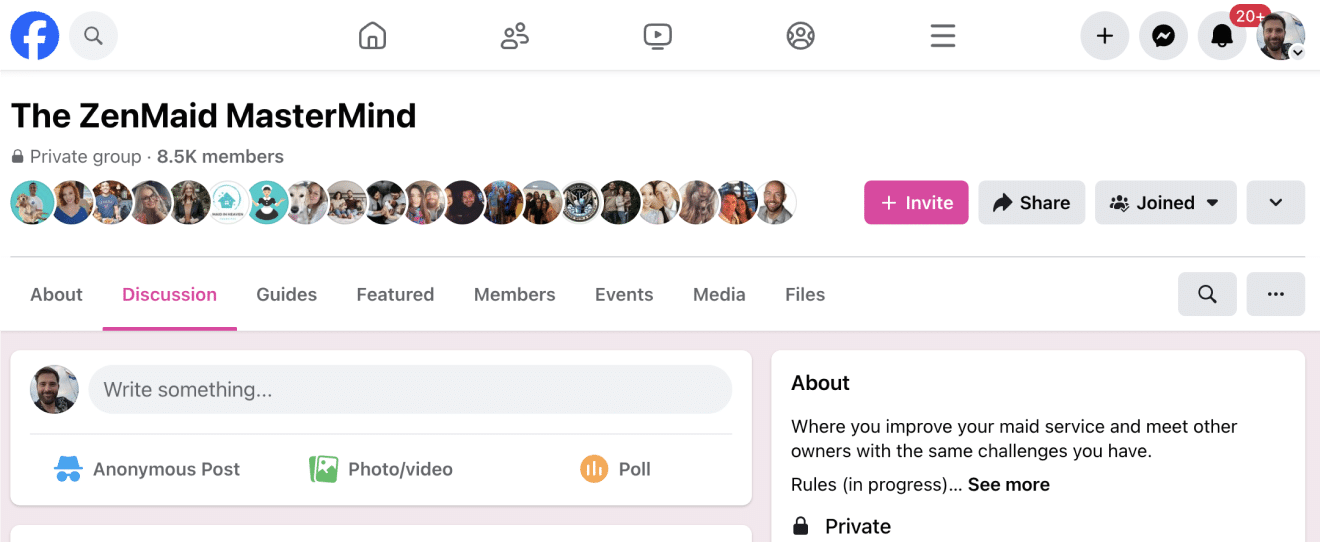
- Become part of a community of 8000+ cheering maid service owners just like you.
Start your FREE ZenMaid trial today and discover the freedom and clarity that ZenMaid can bring to your maid service! Start your FREE trial today