Frustrated with your scheduling? Try the easiest-to-use calendar app, made by and for maid service owners.

By Stephanie Pipkin, Owner of Serene Clean

Brought to you by expert maid service owners
If I could wave a magic wand and fix ONE thing in our industry, it would be how people see cleaning. Because I’m tired of hearing “anyone can clean,” tired of clients questioning the price of skilled work, and tired of watching owners feel pressured to undervalue the very people who keep their businesses running. The perception problem isn’t small — it affects wages, confidence, and the respect cleaners deserve.
Like most things, this misconception didn’t come out of thin air. It’s rooted in history, class, and gender. For as long as households have existed, cleaning work has been pushed onto the lowest-status groups. And because cleaning happened quietly in the background, it was treated as invisible, expected, unskilled work.
Cleaning has been devalued for centuries, but that doesn’t mean it’s unskilled. It means the story around it has been wrong for a very long time.
So it’s time to set the record straight.
Table of contents
“Anyone can clean” is not the same as “anyone can clean professionally.”
Some people clean their own homes the same way they brush their teeth or mow their lawn. They do it casually, the best way they know how. That doesn’t make them experts, though. It makes them familiar with their own space.
Professional cleaning is something entirely different. It requires moving quickly through a home you don’t know, making judgment calls about surfaces, conditions, products, and timing. It requires consistency, even when the environment changes every hour.
At Serene Clean, we’ve trained people who assumed they were “naturally tidy.” Most realized within a week that professional cleaning is faster, heavier, and more technical than anything they’ve done at home. They weren’t failing. They were discovering the truth: this work has a learning curve, and not everyone can handle it. Those who can are doing something skilled.
The better you are, the less people notice.
One of the reasons cleaning gets dismissed is that great cleaners make the work disappear. You walk into a perfectly reset home, and all the evidence of the labor is gone. The dust, the streaks, the buildup, the tiny details that required attention — none of it is visible anymore.
When a job leaves no trace, it’s easy for people to assume the work was simple. They don’t see the sequencing decisions. They don’t see the techniques. They don’t see the muscle memory.
That is why we leave completed checklists in our clients’ homes. Not to justify ourselves, but to make the invisible visible. It helps clients understand what “done right” actually includes. It helps cleaners take pride in the depth of their craft. And it shifts the narrative from “they cleaned my house” to “they followed a professional standard that I couldn’t do on my own.”
Cleaning takes physical and mental stamina — and most people underestimate both.
If you’ve cleaned professionally for just one day, you know that cleaning isn’t light work. It’s sustained physical output for hours. Bent knees, extended arms, repetitive movements, lifting, scrubbing, and transitioning between tasks without slowing down. It’s moving with speed while still paying attention to detail.
The average person can deep clean their bathroom once and feel accomplished. A professional cleaner can do that level of work multiple times a day, five days a week, without losing quality. That’s not luck or personality. That’s conditioning, technique, and experience.
Our cleaning teams do taxing, physical labor. Their bodies learn how to move efficiently and safely. Their minds learn how to stay focused, even when the work is repetitive. This is the reality behind “just cleaning.”
Why perception is a problem for all of us.
When society labels cleaning as unskilled, everyone pays the price. Owners feel pressure to keep rates low. Cleaners feel uncomfortable enforcing boundaries. Clients compare the rate you charge for a home cleaning to what they make in their own jobs, forgetting you’re a business with overhead.
And worst of all, cleaners internalize the message. They start to believe their work is “less than,” even when they’re doing something most people couldn’t sustain for a single week.
I’ve hired people who walked in thinking this job was something to feel embarrassed about. Within a few months, they started to understand the significance of what they do. They help families. They create stability. They remove stress. They are part of the backbone that keeps homes functioning.
When you frame that as “unskilled,” you erase the value. When you frame it as a craft, people rise to meet that identity.
Cleaning is skilled labor. It always has been.
Professional cleaning requires judgment, sequencing, stamina, technique, and consistency. It requires emotional intelligence and respect for people’s homes. It requires discipline and the ability to perform under time pressure.
That is not unskilled work. That is expertise.
And the sooner we start calling it what it is — to our clients, to our teams, and to ourselves — the sooner the industry will see the respect, the pay, and the recognition it deserves.
Cleaning has always been skilled labor. The world is just finally starting to catch up.
QUICK TIP FROM THE AUTHOR
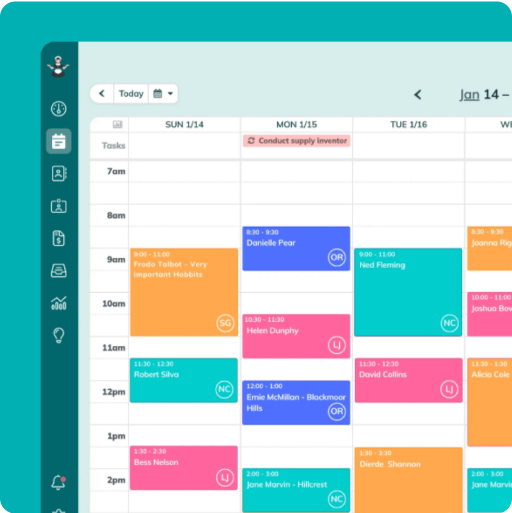
Simplify and enjoy your scheduling with a scheduling software made for maid services
- Have a beautiful calendar that's full but never stressful.
- Make your cleaners happy and provide all the information they need at their fingertips.
- Convert more website visitors into leads and get new cleanings in your inbox with high-converting booking forms.
- Become part of a community of 8000+ cheering maid service owners just like you.
Start your FREE ZenMaid trial today and discover the freedom and clarity that ZenMaid can bring to your maid service! Start your FREE trial today