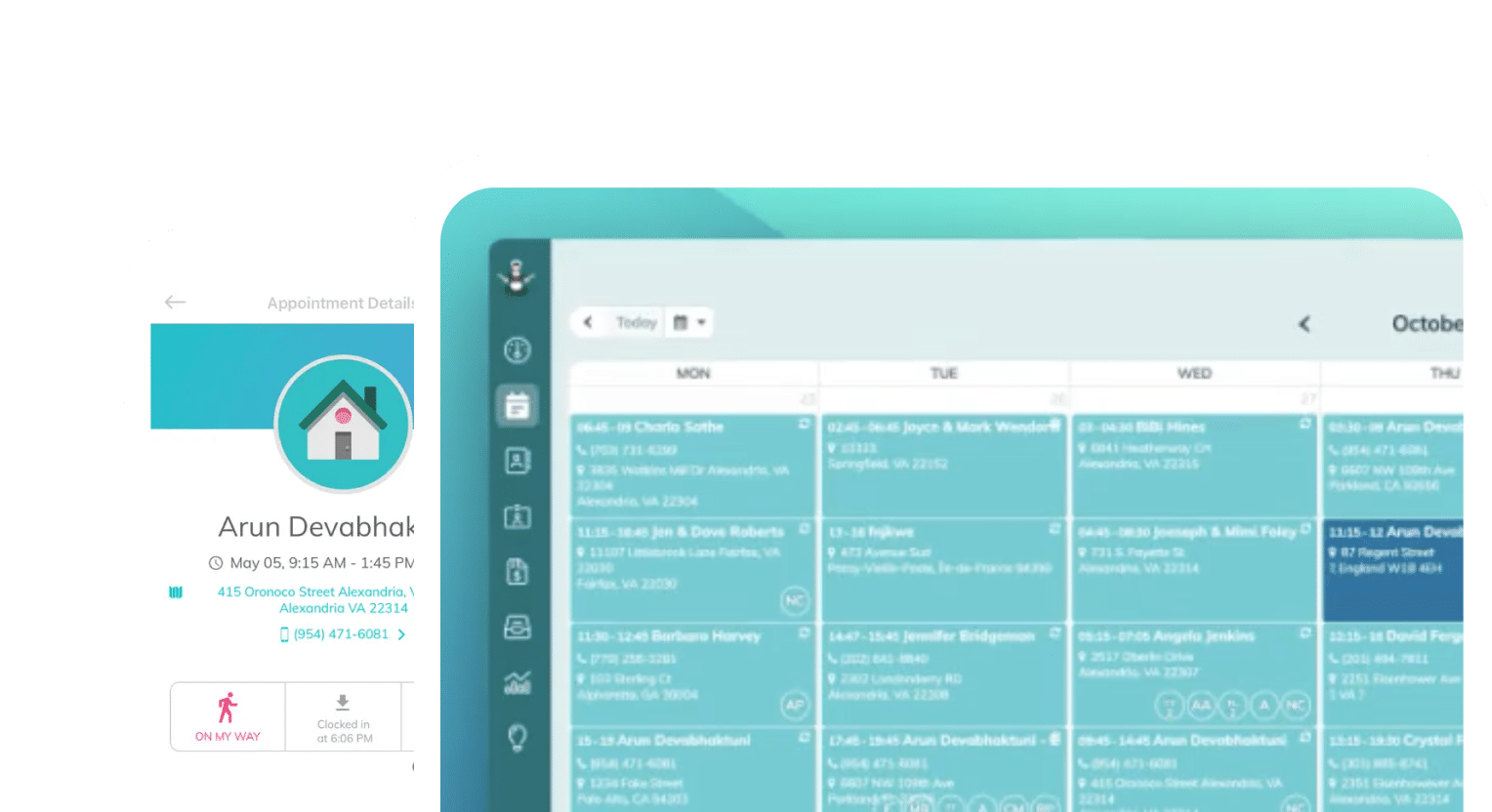
Frustrated with your scheduling? Try the easiest-to-use calendar app, made by and for maid service owners.


Brought to you by expert maid service owners
Listen on: Apple Podcasts Spotify or YouTube
Introduction
Hello, everyone. Stephanie from Serene Clean here. Welcome back to this episode of Filthy Rich Cleaners. Today’s amazing guest is Jacques Bastien, and he is the co-founder of Chery Clean with his wife down in Tampa, Florida. And their business has really taken off in just a very short time, year and a half or so. And we wanted to have Jacques on the podcast to talk about that, but not only his cleaning business, all of his prolific entrepreneurial experience previous to that. So Jacques, thank you so much for joining me today.
Jacques: Thank you for having me. I’m excited.
Stephanie: Absolutely. So first and foremost, tell me about your current business before we dive into your past. How long ago did you open it? What size is it at? And what’s the experience been like overall so far?
Table of contents
- Introduction
- Starting Chery Maids
- The Decision to Focus on Residential Cleaning
- Learning When to Say No
- The Path to Entrepreneurship
- The Journey from Doer to CEO
- The SEAD Framework: Systematize, Eliminate, Automate, Delegate
- Challenging Common Assumptions
- Overcoming Barriers to Systematization
- Practical Tips for Documentation
- Learning from Failure
- Working with Your Spouse
- Hiring Virtual Team Members
- Advocacy and Impact
Starting Chery Maids
Jacques: Yeah. So my wife and I launched Chery Maids 2025. I lied. 2024. Oops. It’s a new year. Yeah. 2024. So we did it in summer of 2024. So about July, August or so. So it’s been just about approaching about a year and a half. It’s, you know, I don’t have many businesses to compare it to, but I’d like to think we’ve been doing pretty decent for how long we’ve been doing it for. We have six teams, cleaning teams, and we do anywhere between 100 to 150 cleans per month right now.
Stephanie: Oh, yeah. I think that’s pretty impressive considering the length of business. And from my understanding, you started with vacation rentals, owning them. And that is what the inspiration that led to the cleaning business. Am I correct?
Jacques: Yeah. So 2022, my wife and I started investing in some properties and we got into the Airbnb space. And so we had a couple of properties in Philly and in Tampa. And at the end of one of those years, the first year, we realized, looked at our P&L, profit and loss statements, and realized most of our spending went towards cleaning. And so our thought was, well, if we start a cleaning business, it’s going to naturally cut our costs at least by half. And so that was the initial reason why we started the cleaning business, which ironically, we have since sold all those properties. And we stayed with the cleaning business. So it’s ironic how things get started.
The Decision to Focus on Residential Cleaning
Stephanie: Yeah. Tell me about that with cleaning for the vacation rentals. So you obviously were cleaning your own properties, but then you started cleaning for others as well, correct?
Jacques: So actually, no. So yes, we did clean for our own properties, meaning the cleaners we had that were cleaning our properties, we ended up bringing them onto our team. And so technically, while they were cleaning our properties and other folks, they were doing our properties. But we actually were our only short-term rental clients. The reason is because as we got into the space and started thinking about the business model, one of the important things I think is worth noting is my wife and I, we’ve been in business for over 15 years. And over the years, we’ve learned the kind of businesses that we like and the ones we don’t. And we really love simplicity. We love repeatable things that can be repeated easy over and over again, and things that we can create systems and processes for that somebody else can follow. And so what we noticed was for the Airbnb space or the short-term rental space, every client is different. Their needs are different. So the way you serve them is different. And so we thought that was going to be much harder for us to actually delegate and get it going how we wanted to. And our number one rule with the cleaning business, but also with any business that we start, is that from the very beginning, we cannot be the ones on the ground doing the work. We have to build a business that we can have other team members handling it. And so that’s why we end up sticking with just residential and not actually focusing on short-term rentals.
Stephanie: That’s such a good point that you bring up that though the frequency and volume of vacation rental cleanings can definitely be higher. And that’s why it’s attractive, of course. The downside of it is you have to customize things so heavily for all of the owners. And it’s very high administrative labor. And as I always call vacation rentals, it’s like high stakes because you got that one shot, right? With a house if you mess it up, not good. But it’s not a guest who is coming somewhere for their vacation, their one vacation. And because you messed up the cleaning. Right. So stakes to get a vacation rental right.
Jacques: I agree. And I knew this because we were the ones hosting. Right. And so we had many instances where, you know, if a guest wasn’t happy with some part of the clean, we had to send a cleaner out same day because we have to try to emulate what a hotel would do. And so we’re paying our cleaners extra to go back and take a look at another spot. Or maybe a certain day we didn’t have a cleaning, so our cleaning team didn’t plan on going to that property, but then somebody booked last minute. And so we had to find ways. We had a couple of different cleaners we were working with, but just that hassle and thinking about being on the other side of it, we just decided it just wasn’t for us.
Learning When to Say No
Stephanie: Have you always had discernment or is that a lesson you had to learn when it came to not all money is good money? And if that was not always a lesson, can you describe some of the situations where you maybe painfully learned that lesson?
Jacques: Yeah, that’s an amazing question. I’ve been learning this my whole career. I think pivotal moments for me, I would say probably 2018. And so I am in Thailand in 2018. I’m in Thailand with my wife and we’re traveling for about six months or so. We’re in Southeast Asia. We’ve been married for about four years at the time. And we’ve been in business together for about six years. And where we are in life at the moment is our businesses goes up and down. We’re chasing million dollars. We’re chasing 30 under 30 awards. We’re doing the traditional thing. And we took a couple L’s, lost some clients, that kind of thing. And so we’re still running our businesses while traveling. But while over there, I was reading this book, which is a book a lot of folks know, The 4-Hour Workweek by Tim Ferriss. And there is a part of the story where the author talked about this, I think it’s called the Mexican parable, something like that. And I’ll fast forward for listeners. So ultimately, it was this idea of this Wall Street individual who works a lot, makes a lot of money, but really stressed out. And so a doctor ordered them to go to Mexico to take a vacation. And while they’re going outside for a walk, they saw a fisherman coming with some fish from the boat. And so they said, oh, some nice fish you have. What are you going to do with them? And then the gentleman, and I’m paraphrasing the story, the gentleman, he said, you know, I’m going to go and I’m going to sell some to the market. And then he would ask, so what do you do after that? And he’ll go and say, I spend time with my wife and take a siesta. Then he’ll say, so what else do you do with your day? Then he’ll go and say, I spend time with my kids. In the evening, I have a beer with my friends, and then I’ll just do it again. And so the gentleman came back and said, no, no, you’re doing this all wrong. What you need to do is leave a little earlier, stay a little longer. You can get more fish. You can sell more to the market, and now you can have more money. You can even get a second boat or a third boat. And now you have a whole fleet. And eventually, you may have to move to the States to import all of this. And now you can have a huge business making a lot of money. And then the guy says, okay, so what else? He says, and the best part is you could do this thing called an IPO and you’re going to be filthy rich. And he says, how long will that take? He says, 15 years, 20 tops. Then he says, so what else? He says, what else? You’re rich, you can do whatever you want. You can move out the country and go live in a small town where you spend your days fishing and spending time with your wife and your friends and your amigos. And that story, I’ve read that book four times at that point, but that story never spoke to me until that moment. And during that timeframe, we were having some moments where we’re doubting our business, doubting our success. And I’m just sitting here, man, we are in Thailand living a great life over there at the moment. We’re traveling, we love each other. We have friends. We have everything we need. But this constant chase of more, not realizing that we already have more than we need. And so that was a huge change for me around that time in my life. And so that ended my pursuit of more. And so generally now, everything we do moving forward in our thought processes, less is more. How do we simplify it? And so to go back to the original question of being able to say no, as we’re making decisions, it’s not just about what’s going to lead to more money, but peace of mind. What is going to allow us to sleep at night and actually get sleep while also taking care of the people that’s in our lives and that kind of thing. And so that’s where that came from.
The Path to Entrepreneurship
Stephanie: Oh, I love that. And I’m sure many of our listeners have read that book. If you guys haven’t listened to it, definitely recommend it. It’s kind of the OG when it comes to remote work and all of those concepts. But point being, it’s just if you’re just pushing and striving just to have the life you already have, frankly, which was the point of the parable. It really makes you look at, well, why? Why am I doing this and digging into that? If it’s just for mindless striving, is that really what you want? And it sounds like you guys have really honed in on that and that a residential cleaning business, shockingly, can be a great path for that because you guys have focused on simplifying and systematizing. So I’m sure a lot of our listeners are piqued by, okay, you guys were traveling. You were already entrepreneurs and business folks. Can you tell us what was that path like before you got to Chery Maids? What were you guys doing? I know you’ve touched a lot of businesses. You’ve done a lot of things. So there’s probably a lot here that we could talk about.
Jacques: Yeah. Yeah. So we still do a majority of those things. I think since that time happened, we have sold two companies. So we had a photo booth business that we ran. We sold that. We had a web design business and we sold that. And so to this day, we still own our stock photography business. We own an influencer marketing business. We also publish children’s books. So I have one here. Got a couple here. We have about nine children’s books that we’ve written. And that started from when our daughter was born in 2019. So just about a year or so after, I think our first book was published 2021. And so we’ve written nine books in the last five years and we plan on continuing to write more. So those are the other companies outside of Chery Maids. And here’s the ironic thing. I think entrepreneurship is in my blood. It’s in our blood. It’s always going to be. And so we’re always going to buy businesses, build businesses, sell businesses, close businesses, and just keep that process going. And so that’s why it was so important for us to create rules around what we can and can’t do. Ironically, the reason we end up selling all of our properties was actually because we technically make more passive income in cleaning than we did in real estate. Although technically real estate is the vehicle that a lot of folks utilize for passive income. This is definitely not a downplay on real estate. It’s an amazing vehicle and we own our home. And so we’re not against the concept of real estate. I think for us, we just didn’t necessarily have many competitive advantages within real estate. And so everything we have to pay full price for. And what I mean by that is those who are in real estate who know construction, they don’t have to pay for that price. Those in real estate with tons of money sitting in the bank account, they don’t have to pay. So ultimately you get a discount just by that alone. But for us, we didn’t have tons of competitive advantage in that space. And so that’s why we left. In this case now, with our cleaning business, we have many skills that we were able to build over the years, agency life that we can bring. Currently, to this day, we have a team of marketers, a team of web developers who work for us full time, who can make any tweaks and changes we need. And so we have competitive advantage here. And so we stick to these kinds of businesses. So that’s the journey, you know, from what we’ve been doing and what we still currently do to where we are today. And I do think the future, though, having been in this space, it does make us think about, is the next route Chery painting? Is it Chery HVAC? So those are the thoughts that we’re having internally right now.
Stephanie: I gotcha. Yeah. And that’s the thing is once you kind of nail one home service, it really is, oh, my, I understand this now, especially when it comes to reoccurring nature of it. And the sky’s kind of the limit. And there’s that, you know, that problem of choice that comes with, oh, as soon as I figured out how to do the cleaning business, I’m like, oh, no, I could do any of these things. And it’s very tempting to do that. So you have to have that discipline to not just chase every single rabbit. And, you know, I really, so what I’m kind of seeing is this pattern of very strong marketing, branding, advertising prowess and that that has lent itself well. I would imagine that has a lot. I mean, not I imagine. That is for sure one of the main reasons I would say that you guys have had such a quick success because in the cleaning industry, a lot of people are cleaners first and then they attempt to become business owners, right? And I don’t mean that in a derogatory sense. You start as a cleaner and you’re like, oh, crap, big demand. Maybe I should hire. Maybe I should do this where it sounds like for you guys, it was opposite. You’re like, I’m an entrepreneur. I’m choosing this business strategically. And this is how we’re going to go about it. I am not a cleaner necessarily. And so I would love to hear those first stages. Obviously, your business is still so new. However, walk me through pre-launch. Walk me through what decisions you were making during that process.
The Journey from Doer to CEO
Jacques: When we got into it, and for the most part, I think I tend to go through the same route whenever we get into an industry. And there’s been a bunch of industries we’ve attempted to get into. I’ll do maybe a couple months of research and realize I don’t want no parts and I’ll just leave. And so when we were thinking about launching a cleaning business, we started looking, you know, just trying to join a bunch of Facebook groups. Right. We join a bunch of forums and just kind of see not only what it’s like for the consumer, but also for the entrepreneur, the entrepreneur that’s complaining and what their struggle is. We want to get a sense of what is going to be our complaint. Right. And to your point, fortunately for us, the marketing and advertising is something we’ve always had within us. But ironically, where most people don’t struggle is where we struggle in the cleaning business, which is not having had the initial cleaning background. Most of the time, we’re actually turning off ads because we have too many leads ready to book and we don’t have enough people to actually serve them. And so we’re always hiring and recruiting, as most folks are doing. But I think that is the other side of what it is. So going back to it now, in terms of us getting started, if I could get as technical as possible. The first thing was probably picking a name. Maybe that’s going too far, which is actually my mother’s maiden name. A lot of people don’t know that, but that’s actually my mother’s maiden name. She passed away when I was 14. So this is more of an ode to her and wherever this brand goes. And at the same time, it’s also my daughter’s middle name. So her middle name is Chery as well. But not many people know that. So actually, you’re probably one of the first I’ve ever said that somewhere public. So we came up with a name and then immediately we kind of canvassed all the websites out there and then we built our site. I’ll try not to get too technical, but because I mentioned earlier, we have developers. We were able to kind of do those things overnight. And so built the site, looked into softwares, got a couple of tools, thinking through CRMs and those kind of things. And we, in the early days, we did a lot of things manual and then eventually we started looking at tools. But the most important thing was in the very beginning, I was very involved in the business. And so this is, for anybody listening, this is sort of the journey of how if you have a service business like ours. And so I think, one, you start as essentially the doer. In this case, somebody who’s a cleaner, they’re the doer in essence. Your immediate next goal essentially would be to try to become the manager, right? In that case, the solution is really try to get more clients, more consistent clients, because that’s how you can justify hiring help to do the cleaning so that you can just oversee the actual day-to-day of the business. So that’s the first milestone. If anybody now is a cleaner right now, I don’t necessarily think, and this may be an unpopular opinion, I don’t think systems and SOPs, I don’t think that’s really what they should be focused on. And I don’t mean systems in a sense of tools. You always need tools. Tools are always helpful. But I mean documented processes, flow charts and maps. I don’t think that’s what they need to be focused on at the point, at the moment. I think your immediate focus should be basically getting yourself from being the doer or the cleaner to the manager. And then when you’re there, then you run the business as the manager. You’re dealing with the clients, you answer the phone, et cetera, et cetera, et cetera. But there then comes a time where there are too many leads coming in. There are too many phone calls coming in, where it actually is hurting your business because there’s not many more of you. That’s when I invite you to look into the route of going from manager to becoming the owner of the business or the CEO.
The SEAD Framework: Systematize, Eliminate, Automate, Delegate
Jacques: And so what that process looks like, everybody’s process is different, but this is how we do it. When we launch our business, we launch it with the goal of being the owner CEO. But we have to play the manager role in the beginning so we can learn what needs to be done. I think oftentimes there are folks that hire people to help them run the business. The problem is, though, most of us are not hiring director level talent because most of the time we can’t really afford to hire director level talent. And the reason why that’s important is because director level talent comes with direction. They can actually direct on what needs to be done. But anything below that, you have to direct them on what needs to be done. And so oftentimes a lot of relationships fail or VA or assistant to owner relationships fail because the owner hires a person and tells the person, here it is, figure it out. But you’re essentially hiring another doer or a manager and giving them roles of directors and beyond. And so you actually have to direct them before you can actually move away. And so what that process looks like is you having spent some time in the manager space, the next goal is removing everything out of your head and put it on paper. And I naturally recommend starting with the customer delivery, which is you have your customer acquisition, getting clients, customer delivery, serving clients. You know, you have recruitment and all the other components, all the other business functions, right? 60% of our time as owners are spent in customer delivery, whether you’re there as a manager or you’re there as a doer. And so if you can outsource that alone, you’re moving 60% of your workload. And so how I recommend anybody who listens to that is start by looking at, okay, how do you do all the things that you do? So we normally start by doing what’s called a process map. And so we start by saying, once a customer books with us, what is the first step? Well, the first step is we send them some emails saying, hey, welcome to the team. Okay, that’s the first thing. We send them an email. Grab one of those emails you’ve sent, copy and paste it. This is our template. Change Brenda to client name. Change the date to date goes here. So that’s the process, right? This is a very long, tedious step, but that is what it takes because ultimately the mistake a lot of us make is we hire folks before we have anything to actually give them any structures so that they know how to do their job. And so there’s a thing that I go by, which is called SEAD, S-E-A-D, which is systematize, eliminate, automate, then delegate. And so the way that I recommend anybody building their business is first, systematize your business by taking everything out of your head, put it on paper, Google. You don’t need no special tools, Google Docs. Here’s how we do this, here’s how we do that. That’s the systematized part. Then the next thing is eliminate. Before you go and outsource, is there anything that you do that you don’t need to do? For example, in our cleaning business, we don’t do walkthroughs. Other folks do it and it works for them, but we just don’t do it. Another thing in our cleaning business is we don’t do phone calls. So if somebody, excuse me, phone calls for new leads. If somebody inquires on our site, the first thing is they’re not going to get a thousand calls from us. We’ll text them. We’ll follow via text. We’ll ask them if they want to call and we’ll keep until they say so. We have clients now who’s been with us for a year that we don’t know what their voice sounds like because they inquired, they got a text, they said yes, they went, they booked, and then our cleaners went there, job is done. And it keeps going. Our cleaners know what they sound like, but we don’t. And there are others who there’s a situation that comes up or we’re running behind or something. So we do have, obviously we have a phone, but it’s just, that’s how we wanted to run our business. And so you have the right to eliminate. My belief is that any kind of business out there, any way you want to run it can be a business that can make a million dollars. And so by understanding that, I hope it gives the listeners freedom to know that you can build your business however you want. You can literally decide, you know, as long as you’re tracking numbers, you’re keeping those things in mind, you can make whatever decisions you want. And so there are a bunch of people who tell me, you know, our closing rate is about 20 percent right now with our leads. A lot of people say, man, you could get to 30, 40 if you just call them. Yeah, but my stress rate would also increase significantly. And that’s just not the kind of business I want to run. Right. And so same thing with our team members. We have two team members who run the business day to day for us. And I want to give them as easy of a life as we can while still being effective. And so that’s the decision we made for our business. And so systematize, then eliminate. And the next thing is before you hire somebody, I challenge folks to think about what are some things you can automate? Is there any part of your business you can automate? That’s where tools come in. Are there tools you can bring on that avoid you needing to hire somebody to do certain things? If there’s a tool that you have, maybe a booking tool that allows you to save the booking, send reminders, all that kind of stuff, that is less human hours that needs to be utilized. Or if you want to say when somebody inquires, I want to send them a text, all those kinds of things, you can do those. I’m not saying they’re easy, but they could be simple. But all of that, figuring out what are some things in the business I can automate. Then and only then, whatever is left is when I say you turn those into things that you delegate to an actual physical team member. And if you say, well, how do I do these things? That’s where your systems come in. That’s where your documentation comes in that helps them do the thing. And so we basically done that right there. We hired our first team member within, I think, the first month in August. So we started mid-June-ish. So we hired her in August, about a month and a half in. And so by then, by a month and a half, we already had enough documentation to know some of the basic stuff. This is how we do it. Here it is. And we were building as she was there. And over time, we just remove ourselves little by little so that by the time January hits, we weren’t really needed in the business as much anymore. This was January 2025. So that’s what I would recommend to anybody who’s thinking about that process. I know I said a lot of things. We can pick at specific ones, but just that is the process that we go through with all of our businesses. What is the business and who do we need to hire? And we naturally start as the managers, learn the business as much as we can, you know, get there, have the calls, handle the issues, whatever, but also document them as we’re doing them. And then from there, we bring our team members to actually run the day to day. And our role as the owners and CEOs is we’re there for really high level decisions that need to be made. And once a decision is made, we create a system around how we make this decision in the future so that over time, we don’t have to make a decision on the same thing twice.
Challenging Common Assumptions
Stephanie: Yeah, so much, so much gold right there, especially what you just said at that tail end there. The goal is that you’re not having to, you know, keep picking at the same problem and repeating yourself. And I think a lot of people feel systematizing is this mystery thing. And it really is, it can be incredibly tedious, but it is actually really simple as you said. It’s kind of a slog of this is how we do this thing. Let me document it. And then really question, I love, I’m so glad you brought up the phone thing because I honestly, you’re the only other person that I’ve talked to that is the same as us. We don’t answer phones for new leads. We don’t. And that is blasphemy, right? Because you’re like, oh my gosh, your close rate. You’re right. I probably could have a bit higher close rate if we did that. But the amount of time that we would spend on the phone when we could send out the same, you know, 10 times the amount of bids by email and hitting them up on text. And like you said, do they even want to call? You know what I mean? Are they just trying to information gather? And for us, I noticed you have a lovely checklist on your website too. We’re very checklist oriented. So it’s like, they need to see that they need to physically see that so that we can sell them. And yeah, so I just, I love, I love what you said of really question, does this actually need to be done. We don’t do in-person walkthroughs either. And I know a ton of our listeners are holding on, are clinging to their in-person walkthrough. Like their cold dead body will have to be gone before they leave that. And I think it has a lot to do with fear, fear of underpricing, fear of sending their cleaners into the unknown instead of questioning, how can I prepare my cleaners so that they, that we don’t need to go see it, right? Like they can go into a house sight unseen and be competent and able to get the job. And that really comes back to systems. So outside of, you know, fear, what other things do you think hold people back when it comes to systematizing or letting go of things that are not the most efficient way to do something?
Overcoming Barriers to Systematization
Jacques: I think, so the first one is, and I’m very empathetic about this because I’ve been in business for so long and I was the doer for more than half of my entrepreneurship journey. So I was in a doer state before I was able to bring myself to the manager and et cetera. And so I say that to say, I was the person that answered the phone call and did the job and did this and did that. And if we dated back to way back when we used to have an office, we used to have an office back in Albany, New York, I was cleaning the office too, if we’re going to be technical. And so I’m empathetic to entrepreneurs, especially those who are currently doing the day-to-day work because I also acknowledge that I don’t want to make this sound like it’s this easy, simple thing to just do because you’re already spending your time serving the client. And so it’s a lot of work. And so this is one of those Rome wasn’t built in a day, one step at a time kind of situation, right? One SOP at a time, if you will. And also that too, not every part of, and this is something, another thing I feel strongly about is that the concept of SOPs and all that kind of stuff. I know this gets thrown around a lot, but I think sometimes we may have to change our perception of what those are. Because the thing about SOPs, one, the simpler they are, the better. The shorter they are, the better. So when you have a 10-page thing, that’s a perfect recipe for it not to be read, not to be utilized. And so not only that, not every single part of the business needs to be SOP, especially the stuff that’s self-explanatory, right? And so for us, when we look at our SOP library for our customer acquisition, for example, there’s not more than 12 things there, 12 different folders of things that gives you whatever you need for when you’re doing whatever you’re doing. And so oftentimes, and I know in the past when I first got into this and I read books like Checklist Manifesto and what is the book? E-Myth Revisited. You know, those are books about turning your business to a franchise, that kind of model. I wrote a whole employee book, a whole book about every aspect of the business. It took me months. I’m talking about 60 pages. Crickets. Nobody looked at it. Nobody read it. Nothing. The most use that book got was this conversation now that we’re talking about it, but nobody utilized it. But it makes sense because if you’re on the phone with a client and something’s happening, they ask a question or you’re stuck, oh, quick second. And what are you going to do? Are you going to go through command or control F and try to find on page? Or can you just go to this one page and this is one out of the five or one out of 10 things you got to look through. Click the one and it’s right there on that page. And so we keep that in mind. And so my advice to folks and, you know, I understand it’s a lot of work as somebody who does it. I know it’s a lot of work and we’ve done it for ourselves. We’ve done it for some other people. It’s a lot of work. But definitely give yourself grace if you don’t have those things set up in place. If the thought process of that in your mind just feels impossible, just know that that’s how I also felt. That’s how most people feel when they’re in the same place. And it’s understandable. There’s only 24 hours in a day. You got to sleep, you got to eat, you got to do other things. There’s not many hours left for you to run the business, serve your clients, and do this extra stuff. And so this is why I would say one thing at a time. If you can focus on, think of what do you do the most that if somebody else could do would save you X amount of time. And that extra hour you buy from that, use that hour now to do the next one. And you keep that process going over again. And then until you eventually have a good portion of your customer delivery systemized and you can have that being outsourced. Now you’re just in charge of the other stuff. But at this point, you’re already going to feel some sort of freedom in your business.
Stephanie: Yeah, that weight just slowly lifts every single miniature task that you take off. And so in that moment, it may feel like this is so minor, but you stack those minor little details. You either it’s getting automated, whether that, you know, through something like ZenMaid and, you know, text reminders, email reminders, et cetera, et cetera. All of those things are happening and you’re not doing it all of a sudden. And you finally look up and you’re like, oh, wow, I feel a lot less stress, you know, and obviously, you know, more money, more problems. And that’s fine. But we’re talking about the things that are just, I don’t want to say they’re not high value. They’re very high value, but they’re not what the owner should be long term looking at doing themselves. Right.
Practical Tips for Documentation
Jacques: Yeah, I have a, so just to make this useful to some folks, here are a couple of examples of some things that I think you can do right now, something that makes it a lot easier. Maybe you have a spouse, someone you live with that has a phone, right? Next time, let’s say you get a phone call from a lead and you’re going to return their call. Grab the other person that you have, grab their phone and just hit record and just record that conversation. Put the person on speaker and record the conversation and record it. And if you can take that file, bring it online, transcribe it and then bring it to one of the AI things that’s out there and just say, hey, this is a call I have with a client. Ideally, if you can have three to five calls, even better. These are three to five calls with our clients. Call number one and three booked. Number one and two didn’t book. You know, three said, we’ll see. Analyze these calls and help me figure out what is my flow, right? What is my process for dealing with these calls? And then eventually you can say, can you turn this to a script that my team can use to handle phone calls? And it’s going to look at all those calls and see, well, in the beginning of the call, Stephanie starts all the calls with a joke. Okay. So maybe that’s our thing. We make a joke in the beginning. All right. Then eventually she finds something relatable with the client. Maybe hears something in the background and go, is that a dog? Is that it? Right? And so the AI can help you do that process. And the beautiful thing is you don’t have to go and actually create and make up a call. You can just do it while you’re actually dealing with the client. Because the truth of the matter is you work better when you’re actually doing a real thing versus you typing up, here’s what I say first. Because you don’t really know what you’re going to do until you do it. All of us have a process for how we do most things. That’s who we are. It’s just not documented. But if you can get it recorded and then upload it to a tool, I’m talking about this thing. But the same thing applies for anything else. If you got to send an invoice to a client, maybe you can just use a tool like Loom and just say, all right, I’m going to send an invoice to the client. Same thing you’re doing. You just talk now and just say, all right, first, I’m going to click file. I’m going to click this. I’m going to go here. I’m going to go into tool. I’m going to click this. And then click. Invoice is sent. Stop. Take that transcription. Can you turn this to an SOP for how to send invoices to the client? Keep it simple. Just only the important steps. And little by little like that, as you’re doing the work and you’re also recording and finding ways to get access to it, it’s going to help you. And you’re going to realize you have four, five, ten different things that’s available. And so when it comes to how do you train your team members, that’s how you train them. Right. First, we do this. Oh, how do you do this? Here’s a document. Then we do this. How do you? Here’s a document. And the list goes on. And so now they have enough documentation where they can do 80 percent of the work and the remaining 20 percent. They’re smart. They’ll figure it out. But that’s how I would advise folks to get into it.
Stephanie: Oh, great, great example, especially considering that when we first bring an office person in, we have nothing, no call scripts, anything. You have no idea what the heck they’re saying. Obviously, call recording is fantastic. But such a good point on just while you’re already doing the thing, just start recording it, right? And yeah, we use that literally. We love Loom. That’s a great tool for that. We just started tracking a new KPI, right? And I was the one who figured out how to do it. So then once I figured it out, record the loom and then give that to my manager. That manager is off today. So guess what? Other manager has to watch that loom and figure out how to do it. So it’s just through this iteration, you realize also what is missing from that explanation. Then that’s where you tweak. So it’s like, I think a lot of people put so much pressure like this SOP has to be perfect the first time. And it’s like, no. As people try it out, you realize, oh, didn’t think about this, you know, and then you’re just like, you know, it’s not that serious guys. We just, we iterate, we iterate.
Jacques: Exactly. Exactly. Yeah.
Learning from Failure
Stephanie: Oh, I love that. So I’d love to talk more, you know, just overarchingly when it comes to, you know, you alluded to, this is not your first rodeo when it comes to business and that you guys have seen a great level of success already with this cleaning business. I’d love to hear, you know, how has your relationship with failure evolved as you’ve gone through many iterations of entrepreneurship? And how has that affected how you see yourself and how you see your relationship with being a business owner?
Jacques: Yeah, it’s a great question. It’s an amazing question. So there are different ways I could approach answering it. I mean, there are not shortage of failures. I mean, there are plenty. I mean, we’re talking about, at one point in our business, we had to file for bankruptcy. I’ve had moments where we’ve been behind on rent. So the traditional things. I mean, there may be folks who are currently dealing with these things right now. And maybe even hearing myself or another entrepreneur talk and it makes them feel down about their situation. But this is why they say you shouldn’t compare your year one or year two to somebody’s year 15 because you don’t know what happened at year eight, nine or 11 that got them to be where they are today. You know what I mean? So for sure, all the things I’m talking about, all the things that you could think of. We’ve had to start over plenty of times. Right. And so that is a constant. I think we failed so many times that now we learn to accept that it’s obviously a part of life, part of relationships. But we also take an approach where we just say, you know, there’s no such thing as good or bad news, just news. Right. And so when things are going really well, you know, we’re excited, you know, we’re grateful for it. I think milestone points, there are moments where I think the biggest project we’ve ever closed was a $2 million project. Two years ago, we closed a project that was $2 million for our agency. And so that’s the biggest project we’ve ever closed. And we’ve also had huge clients walk away from us. And so you eventually, over time, learn that it’s amazing that we get this, but also we know that things are going to be great. They’re going to be bad. That’s just how it is. And so I have a tattoo on my arm that signifies this idea where it’s ultimately a Dahlia flower, which is my daughter’s name, Dahlia. And it’s a lifeline here, another lifeline there, and then like a messed up lifeline in here, then another lifeline, a normal one here. And the messed up part is on the inside, so you can’t really see it. So it’s my own internal thing. But it’s just a reminder that no matter how bad things get, they’re going to get better. But also at the same time, no matter how good things are, right, you’re going to be tested a couple of times. And so just to be prepared. So when things are great, save for the rainy days. And when things are rainy, be grateful that you saved for the rainy days, but also know that bright days are coming. So that’s the mantra that I think we, not just in business, but just in life. Just life is going to life. Life lives to everybody, right? No matter how good you think somebody has it, no matter how green their grass looks, right? Life lives to everybody. And so that mentality just helps us just stay a bit more level-headed just because you know, and I know how emotional our job is, how deep it is, how there’s that meme that’s like entrepreneur. It’s like 8 a.m. Let’s get the day started. 8:30, we’re going to make it. 8:45, this is amazing. Nine o’clock, I’m horrible. 9:10, I’m a failure. 9:15. Oh, I’m great. You know, so just that. And now I have the Oura ring that’s probably showing me my heart rate as it goes through the day.
Stephanie: I’m charging mine right now. I know it definitely shows that I’m freaking out.
Jacques: You know what I’m saying? So because of that, you gotta figure out your thing. But also too, the other one I also mentioned is, and I know this is a privilege. And so I’ll say that with the caveat that not everybody can do that. And I understand that. Right. And so, but I do know that for us, because by us, I mean, me and my wife, we make a priority to also have time away from the business. We do a lot of traveling. We’re going to Brazil tomorrow for my birthday for a week. So we do a lot of traveling. I play basketball four times a week. She does Pilates. And so we have different things where this kind of work will make you go crazy. And so if this is all you do, this is all your life. You have nothing else to compare it to and nothing else to do. It’s tough. And we’ve lived the lives where we couldn’t afford to do anything else but just this thing. And so it is a privilege that we acknowledge, but it definitely helps. It helps because it rebalances and recenters me so that by the time I come back tomorrow, I’m refreshed. I got whatever endorphin or whatever I need to get somewhere else and I can come back to the business with a clear head.
Working with Your Spouse
Stephanie: I love that. And just the concept of this can’t be your entire life or if it is, it should only be for a season kind of thing. It’s like, well, yeah, what’s the point of it all. So I’d love to hear how obviously, you know, you have been working with your wife for a long time and I love to hear how couples handle that. And is there any particular, I guess, rules that you guys have in place or boundaries around working together? Cause obviously that can tear relationships apart. And also, what are each of your guys’ responsibilities within the business?
Jacques: Yeah, great questions. It wasn’t as smooth in the beginning. I’ll say that, right? We started working together in 2013. So that was a year before we got married. So it’s been 13 years now, right? Yeah, that’s the math, 2026. Yeah, just about March 2013.
Stephanie: Was there any hesitation from either of you, maybe we shouldn’t do this because, you know, it’s hard?
Jacques: This is what happened, right? So we kind of, this wasn’t the initial plan. So for me, I started business in college. I was a graphic designer, that kind of thing. And then after I graduated, I had this decision point. You have to get a job or you try to do this business thing. And so I ended up taking a risk and I ended up getting an office rather than going to look for a job. So when I graduated college, I got an office and just went to start my marketing business. At the time, behind the scenes, nobody knew my wife was always there. And so what I mean by that is, you know, we’re building websites for people. We’re creating postcards and whatever. I was never confident about my writing. You know, having somebody who wasn’t, I was born in Haiti. And so I learned English. And so I was always insecure about my writing. And so oftentimes I would ask her. And my wife was the original ChatGPT because I would tell her, I would give her five bullets. And she’d come back with this beautifully written five paragraph. I’m just like, where did you get? And it’s accurate, right? And so that was my original experience. And so in the background, I would give things to clients and they would be happy, but it was her helping me in the background. Not even, not a big deal to her. Yeah. And so this is in 2012 when I got the office and she had a job at the time. But by 2013, she had a moment similarly where, you know, that job ended and she had to get another one. And there was an offer available for her. You know, we just graduated a year ago and we graduated 2012. And I was talking to her. I said, hey, do you want to try to help me do this thing or do you want to do that thing? And so she decided to come with me and we basically had the most fun, hardest, broke upbringing, or as you can say, for the next couple of years. But obviously it made us who we are today. And so I wouldn’t trade it for anything. I couldn’t even imagine life being any different kind of way. And I’ll say, in terms of to answer the question of what we do, in the very beginning of our work relationship, I’ve always been entrepreneurial. I’ve always, from when I was younger, I was 15, I was selling beats, I’ve always been that person. My wife hasn’t always been that person, but she’s very analytical, very operational, very technical. And that works, because sometimes my creative can go a little too far and she’ll kind of bring me back down to earth. But in the very beginning, I kind of thought that, oh, we should both be this person. So I kind of put some pressures on her to also be this public-facing entrepreneurial woman with, you know, podcasting didn’t exist at the time, but with podcasts and this and this and that, but she’s a behind the scenes kind of person. She prefers that space, right? It took me a couple years to learn that. And the reason why that’s important is because in the beginning, there were expectations I had of her that were never going to be met because naturally that’s just not who she is. So we figured those out early on when we didn’t make any money. And so eventually when we actually started making money in the business, we had an understanding of what our role was, which was I was in charge of customer acquisition. So in all of our businesses, I oversee marketing, bringing customers in, handling phone calls or sales calls. Then as soon as they come through, I basically pass the baton to her and her team and they serve the client. So she was strategist who oversaw the team doing the work. And I brought the clients in and I did the public stuff and whatever. Two introverts, I’m a little less introverted than her. And so I didn’t mind taking that role. And we’ve taken that all the way to this day. This is what we do now. The only difference is a lot of businesses now were as the businesses we sold in the past, they required more of us. Nowadays, because we have team members, we both almost act as co-CEOs, just available as needed. But it’s still the same thing. I’m still overseeing new strategies for marketing. She’s still saying, hey, let’s try this new thing for operations, but she’s not in the day-to-day of it. So she’s kind of create something, let it go. And then, you know, we’ll see how it goes and then come back into it. So it’s the same kind of work, but we’re just not as involved in it. And we’re working on, you know, new things together. But that’s really it. In terms of rules, I would probably say the only rule that I could remember is, or I want to say that’s a rule. This was a challenge. Right. Obviously, we had an office back then. And so there is a literal shift between work and home. But being in disagreement at work and driving home and getting home, it’s like you’re my wife now and I’m your husband now. So that distinction between we’re working together versus we live together. Right. And so over time, now that we work from home, we started working from home since 2017. So we closed offices then and we went remote. It was harder because obviously the difference between, at least we had a car ride to talk about it. But now, right. I’m in this office now. There’s an office over there. She’s out right now. They’re doing her nails for tomorrow. But normally now, this was years ago, but the difference now is we close our laptop and you’re right in front of me. And so there was a process of shedding off some of the work stuff. But what I appreciate so much, I think it’s so underrated and we didn’t even realize how valuable that was. We had so much of the same common enemies for so long that it helped us strengthen our bond. And what I mean by common enemies, it doesn’t necessarily mean enemies like enemies, but I mean things like we’re both going through not having money together. We’re both going through, man, they’re going to kick us out this apartment together. We’re both going through, man, these clients are rough. So all the things. So on the flip side, most people, you know, it’s difficult to work with your partner. But on the flip side, we’re like maybe one person goes to work, comes back home frustrated because of this and that. And the husband or the wife, they could be empathetic, but they don’t really understand what you’re going through. In our case, we were able to give each other that because we were there during the day watching what happened. And I think that really helped us not only in business, but, you know, personally. So that whole us against the world kind of mentality. And I think we’re just taking that, you know, into now. Nowadays, that doesn’t happen anymore. We have very clear differences in certain, how we would approach solving certain problems. But we understand and the team also understands, maybe she has an idea for how we should serve our clients in a certain way. I have an idea how we should market certain things. At the end of the day, if she feels like mine is strong, she’ll just kind of let me have it and vice versa on her part. I kind of stay away from that, especially things like if I have an idea that’s a bit more risque or something like that. So there’s that. But yeah, so that’s how we do it now. And then with all of our companies, we do have someone who’s a director. So there’s like a third party in between. One that’s kind of talking to us for the cleaning business. You know, shout out to Mariana. So for her, for example, and Danny is our other team member. Amazing. They’re from Colombia. So we all hold each other accountable. And so it’s working. You know, it works. I’m grateful for it. We’re blessed to have our business work the way it is. I’m going a bit long on the topic. But yeah, that’s how we’ve been able to work as a husband and wife, you know, co-founding entrepreneurship couple.
Hiring Virtual Team Members
Stephanie: I love that. And I’m glad you deep dived into it because a lot of people consider not just with spouses or romantic partners, but family members. And I think that this all applies very well to that because yeah, things can get really messed up very quickly when we go into business with loved ones. And so I’m glad to hear how you guys have established that and have just, you know, that mutual respect, just pulling you guys and tying you together, but also commiserating over the misery, right? Yeah, it really ties you together when it’s like, we’re both going through challenge, and it makes it a little bit easier to face. And you just alluded to, you know, your other team members when it comes to the operations, which sound virtual, virtual folks, of course. I mean, I would imagine. I’d love to hear just actually the nitty gritty. Do you run W2s or ICs?
Jacques: We do ICs.
Stephanie: Okay. I figured as much just because what you said in the beginning of one of your challenges is that you guys are not cleaners, right? And so typically that means ICs. So I’d love to hear just in general, if you had a couple thoughts on, is there anything that surprised you? Any particular challenges you specifically ran into when it comes to the legitimate operations of this is a cleaning business, we don’t know this? Anything come to mind of, oh, this was not something I expected to deal with, or we did not problem solve for this before we got into it?
Jacques: That’s a great question. I’d probably say we probably were overconfident in our thought process in terms of, you know, we were never worried about the marketing. We were never worried about the operation, but I think the recruitment was the one. I think there are so many. Now you can be a good company and if you want to be a good company, this would not be a problem for us, but our reputation matters. As I mentioned to you, the company is named after, you know, my daughter and my mother, right? And so it matters for us where this brand goes. And so because of that, we really care about who we’re sending to these folks’ homes. And so recruitment for us, it’s because you have the, can you do the work? But then there’s the, are you a decent person? And there are so many different levers that we track. So I think we underestimated how much work it would be to find really good cleaners that actually are willing to stay with us and they understand our model and our model works for them and it works for us and vice versa. I think that’s probably the biggest one. And it’s been the biggest challenge, but we’re going through it. We’re hiring folks every month. And so as we hire more, we increase ad spend, we take on more. But I would say that’s the biggest one. And with the team, as I mentioned, the team’s in Colombia. And so we’re remote, so we don’t have a physical office. We have an office, but we don’t actually utilize it. The whole business is remote. Our team works in Colombia. We went to Colombia to visit them a month ago. So we hung out at a little company retreat. And yeah, but this is not a question you asked, but I think one important thing I think folks should understand if they do choose to go the route of virtual is that virtual team members, and I stay away from the word VA. Obviously, it’s virtual assistant, so I get it. But there’s somewhat of a connotation to the term VA that implies maybe the person you give to do the busy work or the person you give to do work you don’t want to do. And for me, what we do is we actually hire virtual team members as our executive team. So they’re handling sales. I mentioned we have team members for this company in Colombia. We have our other company. We have some team members in the Philippines and we saw them in 2023, went to visit them there. So these folks are handling million dollar bank accounts and transacting and speaking with clients. And we’re talking about Fortune 500 companies. That’s for our influencer business. That’s all we deal with. And so I say that to say that realization came to us when we spent some time in Southeast Asia and realized these are regular people, right? I’m from Haiti. So I’m technically an overseas, if you think about it, person. I’m from a different country, right? And here I am today. And so having been around different folks and visiting them, these are regular people with kids and problems and phone bills and everything. And that also means with degrees. They have college degrees and education and specialties. And so I will say, somebody, don’t hesitate to hire someone or don’t underplay what you can give them to do for you. Because in this case, and I’ve shared this before, but my team member, you know, that I mentioned, Mariana, she pays our cleaners and everything. She manages our bank account, puts like this is for taxes, for this, for that. And she sends money in a certain account that’s where I get my money from. So technically she pays me and all of it is handled by her, right? And she can see all the money. Everybody in my team knows how much money we make, not the cleaners, but the, you know, so we keep things transparent that way. But just if anybody’s listening and they’re wondering, these are regular folks with regular lives and we see it, you know, sometimes they can’t come in because someone’s sick or they’re not feeling good or they need a mental health day. The regular things that we deal with other folks deal with as well. And so if that could encourage you to give it a try, if that’s something you’ve been thinking about, these are regular people.
Stephanie: I love that. Yeah, I know for me, my executive assistant is virtual and she’s changed my life and literally changed my life. I love you, Veronica, if you’re listening. And I did look in, you know, South America. Is there any, did you use a recruiter or how did you actually find these people? Do you have any suggestions just quickly on how did you find them?
Jacques: So I haven’t used a recruiter. I don’t think I’ve ever used a recruiter. So a lot of folks, I use Upwork a lot to find folks. And I use it as a lead source. And then I have phone calls with them, like a Zoom call. I want to see you. I want to talk to you, get the vibe from you. For me, a lot of the work can be taught, unless it’s a specific thing like design or something. I want to get a sense of who you are as a person. So I won’t hire anybody until we’ve had a video call and I can see you and get a sense of your vibe. So then from there, I ask people who I work with if they know anybody else. And so I have 20 different team members over there in Colombia that if I needed to hire, I can access that pool because my team just had a couple of people they knew who they were able to recommend. So I start with Upwork. If it’s like a new market, a new thing for me, then I’ll go to the teams I already have and I’ll reach out and ask them if they have anybody that they can recommend for certain roles.
Stephanie: I love that. That’s a really good tactical suggestion there. But yeah, I totally agree that it’s like folks who are not here, if we’re not talking about physical labor, there can be, there’s a whole world of possibilities and very affordable possibilities too, because of the different costs of living. And so it really can change the game for, I feel like an American-based company to do that. And a lot of, I think, folks who are in the cleaning industry are used to a bit more old school oftentimes and, or haven’t, don’t warm up to that. Like it’s something that they’re afraid of. And of course, you can get screwed by somebody in person. You can get screwed by somebody online. Like, you know, you shouldn’t, you know, obviously be cautious, be smart, but it can be done and it can really be a game changer for sure.
Advocacy and Impact
Stephanie: Yeah, I love that. I really want to, you know, take a little bit of time here and talk about, you know, I was just doing some research, obviously, on you before our conversation. And just you really are an inspiration, an advocate for the black community. And I would love to hear one, what that means to you and what kind of work you do specifically in order to be an advocate.
Jacques: Yeah. What it means to me, I think. So this is the. So I stopped teaching in college in May of 2025. But before that, I was teaching college. I taught for 11 years. And so if you were to go to my LinkedIn, my LinkedIn is pretty stacked with a lot of credentials, a lot of different things. And, you know, I’m a real, I’m a confident guy. I’m humble, but extremely confident. I think the, especially when I first started my businesses where I was based, more upstate New York, there are times as a black entrepreneur where it feels like you have to have those level of accomplishments to be able to get the basic entry level thing that’s available to you. And it’s not just my story. This is a lot of folks that I know. And there are a lot of things that goes into it. It’s not that black and white. It’s not that black and white, especially too, because at the end of the day, we ask people, people who remind us of ourselves. And so I say that to say, if there aren’t maybe someone like myself who’s in a position to help somebody else, and if the person that’s in a position to help somebody else is someone who does not look like me, I can also understand the person that they choose to help is someone that reminds them more of themselves. And so for me, it’s been extremely important for me to not only build things that bring opportunities to people of color, but also be in a position to be able to make some of those decisions, have a seat at the table. I think the most, when I think of the work that I’ve done, I alluded to my agency earlier today. It’s an influencer marketing agency that represents black and brown influencers. And so we’ve paid millions of dollars over the last nine years to influencers by helping them get campaigns with brands, your Cokes, your McDonald’s, your CVS, all those guys. And oftentimes, being in that position where a brand trusts us because we know our stuff and they’ll tell us, I have 15K for this person. And we go to the person and say, how much do you charge for this? They say $1,000 and we can tell them that’s cool, but we actually have 15K for you. Those have been the moments for me that in my life that has meant something, right? Thinking back to, you know, black-owned videography companies who we’ve paid $250,000 for certain projects or people we’ve just, just the opportunity to pay folks what they’re actually worth. Being in the position to be able to do that has been the thing that has, you know, brought a lot of meaning to my life. You know what I mean? But as you may have seen from the research, a lot of the stuff we do is rooted in the same thing. Our stock photography site, Nappy, is a website with photos of black and brown subjects for anybody who wants to use. If you want to be intentional about representation in your work, you can go to the site, get these photos for free. Just use them. You don’t got to give credit, nothing like that. And same thing with our stories. Our books feature a bunch of diverse characters about typical stories. Stories about courage, stories about, you know, this is one of our more popular books, All Families Are Different. It’s about different family structures. And that’s about having kids who are three, four, five, six years old see themselves represented, not just in ethnicity, because, you know, there are plenty of books that are features of kids of various different backgrounds, but also in story and in the uniqueness of your story. There are some kids who grow up only with a grandparent, and that’s a story that may not necessarily be told enough. There are stories of kids growing up in unique circumstances or growing up with a unique disease or something like that. And so in all of our books, we interview. So all the subject of the book, we have someone we interview that is of that community, and we tell those stories. That way, if you are a kid at home who is hard of hearing or you sign or you have family members, our Let’s Learn to Sign book, you’re going to see yourself in that book. If you are a kid who is on a spectrum, our Different Together book, you see yourself in that book. If you’re a child that lives primarily with your father or you have two mothers, you will see yourself in our All Families Are Different book. But at the end of everything we do, we’re in a very privileged position to be able to do all this stuff that I’m saying, but also be able to do it profitably. This is not not for profit. We’re able to still take care of our family, be there for ourselves. And so it’s a real humbling feeling to even think about all this. But we’re grateful for what the journey has been able to put in front of us and the accesses we’ve had and what we’ve been able to do. So very long answer, but I hope I touched on some of the questions.
Stephanie: Very inspirational. You guys should be so proud. And it is just really incredible to see how you are using your success and the lessons that you’ve learned to help the folks in your community that you’re like, you know, I want to open the door. I want to get their foot in the door. And like you said, pay them what they’re worth. And the children’s story is that is incredible. I mean, does your daughter have a particular favorite one or is it hard for her to choose?
Jacques: No, she doesn’t have to read these books. I’ve been trying to tell her. But to her defense, she has graduated from these kind of picture books. So right now she’s reading, what’s that robot? It just escaped me. Something robot. I’m sure the listeners are like, oh, Wild Robot. There it is. It’s the robot taking care of the bird. I forgot what it’s called. But there’s a book series where her and my wife, they have this thing where they’ll get these really long storybooks and just, you know, every bedtime and also throughout the day, they’ll let’s do another chapter, let’s do another chapter. So she has the content of these books. She’s six years old, but she’s lost the interest there. So that’s the reason. But prior to this, I would say the first book was her favorite, but she was also young. She was like two years old. So I think she just gave it more attention because it made sense for her at the age.
Stephanie: Yeah, that makes sense. Gosh, you guys are just so inspirational and just you’re having such an impact. And I’m really glad that I was able to spend this time with you. And we’ll definitely be, everybody, if you’re interested in anything that he spoke on, we’re going to be linking all of his resources down below. So and the reason I just want, you know, you have so many interesting things going on. And I don’t want to just keep it to the cleaning industry because we have a very diverse listener group. And like you said, it’s not just what are we, but also our backgrounds and experiences. It’s one of my favorite parts of the podcast is I get to talk and it really expands my variety. So, yeah. Well, thank you so much for your time today. If people want to follow along with either you or your wife or your work in general, where can they find you?
Jacques: I am on the socials. I’m on, you can find me on Instagram, Jacques H. Bastien, first name, initial, last name. Don’t post as often on any of the socials, but I’m there. So if you have a question, you can just DM me there and you can go to my website, JacquesBastien.com and you can see some of the stuff I’m up to. So yeah, those would be the two places.
Stephanie: Awesome. Leave some love down below guys for Jacques and his beautiful family and definitely follow along with his journey. We will see you on the next episode of Filthy Rich Cleaners. Bye guys.
Note: This transcript has been edited for clarity and readability.
Resources Mentioned in This Episode
- The 4-Hour Workweek by Tim Ferriss
- Upwork
- Loom
- E-Myth Revisited
- The Checklist Manifesto
- Nappy
- ZenMaid
- Chery Maids
- Jacques Bastien on Instagram
QUICK TIP FROM THE AUTHOR

Simplify and enjoy your scheduling with a scheduling software made for maid services
- Have a beautiful calendar that's full but never stressful.
- Make your cleaners happy and provide all the information they need at their fingertips.
- Convert more website visitors into leads and get new cleanings in your inbox with high-converting booking forms.
- Become part of a community of 8000+ cheering maid service owners just like you.
Start your FREE ZenMaid trial today and discover the freedom and clarity that ZenMaid can bring to your maid service! Start your FREE trial today