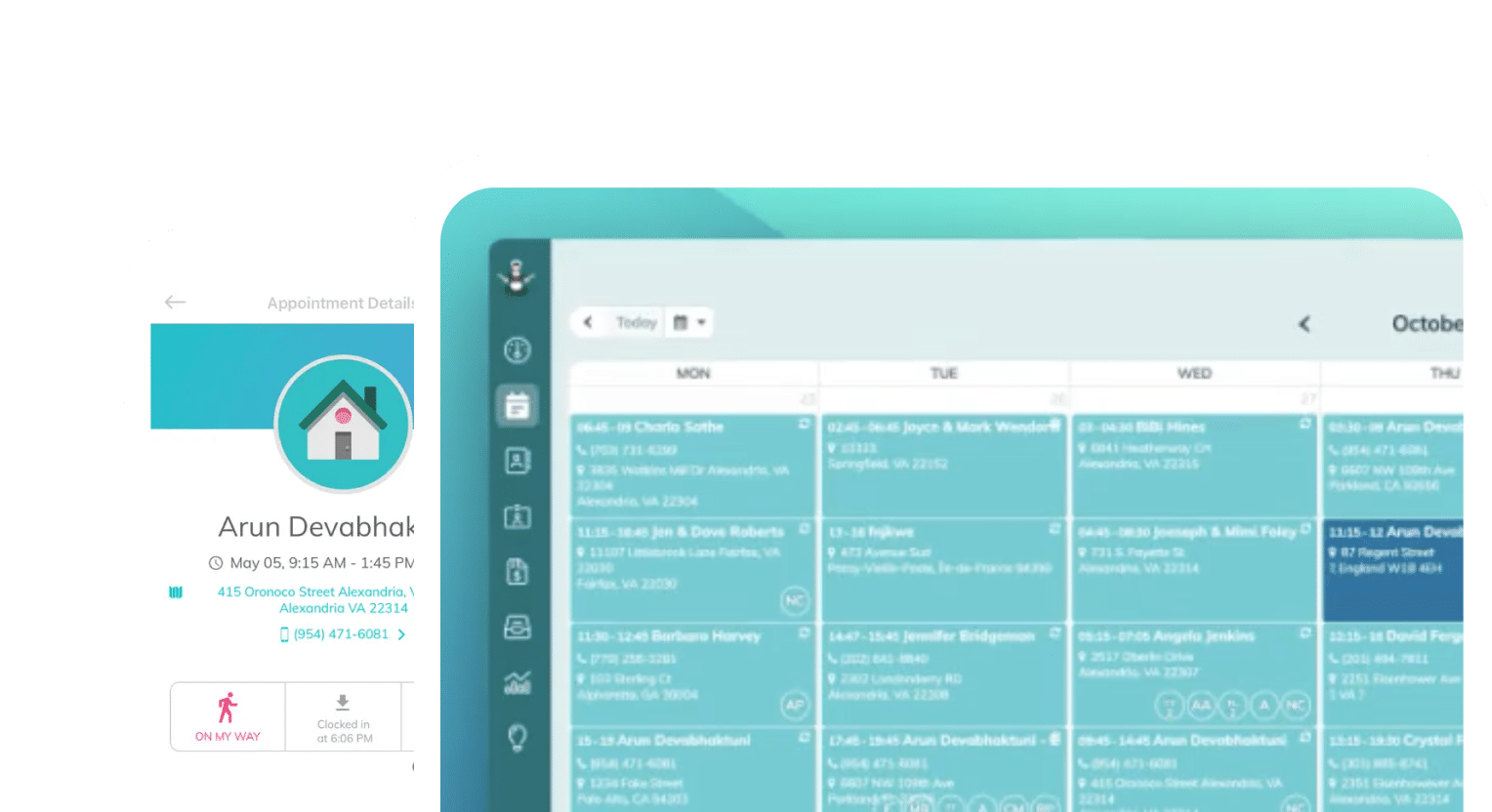
Frustrated with your scheduling? Try the easiest-to-use calendar app, made by and for maid service owners.

Brought to you by expert cleaning business owners

Tips and advice shared here have helped us grow our own maid services. The ZenMaid team currently has 5+ current and former cleaning business owners on our team, including our Founder and CEO, Amar. We’ve been in the maid service industry for 10+ years and counting.
We partner with amazing leaders in the cleaning industry, including Debbie Sardone, Stephanie Pipkin, Angela Brown, Chris Schwab, and many more — all to provide you with the latest industry insights.
We’ve built the easiest-to-use, comprehensive cleaning business software, built specifically for the industry!
Listen on: Apple Podcasts, Spotify, or YouTube
Introduction
Stephanie: Hello everyone, welcome or welcome back to the Filthy Rich Cleaners podcast. I am your host, Stephanie, from Serene Clean, and today’s fantastic guest is Miss Lee Anne Chevalier. I’m gonna get it — Lee Anne Chevalier, of course. I started second-guessing myself. She is the owner of Seren Lumi in Ithaca, New York, right? Okay, Ithaca — and I’m questioning all of my pronunciations of everything. Lee Anne has been in the cleaning industry from what sounds like basically out the womb, and I cannot wait to hear her story, share it with you guys, and the trials and tribulations of being an owner who, not that long ago, started getting staff members. So Lee Anne, thank you so much for joining me today and allowing me to butcher your name.
Lee Anne: Thanks for having me, and not butchering it too much.
Cleaning Was in Her Blood
Stephanie: Tell us, Lee Anne — you started cleaning a very long time ago.
Lee Anne: I did, I did. Probably when I was about a teenager. Both sides of my family — the women on both sides of my family have always cleaned. My mother, my aunts, my grandmother have always had either side gigs or their own businesses to supplement their income and things like that. So I remember as a kid, going with my mom to certain cleaning jobs and just watching her do what she was doing. I actually have a lot of fond memories of that. But it taught me a lot. And also, as a Virgo, as a maybe perfectionist and maybe a little uptight kind of person, I appreciate order, and I’m very analytical. So it’s just in my blood and who I am.
Stephanie: So looking back, obviously you spent a lot of time with your female family members, them showing you different tips and tricks, those types of things. Does anything stand out in your mind — would they really hammer you on one particular thing, like “make sure you do it this way,” or anything business-related either?
Lee Anne: You know, I guess there are. Yeah, there are some things. I remember one of my aunts really recommending to hire only independent contractors and other cleaners, you know, do 1099. And as far as tips and tricks — I’m not really sure that there is anything that I can think of. All of this stuff that I know, I feel like I’ve known forever. Particularly with your method, top to bottom, left to right. I feel like I’ve known it naturally forever. It feels like you’re just breathing — it comes very naturally.
Stephanie: So tell me — you started this as a young woman, and you enter your 20s. Was it just natural then to continue on cleaning? Or what else did you do? Did you try other jobs?
Lee Anne: Yes, yeah. Oh, yes. I’ve never had just one — kind of like a Pringle, right? So I was probably about 19 when I — well, no, I’m sorry, I take that back. I was probably about 16, 17 when I started cleaning some offices locally while I was in high school. I had three jobs when I was in high school, and one of those involved cleaning offices on the weekends and evenings, and then picking up a few residential jobs just to have extra money in my pocket, which was always fun. And then I think I was 19 when I moved to Myrtle Beach. I lived there for a little while, and I bartended and I also worked for a vacation rental company, and saw some stuff.
Vacation Rental Horror Stories in Myrtle Beach
Stephanie: Can you tell me — we like the horror stories, especially vacation rentals always have the nastiest. So this is as not-safe-for-work as you like to go.
Lee Anne: Indeed. It was really great working in Myrtle Beach, working for a vacation rental company. This is back in like the early 2000s, so it was much different. We didn’t have Airbnb or anything like that. It was legitimate vacation rental companies, through a private ownership or company. And most of them were great. It was a lot of work, because they were all hard floors — tile and hardwood, on the coast, on the beach. So, oh gosh, all the things. But my — I don’t know that I’d call it my favorite, but it’s my favorite story.
It was, I think, after Memorial Day weekend, and probably a bunch of young kids — maybe, we’ll see. A bunch of kids had rented out this beachfront home, and I walked in, and it just reeked. There were bodily fluids all over the place. I mean, all of the bodily fluids. There was lots of matter, like, smeared on the wall. I’m not really even sure. I just remember — and I didn’t know that there are some things that you shouldn’t touch. I was pretty young, I was like 19 or 20, and there are some things that I should have had a hazmat suit for. I just did it. And I’m like, wow, I’m really going to make extra money here this week, I’m going to do a good job. I did not. But to me, it just feels good to see that transformation.
Stephanie: Yes.
Lee Anne: From a total dump hole to sparkling.
Stephanie: Wow. Perhaps a match would have been better in some of those situations.
Lee Anne: I swear. Indeed, indeed.
Stephanie: That’s awesome. I feel like vacation rentals really prep your mind, so nothing phases you after you do those types of things, because you just see so much. And we haven’t even seen anything compared to some of our owners that we have on the podcast here, where I’m just like, I’m shocked, appalled. I mean, it’s good. Honestly, selfishly, one of the things I love about the podcast is I hear all of these stories, and then I can go tell them, like, oh my gosh, this happened. It’s the best. It’s fantastic. I am able to titillate at parties, which is always enjoyable.
Going Solo and Starting The Pampered Hamper
Stephanie: So you’re in Myrtle Beach, you’re cleaning vacation rentals — what next? You’re bartending.
Lee Anne: Yep. And then I just continued as an independent solo cleaner for a long time, you know, side gig. I spent 10 years in real estate, which I really loved and really appreciated, and it kind of blended both aspects for me. And I’m raising kids, and it was always something that I did on the side.
I want to say it was 2015 when I was by myself at this clean-out. It was a move-out clean for a client that I still have to this day — so we’re talking like 12 years later. She was getting ready to move, and we’re very tight. I’m not this friendly with all of my clients, but with her, she’s like one of the best. I think it was my second or third visit there, and it’s like 10 o’clock at night, because I’m having to do it after work. And I was just really dreading going to the office the next morning, because I enjoy cleaning — it makes me feel good to do the things. And I was thinking, could I do this? Could I actually do this and replace — not just supplement my income, but replace it and do this? And the next morning, when I started doing the math in my head, it was like, okay, yeah, I can. I totally can. And I could get some help. And the sky’s the limit, right?
I want to make something, because the reputation around the cleaning industry is not always the greatest. We tend to be looked down on or seen as inferior, as “the help,” so to speak, which was really frustrating. And I wanted to be one of the people that helped change that, at least in my local area. Having standards of excellence is really, really important to me — making sure that I’m not just wiping stuff off and leaving it half done and saying “good enough,” and just hitting the points that the client thinks. Let’s actually do a good job. So I really wanted to be someone who was able to change that mindset.
And so I remember the next day I started thinking about names and trying to come up with some ideas — ways to be, I guess “revolutionary” would be the word, even though there’s only so much revolting you can do. I wanted to be innovative. And we were slow to implement some things, just because of the timing with everything, and as a business owner having to be responsible for all of the different moving pieces by yourself, it’s intense. But yeah, so that was the beginning of my Pampered Hamper. I’m sorry, that just kind of jumped there.
Stephanie: No, no. So what did that transition look like — from, it sounds like, full-time realtor cleaning on the side, to flip-flopping that?
Lee Anne: Well, there wasn’t really a flip-flop. I continued to do work in real estate, and it was still just nights and weekends. I had a lot of fear around it and needed to build that up, as a single mom at that point. You can’t really give up your full-time job when you have two little mouths that are depending on you. So for me, I was still just hustling, and whoever would come and join me and help me, I paid them cash under the table — so they weren’t actually employees, they were more like 1099.
Moving forward, we did build up quite a nice little book of business. I think we had about 12 regular clients, which was a lot considering that we both worked full-time jobs in addition to that. And we did that for probably about eight years, and we had some other friends that were coming in and helping, but, again, a lot of turnover, which is common.
Rock Bottom, Cincinnati, and Coming Back to Ithaca
Lee Anne: And in 2023, I had some personal experiences that caused me to move out of state. I needed to go and really just heal. I needed to heal and put myself back together. I was, like, at rock bottom. So I basically had to dissolve my business as it was, and I moved away. I moved to Cincinnati and stayed with some family for a couple of years.
And during my time in Cincinnati, I was like, you know what, let me do this here. I can do this, no problem. So I did form an LLC, and I did get some help, we started a website, we started a Facebook page — but we never really pursued any clients. I think we had one client. And then my heart just wasn’t in it. I wasn’t ready. My heart just wasn’t in it.
But then, when I moved back to the Ithaca area last fall, I immediately knew exactly what I wanted to do. I initially had come back — I’m also a business consultant — so I came back for a contract for this guy that was an electrician, to help him grow his own business. And the contract fell through. It didn’t really work out. And I got to thinking about it, and I’m like, why am I helping somebody else grow their own business when I could be taking care of myself here?
So that was the beginning of it. And I wasn’t sure if I wanted to revive my Pampered Hamper — I kind of felt like we had retired that, and that was just done and over with. So I started brainstorming some new names. And I knew that I wanted to come into this — I wanted to re-enter the market as a full brand, and not try to piecemeal things together. So I called up my old client and I said, “I’m back in town. Let me know if you know of anybody that wants service, and send them my way.” She says, “We do — when can you start?”
Stephanie: Excellent, excellent.
Lee Anne: They had hired another service while I was gone, and she just said, “They’re not you. They’re not you.” And like that, I knew immediately, as soon as those words hit home — okay, I’ve got this, and I can do this. And now we’re gonna go back, or we’re gonna go home.
Building Seren Lumi as a Full Brand
Stephanie: I really love so much of what you just said — the story and journey of just evolving, rebirth, trying again, trying again. And it sounds like going through a lot of personal, tumultuous times, but never letting this dream die. It just looked different ways. I think that’s a really good lesson to be had: it doesn’t always look the way you think it’s going to in the start. Actually, I would argue it never does — it certainly didn’t for me. And I think that if we get too rigid on what we think this thing is going to be when it’s fully formed, we really miss out on the opportunity to be flexible.
The beautiful thing is, it is a fairly low cost of entry business. But the other beautiful thing is, like you said, you have all this experience — you know how to clean, right? That’s not the problem. And coming at it now, with this new brand, it really is fully fledged. I looked at your website, it’s beautiful, it gets across what you’re trying to do — elevated, high-end luxury cleaning. And that attracts a certain type of clientele who are more willing to pay for the things associated with that type of brand. So even in the beginning, it’s so wonderful to have that type of vision when it comes to the brand. Be flexible on a lot of things, because shit happens, right? But having that brand, it’s so useful, because it’s kind of like your North Star of, what are we following here?
Lee Anne: Yes, absolutely. And that’s it. Coming back into this, giving birth to this idea and this brand — it’s my baby, my brainchild. From the beginning, I took myself out of it. It’s now “we.” Everything is “we.” It’s all about the Seren Lumi. We have the Seren Lumi Shine Squad — that’s what our team is called, the Shine Squad. That’s in all of our messaging, all of our social media and our marketing. Let’s talk about the Seren Lumi shine. That’s our standard — we have our Seren Lumi standard that we have to get your house to, the baseline, before we’ll start recurring services. So it’s all about establishing that standard and the brand voice, and then holding true to that, like you said, like a North Star.
Stephanie: It’s so interesting how powerful language is — even the phrasing of “we.” I can totally relate to that, because it’s very difficult for me to ever say “I” in Serene Clean. It simply doesn’t exist, because it is “we.” You just get this team mindset, even if there isn’t a big team. If you build it that way, of “we,” it sets you up for having a really great company culture as well. And that team atmosphere — in such an independent industry, even within a company, it can be very difficult to make that culture.
Finding Taylor, Her Operations Manager
Stephanie: So tell me about — obviously, you have staff now. It sounds like this morning had a little Monday hiccup. So, as we do — I mean, we just had some extreme turnover in the past couple months, we’ve been hiring like crazy. It is what happens. So if you care to share — this is the real shit — what happened today?
Lee Anne: Well, let me start off by saying that I have a rock star operations manager named Taylor. Back in the fall, when I was thinking about starting this up again, I did start service for this client, and I had someone that was helping me — she had helped me for a few visits, and then she just kind of ghosted. So I sent an SOS message out to all of my contacts: “If you, or someone you know, is interested in making a little extra money next week.” This is right before Thanksgiving, so it was crunch time to try and find somebody to help me. I could have done the job by myself, but it would have taken all day. And as it happened, someone reached out and said, “I know someone that I think is looking to start their own cleaning business as well, but I can see if she’s available.”
And so the girl called me immediately, within an hour. I gave her the details of the job. I said, “It’ll take us about four hours. Can you meet me?” It’s a Target parking lot, and we drove over together. And the fact that I gave her the brief on the way to the job in under five minutes — I had to give her minimal direction. I just had to set the standard for her of what I expected, or what the client expected from our service. And she was with it. So I’m like, I think you’re exactly what I’m looking for. I can’t do this alone. I need somebody that can take this and run. I’ll build the business — can you run the operations? Can you run the team?
And she was hesitant at first. She was like, “I don’t know, I don’t think so.” And I slowly had to wear her down. Every time we would go to clean, I’m like, “What do you think? Will it transition you into this?” So we still joke about it now that I had to pull her in by the teeth, kicking and screaming. But now she’s here, and she’s like, “I wouldn’t have it any other way.” We’re just an amazing team. So shout out to Taylor for that.
The First Termination
Lee Anne: And then we’ve had some other staff come in. We’ve had a few people that have come in, and they’ve left already. When I started this, my goal was to have five staff by the end of the year, and I felt like that was pretty ambitious. This morning we were at four; we are down now to three. I did have to perform my first termination today, which was not pleasant.
This employee, I had hired them back in April. They came with great references. They showed up, they did a great job — a great job for their working interview, and were very ambitious. They came in, they worked one job. They went with Taylor; Taylor comes in, she says, “Perfect, good. It’s like having a clone of myself, this is amazing.” Everything’s great. And this person wants to pick up some admin hours to help me out with some social media and some other stuff — little things that I can hand off that don’t require my immediate attention or control.
And it was funny, because that was a Friday. And then it was Tuesday — we had her scheduled for two jobs. And I remember it was Monday afternoon, I was actually listening to one of your episodes. I think it was the first one with Cheryl Hasher, who is my coach, by the way.
Stephanie: Yeah, love Cheryl. Amazing.
Lee Anne: It was funny, because you were talking about the fact that your staff is going to leave — just get used to that idea and understand it. And while I’ve got that in my head, I’m listening, and I’m like, I’m also very fortunate right now to have a pretty solid staff. I shit you not, Stephanie — not even one minute later, I’m walking the dog, and I remember I was in the driveway listening to that part, and by the time we got to the road, I get this text message that says, “I’m so sorry.” Between the — it’s an hour-long drive, which it was, an hour drive for her.
Stephanie: That was her decision to make. Yes, it’s too far.
Lee Anne: But she made that decision between the hour drive and the pay cut, because I couldn’t afford to pay her what she was used to. I said, “We’ll start you out at this, and if you can bring this, we’ve got scheduled increases, we can talk about that.” Between that — “this just is not going to fit in with my lifestyle, and I don’t want to shut the door on this indefinitely, but this doesn’t fit with my lifestyle.”
So I see this text, I immediately call this person to see — “Hey, we’ve got you scheduled for two jobs tomorrow. Is this effective immediately, or are you leaving us high and dry? Are you going to work the hours that you’re scheduled for already?” And of course, they didn’t answer.
Stephanie: I was gonna say, there’s no way they picked up.
Lee Anne: I knew that, but you gotta try. You gotta try. So, no answer. I called Taylor immediately to let her know, “Hey, I think we’re done here. I’m gonna try again, we’ll see what happens.” And then I called them again, left another voicemail, and then I sent them a couple of text messages, just saying, “I can understand where you’re coming from. Are we going to still work this out for tomorrow, or are you leaving us in a bind here? If you can still help us out for tomorrow, I’m willing to pay your travel time from your house to the job instead of from the office to the job. That will help compensate, because I know gas prices are insane right now. It’s tough for everybody out there. Let’s just, if we can find a way to make it through this tomorrow, then we can leave the door open. You can return your shirts and your alarm, and we can leave the door open to maybe say hello again in the future.” And of course, there was no response.
About two to three weeks went by, and I get a text message: “Hi, it’s me. I’ve had some stuff going on. I would love the chance to have a conversation and explain.” And at first I’m like, get fucked.
Stephanie: Yep. Yeah, really.
Lee Anne: Yeah, you showed me exactly who you are. But I have a bleeding heart, and I want to help everybody, and I believe in second chances. If somebody hadn’t given me a second chance, I wouldn’t be where I am right now. It’s a part of my fabric and who I am. I want to believe in people. So, okay, we can talk at this time, blah blah blah. And they call me up, and I don’t even know what they want, to be quite honest. Of course, I’m assuming they want their job back, but I don’t know, and I don’t know if I’m willing to. But I’m willing to hear them out.
When it comes back to the first time that they left, it was a mark against our core values. We’re about integrity and teamwork, and we live and breathe and die by our core values, and those are two of the big ones. Teamwork is so important — you just let your team down, and not having integrity. So during the whole conversation — and it was a whole sob story, I got the crying, I got this, I got that — I still wanted to believe. Their character references came back great. So I said, “Let me take some time. Let me talk it over with Taylor. Let me see how we feel about it and where we’re at. We are still hiring.”
And — well, let me back up. When they first came on, they were so good. I said, “All right, we’ll start working you into being a team lead. That can be something you take on in the future, if you can stay and maintain this level of standard. We’d love to have you train other people, especially because not everyone we hire has experience.” When we were having this conversation, she said, “I’d love to come back into management.” And I said, “No, no, no, no, no, there’s no management position available.” Well — “as a team lead?” And I said, “Well, we’ve already filled that position, with someone who has shown up and done a good job.”
A Quick Break
Stephanie: Quick little break here. If you have ever been listening to the Filthy Rich Cleaners podcast and thought, “Oh my gosh, Stephanie would die at this story” — well, guess what, guys, I want to hear that story. Okay? We are looking for guest applications for the show. And I know many of you have never been on a podcast before, but those are my favorite episodes, to be frank — the owners who are just here to share their stories. So if you are an owner who wants to share their story — or perhaps you would like to have a free consulting call with me and ask me your questions live for everybody else to learn from — that is also an option. And then finally, if you know somebody in our industry — you have a friend or somebody that you look up to and have learned from, who you think would be a great guest option for us — please go to the link down in the bio, and we would love to see you apply or nominate them, and we will take it from there. I would love to have a conversation with you and get to know you more closely. Back to the show.
Giving the Second Chance
Lee Anne: Yes — let me take some time and think on it. I talked with Taylor about it. And I said, “There’s going to be some stipulations. We’re going to extend the probation period another two weeks.” I didn’t feel a full 30 days was necessary, but I figured two weeks of extended probation, no call-outs without a doctor’s note — just have some stipulations there. She would be part-time, she would work up to be a team lead again — it wasn’t taking it completely off the table, but you need to work up to it. You need to prove yourself, is basically what it boils down to. Because you screwed us, and now you’re asking for a second chance. We’re willing to give it to you, but here are the guardrails for it.
She seemed to be fine with it. She said, “I’m still willing to do some of the social media stuff and some admin stuff.” And I said, “Well, I don’t really have any admin work for you,” because at this point, I don’t know that I trust you.
Stephanie: Yeah, exactly. You don’t even want to give them logins and that type of thing.
Lee Anne: But the fact of the matter is, social media is not a strong suit for me. It’s not my strength, I definitely struggle there a lot. I had someone that was helping me with that for a little while, and they had some family stuff come up, so they weren’t able to carry on with that, and we had a bit of a gap. And she comes in willing to step up and do that. So, okay, great. We can work with this. I’m absolutely willing to be flexible and work with you here. So that was the first week of June — about three weeks ago. I got a couple of hours out of it.
When It All Fell Apart
Stephanie: So what happened?
Lee Anne: They were just high maintenance. Their availability was one thing when they first came back, and they’re eager for hours — “whatever you can give me, to get me as close to full-time as you can.” And I said, “We’re working you up to that. You’re starting as part-time.” And they’re very, very needy. They’re texting me all the time about this. I don’t know how many times I told them, “Please put this in Slack, because we use Slack to communicate. Put this in this channel. If you’re going to set up content, set up a whole week’s worth of content so that we can look at it once, and let’s streamline this.” It was just — I had to keep telling them over and over and over, lots of different things. They would talk over me, they would talk over their teammates, weren’t listening. At one point — I didn’t want the dragon to come out. I don’t want to be that kind of leader. I don’t want to be that kind of boss. I don’t even like the word “boss.” It just feels —
Stephanie: Understandably.
Lee Anne: Yeah. And there’s a part of me — I’m very patient and understanding, but when we get to the point, the dragon’s going to breathe fire. And I don’t want the dragon to come out. I remember our team lead was like, “Are you okay?” Like, “I’m holding it together, you guys.”
And I remember, it was about two weeks ago, we had an issue. My team lead was supposed to be at a job, and she had some issues with her car last minute, and I didn’t want to disappoint this client. So I called them to let them know, “Hey, I need to reschedule you, but I don’t know when for. Let me get back to you. I just wanted to let you know.” And she’s supposed to be available. As I call her, she’s not responding, and she’s just messaging me back, pinging these little things like, “I can’t do this today, I’m in an appointment with my mom,” blah blah blah. And then in the afternoon, she was like, “I can’t do anything today.” I said, “It’s not for today, but I just need to check your availability and confirm this thing for tomorrow, and I need to get back to the client, which I can’t do until I’ve spoken with you. So help me help you. You want these hours, here they are, but you’re not willing to communicate.” And I understood that she was at an appointment with her mom. Had she said, “We’re in with the doctor,” or “I can’t talk right now,” communicated effectively —
And so then, a few hours later in the afternoon, I get this text message: “I really just need to say this — it was so rude of you to continue to call and message me when I told you I couldn’t talk.” And it went on, it was like this Bible of how rude I was being.
Stephanie: Wow.
Lee Anne: And I had to take a step back and breathe the fire out somewhere else. Flame retardant.
Stephanie: I see nothing caught on fire.
Lee Anne: And I said, “First of all, don’t ever send me a text message like that again. If you need to communicate something, don’t hide behind your keyboard — call me up. You can text me and say, ‘Hey, Lee Anne, I think we need to talk about something,’ but don’t do that in a text, and then on the phone pretend like nothing.” Well, “I just needed to say it, because my mom was really upset.” How old are you? How old are you? And it was what it was. And I let it go. I should have let them go at that time, but I didn’t, again. I’m thinking, okay, we’ve just had some stuff today, I’m trying to be understanding of everything that they have going on.
And I remember having a conversation with my coach, with Cheryl, about it. And she’s like, “You just need to let it go.” I’m like, “I’m just trying to give her another chance.” She was like, “I know, but you need to just let it go. You need to just end it. You have to protect your team.” And that stuck with me. This was like a week and a half ago. So for the last week and a half — I realized the other day that I’ve given this way too much energy and time already. And it has not stopped.
And then there’s been some other stuff that has come up. The latest started last week: when she came back, I told her that if she needed to get another part-time job in order to make up the hours, I’d be flexible with that, as long as she gave me her availability, committed to that, and stuck with it. “Give me two or three days a week that you’ll prioritize Seren Lumi, and then you’re free to do whatever. If I know your availability, then we’re okay.” And last week she was fine with that, and appreciative of it. And then last week, during our staff meeting — before the staff meeting, she came in and she started talking over me again, it was this whole thing. And then she says, “I’m trying to get unemployment from my last job.”
And part of the reason why it came up — so our payroll is through Gusto, and I’m trying to give her another pay rate, but I was trying to do it as a flat rate, and Gusto won’t allow — if they’re an hourly employee, they won’t allow you to change that pay rate or frequency. You can do it by the hour, by the week, or by the month, I think. No matter which way I did it, it still needed to be an hourly rate. So for the flat rate that I had assumed — and it was funny, because I actually made a mistake in this payroll run, but it worked in my favor, thankfully. But she was like, “Are you listing it in there as hours? I can’t have that on there because of unemployment and the way that this is working.” And I’m like, “Okay, but I can’t — I’ll look into it and see what I can do.”
And it came up this Friday. She messaged me at like seven o’clock in the morning on a Friday — which we’re not even open on Friday, on Juneteenth we were still observing the holiday. So outside of business hours, and it became this whole dramatic thing: “The pay stub’s not right, and I’m not seeing the extra five hours for social media admin work,” blah blah blah. And I said, “Okay, I’ll look into it. I can’t have you adding this in here like that.” And I said, “It’s going to be a separate line item.” And she’s like, “You just need to pay me in cash, or Venmo, or whatever.” And I said, “No, no, no, it needs to go through payroll.” And then she’s telling me how I need to pay.
Stephanie: Demanding.
Lee Anne: Yes. Oh, very demanding. Very demanding. And at one point on Friday afternoon, I was also dealing with an indoor flood from my washer. It was this whole mess. I had some personal stuff coming up, on top of her barrage of texts. Friday afternoon, I made an executive decision for myself that I couldn’t take on any more of that. I read her last message, but again, “I’m not going to respond to this right now. This can wait till Monday.” And then they continued to come in over the weekend: “Why are you leaving me on read?” and blah blah blah. It was just this whole thing. And I just got to the point — I think it was Saturday afternoon — I was just like, “I’m done. First thing Monday morning, we’re calling this off.” And I asked my operations manager to come in, and I did record it just in case. And I said, “New York is an at-will state. She’s still within her probation period.”
Stephanie: Not even a question here.
Lee Anne: Yeah. No, no, no. And the thing that bothered me was that she’s asking me to be complicit, or aid her, in unemployment fraud.
Stephanie: Unemployment fraud.
Lee Anne: Correct. A hundred percent. And then still saying things to me like, “You’re not allowed to pay me that way, that’s fraudulent,” blah blah blah. So every time I’m seeing these texts come in and seeing these keywords, my heart is in my stomach, because this is my entire reputation, my everything, my livelihood on the line here. While I know that I’m in the right, while I know all of these things to be true.
Stephanie: Sometimes we hire bullies. Sometimes we hire manipulators. And that’s exactly what was happening. She was trying to manipulate and bully you into behaving in the way that she wanted you to behave. And it is very — I know exactly what you mean. Intellectually, I’m not doing anything wrong, I’m not doing anything illegal. Once they start throwing out words like that — “you’re fraudulent” on one hand, and on the other hand they’re saying, “so just pay me cash.” Right. So it’s incredibly emotionally activating to be around people like this. And I have hired so many people like this, and they’re a fucking doozy. They are a doozy, and they are an absolute poison to everybody.
Lee Anne: Yes. Yep. And I just keep coming back to Cheryl saying, “You have to protect your team. You have to protect the rest of them.” She was like, “What does Taylor say?” And I’m like, “We both want to give her another chance. That’s who we are.”
Lessons Learned: Trust Your Gut
Stephanie: And I think that’s true across this whole industry. That’s what cleaners are — we want to help people, we want to bring relief to their lives.
Lee Anne: It was a great learning lesson for me. A great learning experience. Having to cut my teeth on someone as nasty as —
Stephanie: And I’m really so happy. Obviously this is brand new, this is fresh, it’s raw still. And that’s why, honestly, I’m really happy we’re having this conversation day-of, because I want people to hear that this is how it is. This sometimes is what you have to deal with. It’s going to happen for every single one of you listening. If you get staff, this is going to happen. And I’m not saying that to scare you away from hiring — I’m saying it to prepare you, that you just have to go through it, and you just have to stand your ground. Know what is right. Know when somebody is trying to domineer you in your own business, because it’s very common. And especially with people who have big hearts, which, like you said, is most of the cleaning industry. Most of us open our businesses for a variety of reasons, but one of them is, we truly like to help people. And that extends, of course, to our staff.
And so I think back to my first hires, where I was experiencing the same type of thing — just absolute fucking crazy shit. And I look back, and I mean this in a good way, because I’m glad I was so naive, because otherwise I wouldn’t have done it. We wouldn’t be here right now. But it truly was — I look back, and, my gosh, I was really naive to not expect this kind of thing. But I’d never dealt with it before. And it hurts, because you haven’t calloused your heart yet. And I don’t mean that in a way to be cynical or callous, but your heart must get a little slightly less soft, because otherwise it’ll just kill you. It’ll just kill you.
And I’m so glad that you made the right decision. And Cheryl is so right — you have to think about not only your current team, but your future team. Anybody you hire with somebody like that on the team already, it’s a bad thing, a bad experience. And when they’re willing to behave like that — another red flag for me was her coming in like, “Well, as a manager, right? You’re gonna hire me back as a manager.” Okay, lady. Oh, honey, you’re cute.
Lee Anne: Yeah, you’re cute.
Stephanie: Exactly. So I’d love to hear — obviously, you just told us the whole story. Our listeners are thinking through perhaps similar situations they’ve had, perhaps how they would react. I know this is fresh, but it’s good to process this. What kind of lessons are you going to take going forward in hiring and management of staff?
Lee Anne: That’s a great question. That’s a great question. Something that I’ve been asking myself all morning — okay, so what do we learn from this? It’s funny, because our first hire, who also goes to this — that was fine, it was not as dramatic. She actually came yesterday asking for some more hours back. And knowing what I’ve been through, even though the decision hadn’t been made, and we hadn’t actually terminated this other person yet — last night, when Taylor asked me, I said, “No, I’m sorry.” Nope.
You do learn from it. You learn to trust your gut more. That’s the biggest thing. If I could offer any advice to anyone listening, it’s to listen to your gut. My gut was screaming at me, and I’m still going, “No, I still want to give them a second chance.” But my gut was screaming at me — something wasn’t right. And I know to listen to my intuition. I know when I’m feeling that. The past week and a half, I’ve been having these visceral reactions.
And what I think is kind of funny — she’d come back to the office, which — the office is out of my house, out of my garage, which is fine. Everybody loves to come and see the office dog. I know that’s not something we want to keep forever, but for right now, it makes sense. Finance is always first, we have to think of that.
Stephanie: Yep.
Lee Anne: Just coming back again to listening to your gut. So, every job they were coming back to — because they would park here and ride together to the jobs that she was training on — she’d come, and she would skedaddle. She wouldn’t come in to say hello, because we always like to talk about the job: How did it go? Anything come up? Anything I need to communicate to the client? Because I’m not out there as much anymore. I’m the backup — I sub whenever I need to, or if there’s a certain person in training that needs a little more coaching from me, then I’ll go to a job. But for the most part, I’m here, because I’m still working a full-time job. I work remotely from home for a software company, so I feel very fortunate to be able to do both of these things. But instead of coming in, she just gets in her car and leaves. And it’s funny, because someone said the other day, “I think she’s avoiding you.” And I said, “She definitely is.” She thinks she’s operating by her own rule set here. But I’m noting everything. I might not say anything, I might not call her out on every single time, but I’m noting it and documenting it.
On the Hour-Long Commute
Stephanie: When it shows you the behaviors, the patterns of behaviors are very universal. And another thing I wanted to call out is the travel situation — when you’re paying them from office to job, as you should. You’re doing everything correctly. We have historically had, I believe, a 0% success rate with anybody who has to commute very far. And by that, I mean, we are explicit with how it works. You are paid from the office to the job, job to job, job back to office. Everything about it is on the up and up, and it is fair. We’re not paying you from your house, because that’s your commute. But a lot of people don’t even pay — there’s lots of things people do with travel that’s a little sus in our industry. However, when people say, “No, it’s fine, I’m happy with driving an hour,” they say it, they say it, they say it — it never works out. They get sick of it.
So I’m saying this to you guys, so that when you’re like, “Oh, they’d be great, they’re an hour away though” — I’m telling you right now, it’s not going to work out long term. They’re going to get tired of it. And no matter how much you pay them, if they’re using their own vehicle, it’s going to bother them. Even if you spell out all the math, it’s still gonna bother them. So those people tend to not work out, for sure.
And so I think that these are the types of things that really grow us. The only way through it is through it. You can’t go over it. You know that bear song? Did you guys do this in swimming lessons? I don’t know if this is a very niche reference, but we’d sing this song that was like, “You can’t go over it, you can’t go under it, you gotta go through.” We do this exercise in the pool. This is like a childhood memory unlocked right now. But I feel that way about challenges in business — we can talk about it, we can hypothesize, we can prepare as much as possible, everybody listening can hear these stories, and you will — you just have to go through it. As I say, you gotta touch the hot pan. You gotta touch the hot pan sometimes.
Lee Anne: Exactly. And it’s so funny, because Cheryl was like, “No, get rid of it,” because it’s a muscle. You hear one thing, and you’re like, “Nope, that’s it.” And we all will build that muscle. The more staff you have, the more experiences you have.
Stephanie: But it’s very interesting how many times I get you on a consulting call or whatever, and I’m getting all this stuff from the person I’m talking to. They’re like, “But this, but this, but this, they’re blah blah blah.” And I’m just like, “I’m telling you right now, they’re not gonna work out.” And then a month later, they’re like, “Oh, Stephanie,” and I’m like, “I told you.” Because, you know — tigers, tigers really, what, change their stripes? I don’t fucking know what to say. You know what I’m saying? So, looking at their actions.
Second Chances and the Bank of Trust
Stephanie: Oh, you know what else I wanted to mention, too — the whole giving people second chances. I too believe in second chances. But I believe you need to first build up a bank of trust. So I think that giving people second chances without you knowing them — it’s only been a couple weeks, right? You haven’t earned it. And my therapist always talks about it like a credit card, when it comes to trusting people: you have to extend some credit to them. But you don’t extend $10,000 to somebody who you’ve never worked with. There’s no credit history, right? So first, you do $500 of a credit card and see if they can handle that. And then you extend, and extend, and extend. And obviously, no matter what, even if they go rob a bank, then they’re gone. But this whole analogy is about — yes, don’t not trust people, don’t be cynical, but they have to prove themselves at least somewhat before you go out on a limb again.
So I think that your heart is absolutely in the right place. It’s just honing, and, like you said, listening to your gut. It was screaming, and you wanting to be kind overrode your gut.
Lee Anne: 100%. Oh, yes. Yeah, I couldn’t agree more.
Stephanie: I’m happy that you made the hard decision. But the relief is probably already setting in that you’re not going to deal with this person anymore. It’s awesome. It’s a fantastic thing.
Lee Anne: Very much. Exactly.
Stephanie: So I’m really happy that we were able to talk about this.
Lee Anne: Absolutely.
Vision for the Next Year
Stephanie: So what is your vision over the next year? Obviously, you’re working full-time. What is your long-term vision for this next year? You said you wanted to have five staff members by the end of the year. All goals — tell me.
Lee Anne: Yeah, like I said, when I first started, my goal was to have five staff, ideally full-time, or at least as close to full-time as they could handle, by the end of the year. And we’re at a point now where that’s okay, that’s enough of a goal. But I’ve adjusted my goal to now I would like to be between eight and ten full- and part-time staff. I’d like to have anywhere from 40 to 60 appointments per week, have the schedule filled up. And ideally — and I know what your response to this is gonna be — ideally, I would love to be opening a second location next spring.
It’s a very high-end area. We’re in the Finger Lakes area of New York, and we’ve got a town at the north end of one of the Finger Lakes. It’s called Skaneateles — don’t look it up, because it’s not spelled like it sounds. But it’s a very affluent enclave. We have lots of millionaires and billionaires that have vacation homes there. And it’s on a beautiful lake — I think it’s the second cleanest lake in the US.
Stephanie: Wow.
Lee Anne: Yeah, it’s pretty incredible. And it’s probably 20 minutes from Syracuse, which is a larger market. So when I say Skaneateles, that’s our target where we want to hit, but I really want to open up in the Syracuse area. I think it can be done. And the biggest thing would be to refine our systems — I still need to finish implementing a lot of our systems. Again, doing it all alone is pretty tough. I’m at the point right now where I’m looking to hire a VA to help with some of the administrative stuff, so that I can focus on lead generation and things like that to really grow the business, because we’re at a point right now where we’re kind of stagnant. We really exploded.
And I just want to take a moment to call out, first of all, you and this podcast. I’ve listened to every single episode, and I’ve taken all of the knowledge that you and your guests share and implemented it. I’ve purchased almost all of your templates. We’ve used those, we’ve tweaked them to make them work for Seren Lumi, and what a time saver, life saver. So first of all, thank you for that. Thank you to Cheryl. Thank you to everybody in the Maid Mastermind and the inner circle for sharing all of the knowledge, because I’ve taken all of that, made it fit for what we’re looking to do with Seren Lumi, and we’ve really exploded. It’s been incredible.
All of our leads are coming from Google, because I took the time to optimize with SEO on the website and build that out. I use Claude — Claude is like my VA right now — and I’m thoroughly prompting everything to make sure our keywords are in everything. They’re not just on our website, they’re in all of our images, all of our social media. It’s everything. It’s creating the brand, the vision for the brand, the brand voice, and then implementing that everywhere. And just taking all of the cautionary tales and living by them. Because if I didn’t have those cautionary tales to give me some forewarning — it was because of listening to your podcast, and some other podcasts, listening to people in the mastermind, in this community. I knew what I needed to do. Thankfully, I had that. It doesn’t make it any easier to actually do, but I had that, and I knew. Without that, I probably would have let her run over me for another couple of weeks before I finally got set up. So super grateful for that — taking all of the cautionary tales, taking all of the advice, and making that work and tweaking it for what we’re looking to do has really helped us so much.
Stephanie: I’m so grateful to hear that. And obviously, that’s the entire point of these conversations — we all get better when we share, when we’re honest, when we talk about the shitty parts and not just the highlights. Because it’s so easy — I can’t tell you how many times I’m like, “Oh shit, this bad thing happened, I fucked up. I don’t want to talk about it publicly because it’s embarrassing, it’s gonna make me look bad.” But I’m like, no, this is exactly what you have to share, because how many people could benefit from you fucking up in this way? And so really thinking of it that way — that’s what I really love, the educational part, the community part. It’s very cool. It’s very special what we have here. I’m so grateful to hear that you heard and listened and implemented that. That’s incredible.
Lee Anne: Yes, thank you.
Stephanie: Yeah, absolutely.
Using ZenMaid From Day One
Stephanie: Well, so you are a ZenMaid user then?
Lee Anne: Yeah. We started — I formed in the beginning of March, March 5th. So we’ve been using ZenMaid from the beginning. We started out on the starter plan, but we’re Pro Max now. We’re also part of the beta testing for the new app, and you guys are gonna love it, by the way. It’s really awesome.
Stephanie: Oh yeah, I know. I’m so happy with all the little details in it. It’s awesome. The cleaners are gonna love it too. So I’m glad to hear — any particular features you like best? I always like to get — sometimes people say things that surprise me.
Lee Anne: I love all of it. It’s amazing. Super, super helpful. Before, I was doing all of my estimating and pricing — I’m still doing my pricing out of the same workbook that I was using years ago, but I was doing all of my estimating, all of that, and it was just such a tedious manual process. So sending out the estimate email is really nice. The invoicing and payment portal — we use Stripe integrated with ZenMaid. And the Mailchimp integration is nice. We’re not really utilizing it to its fullest right now, just because we’re still trying to implement a lot of different systems and get those into place. So we’re slowly building. And being able to see where everybody is when they clock in and clock out is really helpful.
And you guys talk a lot about the SOS feature — I think that’s probably the coolest thing. It’s reassuring to the staff. When we’re doing orientation and I show them how to use it once we get them onboarded, I show them where the button is and what to do, and I go through the whole protocol of what will happen. They really love that. It allows you to show your staff that you have their back — that you’re thinking about it, instead of just brushing it under the rug. God forbid something happens, but we need to talk about it. We can’t pretend like nothing bad ever happens. Be prepared for it: what are the possibilities, what would we do in this situation, what would we do in that situation? So yeah, it is awesome. And it’s just exciting to see all the new stuff coming out.
Stephanie: I’m glad to hear that you’ve used it since the beginning, because I find it so — I’m not trying to push it, guys, but just any scheduling software from the beginning, please. Transitioning is so much harder when you’re doing it from Google Calendars and you’re like, “Oh, I’ll do it later, I’ll do it later, this is free.” It is costing you — it is costing you in time, in mistakes and headaches, and all these workarounds to try to make it happen, when there’s stuff built for this, guys. It’s fantastic. If anything, I really don’t think you can build a large cleaning company that runs smoothly without a scheduling software. It’s not possible.
Lee Anne: Agreed. Yeah.
Taking Care of Yourself After a Hard Day
Stephanie: What does this week look like for you, after the shit show today? How are you recalibrating? Because this happening on a Monday can really set the tone, if you allow it to. So how do you take care of yourself in situations like this?
Lee Anne: Well, I knew that this was coming up today, and that it would be a pretty heavy day for me. So one of my girlfriends is coming over tonight, we’re gonna get takeout, and she’s gonna let me cry to her, because I’m pretty sure that’s gonna need to happen — just to flush out all of the stuff. And then I’ll wake up tomorrow and everything will be better. Each day is packed this week with some tasks and some jobs, so we’ll be good there. I made sure that anything she was scheduled for this week, they’re gonna be solo for, and I made sure they’re okay and aware of that. And then yeah, I’m really ready to put this one to bed. It’s done and over with now. And thank you for letting me share, and for kind of trotting that out.
Stephanie: I don’t mean to re-traumatize you, but I think there’s just so much value. And it is very cathartic to talk through these situations.
Lee Anne: Yeah, absolutely. And it needs to happen. It’s like a pressure relief valve.
Stephanie: Yeah. Crying — to anybody — I cry all the fucking time. It literally is your body’s release mechanism. So it’s great. Cry, guys. Just try not to do it in front of your staff. Close the door first.
Lee Anne: The only crying I like to do to them is when it’s tears of joy. Yeah, I’m too much of an empath, so sometimes the tears just come out, and I’m like, “I’m sorry.” It’s fine.
Stephanie: Yeah, no, same, for sure. It’s just always kind of on the emotional connection side, as opposed to “oh no, shit’s going really badly.”
The Realtor Affiliate Program
Lee Anne: But we’re gonna be working on continuing to get some leads in. While we’re on this call right now, I just received another phone call, so I gotta call them back when we’re done.
Stephanie: Great.
Lee Anne: And then I’m trying to finalize right now a realtor affiliate program that I’ve been working on, so I’m gonna put that out to the local realtors in the area.
Stephanie: What’s that gonna look like, if you don’t mind sharing? What is the strategy?
Lee Anne: So a lot of realtors in our area — we’ve done quite a few move-in/move-out cleans recently. We had one person call and say — they were purchasing a home, so they were asking us to do the move-in clean — they called like two days before saying, “I’m sorry, I didn’t realize that the sellers had somebody come in.” So a lot of realtors are actually offering that to their sellers as a closing gift, or to their buyers as a closing gift. So we’re looking to introduce a program where each realtor will get their own affiliate code that they can give out to their clients. That will give them 20% off their initial move-in or move-out clean, or even a market-ready, make-ready clean that includes staging. And then if they continue with us — we modeled it off of yours, with the “book your first clean, your second one’s 50% off.” So we’ll offer that to them if they want to continue with recurring services.
So what that looks like for the realtor: if they want to purchase it for their clients, they’ll get the 20% off. If they’re purchasing it for them, the client will still be eligible to receive that 50% off their second clean if they sign up for recurring services. But each client that signs up for recurring services with us, or if they purchase the move-in/move-out on their own, the realtor gets — I think it’s 20% — I get so many in credits, I can’t remember off the top of my head what they are, but they get so many dollars in credits for their own services at their own expense.
Stephanie: Incentivize the shit out of them.
Lee Anne: Yep.
Stephanie: I love that. We did something a bit more simplified, without all of the bells and whistles, with a local realtor team years ago, and it worked okay. We gave out a lot. For us, it was more — we just didn’t have openings. I can’t remember the benefit, but I should have honed it more instead of chopping it off completely. But especially with your contacts, your background — I mean, come on, meat and potatoes for you to sell to realtors, right? So I love that, and I think it’s a great idea. Anybody who wants to implement a similar method — I think it’s really great to get those connections. And I like that you’re incentivizing the realtors by giving them something, because then they’re going to be more likely to push it, of course.
Lee Anne: Yep. I just went to — we have locally a women’s business networking event that’s once a month. And I went in, and when I introduced myself and said I own Seren Lumi, we’re a cleaning service, she was so excited. So it was good to make that first connection and have that little intro to it. We’ve got a few others that we’ll slowly introduce it to next week too, and then we’ll see how it goes.
Stephanie: Yeah, networking is so valuable. 100%. Just getting out there, making introductions, being friendly, putting faces to names — with our type of business, it’s very important. So a lot of good things coming.
Where to Find Seren Lumi
Stephanie: Where can the people find you if they want to follow along with your journey?
Lee Anne: All right, so we are saranloumy.com. Our name is derived from the words “serene” and “luminous,” which is how we want each of our clients’ homes to feel after we’ve left. It’s a big thing for us. So, saranloumy.com. On Facebook, we are Seren Lumi LLC. And on Instagram, we are saranloumy.ithaca. Sadly, saranloumy was taken.
Stephanie: I get it. Do you ever have any men ask you what the word “serene” is, or who “Serene” is? Because I get that all the time from guys — they don’t know what that word means. “Are you Serene? Who’s Serene?”
Lee Anne: Maybe she could explain it to you.
Stephanie: Leave a comment down below, men listening — we’re not bashing you. Do you know what the word “serene” means?
Oh my gosh, Lee Anne, this has been awesome. Thank you so much for sharing your story, being vulnerable, sharing everything today. I really appreciate it. And we’ll be sure to link all of your links down below. Everybody, please give her some love in the comments. This has been wonderful. Hit that like, hit that subscribe, and we’ll see you on the next episode of Filthy Rich Cleaners.