Frustrated with your scheduling? Try the easiest-to-use calendar app, made by and for maid service owners.

Brought to you by expert cleaning business owners

Tips and advice shared here have helped us grow our own maid services. The ZenMaid team currently has 5+ current and former cleaning business owners on our team, including our Founder and CEO, Amar. We’ve been in the maid service industry for 10+ years and counting.
We partner with amazing leaders in the cleaning industry, including Debbie Sardone, Stephanie Pipkin, Angela Brown, Chris Schwab, and many more — all to provide you with the latest industry insights.
We’ve built the easiest-to-use, comprehensive cleaning business software, built specifically for the industry!
Listen on: Apple Podcasts, Spotify, or YouTube
Table of contents
- Why Checklists Are the Cornerstone of Serene Clean
- Reason #1: Consistency and Scalability
- Reason #2: Accountability
- Reason #3: Checklists as a Sales Tool
- Consistency Across Cleans and Cleaner Transitions
- The Notes Section and Personal Touch
- The Abbreviations Key
- Checklists as a Review-Generating Tool
- Why Checklists Help You Stand Out
- How We Physically Make It Work
- Resources Mentioned
Why Checklists Are the Cornerstone of Serene Clean
Stephanie: Hello everyone, welcome or welcome back to the Filthy Rich Cleaners podcast. I am your host, Stephanie from Serene Clean. And it has come to my attention that many of you do not think a checklist is necessary for your cleaning technicians to leave behind and fill out. And the reason I know this is because I have lots of consulting calls with you people and you tell me that you don’t want to do a checklist, you don’t think you need a checklist.
And then in the same breath, you describe all of the problems that you’re having that would be solved by having a checklist, guys. So in this episode, I am going to explain to you why, for Serene Clean, one of our cornerstone foundational aspects of running my business is we follow a checklist. We leave behind checklists at every single residential appointment — not just first times, not just move-outs. Every single one. All of the maintenance cleans get checklists left behind too.
And I know you may be thinking, “My gosh, isn’t that a lot of paper? That seems like a lot of administrative stuff to deal with. Like it’s not worth it.” It is worth it. And if you guys know me — if this is your first episode and you don’t know me and you’re like, who the heck is this lady? My name is Stephanie. I own a million-dollar-plus cleaning business in Western rural Wisconsin, and I run it remotely from Savannah, Georgia. I’ve been remote for three and a half years now at the time of this recording.
And from day one in my business — and I’m talking literally the first cleans that I did, the first free cleans that I did — I used and left behind a physical checklist. So I knew from the beginning that I wanted to do this. And seven-plus years now later, I have not changed my mind about this. In fact, I have only grown stronger on this. And you guys know, I am not somebody who will not change her mind if the evidence is in my face. If I see reason to do something differently, I’m going to experiment with it. And this is one of the things that I have not budged on at all over seven years. In fact, I’m just even more sure that this is one of the reasons for, frankly, my success — having a paper checklist.
So the first thing I want to note is, I know it may seem like it’s a lot of extra work to do this. What I’m going to challenge you on is the amount of work that you’re going to have fixing the problems that come up because you didn’t have a paper checklist, right? So this little smidgen of work and what feels like friction is actually going to solve so many problems that you’re not even going to deal with — because you’re using a paper checklist — or it’s going to lower the impact of the problem.
So it’s not this big huge thing. Additionally, as you guys continue to scale and grow, you will be running into problems without a checklist that people are filling out. This is a big thing too. I ask a lot of you, and you’re like, “I do have a checklist. They have access to it. It’s in their kits.” Do they fill it out? No, they don’t fill it out. Okay, that’s the problem. So it’s not just enough to have a checklist. It’s not just enough to send the checklist to your clients, right? Because that’s one side of it — the sales aspect, which we’ll get into — of what it does for your sales and marketing.
You’ve heard me talk about checklists before. This is not the first time. But I have not done an entire episode explaining from every angle the impact of these paper checklists. Do not take a shot every time I say “checklist” in this episode. You will die. Okay, you will die, unless it was a shot of water.
So I want to break this down into the different areas of why I think checklists are so important, right? Maybe one of them doesn’t seem that impactful to you, but I’m hoping holistically, after this episode, you understand and I’ve gotten you on the checklist train.
Reason #1: Consistency and Scalability
Stephanie: The number one area is going to be consistency and accountability across your team as you continue to grow. Because as you grow and as you add team members, you may not always be the one training — and even if you are, you may not always train the same way every single day. We’re not all perfect. We’re not robots, right?
But if we have one source of truth across our entire company, does that not make it easier if we’re all using the same reference material? So if we were all studying for a test and we were all given different books of what’s going to be on that test, and then we get to exam day, we’re probably going to struggle to consistently have the same answers — because we’ve been given different source materials. So it stands to reason that if everybody is trained but not given one source of truth — “this is the textbook, this is what we’re going to be testing you on” — it’s probably going to stand to reason that when you get to exam day, you’re going to have some different answers. Even though you’re like, “well, they all read books on the topic, they were all shown how to clean, I don’t understand why the results are differing.” It’s because there’s no common source of truth.
Consistency as you scale is going to be one of the hardest challenges you come up against as you’re bringing more people onto your team. And it’s not like they all stay, right, guys? We’re going to have turnover. I have one person starting tomorrow and another person starting in two weeks. And I know without a shadow of a doubt that they are all going to be shown and trained off of the same material. So I know that they are going to understand what is expected of them.
And that’s the other flip side of this consistency thing — the amount of stress relief that it provides your staff members. Are you thinking about that? Are you thinking about how stressful it is to not know exactly what’s expected of you at every single job? And again, you may be thinking, “but I tell them” or “they’ve been doing this for years. Why would I implement this on somebody who’s been doing this for years?” I understand that. And that’s kind of the accountability side — we’ll talk about that in a moment. But from a consistency standpoint, at least we’re all starting on the same page, right?
It doesn’t mean mistakes aren’t going to happen. It doesn’t mean you’re not going to get quality issues. But at least we’re all starting from the same place. This is what’s expected. If you do these things up to standard, you are not going to get in trouble here. You’re not going to have issues related to quality if you just stick to this list of tasks.
So from a standardization perspective, it cannot be beat. I’ve had multiple people training over the years — and especially before I could afford to have Hannah, my lead trainer, as the sole trainer, we were having lots of cleaning techs train each other. Before we were able to do our current training program, we were training in this old style for years. Literally years. How we built the business to a million-plus was in this old style of training. So it got the job done. And if we did not have checklists to be like the anchor point for everybody, it would have been chaos. Because it was still already kind of chaotic — we had multiple people training who were great cleaners, maybe not the best at training and explaining things. But at the end of the day, they at least had something to go off of. Okay, this is the list of stuff that we’re going to do. And I’m going to fill it out every single time and hold myself to what I’m saying I got done.
So if you’re in that situation where you’re going to have different people training, it’s not always going to be you — and even if it is going to be you, it doesn’t mean they’re going to just remember everything. Trust me. If you just have a checklist and they don’t have to fill it out, things are going to slip through the cracks. There are going to be mistakes made and things missed because you’re relying on memory.
And it’s not like our cleaners just have their noses in their checklists the entire time. It’s not like, “okay, I cleaned the sink, let me check that off.” It’s not like that. They do remember, of course. But the point is the checklist is the catching point — like, “shoot, did I do this? Because I’m signing my name to it,” right?
So consistency and scalability is one of my main reasons for loving checklists so much. I know that no matter who walks through the door of Serene Clean, no matter how much turnover we have, no matter how many new faces, we all have the same source of truth: this is what we do, this is what is expected of you.
And from the client’s perspective as well, they have a source of truth. This is what is expected of our techs. This is what we are beholden to. This is what we promise to deliver for you.
Our new staff members — and we do not hire people with cleaning experience. I would say 95% of our staff come in with no cleaning experience at all, because that’s not something that we hire for. I know some of you are complete opposites — that’s all you want. It just depends on your market, right. We don’t have a lot of cleaning companies in our area where we could even pull from. So I have to be open to people who have never cleaned professionally before, and I actually like that, because then I don’t have bad habits I need to break. The ideal person is somebody who’s just got the values, the work ethic. That’s what I’m looking for.
So that means they’re learning from scratch. And it is nerve-wracking coming into a new job. I think we can all agree on that. It can be very nerve-wracking to be shown something without any reference point — like, “okay, I have to remember everything that’s being shown to me right now.” That’s really stressful. And especially some of our younger staff — they may not have ever had a job before. This might be their first job. And so it can be really, really stressful to feel like you have to remember everything.
So the feedback that we’ve gotten from staff members when they come in is, “okay, at least I know — I just gotta follow this list.” And I think, I don’t know why we think that we’re above that. I think that’s a mindset that will hold us back — if we think we’re above needing a list of things.
Me, Stephanie — I literally am a slave to my list of things that I need to get done. Everything about my life is in task form. And I know you might be thinking, “well, you’re super type-A.” I am not type A. I promise you, I am not type A. This is the only way. I’m like type C, honestly. There’s a path of destruction that follows me. Ask any of my staff members. I am very chaotic energy. There’s a mess tornado behind me. So for me and my brain, I need it — because otherwise I would not accomplish anything.
Here’s me, whatever, the “successful person,” and I’m telling you right now, this is how I live. I have everything in ClickUp — tasks set on a reminder schedule so I never forget. If a new task pops up, it gets added to my ClickUp, set on whatever frequency it needs to be on, because I am not trying to use mental space to remember that stuff. It comes in, it gets dumped in ClickUp. Same concept with the checklist. There’s no mental space being used to try to remember every little thing that needs to be done. It’s not that you’re not supposed to do them. It’s just, here’s your reminder at every single appointment: this is what is expected of you.
And that is a huge reassurance to new staff members and old staff members alike. Especially for things like move-outs that they haven’t done recently — that happens a lot where a staff member could go weeks or a month before they’re on a first time or a deep clean, especially in a vacant home where we’re talking all of the appliances. To remember everything that we are telling clients is going to get done — to expect that of them — is just unreasonable. And it’s unnecessary.
My thought process as the owner and leader is to make things as easy as possible to win. So if my thinking is “well, they should be able to remember” — sure, they should be able to. But is that going to get me the result in the easiest path that I am seeking? I am seeking consistency across hundreds of appointments every single week and across dozens of staff members. What would be the easiest path to make that happen? Is it relying on their memory? Is it relying on “they should be able to do this without a list of things in front of them”? No, I don’t think so.
The easiest path to my goal is to make it as easy as possible for my team members to get their job done right, consistently. And that is truly the magic of the checklist — it’s making it easy. Make it easy on your staff members, guys. It’s not that hard to provide them with this. I know it may seem ridiculous, and I will explain the logistics of how we actually make this happen physically. But it is so, so important that we are making it as easy as possible for them to be successful. Why would we make it harder? It’s already hard enough to wake up every day and want to clean. Could we make it a smidgen easier and not give them the mental bandwidth of “I’ve got to remember everything specifically”?
And this is where notes come in, of course, if there’s something different from the standard checklist. But that’s the thing — the differences are all noted. Everything is noted. Nothing is left to memory. And that means I also take that thought process and give it to my cleaners as well. So anything we can do to make it easier, I’m going to do that — especially for newer staff, but seasoned staff alike.
So that is number one: consistency as we continue to grow and bring on new people, have turnover, have different trainers. At least there is one source of truth.
Reason #2: Accountability
Stephanie: The second part of that, which I already mentioned, is accountability. And this is why we have them fill out the checklist. You could take what I just said and be like, “well then just make sure they have a copy of it for them to reference.” They’re not going to do it, guys. They’re not going to do it. You’re still going to have quality issues. You’re still going to have them missing stuff, and you’re still going to be questioning did they do it. And your clients are going to be questioning did they do it.
So the reason we have them fill it out and leave it behind is accountability — because they’re signing their name to it. What will happen otherwise — and we have experience with this in vacation rentals and commercial, because we do not leave behind checklists there — they will say, “I forgot.” Even though they had it in front of them. So how can we make it impossible for a staff member to honestly say, “I forgot” or “I didn’t know I was supposed to do that”? You make them fill out the checklist.
And for all of your staff members who have not been doing this and might have pushback — they’re getting paid for this time. And if they’re doing their job, it should be no problem. They’re just taking two minutes to fill out a physical checklist. That’s not hard. And I know, if you haven’t been using checklists, this may feel like a lot. But once we get into the client side of it — how much the clients like it and appreciate it, and tips come from it — it should be an easier sell. Especially if you put some of the marketing assets I’m going to suggest to you with the checklist and the other leave-behinds.
For your staff members who have been with you for a while — if they’re doing their job right, there should not be an issue with this. They might be a little grumbly about paperwork, yes. But for them it should be: I want you to showcase your value even more to the client of what you’re doing. That’s what the leave-behind does.
So when it comes to teams — if it’s a first time or a move-out — we have multiple staff members, right? We literally have our cleaners write which section they did. So if McKenna did the bathrooms and Ashley did the kitchen and Ihara did the living room, they would write their initials next to those tasks in that section of the checklist, or call out which person did which area. That’s how we handle it on the team side — so there’s no question in a team scenario about who has done what.
When you have to sign your name to something, it’s going to force you to take accountability if that thing did not get done correctly. Especially on teams, I find this really useful because that’s actually our most likely place to get a complaint — a first time or a move-out — just because the scope of work is large, multiple cleaners, it’s more complicated. A lot of times there’s a time crunch as well. So it’s very important that we know immediately who did what area and the finger-pointing doesn’t happen, because it’s like, well, there’s your physical proof, right?
And just in case you’re wondering about the logistics — we have them take a photo of the checklist and send it in Slack, or attach it in ZenMaid, when it comes to a first time or move-out so we’re aware. We do not do this on maintenance cleans right now because we have such a good track record of not having complaints because of this system. However, if we were having a tech with a lot of quality issues, we would have them take a picture of the checklist as a ramp-up of accountability.
Now, the ZenMaid team has digital checklists. And actually, if you are interested in seeing the tasks that Serene Clean performs, our checklist is literally one of the samples in the ZenMaid digital checklist. I still like a physical leave-behind. I’m a big proponent of that. However, if you’re still small and this is more about the accountability and task side as opposed to the sales side, a digital checklist can be a wonderful thing as well because it’s forcing them to check it off.
For a lot of you who are ZenMaid users, the digital checklists have been a game-changer because you didn’t have anything in place before and now your techs are being held accountable to what they are doing. If you’re not using any checklist, the digital checklist would probably be the easiest leg up for you. I still like the paper because of the reasons I’m about to explain. But that would be a really good place to start.
Reason #3: Checklists as a Sales Tool
Stephanie: The final reason I love checklists is that it is truly a sales tool to showcase your value explicitly — in list form, in front of their eyeballs — to your clients as to why your cleaning services are worth it. Because it showcases, it embodies all of the work that’s getting done.
I find that if you do not have that physical leave-behind or list of work, clients have a hard time seeing everything because now it’s clean. Unless they physically watch you do all of the work, a lot of our tasks go unnoticed. Doesn’t mean they didn’t get done. Because maybe they didn’t notice that their toothbrush holder was really, really bad, or they don’t notice the cobwebs in the corner. They don’t notice these things because they’ve become blind to their own house. They understand that it’s dirty and it needs cleaning, but they don’t necessarily see all of the little things that we do — especially those of us who really pride ourselves on being detail-oriented. Sometimes customers don’t notice those details. So this is your opportunity to show them all of the work instead of even having to say it. Here’s the list of things, right?
As you guys know, if you watch my episodes on our sales process, this is a huge sales tool for us. It’s actually one of our most powerful sales tools. And I know that might sound crazy — how can a checklist be such a powerful sales tool? Because when you’re looking at cleaning services, people are reaching out for prices and they’re trying to figure out who to go with. So you’re just starting out and there are all these established companies. How do we stand up against that?
Well, a lot of companies don’t want to use checklists because it’s slightly inconvenient. So they don’t. They say, “these are the things we’re going to clean for you” — and they verbally haphazardly list things. “Yeah, we’ll clean the bathrooms, we’ll clean your floors, we’ll clean your bedrooms and the kitchen.” If I hear that, cool. But what does that actually mean? Because I could go to 10 different cleaning companies right now and say, “hey, come clean this room,” and I’m probably going to get different results. Because the word “clean” means different things to everybody. And what those actual tasks break down to is going to look different. Not only is it going to look different per cleaning company, it’s going to look different per staff member if they are not using a checklist.
So for a client to understand why you’re different, why they should go with you — and for you to be able to sell your value — the checklist is so powerful because it lists out explicitly the individual tasks that you’re going to complete. And all of a sudden you’ve got this huge list of things, and they’re like, “holy crap.” That is a reaction.
I still remember to this day one of my very first customers I got when I just opened. I went to their house — they lived on the golf course, and all I had was me and my polo shirt and my checklist. I walk into this house, they’ve got six kids, he’s a surgeon. Really nice person, but I was intimidated. And I put that checklist down of what I was going to do for them — and they had had cleaners before — and they just kept saying, “this is amazing, you’re going to do all this? You’re going to do all these things?” They were so blown away. They hired me on the spot. They gave me a key to their house and they went to Disneyland. They had just met me. But it showcased to them exactly what I was going to do for them. And it gave them a sense of, “she cares about this.” I had barely any customers. I had not established social proof hardly at all. They just trusted me because I had put in the work of saying, “this is what I’m going to be held to. I’m telling you I’m going to do these things. I’m showing you. And I’m going to fill this out and leave it behind.”
So it’s this security blanket — not only for your team, but for your customers. “Okay, I can hold them to this list because this is what they say they’re going to do.” The scope of work being explicitly spelled out, not just by room but by tasks in that room, is very comforting to clients. Especially clients who have gotten burned. It’s not like all cleaners are good, guys. We know that. They have gotten burned in the past by people who are not consistent across cleanings.
I have a house cleaner here — I have a small company that cleans for me, and I wanted to give my business to them over a bigger company. I asked in the mastermind, found somebody. I picked a company. They had some good reviews, but they are smaller. They don’t use a checklist. And when she came and did the walkthrough at my house and was kind of frankly rambling about what they were going to do, it really made me realize how much I love a checklist. I was trying to listen and be like, “but what about this? What about this?” If I just had a list of things that I could see — what she was going to do — that would have made me feel better. And they do a great job. They’re fabulous cleaners. But I really missed the certainty of, “well, did they do this?” It would have made me feel a lot more confident going in. They’re killing it. They’re doing a great job. I’ve had them for about four months now.
Consistency Across Cleans and Cleaner Transitions
Stephanie: When we send the estimate, we send the list of tasks, and clients really, really appreciate that. They love that it’s being left behind. As I mentioned, we leave it behind at every single maintenance clean as well, not just the first times. And they really like that because they know when we send somebody else, it’s going to be the same thing.
You cannot expect that you’re not going to have different techs in the same house. Best case scenario, someone calls out sick. Worst case scenario, you have turnover — but that’s not even worst case scenario, that’s just what happens. Every single cleaner is going to leave at some point. So at some point, every client that you have is going to have a different cleaner in that house than they have right now — 100%.
So how can we ensure that transition is as seamless as possible? I’ve talked before about how changing cleaners is a danger zone for losing a client. Checklists help blunt the effect of that drastically. Because although the client knows it’s a different person, that person is doing the same task list, filling it out just the same. It gives that confidence of, “okay, not the same person, but the same things are getting done in my house.”
Because typically without that checklist, when they have a new person, that is prime time for them to start looking around. “I really, really liked Sally and now Susie’s in here and I don’t know Susie.” But Susie filled out the checklist just like Sally did. And so they understand that according to this, Susie did the same thing Sally did. If I didn’t have that checklist, they’re going to start looking around and being like, “hmm, I don’t know if Susie’s doing exactly what Sally did,” right?
The Notes Section and Personal Touch
Stephanie: Something that makes clients happy — and gets our cleaners more tips — is the notes section at the bottom of our checklist. This is where our cleaning techs leave personalized notes for their clients. And these are very, very special. Sometimes these are what get mentioned in reviews. This is what gets mentioned in emails — Ashley left me this really nice note where she said, “Hope the kids are doing great in school. Hope you had a lovely Christmas.” That’s your cleaner’s time to shine.
And that is what gets tips. It’s not just the cleaning. It’s allowing them space to say, “I like taking care of your house.” We’re already at a disadvantage a lot of times with clients thinking their cleaner is kind of having to do this and they feel awkward. So if our cleaners have the opportunity — because a lot of times our cleaners and our clients aren’t seeing each other, the clients are at work or out of the house — this allows for that personal touch to be left. “I’m happy that I got to help in your home.” It makes the client feel good and walk away from the interaction not only with a clean house, but feeling positive. “My cleaner actually really liked doing this.”
Sometimes that is the only touch point that the client and cleaner are going to have. Otherwise it’s like, “well, who is this person that was in my house?”
And I know you might be thinking, “but isn’t that going to make the client attached to the cleaner?” Possibly a little bit. But that’s not a bad thing all the time, guys. I want my clients to like my cleaners. I want them to be attached. I want them to be loyal to them — not too loyal. I still want them to want the Serene Clean systems, the ease, the convenience, the delight of working with us. So that they don’t leave with my cleaner if my cleaner leaves. But this is not a reason to not do checklists and not allow your cleaners to leave a personal note behind. The more positive associations your clients have with your cleaners, the better it’s going to affect your business.
We train them to do that — find something, anything, or just say how much you appreciate being able to help with their house. That is really important and why we’ve always had that notes section.
The Abbreviations Key
Stephanie: Another area that we’ve added to our checklist in the past year that we did not have in the beginning was an abbreviations key. And maybe we can insert that here so you guys can see. We have this abbreviation key so that our cleaners can quickly write down next to a task why they didn’t get it done. So if there was a cluttered area or they couldn’t reach it, they’re going to put that abbreviation next to the task. It’s communicating with the client in shorthand: this is why we didn’t do this area, this is why this task wasn’t done.
That’s one of the examples of why I like the checklist — because it’s so easy to communicate if something didn’t get done. We don’t have to send another email or rely on our cleaner to tell the office. When it comes to individual tasks, it’s on the checklist. And for the client, that’s really nice to know: “this is why they didn’t do this area. I don’t have to investigate any further because it’s explained there.” It breeds confidence. It makes the client feel confident that okay, they’re doing what they say they do. And if they didn’t do something, they’re explaining why.
There’s just this ease of knowing the work order has been completed. Here’s my proof of it. Here it is filled out. It really is wonderful.
Checklists as a Review-Generating Tool
Stephanie: On the checklist, we have QR codes that link to our Google My Business so that clients can leave reviews. You can start there. That’s a great place to start.
Also on the checklist, it explains how to interact with our business. Need to reschedule? Want to add a task? How we handle locking up. And the safety checklist — that’s another thing we have. A seven-point safety checklist of the things the cleaners go through before they leave. This is really, really important because that’s the type of thing that’s going to really upset a client if you forget something. Making sure windows are closed like they were when you got there. The stove is off. No water is running. The pets are where they’re supposed to be.
Outside of cleaning, you’re in someone’s home. So when it comes to the whole trust economy of it all, here is the proof that I went through this list to make sure your home is in the condition it’s supposed to be in. That gives the client a huge sense of security. And also the cleaner — I’m sure many of you have had this experience where you leave your house or you’re flying somewhere and you’re like, “shoot, did I leave the curling iron on? Is my oven on?” The things that keep us up at night. This is kind of that situation for your cleaners too. That little checklist is really, really useful.
So you can use your checklist not just for cleaning, guys. And I think that’s what makes it like a secret sauce — the cleaning checklist is not just the tasks of cleaning that got done. It’s also a process for your cleaners to go through to make sure they’re doing everything that needs to be done, including making sure the house is locked up the way it should be, as well as prompting clients to leave a review.
And that’s the most — if you’re wondering how to get more reviews, having a checklist is going to get you more reviews because clients are going to like it. It’s going to prompt them. And we’re asking them every single time we do a cleaning, technically. We’re asking it on the checklist. We’re asking it with the leave-behind. We’re asking it when we send the bill and it’s linked in the invoice. Don’t be bashful about this. Most people are just really, really busy. If they’re going to do it, they will do it after the tenth time. So don’t feel bad. Your cleaners are incentivized because you’re giving them a bonus every time they get a positive review.
The kind of side addendum I want to mention is another leave-behind that we do. And one that’s actually been getting us more reviews than I can remember in a long time — almost daily we’re getting a new review. And I think it has a lot to do with our bigger leave-behind that we just created.
Previously we always had this little postcard-size thing — very small — that explained how to leave a review for your cleaner, and the cleaner would write their name on it. That worked really well, so that’s a great place to start. We just made a four-by-six postcard, double-sided. The front explains how and why they should leave a review with all of our Google My Business and Facebook pages linked. And on the back it actually explains how and why they should leave a video review, and that their cleaners are going to get big bonuses. We officially just got two video reviews in the past two weeks alone because of this, as well as adding more bonuses to our cleaners to incentivize the behavior that we want. If you want to know more about this, let me know and I can talk more about it in a future episode — because it’s working really well.
But the point is, the checklist in combination with the leave-behind — they’re seeing the work that got done. “My gosh, look at all the stuff that they did. This is so nice. My house smells great. The cleaner left a sweet note.” You’re feeling really good and satisfied with your experience so far. And then boom, you hit them with, “would you like to leave a review? By the way, this is how you do it. And by the way, your cleaner is going to get a nice little bonus if you mention them by name.” We are catching them at their highest point of happiness — when they’re looking at this checklist of all the stuff you did in their house — and then you ask them to leave a review.
Why Checklists Help You Stand Out
Stephanie: When it comes to just standing out — as I’ve said so many times, we all say we’re quality cleaners. We all say that we’re the best cleaning company in the area. How can we showcase that? Show your work. That is the beauty of the checklist. It helps sell for us. It helps prove and show how we’re valuable — not just us saying it. And it holds everybody accountable. It allows for consistency across many, many staff members. It allows for consistency across a client’s experience over time. I’ve got clients that have been with us for six or seven years and they’ve gotten a checklist every single time and they haven’t asked us to stop. They’ve only expressed appreciation for it.
And if we do miss the mark, it’s very pinpointed. “That was the thing.” And then we can take that to the cleaner and be like, “all right, you said you did this, but it’s not up to standard. Let’s talk about that.” Maybe there’s an opportunity for retraining. But it just allows you to have so much more control over what’s happening.
And I know for a lot of you, you’re so nervous about bringing staff members on, or you’ve gotten burned bad from staff members. “They didn’t clean like me.” Well, did you set them up for success? Yeah, maybe you trained them well, but did you give them a list of stuff that they need to do — and then fill out that list, and then leave that list behind? Maybe let’s start there first before we throw the baby out with the bathwater of “people suck and we shouldn’t hire them.”
I am such a proponent of this, guys. It’s such a cornerstone. It’s so important. I just babbled about it for 43 minutes and I could babble for another 43, probably even more, because I am so passionate about this being integral to the success of my business. I could not imagine not utilizing checklists — in all aspects of the business, but especially for this: the cleaning checklist.
And obviously we’re using this on commercial and vacation rental, but it’s a little more complicated there because we’re not leaving those behind. For vacation rentals, we have them take pictures after — that’s the accountability, because we need to give those to the owners in case something happens on the Airbnb side. But it is more likely to get a complaint because we’re not leaving it behind.
For commercial, we have very explicit checklists, even itemized by day potentially, and we do a lot of quality checks to make sure that’s not an issue. Commercial tends to be incredibly consistent with a lot fewer variables compared to residential. I have definitely considered adding digital checklists for commercial, but we have such a low quality issue rate right now. We’ve circumvented the need for them filling it out by having really robust commercial quality control — checking in on all of the cleaners regularly, doing physical quality checks, sending emails checking in on everybody on a monthly basis. We are nipping anything in the bud. And if something was really having a problem, we would have them fill a checklist out.
However, on the residential side, because of all the sales and marketing benefits and the accountability and the variability in houses compared to commercial, I’m still going to be a paper checklist girly for life. So okay, I hope I’ve convinced you. If not, enjoy your chaos, I guess. If you’re like, “we have no issues, we have no issues” — then why are you listening to this? But I’m just a really big fan of this, guys.
How We Physically Make It Work
Stephanie: As I mentioned — how do we make this happen? We just print, and we’ve got three offices, and we still make this happen. Our managers are running it, or if a tech is passing through Black River on the way to La Crosse, we’re like, “here, take these checklists, drop them off at the office,” because they already have to stop and get supplies anyway.
We print them. We make sure all of the offices have plenty of them. They are double-sided. They are in color because it’s pretty — and it was worth it. I have spent a lot of money on that over the years in printer costs. And I think that money is well worth it.
And then our cleaners, from Walmart, they have waterproof clipboards that clasp — and that’s where the pens are, that’s where all their paper checklists are, their review leave-behinds, all of their paperwork — so it doesn’t get messy. That just goes in their kit, their bag.
Actually, let me grab one so you guys can see.
Okay. So this is what our cleaners get — this waterproof plastic clipboard. It clasps and opens. And as you can see, I have some paper checklists here that are double-sided. I have some deep clean ones as well. We also give them some how-tos of like, how do you request that — the kind of things that they need, because they do it wrong all the time. We also have our sheets for estimated time for staff residential appointments, for newbies especially. This is really useful — I believe I gave this as a goodie in one of the solo episodes.
These are the old review cards that we had. As you can see, it says, “Happy with your cleaning today?” The cleaner leaves their name there. There’s a QR code for leaving a review. The new ones are bigger. And then there’s a slot for additional notes.
We also have our staff safety reminders — which I went over in the safety episode — and our start and end procedures. These are all laminated. I love laminating things. It’s one of my favorite things to do. I wish I could laminate more things. So we have our start and end procedures for residential, commercial, and vacation rental cleanings so that they know exactly what to do.
They have all of these things, most of it laminated, and then they have their paper checklist. And again, we’ve been doing this for literally seven years now, and we have hundreds of appointments a week at this point. This works, okay? It may be slightly more inconvenient, but running a business is slightly inconvenient at times. And if you want to run it more smoothly, sometimes you have to do things that are slightly inconvenient to save yourself down the road. And this will absolutely save you so many times down the road.
It’s hard to even quantify how many mistakes have not happened because of this. I can’t give you that number, but I can certainly tell you the headaches that I know for a fact have been prevented over the years because of it.
So okay, I hope I’ve convinced you. Let me know what you think in the comments down below. Leave me a little check mark emoji if you made it this far. Hit that like, hit that subscribe. If you’re not in the ZenMaid Mastermind, do so — it’s free, you don’t have to be a ZenMaid customer. Subscribe to the newsletter. We’ve got tons of great content coming out every single week on the ZenMaid email newsletter. Okay, guys, I’ll see you in the next episode of Filthy Rich Cleaners. Bye.
Resources Mentioned
QUICK TIP FROM THE AUTHOR
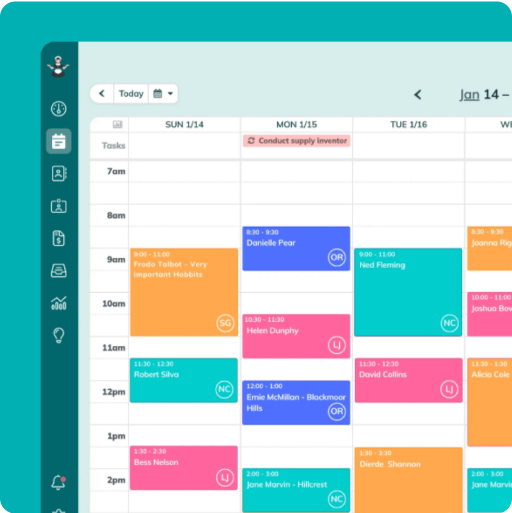
Simplify and enjoy your scheduling with a scheduling software made for maid services
- Have a beautiful calendar that's full but never stressful.
- Make your cleaners happy and provide all the information they need at their fingertips.
- Convert more website visitors into leads and get new cleanings in your inbox with high-converting booking forms.
- Become part of a community of 8000+ cheering maid service owners just like you.
Start your FREE ZenMaid trial today and discover the freedom and clarity that ZenMaid can bring to your maid service! Start your FREE trial today