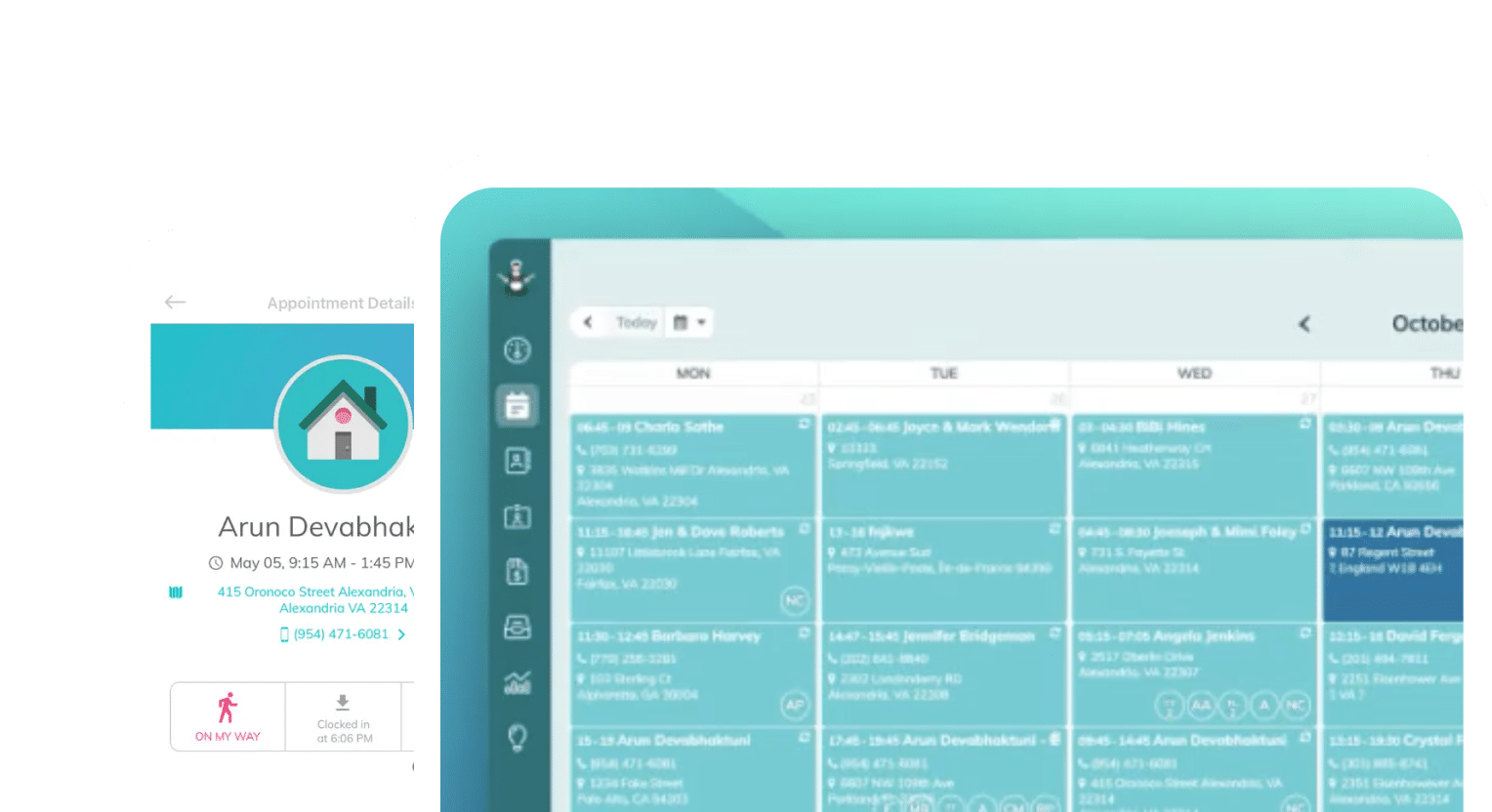
Frustrated with your scheduling? Try the easiest-to-use calendar app, made by and for maid service owners.
Brought to you by expert cleaning business owners
Tips and advice shared here have helped us grow our own maid services. The ZenMaid team currently has 5+ current and former cleaning business owners on our team, including our Founder and CEO, Amar. We’ve been in the maid service industry for 10+ years and counting.
We partner with amazing leaders in the cleaning industry, including Debbie Sardone, Stephanie Pipkin, Angela Brown, Chris Schwab, and many more — all to provide you with the latest industry insights.
We’ve built the easiest-to-use, comprehensive cleaning business software, built specifically for the industry!
Listen on: Apple Podcasts, Spotify, or YouTube
Introduction
Stephanie: Hello everyone, welcome or welcome back to the Filthy Rich Cleaners podcast. I am your host, Stephanie from Serene Clean, and in today’s episode, we’ll be answering a listener question about quality control and the actual logistics of making those quality checks happen.
I did a YouTube video about two years ago — we will make sure to link that — and it showcases Serene Clean’s quality control system for our team, and it works very well for us. We have made some slight changes over the years, but I do want to kind of touch on how we handle that. But if you want the full breakdown and screen sharing, go watch that video, guys, because then you can actually see what I’m talking about instead of just hearing me describe it.
A lot of times with certain things, it is so much easier to see it, and that’s why I do love a good screen share. If you’ve ever done a consulting call with me, you know that the majority of the call is me screen sharing and showing you guys how we do things. So if that’s ever something that you want to see, as much as I’m able, we could always make a separate actual YouTube video if that’s something you’re interested in, or any type of live presentations.
Of course, Maid Summit’s coming up at the end of the year, I believe, and I will be doing a presentation as I do there. So as always, thank you for submitting your questions and requests for certain types of content. Try to stay organized and just keep asking, guys.
The Listener Question from Kate
Stephanie: So this question, as I mentioned, was from Kate in Australia. Oh my gosh, it’s so cool when we have Australian listeners and guests, I love it. So Kate writes to Amar:
“Hi, Amar, I would love to ask a question for Stephanie. Firstly, thanks so much. I wouldn’t be as successful without your amazing podcast and generosity of knowledge.” So sweet. “I found it right as I was starting my business and it has shaped Cultivate Clean greatly” — her company.
“I would love to hear you talk more about your quality control checks. I’m in the process of creating a 100-point QC audit sheet, which will help me keep any bias out of QC and help me be real with my staff. Also recovering people-pleasers over there can relate. But I am struggling with logistics.
Do you, the person conducting the quality check, turn up at the end of a clean while the cleaner is still there or just after they finish? Do you let yourself in? If my techs have let themselves into a house, they have probably taken the key in with them and won’t replace it outside until after. Or sometimes we leave the spare key in the house. Do you tell the tech you’re coming if they’re still there? Do you tell the client?
Probably the majority of our clients are work from home or have barking dogs or babies napping right around lunchtime when we finish first clean. I don’t want to disrupt their day any further. I’d love to hear how you guys perform these, how often, and what your process looks like from a practical POV. Thanks from way down under in Australia. Love, Kate.”
Such a great question, Kate. Thank you so much. And we are going to go through every single one of these points. I love that you’re thinking about quality control. I love that you’re thinking about being very, very extensive with the checks, with removing bias as much as possible.
And what this is going to do is, when we build the system like this, it allows other people to step in later and help with that system or completely take it over. Of course, I’m not physically at my business doing the quality checks, but we have a wonderful system where truly anybody could do a quality check — literally any tech could do a quality check on any other tech.
Building a Culture Where Everybody Checks Everybody
Stephanie: And how we handle things at Serene Clean is it is part of our culture that everybody checks everybody. So as you know, or may not know, if this is your first episode, we run individual cleaners as much as possible at Serene Clean. The only time we are going to have teams of cleaners together is going to be first times, move-outs — which are also probably first time, but you know what I’m saying. So big cleans, cleans that are going to take over seven to eight labor hours. And even if it’s like scheduled for eight, we’d probably put two cleaners on just in case it goes over, right? So that nobody’s having to work super long days or anything like that.
So that’s the situation we would have teams on. Or if for some reason, say, we had a call-out and we have to start pairing people up, then we’ll do it. But for a variety of reasons, we do individual cleaners.
But in any situation where any staff member is working with another staff member, it is expected that they check each other’s work — that when they get done with the home and the space, they go and look at the other spaces that the other team member did and check it over, right? And that regardless if they have been there for a month or six years, it is the same thing for everybody.
So we do not have team leads. If you have team leads that are responsible for checking the work, of course, that makes sense. Have it that way. But this is how we do it. And for us, it works very well from a cultural perspective as well, to showcase to the new folks that we respect your opinion, we respect your eyeballs, and that anybody can make a mistake. And we are expecting you to take that feedback with humility and accept the constructive criticism, fix it, because at the end of the day, we want the whole clean to be successful. And also anybody can mess up, right? Not just newbies — anybody can mess up.
So that is part of our culture. And what that is going to look like when it’s like the team themselves — that’s not going to be our separate quality check procedure. That is just going to be that you have your cleaning checklist, you know what is expected in each space. So just make sure that your team members’ spaces match what has been marked off on the checklist and to our quality standard.
Why the Cleaning Checklist Is the Foundation
Stephanie: Our quality standard for every single task is laid out explicitly in our quality standard policy so that they know what does it mean for this thing to be clean, right? Because the hard part is — and this is the first place we need to start with quality — is going to be cleaning checklists. And making sure that your team members understand what does it mean for this to pass or fail, right? What does it mean for this thing to hit the standard of your company? Because everybody thinks differently on what that looks like potentially. So we need to define it in your business.
And that’s why obviously for us, the cleaning checklist is the end all be all. And so this works as a wonderful tool when you do have teams who are checking each other’s work: okay, does this match what the checklist says, right? It doesn’t exactly showcase how to perform the quality check, it’s just plain and simple. If they’re cleaning and checking each other’s work, does this match what’s on the cleaning checklist? Great.
Whereas if we are assigning somebody to do a quality check — and that could be you, that could be a team lead, that could be a field manager, that could be anybody, or for us, another cleaner, right? We’ve done that as well. That’s how we used to do our quality checks before we had a dedicated field development and quality assurance specialist, Hannah, who you guys hear me talk about all the time. But at the end of the day, we do have other folks still doing quality checks with our system, right?
If Hannah can’t get to something, or if somebody is in the area and we’re like, yeah, they got 20 minutes, let’s assign them to a quality check on their coworkers — so that’s still happening in our business. It is not unusual for that to happen. Hannah is still doing the majority of them, but I’m hoping by me talking about this, it showcases to you guys that you can use your team to do this, and whether you want that to be part of a dedicated position, or just your general cleaning techs, right? Because they really like that, just because it showcases that you trust them, and as long as you have the procedure and process in place for them of what they’re supposed to be doing, it empowers them to be able to do it well, and that you have standard consistency across the board.
It also, as I mentioned in my quality control video — one thing I love about it is by your team members doing quality checks on each other, they are explicitly seeing what they’re going to be expected to be hitting for their quality checks, right? Like, oh, they’re going to be wiping down the tops of the door frames — well, I best dust the tops of the door frames at my cleanings, right? It kind of just solidifies what the expectation is and what they’re going to get checked on so that they can succeed. We’re not trying to trick anybody, of course not. We want them to nail their quality checks, and so this is just helping embody and embed that: oh, I’m going to be checked on these things, right?
So that is how we handle that.
Building a QC Form Anyone Can Use
Stephanie: How we do that, how we perform quality checks, right? So Kate, you are in the process of creating a 100-point QC audit sheet. Love it, that’s great. How can we think about that in a way that somebody else could use it, right? So making sure that it doesn’t just make sense to you, that it is easy to follow for somebody else.
And so how we have done that is in a Google Form, right? A form — those are free, completely free — and we literally just have them labeled as our quality check forms, and that is what the checker is going to be filling out after they perform the QC. It’s also like teaching them how to perform the QC — like do this, do this, like what does this look like? So they literally will have it pulled up while they’re doing the quality check. So it instructs them on what to do so that they don’t get confused or unsure of anything or whatever.
So that’s the first thing: think about, could somebody else use this? If not, then we need to keep tweaking that, right? Of course, you’re the one doing the quality checks right now, but I always want to think big picture, like hopefully someday I can delegate this off or share the load when it comes to quality control.
Walking Through the QC Form — Professionalism
Stephanie: So, struggling with the logistics. Also, do you guys want me to read through the form questions? Yeah, I’m sure you do.
What does Stephanie ask when we do a quality check? If you find areas that are needing correction, please take a picture for documentation. Pictures should be sent via your designated manager group. Date of the quality check, the checker’s name, the cleaning tech’s name that is being checked.
First section, professionalism. Was the cleaning tech dressed to standards according to the dress code? Yes, no, employee not on site. Additional feedback for dress code. Did the cleaning tech have their supplies in an appropriate location and were they tidy and not scattered around? Yes, no, employee not on site. Additional feedback for supplies.
So we want the quality check to not just be on the cleaning itself. We want it to be on the entire experience of the cleaning. And that means how are your techs dressed? How are they behaving? Are they keeping their stuff near them, right? Because a lot of times, especially with newer folks, their supplies kind of start to strewn through the house. You know what I’m saying? They’re scattered about the house, willy nilly. And we don’t want willy nilly. Willy nilly looks bad.
Just like we don’t want plastic little Walmart bags for our cloths — that’s what we used to use. Now we have nice little, still inexpensive canvas totes. The cream ones are for the clean and the dark bags are for the dirty, so that they can keep their cloths all neat and tidy without having plastic bags, right? Because that doesn’t feel very elevated.
So little things like that is what we’ve continued to evolve on over time — like, is everything about this experience screaming professional, high-end luxury, right? Like that’s what we want, and that we have our shit together. And one of the parts of having our shit together is making sure our supplies go. And I’m like the worst with this, guys, because I am quite chaotic and my shit will be all over the house, right? So, pot, kettle, black, Stephanie. But when you guys are doing QCs, be looking at this stuff. Is a dress code, all of these things, reiterating, right?
The QC Form — Vacuum Appearance and Maintenance
Stephanie: Okay, next section, vacuum appearance and maintenance. Do you guys know what I’m saying? High maintenance, I am very high maintenance. There’s like a video. I don’t know, maybe nobody else gets that.
Okay, vacuum appearance and maintenance. If the employee is not on site, please skip to the next section. So it’s indicating how to handle each situation, right? So, employee on site, employee not on site — because we do quality checks in both situations, as I will get to in Kate’s question.
Are all latches on the vacuum in working order? Are all hoses on the vacuum intact and appear to be working? Does the canister appear to be in good condition, not filthy, cracked, et cetera? Does the vacuum have both wheels? When did the cleaning technician last check the brush roller? Does the brush roller need to be cleaned, because they’re supposed to be doing that? When did the cleaning tech last change the two filters, because that should be happening every day? What condition are both filters in? When did the cleaning tech last change the HEPA filter? What condition is the HEPA filter in? Any additional comments regarding vacuums?
Because vacuum maintenance is a huge expense — replacing vacuums, repairing them, it’s so expensive. And as the cleaning tech is supposed to be maintaining that, they are getting paid to do so, they are taught how to do that, right? Like the basics of keeping their vacuum in good working order and clean. That’s the biggest thing, is that daily maintenance of the vacuum. And so that’s something that we want to be checking, because they’re responsible for that, right?
I know a lot of you guys are doing all of this stuff for your techs. We expect ours to do this. They are paid for it. They have prep time every single day built in so that they can make sure that all of these things are taken care of.
The QC Form — Cleaned Areas
Stephanie: Next section, cleaned areas. Kitchen — check the following areas. Run your finger along the top of any door trim and wall hangings to ensure no dust or debris is left. Cupboards are clean and free from debris — make sure to check near the handles. Backsplash is free from debris.
How many times — every time I see the word debris, I want to say debris, because that’s how it’s spelled, debris. Check light switches and doorknobs to ensure they are free from debris. Countertops are tidy and free from debris.
You know what it also makes me think of is Lord of the Rings, because I’m pretty sure in the first one, that’s like the river they’re trying to get to while the creatures are following them. I love Lord of the Rings. I’m a huge Lord of the Rings fan. Of course, I can’t think. Debris — is that the town they’re getting to with the fairy? Lord of the Rings fans, leave it in the notes. Clock me on — what am I thinking of? Okay, my mind today. It’s a Monday, guys.
Countertops are tidy and free from debris. Get down to eye level with the countertop to really see. Make sure to check under any appliances that should be moved and cleaned under — the toaster, coffee maker, microwave, et cetera. So again, in this, we’re telling them how to do it. Not just look, like, is it clean, right? But like check this, check this, because we want them to make this as easy as possible, right? And that everybody’s performing this the exact same way.
Microwave — check interior, including the roof. Check the sink and faucet and make sure to look around the faucet, including behind and underneath. Baseboards are free from debris. Floors are clean and free from debris — double check in front of the fridge, stove, and sink where messes are frequent.
And then they just select: all areas were clean to expectations and no constructive feedback was needed. Some constructive feedback was needed — please provide this feedback to the employee on site, and if you have any suggestions or tips for the employee, please provide them. Please describe what feedback was needed in the box below. Or: room is not included in the cleaning / not finished, not able to check, right?
So again, we’re going to go into the timing of everything with Kate’s question. And then any additional feedback for the kitchen, okay? And then we’re just going to follow that along in all of the spaces. So bathrooms, bedrooms, hallways and common areas, and any additional feedback or any other spaces, right? So it’s that same thing — check this, check this. So it’s not like bathroom one, bathroom two, bathroom three, right? They have to just — that would be a crazy form, right? We also can’t possibly do that because every house this needs to fall under. So it literally just tells them exactly how to do the check, right?
Break — Guest Applications
Stephanie: Quick little break here. If you have ever been listening to the Filthy Rich Cleaners podcast and thought, oh my gosh, Stephanie would die at this story — well, guess what, guys? I want to hear that story, okay? We are looking for guest applications for the show. And I know many of you have never been on a podcast before, but those are my favorite episodes, to be frank — the owners who are just here to share their stories.
So if you are an owner who wants to share their story, or perhaps you would like to have a free consulting call with me and ask me your questions live for everybody else to learn from, that is also an option. And then finally, if you know somebody in our industry — you have a friend or somebody that you look up to and have learned from who you think would be a great guest option for us — please go to the link down in the bio and we would love to see you apply or nominate them. And we will take it from there. And I would love to have a conversation with you and get to know you more closely. Back to the show.
The QC Form — Finalization
Stephanie: All right, section five of five, finalization. If constructive feedback was provided, how do you feel your coworker took this? Good, neutral, could have been better, or they seem dismissive and not receptive to the feedback provided. Is there anything else you find pertinent to let management know about this quality check? And then, how did you personally feel about providing this quality check today? It was great, all the way to, I didn’t like this at all — please elaborate why you felt this way in the box below.
So that is how we do the quality checks for anybody to follow. And even Hannah, she is going to be filling this out so that she’s following the same process, because we want that standardization to apply to everything — the cleaning checklist, but then also our internal processes and systems like quality control. So they’re going to fill this out every single time. And we have one for deep cleaning, we have one for commercial, and we have one for vacation rentals as well.
So that is like the question process, right?
Logistics — Do You Show Up While the Cleaner Is Still There?
Stephanie: So let’s get into Kate’s logistical problems. So, do you turn up at the end of a clean while the cleaner is still there or just after they finish? Both. Both, we will do both.
The ideal situation, in my opinion, is to get there in a residential clean at the end of the cleaning while the tech is still there. But sometimes that’s very difficult to do depending on your schedule, right? But that is the ideal. And the reason that that is ideal is so that you can walk through with the tech in real time, and they can see it in real time, and they can correct it in real time. That is the end all be all best situation, right?
That’s the best situation, because after the fact, if you’re checking and you’re fixing the things before the homeowner gets home or whatever, and then you are sending pictures — it’s just not as visceral, and that feedback loop is just longer, right? Because then they go do other appointments, blah, blah, blah.
This is the ideal situation, but sometimes that cannot happen, right? And oftentimes we are doing quality checks after the cleaner already leaves. And that’s okay. It is okay. Is it perfect? No. But is it better than nothing? Absolutely, absolutely. If you can’t make it there during the cleaning, it is absolutely okay. Something is better than nothing, and you’re still going to be able to provide that feedback, right?
So that is the ideal situation: we’re going to show up maybe 15 minutes to 30 minutes before the end of the appointment is scheduled. I prefer more in the 30 minute range, because if they’re moving fast and they’re getting done early, then you don’t want to miss them, right? And then it’s really stressful. So that is the ideal scenario.
Logistics — Do You Let Yourself In and Tell the Tech?
Stephanie: Do you let yourself in? If my techs have let themselves into a house, they’ve probably taken the key in with them and won’t replace it outside until after, or sometimes we leave the spare key in the house. Do you tell the tech you’re coming if they are still there?
What you do is you go up, if nobody’s home, and you ring the doorbell and the tech will let you in, or you knock on the door — surprise, quality check time. And it’s just a delight. There’s a sheer look of terror on their face. It really gets me going. Just kidding, they’re happy.
You know what you can also do to lighten this quality check anxiety is, when you onboard staff members, ask them what their favorite soda and candy and snacks and stuff are. And if you do have time to stop by a gas station before the quality check and pick them up a Diet Coke and be like, “Here you go, quality check” — so we can Pavlov-dog them to associate it with something better. So little pro tip for you guys, if you can do that. And for my quality checker, she has a gas card that she can go do this at her leisure, pick up little treats for the cleaners so that she can do this when possible. It’s not always possible, but that does help.
We don’t actually want our cleaners to be in terror or panicking, right? They’re going to be nervous. Sometimes they get nervous, right? Because that’s a surprise. But if you tell them ahead of time, “Hey, you’re getting quality checked today,” well, that absolutely defeats the purpose, right? Because they’re going to make sure it’s good. So we want to get them in their natural habitat of just doing their thing, right?
What you can do is, if you don’t want to set the dogs off or people are working or whatever, call your cleaner. Call your cleaner and be like, “Hey, I’m coming, I’ll be there in five minutes, let me in.” Right? Or make sure the door’s unlocked, whatever. So then just communicate with them as you normally would. Otherwise, yeah, just keep knocking on the door, blah, blah, blah — there’s a lot of codes, that type of thing. Just get in the house however it is that you need.
Logistics — Do You Tell the Client?
Stephanie: And then, do you tell the client? Probably the majority of our clients are work from home or have barking dogs or babies napping right around lunchtime when we finish first clean. I don’t want to disrupt their day any further. I’d love to hear how you guys perform these.
Okay, so how we do this is: if a client is home, no, we typically don’t. If we know that they work from home, or that this is the thing, and we have babies napping right around lunchtime when we finish the first clean — if you know this about a client, absolutely just send an email or send a text like, “Hey, Mrs. Smith, we plan on popping by for an unannounced quality check on Tina’s work. I’ll probably be there around 11:30. I just want to let you know — is anything happening there that we need to avoid?” or whatever, and just be quiet as much as possible.
But this shouldn’t be a very — like, you being added to the house shouldn’t make that much more noise than just your tech, right? You shouldn’t be shouting or anything. So I wouldn’t worry about that. But if this is a concern, of course. And the beautiful thing about this is if you let them know that you’re doing that, they like it, because it shows what they’re paying for. They like it. They like that attention in their home, that that quality check is happening. So it’s actually a positive to do this.
Most of our clients are not home when we are cleaning, for the most part. You know what? I would say probably 60 to 70% of our clientele are not home. Most of ours are working outside of the home, I think, at least. I don’t know. We have 333 recurring clients, so I don’t know, honestly, the answer to that. But I’m pretty sure, based on just notes and what I’ve seen, that our clients are typically out of the house.
But it could be a really good marketing tool, now that I think about it — just to let them know. The thing is, for us, our plans change a lot, and a lot of times we’re doing the quality checks on the fly, same day. So we’re like, “Oh, we’re in the area, they’re stopping, great, that’s what we’re going to do.” But I don’t think it’s a bad idea at all to let your clients know, because that’s going to make them feel deeply taken care of and that their home is getting checked. So I think that that’s a great idea.
How Often to Perform Quality Checks
Stephanie: How often do we perform quality checks? So it all depends on if that cleaner is brand new, are they in good standing? And by good standing, I mean, did they just fail a quality check or did they just get a complaint? Because then we are going to, of course, up the ante of frequency of quality checks.
So when somebody is new and they are right outside of training, we are going to be checking quite frequently. I would say at least once a week, I would like that, if not more, depending on what we saw in training. If they were knocking it out of the park, that’s great. We will also be following up with the clients as well, because it is a new staff member. But I would say, ideally, you’d be checking a new staff member once they’re out of training — like that first day on those first houses, or every other day at least. I mean, the ideal would be that much the first week, because we want them to be successful. We want to catch small things as soon as possible so that they are corrected early on, and they also get used to getting quality checked, right?
So I would say a couple times, at least, that first week, and then maybe once the following week, and then they go into the normal quality check rotation. And so for us, every single person should be, ideally, getting quality checked. When we were smaller, we were able to do everybody, I would say, at least once a month. We try to do in-person quality checks on every staff member every other month. So we kind of flip-flop, and then if there’s any issues, we increase that. If we can get to more, that is fabulous. But just looking at our quality control tracking sheet, it looks like we are able to consistently hit everybody every other month. Now, again, if you have a single issue, you up that, right? You start checking more frequently.
So that is what that looks like. You’re not checking every house, though — I want to make that clear. We are checking the staff members, because if they’re messing up in one house, they’re probably messing up in another, and it is simply impossible for us to check every house.
Commercial and New Staff Frequency
Stephanie: Every commercial account, though, does get quality checked quarterly in-person, and they are getting emailed every single month with a quality check survey and instructed explicitly that if you don’t provide any feedback, we are going to take that as good news, right? And that there’s nothing wrong. That is how we handle commercial.
Again, we have to think sustainability. For us, a quarterly in-person is sustainable at our current size and the amount of commercial — which I think we have, at this point, 70 commercial accounts, I believe, 60 to 70. And so that is what is feasible for us.
So for you, I think if you have a smaller team, it’s a lot easier to do more frequent, personally — obviously, because it’s just more people. The more difficult it is, the more call-ins, and just things that you’re dealing with, right? So you really just want to be watching especially the newer staff, anybody that you’re having issues with. And we use a color coding system for us, which is going to be like red, green, yellow. And depending on what color their last one is, we’ll determine the speed at which we come to the next one, right?
And a lot of times it’s also just random, like if we’re in that area — like Hannah’s going to be in that area anyway, she’s like, great, I’m going to pop in, check on them regardless, right? Even if it’s been just a couple of weeks or last month or whatever, just if you’re already there, might as well, especially if it’s super convenient.
Sharing the Feedback and Closing the Loop
Stephanie: So if they are not there, that’s where you’re still going to be taking those pictures. And how we share that feedback is we literally send them the results of their quality check as soon as we get the feedback in. So what that’s going to look like is the results of that form. Crystal, my HR manager, is going to send that in a message to them. I’m going to read off what that looks like.
“I wanted to follow up with you on the results of a quality check that has been done. If you were on site during the QC, you may have been notified of these results already.” So no matter what, we’re putting this in writing. This is very important for documentation, that it’s not just verbally said, it’s in writing, because this matters for us — for raises, for bonuses, for any type of escalation of warnings, if it’s really bad for some reason. So I do encourage you — we’re using Slack, everything’s in Slack for us, but even if it’s just texting them, like, hey, these were the results of the quality check or whatever.
So we do date of QC and relevant cleaning tech, location, cleaning performed. Is it the day of? This was the day of the QC. This was a commercial account. Kitchen or break room, all areas were clean to expectations. Bathroom, all areas were clean to expectations, looking good. All other areas, all areas were clean to expectations. Are there reference pictures? No, because there was nothing. Additional comments and suggestions: looking great, keep it up. When I arrived, she was dusting the tops of the cubicles. Awesome job, keep it up. Great job, Billy Joe. You’re probably not listening to this, but you killed it at Fireline.
So that’s how we do that. We share that immediately, right? And if there’s anything negative, they’re going to respond to it. So we are just like immediate feedback loop, immediate feedback loop as fast as possible so that they are getting that. And if there’s anything really negligent, of course, like we’re going to be like, hey, what’s going on? Like, this is this, they had to fix this, blah, blah, blah.
If they are not there — if they are there, we are going to fix any problems, right? Obviously the client deserves that perfect quality as much as possible. That’s how we’re going to handle that. And if need be, and it’s like a time crunch or whatever, the QC-er will jump in and help get those places up to snuff. But truly the ideal situation for that accountability is going to be that person is going to fix all of their mistakes if they missed anything. And if they have to run over or whatever, or we have to rearrange a schedule, we want to make sure that everybody’s getting what they deserve.
So that is how we handle the communication of issues. And then that’s going to be documented in the employee files again, for things like performance reviews and bonuses. So that is what that process looks like for all of our cleaning techs. They really appreciate that feedback. Sometimes it doesn’t feel great, of course. Sometimes they do get nervous, but we just want it to be a regular part of the culture, that this is what’s happening.
Hannah’s Happenings — The Team Meeting Recap
Stephanie: And then at our team meetings, Hannah, who is doing most of the quality checks — so this could be you — she gives an overview of what she saw at the quality check. So what that’s going to look like is — let me read a little section — is part of our team meeting every single week is going to be Hannah’s Happenings. So what Hannah does during the team meeting every single week: she says number of residential quality checks, number of commercial quality checks, calls out each person she quality checked on something that they did, any products and processes — she also does that — and any reminders and just kind of field things, if you will.
So that is every single week, we’re doing that as well. So she’s calling out the positives of things that she is seeing, anything that we need to work on, anything that’s being used improperly, et cetera, et cetera. So that is kind of the final — where we close the loop on that with quality checks, just as a team.
Starting Simple with a Tracking Sheet
Stephanie: So I hope that, Kate, this was helpful to you. If you have any further questions about quality control, I would be happy to help.
For anybody who has absolutely no rhyme or reason to a quality control program — you’re like, I just check what I can, blah, blah, blah — do what you can. The ideal is to start getting some type of process, making a simple tracking sheet with all of your cleaners on it, so that you can see. You don’t realize how few times you’re maybe doing QCs, or you’re only doing it in a reactive and not a proactive way, right? Like you get a complaint and then all of a sudden you start checking somebody. We don’t want to think that way. That should be half of it. The other half, or really the majority of it, should be proactive. We’re checking people so that they know at any time they can get checked on any job. We don’t want anything to get dropped, right? We don’t want quality to go downhill. So if they just know that on a regular basis they’re getting checked and they have no idea what appointment it is — well, that is the expectation, because we need to be hitting our standards.
So for you, if you just list your staff members out, right? Date of the last — like put the months across, date of their last QC — and then we just literally leave a little comment. So like right click, leave a comment on what was the result. Green, yellow, red, then just color code them, right? That’s how we do it. Like I said, go watch that other video and you can see what that looks like.
You know, eventually I could see us moving this to ClickUp so that it’s just like automatically telling us dates and things like that. But for now I do like the visual of a spreadsheet for this. And we just call it our quality control tracking sheet. And that allows us to see, and then we can look ahead.
Routing the QC Week and Flagging Complaints
Stephanie: What Hannah does is, at the beginning of every single week, she looks at the spreadsheet, looks at the schedule, and literally routes herself a QC route, right? Like, okay, these appointments end here — like look at the daily view in ZenMaid — these appointments end here, and this is how I’m going to hit these so that I have enough time. Make sure you’re getting it at the end as much as possible, or at least the latter half, so you can see the kitchens and bathrooms, because that’s where our techs start. And that way we can at least see the big heavy hitters as well.
Because it’s not perfect. You’re not going to be perfect on your timing with QCs, but you do the best you possibly can. And anything that of course is flagged, like, okay, we really need to check these, or these clients specifically have had complaints. If we had a complaint at a client’s house, that would be the catalyst of, like, make sure that you’re flagging that for your calendar. Okay, when the complaint happens, what we do is we go and add a task for ourselves on the ZenMaid calendar: QC Mary’s house, complaint last time, right? So we make sure that we nail it and we’re making sure that everything is perfect for them the next time, because we never ever want to have two quality issues at a house in a row, right?
So it’s kind of a lot of coordinating and logistics of, like, okay, who needs to do it? Who do I need to QC here? That type of thing. And I hope, for the future, that that is going to be something that with AI and ZenMaid we’ll be able to kind of solve and flag. So those are kind of my big dreams of the software, is moving it towards that direction of tracking complaints in-house and being able to just be like, who do I need to check? And it’s literally telling me and routing it for me. Oh my gosh, right? Oh my gosh.
And I probably could figure something out like that right now. I just haven’t got the bandwidth to apply myself to it, because it’s not really quote-unquote broken compared to other areas of the business. But those are my mind meanderings. And I know that AI is going to be able to help with this greatly when it comes to the logistical side of things.
Wrap-Up
Stephanie: I hope this was helpful, Kate. Anybody else — if you guys have questions, make sure you are subscribed to the ZenMaid newsletter. That is where you can respond and ask any question. And we compile those questions for future episodes. So please do so, so that I can answer your questions.
If you are not a member of the ZenMaid Mastermind — you do not have to be a ZenMaid customer for that, or for the newsletter either. All the links are going to be down below in the description of this video or podcast episode. If you join that group in Facebook, the ZenMaid Mastermind, I’m there. So many cool people are there — 10,000 cool people, in fact, all cleaning business owners, all learning and growing with each other. So would love to see you there. Please hit that like, hit that subscribe, hit the hype button on this video — that really helps us get discovered.
Also, guys, have you bought your CleanCon tickets? CleanCon in Austin at the end of September this year. I’m going to be there, ZenMaid’s going to be there. I know so many of you guys are going to be there. I want to mention this now because I know last time, when it was in March, a lot of people were like, “Oh my gosh, I never even heard of this, what?” It’s going to be in Austin, end of September. Look up CleanCon, I would love to see you there. It was an amazing convention and I can’t wait for this one. So I would be happy to see you there, guys.
Oh gosh, what else? If you haven’t noticed, I have extensions in for all of the men watching who had no idea and thought my hair just grew. I put my extensions back in because I’m ready to be a diva again. And yeah, I want to call that out, that this is all fake. So never think I’m a natural beauty, because I’m not. (laughs) All right guys, I can’t wait to see you on the next episode of Filthy Rich Cleaners, bye-bye.