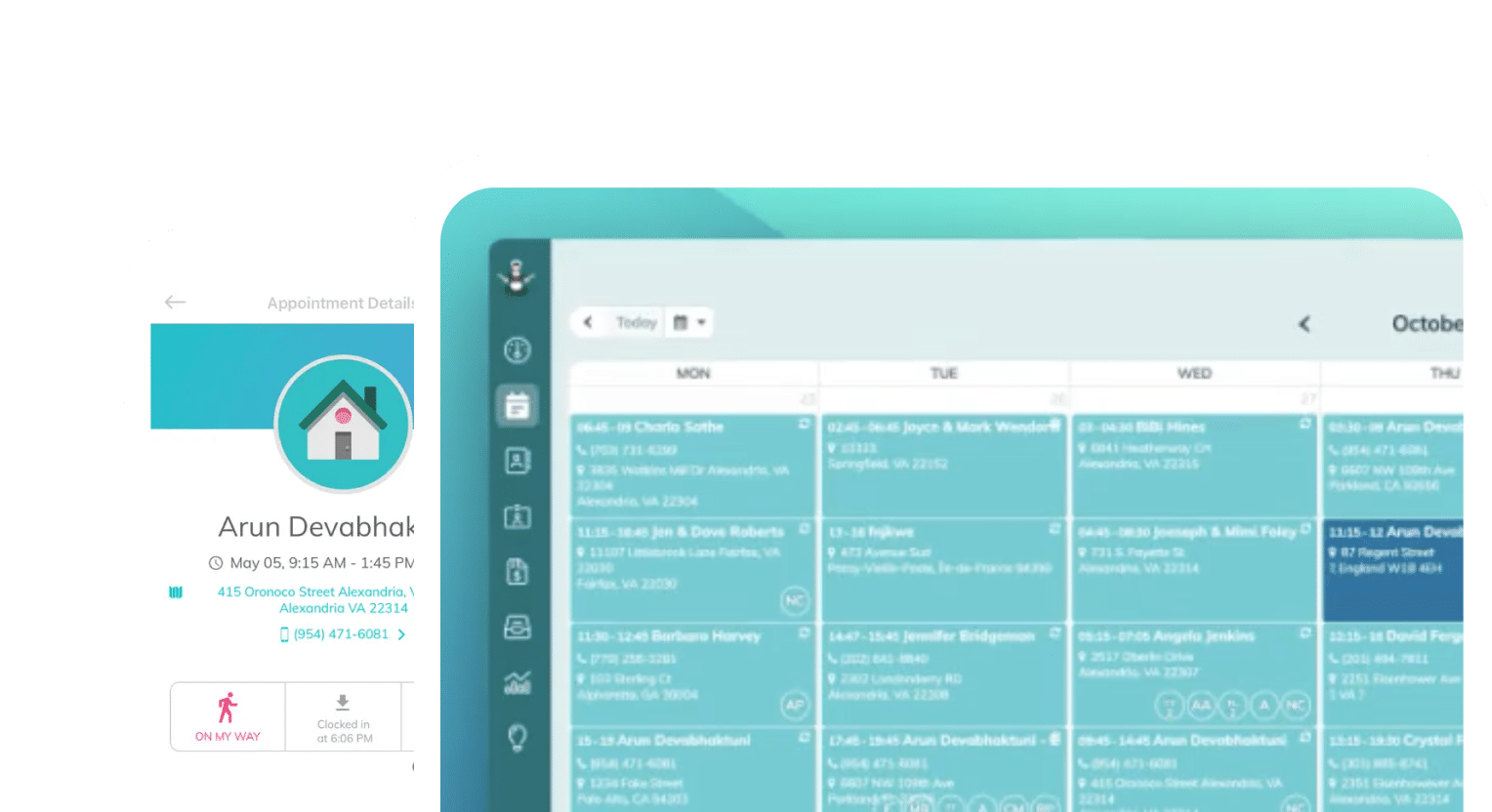
Frustrated with your scheduling? Try the easiest-to-use calendar app, made by and for maid service owners.

Brought to you by expert cleaning business owners

Tips and advice shared here have helped us grow our own maid services. The ZenMaid team currently has 5+ current and former cleaning business owners on our team, including our Founder and CEO, Amar. We’ve been in the maid service industry for 10+ years and counting.
We partner with amazing leaders in the cleaning industry, including Debbie Sardone, Stephanie Pipkin, Angela Brown, Chris Schwab, and many more — all to provide you with the latest industry insights.
We’ve built the easiest-to-use, comprehensive cleaning business software, built specifically for the industry!
Listen on: Apple Podcasts, Spotify, or YouTube
Stephanie: Hello, my friends. Welcome or welcome back to the Filthy Rich Cleaners podcast. I am your host, Stephanie from Serene Clean, and today we are going to be talking about the importance of running practice absences, or practice rounds of people being gone — whether that be you, whether that be a cleaner, whether that be an administrative person that you have working in your company.
The reason this came to my attention is we are having this happen. It’s not like it’s the first time that any of my office managers have taken a vacation or a trip, but coming up in October — I believe, let’s see, October eighth through the 26th — one of my office managers, April, is going to be out of the office and will most likely be unavailable or have very limited availability while she is out.
We are seven years into April working for me now, or she’s coming up on her seven-year anniversary. We’re coming up on seven and a half years in business, and there are still things that are not documented. This is how we realized it. This was such a useful realization this past week in our ops meeting: there are still areas of April’s job and responsibilities that live in her head, and this is a problem.
And April is incredible; she’s amazing. I love her. April, if you’re watching this, you know how amazing you are, and this is still a problem, because this is exactly what is going to happen with every one of your team members. Eventually, they are going to take a trip, they are going to have to be out for a planned absence or an unplanned absence. People get sick — all sorts of things, right? So we know this is going to happen, so we need to be proactive instead of reactive.
Of course, when somebody is out in an unplanned circumstance, there is a level of reactivity to it, especially when we’re talking about our cleaning techs, right? There are some things where you have to go do the physical labor, and sometimes clients need to get canceled on, things need to get rearranged. But when it comes to all of the admin-level things that need to get done in our businesses, this is where proactivity can really be helpful.
A lot of times, especially when I’m having consult calls with you guys, or I’m getting email questions from you, you’re like, “Hey, I’m having a baby in like a month. I really want to get one of my cleaners into the office. What should I be doing?” And I just want to be like, well, we should have been thinking about this a couple months prior, because the ideal time to start figuring this stuff out is now. It’s not when the person is gone; it’s not a week before they’re gone, because then you start to panic.
So this is proving to be a really fruitful exercise for us, because we still have time — we have just under a month out — and we are putting several things into place to prepare for this. And so I want to outline what that’s looking like practically for us, so that you can take it into your business and run practice rounds.
It may be that you don’t have anybody leaving right now, but what if we pretend? What if this person was going to be off? What would happen? What happens if this client or cleaner calls out? What happens if all of a sudden somebody limits their availability or gets sick or whatever? What’s going to happen?
And of course, at the end of the day, as the owners, we are usually going to be the ones doing the most until you get to a certain level, right? And so for most of our listeners here at Filthy Rich Cleaners, you guys are still doing the most. So you may just start bringing people into the office. So you could be looking at your responsibilities: what happens when you want to take a vacation or you are sick or XYZ? The nice thing is it’s easier to run a practice round on yourself, I think, than other people. So we will run through what that looks like.
You guys know, if you are a listener, I have mentioned the book Buy Back Your Time several times throughout many, many episodes, because it was such a valuable book to me, and it helped me really introduce a lot of the concepts that we have put into practice at Serene Clean. But there still is clearly room to implement those lessons. And so let it be known: we are not perfect; we still have a ton of room to improve at Serene Clean, and this is a perfect example.
And I’m so grateful that this came up now, because it is pushing us to grow as an operational entity — meaning the manager team. The management team is able to grow together because of this planned absence. And it’s really pushing us to look at every single role: okay, great, now that this is happening in this particular aspect of the administrative work, what about the other areas? What happens if Crystal’s off? What happens if Katie’s off? Is there anything that’s not documented? How are we going to rearrange the workload? And literally divvying up the tasks and when are they due — getting really nitty gritty. So let’s just get into it. I want to explain how we worked through it and what made us realize this.
Start With a Weekly Operations Meeting
So last week we had our weekly operations meeting, which we do every single Monday for two to three hours. Which I know you may be like, “Stephanie, what could you possibly talk about?” Well, you guys know I can talk — that’s not a problem — but what could you possibly have to talk about for hours every week? We oftentimes go way over and we need more time, because there’s just so much. There’s so much, and I find this to be one of my favorite parts of my week. It really makes me make sure that progress is continuing on Serene Clean, and all of the departments are moving forward and getting their questions answered, and we are uncovering things that are problems that maybe we did not realize before.
So one thing is really sitting down and having time and going through every area of the business — what is going on in that — and we have an agenda for our ops meeting. And so, even if you are a one-man band or one-woman band right now, I think that setting aside time to go through the departments on a weekly basis and be like, “What is the status here? What do I feel good about? What’s not going well?” — and going over the numbers.
So, before we even get to this, obviously understanding what you should be tracking is the first and foremost thing, which I know I’ve done many episodes on. I mention tracking all of the time, but that’s going to be the ground zero of what you build an operations meeting off of — the numbers, right? Because we start talking and analyzing the numbers, and that is the basis.
There are a lot of things that also get talked about in the ops meeting, of course. Things like, well, who’s the problem child this week? I jokingly say that every week at the meeting — like which staff member do we need to be watching, going through all of the staff members, what’s going on with them. Going through the hiring and what the pipeline is looking like, looking at the ads, looking at the marketing, looking at the close rates. Like, right, that’s what it is tactically: you’re just going through and getting a state of the union, if you will, and figuring out where everything is progressing on our different areas and projects and stuff like that.
So, number one thing, I think, is it is really valuable to have this time. And so this is when this came up, was last Wednesday: we knew April’s absence is coming up.
Treat a Planned Absence Like an Audit, Not an Emergency
The first thing I want to say is that we need to be treating a planned absence like an audit, not an emergency, because this isn’t an emergency. We know it’s coming; we’ve known it’s coming, which is fantastic. This is literally the ideal situation. Not every situation is going to be like this. Most times when people are going to be absent, it’s not typically planned, because something is happening in their personal life. So this is a perfect opportunity for us because it is planned. So this is like the perfect runway for trying out what I’m about to describe.
So for you guys, when I say if nobody has a planned absence, could you pretend? If you had to pick a date two months from now that your admin person or you are going to be off for a week, for two weeks, right? What would break? What would not work? And then you just start granularly breaking it down. It may feel like, well, everything would break because they do everything. Okay, well, let’s start with the first thing. What would be the first thing that breaks? And then we start to document that. We start to explain it. And we start to put due dates on it, right?
Break the Role Into Daily, Weekly, and Sporadic Tasks
So what we did then is we worked through the calendar that she is going to be gone and looked at daily tasks, weekly tasks, sporadic tasks. Okay, so that would be what I would do for you: I would work through what needs to get done every day by this role or person, what needs to be done every week, and what needs to be done sporadically, or maybe it’s on a rotating basis.
So, for example, with April’s position, she is my payroll and accounts manager. So she runs all of the payroll; she does all of the invoicing — anything to do with billing or payment, that is her. She also ensures that all of our credit cards are paid on time, with all of the transactions — if I could speak, holy crap — all of the transactions are categorized correctly. She is doing that. She is going to be paying any manual bills that are coming in. She is going to be processing checks. Literally anything to do with accounts receivable or accounts payable, that is April’s responsibility. So the final area is going to be inventory — that is her other responsibility. And there are other things like maintaining vacuums and some miscellaneous stuff, but these are her heavy hitter responsibilities.
We started just going through: okay, what do you do every day? Like, what do you need to do every day? And we started divvying it up. Cool, invoicing needs to be done every day — well, who is going to do that? And we kind of talked about, could we divide it up amongst the rest of us? And then Crystal said, “Awesome, I will take on invoicing.” Crystal is going to handle invoicing. Done, cool. And all of the invoicing notes are within that client’s details in ZenMaid, so we have the details, how much they should get charged — everything that Crystal needs in order to fully complete invoicing is there on the residential side.
Finding the Gaps in the Documentation
On the commercial side, though, we had some gaps. So, for example, I started digging into April: how do you know when to do the invoices? Meaning the commercial invoices — the ones that are not done after every single service. And this is where we realized that there were some things that were still a little bit spread out.
So, we have — as you guys know, and you’re probably sick of hearing about ClickUp — we have really moved towards moving everything into ClickUp as much as possible, because ClickUp has due dates, it has subtasks, it has recurring tasks. And so that is really what we’re moving towards. But previous to that, my managers had really used Outlook for a lot of their reminders. So, you know, your Gmail — I know many of you guys are probably using your email or another basic to-do list, that type of thing, for what needs to get done and when, right?
And so for us, we really want to keep our email set to meetings — like, that’s what I keep my email for. All of the things in my calendar are only related to meetings where I am having to communicate with another person. That is going to be in my email. Everything else is in ClickUp, because that is a task I need to do. My meetings are also in ClickUp so that I can see everything I’m doing that day. But otherwise, what happens is things kind of get spread out — like, do I need to do something, or do I need to meet with somebody?
For all of the invoicing, you know, a lot of that is automated because it’s set up on a regular cadence. We just have it set on auto-invoice in QuickBooks — easy peasy. But there still were a couple where the reminder is in April’s Outlook on the first and the 15th to remind her to send the invoice. Right. That’s not the right place for it to be. It needs to be in ClickUp. It needs to start getting moved over there.
So once we started asking questions about, like, are there any invoices that are unusual or anything like that — that nuance is where things can get really messy when somebody’s out. Because it’s like, great, you got 90 percent of the thing, right? Invoicing — 90 percent of that is good. But all of these kind of edge cases, that’s where things can get really messy. And so it’s a perfect example of where we can make sure that process is in the right place and tagged with the due dates, so that nothing gets missed.
So that was an invoicing task. There were some other things that were still in her head, right? So things like reordering for our largest account — like, where do we go for that, right? Because the task was in ClickUp, meaning reorder, like check supplies for that account, because we do order our stuff directly to that account; it’s kind of an outlier. So it’s like, cool, you need to reorder — but where do I go for that? What spreadsheet is the correct one to go to for reordering that stuff?
So it’s painful, guys. Everything about what I’m describing in this episode, it’s really fucking boring and nobody wants to do it, but it must be done. It must be done, and it is just something that you need the discipline to slog through. And once you do it once, it does get easier, and the gaps get smaller and smaller as to what needs to be done, right? Because most of April’s job has been documented really thoroughly, but these are the little gaps that would trip us up in being able to complete something fully. Like, “Cool, I need to check the supplies for this one account, right? The big account. Great, I see that task, I see when I’m supposed to be doing it, but where do I go to do this?” So there was a gap there. So literally running through everything from start to finish to completely have that thing done correctly — what does that look like? And then any gaps, we need to fill those gaps, right?
That was one example. Another one was the credit card payments. You know, the Amazon card — we have two credit cards. The Amazon card is on auto-pay; the Chase card is not. So, what do we need to do? We need to assign it in ClickUp with the due date and the link to the how-to, the login, all of that stuff. So, just making sure it’s like, cool, we know we need to pay the credit card — like, we know we need to do that — but what does it mean to do that fully, in completion, so that nobody ever forgets it again? It needs to have a due date. It needs to have a recurring task, right?
And so, this is why — like, I know you guys are sick of me talking about getting a task management software, but I honestly can’t believe we were able to do anything before we implemented one. It’s so overwhelming, right? Like, I know how overwhelmed you guys are. I know how overwhelmed I was, and how sometimes I still get overwhelmed, even with a task management software.
So, at the very least, if you don’t want to have some type of software for this, be religiously using your email — like events or to-dos — and making sure you’re setting due dates, and you treat that thing like the Bible. Like, we are going by this. This needs to be done then. Because if you don’t have the discipline to use something like that, things are really going to fall apart. Like, it’s going to fall apart, because as soon as you do want a vacation, as soon as somebody is off, all of a sudden you’re like, cool, this is the list of things — like, I’m sure you know all the things that you do, right? But when do they need to get done?
Like, really start separating — a good exercise may be to really start separating your tasks by daily, weekly, monthly, and sporadic. Just create a chart and start brain dumping. What do I do every day? What needs to be done every day? And then we start working through each of those and documenting each of those. And it is a slog.
Use Loom Instead of a 30-Page SOP
I am going to recommend — a lot of you guys really like the idea of an SOP, which I understand, but your version of an SOP is like a booklet with pictures and all of these things, and I do not recommend you go that route, because things change, right? Things change, and doing instructions like that — it’s so much work when you don’t need to do it that way, when software like Loom exists, right? Like, I’ve mentioned Loom before many times. This is a perfect example of the ideal reason we have Loom: so you can just record yourself, right? Record yourself doing the thing. You don’t need to make a booklet or anything like that. Quick and dirty — attach that Loom.
You know, you could take the transcript, give that to AI, and say, “Hey, make a checklist for this.” I love a checklist outside of the field, too. A checklist in the office is amazing, because it’s like boom, boom, boom — just do it this way. And then now you do have written instructions, you have a video that goes along with it, you have the due date, and you have all the links that are associated with that task. Boom! Now that is fully documented. It is ready to go. It’s ready to pass off.
And if something changes, it’s very easy to just re-record the process or add a little note about what changed — like, “At minute blah blah blah, do this instead,” right? So, all of that to say, that’s what documentation truly looks like. You do not need to make a 30-page SOP for anything; nobody is going to read that, and it’s a waste of your time. So please, please, please start using screen recordings. And again, Loom is very, very affordable — just highly recommend.
Run Practice Rounds Before the Absence
Okay, the next step that has been crucial for us is doing practice runs before her absence. And so, the practice run specifically that we’re talking about is running payroll. Okay? So payroll is definitely the most time-consuming and complex part of April’s job, and it’s not something where you could just give somebody instructions and we would feel comfortable that they’re going to get it right the first time, right? Because there’s so much variance; there are so many random things that come up with payroll. What if they have something that we need to reimburse them for? What if there’s a random whatever? Like, there’s just so much random shit that goes into payroll to make sure it’s accurate that we are not comfortable with just being like, “Okay, cool, we don’t need you to show us it. We don’t need to run practice runs. You can just hand off.” And really, for most things, we don’t want to do that. We want to watch the person. We want them to practice it and then us check it — or whoever is responsible for that task originally, they check it.
It’s just like, honestly, how we do ideal client handoffs in the field. When we are switching off a client to a new cleaner, right? Like, the ideal situation is the current cleaner has the new cleaner go with them to at least two appointments, and then it is now that other cleaner’s client, right? That is the ideal, because they can see the home. Even though we’re following our checklist, they can run through, they can make sure everything’s perfect at least twice, and then it is now that handoff — that transition is beautiful, and it’s very likely that the client is going to be happy. So we treat some of these more complex office tasks in the same manner.
So, for example, payroll. Veronica, my executive assistant, is going to be doing payroll while April is out. And there are a couple reasons that we decided to do it that way. The main one is, instead of Katie or Crystal taking on payroll, we have Veronica available for work. But the more complicated thing than payroll is client communication and rearranging schedules and all of these other things. So we would rather Katie and Crystal do anything customer-facing, because they have all of the context they need. They’ve talked to these people; it’s going to be much easier for them to take any of that communication on and stay open for that, as opposed to doing payroll — which we can train her on so she doesn’t have to talk to anybody or anything like that, because there is a time difference as well. So it made the most sense for Veronica to take this on instead of the other managers.
Additionally, there’s a decent amount of time to get payroll done, because it’s due on Thursday evenings every week. Instead of, with client communications, this may need to be done very timely — like, we need to get back to them quickly, we need to answer questions, whatever. So it just made the most sense, really looking at the workload and who does it make the most sense to do that thing, right? And so it made the most sense for Veronica to do the payroll.
So the first thing that we did was we had April document her payroll with the Loom and have the AI do the instructions, and then we had Veronica do a test payroll a few months ago, basically, because we’ve known about this for a while. I think we had her do one or two practice rounds, and April watched her do it and saw where the gaps were in the documentation, because she was making mistakes. And it wasn’t Veronica’s fault; there were gaps in documentation.
And this is why we do this: because when we document our stuff, almost always the first time is not perfect. This is why I’m like, don’t slave over a book or anything like that. Just document it, give it to somebody else, have them do it, and be like, “Oh shit, I thought that was obvious.” It’s not, because it’s not their process to own. They don’t know where everything is. We just have so much stuff that we know in our heads that we don’t even consciously think about when we’re doing a process, and this is why we need to have somebody else do it — so that we can see where those gaps in documentation are.
So now it’s been a couple months; April has made those changes, and now Veronica will be running all three remaining payroll cycles as practice while April is still there to check them, right? So there are going to be three more payroll runs that Veronica can basically draft up — she does not hit the final go-through — and April can check over, correct, and make those minor adjustments to any documentation. So we are going to be golden and very confident that payroll is good.
And then while April is gone, I am still going to be doing the final push-through to run payroll instead of having Veronica do it, just so I can have eyes on it. I may not catch mistakes, but just like, okay, this looks normal. This looks like everything looks correct, right? And we can always correct something if something goes horribly wrong. But at this point, it should be practiced enough.
This Is How You Slowly Give Independence
And this is how we like to slowly give independence. When you guys are asking me questions about, like, how do I trust my office staff — like, I want to go on vacation, but I just don’t know — this is how you do it, all right? You document something. You have them practice it. You see where the gaps are. You make adjustments. They practice again, until we can get it smoothly.
And the beautiful thing is, once you do this once, right? Like, this is painstaking, for sure. But now that we’ve done this once and it is fully documented, well, guess what? The next time April is out, we’re good to go. We’re ready and everything is documented. Because remember, guys, we never know what the future is going to hold with any of our staff. And this is how you grow a company and allow it to be systematic, because maybe somebody doesn’t even leave. Maybe their role changes, right? Maybe we move it so that — for example, I could very much see us bringing on a salesperson, you know, and so that means that things would shift. I wouldn’t be firing anybody; I would be bringing somebody else in, and they need to learn the systems and processes, right?
So again, we can do this with ourselves. It doesn’t have to be that we have somebody else right now. But you could literally start taking all of your admin work that you do and start running it through this pipeline of documentation, so that you are ready — and also really figuring out where your gaps are, because you probably don’t have everything documented either. Most of us don’t, right? There’s always something.
Documentation Makes Your Business More Valuable
And so I think that this is just such a useful endeavor for anybody who wants to grow their business or just run it more smoothly, or foresees bringing anybody in to help administratively in the future. And especially if, like, long term you guys are wanting to sell your business — well, guess what? This makes it more valuable. The more that you do this, the more valuable your business becomes when it comes to a selling point, because they want to see systems. They want a business that is not relying on the owner to do everything, right? That is not a valuable business to most buyers, right? So every time we do things, we’re making Serene Clean more valuable the more that we document.
So, not that I have any plans of selling — so nobody email me about it. But the point is, like, if I were to make my business as attractive as possible to buy, it’s probably going to be super well run. It’s probably going to be running very smoothly. So it’s like, what would that look like if I had to sell my business? If I had to hand the whole thing off, could somebody come in and do the thing? And if not, or they couldn’t figure it out based on our documentation, then there’s still room for improvement, right?
And so that is why we made the decision to start moving everything into ClickUp, managing everything there so that it’s universal, and really trying to limit where information is, right? We still have Google Drive; we’ve got ClickUp. We will hopefully actually be moving away from Trainual — which I know, shock, awe — but with Maid Path in the works at ZenMaid, which is going to be a training platform that we can move our orientation and certain things over to, I hope to cancel Trainual, and then that’s one less place to go for that.
So that’s super duper exciting! I actually just had a call with Amar talking about Maid Path this morning, so I’m super excited about it. I don’t know when it’s coming out, guys — don’t ask me — but it is in the works, and that will save me a bunch of money. But this is a good, good point of, like, really using the right software and auditing where all of your stuff is. And anything that is a sticky note or in your brain is probably not particularly useful when you need to hand something off.
So I know so many of you want to eventually be able to have a business that does not need you every single day on everything, because that just — you know, that’s the worst job ever, right? And I’m not saying it doesn’t have to be that way right now, right? Maybe it does need to be like that. But can we work towards documentation like this? And again, things are going to change. This can be quick and dirty, and that’s why I’m just going to keep coming back to Loom, because I think that it’s such an efficient way for all of us to document something, get it out of our head, and talk through it, right? Because a lot of times, like, “click here, click here” — trying to document that in anything, it’s so inefficient, right? So I really like this. I know there are other software options as well that can watch your mouse move and turn that into an SOP or whatever. But people like to watch a video; they like to hear it get explained, and they can just follow along with the video on how to do something, right? So I’m just a big fan of that. That’s how my brain works: I want to follow along with a video or have a very straightforward checklist, so I can be like, “Do this first, do this.” And so, yes, I’m a big fan of this.
Plan for the Worst-Case Version
So, all of that to be said, I’m really glad that this happened. And you know, at the end of the day, I really want to plan for the worst version, and then if it’s better — meaning April can work sooner than we anticipate — great, that’s a bonus. But I want to prepare for the worst: April is going to be completely unavailable. What would that look like? How do we make sure that everything gets done and gets done on time? That’s very important, right? I don’t want to be paying credit card fees; I don’t want to not invoice somebody correctly or on time, that type of thing. So we need to run payroll on time. Like, these things need to happen. So this is a really useful lesson, and I’m really glad that it happened so that we can continue to hone and improve the documentation within Serene Clean.
Your Homework: Document One Area
So, I guess my homework for you guys after listening to this is: I really want you to think about starting with one area — one area of tasks that you do, or maybe, if you do have an office person, that they do — that if you had to be gone, what would somebody need to know? And where would it be documented for them to be successful, right? And start working through that. And it does not need to be perfect documentation. Again, go listen to the book Buy Back Your Time — he really talks about doing three versions of something. And what I mean by that is, like, if you’re going to run payroll, for example, run through it three times and just record three different times, because that will help capture some of those oddities. Because as you guys know, not every single thing is done the same exact way every single time, right?
And then the other thing I wanted to mention is, I really am trying to be better about knowing when my other managers are off, to understand the flow of the office better. So, for example, when April’s going to be off for these several weeks, I’m like, “Cool, Katie, Crystal — do you have any days that you guys are going to be off during this time as well? And what needs to get done on your guys’ end? What do we need to rearrange there?” — and looking at the office as a whole entity.
And with Crystal taking on the invoicing, another thing that she’s doing is she is going to limit interviews, because she is responsible for the interviews. We’re also not going to be starting anybody unless it’s an absolute emergency the first week that April’s gone, because managing a new staff member is a lot of administrative work and communication. So if we could just cut that possibility off, the goal is just to keep it nice and steady, right? So as you guys do take vacations, right? Maybe don’t start somebody the week before, right? Maybe don’t start, you know, a new client, if possible, that week. Like, we just try to keep it nice and steady during these types of times.
And really look at, okay, cool, what could we limit, because we’re going to be down one woman? What could we limit as a whole entity of work for the business? Well, we can do less interviews during those days. We can not bring somebody on, XYZ, right? There are certain things that could be just paused, just to help with that workload. So that would be another thing: what really, really needs to get done versus what can wait until the break, right?
So, all of that said, I would love to hear — if you guys can leave in the comments — what your task is. I want to hold you to it. Okay, leave me something down in the comments. What is the task that you want to get documented fully, with the due date, with how to do it, the links to whatever things they need, and the websites or Google Drive spreadsheet that they need to get the thing done? I want you guys to put it down below. I want to hear what you need to document, and I would love to hear your thoughts in general.
As always, any ideas for podcast episodes are always welcome, guys. I’d love to see you subscribe to the ZenMaid newsletter, and it is completely free. You do not need to be a ZenMaid customer. And every single week they’re putting out really great content, educational content, and super valuable stuff so that you can learn and grow. And if you respond to that newsletter email with a question you have for me, we’ll add it to our list for future podcast episodes. So please hit that like, hit that subscribe, guys, and we will see you in the next episode of Filthy Rich Cleaners. Bye bye.
If you enjoyed this episode of the Filthy Rich Cleaners Podcast, please be sure to leave us a five-star review so we can reach more cleaners like you. Until next time, keep your work clean and your business filthy rich.