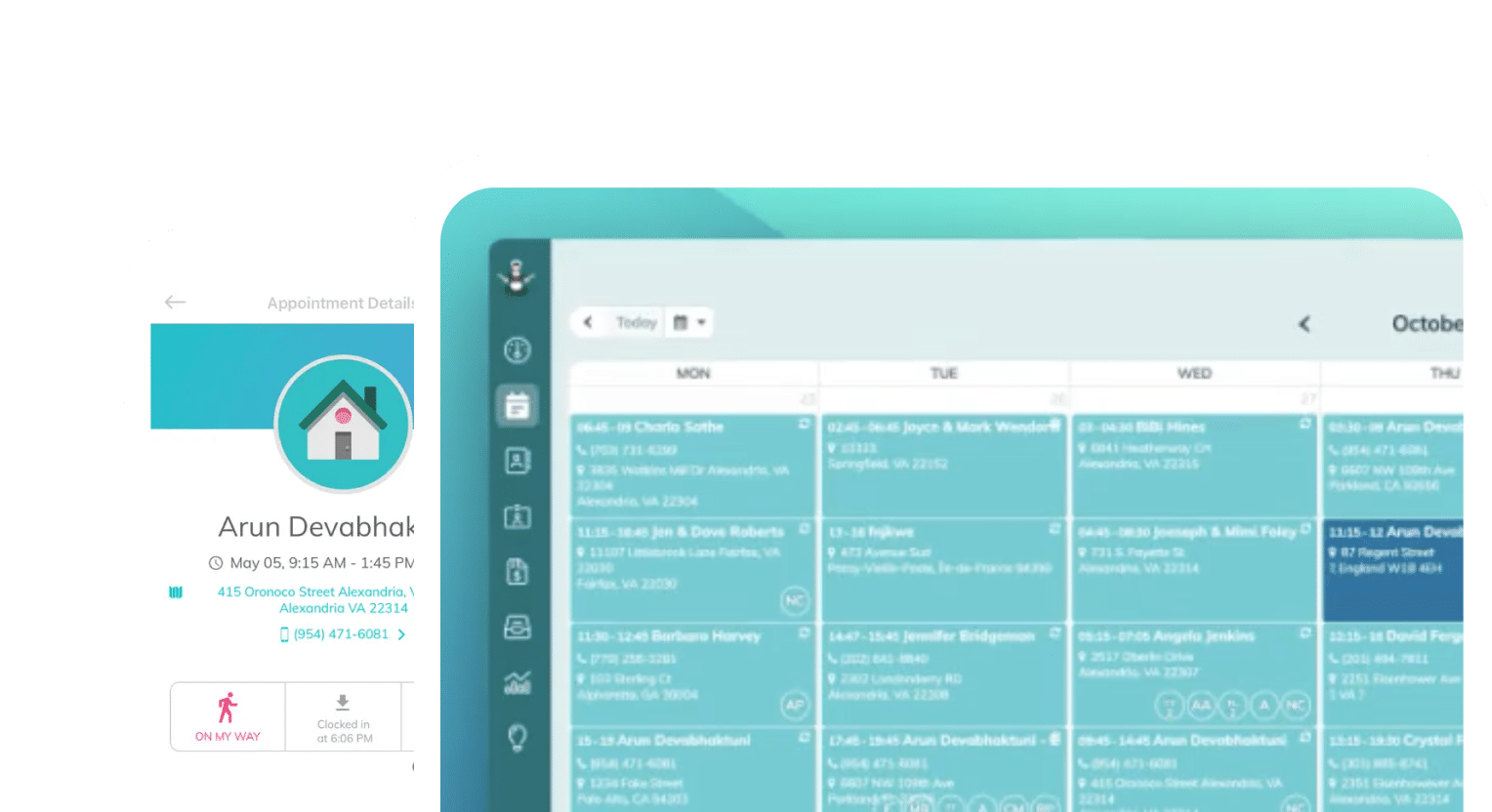
Frustrated with your scheduling? Try the easiest-to-use calendar app, made by and for maid service owners.

Even when your cleaners are well-trained and operating smoothly, you know that some of them are more skilled in some areas than others. Sometimes, certain cleaners have preferences: one person loves doing vacation rentals, while another is your go-to for deep carpet cleaning.
Sometimes these specialties make cleaners better suited to residential jobs over commercial ones. If someone is really skilled at handling pet dander, you’ll want to send them to the client with three golden retrievers. But in commercial, only a few cleaners will hold the certifications needed to legally service medical offices.
You can use this knowledge about each cleaner’s skills, quirks, and qualifications to boost your service quality and build your reputation for specific jobs — which means more money flowing through your business.
We’ll walk you through how to assign jobs to cleaners by skill set and keep certifications and training current. With these two systems, you can quietly gain a competitive advantage.
Why Skill-Based Assignment Beats “Whoever’s Available”
Most cleaning business owners think about scheduling as availability-first. Whoever can take a job gets it.
But this method doesn’t give you room to think about how to match skills to jobs, and it risks the consistency and quality of your cleans. Skill-based assignment flips your priorities by matching the job’s requirements to the cleaner’s proven abilities first, then optimizing for availability and location.
If the first available cleaner for a vacation rental has never done one before, that unnecessarily risks your cleaning quality and may even lose you clients over time. Take the extra step of assigning your first available specialist, someone who has the skills to do the best job possible, and may enjoy the challenge of a deep cleaning.
More routine jobs can go to newer hires who need time to get good at their jobs and find their niches or specialties. The result is fewer redos, happier clients, and cleaners working within their strengths.
The Cost of Getting It Wrong
Mismatched assignments are expensive in ways that won’t show up on a single invoice. They’re more invasive than that, and hard to track without systems in place.
Think about the time you lose to callbacks, a supervisor briefing, or saving a client relationship. There’s real work that goes into repair and resolution after a mistake happens. Even if a client doesn’t leave, you end up investing more time and resources into winning back their trust than you would have had the mistake not happened in the first place.
Outside of client satisfaction, you risk your operating compliance. Sending an uncertified cleaner to a facility that legally requires bloodborne-pathogen training creates a liability issue, which is even more serious than a quality issue.
Beyond that, you don’t want to force cleaners into jobs they’re not well-equipped to perform. The morale cost of this leaves cleaners frustrated and burning out faster, which feeds the turnover problem the whole industry already struggles with.
How Software Can Help
Maintaining cleaner profiles, certifications, specialties, and availability in your head is unsustainable. Even with pen and paper, certifications get hard to manage manually as your business scales and you bring on more staff.
Software like ZenMaid serves as your cleaner data repository. ZenMaid’s team and staff profiles let you add notes or tags like their preferences, allergies, or descriptions of past events that can help you match the right cleaner and job every time:

You can even toggle between making these notes private to you or office staff only, which makes performance notes secure and keeps cleaners focused on what matters most: their appointments.
What “Skills” Actually Means in a Cleaning Business
“Skills” doesn’t mean “good at cleaning”; they’re more complex. Let’s break them down into categories:
- Job-type expertise: Deep cleans, move-in/move-out, post-construction, recurring maintenance, vacation rental turnovers
- Specialized techniques: Hardwood floor care, natural-stone countertops, leather furniture, high-end appliance cleaning
- Client-specific needs: Pet-friendly households, allergy or chemical-sensitivity protocols, green/eco cleaning
- Property complexity: Large estates, multi-unit buildings, commercial spaces
- Language and communication: Cleaners who can communicate directly with a client in their preferred language
Naming these categories clarifies everyone’s skills and removes the guesswork from your scheduling routine. You can confidently match a defined client need to a cleaner’s documented ability, all but ensuring that your client will have a good experience.
How to Build a Skill Matrix for Your Team
“Skill matrix” sounds complex, but it’s just a simple grid: cleaners down one side, skills across the top, and a marker where each cleaner is qualified. It’s the foundation everything else rests on:
| Cleaner/Skill | Tile, Stone, Marble Cleaning | Carpet Cleaning | Hardwoods | Bloodborne pathogens |
| Stephanie | 3 | 1 | 3 | 3 |
| Luke | 1 | 3 | 3 | 1 |
| Cassandra | 2 | 2 | 2 | 3 |
Even though ZenMaid is a great place to store this information once you’ve completed the exercise, you don’t need any special software to start. A table or spreadsheet is just fine.
Step 1: Record existing cleaner specialties and certifications
Write down every cleaner’s real capabilities across the first row, and then their names down the first column. With this information out of your head and onto something you can reference when scheduling.
A good next step is to log it all into software like ZenMaid, or to follow up with your cleaners about any certifications they have and when they expire. You can also store this information and create reminders for you and your cleaner to re-certify, so nothing expires.
Step 2: List Your Job Types and Requirements
Next, in a separate area from the matrix, write down the services you actually sell. Write out every job type, then note what each one requires of your cleaners, including special equipment, techniques, certifications, or client-handling skills.
Think each job through and be honest about which jobs are genuinely harder. A post-construction clean and a weekly maintenance visit require different people and different skills. Treating every job and cleaner as interchangeable is how you let quality slip.
Step 3: Rate Each Cleaner Honestly
Now go back to the matrix. For every cleaner, mark their expertise level for each skill. A good, simple system could be:
- 1 – Can’t do it
- 2 – Can do it with supervision
- 3 – Fully independent
Resist the urge to inflate ratings. The matrix is only useful if it’s true.
If you’re struggling, involve your team leads or supervisors. They see day-to-day performance you might miss from the office.
Step 3: Identify Gaps and Overlaps
Once the grid is filled in, patterns will jump out at you. You can more easily see where skill gaps are affecting your business — if only one person can handle your commercial accounts, that’s a single point of failure. If half your team is certified for a service you rarely sell, you might need to reorganize or retrain staff on new services.
These gaps also show you where you’re overexposed if someone quits, which means you can more easily structure and accelerate your hiring process.
Assigning Jobs by Skill in Practice
Now, let’s make that skill matrix really valuable and use it to change the way you schedule your team. We recommend folding it into your daily workflow so you don’t have to carve out hours for admin. Below are some tips to help you plan.
Tip 1: Match jobs to cleaners first, then optimize calendars
Before you look at anything else, filter your teams by skill set. When a new job comes in, you know exactly who to consider assigning to the job, and don’t have to weed through your entire staff.
You’re now only weighing availability, drive time, and workload balance among qualified cleaners. This sequence matters. A perfectly efficient route means nothing if the cleaner can’t do the job to standard.
Tip 2: Balance specialists’ time against everyday coverage
It’s tempting to book your best cleaners for every job. But overworking your most skilled cleaners puts you on a fast track to burning out your best employees and mismatching their skills with jobs they aren’t really needed for.
For example, if your only stone-and-marble expert is buried in routine cleans, you can’t take the high-value specialty job at a marble-floored museum when it calls.
Make space in your specialists’ calendars to reserve their capacity for these kinds of jobs. Newer cleaners can — and should, while training — handle the standard recurring work that comes in so your experts stay free for jobs only they can do.
Tip 3: Use Assignments as Training Tools
Knowing which cleaners are more skilled than others in certain areas can transform your training processes. Pairing new cleaners with long-term skilled cleaners or certified job leads helps new folks train up in areas you prioritize, and minimizes your quality risks during onboarding.
Over time, this widens your matrix. More cleaners with more skills gives you better flexibility when scheduling, more capacity for complex and higher-paying jobs, and fewer single points of failure.
ZenMaid’s scheduling software allows you to assign multiple cleaners to single jobs, which makes it easier to see who is available to train new staff and pair cleaners with different skill sets for more efficient jobs.

Don’t Forget about Certification and Training Tracking
Letting skills lapse because you aren’t keeping track of training or certifications is the most common way cleaning business owners introduce risk without realizing it. If you’re staffing jobs based on qualifications, you have to know those qualifications are still valid.
If you’re tracking this at all now, it’s probably in your memory or a forgotten spreadsheet. That works right up until an audit, an insurance claim, or a client request proves it doesn’t. This is where software covers you and keeps you and your teams accountable.
What’s Worth Tracking
Not every business needs the same records, but common ones include:
- Formal certifications: Bloodborne-pathogen training (OSHA), green-cleaning credentials, IICRC certifications for specialized restoration work
- Internal training: Your own onboarding modules, technique sign-offs, safety protocols
- Compliance items: Background checks, insurance-required training, chemical-handling documentation
- Renewal dates: Because nearly all of the above expire!
The renewal dates are the part everyone forgets, and they’re the part that bites hardest.
Why Expiration Dates Deserve Their Own System
Assigning a cleaner whose certification has expired to a job that requires that skill is the most likely way you’re introducing liability to your cleaning business. You think you’re covered when you’re not, and a single client complaint or audit might get you in big trouble.
Software like ZenMaid can help you build a system that flags renewals well before they lapse. Setting expiration alerts 60 to 90 days out gives you room to schedule the training without pulling someone off jobs at the last minute.
Keep the Records Where You Schedule
It might seem more organized to keep certification data separate from your scheduling system, but when they live apart, no one cross-references them. This is how lapsed cleaners get assigned to jobs they’re no longer cleared for.
You fix this by storing training and certification notes in your cleaner profiles, ideally the same ones you use to assign their jobs. This creates your single source of truth and ensures it is checked every time you schedule.
ZenMaid’s staff profiles hold all of this information in the same place you manage your staff schedules. Scheduling becomes a lot easier when you have all of the information you need to make decisions in a single place:

Putting It All Together
Creating a system that links skill-based assignment, certification tracking, and scheduling is the only way you can protect your business against unnecessary risks. A cleaning skill matrix tells you who can do a job; the certification records confirm they’re still qualified to do it.
Every assignment decision gets easier when you have all the information you need to schedule in one place. You stop guessing about skills or certifications, you stop scrambling when someone leaves, and you stop the quiet compliance risks that build up when qualifications go untracked.
You don’t have to build all of this at once. Start small and expand:
- Week 1: Build your skill matrix in a spreadsheet, warts and all. Be honest with yourself and your cleaners’ abilities.
- Week 2: Add certification and expiration data for every cleaner.
- Week 3: Move it into your scheduling software so it’s referenced on every assignment.
- Week 4+: Set renewal reminders and update the matrix as cleaners grow
When you do this consistently, your system can optimize cleaner jobs, lower callbacks, reduce liability, and build a team that works where it’s strongest. It also makes your business far more resilient to change because you know exactly what capabilities you have.
That’s the difference between a maid service that runs on memory and one that runs on a system.
If you’re just starting out building a skill matrix or using software to make scheduling easier, give ZenMaid a try. ZenMaid centralizes staff skills, certifications, and scheduling in one place — providing you the system we discussed in this article all at once, specialized for maid services.
When you use ZenMaid, you also join a community of 3,500+ cleaning business owners whose input and great ideas have sharpened the software’s systems over 13 years. Start your 14-day free trial here, or book a demo call at your convenience.