Frustrated with your scheduling? Try the easiest-to-use calendar app, made by and for maid service owners.

Brought to you by expert cleaning business owners

Tips and advice shared here have helped us grow our own maid services. The ZenMaid team currently has 5+ current and former cleaning business owners on our team, including our Founder and CEO, Amar. We’ve been in the maid service industry for 10+ years and counting.
We partner with amazing leaders in the cleaning industry, including Debbie Sardone, Stephanie Pipkin, Angela Brown, Chris Schwab, and many more — all to provide you with the latest industry insights.
We’ve built the easiest-to-use, comprehensive cleaning business software, built specifically for the industry!
Listen on: Apple Podcasts, Spotify, or YouTube
Introduction
Stephanie: Hello everyone. Welcome or welcome back to the Filthy Rich Cleaners podcast. I am your host, Stephanie from Serene Clean, and I am so excited for today’s guest, Ms. Rose Cavanaugh. She is the owner and founder of Patriot Endeavors Cleaning in the great state of Texas. And Rose is an avid listener of the podcast — that’s how she applied. So thank you for being brave and coming on the show, Rose. I’m so excited to talk to you.
Rose: Thank you. Me too.
Stephanie: Tell me, Rose, how many staff members do you have? Where did you start your business? I want to hear the full history. Let’s hear it.
From Newly Single Mom to Business Owner
Rose: I was, in 2019, a newly single mom and thought, what can I do? I’ve got to make some money, and I know how to clean houses. So I just started doing that. I went from just cleaning family and friends’ houses, and then it kind of just started growing and moving, and I got a lot of word of mouth. And that was before it was saturated with cleaners where I’m at. There’s a lot of cleaners now — before, there were just a few of us. And so today, if I go forward like seven years, we have 175 clients, reoccurring clients. We also have 15 Airbnbs that we clean, which is something that we’re growing into more and more. But yeah, I went from, you know, 10 clients to now I have 175. I have 15 girls that work for me, cleaning techs. I have an office manager, which I never thought would happen. And this is where I’m at. I don’t clean houses anymore. I manage and do most of the payroll-type stuff.
Stephanie: Well, bravo. Oh, that is incredible. I know a lot of our listeners — that is where they’re wanting to get to: getting out of the field, getting out of having to be cleaning all the time. Obviously fill-ins happen, of course, but it’s the goal, because then you can focus on growing the business, being a great boss. It’s very hard to be a wonderful leader when you are running around like a chicken with your head cut off because you’re cleaning all of the time. So you said you were a single mom before — were you a stay-at-home mom, or you became a single mom newly? Tell me about your upbringing. What did you do for work? What did your schooling look like, if any?
Rose: Well, I was a stay-at-home mom for most of the time. Between Chad, my boyfriend, and I, we have three kids — seven, 13, and 20. I raised my 20-year-old; I was a stay-at-home mom raising him. And then I had my now seven-year-old, and shortly after got a divorce. And so it’s like, okay, what have I done? I had cleaned houses here and there for people, friends that would ask me, ’cause I’m a little OCD — aren’t we all as cleaners? And so I just started doing that a little bit. And then when I was like, what am I going to do? I didn’t want to go back to full time. I wanted to still have the time with my kids. My daughter was young. Of course, I was going through a divorce, so my kids needed me. So I wanted something that gave me a little bit of that freedom, and this did. And looking at, do I want to go back into an office? ‘Cause I did a little bit — I was in the dental field for a little bit. I went to dental assisting school. I did that for a little while when I was younger. It just wasn’t for me. So stay-at-home mom is mainly what I did.
Learning What to Charge
Stephanie: I’d love to talk about, I guess, financial security, because I think a lot of women who are stay-at-home moms have to come out of that for whatever reason, right? Whatever situation’s happening. And a lot of times it’s like, what do you do? You need to make money fast. You need to support your family. So talk to me about what cleaning did for you financially to be able to support your family.
Rose: So I think in the beginning, it’s like, I just need to make some money. I had no idea how to price these houses. I just went in and I’m like, well, I could get this done in a few hours. I don’t know, let me see — $100, you know? I didn’t have any kind of system. I just kind of threw a number out. If they took it, great. And most of the time they did, because I needed the money. That’s what I had to make a living. I didn’t have any other support, so I had to do that. And going through that, and where I’m at now, I’m like, okay, take your time, learn what you know. I help a lot of women that are trying to do this, and a lot of them say, I just need the money, I have to take the job, it doesn’t matter. And I had to learn, though, what I’m worth. And that was it — I needed to be making more. But at the time, it did help. But then when I started to bring employees on, I couldn’t do it at that. I had to get insurance, I have to provide supplies, I have to do all of these things. I had to eventually realize, okay, I have to charge more than what I’m charging.
Stephanie: I’m really happy you brought that up, because what you’re describing is something so many owners face. They’re in survival — I will take any job. You are hungry, but also it’s coming kind of from a place of desperation, right? Where it’s just like, I’ve got to take anything that I can get. And that mindset gets you through to a certain point. But as you just said, once you bring staff on, we can’t think that way anymore, because it’s simply not going to get you the jobs that you need, the pay that you need, in order to have a financially healthy business, right?
Rose: A hundred percent. And that was something for me when I started to see it. I really booked myself when I was a solo cleaner, because that’s how I started. And when I was doing that, I’m working five or six days a week, cleaning two or three houses a day, because I’m trying to make ends meet. But then I’m like, okay, ends are meeting. I need help. I can’t do this anymore. And so then, realizing, okay, now I have to pay somebody — and I try to pay anybody I hire a good salary. Some of these cleaners are paying their techs $12 an hour. I just can’t. That doesn’t seem doable. As a single mom, and I’m hiring a lot of single moms, there’s no way you could work for that. I mean, you can go to Target and make more than that.
Stephanie: It’s so physically demanding, right? It’s such a physically demanding job.
Rose: And you’re going to get what you pay for. Somebody making $12 an hour, they’re not going to come in and do a good job as somebody who might be getting $18 to $25 an hour and does a good job. So I think for me, it was realizing I have to get more help. I have to hire more help, which means I have to charge more, because I have to pay somebody.
Stephanie: And really thinking about pricing as a way to serve your staff and be able to give them what they deserve. And again, coming back to the financial health and longevity of the business — we’ve got to charge higher. So for anybody listening who’s like, I’ll just take any job, that may serve you right now, and it may be what you need to do just to get your feet going and get some customers under your belt. But that cannot be the forever strategy. We don’t want to be racing to the bottom, right? When it comes to price, competing on price is never a winning game. You’re going to struggle, for sure.
Hiring Is the Hardest Part
Stephanie: I’d love to hear — it sounds like you being a mother has influenced greatly your company culture. And I’d love to start out by just hearing about your first experiences hiring your first staff members. Are they still with you? I know none of my first ones are, because they were nightmares. Tell me about that first hiring experience, because a lot of listeners right now are absolutely terrified. They are where you were — they’re at max capacity with their schedule, right? And they were terrified to hire. They knew they had to hire, but they were scared. So walk me through that.
Rose: Yes, I was scared too. And my first hire is not with me — she, I think, has her own cleaning business now, maybe.
Stephanie: You inspired her.
Rose: I think the hardest part for me when hiring that first person was getting them to realize: if we do a good job, we get more clients. And because this is our baby — this is the owner, this is my baby. I’m going to do it 110% every single time. But for them, for some people, it’s just a job, and I need to make money. So they don’t take it the way we take it as the owner. It was hard because — she was a great person, but she had a lot going on in her life. So I would get those calls of, I can’t come in today, and I’ve got a full schedule. She had a full schedule, and then, okay, now what am I going to do, because that’s four clients. How am I going to cover that? Figuring that out — I had to do it. And then eventually I had to let her go. I will say, three of my techs have been with me for three-plus years. Caitlin has been with me for maybe close to four. She’s great. She’s a rock star. Her mom is my office manager, and she cleaned for me. She’s been phenomenal. We just put her in that role a month ago. And then I have Maddie, who has been with me for three years. This was her very first job out of high school — never had a job.
Stephanie: I love that.
Rose: Yes, and she’s a rock star. And I actually just promoted her into social media, because she’s young, she knows how to do it, I have not a clue. And then the other girls — I have a few that have been with me for just about a year. And I mean, we are constantly hiring now. When I first started, I’ve had several different people work for me that are no longer with me, because I have a high expectation, to be honest. We go into very high-end houses. We also clean high-end Airbnbs. So it’s got to be a good job every single time. There’s no room for error, basically. So I have a high expectation, which I think sometimes people think, oh, it’s just cleaning houses, that’s easy, I clean my own house. It’s not the same thing. And I tell people that in the interview: this is not like cleaning your house. I have a high expectation. Our clients have a high expectation, because when I go do a walkthrough, I am giving them that expectation that they’re getting a high-end cleaning. So working through those kinks — but hiring is the hardest part. The hardest part. I did an interview this morning, and it’s like, great, let’s hire, see what happens. And I hired seven people our last go-around. Three of them are still here. And that was two weeks ago. Two weeks.
Stephanie: You’re preaching to the choir. It is hard. It’s hard. And I’m glad you’re willing to share that, because I think when people hear about fast-growing companies, you just think it’s this flawless thing and it’s just been so easy. And it’s like, no — we are facing the same exact problems that everybody is facing. We are just having to accelerate it a lot more. We have to see more people, we have to talk to more people, interview more, and hire more in order to keep this train moving. And so I don’t think that at all is a testament to anything except what the industry is now, because that’s like everybody I talk to — that’s kind of the experience. It’s not the job for everybody, that’s for sure. And for us, a lot of people are like, yeah, I’ve done physical work before, yes, I can do this, and then they get in and it’s like, whoa, I can’t do this.
Rose: I think that’s the hard part — getting people to understand that it’s not just, you know, I tell them, you have to move things. You’re not just surface cleaning things, we’re moving things.
Stephanie: You’re not just Swiffering something.
Rose: Right. Look at the baseboards. Do they need to be cleaned? Do all of it, all the time. We have a checklist — use the checklist. So it’s those things. And then making sure you’re hiring people that have integrity and that actually care. And yes, we’re all here to get a paycheck, but also they care about our clients. Because I feel like the thing that I have done with my company is my clients become family. I’m sure you know — you get a Christmas card, you make them cookies, you know, when big life things happen. Some of my clients have become like family to me. I literally talk to them on a weekly basis, not even about work, just life.
Getting Clients: Word of Mouth and Facebook
Stephanie: I love to hear that you have such a close-knit clientele, and additionally that you are bringing on these higher-end clients too, and that still is applying. So I would love to hear — I like to go back to the beginning and hear how things took off. I just asked about staffing. When it comes to getting clients, you said mostly word of mouth, starting with friends and family. What other strategies did you use in order to get clients in the beginning?
Rose: Mostly, and still to this day, it’s Facebook. We are in every group, we post in all the groups. A lot of it, though, is truly still word of mouth. I’ve been doing this for seven years. We’ve been voted the best cleaner in our area the last four years, I believe, and I’ve built that name for myself, that people trust us. Most of our clients have been with us since the beginning. I still have those clients that have been with us since the beginning. I do before-and-afters, I share that, I have a Facebook page, we share on there. We’re just building that side of social media up. But I used my personal Facebook page. I would go in the different groups, the neighborhood groups, and I would just post what we’re doing, and then my clients would go and comment on it: Rose is great, her team’s amazing. They still do that. And so it really truly has been word of mouth.
Stephanie: I love that. And it’s so true that these neighborhood groups — you know, some cities are different, some have very strict rules about businesses self-promoting, so make sure you guys are checking the rules, or they only allow it like one day a week, there’s different things, right? But also just being on it. For us, we search in the groups to see if anybody’s looking for cleaning, and making sure we can hop on it. And obviously there’s going to be a lot of people commenting on that, a lot of individual cleaners who are trying to get jobs — of course, more power to them. But what you just said, your clients jumping in and saying that, that is like absolute gold, because it’s social proof, right? It’s this beautiful combination — and it’s free. That’s the great thing, it’s completely free.
Rose: Going back to what you just said, that’s one thing they’ll tell me when I say, well, what made you reach out to me? Because I can see a post, like you said, and there’s like 100 different cleaners. And I’ll ask them, what made you choose me? And they said, one, your name got posted the most. Two, you were the first person that answered the phone and scheduled. They said, I called 10 other people, they didn’t answer the phone. And then I’ll show up, and they’ll say, wow, you showed up. Why wouldn’t I show up to do a walkthrough?
Stephanie: It’s truly astounding, because obviously running a business is incredibly hard, guys — one of the most difficult things. But the bar is in hell. The bar is in hell. And what I mean by that is, if you show up when you say you’re going to, you do what you say you’re going to do, and you communicate — boom. Just do that, and people will be absolutely floored, because they’re having such abysmal experiences with home service companies. They’re so jaded and burned that when we do that — like the bare minimum, in my opinion, of what we say we’re going to do — they’re just blown away, right? So it’s like, just do what you say you’re going to do.
Rose: Show up when you say you’re going to show up.
Confidence in the Walkthrough
Rose: And be confident. That’s the other thing. I’m very confident when I go in and I do a walkthrough and then I give an estimate. I don’t budge. I know this is what we’re doing, this is what the price is. If that doesn’t work for you, there’s another cleaner down the road, give them a call. And I go in with that confidence, and I will tell them, I’m going to be more expensive than the other cleaners you’re going to call, but you’re going to get a better cleaning from us. And not to dog on any of the other cleaners — I’m friends with a lot of the cleaners, and a lot of them are great. But for me, I just have that confidence that we’re going to come in and do a great job, and it’s going to be worth every penny.
Stephanie: Okay, let’s dig into that a bit more, because I think price — confidence is one of the biggest problems, I would say, especially with newer owners. Throwing out prices maybe that they’ve never thrown out before, right? They know they need to do higher prices, and then that moment comes to spit out the number, and they lose it. Or it’s literally their body language. So can you walk me through just some suggestions you have on getting that confidence?
Rose: Practice. That’s really what it comes down to. When I go in — because I do the walkthrough still at this time — I do a walkthrough. My office manager will text them and tell them what our minimum is, so that they’re aware, because I don’t want to waste their time and I don’t want to waste my time.
Stephanie: That’s a good idea. That’s a great idea.
Rose: So if they’re like, oh, that’s way too much — okay, well, we’re not going to be able to do that. And then from there, I come back to the office. I don’t give an estimate in person. I will tell them, okay, I’ll go to my office and we’ll get you an estimate, I’ll have it back to you by the end of the day. I know a lot of people have base prices. I don’t. It’s just my system.
Stephanie: Everything’s still in progress.
Rose: And so I figure it out, and I will text them and tell them this is what it’s going to be. But when I go and meet them at that walkthrough, I am explaining to them that we are very thorough. We’re going to come in — even though it’s not a deep clean, we’re still top to bottom checking your house, making sure it’s clean. You’re going to come in and you’re going to feel peace when you walk in your house. I’m making sure they understand the value of what they’re getting, because I think that’s the most important thing — that they understand the value. And then when I send them that text and I tell them, okay, your first cleaning is going to be X amount of dollars, they’re like, okay, sounds good, when can I schedule? And I will tell you, I do probably close to 10 walkthroughs a week. I probably secure nine of those as reoccurring clients.
Stephanie: Wow. Yeah, you need to up your prices, girl. That’s what that tells me.
Rose: I don’t know. We are pretty high.
Selling the Value and Setting Team Expectations
Stephanie: That’s amazing. But what you’re talking about — and I’m so happy you’re saying it — is just setting up that value. Because I think so many people come in, even just on the Facebook groups or wherever, and they just throw out a price. Or I’ll ask somebody, how is your sales process? And they’ll show me, and they literally just be like, they get the details, boom, here’s your price. It’s like, you’ve got to sell, guys. We’ve got to wine and dine these people before you sticker-shock them, right?
Rose: Well, and back to even explaining the value — it’s having your team understand that value. Because I can go in all day and tell them, this is what the expectation is, this is what we’re going to do, but if you don’t then relay that message to your team, they’re not going to know. I hope that my cleaners would do an excellent job every time, but I have explained to them that we want a five-star and above review every single time. There’s nothing — we don’t want less than that. So the expectation is, we go above and beyond for our clients every single time. It doesn’t matter what we walk into — above and beyond.
Checklists and ZenMaid
Stephanie: I would love to hear — because you mentioned it earlier, and obviously I’m a huge fan of this, it’s the bedrock of Serene Clean — checklists, cleaning checklists. How are you utilizing cleaning checklists in your business, in the sales process? Are you providing that? What does that look like? Because I’ve beaten this dead horse, but I’m going to keep beating it, because you’re going to say it too.
Rose: Do they follow the checklist? Sometimes. I will say, now that we have ZenMaid, that has been huge. And we use the ones that they have saved in there.
Stephanie: The digital checklists.
Rose: Yes, we’ll use the generic one. But then, because like I told you in the beginning, we do Airbnb, so they have certain checklists, so that’s in there. It makes it a lot easier, because all you have to do is go look in ZenMaid, pull up the checklist, and you can check it off as you do it. So I’m trying to, when I interview these new hires, explain: use the checklist. We also printed it off and laminated it, gave them a clipboard with a dry-erase marker, hoping maybe it’s in their caddy and they’ll use it. And I’ve given it to clients — they have requested it, so we have one we’ll just send them that shows the difference between a deep clean and a regular clean. And then, if you use ZenMaid, you know there’s a notes part where you can put notes. We always put specific notes there. And when I do the walkthroughs, I try to be as detailed as I can, so that my team knows this is what the expectation is — oh, they don’t want you to use this certain product, or whatever. We put those in there so that everybody’s on the same page.
Stephanie: Really setting your team up for success, and making sure that the telephone game — shooting the messenger — doesn’t happen. Because if you don’t relay the information to your cleaners in some way, in a sustainable, systematic way — not just verbally telling them, but having it in the notes. And I’m happy you mentioned the whole vacation rental thing, because that is such a beautiful use of the digital checklist. For us, we’re not going to leave behind a checklist at one of those, but every single vacation rental has a custom checklist. So I love to hear that.
Serving a Big Rural Area
Stephanie: I’d love to hear about your vacation rentals — it sounds like that’s something. Well, I want to know more about your town. Can we back up a little bit? Tell me about your area.
Rose: So we actually service quite a big area. Our office hub is in Burnet, in Central Texas, and then we go out about 30 to 40 miles, which is pretty big, I would say, for us. We have a lot of rural areas — not a big city, but it’s growing a lot. We have a lot of new homes coming in, a lot of builders, and so we do work with some builders as well. We live by the lake — we have three lakes around our area, so of course vacation rentals keep us busy. But I have girls in each area. Right now we’re trying to get more hired in some other areas, but we try to keep everybody generally in their area — within, I try, 20 miles, especially with gas prices. We try to keep them within a 20-mile radius of their home. It doesn’t always work that way, but that’s what we try to do. So it’s a big area that we service, but it’s still very small. We’re a very small-town feel, but we’re getting bigger.
Stephanie: I so can relate to that, because that’s exactly how it is for us. We have towns that we service, it’s kind of a big service area, so I can totally relate to the routing being challenging sometimes, especially when somebody calls out. You’ve got to send somebody who’s maybe not in that area — it’s not ideal, but you’ve got to get the job covered.
Rose: Yes, for sure, for sure.
Growing as a Leader
Stephanie: I’d love to hear more, just as the business has grown — you said it’s been open for six, seven years — about you as a leader. You do hold yourself in a very confident manner. The way you speak, everything about you, really projects leadership. Has it always been that way? How do you see how you’ve changed over the years?
Rose: No, I don’t think so. It’s definitely helped me to be a better leader. It’s still hard. It’s hard to lead this many people. You have a single mom that’s looking for a job, and you hire her, and you think it’s going to be great, and then it’s not working out, and you have to go, this isn’t working. And not to say I’m sorry and apologize, but it’s not working. And I tell our clients, I tell our employees, I tell everyone: open communication. If something’s not going right, if you’re not happy, if I’m not happy, let’s just communicate that and get it out of the way. So I’ve grown a lot in my communication with this business, for sure. With clients — I say all the time, I can go into a stranger’s house and become best friends with them, but then trying to go make friends with other people in the world, I can’t do that. But I can walk into a client’s house and make friends with them and feel like we’re family. I am a very personable person. I like people. And I do think that has helped me in growing and finding the right people. I try to find like-minded people as well — people that have a good attitude, they’re positive, they bring that energy to our business. And I do think communication — I’ve learned how to communicate a lot better, saying, like, this isn’t working. Whereas before, I would drag it on: oh, maybe they can get better, maybe we can help them, maybe we can teach them. And it’s constant, and it’s not changing. Here we are a month later from when I noticed it, and now I’m just like, over a weekend, yeah, this isn’t going to work.
Stephanie: And it really is looking out for the rest of the team too, when you just make that decision — like, this person isn’t right for the team, and they’d be better suited at a different type of job. It’s hard in the moment, but long term, you’ve got to think long term for your team. How is this affecting them? Do they fit? What kind of things do you think you still have room to improve on, like skills in the business, in the different departments?
Letting Go and Delegating
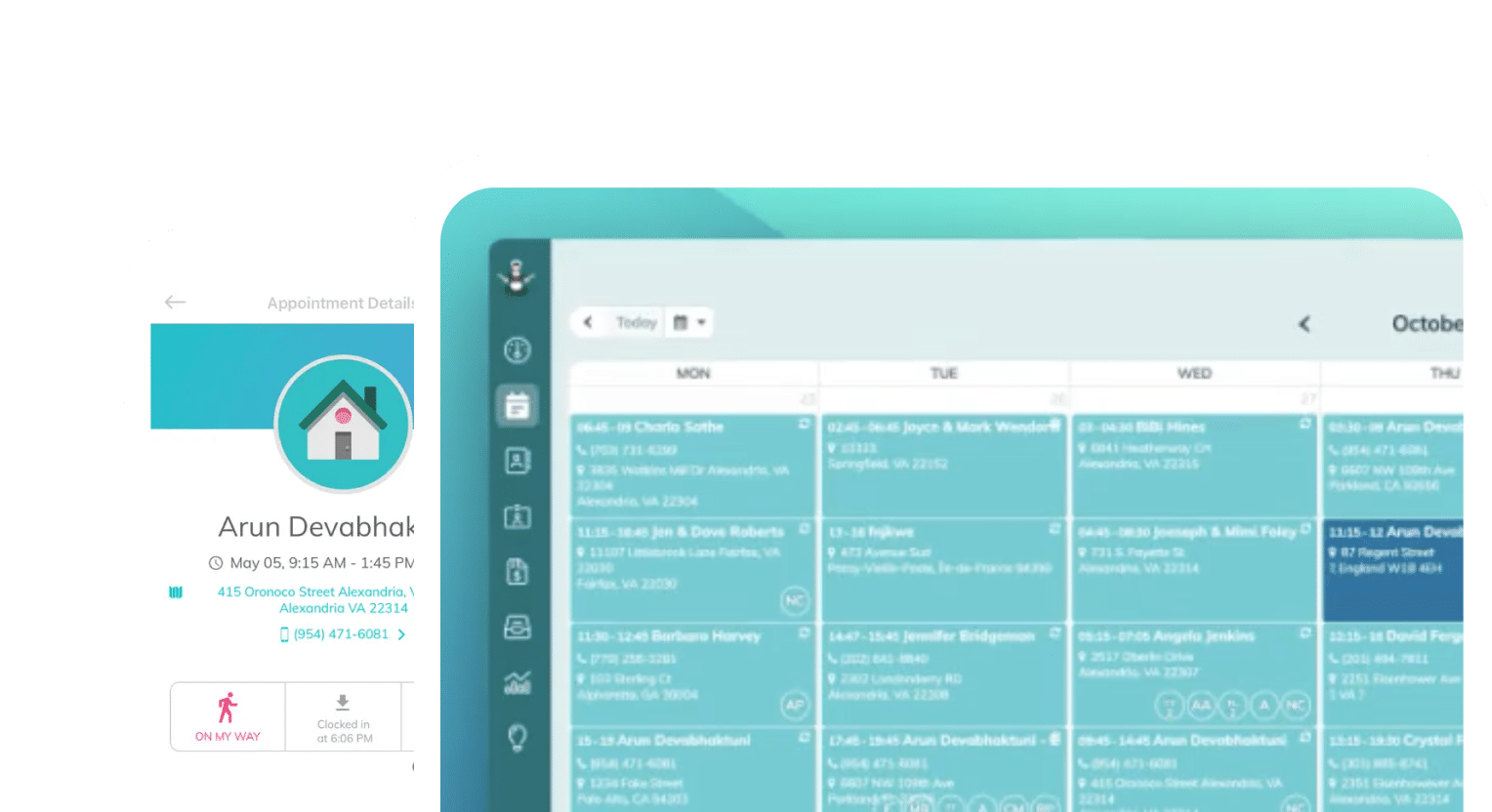
Rose: Letting go. I just hired Legina, my office manager, and that was hard for me, because I’ve been doing this myself from the beginning, by myself. And back to even ZenMaid and taking that change — because I was pen and paper. If I showed you my calendar and how I used to do this, you would be like, girl, what are you doing? And I had had an assistant who found ZenMaid for me, and when she did, I said, why didn’t I do this sooner? This is the greatest thing I have ever found.
Stephanie: You just don’t know it exists, always, until — or even, if you’ve never run a business before, you don’t know this exists. Like, all scheduling software — I didn’t even know what that phrase was until I started looking online. You just don’t know that this stuff exists.
Rose: Right. And so I think trusting the systems, and trusting that, okay, let’s give it a try. That’s how I was — okay, we’ll give it a try, see how it goes. And it was like two weeks in, and I’m not having to pen-and-paper with a ruler in my planner. Game changer. Game changer. So that for me has probably been hard. And then even still, like allowing Legina to — okay, you spread your wings and you do it, and I’m going to step back — and not thinking I have to be here all the time. That I’m still working on, because when I hired her, I told my boyfriend, oh yeah, I’ll be home more, it’s going to be great. I’m here five days a week still.
Stephanie: Well, there’s always something else.
Rose: Yeah, I’ve got to hire people, I’ve got to do interviews. And letting go of the control — that’s still really, really hard for me. Really hard.
Stephanie: No, understandable. Learning how to delegate — and it is your baby, you know, I totally understand. And especially, people are going to make mistakes, and that’s really tough sometimes, when it’s just like, well, I’ll just do it myself. But obviously that doesn’t work long term if you want the business to grow, because something’s got to give.
Rose: I think letting go and allowing her, like you said, to make mistakes, and it’s okay. Nothing’s so messed up that we can’t fix it. We can always fix anything. And when we switched to ZenMaid, we did a lot of changes — we went to invoicing, we went to all of these things. And I think that was scary, having to explain all of this to, at that time, I’d say 140, 150 clients, and telling them, here’s all these new changes. We lost a handful of clients. But one thing — me, I’m a strong believer: anytime I have lost a client, I’m telling you, God brings five more for that one client. So when that happened, it was like, okay, we lost 10 clients — well, now we’re exceeding, way exceeding, where I thought we would be at this time of year. So for me, I think just trusting that it’s going to be okay. If we lose a client, it’s not that big of a deal. It’s not the end of the world. We’re going to be okay. And trusting the process of change — change is hard for anybody. So going through those changes, it definitely helped us. It was hard in the moment, but we’ve exceeded what I thought we would do where we’re at right now, if that makes sense.
Switching Systems: ZenMaid, QuickBooks, and ACH
Stephanie: That’s amazing. What you envisioned for the year, it’s already way past that. I love to hear that. And I love to hear that you just continually improve the systems and the processes. So how did you guys do it before invoicing? Was it just checks, or —
Rose: Venmo.
Stephanie: Venmo. I figured. That’s how I pay my cleaners.
Rose: Yes, that was it. And we still do Venmo, but we don’t do it as much. So we use QuickBooks. My bookkeeper got me all lined up for this year. We went to an LLC, we did all the things this year — it was a huge change for this year. My bookkeeper was like, girl, we can’t do Venmo, we’ve got to get away from Venmo. And so she set me up with QuickBooks, and it’s been great. Most of our clients just set up their payment. We don’t do credit cards on there, just because I don’t want to pass any more fees along. So we just do ACH. We haven’t had any complaints. Everybody has been great with it. It’s working good. And again, we still do Venmo, but mainly it’s the ACH.
Stephanie: That makes perfect sense. And like you said, clients sometimes just get fussy about things being done in a different way, even though it has pretty much no bearing. We switched over to flat-rate pricing, as I’ve described recently, and we had a couple of clients just drop, because they didn’t agree with the structure — even though it’s like, this is the same price you’re paying, and just us changing — they’re like, I don’t like it, I don’t like it. I’m like, okay.
Rose: Flat rate is the best way to go. It’s the best. I never did hourly. I never did it — I’ve always done flat rate, and it’s the best way.
Stephanie: Yeah, I’m truly a believer now. Hourly was wonderful in a lot of ways, and it was protective, but now that we’ve done flat rate, I’m like, oh my Lord, we could have been making so much more money. Okay, on that note, is there any other big changes that you made where you’re like, gosh — like, for example, having a scheduling software — what other things come to mind where you’re like, good Lord, should have been doing that?
A Quick Break
Stephanie: Quick little break here. If you have ever been listening to the Filthy Rich Cleaners podcast and thought, oh my gosh, Stephanie would die at this story — well, guess what, guys, I want to hear that story. We are looking for guest applications for the show, and I know many of you have never been on a podcast before, but those are my favorite episodes, to be frank — the owners who are just here to share their stories. So if you are an owner who wants to share their story, or perhaps you would like to have a free consulting call with me and ask me your questions live for everybody else to learn from, that is also an option. And then finally, if you know somebody in our industry — a friend or somebody you look up to and have learned from — who you think would be a great guest option for us, please go to the link down in the bio, and we would love to see you apply or nominate them, and we’ll take it from there. I would love to have a conversation with you and get to know you more closely. Back to the show.
Scaling What You Offer
Rose: Definitely ZenMaid was the big game changer. And then having somebody — so now we invoice, so that’s an extra step — having somebody in office that does the invoicing. And then just letting go of that I have to do everything, and allowing, like my bookkeeper, I’m like, here, you take this. I do not want to reconcile a bank, whatever it is. I don’t know how to do that, I don’t want to do it, can you just do it? And having people to do those things has taken a huge stress off of my plate. When it was just me by myself and I was cleaning, I don’t know, 25 houses a month, sure, that wasn’t a big deal, I could handle it. But now, with 175 clients a month, I can’t do it all. So being able to delegate and to have systems in play, and using ZenMaid and QuickBooks. And then even — I’ve heard you talk about different software that y’all use to talk to your team, and we found that GroupMe has been the best. We were doing group text, and it’s like, somebody gets fired, you’ve got to start a whole new thread. So those things of, okay, let’s try GroupMe and see how that works — and that has been pretty good for our team to communicate. And I think also learning from other people — like this podcast has helped me so much. I have learned so much and come up with new ideas. But also remembering that you don’t have to do it all at once. Because when I listen, I’m writing it down, I’m like, I’ve got to do this, I’ve got to — and then, no, take a breath, step back. What’s important? What do I need to prioritize and do? Where, like ZenMaid, QuickBooks — those were things where it’s like, we’ve got to do this, this has to happen. So I think doing that, and just trusting the process.
Stephanie: And just the whole “Rome wasn’t built in a day” kind of thing — incremental improvements every single month, and then you take a step back and look, whoa, this is so much easier. And like you said, delegating little chunks over time, and all of a sudden you’re not doing that manual stuff. It is important — I’m never going to say don’t do bookkeeping, guys, it has to be done. But should you be the one doing it? Probably not. Probably not. So just making those decisions, and really looking at how you, as the owner, are shifting from technician to operator, manager, entrepreneur, CEO thinking, right? Because when you’re the technician all the time and you’re doing all of these other things, you’re probably not doing any of them particularly fantastic. You may be a great cleaner — I would imagine most owners are great cleaners, for the most part — but you have to think differently, and think in a much more systematic way. Things that come to mind are going above and beyond with cleaning tasks that are not scalable. I certainly made mistakes with that, doing things where I’m like, okay, I wouldn’t want my cleaners doing this, whether from a safety perspective or whatever. It’s like, yes, I’d love to get the tops of the kitchen cabinets, but we’re not going to climb on top of these things. This isn’t scalable for what I envision for the business. Do you have anything like that that you’ve had to alter with what you provide, surface-wise, because it just doesn’t make sense as you guys continue to grow?
Rose: I think for us, it’s actually been adding things. Our routine clean, it was just a basic cleaning, and it’s like, let’s actually — you know, over the years, I’m like, let’s add this to it, let’s add this to it. Most cleaners, baseboards is a deep clean. For us, it still is a deep clean, but we still dust the baseboards, because there’s still dust on them, so let’s just dust them. But if we need to scrub them, that’s more of a deep clean. And explaining that to our clients, so we’re all on the same page, they understand that. Being very clear on what is provided in a routine versus a deep clean or a first-time clean or a move-out clean or whatever, because we provide all of those services. So just knowing the difference between those. But going above and beyond, and actually truly meaning that — not that I didn’t do that before, but realizing, oh, you know what, we could add that, that would be a great thing. And it’s usually because a client’s like, hey, I was wondering if y’all could do this at this clean. It’s like, you know, it didn’t take that much more time, let’s just add that to our checklist. And that’s what we do.
Stephanie: And just being able to sell them on that extensiveness — it makes you stand out, like you said, because most people, their basic clean is skipping a lot of stuff. And personally, that doesn’t sit right with me. I get it, then you can upsell, I understand. I just like to be able to be like, nope, standards vary, like, detailed.
Rose: And that’s what we tell them — that our first cleaning is a very thorough clean. If you don’t want to pay for the deep clean, I get it, that’s expensive. But you’re still going to get a thorough clean, and it’s still going to be expensive, because it’s a first clean, and we’re going to get it to our standards so we can maintain it for you.
Stephanie: Exactly. And how many times clients will be like, oh, can we just skip to the maintenance clean? And I’m like, okay, so the tasks still are going to take longer. Me cleaning this toilet — it’s not been cleaned in two years, so it’s still going to take longer than it’s going to take in two weeks from now, when we’re just maintaining it. So just being able to explain succinctly to the clients why. Because yes, they get that sticker shock on the initial. Saying it straight, like you said — you go into the walkthrough saying, yes, we are not going to be the cheapest, we’re going to be more expensive, and this is why. The first clean, it’s your most expensive clean you’ll ever have, but this is why.
Wild Client Stories
Stephanie: I’d love to hear, if you are willing to share, just any standout client situations that have been maybe mistakes, or the client just wasn’t a good fit. Have you guys ever broken anything crazy? I mean, I know that one story — I want to hear about the one you listed, with the naked man.
Rose: Yeah, that was probably the craziest thing that’s happened. My cleaner showed up and started cleaning, and they text me and say, I think he’s sitting on the back porch naked. And I’m like, naked? Like, naked-naked, no underwear? No, he’s naked. I’m like, okay, if you don’t feel safe, if you don’t — get out of the house, leave. They’re like, no, we’re going to finish. I’m like, okay, more power to you. And he was just kind of rude too, and made some inappropriate — not sexually inappropriate, but just inappropriate comments. Basically like, you’re here to do my job, do this. Very rude. So they are not a client anymore, and we did not go back.
Stephanie: Was it a married couple? Did you tattle to the wife?
Rose: She was there.
Stephanie: Oh, she was there.
Rose: So I guess that was just normal. And then, of course, we found adult toys. And one time we went in and cleaned, and it was there — didn’t touch it, it was like on the shower, didn’t touch it, cleaned around it, and texted her after we were done: okay, we’re all done, let’s schedule the next cleaning. We didn’t hear back from her, and I think it was because she was embarrassed.
Stephanie: Yeah, she didn’t mean to leave it.
Rose: Yeah, I don’t care. To each their own, whatever you want to do, it’s your house. Just recently, I went and did a walkthrough, and it was in the country, an older man’s house. I love dogs. His dog came out, was barking, growling at me, and I’m like, is the dog friendly? And he’s like, yeah, he’s super nice, he just needs to smell you. And I’m like, okay. So I try to let him smell me, he kind of walked around me, I’m like, okay, well, he didn’t smell me. But I shook the guy’s hand, everything, started walking up — the dog bit me. On my ankle. And he’s like, oh, he just grazed you. I’m like, no, I’m bleeding. There’s blood coming off of my leg.
Stephanie: Oh my god. So what did you do?
Rose: I got it wrapped. He got me a Band-Aid and some wrap or whatever. And I’m thinking in my head, do I do the walkthrough, do I not? So I’m like, I’ll do the walkthrough real quick. It was a disaster. This old man, poor thing, hadn’t cleaned his house in who knows how long. I felt horrible for him, and he was very apologetic. And I have a dog, so I’m like, I get it, it’s fine, he was doing his job, he was protecting you, I understand that. And he’s like, after the walkthrough, so probably not going to clean my house, huh? I’m like, I don’t know. I said, honestly, if we do, you’re going to have to put that dog away. He’s going to have to be put away, because if that happens to one of my techs, I can’t guarantee you they’re going to be as cool with you as I am.
Stephanie: Well, no, because obviously, police reports and, you know — I mean, yeah.
Rose: I didn’t do — I did not do that. I went to the doctor, got antibiotics, after many friends were like, please just go to the doctor.
Stephanie: Well, you know, like a tetanus shot, rabies vaccine, those sorts of things.
Rose: Right. So that’s been the most recent crazy thing that’s happened. I’ve had clients that are like, oh, you didn’t move our furniture — no, like a couch. They expected my techs to come in and move couches, and I’m like, no, we don’t do that. So now I make sure to tell people that we don’t move furniture. If you would like us to, I need to know ahead of time, so I send enough techs to do that, because one person can’t do that. Outside of that — we don’t use bleach. I hate bleach, we don’t use bleach.
Stephanie: I don’t use it either. Nope.
Rose: I’ve lost clients because they’re like, well, I left bleach out and y’all didn’t use it. And I’m like, we don’t use bleach, my techs don’t like it. And so they’re like, well, I like the smell of it and I want my house to smell that way. And I’m like, we’re not the cleaner for you.
Stephanie: It’s very shocking to me. I’m just surprised to hear that people still want that in 2026. There’s just so many alternatives to that. And I get it — I was raised cleaning with bleach, so I associate that smell with — I understand it. But I also know the house can be clean without bleach.
Attracting the Right Client at the Right Price
Rose: Something — I don’t know, this is just something that stuck with me — somebody told me a long time ago, just for other cleaners: you attract the right client at the right price. And that stuck with me. He told me that a long time ago, just about — I was talking about how I’m trying to raise my prices and that’s hard. And when he said that to me, it was like something inside of me clicked. And going back to when we were talking about the confidence I have — I think it’s that. The person that’s going to pay a higher rate, they’re going to respect us and appreciate us and know our value, because they’re paying a little bit more. I just feel like you attract that right client, if that makes sense.
Stephanie: I totally agree. And obviously everybody’s got their budgets, everybody has their financial level, and I totally respect that. But I will 100% say the budget ones sometimes can be absolute nightmares, because the cleaning is a larger percentage of their income, and so the expectation — I mean, we should be wonderful, right? That’s the goal, absolutely be wonderful. But when it comes to reasonableness, whenever we get the response of, like, it just wasn’t — I didn’t feel the value was there — and it’s like, but what specifically? And they can’t name it. All it is is, mentally, they can’t wrap their mind around it. They have not reconciled paying this much for a cleaner. And if they can’t literally name anything we missed, there’s nothing wrong per se, it’s just it doesn’t sit right with them paying that much. And it’s like, this is just never going to work, because we’ve got to prove something that we simply cannot.
Rose: Right. And sometimes I feel like those clients, they don’t understand the value, and they want all these things, and it’s like, but you don’t want to pay for that. You want to have the high-end cleaning, but you don’t want to pay for that high-end cleaning. And for me, weeding through that — not that we don’t ever take some of those. I have a soft spot for elderly people. My elderly people get the lowest pay, but I love them, and they’re the sweetest people, and I have a soft spot for them. So that is something that we try to do, I do try to serve in that way. But I think just going and knowing and being confident, and letting them know and understand the value that we’re bringing to them. And then when they come back and they’re like, you don’t know how much peace you’ve brought into my home — that, to me, is it. My job is done. That’s why we do it, so that we can bring peace for other people.
Valuing Your Team
Stephanie: Oh, I love that. And then to take that to your team as well. That’s the best — sharing the feedback with the team, of how much customers are appreciating it and how we’re changing their lives. Because if you don’t think, as an owner — if you’re not that serious about it, that we are changing people’s lives — then you probably just don’t have enough passion for this. And obviously, we weren’t all passionate about cleaning, most likely, right? You needed money, I needed money — that’s why we started these jobs. But it becomes a passion. Passion starts to grow, especially as you start to see the effect of your work. And I see that in my staff members too, where it’s like, yeah, they were good, they liked it, and then once they started getting that positive feedback, good tips, getting treated well — all of a sudden, now they’re really passionate about what they do, and they can speak on it really excitedly.
Rose: And I think that’s something too — I really want my employees to feel valued and appreciated. I never want them to feel like I don’t appreciate what they’re doing. Because I think a lot of cleaners are — what I see is, they’re just looking for somebody to help them with one or two houses. But this is an actual business, and they are employees. They’re W-2 employees.
Stephanie: Not helpers. You’ll see people use that word, helper — oh, I just have a helper. And it’s like, no, these are employees. This is a team.
Rose: And I want them to feel that appreciation. So I try to do things for my team to show appreciation — birthday gifts, or, you know, I have a girl that was an assistant for me, she’s a massage therapist, so I’ll pay for them to go get a massage.
Stephanie: Ooh, I love that. That’s great.
Rose: I want to do these things because, when I have worked in a couple of different jobs — I was a personal assistant for somebody one time, and they really taught me how to be a good boss, because they appreciated me so much. I was doing all of these things for them, and I always felt appreciated. I never felt below them. And I don’t ever want anybody on my team to feel below me. This is our company, all together. Yes, I started it, it’s Rose’s Cleaning Services, but we all did this. It was a team effort. I wouldn’t be where I am today without the team that I have, especially those that have been with me for three, four years. They’ve helped me grow it to what it is today, and I couldn’t do it without them. So I want them to feel that appreciation and the love.
Stephanie: I couldn’t agree more. And just having that “we” mentality, that team mentality — because anytime you continually think, well, yeah, but I did this, I did this, that’s not useful. It’s not a useful leadership trait. We need to be able to take complete responsibility and accountability for our entire team, and show that appreciation and love. And even coming back to having slightly cheaper prices for elderly — the beautiful thing is, when you have excellent service. And this is what I tell my team all the time: we have to command quality and excellence, because if we don’t do that, if our reputation isn’t good, if we aren’t the best at what we do, we can’t charge high prices. And when we can’t charge high prices, not only does that affect you guys all financially, but it affects our ability to give and have a bigger impact. Because what you’re talking about is intentionally having lower prices so that your service can benefit folks who otherwise wouldn’t be able to afford it. That is a form of giving. And so our ability to give as companies is directly correlated to how wonderful the service is and how much we excel at it. So I’m constantly tying that for the team: guys, the standards are super high, and we’re very picky, but it’s so we can do all these cool things for our community and for you guys.
Rose: Right. And I think that’s something for me — going back and helping the elderly. Everything I do, I want it to, for me personally, honor God and what I feel I’m called to do. And I feel that is where I’m called to help. And I’m stepping out and trying to do more. Like, I’m doing a giveaway on Facebook for a teacher — we’re going to do the first $300 of her Amazon wish list and pay for that, and then share it so other people can help. Because teachers are amazing. It is not an easy job nowadays, and so if we can help in any way, I want to help. And you actually have inspired me to do more of that with the community, listening to the podcast and just stepping out. And I have felt that call on helping the elderly. That’s why, when I go do a walkthrough and they’re like, I’m on a fixed income, I’m like, it’s okay, we got you, we’ll do it at this, and it’ll be just fine. And my team — I know which girls I can send to that person’s house that they’ll have a good connection with, and it’ll be a good relationship, but they can also get in and get the job done. But it’s still building a relationship and being there, because some of those people don’t have anyone else. We’re their contact. That’s who they see the most.
Stephanie: Yeah, I totally agree. I was up in Wisconsin a couple weeks ago, and I was on some cleans, and I did a clean for an elderly woman that we clean for, just in her little one-bedroom apartment. She’s clearly on fixed income, and she talked to me the whole time, and all I could think of was, this is not just clean — cleaning for these older folks, like you said, that connection. It makes it tougher sometimes to get through a clean, for sure, because they’re yapping at you. But it’s great, because all I can think of is, they love this for more than just the cleaning, right? The personality. It sounds like your team has some great personalities on it.
Rose: Yes, for sure. And I think too, our team feels better when they do something like that for somebody. It makes them feel, like, we just helped this person — we helped somebody that maybe somebody else said no to, because they couldn’t do it at their budget or whatever. And so I think it just builds everybody. It builds the team morale, it builds our confidence, all the things.
Family First: Building Culture
Stephanie: No, I agree, it’s wonderful for culture. And it sounds like your company culture — I would imagine that you have a lot of parents on your staff, probably some single moms, as you mentioned. I’d love to hear how that has influenced the type of culture that you’re building. Do you have specific core values that you guys talk about? How do you integrate parents into the staff? Because I’m the same way — we’ve got tons of them.
Rose: I’m very big on family first, and I tell people that when I hire them. And I am super flexible and understanding when things happen. When we hire people, I ask them, do you want full-time or part-time? Do you have kids? Do you have obligations? What time do you need to pick your kids up? And I plan around them. If they tell me, hey, I can only work three days, and I want to go to my kid’s field trip — great, you let us know when that field trip is, you’re off, you can have the day off. I try to be super understanding. I tell them, I know people get sick, if you have to call in, I get that — as long as it doesn’t become consistent, and then there’s other problems. But I try to be very understanding. And then, you know, I’ve got single moms, and their car will break down. Well, my boyfriend is a mechanic, has done mechanic work, so I’ll say, bring it over, he’ll fix it, he’ll look at it. He says all the time, we have an office in the middle of town, he’s like, I just need to park out there and do oil changes for all the girls. Because it’s like, oh, I haven’t had my oil change, or this or that. But he’s so helpful in that part of it — he’s like, tell them to bring the car over, I’ll look at it, we’ll get it figured out. And helping them in that way — I want my team to feel like family, and the best way I can do that is to be a great leader, and to also be understanding and communicative with them, communicating on, these are the things that are going on. We just put a pool up, and I’m like, let’s have — you bring your kids and let’s have a pool party. Those types of things, and building that team morale. And not just — I want my team to all feel that way together, not just with me, but with each other. And I took something from you again — I know you guys do weekly meetings. We’re starting a monthly meeting in person, everybody’s going to come to our central location, just to be like, hey, this is what went great last month, and also, here’s the new people, I want everybody to meet them. Just going over those things to build that morale, because I think that’s super important. And I want people that want to stay with us long term. This is a high-turnover industry, and I’m trying to change that, at least for my company. I don’t want it to be a high turnover.
Stephanie: And it’s all of these things. When people are like, oh, company culture — you typically aren’t pinpointing it to one specific thing. It’s about 70 different little things that we can do that combine into this colossal stronghold of a wonderful company culture, where you do what you say you’re going to do. We walk the walk. It’s not just corporate BS. How many companies say they’re family first, but then when push comes to shove and your kid’s got a field trip, well, you can’t get off, or you’re getting dinged for that? So it’s like, how can we actually embody what that looks like? And of course, there is going to be drawbacks to that, because I have the same thing. We’re super flexible, we build the schedules around what they can do. If you need to be off at two every day, well, then you’re probably only going to get one house in, working individually, so that’s going to affect things. But you have to be aware that that means it’s going to affect things from the business standpoint. And that’s personally something I’m willing to do, because those are some of my best staff members. I have lots of fantastic ones, but they’re going to be loyal and very, very appreciative, because other jobs will not do that for them. And especially for folks who are just starting their business, and you’re like, I can’t afford benefits, I can’t give them anything — the one thing you can give them, guys, is flexibility. You can give them that flexibility that other jobs can’t. And look what it’s done for Rose, because she has also been incredibly flexible, and seeing it from a parent’s perspective, and making it work for parents, who are like gold mines for staff.
Rose: For sure. And I do think that has helped us in building that. And also, when I do that, they know that, okay, you need the time off. I also have other girls that they’re not moms — like the one I was telling you about, that’s going to do our social media. She’s great, and I can call her and be like, hey, so-and-so’s got this going on, do you mind covering? And she’ll do it. And just knowing that I have such a team. My core girls that have been with me for the last three years, even the girls that have been with me for a year — they’ve been so dependable and just shown up in ways for me, and this team, and the business. I’ve got a girl, she’ll start at 6 a.m., she’s like, can I get there at 6 a.m.? And a lot of it’s commercial, so it’s not a big deal, or it’s rental houses where there’s nobody there. And just knowing that they always try their very best. And then I try to show that, like, I appreciate that. That means so much to me, that you’re trying, and you want to do better and be better and help build all of this. The team I have now, they want to build it. They want to see it grow. They want to grow with us and be a part of that. And that’s what I’m trying to convey to the new hires — I’m looking for people that want to grow with us. Not just come on, get a job, get a paycheck, and go home. I want you to grow with us and grow into something.
Stephanie: Yeah, be part of a team, that belonging, that sense of belonging. It’s wonderful. And I love to hear that you’re going to be implementing the team meetings, because it does do wonders, especially considering how kind of remote the work is. You just don’t see your co-workers very much. And even just something as simple as having the group chat, so you can talk — like GroupMe is great. Actually, the cat shelter I volunteer at, they use GroupMe to stay organized with all of the volunteers. So it’s a wonderful app, for those of you who don’t want to pay for something like Slack — that’s a really good option. There’s lots of different apps for this type of thing. Just get away from text groups, dear Lord. Because, like you said, it’s the worst.
Rose: Yes. It’s horrible. I’m like, we’ve got to figure something else out, because this is not working.
Stephanie: When you have to delete the whole group or start a new group because somebody quit, it’s a nightmare. It’s a nightmare. So love to hear you’re implementing all of these amazing ideas. It’s really cool to see.
Advice to Her Younger Self
Stephanie: And I’d love to hear, Rose — if you could talk to Rose seven years ago, who’s about to start this, what would you say to her? If you could give her some advice.
Rose: Trust the process, again, like I keep saying. Because I don’t know, a year in, I might have looked at it and thought, this is growing, but is this what I want to do? And it’s hard on your body, it takes a lot of work. But if I could go back and tell her, just trust the process, have faith, because it’s going to be bigger than you could have ever imagined. In the last three years, it’s grown exponentially further than anything I ever imagined. I never ever thought that I would be on a podcast. I never thought I would be doing the things I’m doing, and have the type of team that I have, and the business that I have, and the clientele that I have. Just trusting that process. But also, not comparing where you’re starting to someone else’s chapter seven. I have other cleaners that will reach out to me, and they’re like, I just don’t understand how you’re here. And I’m like, well, when did you start? Oh, six months ago. I’ve been doing this for seven years. It took me seven years to get to this point. Could it have gone faster? Sure, had I implemented some of these things that I’ve now implemented. But trusting that process, and just taking it day by day, and not beating myself up when something does go wrong. Because you’re not always perfect. There’s going to be things that you’re going to fail at, you’re going to fall on your face. But trusting that if I keep going, and I keep showing up with 100%, giving it my all, my effort, and knowing the value that I’m bringing into these homes and that my team is bringing into these homes — it’s going to take us further than we could have ever imagined, and just continue to grow.
Stephanie: And just not cap yourself. Because I can so relate to that — I could never imagine when this started what it was going to be. And remembering that now, in the spot that you are now — you never imagined this. In five years, what’s going to exist, you can’t even imagine right now. So it’s the possibilities. And for everybody listening, I want you to feel encouraged by that. One, everybody’s timeline is different. It is different. You cannot compare, the situation is not the same. You cannot expect to have the same exact growth or experience that anybody else has had, right? So don’t get discouraged if you have challenges that neither of us have experienced. That’s life, and we have to overcome our individual challenges. But the beautiful thing that I’m trying to express is, this industry is such a wonderful one to be in — not only from a financial perspective, obviously, being able to grow a successful business, but just from a purpose perspective. It seems like you can really relate to how much purpose you can draw from this career.
Rose: Yes. And I think too, being authentic. I know that’s like a phrase everybody uses, but — like, being, when you’re hiring, when you’re looking for that person to hire and bring on. I remember when I first started, I would just hire anybody, just anybody that I could get. And now we still kind of do, because we’re like, let’s just see what happens, and if it works, great. But then, once you get to know that person, don’t string them along. If you realize it’s not going to work, just let them know, this is not going to work. And I think being honest, and again, back to communication — communicating with your clients, with your employees, with your managers, with all of those things. And knowing, yes, like you said, there are so many challenges in this business. Challenges that I’m like, sometimes, how did I get through that? But then I did get through it. My office manager, she’s like, it’s every day, huh? I’m like, every day it’s something. Every single day. And you don’t realize that. I told my boyfriend, when I hired her, I was like, I think she’s finally seeing why I had to hire her, because I couldn’t handle it. But knowing that — and I’m so glad I did — seeing and knowing that you’re going to have challenges, you’re going to face objection, you’re going to face all of these things. But as long as you continue to grow and you continue to learn from it, you’ll get through it. Any of the challenges I’ve gone through, obviously, here I am, I’ve gotten through them. In the moment, it’s hard, I know, but you can still get through it.
Stephanie: No, a hundred percent. Everything is figure-out-able, as they say. So Rose, where can people find you if they want to follow along, either with you, if you’re willing to share, or your business pages — whatever you’re comfortable with?
Rose: We are on Facebook, Rose’s Cleaning, and then we just got TikTok and Instagram, and we’re starting to build those up — thank you, Maddie. You can search us up, Rose’s Cleaning Services, and find all of that on there. We’re in Central Texas, and we’re going to be posting some fun content, I think. I’m excited about it.
Stephanie: I can’t wait to see. I’ll definitely give it a follow. We’ll link it all down below, guys. Leave a little Texas emoji down below, if there is one, or just a cowboy hat, you know, or just say yeehaw in the comments as a thank you for Rose joining us today, because this has been lovely. Thank you, Rose. Thank you for watching, thank you for being a fan, and thank you for this conversation. It’s been wonderful to learn about you and your business.
Rose: Thank you. I appreciate it.
Stephanie: Yeah, you betcha. And everybody, please hit that like, that subscribe, and we’ll see you in the next episode of Filthy Rich Cleaners. Bye, guys.