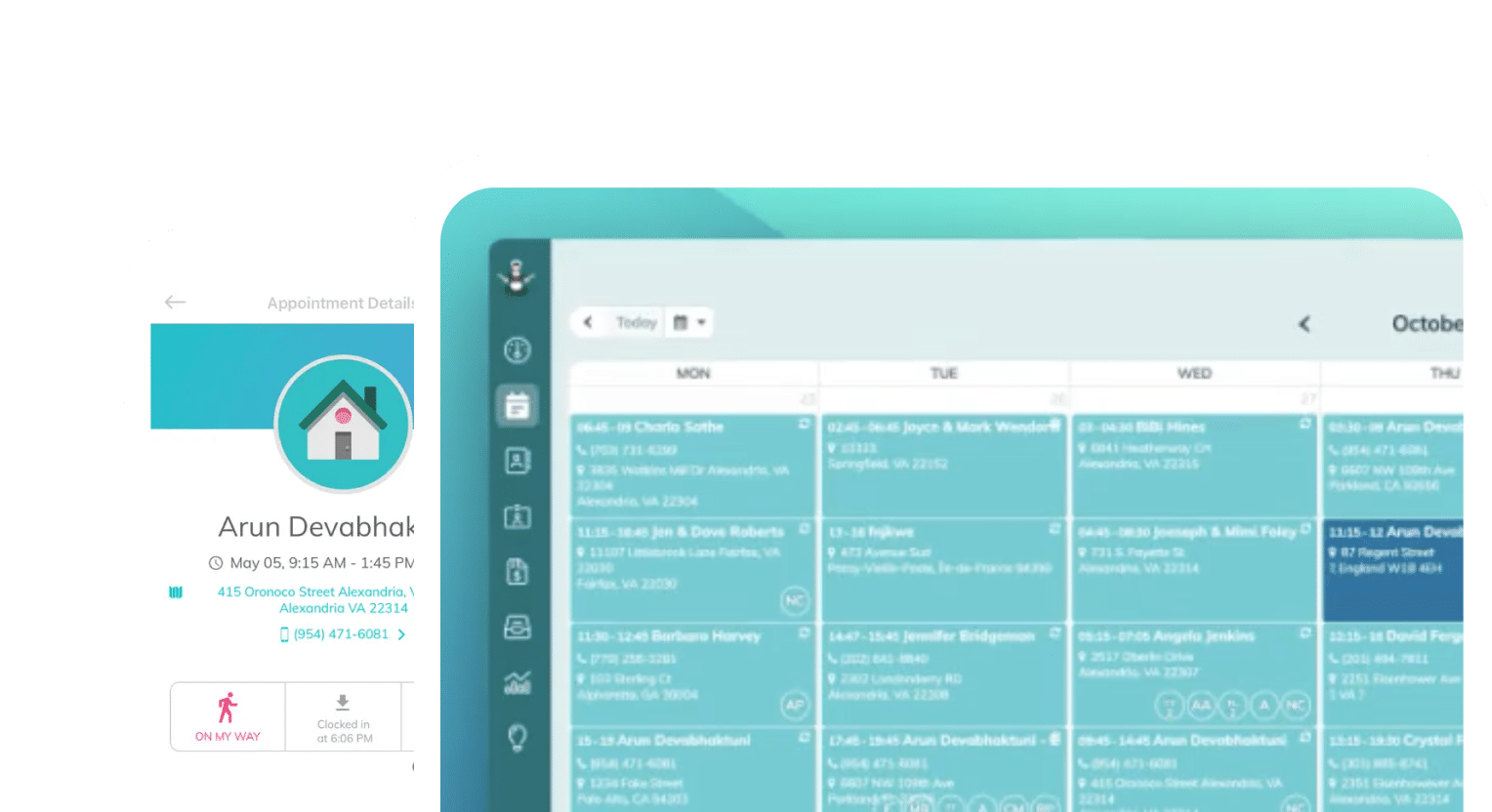
Frustrated with your scheduling? Try the easiest-to-use calendar app, made by and for maid service owners.

Scaling a cleaning business means making smarter decisions about hiring, systems, and revenue, before you actually need to. Predicting how you’ll need to make these decisions is easier when your operations are systematized.
The busier you get building your business, the easier it is to overlook your need to forecast demand, especially for staffing. Most owners hire reactively — suddenly, you have more business than you know what to do with — instead of proactively, where you hire in preparation for demand.
Avoid turning down work or scrambling to cover jobs last minute. This guide walks you through how to forecast staffing needs systematically.
Forecast Demand for Staffing with ZenMaid’s Free Calculator
Translate your job forecast into cleaner headcount, accounting for drive time, callouts, and availability, with ZenMaid’s free labor hours calculator. Input your numbers and find a custom solution for your staffing needs, all for free.
Staffing model
Weekly labor hours calculator
Translate your job forecast into cleaner headcount — accounting for drive time, callouts, and availability.
Job volume
Buffers & availability
Base hours
—
before buffers
+ Drive time
—
incl. travel
+ Callout buffer
—
capacity needed
Cleaners needed
—
rounded up
Step-by-step breakdown
Build a Baseline From Your Historical Data
Even with the potential for surprises, the best predictor of future behavior is past behavior. Look at your own job history and your cleaning business’s growth trajectory.
This is the best way to build the foundation for your staffing forecast, and systems make it easy to find the numbers you need. Pull your scheduling data and look for:
- Average number of jobs: Look at numbers per week, month, and quarter depending on how far out you intend to forecast
- Seasonal spikes: Spring cleaning season, pre-holiday cleans, and summer vacation rentals all drive business at certain times of the year
- Seasonal slowdowns: Figure out which periods consistently slow down, like the post-holiday season or mid-summer for residential cleanings
- Cancellation and no-show rates: Look for changes by season, appointment type, and client
Scheduling software makes this data accessible, you just need to build the habit of reviewing it quarterly. ZenMaid’s cleaning business scheduling software manages all of your bookings, payroll, and credit card processing, which means you can find rich data about your seasonal dips and peaks.
Don’t worry if you don’t have software yet. Look at your calendar and build a spreadsheet tracking jobs per week over 12 months. This will reveal patterns in your business that help you eliminate guesswork from your staffing decisions.
Convert Job Volume Into Hours Needed
After you determine your demand baseline, use it to figure out your labor hours and production rate. These are slightly different metrics, and you need both.
Labor hours refers to total time spent. Production rate typically refers to the rate at which work is completed, such as square feet cleaned per hour. If a space is 800 square feet and it takes your two-person team 15 minutes to complete 100 square feet, schedule two cleaners for two hours.
The next step is to translate your demand baseline into labor hours. Let’s work through this example:
- The average job takes two and a half hours and two cleaners to complete
- Your profit margins require that you forecast 40 jobs each week to remain profitable
- Drive time between jobs typically adds 15–25% to cleaner hours needed
- Your average cleaner’s weekly availability
- A 10–15% buffer for callouts and cancellations
Using these numbers, you can calculate:
- Base cleaning hours needed to cover: 40 × 2.5 × 2 = 200 hrs
- Drive time buffer (20%): 200 + 40 = 240 hrs
- Callout and cancellation buffer: 240 ÷ (1 − 0.12) = 272.7 hrs of capacity you need available, not just scheduled
- Adjust for cleaner availability: 272.7 ÷ 30 = 9.09 → round up to 10 cleaners
Always round up, not down. Don’t round down on staffing. Fractional cleaners don’t exist and rounding up gives you some additional room in your schedule when demand grows.
For example, if you drop to nine cleaners at 30 hours each, you only have 270 hrs of capacity, which falls short of your required 272.7 before a single thing goes wrong. This automatically costs you a job based on your average job duration.
Identify Your Leading Indicators
So far, we’ve only worked with historical data, which tells you what happened. Now, we’ll shift focus to leading indicators, which help you see what’s coming.
The most reliable leading indicators for maid services are:
- Booking form inquiries: A spike in quote requests two to three weeks out usually signals upcoming demand
- New client onboarding rate: If you’re converting five new recurring clients per month, you can model when their cleaning frequency will hit full rhythm
- Referral activity: Word-of-mouth referrals often cluster seasonally, so you can hire in advance to accept as much new business as possible
- Local market signals: New housing developments, apartment complex openings, or a nearby competitor closing are all demand signals worth tracking
This is where knowing your market — not just your business or competitors — is essential.
Plan Staffing in Tiers, Not Just Headcount
Sometimes, especially seasonally, it won’t make sense to hire full-time staff that you can’t keep busy in the off-season. But you know you’ll need the help, so you still need to find new cleaners.
This is where thinking more creatively about tiered staffing pays off:
- Core staff: Full-time or high-hour cleaners who cover your predictable recurring client base. These cleaners can train new hires and build your company culture
- Flex staff: Part-time cleaners available for surge weeks, first-time cleans, and deep cleans. This pool is also your best pipeline for finding future core staff
- On-call pool: A small roster of trained cleaners you can activate for unexpected volume or callout coverage. Former cleaners, retirees, and folks looking to pick up extra work are great fits here
This structure means you’re not overpaying for labor in slow weeks or turning down jobs in busy ones. On-call pools are most often underused by small operators, but it’s worth exploring as an option because they help you absorb demand spikes without permanent hires.
Avoid Overwhelm with Hiring Trigger Points
As we said earlier, don’t wait to hire until you feel overwhelmed — by then, it’s always too late. Using the data you’ve already gathered, you can establish clear metrics that tell you when it’s time to start hiring.
These triggers can include:
- Recurring job count crosses a threshold: If you go over 35 weekly jobs per full-time cleaner, you need to hire or pull in a part-timer
- Cancellation or decline rate spike: If you’ve declined or rescheduled more than three jobs in a single week, you need more staff
- You’re slower to respond to new inquiries: It takes you more than two weeks of lead time to onboard and schedule new clients
- Overtime hours increase: If overtime exceeds 10% of total payroll hours for two consecutive weeks, you need more staff. Don’t burn out your best cleaners
Start recruiting as soon as you hit one of these thresholds. If you wait until someone quits or you’re already overbooked, you’ll lose money on new jobs.
Account for Attrition in Your Forecast
Turnover is high in the cleaning industry. The average annual turnover rate is 50–75% in many markets. Statistically, if you have six cleaners today, you’ll need to replace three to five of them over the next 12 months.
Plan for this. Build attrition into your staffing model so you’re always running a slow, steady hiring process rather than emergency recruiting every time someone leaves.
There are also several ways to reduce attrition and improve employee retention. These include better training and onboarding, stronger benefits, and a clear career path for your cleaners. People are less likely to leave if they’re paid well and feel secure in a role.
Review and Recalibrate Quarterly
A staffing forecast isn’t a one-time exercise. Review it every quarter against what actually happened. Put a review cadence on your calendar now.
Find out where you were overstaffed, where you were short, and by how much. The goal is to narrow the gap between forecast and reality over time, so your hiring decisions become proactive rather than reactive.
Forecast Early and Often With ZenMaid
The cleaning businesses that scale past 20 or 30 clients without chaos are almost always the ones that treat staffing as a planning function, not just a response function. Build the systems you need to make forecasting easy, with backward-looking views on your client, cleaner, payroll, and scheduling data all in one place.