Frustrated with your scheduling? Try the easiest-to-use calendar app, made by and for maid service owners.


Brought to you by expert maid service owners
Introduction
Stephanie: Hello, everyone. Welcome or welcome back to the Filthy Rich Cleaners podcast. I am your host, Stephanie from Serene Clean. And in today’s episode, I am absolutely thrilled to have Samantha Price who owns Clean Sites Solutions in South Florida. And her specialty is something that we have not covered once in over a hundred plus episodes of Filthy Rich Cleaners. And that is why I am so thrilled to have her — because this is something that I want all of us to learn about, and that is post-construction cleaning. It is not something that I at Serene Clean have specialized whatsoever in. We’ve dabbled here and there, but I am by no means an expert. So I am really, really excited that Samantha reached out. She has been a listener for the entire time the podcast has existed. So it is wonderful to have you, Samantha. Thank you so much for agreeing to come on the podcast.
Samantha: Thanks for agreeing to have me. I’m so excited. I listen to your podcast like every day that I’m working, and it’s so valuable to hear from all the different cleaning business owners that you interview and hear the do’s and don’ts and the lessons that they’ve learned. And I’m just excited to hopefully contribute and give back a little bit to this community of cleaning professionals.
Stephanie: Absolutely. And that’s really what makes it special — everybody has such diverse backgrounds. And even though we’re all technically doing the same physical thing, cleaning, there are so many different angles to it. And your angle is so specific and unique, and I’m just very intrigued at all of your experience here. So how did you start your business to begin with? And was post-construction your initial focus, or were you more interested in general residential cleaning?
Samantha: So 100% from day one with the creation of the company name, Clean Sites Solutions, I knew this is where I wanted to be. Now, I didn’t know what that meant, but I’m studying construction management. I didn’t want to stay in that job anymore and I needed flexibility to work with my kids. And to start a cleaning business, just register your LLC, you get your insurance, and you are a cleaning business owner. It was like an epiphany that I had — I was like, this is where I’m going to be. This is how I’m going to get into construction and have the flexibility that I need to be very involved with my kid’s school and also my own schooling. So from day one, I knew I was going to get into construction.
Table of contents
- Introduction
- Commercial vs. Residential Post-Construction
- How to Find Post-Construction Jobs
- The First Job and Lessons Learned
- Pricing Post-Construction Cleaning
- Repeat Customers and Getting Out of the Cleaning
- The Phases of Construction Cleaning
- Navigating Budgets and Negotiations
- Tools, Supplies, and Equipment
- Working With Subcontractors
- Windows and Knowing When to Pass
- Walkthroughs, Bidding, and Reading Plans
- Closing Advice: Just Do It
Commercial vs. Residential Post-Construction
Stephanie: And so obviously you focus on more high-end luxury on the residential side. Do you do any type of post-construction for commercial, or is it specifically residential?
Samantha: So actually most of the post-construction cleaning that we’ve done has been commercial. We’ve done Five Below, which was like a 10,000 square foot warehouse — I did the rough and final cleaning. We’ve done several Insomnia Cookies, Crumbl Cookies, hospital ICUs, outpatient facilities, dining facilities. We have done residential construction cleaning as well. I like to say that I specialize in transitional cleaning. We do clean occupied homes, but we’re trying to do unoccupied residences, move-in and move-out. And in Miami, it works because it’s a huge city. Everybody’s moving, everybody’s coming and going. And we cannot — not exaggerating — we cannot drive a mile without seeing a construction site. So the opportunities here are plentiful.
Stephanie: Absolutely. And I think that’s one of the reasons that we don’t run into opportunities that much being in such a rural area — building is few and far between and certainly not enough to sustain a full schedule unless you were to get into more complex things with lifts. So I really want to walk through kind of from procurement of these jobs all the way through to doing the job, planning for it, finalizing it, the different stages. There’s so much information that you’ve got that I want to dig into for post-construction.
How to Find Post-Construction Jobs
Stephanie: So first and foremost, for people who are wanting to go after post-construction jobs, what would you suggest? What has your experience been like, and how have you gotten your jobs thus far?
Samantha: I find that networking is so important in construction, whatever trade you are. I think it’s so important — who you know matters. And I saw a study once, I think it was from LinkedIn, where it said that 70% of jobs are given to people based on who you know, not necessarily what you know or what your qualifications are. So I think my sales experience has helped me a bit because I am not shy to cold call. And I have had multiple experiences where I pick up the phone and I just call a general contractor. “Hey, my name’s Samantha. I own Clean Sites Solutions, a construction cleaning company in Miami. And I would love to work with you.” And twice it’s happened now where they’re like, “Can you clean this weekend?” And I’m like, “We can clean right now. Let’s go.”
The exciting thing about that is once you start getting in and you start doing jobs, you are proving that you’re reliable, proving that you do a great job. And they call you back. Next time they have another site, they call you back. I stop at construction sites. I go up there and I act like I’m supposed to be there. I’ll talk to the superintendent, and a lot of times they’re not there, but I’ll give them my business card. You just can’t be shy. You have to look for the opportunities — you can’t just sit here and twiddle your thumbs and think that Google is gonna do all the work for you, at least not yet.
Stephanie: Yeah, that makes a lot of sense, especially because every time I’ve ever heard or we’ve talked to a general contractor or construction company, they are hurting for cleaning companies. The opportunity is there — if you can show up and do the job, the world is your oyster when it comes to post-construction because there is just such a demand for it. So for you, that cold calling and the drop-off concept — except you’re going to construction sites. I love that boldness.
Samantha: At first I was — I still am nervous. I have anxiety, guys. I’m nervous, but they don’t know that, and your brain doesn’t know if you’re faking confidence. The first time I picked up a call and I was like, “I own a construction cleaning company,” and I have cleaned zero construction sites — you’re nervous. But the confidence comes along. So I’m faking it a little bit less.
Stephanie: I heard once — I don’t know if this is true, but I choose to believe it — that your body recognizes nervousness and excitement in the same manner. It’s the same type of energy. So if you just tell yourself that you’re excited instead of nervous, then you’ll be more confident. Fake it till you make it really does work.
The First Job and Lessons Learned
Stephanie: All right, tell me about the first job. Let’s dig into what surprised you. What did you mess up? How did you price it? What was the first one?
Samantha: The very first job was a renovation, but what surprised me about that was that it was not very dusty. It seemed like they had just done the flooring or something. After that, though, the first real construction job — there was so much dust. I got this job from emailing. I went on Google and searched general contractors in Miami and I just emailed a whole bunch of them. One of them messaged me back. He’s like, “Hey, I’m actually the VP of this company and my own house was just built. Can you guys come clean it?” And we showed up with the shop vac and the broom, and we did an excellent job. It took us two days instead of one day, but that general contractor still calls me for work. He still calls me.
I have screenshots of the whole email thread because it’s just so exciting when the energy and what you’re putting out comes full circle. But wow, there was so much more dust than we expected.
Stephanie: Cold emailing, cold calling — I hope you guys are listening because it still works to this day. And now with AI, even easier because you can have it write the emails. We were just cold emailing this week and we already got responses from it. It’s the go-to first level because it’s the easiest — if you want to dabble, start cold emailing first.
Pricing Post-Construction Cleaning
Stephanie: So pricing for this job — did you lose your butt on this job, or did you make any money?
Samantha: No, we made money. I’m so excited to talk about pricing, actually. So the first job I think I did — I’m just gonna be completely transparent — I think it was like $1,100 that we bid, and it was just two of us. It was me and my boyfriend’s mom. Shout out to Emily, she’s the OG. It was just the two of us cleaning this house top to bottom. The overhead cost was very low. We literally were like, bring your own cleaning supplies — bring your house vacuum, bring whatever rags we had, and we just went and cleaned it with what we had. So we made money. It’s $1,100 for two days of work and it was the two of us.
Stephanie: Do you charge a flat rate or do you charge hourly?
Samantha: Flat rate. I know that you charge $50, $55 per hour. I’m so apprehensive because the market here is extremely competitive. It is very hard to tell somebody that I’m charging $50 per labor hour.
Stephanie: Honestly, I think for post-construction, flat rate is the ideal. They want that. If they’re a construction company, they want a fixed cost — they want to know in the budget, this is what it’s gonna be. Which of course means on our end, we need to be on the money for pricing. So what’s your pricing technique now for post-construction?
Samantha: It varies so significantly. I do have like in my mind, 55 to 65 cents per square foot. But we’ve done hospital ICUs and we’ve done Five Below and we’ve done homes, and 2,000 square feet in a hospital is very different than 2,000 square feet at a restaurant or somebody’s house. We also have a lot of homes here that are being built that are like mini mansions — 6,000 square feet, 9,000 square feet, massive. And they have floor-to-ceiling shelves all throughout and cabinets all throughout. And when that’s brand new construction, that is so much labor. So it definitely depends on my estimate of how long it’s going to take us. Sometimes I make a little bit less than I would like, but I always just make sure that best case scenario, worst case scenario, I’m happy either way. My cleaners are happy either way.
Stephanie: Do you have any idea on production rates for post-construction? For us in a move-out clean of a vacant home, we’re literally doing like 100 square feet per hour. However, it’s dirty. Post-construction is all brand new stuff — it’s just dusty. So I’m curious if there is any rhyme or reason to speed and production rates.
Samantha: I want there to be. I want to audit it, but right now I am still cleaning a lot of the times. I am transitioning out of that. I need to do production audits, but I need to get out of the cleaning so I can do production audits.
Repeat Customers and Getting Out of the Cleaning
Stephanie: What would you say your repeat customers are like? I know you mentioned that first guy who you did his house and now you’re getting jobs from him. Is most of your work right now coming from regular customers in the form of contractors?
Samantha: Yes, I think I could say 100% of the contractors that I have worked for have contracted us again for repeat jobs. As you’re seeing, it’s very sporadic. Right now I’m trying so hard to get out of the cleaning so I can focus on networking, so I can meet more contractors. That’s my role in the company, which I think — even though I’m the owner and I could probably outsource it — I don’t want to. I want to be the face. I want to be the one shaking hands and showing face.
Stephanie: The biggest difficulty of being post-construction focused is the sporadicness of the jobs and having a steady, consistent schedule. I’d imagine a lot of it is all of a sudden — like they need this done now. Does that happen very often?
Samantha: Yes, a lot of times it is. And that’s my grief with these contractors because you knew this was coming. This did not just one day finish. You had my number. But we are accommodating, we are grateful, and we are ready to work. I think that’s just the nature of construction. Another issue is we have right now — I’m waiting to do a Bed Bath & Beyond. We were supposed to do it in January and now it’s March, but they have not completed the project. They’re just having unexpected delays with the construction, so that kind of delays us and puts us off as well.
Stephanie: This is why independent contractors make a lot of sense for staffing post-construction. How the heck can you plan when you don’t even know when the job’s gonna be? Even if they say it’s gonna be on this day or in this month, depending on construction delays, you’re completely at the mercy. I understand why a lot of cleaning companies shy away from this — there’s a lot of money to be made, but it’s a challenge.
The Phases of Construction Cleaning
Stephanie: Can you define rough cleaning, final cleaning? What do all of these different phases mean?
Samantha: Just to be clear, there are phases in construction cleaning — rough, final, touch-up — but there are also sometimes phases where a project is way too large. At the hospital, they couldn’t just shut down their entire ICU to renovate. So they did like 12 rooms and this section, and then this section.
Rough cleaning is typically before the flooring is put in, before the appliances are put in. You come in and you clean so they can do those things. It’s mostly focusing on clearing debris and dust from the floor. Typically that’s cheaper than the final cleaning, and I like to bid the rough clean cheap because then I’m gonna win the final. A lot of times they also want you to bid them both at the same time. We mostly do final cleanings, which is interesting to me. A lot of times contractors will use their own laborers to do the rough clean because it’s not so essential — anybody can push a vacuum.
Stephanie: I mean, I have had cleaners where we’ve had to almost explain which side of the broom to use, so…
Samantha: The final cleaning is a higher price and it’s so thorough. A lot of times it takes two days because there’s so much dust. We use HEPA filter vacuums, microfiber rags, top to bottom cleaning, everything — because the dust just goes, especially if they have the AC on.
The touch-up clean — sometimes we’ve been called for those. Basically, after a final clean, the project is done and they’re getting ready to turn it over. But the general contractor needs to do a punch list walkthrough with the client, and they’re going to go, “You need to fix this outlet, you need to fix this baseboard, there’s still drywall over here that needs to be patched.” That does create a bit of a mess. So they might call again for a touch-up clean, which is much cheaper, much faster. A lot of times I could do it by myself or send one person.
Navigating Budgets and Negotiations
Stephanie: How often do you experience contractors giving you a budget versus you flying blind?
Samantha: The only time they told me a budget was the Five Below that I told you we underbid. So most of the time I give them a price. Sometimes they come back and say, “Hey, can you do it for this?” And I don’t think I’ve ever said no because a lot of times it’s reasonable and I’m pricing it where I make a little bit less, but we’re happy. Especially in the beginning — I’m trying to build a reputation, build a company. I need pictures for my website. I need validity.
Stephanie: Would you suggest people going a bit high knowing that they might get negotiated down, kind of like a car dealership?
Samantha: I don’t necessarily think I would recommend bidding high, especially if you’re trying to get into it. I would even rather bid a little bit low. Like you said, I’m cleaning myself, so I’m paying myself as a laborer — I’m able to make money, to get in with that contractor. Take a little bit of a loss, not lose money, but don’t make as much. Because that contractor — like I said — 100% of the contractors have called me back. So I think it’s worth it on the first job. I actually love when they negotiate because that means I’m their guy. That’s it.
Stephanie: Every contractor that you can make a relationship with and get that first job, prove yourself, and show them your work — they’re going to remember that. I love the strategy that you’re going about this with. For post-construction, this is different than residential because of how valuable those relationships are. With house cleaning clients, they’re kind of reoccurring, and if you come in really low, you’re locked in. But this is on a project basis — this project is this price, and next project you can decide for that.
Tools, Supplies, and Equipment
Stephanie: Any mistakes that you feel you made when it came to tools or supplies? Anything different from regular house cleaning appointments?
Samantha: Vacuums are one thing. We don’t have any backpack vacuums yet — they are very expensive. We have rented equipment from Home Depot. I needed a floor scrubber for the Five Below. I don’t have a floor scrubber; I have a tiny apartment. So we rented it for like a day — I think it was $150. And I just kept that in mind when pricing the job.
Otherwise, we did buy vacuum cleaners from Walmart that were just upright vacuums, which are great for houses, not great for construction. So we have shop vacs that we bring with HEPA filters, which is essential. I prefer the bags because they keep the dust in — otherwise the dust is just shooting back out.
Microfiber towels — we have so many. Very few terry cloths because it’s not a lot of scrubbing. Like you said, it’s not dirty, it’s dusty. We also have big brooms — I think they’re 18 or 20 inch microfiber brooms. And one thing I preach is you can’t clean with a dirty rag. I don’t know why I have five dirty rags when there should be 50 of them.
Stephanie: How do you dust walls?
Samantha: Microfiber broom. A lot of times it’s not necessary — it depends. Renovations, it’s more necessary because they have the AC running while they’re renovating. For new construction, I find that there’s not a lot of vertical dust, maybe because they haven’t had the AC unit going, so it’s not pulling the dust through the house. That’s theoretical, but it makes sense to me.
Stephanie: As for PPE — do you wear masks because of all the dust?
Samantha: I provide them. I don’t require them to wear them. I have a hard time breathing in the mask. I always provide gloves — highly recommend. Not because I’m scared of dirty, I could wash my hands. But the microfiber rags will dry out your skin like crazy. I provide shoe covers, which we more do like the second day of cleaning — double up, triple up the shoe covers and take them off when they’re dusty to prevent tracking the dust.
Stephanie: And you’re not introducing liquid until you have to, correct? Because with drywall dust it turns into mud.
Samantha: That’s actually one of the biggest things. I’ve seen subcontractors have a bucket of water, dunking their rags in it. I’m like, it’s gonna get clean, but this is so inefficient. It’s better just a little bit of a spray if any. I like to do a dry dust, then a little spray, then a dry dust. You don’t need to be sitting there making mud. It doesn’t look as good and it’s not efficient.
Working With Subcontractors
Stephanie: Let’s talk about subcontracting. I know you mentioned the W2 versus IC conversation. Post-construction is an area I understand why one would use independent contractors because the steadiness of the work is completely variable.
Samantha: One of the issues is subcontractors are other cleaning business owners, right? And a lot of times they are not used to construction cleaning. I’ve seen them with buckets of water and it’s just not efficient. We also sometimes use day laborers — I had a cleaning project at a hospital that was an hour and a half away. The night before, the husband and wife cleaner that were going to come with us got in a car accident. They’re okay — they just didn’t have a car. So I called a labor company and they sent people. I paid them their rate, which is actually cheaper than what I pay my cleaners. But you get what you pay for.
Stephanie: That’s the trade-off with all of this. The benefit of W2 is the level of control, the level of quality. You can have very high quality independent contractors, but it’s much harder to get that consistency, especially if you’re getting what you get that day.
Windows and Knowing When to Pass
Stephanie: I want to know about windows. Do you do exterior windows? Do you subcontract that out?
Samantha: We do interior windows. Insurance allows us — there’s no height restriction on inside, which I’ve learned. I actually told a general contractor, “We can only clean up to six feet.” He’s like, “You have general liability insurance — there’s no height restriction inside.” But the problem with that job is we lost it because it was so short on time. He needed it done in two days. I’m sitting there looking at these window schedules — it was a three-story recreational center that was mostly windows — and I’m so confused, so overwhelmed. He needs this bid by the end of the day.
I told him I needed to subcontract a window cleaner because there were just so many windows. I’m still sad about it, but I know for my own integrity that I did the right thing.
Stephanie: You did the right thing, girl. You wouldn’t have known how to bid that and you would have gotten locked into a price.
Samantha: Now, funny enough, I’m about to bid on a hotel and I’m so excited. I’m starting to bid on a lot of projects. We just bid on a Taco Bell, and I bid so low that if he doesn’t give me the job, he either wants it done for free or he just doesn’t like me. I see this general contractor all over town. They’re doing Burger Kings, Taco Bells, McDonald’s, all these things. I have called his office, left messages, I have his superintendent’s cell phone number — I’m harassing him until he tells me no. I’m a sales lady. Finally, this is the first project I was able to bid with them.
Stephanie: They should have a restraining order on you, and honestly, that’s where you should be.
Walkthroughs, Bidding, and Reading Plans
Stephanie: Obviously you have this construction background, which most of our listeners are not going to. So talk me through the walkthrough process. What types of things are you noting? Are you taking a video?
Samantha: I would first back up and say I don’t have much of a construction background at all. I am studying construction, but that’s it. That’s actually why I started the construction cleaning business — because I’m going to have this whole bachelor’s degree and my experience is sales and hospitality. It was like an epiphany — this is my way into construction.
For walkthroughs — I once got sent a video and pictures of a site from an out-of-state cleaning business owner who subcontracted me for an Insomnia Cookies. I get there and it was nothing like what he sent me. He said it was the same layout, just a different location. From then on, I tell the superintendent I need a video of the actual site.
Sometimes the sites are far away and it’s not feasible to go for a walkthrough. Sometimes you’re bidding before the site is even to that phase. In that situation, I’ll give them the price but say, “Hey, before we come in, this might change if there’s anything excessive like paint splatter or they didn’t use floor protection.” I even put that on the estimate in the scope notes — this price is subject to change based on conditions.
Stephanie: And what about paint splatter? How do you deal with that?
Samantha: Trade secrets here. Goof Off. I need to invest in Goof Off — I’m like high as hell on Goof Off all the time. It’s amazing for grout haze, it’s amazing for paint removal. Just proceed with caution, test an inconspicuous area. You can’t use it on rubber flooring, but you can use it on most flooring that I’ve found. It makes your job so easy for paint removal.
Closing Advice: Just Do It
Stephanie: If somebody wants to get into post-construction — what’s your one piece of advice?
Samantha: Every year I try to come up with a word to focus on. I’ve done intentionality — being very intentional about moves that I’m making. I’ve done consistency, because consistency wins every time. You can’t just send an email and think that you’re gonna get a job. This year, my word is — maybe because I’m a runner now and I’ve been using the Nike Run app — just do it. Who cares if you’re scared? Who cares if you’re embarrassed? Who cares if you mess it up? That’s just one opportunity, and another word is practice. Everything that I’m doing, I’m practicing. If I’m stopping at a construction site to go ask for the superintendent, I’m practicing. Who cares if I mess it up? If I go for a run and set out to do 10 miles and fall off at seven and have to walk, I’m just practicing. Just do it anyways, and you’re gonna become less scared. Your brain doesn’t know if you’re faking confidence.
Stephanie: Oh my gosh, Samantha, I want to go lift a mountain or something. You got me all jazzed up. Guys, if you want to see Samantha again or have more questions about post-construction — leave her some love down below. Samantha, where can people find you?
Samantha: My business Instagram is @cleansite_southflorida. And my personal Instagram is @samantha_anastasia. You’ll see me in the ZenMaid Mastermind group too. Reach out — I love talking about anything, but right now I love talking with people who are on the same track, who are like-minded and excited to be here. Don’t be shy. Message me if you have any questions.
Stephanie: This has been amazing. We’ll link all of that in the show notes. As she mentioned, she is active in the ZenMaid Mastermind — you don’t have to be a ZenMaid customer to be a member on Facebook. Lots of great people there. This has been amazing, Samantha. Thank you so much for your time today.
Samantha: Thanks for having me. I was so excited to come, and it was a great time.
Stephanie: Give it a like, hit that subscribe if you’re not subscribed, and we will see you on the next episode of Filthy Rich Cleaners.
Resources Mentioned in This Episode
QUICK TIP FROM THE AUTHOR
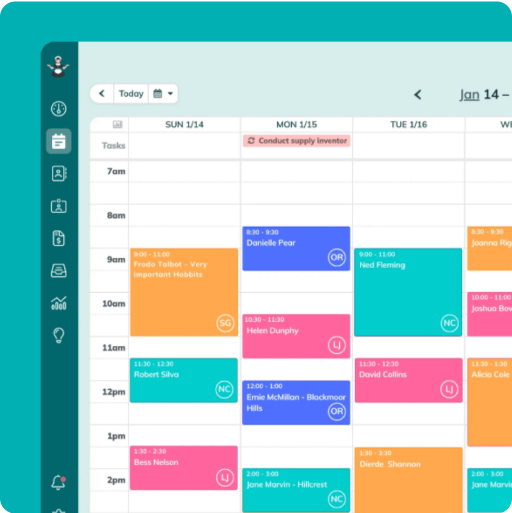
Simplify and enjoy your scheduling with a scheduling software made for maid services
- Have a beautiful calendar that's full but never stressful.
- Make your cleaners happy and provide all the information they need at their fingertips.
- Convert more website visitors into leads and get new cleanings in your inbox with high-converting booking forms.
- Become part of a community of 8000+ cheering maid service owners just like you.
Start your FREE ZenMaid trial today and discover the freedom and clarity that ZenMaid can bring to your maid service! Start your FREE trial today