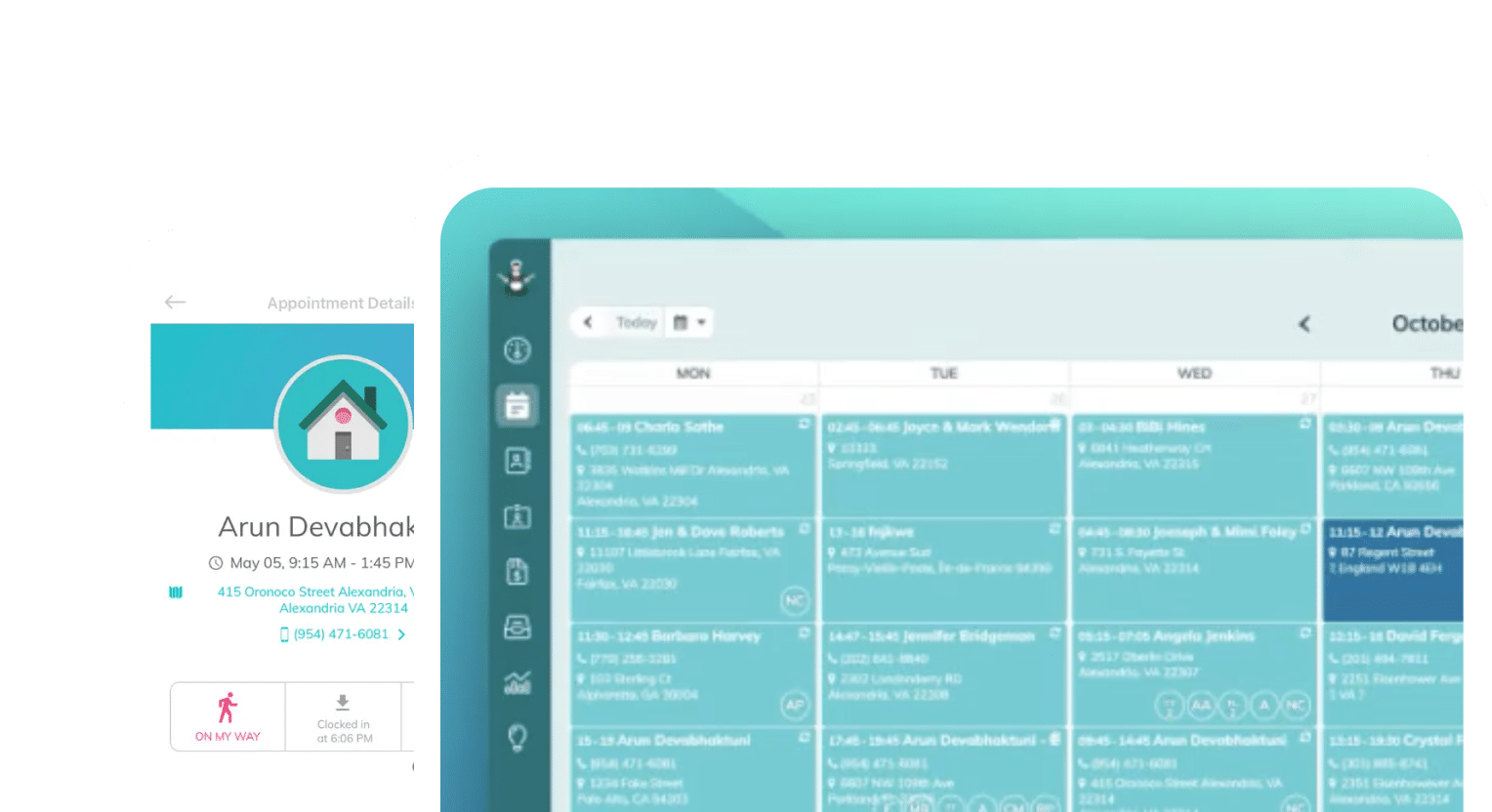
Frustrated with your scheduling? Try the easiest-to-use calendar app, made by and for maid service owners.

Brought to you by expert cleaning business owners

Tips and advice shared here have helped us grow our own maid services. The ZenMaid team currently has 5+ current and former cleaning business owners on our team, including our Founder and CEO, Amar. We’ve been in the maid service industry for 10+ years and counting.
We partner with amazing leaders in the cleaning industry, including Debbie Sardone, Stephanie Pipkin, Angela Brown, Chris Schwab, and many more — all to provide you with the latest industry insights.
We’ve built the easiest-to-use, comprehensive cleaning business software, built specifically for the industry!
Listen on: Apple Podcasts, Spotify, or YouTube
Introduction
Stephanie: Hello everyone, welcome or welcome back to the Filthy Rich Cleaners podcast. I am your host, Stephanie from Serene Clean, and today’s fabulous guest is one of our own listeners, Miss Michelle Walker, and she is from Portland, Oregon. She — Oregon, sorry, I know I’m probably offending all of the Oregon listeners. I say Oregon.
Michelle: Oh, there you are.
Stephanie: I know, I say a couple of things that I’m like, I don’t like jif, jif, GIF. Like I’m gonna say jif, it may be GIF. I’m saying jif.
Michelle: That’s okay.
Stephanie: So, Oregon, good old Oregon. Michelle, welcome. I am so excited to have a conversation with you. I know you have some questions for me. This is kind of gonna be a hybrid consulting one, so thank you for joining me and being brave.
Michelle: Great, thank you so much to you, Stephanie, for giving me this super cool opportunity to share my story and to also get some of your super valuable help. I really appreciate that.
Stephanie: Oh, of course, I’m happy to help, always happy to have a listener on. And tell us, Michelle, I know that you haven’t always been cleaning. You were actually in the childcare space, so I’d love to hear your backstory. And additionally, you have not been in America that long, so that truly is impressive. So I really wanna dig into your backstory and understand where you come from.
From Colombia to Portland
Michelle: So I have been living in the US for four years. English is not my first language, so if I say something weird —
Stephanie: I mean, you sound fantastic, girl. You sound incredible.
Michelle: Thank you so much. Thank you so much. So my background back in my home country, which is Colombia, was in sales. Not great at it, oh my gosh. I actually hated that. My first job was at a clothing store before the pandemic, and then I worked there for six months. I hated it, but I was thankfully let go. And then I got an opportunity to do, like, what’s this called? Like a program to become a bank teller, so that’s what I did. It was super cool. They paid you to study to become a bank teller. Numbers is not one of my, I guess, skills. I don’t know.
Stephanie: Oh, I did that. I did that for a year and a half. It’s great that I was not in charge of the money.
Michelle: Yes, I was a bank teller for six months and I hated it. I just, first of all, I didn’t like to be sitting at a desk all day, just glued to a screen. I hated that part. Also, the fact that I was so pressured into selling and —
Stephanie: Yep, credit cards and loans, and yeah, I totally get it.
Michelle: Cold calls, oh my gosh. That was the worst part. And I think my main thing about working in an environment like that is that you’re just a number. You’re not a human being with feelings. They treat you just like you’re just a number. They don’t care. I didn’t like that part. I hated that. And I stumbled across this au pair program. I don’t know if you’re —
Stephanie: Yeah, familiar, yeah.
Michelle: Nannying, but like fancy nannying, if I’m correct. We come from different countries around the world and we live with American families, of course here in the US. I thought that was a great opportunity for me. I wanted a change. I wanted to also improve my English. So that’s the best way to do it.
Stephanie: Wow, were you nervous? I mean, had you been to America before?
Michelle: No, I’ve never traveled outside of my country. I lived with my family, of course, all of my life. I was just 20 years old. So it was a big step for me. Moved to a different country with a different culture, different language. It was a big one.
Stephanie: Super brave. Honestly, I think that, I mean, most people would really struggle with that. So to do that at such a young age is quite commendable. You did it all at once.
Michelle: I, yeah, that was kind of crazy. So I found this super cute family with two little boys here in Portland, Oregon. I had no idea what Oregon was.
Stephanie: Yes.
Michelle: I was like, oh, I want to go to LA or New York, you know, the big —
Stephanie: The two cities in the US.
Michelle: Existed for me. They were like, oh yeah, come to live with us in Portland, Oregon. I was like, what is this? Where is this? Sure, let’s do it. Which is actually great because this state looks a lot like my city, which is Medellin. So it was great. I did that for two years. I live where I worked. So you can imagine how hard that is. You have to work 45 hours a week. So like pretty much nine hour days and you only get paid like $3 an hour because —
Stephanie: Wow, because you’re getting free, yeah.
Michelle: But still, that was just kind of crazy for me, but it was okay because I didn’t have to pay for rent or food, but I still had to cover my personal expenses. Like if I wanted a treat or something like that, I had to cover that. So I think that was a great opportunity for me because I learned a lot about the culture. I super improved my English.
Stephanie: Did they have any like desire for their boys to learn Spanish? Was that something that you — okay. ‘Cause I was like, that’s what I would do, of course. Like, especially kids, they are soaking up like a sponge.
Michelle: Yeah, absolutely. I taught them Spanish. I love them. They’re just such a big part of, you know, my experience here and they’re like family. I’m still friends with them and I have a great relationship, but it was hard. It was a hard two years. At the end, I was getting kind of tired of that. And I was coming to the end of the program, the two years program. I had two options, stay with them for a little bit longer or just go back to my home country, which I didn’t want to. I saw myself living here. I also met my now husband. So yeah, for me going back was not really an option anymore. I was so in love with this country and the culture. So I started to look into transitioning to do something different. I was so done with childcare. I love kids so much, but I just didn’t want to keep raising them.
Stephanie: It’s a lot, that’s tough. And also I think living in your workplace, I mean, that also is very challenging as well. It feels like your boss is always there. Like they know when you come, they know when you leave. Like if you’re out on the weekend, they know.
Michelle: They were so chill, they were great. I didn’t really have a lot of strict rules. Of course their house, so you have to respect their house and everything, but they were amazing. They were so chill. I just felt like I was getting too close with them, if that makes sense. ‘Cause I was with them nine hours a day, pretty much all day. So that was just becoming too much for me. I also get bored easily. I never wanted to do just one thing. And also I always felt like I wanted to do something myself, like I wanted my own boss and do all that. So I started to look into doing something different. I am very active. I love working out. I love doing sports. I do kickboxing and all that.
A Detour Through Personal Training
Stephanie: Very cool, badass, love it.
Michelle: I found out that you can do like a personal trainer certificate online. I was like, yeah, let’s do it. I see myself doing this now. So I did that and I finished a certificate right when I finished the au pair program. So I said goodbye to the family and I transitioned into being a personal trainer. I did that for a little bit. It was such a fun job, but it was just not my thing. Think about going from babysitting little kids to babysitting girls. For real, plus sales, plus like very crazy hours.
Stephanie: Yeah, like it’s not all it’s cracked up to be. To be honest, if you don’t have a full schedule, there’s not really money in it.
Michelle: No, no, it’s so hard. So yeah, it was a super fun experience. I learned a lot and it was something that I was enjoying a little bit more.
Stephanie: Yep.
Michelle: It was just not it. It was not —
Stephanie: Not the money, yep, not, yeah, for sure.
Michelle: Too much work for very little money. And the owners of the gym are the ones that get pretty much all the money and I just get a little bit. So I was doing that while I was also doing a little bit of babysitting on the side, but it was very little. And I have a really supportive husband, so he was like, “Just take it easy, find out something you want. If you want to study something, you can just, like, take it easy.” So that was great for me because I wasn’t super pressuring to, I have this now, but of course, if we wanted to buy a house someday and all of that, I needed to start bringing money. So one day, I think it was in TikTok and everybody watches cleaning videos. I mean —
Stephanie: Yeah, so satisfying.
Michelle: So yeah, that’s how I came up with the idea of starting a cleaning business. Just looking at one content creator and she was just saying, not how easy it was, but how simple it is to start a cleaning business and that you can start it with very little money. So I was like, I grew up in a family that did cleans every Sunday.
Stephanie: Yes.
Michelle: I did cleaning about, so I think I can do this and I’ll work by myself, nobody’s gonna bother me, I don’t have to deal with kids or adults not wanting to exercise or whatever, so.
Getting the First Cleaning Clients
Stephanie: Yeah. That’s amazing and it is so true that this is one of the, I would argue, lowest cost of entry businesses that you could get into. You really do not need a lot of money, even to do it, right, like register your business, have everything on the up and up, being insured, especially when you’re just starting out and you’re on your own, it’s very affordable. So I love that you’re like, let’s go, let’s do this. Was there any, I’m curious, obviously we’ll get into like what you’ve learned since opening, but do you remember within the first couple of weeks, I know that you — actually let’s talk about how you got your first customers, okay, let’s talk through that first.
Michelle: I started with like $200, bought some supplies, got my own vacuum, got some shirts, so I didn’t have to get my own dirty. And I remember I had this family who I babysat for, very occasionally, and one of those times I told her that I was going to start offering cleaning services and if she was interested, to my surprise, she said yes right away, like, yeah, that’ll be great.
Stephanie: Well, she trusts you with her children, clearly, she, you know.
Michelle: She really liked me, I guess, and she was all for supporting my business, I guess. So she was my very first recurring client, she immediately said, yeah, come over and clean my house every month. I was like, okay, this is happening, how cool is this?
Stephanie: So easy.
Michelle: Yeah, that’s how I got my very first client.
Stephanie: Gotcha, so what were the next, like, how did you get those ones, how did it build?
Michelle: So of course I was very underpriced, it was a large house, I guess, it was like a three bed, three bath house, and I charged like $130 for that, for like six hours the first time. So I was like, okay, this is cool, I need to start getting more clients. I had no idea that I was undercharging.
Stephanie: Yeah.
Michelle: So I also told the family that I used to live with that I was starting this business, and of course they were on board right away. She got me to clean her house every two weeks, so, second recurring client. It was just like people I knew.
Stephanie: That’s actually really incredible when you think about anybody who would bring in external help for childcare, most likely has some wiggle room in the budget for cleaning, right? Because they already are open to that. Obviously a lot of people just have daycare and things, but if you have an in-home anybody, then you have some money potentially for house cleaning, and you’re busy clearly.
Michelle: Totally, yeah.
Stephanie: So that’s a really good pipeline for clients, I’ve never thought about that before.
Michelle: Yeah, that’s a great point, because if they also have kids, and they’re both working parents, they most likely don’t have the time for it. So yeah, that’s such a great point. I started to do those, and I honestly didn’t take the business really seriously since the beginning. I was more like, I’m just trying this and see if there’s some money in this, and if I can do it, and if I like it. I was really focused on finding some purpose, and I guess a passion for something, and something that I really enjoyed doing. So not very seriously, I was not really trying to get a lot of clients right away, still doing babysitting on the side. And also that year was really busy for us, we got married, we had a few weddings to attend to —
Stephanie: Mm-hmm.
Michelle: Trips planned, and it was very busy, so.
Stephanie: Yeah, sounds like it.
Michelle: Yeah, I was not really into, okay, let’s grow this business. So I think last year, I only had like four recurring clients. The next two I got on Facebook groups. Someone gave me that idea, I think, I don’t remember who, but yeah. They told me to join community Facebook groups, and post my services there. Also Nextdoor too, I got one client there. And yeah, I ended last year with just four recurring clients, but I stopped babysitting fully, and I was thinking that, okay, for next year, which is this year, I’m gonna take the business more seriously. So that’s what I did.
Going From Side Hustle to Real Business
Stephanie: Do you remember kind of transitioning from really, this is, I’m cleaning on the side, this is a casual, and now I’m going to do this as a business. Do you remember what changed for you? Like why did you feel that that was the necessary next step?
Michelle: I realized that, okay, I got four recurring clients, and I did this all by myself. I think I can really do this. So this year on January, I officially, I guess, registered my business as an LLC. I set up my bank account, I got my cute little shirts.
Stephanie: Yes.
Michelle: And I found you and your podcast. And I binged all of the episodes while I was, and I got a lot of great advice from it, which is incredible because it’s free. I was like, oh, it’s free, there’s no way. So I, yeah, I guess that was the switch, just realizing that I got a few clients and there’s a need for it in my area. So yeah, let’s do this full time. And that I really enjoyed it.
Stephanie: That’s amazing to hear. And I know you said you haven’t really had any nightmare experiences thus far, knock on wood, with clients. So is there anything that has surprised you since starting cleaning or starting the business before we get into your questions?
Michelle: I guess when I, a lot of stuff has changed since I filled up the intake form. A lot of great things. I hired my first employee, I guess. I signed up for ZenMaid, oh my gosh.
Stephanie: Oh, yes, I’m so happy.
Michelle: Something that surprised me, I guess, oh, there’s so many things, but the first one I can think of would be how congested the industry is here in my area with cleaners that underpriced themselves. So it’s really, really hard to compete with that.
Stephanie: I think that that is a really pertinent one, especially when you are starting out as establishing yourself as a business and starting to move away from basically the same thing. Then it’s like, okay, how do I differentiate myself from those people when we’re not that different? I’m just trying to charge more ’cause you haven’t built this giant base yet. So it is tough.
Michelle: Yeah, it was tough because now I was an established business and I saw all the backend of having a company, like a legal company, I guess, taxes, insurance, supplies, all of that that goes behind. So that was hard, but I have been growing really slow but steady. Right now I have 15 recurring clients and I do a little bit of post-construction too. Yeah, I think that was really, really hard for me in the beginning, just like, okay, I offer the same service as them and I kind of feel like I’m a little bit generic. I don’t have this really cool idea, this new idea in the market. I just offer great residential cleaning. I pride myself on doing things great every single time, being consistent, being reliable, being kind, empathetic, but that should be, I guess, the basic.
Stephanie: That should be everybody’s basis, exactly.
Michelle: Exactly, but I didn’t have this cool thing that I’m offering. So that has been a little bit hard for me. When I say that I’ve been growing slow and steady, I could be double the size right now, but I would have a lot of nightmare clients. I’m super picky when I’m choosing someone to work with. So I guess, yeah, I could be double, but I could have double the headaches right now.
Red Flags When Choosing Clients
Stephanie: Tell me more about that. I’m curious because you said on your intake form, you mentioned that you feel you can tell how somebody is gonna be by your first interaction with them.
Michelle: Oh yeah.
Stephanie: Yeah, tell me about that. I’m curious with being picky about clients, what are you looking for? I love hearing what people see as red flags, whether that’s behavior, things that they say that is tipping you off this might be a difficult person.
Michelle: Yeah, the first interaction says a lot about who they are. And to me, when somebody reaches out to me and says, “Hey, I need you to clean my super ginormous house in two hours.” Like, no ma’am, you don’t get to tell me how long I’m gonna take. Or, okay, here’s the price, here’s what I can offer. These are all of the great things I can bring. “Too expensive, someone else can do it for cheaper.” Okay, is this cleaner not available anymore? You know, it’s a lie.
Michelle: Basically, a big red flag for me is when someone tries to run my business or tell me how to run things. Or if I feel off, I need to walk through in person, but sometimes how they text is just weird. I don’t know, I just feel it. Or just not very kind, just not even hi, you know. “I’m interested in your services, blah, blah, blah.” Just like, “Hey, I got this house.”
Michelle: So there’s that, which sounds silly because I need to grow the business, but at the same time, I just wanna work with people that appreciate what I do for them because I’m not doing them a favor. They’re paying for a service. So that’s very important for me, and that I truly care, like we truly care about our customers. So yeah, I don’t want them to just think that I’m just doing them a favor and, oh, it’s just a cleaning. No, my clients are really cool. They like to chat, they like to ask me, “How was your weekend?” And they know a bunch of things about me. So that’s important for me when I wanna work with someone. We don’t have to be besties, but have a good, respectful working relationship, I guess.
Stephanie: I think that that discernment is so valuable when it comes to who do we wanna work with, because that’s the difference between owning a business and working for somebody else is we actually get to choose that. Whereas when you work somewhere, this is who you’re assigned to. This is the table you need to wait upon. This is the patient that you need to go take the blood pressure of, right? Whereas in our businesses, we do have absolute 100% full control. It may not feel like it. It feels like sometimes the customers or the employees are the ones who like, oh, I have to do this. And you’re feeling all this resentment, but taking that step back and saying, I don’t need to work with this person if I don’t want to.
Stephanie: And as you said, the giant houses, I mean, I’m curious, everybody pop off in the comments of just, it’s been my general experience that the bigger the house, the less reasonable they are on how much it costs to clean said house. And it’s funny because I was talking to my house cleaner yesterday, a small company here, and she — actually, I finally told her what I do because I was like, okay, I should probably, ’cause I hadn’t told, I mean, they’ve been cleaning my house now for eight months ’cause I got them in January. They do a great job. And I just got her on ZenMaid too. And I was like, “Hey, you might like this. It’s this thing I’ve heard of.” And then I finally was like, I spilled the beans yesterday. So I own a cleaning company. I didn’t want to tell you ’cause I didn’t want you to be nervous. And so she started asking me all these questions and she was talking about just how these giant houses, it’s like they want to pay $100 for. And I was like, yeah, rich people. That’s how they get rich.
Michelle: Sometimes, I mean, they didn’t get rich, but yeah, that’s how they got rich, exactly.
Stephanie: And unfortunately, there are people who will work for very, very little. And it’s not to poo-poo on them. It’s like you have to do what you have to do. And especially if you’ve only ever worked like an employee job and you’re used to making $14 an hour and then you go clean on your own and you make $20 an hour, that is a significant increase for you, right? And it also to the homeowner is like, you’re making $20 an hour. That’s a good job. And that’s like, that’s what my cleaners are making for me. But that means that the business, like if you’re gonna have a business, you have to charge minimum double, if not more, I mean, ideally, like way more than double to cover everything. And that’s a really hard pill for people to swallow and also understand of like, well, what’s so different?
How to Stand Out When You Feel Generic
Stephanie: And I think that’s where it comes down to our job and what you’re describing as one of the difficulties is like, how do I stand out when I feel generic? Is you need to really sit down and say like, what can I do differently? Because at the end of the day, we are all cleaning. You’re cleaning, I’m cleaning. Like this is, we are doing house cleaning, right? There is nothing truly unique about this. There’s unique angles for sure. So it’s like, how can I do something simple so well that it stands out? And how can I do things around the cleaning that make me stand out?
Stephanie: Because at the end of the day, cleaning a toilet perfectly is cleaning a toilet perfectly, right? So if every cleaning company can hypothetically do that, which they can’t, but hypothetically speaking, if all of your competitors in your local area can clean that toilet just as well as you, what else can we do to make ourselves stand out? Well, they can’t communicate well. They cancel all the time. They have really poor professionalism, right? Like all of these things that we can do to actually stand out from just the task itself, right?
Stephanie: So I think that that would be a really great place for you to think about like, how can I stand out and then communicate that? Like, for example, it’s great if you like, I’m gonna always say like, follow checklists, right? Like we have checklists, we leave them behind. ZenMaid’s got the checklist feature now, which is fantastic. But if you don’t communicate that to the client, they’re not going to know, and they also don’t understand why that’s even important. Right, so it doesn’t matter that you do it if you can’t communicate it well, right?
Stephanie: So I think really thinking like, what are the few core things that I can do that I can sell on? Like, so for Serene Clean, it’s the checklist, it’s W2 staff, never independent contractors. No offense to anybody who uses ICs, but one of the benefits of Serene Clean is we don’t, right? There’s pros and cons, of course, but use what you got, right, and this is something that I got, W2 employees. My competitors do too, but they don’t talk about it, right? Except maybe, I know a couple listen, the ones that are listening, please close your ears. Go away, go away, you’re not welcome. I thought about asking ZenMaid, can we just like block the IP of my competitors so I don’t teach them everything that I know?
Michelle: Oh boy.
Stephanie: That was one of the considerations of the podcast, was like, ah, do I really want to put this out there? And I was like, there’s plenty of business to go around, I’m not concerned. And knowing and doing are two very different things. So yeah, I think really thinking about like, okay, what can Michelle do consistently that is something I can sell on, especially now that you have staff members. And I’d love to hear, tell me about first staff experience. Like, walk me through how long have you had this staff member? What’s it been like?
The First Hire That Fell Apart
Michelle: She is not officially an employee of mine, but I’m onboarding her this week as a W2.
Stephanie: Oh, that’s sweet. Woo, exciting.
Michelle: Yes.
Stephanie: Good job, good job. W2, I love it.
Michelle: W2, there was really no other option for me in what I wanted the company to be. It had to be W2 in my case. So I actually, I guess, hired someone else before her and she quit on her first day, I guess, after her first day.
Stephanie: Oh, that’s a, what did they call it? That’s like your hazing or your rite of passage, I should say, into being an owner because I too had somebody, my first employee didn’t even show up to training.
Michelle: And I knew it, I knew this was gonna happen. You tell everyone that’s gonna happen. So I had that in my brain and —
Stephanie: Good, good.
Michelle: But you get excited, you know?
Stephanie: It still sucks, even if you know it’s gonna happen, it doesn’t change that it sucks.
Michelle: I wanted it not to happen. So I guess I found her on a Facebook group. I did a phone call with her, she was great. She had moved here from Bolivia, I guess. So she wanted a job, she really needed a job, but it was hard for her because she didn’t have any experience here, but nobody was giving her the experience. So as an immigrant myself, I had a soft spot.
Stephanie: Of course.
Michelle: Soft spot for everybody, but especially in that case. And I really needed the help, my back was absolutely destroyed. I am actually getting stressed now because it’s really worrying. I really needed the help, so I finally decided on posting on Facebook, found her, talked to her. Everything sounded amazing, the only thing is that she didn’t have a car and that was one of my must-haves. You need to have a car, you need to get to the client’s houses and I cannot pick you up and drop you off.
Michelle: But I was talking to her and her attitude was so positive, she really needed a job, she was very respectful, she sounded really kind and she really needed a job. So I was like, okay, I’m gonna save you, here’s this opportunity. And I really needed the help. I think I was so desperate because I actually had a post-construction job coming, so I wanted to train her for her to work that, it was a big house. So I was like, oh man, something’s telling me not to, but I really need her. What if this works? Because sometimes you can find great people that maybe don’t have a car. So I was like, maybe this is it. But that’s a really, a must-have for me right now.
Michelle: So I told her, “Where do you live?” And she lives across town, so it was like a 25 minute commute to the area I had all of my clients in. And I told her, “Here, these are all of the areas where I have clients in, it’s pretty far for you to get there in the bus.” It was like an hour and a half commute every day.
Stephanie: Oh my gosh.
Michelle: I was like, “I don’t think this is gonna work for you, I’m so sorry.” “I really need the job, that’s okay, I can wake up two hours early and get there.” I was like, okay, she sounds like she wants to do it, but something’s telling me not to. And I was like, “Okay, how soon can you get a car?” “Oh, I’m saving for a car, I think I can get it in a month.” And I was like, okay, that doesn’t sound very unreasonable, I think we can wait for it, and up to you. If you really want to do an hour and a half commute twice a day, that’s your business. I need you to be really reliable. I pride myself, super reliable, I am pretty much never late at my clients’ houses, so that was a big one for me.
Michelle: So she started, I guess I did the background check first, that costs some money, so I had to do that. And then I asked her again, “Hey, are you sure you want to do this? It’s really far.” “Yes, Mrs. Michelle, I want to do it, I want to do it.” “Okay, great, you’re going to start Monday, this is the first house we have, we have two houses. Why don’t you come check it out, work with me for a week, see if you really like it, and if you do, I will hire you as a W-2, you’re going to have all the benefits and everything, and it’s going to be a legal thing.” Yeah, that sounds great for me, and it was also great for her to gain this experience.
Michelle: The day came, she started, she got there early. I think someone dropped her off at that house. She worked with me, she was great, she followed directions, and I guess she had some experience doing cleaning. It wasn’t that hard for me to train her, I guess, just kind of showed her how I do my stuff. She did great. Apart from like a few things that I needed to show her, we did two houses that day, and I was so excited. It felt great not to be the one doing the whole thing by myself. I was like, this is amazing, I really want this.
Michelle: So I told her at the end of the day, “Hey, Mercedes, I really like you. I like working with you. If you like this job, you’re totally welcome. You do need to get a car pretty soon because you saw how far the houses are. So I’m more than happy to have you working with me, and it’s for you to save up for a car, but you need to get it pretty soon.” “Oh, yes, thank you so much. I really like this job,” all rainbows and flowers. And I was like, “Okay, do you want me to drop you off somewhere?” And yeah, she said that if I could drop her off at the bus station, that would be great. That was just two minutes away, dropped her off.
Michelle: I got home, and boy, oh boy, I was so happy. I was so excited. I was like, this is amazing. This is gonna be my very first employee. I’m gonna be a boss. This is great. I am going to schedule all the big houses for this week because I’m gonna have help, and this is gonna be great training.
Stephanie: Oh, no! Rookie mistake.
Michelle: Yeah. I did that, and I also did that because the following week, I was gonna be on vacation for a week. So I was like, okay, let’s do all these big houses this week.
Stephanie: Okay, so it worked good to get these houses, yeah.
Michelle: That same day, at 10 p.m., I was about to go to bed. I get a message from her. “Hey, Michelle, so sorry, cannot continue, too far.” Girl, I told you. I told you, I told you.
Stephanie: You told her like seven times.
Michelle: I told you, I told you, I gave you the chance. Of course, I didn’t say that to her. I was just crashing out at my husband. I was like, I told her a hundred times. I asked her. I showed her the addresses. I spent money on a background check. I was about to order her uniforms and everything. Thank God I didn’t do that. I just, I kinda cried also.
Stephanie: Oh yeah, that’s a very good reason to cry. Everything is a good reason to cry.
Michelle: But I was like, is this how it’s going to be? Am I not gonna be able to get someone reliable? Like, she really needed this job. Like, it sounds that she didn’t need it, but I’m not gonna go into that a lot. But I didn’t know that she was not very reliable. And I’m glad that it happened that day and she didn’t, you know, not show or something. She had the kindness, I guess, to let me know that it wasn’t working for her. And it was also my mistake because I knew it. I didn’t follow through with that gut feeling I had. I knew it. I gave her the chance, I guess, but it’s okay. I just got a little bit worried because I had to do all of those big houses by myself. But I did it. I figured it out. And the good thing is that the following week, I was on vacation. So I was like, okay, I’ll bust my butt this week and then just rest the next week.
Finding the Right Employee on the Second Try
Michelle: After that, I had to get someone else for the post-construction job. I went into Nextdoor. I thought that maybe posting into a different platform would get me a different kind of person. And it was great because I knew that if I have a must-have, it’s a must-have. I posted the job. I need someone part-time with the opportunity to grow into the company. This is what we do. The kind of person I need. I got a lot of leads. I got like 10, 12 people that messaged me, but only three of those followed through with phone calls. Only one I really liked, and she’s the one that’s with me right now. It’s been almost a month of her just kind of shadowing me, I guess, in the job. And she showed me that she’s really reliable. She’s great. And that she really wants to do this. So I guess this is my official first employee.
Stephanie: Oh, I’m so excited for you. And I’m really happy that we ran through that story of the first hire and what that’s like, that disappointment, because, I mean, you heard it on the podcast. You knew that this could happen, but it doesn’t change that. Yeah, soul crushing disappointment of here’s my hopes and dreams that I’m finally letting somebody else and a stranger in on. And that’s the first experience you have. And for a lot of people, they would take that and keep that disappointment as a proof that this cannot work, right? Or this isn’t going to work for me.
Stephanie: As you said, like you worry about that of like, am I gonna be able to find anybody? And the answer is yes. But that’s gonna happen again and again and again. And so that disappointment and being able to manage your own emotions, not only manage your emotions, but also be able to hit failure again and again, and then keep doing it, right? That’s where I think the separating line is between what’s gonna make somebody be able to run a business and manage people versus somebody who should stay just you’re on your own, right? Because —
Michelle: Try for 20 minutes and then —
Stephanie: Yes.
Michelle: Figuring that out.
Stephanie: Exactly. Exactly. And it’s so true what you said about having very strict that you must have, right? Requirements, because we’re the same way. You must have a vehicle. We will not even, we make it clear on the job listing. We ask them like when they apply on Indeed, it’s one of the questions. And then in the group interview, we talk about it. And I remember a couple months ago, we had somebody make it through the group interview. And then when we opened up to questions, she asked Crystal, my HR director, so like, “I don’t have a car. Like, do I need that?” And it’s like, you’ve been told this 7,000 times already. And it’s just very, yeah, it’s, I know, I know.
Stephanie: But it really is, those are the instances of you knowing something and doing another thing because you feel bad. And I can tell you, I have done that 1,000 times in so many different scenarios, managing people, or even just the clients too, of just like, I, in my mind, I’m like, no, this is how we’re gonna do things here. And then I let people basically, you know, you set a boundary and then they walk all over it because you’re not actually going to enforce it.
Stephanie: And especially with the vehicle thing, I will say we oftentimes get people who apply, who are, you know, you can see where they’re from or whatever, and it would be a long commute. And they tell us in the interview, it’s no problem. Like, we’re not, and we decide not to hire them because they are telling us one thing, because it’s like, they truly think that. I don’t think that they’re lying. Just like, I don’t think that she was lying to you when she was, they don’t know until they experience it. And then it’s like, oh shit, yeah, this isn’t gonna work. So we know that that’s going to happen. So it’s just, we just make that decision. We’re not even gonna offer a job.
Stephanie: Every single time somebody has had to commute, I would argue more than like 45 minutes to an hour. Like, that’s, I’m not saying that that’s not our service area. It is, but they’re getting paid for that. I’m talking like unpaid commute to the office, if you will. That’s where, yeah, it’s not gonna happen. No matter how much they swear up and down, it’s not a problem. It’s going to be a problem. Everybody listen and learn from Michelle’s pain. All right, that’s why we have this podcast, to learn from our pain.
Michelle: We do, and if you also have a gut feeling, it’s for a reason, you know? Just don’t say, oh no, this is not gonna happen. It’s going to happen.
Stephanie: Absolutely, absolutely. Well, how can I help you, Michelle? I wanna know, what do you wanna know? How can I help you?
Should You Keep Being Picky About Clients?
Michelle: Okay, so I guess the first question I have would be related to, do you think, keep being so picky to get clients, it’s a good strategy? Or should I just start focusing on, you know, taking on everybody just for the sake of growing the business or to get more cash flow?
Stephanie: Sure, well, the answer to that lies behind what your goal is, because depending on what your goal is determines that. I do think that no matter what, we do have to have a baseline set of absolutely nots, right? Where it’s like, if they act like this, we’re not gonna, like, that needs to be everybody across the board. You should never take a job on where you feel that they are being disrespectful. They are not gonna be playing with the same rules. And what I mean by that is like, ethically speaking, like, are they, you know, accuse you of cleaning, or stealing, accuse you of cleaning. I sure hope you clean. Accuse you of stealing, things like that. But so all of that aside, what is it that you want and how fast do you want that to happen?
Michelle: Hmm, well, I think like every single one of us, I want to grow. Of course, I want it to be fast. But I also, like I said, don’t have the need for that right now. I really want to work with nice people, I guess. But then I also need to get some money. So, you know, I think, I guess I just answered my own question. I just keep doing what I’m doing and keep just —
The Pie: What Happens to Your Income When You Hire
Stephanie: Yeah, this is what I ask when people start hiring, okay? Because it comes, every single person listening has a different answer to what I’m about to ask. So that’s why we have to ask it, is what are your financial requirements right now from the business? Because as soon as we bring on staff members, we need to think about the money coming in as a pie, as I like to say it, right? Right now, Michelle gets 100% of the pie as the owner and the cleaner, right? So think about those as two wedges. The cleaner chunk of you gets one wedge, the owner chunk of you gets a smaller wedge. But you’re getting all of it right now. So once we bring a cleaner in, that cleaner wedge of revenue goes to somebody else and you’re just left with the owner wedge of that cleaning, of each cleaning, right?
Stephanie: So what that means is you don’t need to hand off every single one of your clients to the new staff member once they’re trained in and you feel confident. You don’t need to do anything that you don’t wanna do here. But what that depends on is your financial requirements in your household, right? So if you’re like, I must make minimum this, well, how many houses could you hand off to the cleaner and still make that, right? Because at the end of the day, as we add more clients, that number is gonna grow.
Stephanie: But what typically happens is you temporarily go down a little bit in your income or a lot of bit if you just hand off right away, that you can pace that because no matter what, one, read Profit First. If you haven’t read that book, listen to it because you need to always be paying yourself a percentage of revenue as the owner. I don’t care if it’s 1%. You need to have that owner slice coming in, right? So you need to protect that. But that cleaner slice is a reality, right? So we need to figure out, okay, like if I gave her four of my clients, could I still survive? Because what that’s going to do, open you up to push for growth. And that’s how you make it back, right?
Stephanie: So when I first started, I was cleaning part-time. I was bringing staff members on. I was still cleaning some, but I was also adding clients too. So like I didn’t really experience that dip in income because I was also growing the business at the same time that I was bringing staff members on. That’s not easy though. And I also had my full-time job, so it really wasn’t easy. But so it really just depends, like it just depends of like, okay, if I need to make more money and I don’t want to be cleaning, well, guess what? That means ergo, we need to add a bunch of clients. That’s the answer. If I don’t need as much money right now and I want to be off cleaning, well, then I can hand over the clients gradually to this new hire and completely remove myself from the field. Most likely that is not going to happen for anybody listening, just like the smooth little transition. It’s usually you do it a little bit and then they quit and then you hire somebody else and you like, it’s like this painful crawl out of the hell hole. And so it really isn’t, but that’s how we have to think about the finances.
Stephanie: And the reason I bring all of that up is that determines how many clients you need to bring on. And the next section of questioning is how many leads are coming in every week? Because me telling you to be picky, if you get 10 leads a week and picky for you is three of them, well, that’s still pretty good if they say yes, three people say yes at your size, that would be really rapid growth. But if you are getting one lead a week and you’re only saying yes to a new client every month, because one, only four people are coming in a week that are interested and you’re only choosing 25% of them that works for you, well, then that changes.
Stephanie: So I think saying generically, how picky should I be? Well, in what context, right? What are we talking about? How many leads are we getting? What is your close rate looking at? Like I would start tracking those things first and then you’re telling me you’re being picky, but are you actually, I think maybe a lot of people, like you, like, I think that may be a limiting belief for you potentially.
Michelle: I think so, yeah. I think it sounds very reasonable not to work with someone that starts off being disrespectful, right? I think that should be the baseline for all of us. So yeah, my close rate, it’s good. I just don’t get that many leads. And I think, well, I’ve never paid for paid advertisement, never paid for Facebook, Google. I did set up a Google profile and that is the thing that has brought me the highest paying jobs actually, which is the post-construction jobs.
Stephanie: It’s amazing, it’s incredible. Everybody, if you have not done a Google business profile, do it, it’s super easy.
Michelle: Completely free, completely free. So I’ve been getting leads from that. I’m to the point where I’m starting to get referrals, which is great, feels amazing. So I have not been very active on the Facebook groups, posting because I’m getting busy with the referrals. So that’s great. So yeah, now I’m just more focused on getting my cleaner ready to take over houses. Yesterday was her first time working by herself.
Stephanie: Oh, how did it go?
Michelle: She nailed it. She did an amazing job. Now that I thought she was not gonna do great, but it was just her first time. So I did not really have high expectations. She absolutely rocked. So I’m really proud of her. I’m proud of myself too. Sometimes you have to look down and look at your accomplishments too. Yeah, right now I’m just focused on just implementing ZenMaid.
Setting Up Systems Before You Scale
Stephanie: Yes, and that’s where my biggest suggestion for you is going to be make sure that the notes on every client, everything you know about this client that would make them happy and make any cleaner, not just this one, but any cleaner going forward successful, that’s what we wanna utilize those employee notes for or those client notes rather, because you set it up once for that client, you just keep it updated. Then no matter if it’s her or somebody else going there, you’re not having to reinvent the wheel, right? So just make sure everything in your noggin is going in those notes that you know.
Stephanie: And don’t be afraid to use AI to clean it up, create a template. We just templatize our notes of like, this is how you get here. This is how you get in. And obviously custom fields are there, of course, for that kind of information, but that’ll really help them be successful. I would definitely recommend the digital checklist feature for her as well. That’ll help keep her confident that she’s doing what she’s supposed to be doing, right? Because this is all brand new to her. So definitely a good one to have. Have her send the on my way text. Clients really love that.
Michelle: Okay.
Stephanie: And then just making sure you have policies in place that she can sign. Even if you haven’t got them yet, like you can still have her sign anything, any day because —
Michelle: She actually got a waiver signed when she started with like the basic.
Stephanie: Good deal. That is fantastic. I’m so like, this is so exciting. We’re on like the precipice for you. So exciting.
Michelle: Yeah. Yes. I’m not paid by ZenMaid guys, but I just started using it. I’m on the first trial and I am so excited for the future because it’s saving me so much time. I was sending the reminders every time by myself. You just, it does it for you. I’m like, this is unbelievable. The payroll, it does it for you. I was doing that by hand. It’s just amazing. ZenMaid just got a new customer.
Stephanie: Ah, yay. And I’m so happy that you’re implementing it from day one of having staff members. I think a lot of people are like, I’ll do that later. ‘Cause you gotta pay for it, right? And it’s like, yes, you do because of the value it’s gonna provide you, the amount of time and mistakes. And truly starting off with staff members on it is so much easier because as I just said, what are you gonna do? Text her the instructions for all of these customers? And what if she calls out and your next new cleaner you have to assign and that, so it’s just like all of those things, that’s where people feel really chaotic all the time, which we all do anyway because we’re business owners. But like, this just makes it so much worse of all those little things. And like you said, you forget to send a reminder text, you show up and the clients are like, I forgot that you were coming today and you have nothing to fall back on, right? So it really is amazing to start off with a scheduling software.
Michelle: And the fact that she can clock in and out, it’s so cool to me because before doing that, I was like, if I’m gonna leave her by herself, how can I make sure what time she actually starts and finishes the job? That was my main thing. I was like, let’s just do ZenMaid, let’s just see. And I had this idea that it was gonna be really expensive or something and I looked at the website and I was like, I should have done this since day one, just at least, what is ZenMaid about, what are the prices, how is this gonna help me? And you can just do the first trial, see how that fits your business. And yeah, I am so thankful that I did it now. It really helps, it truly does.
Stephanie: I’m so excited, especially with some of the features that are about to come out, like spoiler alert, there is production rate auditing in the midst happening right now, guys. And I can’t wait, I can’t wait because that’s gonna help us know every job. What did we make? How fast did we clean? It’s like, yeah, so I don’t wanna spill the beans but I’m so excited about it. I’m like, guys, build this right now, please build this because it’s like the thing that I want the most. And so I’m really excited, yes.
Michelle: That is so exciting.
Stephanie: It’s fantastic, so I’m so happy to hear. Is there anything else before we wrap up that you want to know?
Are Networking Events Worth It?
Michelle: I think that was, I guess my main concern about what should I be focusing on right now? Oh, I guess maybe, do you think now that I will have my employee doing most of the labor? Do you think with the extra time that that will give me, should I be doing networking events or chambers of commerce or BNI chapters? I’ve been looking into that. I just don’t know if it’s really worth it for me right now.
Stephanie: Yes, so I do think I would really pick a couple areas of growth opportunities, which is going to be obviously online and then in person. And the smaller your business is, the more impactful and more important that in person can make a move for you because it’s just such a big lever because you’re getting in front of people. And especially, I don’t know if you’re interested in commercial, but even if you’re not, those people who own businesses happen to own houses and they’re very busy people.
Stephanie: So when I joined the chamber, I joined it right away when I started the business and it was so valuable. I went to every business after five and just getting your face out there, your name out there, being friendly so that they think of you, handing out your business card, coming up with an offer, like for us, book your first cleaning and get your second 50% off is what we started. We’ve tweaked it a little bit. So now it’s like when they sign up for reoccurring, they get that second cleaning. It’s pretty much the same thing, but we want to reward that they’re signing up for recurring, putting that on your business card so that it stands out. That could be something that you do that stands out.
Stephanie: So I would pick like three things to focus on, which is going to be in person networking events. So chamber is great. BNI is good, but I think maybe I’d just start with the chamber right now for you. Any type of community events that you can go to is excellent.
Community Involvement and Giving Back
Stephanie: I would then, like, okay, so that’s one of three. Two of three, I would really lean heavily into figuring out a cause that is important to you or perhaps just in general community involvement. And I would start right now today by signing up for one, Cleaning for a Reason, and two, doing a monthly charity that you donate to. 25 bucks, right? It doesn’t have to be a lot, but I want you to start the habit of giving right now because then when you’re me in seven years, or maybe faster, and you can say, look what we’ve done since the beginning. Every month we donate locally because that’s what’s important to us. And what you can do is have your staff member choose. Where do you want to donate? ‘Cause that’s what we do, right?
Stephanie: So I think establishing that core basis of, at this company, we give, we give. And so you can do giving initiatives in that, Cleaning for a Reason, of course, and then just free cleanings in general if you just feel so called to do. That’s a really good marketing tactic as well is going to be cleaning giveaways, which I still do to this day. We do multiple cleaning giveaways a year. They’re fantastic. They’re a huge hit on Facebook for us.
Google My Business, Your Website, and Video Reviews
Stephanie: And then the final one is going hard on Google My Business and your website, right, as well as Facebook. And so what I would do is just make sure that you are uploading photos every single week to Google My Business. Before and after content, photos of you guys cleaning, just anything that shows that you are a real person because I guarantee if I looked up your competitors right now, they have shitty photos, or no photos at all, or old photos, no pictures of cleaners, AI-generated photos. Their before and afters are all over the place ’cause they’re not editing them in Canva. It’s just such a easy way to stand out is just making sure that you’re updating ’cause Google likes to push companies that utilize their Google My Business. Make sure you got the website. Put the booking form on the website. It’s gonna make your life so much easier if they can just do that.
Stephanie: I would also get your communications in order. And what I mean by that is, for example, if you have a business Facebook page, make sure you set up the auto-response settings so that it’s pushing them to the ZenMaid booking form because most likely they’re reaching out, they wanna quote, right? They wanna get an estimate. So if that’s the case, instead of you typing out all the questions, just have it auto-send them to the booking form so that they go do what you need them to do anyway. It saves time and saves back and forth for you ’cause everybody’s getting pushed to ZenMaid in that way.
Stephanie: And then finally, that was three I know, but the piece de resistance is get some damn video reviews, girl. Like they are so valuable. I don’t care what you need to do to get three, put those at the top of your website and on your Google My Business and on your Facebook and boom, that’ll, trust me, your phones will be ringing.
Michelle: Hey, what do you think about my business? Really?
Stephanie: Yeah.
Michelle: That’s really cool.
Stephanie: They will do it, I promise you. People don’t like it. This, yeah, this year alone, we’ve gotten like a dozen because I started paying my cleaners a bunch of money to get them. And so all of a sudden they’re incentivized to do so.
Stephanie: But I know I just like listed off a bunch of shit, but like that’s what I would be doing right now if I were you once you can get some of these cleanings off your belt. What’s gonna happen is as you add a couple more cleaners, you’re gonna hit that oh shit moment, okay? You’re gonna feel overwhelmed a lot because now all of a sudden we’re growing clients, yay, but that means growing employees, oh no. And so the managing is going to get challenging. So just that’s why we need you out of the field as fast as we possibly can so that you can really focus on this. But please be warned, you’re gonna get pulled back in the field a lot for a while. Like that’s what’s going to happen. So hire part-timers, hire part-timers who are flexible, who are moms, who if they get 20 to 30 hours, they’re happy so that if Sally calls in, Tina can take on some of the hours. Like, so that’s what we do. And also when one quits, then you’re only going into the field for 20 hours instead of 40.
What’s Next for Michelle
Michelle: Okay, no, that sounds great actually. I think I will focus on doing all of the things you just said, having my website, and just kind of focus on, yeah, the marketing and getting all the systems in place and maybe a good goal for next year would be with all the systems already in place, just grow, grow, grow and get clients.
Stephanie: Oh, 100%. And it’s really just doing everything again and again, like that discipline to do the boring stuff on and on. Like what I started doing year one, we’re still doing all of that year seven. It’s just because it works, right? We’re still uploading to Google My Business. We’re still doing all of these things, doing cleaning giveaways, ’cause they work, it works, right? And so just that consistency, that’s where that discipline comes in.
Stephanie: But I know that you’re going to kill it, Michelle. I can’t wait. I really hope that you would be open to another conversation in six months to a year to see how it’s going. I think that that would be really, really fun because you’re about to have some really explosive growth and I’m just really excited and you’re going to learn so much and just keep going. I know it’s going to be tough sometimes, trust me, I know, but just persevere, right? Cry and then move on. Like do it, just wake up and start again.
Michelle: Yeah, I’m super excited too. I would love to be back here and just kind of yap some more and tell you all what I’ve been up to and grow and everything. I know it’s coming, but yeah, yeah. I’m very, very excited.
Stephanie: Yes, this is very exciting. I’m excited for you. If you are willing, do you have any public profiles that we can link down below if people want to connect or just follow your business journey?
Michelle: I am not super active on Facebook, but from today I will start being more active in that, maybe create some content a little bit, I don’t know. My Facebook is Walker Cleaning Solution here in Portland, Oregon. And if somebody has a question or wants to share some advice with me, that’ll be greatly appreciated. And yeah, you can find me right there.
Stephanie: Awesome, we’ll definitely put that down below. Give her page a like, guys. We always like to do that for other cleaning business owners. It’s a great way to show your support and please leave Michelle some love down in the comments. And if you guys are interested in a conversation like this, don’t be shy, apply. Oh, that rhymed. There’s a link down in the description below where you guys can apply to be on the podcast and we can have this awesome conversation. I’d love to do that. So Michelle, thank you, thank you. And we’ll see you at the next episode of Filthy Rich Cleaners, guys. Bye.