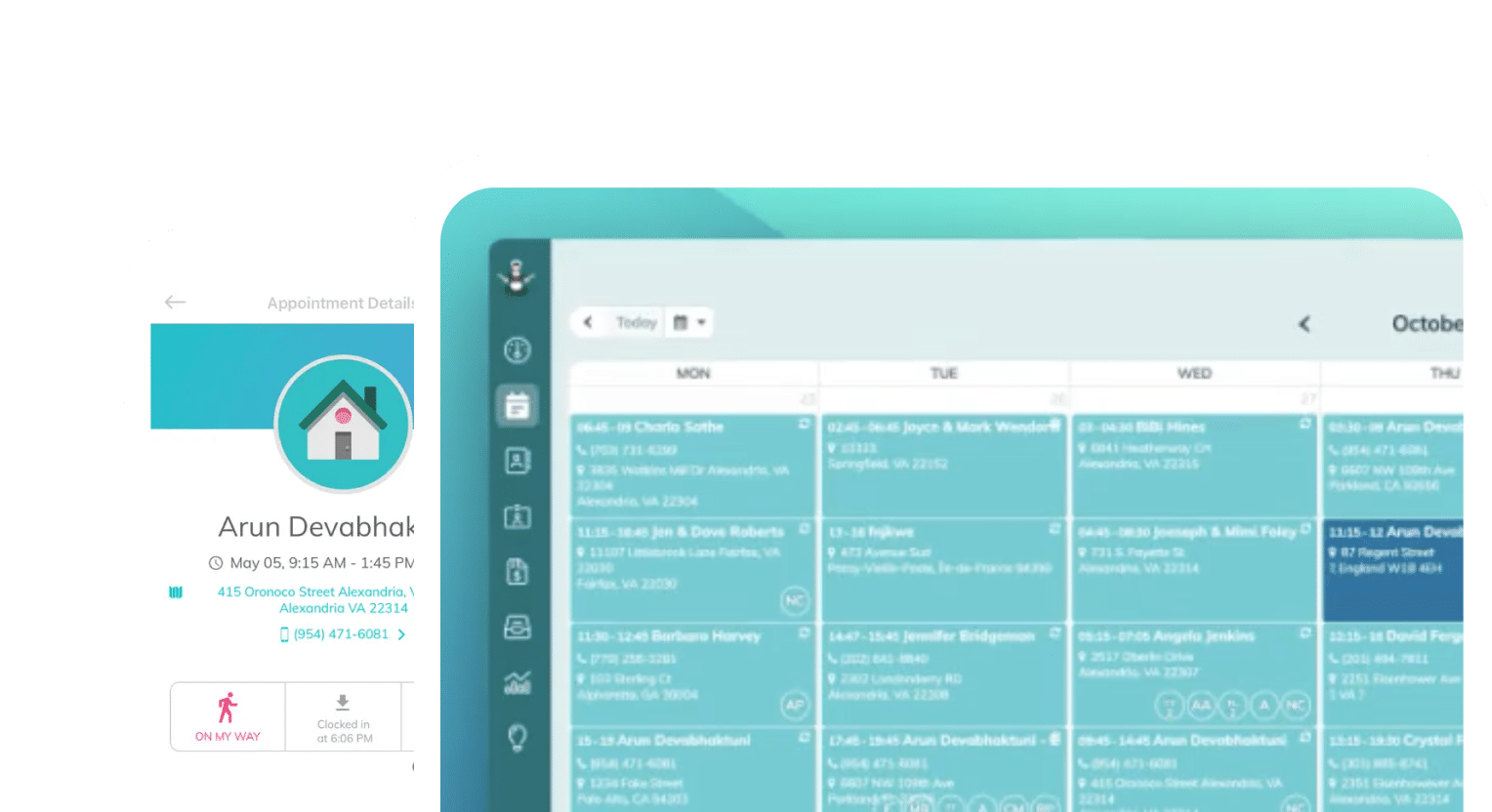
Frustrated with your scheduling? Try the easiest-to-use calendar app, made by and for maid service owners.

Brought to you by expert cleaning business owners

Tips and advice shared here have helped us grow our own maid services. The ZenMaid team currently has 5+ current and former cleaning business owners on our team, including our Founder and CEO, Amar. We’ve been in the maid service industry for 10+ years and counting.
We partner with amazing leaders in the cleaning industry, including Debbie Sardone, Stephanie Pipkin, Angela Brown, Chris Schwab, and many more — all to provide you with the latest industry insights.
We’ve built the easiest-to-use, comprehensive cleaning business software, built specifically for the industry!
Listen on: Apple Podcasts, Spotify, or YouTube
Introduction
Hello everyone. Welcome or welcome back to the Filthy Rich Cleaners podcast. I am your host, Stephanie from Serene Clean, and today’s guest is Mr. Jose Razo. He is the owner of Allen’s Landing Cleaning, just outside of Houston, Texas. Jose, thank you so much for joining us today. I really appreciate your time today.
Jose: Thank you. Thank you for having me, Stephanie. I appreciate you.
Stephanie: Absolutely. So tell us, have you always been a cleaner, sir? What have you been doing your whole life?
From Cybersecurity to Cleaning
Jose: No, no, no. This is a new venture for me. So I will say it’s definitely different. I’ll go back a little bit. Ten years, I’ve been doing cybersecurity, so completely the opposite of what I’m doing now. I’m doing both still, and we’ll kind of get into that a little bit here, but I had got laid off a few months back, and so I’ve done real estate. I purchased — I have a business partner, so we used to buy and hold real estate. And so one of the things we always thought about doing was to build synergies within companies. So we had a real estate holding company and said, “Hey, you know what? One of the things we do a lot is clean homes, maintain homes.” So one of the ideas was to kind of start a cleaning business as kind of the foundation and then kind of grow that out.
It never came to fruition there, and so what ended up happening is I got laid off about two and a half months ago and got a little severance package and said, “Well, I’m getting paid to sit around. I might as well launch it.” And I didn’t pull the trigger right away. I kind of thought about it. I was hesitant. They say knowledge is power, but execution is really the power. And if you don’t do nothing, you’re just gonna sit on that idea. And I’ve been sitting on this idea for many years now.
And one day, my cleaning lady — she’s been with me for about six years. So it’s been six years, and she was complaining about the company she works for. I was her only private customer, and she’s just been coming to the house for so long. And then she was telling me, “Hey, you know what? I haven’t got paid. The guy who’s running the business isn’t paying me.” And I was like, “What do you mean?” And she was like, “I’m like three weeks behind on pay.” I was like, “Wow.” I was like, “If I was three weeks behind on pay, I wouldn’t be at my job. I’m sorry.” I told her, I said, “I don’t know.” And I asked her, I said, “Don’t take this the wrong way.” I said, “But what makes you kind of keep going back?” She’s like, “I’ve been there six years.” She’s like, “I’m just loyal to my employer.” Very loyal. Okay. Probably a little too much there, right?
And so I kind of just probed a little bit, asked her like, “Why? What was going on?” And so then I started asking about the business and kind of, how does he run business? Is he a successful business owner? And to be completely honest with you, I was a little shocked that he was doing fairly well. And I was like, “Well, if this gentleman who’s not organized, not paying his team, can build a cleaning business, maybe someone who puts a little more effort into it, maybe can be a little bit more organized, can kind of do it better.” And so decided to go ahead and give it a shot.
And I told her, I said, “Hey, let me think about it. But if I do this, are you gonna come on board? Are you gonna come with me?” I said, “I have to take you with me. You’ve been with me for six years. I trust you, I know you. If I’m gonna build something, I’m gonna build it around you.” And I told her, I said, “Look, it’s gonna probably not be easy. It’s gonna be something that we’re gonna have to build together.” I said, “But if you put your faith in me,” I said, “I’ll make sure we do the right things.” And so that’s kind of what started the journey.
Stephanie: Oh my gosh, that’s so incredible. What an amazing catalyst. Sometimes it takes the perfect storm, if you will, because it’s like, you’ve been thinking about this, the real estate, you see the need, but until you had the person sitting in front of you, like explaining the situation, and yet she still stayed. Like, obviously, yeah, she’s got a heart of gold, very good value system. That’s amazing. Wow, okay. Well, why did it take you so long to do the leap, do you think? Like, why now? Obviously, we just talked about your house cleaner having this conversation with you, but is it getting — like, it was just the perfect storm. Do you feel getting laid off, all of these things together?
Jose: Sure. You know what, to be completely honest, I don’t think we’ll get into too much of the details, but I went through some personal issues as well, and the job thing kind of just put me over the top. And so, like you said, it is a perfect storm. It was some personal issues that kind of came up, changed the way my home dynamic was. And then from there, losing your job on top of everything else, it just — you know, I’ll be honest, I felt like I was at a very low point for a minute there. And as you kind of sit and really ponder, okay, what’s my life gonna look like? And from both sides, the personal and the business side, and I’m still managing the real estate that we have. And then I was just like, you know, it’s just the time to do it.
I think it was one of those — you know, in your podcast, you always say you had to put your big girl pants on. Well, I had to put my big boy pants on and kind of get going. And that was, I think, the entry point. Not saying that starting a business is easy, but I think the entry point for the cleaning business was like, okay, I can do this. It’s not game changing or life changing things that I need to do to make this work. So let me just give it a shot. I just dove in, into the deep. Let’s go.
Stephanie: Oh my gosh, I love that. You know, be a Phoenix. I got a Phoenix tattoo for a reason. You know, you can always rise from the ashes. And I also think it’s like, if you have one good person, you can do this thing. And luckily we all are the one good person, you know, and so much can come from just diving in. And as you said, the whole knowledge is power thing — but I love the way you phrase it. Knowledge is power, but execution is truly the real power. Because I think a lot of us use learning, and “I just need to know more. I need to know more” as a form of procrastination, you know, like just keep consuming and not ever put anything out there. So that’s pretty amazing that you were just jumping in head first. So tell me, what has the experience been like thus far? Challenges so far that have occurred? I really want to hear about everything.
The Struggle With Pricing
Jose: I think that at the beginning was not really knowing what the business structure was going to be like. And so, you know, that’s kind of where I started to listen to your podcast. Your podcast was one of the first ones that I picked up, and kind of, you know, other than some YouTube videos, I learned more about cleaning than I’ve ever — there’s an art to it. It’s, you know, for anyone who thinks that it’s just easy, it’s not. And so what I started doing was listening to your podcast and kind of some of the stuff you were talking about. I don’t remember the first episode that I listened to, but I know you were kind of going into — yeah, people were doing the business and kind of the scale of it. And so I was like, well, I’m going to be very small. So I started to just kind of go from there.
And so some of the things I started to figure out was pricing. Pricing is one of the most difficult things, in my opinion, that I’ve struggled with. I think you have some hesitations, or at least I did — hesitations to want to charge enough, because you have to take into consideration, you know, people want, you know, the cleaning business, people want cheap. And I’m sitting here like, you know, if you think about the cost, the overhead that actually comes from it, it’s not as cheap as you would assume. So those are the big struggles, is knowing what to charge, how I was going to phrase this and put it out there. And I didn’t want to come in and kind of try to be that company that’s cheap. I didn’t want to be that. I live out in the suburbs and, you know, they’re in — I don’t know how to phrase this the right way, but around here, people have a little extra disposal. People got money.
Stephanie: Yeah, you said all the people are there. It’s a happy place to retire. They got money.
Jose: Exactly.
Stephanie: They’re hoarding all the wealth.
Jose: And you know, and it’s work. And so what I ended up doing was having my cleaning lady — she started, she’s been cleaning my house — I started to get the numbers, kind of run some of the numbers and figure things out. But I wanted to actually — and I took this from you, so thank you — I wanted to be a people-first type company as you kind of state in your business, because the reason she wanted to come over was because she wasn’t people-first at that company she was at. She’s not getting paid. And so if I can’t bring her over and give her the exact same experience — I had to structure the company around, how was I going to change that environment and make it something that she wanted to be at and invest her time into the company as well, because it’s going to be something that it’s just us two. And when it’s just two people, I mean, you have to put your confidence in that person.
And so what I did was, okay, let me figure this out. And it just started to kind of dive into it. And, you know, I got workers comp, I did the insurance. I offered her $20 an hour. And I remember the day I told her, I said, “Look, I’m going to offer you $20 an hour, because I just feel like I don’t think I’d do it for myself for less than that.” And she’s like, “You don’t have to pay me that much.” And I said, “No, I don’t.” And she was like, “I’ve never made $20 an hour.” And I was like, “You should — I mean, you should have been. I’m sorry. I mean, you should have been.” And I told her, I said, “Look, we can’t come into this thinking at 12, $13 an hour, you’re going to make $20 an hour.” I said, “I have to cover my costs. And then hopefully down the road, I can make some profit as well, because it’s going to take time off me. And I have to invest capital into the business and put in, you know, just some sweat equity into this.” And I told her, I said, “So we’re going to have to make it work and we can’t be cheap. So the expectations — I’m going to pay you $20 an hour, but I’m going to build a company around setting expectations and standards that are going to meet that value proposition that I’m trying to establish for the company.” And even on our website now, it says we’re not the cheapest.
Stephanie: I was going to call that out when you stopped talking, because I was like, I love that you say that on the website. Be bold, literally saying like, we’re not the cheap option. And the thing is — good, like good for you, but good for the customer. There’s so many benefits. Really nothing good comes from cheap labor for the customer.
Consistency as the North Star
Jose: No, no. And, you know, part of my kind of investment in learning was not just looking online for resources, but it was also to ask her questions. She’s been doing cleaning for a long time. She’s worked for a company that clearly wasn’t doing the right things. And so I asked, and one of the things you continuously hear is consistency is hard. It’s something that’s not maintained between employees, but then also between cleans. So the first one might be the best clean that you get. And then after that, the consistency drops. And I’ve heard the same thing mimicked from customers and people. People who reach out to us, their biggest complaint is it was great at the beginning and now it’s not. And so my goal is the first clean or the 10th clean is going to be the same. And so we’ve done a lot of things and I’ve incorporated a lot of things and ideas from Serene Clean and from your podcast and from other people you’ve had on the show, just to try to kind of take the best of the best and kind of put my own spin on it.
Stephanie: Oh, well, I’m deeply flattered, sir. As is every guest that’s been on. I know a lot of our guests listen, and it’s really rewarding and invigorating to hear that you have built your business based off of these lessons, and it’s going to serve you so well. I noticed you’re highlighting the checklist, the systems, and I’m so glad that you highlighted that consistency being like the goal. And it’s true. And I honestly — like I was up in Wisconsin two weeks ago with my business and I was getting video reviews, and I was specifically trying to get them from clients who’ve been with us for years because I wanted a hit on that of like, we’re nailing it for years, and that’s where the differentiating factor and not having to switch between companies. That sucks for the customers. That’s not fun. That fatigue is really frustrating. So I think that your value proposition and explaining the value that you’re trying to go for is wonderful, and I think that it’s going to allow you to sell at higher prices.
I also love that you are asking your client — can we use her name? Is that all right? What’s her name?
Jose: Yes, Victoria.
Stephanie: Victoria. I love that you’re having these conversations with Victoria. This woman is going to like go to war for you. I promise you that, because you’ve seen the loyalty that she’s given to somebody who didn’t deserve it, and you’re already out the gate treating her well. And the fact that you’re asking her opinion — just speaking to my long-term staff, that’s what makes a huge difference. Yes, money is important, of course. You got to pay the bills, but respect — respect is what makes them incredibly loyal and stick around. So I’m so excited for you to have her because that’s going to be a game changer right out the gate. You’re going to be hopping.
Hiring an Experienced Cleaner vs. Training From Scratch
Jose: She’s definitely great. I’ve learned more from her than from anyone. So, I mean, she’s got the experience and we’ve built our cleaning systems around things I’ve seen online, but also from her experience and what works. And I know that you have a method of thinking, hey, I don’t want someone with cleaning experience to come into work. I think you prefer to have people who don’t have experience. And I understand why, ’cause I ran into a couple of challenges trying to tell her like, hey, I know you do it this way. And I told her, I said, “Look, if I want to do it faster or quicker” — so I told her, I said, “Look, if it’s not faster, the quality needs to be up, or it has to be faster. If not, we don’t change any of it. We just keep doing it the way we’ve been doing it until we find something that actually meets one of those requirements.” And we continue to do it and it just works.
And so she gives feedback and she — you know, I listen to her every time. And now we have — you know, sometimes at the beginning, earlier on, we’re doing a little bit better now, but earlier on, we had a lot of free time and we used to sit at my breakfast table and she’d be like, “I feel like I should be doing something.” I said, “No, we are doing something. We’re talking, we’re having conversation.” I said, “Brainstorming the idea. One day, everything we talked about today will actually be in play. So don’t feel bad that you’re getting paid to sit around.” She’s just so accustomed to being on the move and doing things. I said, “You know what? When I brought you in, we’re going to build something together. And building something together means conversation. So I’m sorry if it makes you uncomfortable. This is what we do.”
Stephanie: Oh, I love that. And you know, especially, I think that in your position, meaning you have never professionally cleaned before — I take it that’s never been something that you’ve done — I think bringing somebody in or having somebody in the beginning who has that cleaning knowledge and know-how, the value far outweighs the negatives, which you just alluded to. Things that I’ve said before of like, I know how to clean. All my managers know how to clean. So when we bring somebody in, like, yeah, I don’t want to break that horse. I want a new — what’s the — a foal, a gelding? Isn’t there a horse that like — a brand new horse? I want a brand new horse, right? That’s never been on a rodeo before. Whereas you, you want the rodeo horse, right? So I think it makes a lot of sense in your situation and in scenarios like, you know, you’re in a large city. Like, I think that you’re just going to have a lot more opportunity for people who have had cleaning experience.
So what was the first month like? I want to hear how it launched. I want to hear what strategies you used and how those strategies are going. How have they evolved? I’m always intrigued by launching.
Building the Brand From Day One
Jose: Full transparency, I didn’t know a lot about cleaning. And so research, as I kind of alluded to earlier, but then I used AI. So I took Claude and I used some of my technical background. That’s kind of where I’ve been. And I leveraged that to kind of build standard operating models for the company. Also a game plan. I used Claude to do a kind of just a brand image across — I wanted to be consistent. So I wanted to think big, like a big, large corporation, even though we were a two-person team there. And I started to kind of just build out what the brand was going to be and what it was going to embody.
And I will say my website probably changed 20, 30 times in the first month. I remember sitting on the weekends watching, you know, the baseball game on my laptop, having a beer at the sports bar, and people are like, “What are you doing?” I was like, “I’m trying to rebuild my website. It’s just not what I want it to be.” And there was so many versions, but I took all those practices and just kind of built the brand before there was a brand. And at the end, you know, we had this good website. It was good enough. It was better than the competition. I did a lot of research on what other competitors are doing. And I wanted to look like that, even though we were the new person on the block, even though we were the smallest — probably the smallest company there — I wanted to feel premium. I wanted to come across as that premium brand because, you know, if you don’t believe in yourself, then no one’s going to believe in you. And that’s kind of where I focused on.
And so one of the biggest things we ended up changing was adding our kind of what we call our standard, which is our Yellow Rose Standard. And our Yellow Rose Standard is essentially your checklist items and what we hold ourselves accountable to. So one of the things — I’ve done consulting work and one of the things you always worry about is scope creep. You know, when people expect certain things and they want more than what they’re paying for, or they don’t get the value. And so I wanted to be able to protect not just the company, but the client. And so I took your idea of doing the checklist, which is a great idea, by the way. But what I ended up doing was kind of just labeling that and kind of building the brand around our checklist as far as saying, hey, this is our standard. This is the name of our standard. And you’re going to see it across everything we do. So it’s not our main branding, but it is kind of an accent to our branding. And we do that only for residential. Commercial, we stick to more of a clean look and design.
But for the residential, being that cleaning is typically a woman’s business — and not in a bad way — and coming in as a man into the cleaning business, I’ve heard from other men that run commercial cleaning businesses that, hey, residential is difficult as a man. And so I wanted to soften the image with a little bit of something. So I put a little bit of personal kind of branding of myself. It’s kind of a secret, but you know, it’s out there. And I love it because it just kind of puts a little — it embodies a little bit of me in it. So when I get up every day and I work for it, it’s me kind of putting my sweat and tears into it.
Stephanie: I love that. And I really like — I don’t want to say it’s like a mascot, but this emblem, obviously yellow roses, that’s a Texas state flower, correct? Am I right?
Jose: I guess. Yeah.
Stephanie: Okay. So obviously get that Texas pride going too, people eat that right up.
Jose: Yeah, exactly. I mean, even our name is a Houston reference. I don’t know if you know that.
Stephanie: Well, when I was doing my research on you — yes. Actually, when the AI was doing the research on you, I see that Allen’s Landing is the site in Houston where founders Augustus and John arrived in 1836. I found something out.
Jose: That’s right, yeah. And so, you know, that’s a nod to myself because I’m born and raised in Houston. And so is the company. Our real estate company is Allen’s Landing Group. And so our cleaning business is Allen’s Landing Cleaning. So we’ll just continue to build that empire as we can.
Stephanie: Oh, I love that. You really have — so profound to me — you have quite an astute understanding of branding. And I’m so happy that as a new owner of a cleaning business, you are taking branding so seriously, because I think it’s something that people put on the back burner or they’re like, oh yeah, I got this logo and that’s all I need, right? And there’s no other thought to it. And just like you want consistency in cleaning, the actual product that we’re selling, the service that we’re selling, the consistency in the experience, the branding is so important. And yeah, I just love the yellow rose. I love that concept because it does have a bit more of a feminine feeling to it. Obviously, you know, men love flowers too. But I think that it softens it. That’s a really good word for it, because otherwise, when I look at your website, I could be like, this feels a bit like a commercial cleaning company. But when you infuse that, it’s like, oh no, this is both now. I really like it.
Jose: No, that’s exactly why I came up with the idea. I didn’t wanna rebrand at that point. I was a little too far into the brand to really wanna change it, but I did wanna soften it. And I was kind of playing with AI and doing some research. And then it was like, you know, hey, accents — it’s never gonna be your logo, but it’s just something you kind of put into your marketing and everything you do. And so I ran with it and we did a couple of versions of it and we ended up on the one we have now, but it works, people love it.
And we even do our own scent. We call it Yellow Rose scent. It’s a combination of essential oils that we spray when we leave the house. You know, the goal one day — it probably hasn’t happened yet — I want someone to walk into an apartment or a house and walk in and know exactly who cleaned it just by the way it smells.
Stephanie: I love it. Well, you’re a man after my own heart because that’s what we do. We have the custom scent and it is trademark pending. It takes a long time to get things trademarked, but I would recommend — you know, it’s a great, great thing to do. But yeah, ours is called “Reclaim Your Calm.” That’s our slogan, that’s the Ring Cleans thing. And so, and then also we got our candles that we leave for new clients and clients on their anniversaries. It’s the same scent, right? So, yes, same thing. You want to like Pavlov-dog them of like, you walk in, you know what this is, you know who it is. So yeah, get some candles too, Jose.
Jose: I haven’t done the candles, but you know what? We’ll do something. I was kind of leaning towards sponges of me. I mean, Scrub Daddy’s got nothing on Scrub Jose.
Stephanie: That’s what I’m saying. That’s funny, that’s funny. Oh my gosh. I love that again, just very intentional. And the fact that — I liked that you said, like you want to act like a big boy, even if you are a brand new company. And I think that’s so important. And I always thought about that as well, even doing my first commercial walkthrough. It’s like, don’t let them know. Like just fake it till you make it, you know? And that’s the thing, is we’re voting for the type of company that we are. ‘Cause then we start feeling like a professional company, not just like I’m a side hustle. I’m, you know, just a cleaner, that type of thing. It’s like, no, from day one, I’m a company and I’m going to act and behave as such.
Landing the First Customers
Stephanie: So how did you get your first customers? Talk me through that.
Jose: Well, my very first customer was organic. I was at the sports bar building my website.
Stephanie: Yeah, exactly.
Jose: I was at the sports bar building a website and I was sitting inside. And so it started to rain and I had a large table and I was sitting by myself that day. And a group of ladies came and said, “Hey, can we sit with you?” And I was like, “Yeah, sure, go ahead.” And so they start asking me, “Hey, you’re at a sports bar, you’re on your laptop. Like clearly something’s not right. What are you doing?” And so I said, “Oh, I’m building a website and I’m just kind of here working. I got tired of sitting at home and working, so let me go get out the house a little bit.” And so they were like, “Oh, what do you do?” And so I said, “Well, I’m trying to launch a cleaning business,” and this was going on. And I kind of alluded a little bit to Victoria needing work and how she was struggling and how I had got laid off. And one of the ladies was like, “Hey, why don’t you come clean my dad’s house? Like he’s out of town, I would love to surprise him.” And that was our first customer. And so we set that up and that was the first one.
After that, we just kind of did a lot of family and friends supported us. Some at cost or below cost cleanings to just kind of start the reoccurring. And from there, it’s just pushing in marketing. I reached out to the Chamber of Commerce here in Friendswood and they’ve been a great help. A shout out to them, of course — they’ve been, the ladies there have been helping me and we did a ribbon cutting, they promoted the business. And then from there, it’s just been a lot of walking, putting door hangers on doors and, you know, a little sweat equity, and we’ve clearly have grown. And so we continue to grow. We did 100% growth on the second month and then this month we’re doing about — we’re trending about 80% growth. So it’s growing steady, it’s slow, but it’s steady.
Stephanie: That’s not slow, that’s amazing. That’s incredible and I’m just so excited. I can’t wait to have a conversation with you in a year because this thing is like gonna be taking off. And I love that you’re hitting the pavement, you’re doing the things, because I get so many messages and questions of like, oh, how do I go get customers? You know, I don’t know anybody, whatever. I just go to the houses I have and come back. And it’s like, there’s so much that can be done if we’re inexpensive to get your name out there. But it does take effort, it does take networking, you know, getting your name out there, having the conversations and being bold. Like even at that bar scenario, like obviously those ladies asked you, but don’t be — I know that my introverts are just cringing right now, but I’m like, talk about what you do. Talk about it with everybody. And I know in some cities or areas, you know, that’s not as normal as it is in the Midwest and maybe Texas, but you gotta just be a yapper about everything that you do. Like everywhere you go, they should know what you do.
Jose: Of course, and you know, it’s a little nerve-wracking at times to kind of speak up. Even I hesitate with that. Sometimes you don’t want to, or sometimes you feel silly doing it. But you know, nowadays I just carry business cards in my pocket. I’m like, “Here, let me do a shameless plug,” and I’ll handle it. Just kind of talk about it. And so, you know, I offer a lot of free cleans or discount cleans to people and they usually — once you kind of throw that out there, everybody needs their house cleaned, wants their house clean. I see it as a luxury. It’s a thing that, you know, it’s a status symbol. That’s kind of what I want to sell cleaning as. I’m not selling cleaning, I’m selling your time back.
Guest Applications Break
Stephanie: Quick little break here. If you have ever been listening to the Filthy Rich Cleaners podcast and thought, “Oh my gosh, Stephanie would die at this story” — well, guess what guys? I want to hear that story. Okay, we are looking for guest applications for the show. And I know many of you have never been on a podcast before, but those are my favorite episodes, to be frank — is the owners who are just here to share their stories. So if you are an owner who wants to share their story, or perhaps you would like to have a free consulting call with me and ask me your questions live for everybody else to learn from, that is also an option. And then finally, if you know somebody in our industry, you have a friend or somebody that you look up to and have learned from, who you think would be a great guest option for us, please go to the link down in the bio and we would love to see you apply or nominate them and we will take it from there. And I would love to have a conversation with you and get to know you more closely. Back to the show.
Free Cleans and Getting the Foot in the Door
Stephanie: Putting your name out there, being bold. I mean, I’m just gonna say it guys. I got a strip club as a client because I was at a strip club and talking to the manager and I sold cleaning. And we cleaned the strip club, all right? All money’s good money to me.
Jose: Money is money. Come on, Stephanie. We don’t judge.
Stephanie: No, no, I don’t care. Just don’t blacklight it. We will clean it, it’s fine. But on the residential side, I agree. Free cleanings are fabulous. Obviously I talk about them all the time. And I think that people think that if you give away cleaning for free that it cheapens your brand or like, oh, they’re not willing to pay. It’s like, you gotta get your foot in the door. You gotta get your foot in the door. Do discounts, and if you can sell them on that first one, at least you’ve been able to prove yourself, right? And then get that reoccurring. So how has it been getting reoccurring? Like have most of them been converting?
Jose: Yes, so most of our customers stay reoccurring. We kind of push the promotions of incorporating some type of discount for people who actually stay as reoccurring. Usually — well, what I’ve done recently is kind of offer, instead of doing that first clean a little bit more expensive, I’ll just set the price consistent and say, “Hey, look, this is your price going forward. You sign up for every two weeks.” I said the first — and I will explain the value. I say, “Hey, the first time we’re gonna take a little longer and we’re not gonna charge you extra, but I wanna encourage you to kind of stay on board. I want you to see that house clean for that first time.” That first-time clean is always the best one. That’s the one that’s gonna hook them on there. And so once I kind of show that value there, they’ve stayed on. And so right now we’re up to 10 reoccurring customers that are residential customers that are on board, and that’s good money. And so I’d rather spend the time and effort on those customers, ’cause in the long run, those are gonna give you the most value than the one-time or move-ins or move-out cleans.
Stephanie: Oh, I totally agree, being willing to discount or be more flexible on things that are gonna turn into reoccurring. And even us, like I’ve talked about, we just switched to flat rate finally after years. And on the first cleans, like if we lose a little, and they’re already signed up for reoccurring, I don’t care, right? ‘Cause of that — I mean, that could be $10,000 a year, a client, you know, that’s very reasonable for a residential — or realistic, I should say. I don’t use the word reasonable, but what does that mean to anybody, right? But I love that.
Managing the Logistics and Adding Cleaners
Stephanie: So have you been going to these cleans with Victoria? Are you splitting them up over multiple days? Are they smaller homes? Like how are you logistically managing?
Jose: Sure, yeah. At the beginning, we only really kind of — fortunately for us, we had smaller homes, or she was there for a long time. I tried helping one time and I wasn’t living up to my own standard that I made up. So I definitely was like, I fired myself from the cleaning business part of it. So I just kind of handle everything else. But what we ended up doing is anytime we needed — she had friends who also in the cleaning business. And so we would get, anytime we had a large job that we needed to get done, we would just kind of ask for a little extra help and we kind of fill in there. So now we’re up to two cleaners. So we just hired our second cleaner, she’s full-time. And then we also have a part-timer that’s not really part-time, she’s more of a — you know, on contract when we need it.
Stephanie: Flex, yeah.
Jose: Yeah, she’s more of a flex employee for us. And so, you know, two and a half employees at this point. And the reason was ’cause I got called by a customer who wants to start next month and it’s a 6,000 square foot house. And so, yeah, that’s a big house. And so I sat there and I was like, “Man, that’s bigger than my house.” And I’m sitting here like, “Yeah, that’s too much for her.” And so I was like, “I need to have a second cleaner.” And because I feel like if having only one — and Victoria’s great — but having only one kind of limits the opportunities. And so I said, “Well, fortunate for me, I started working again. So now I’m getting a paycheck again.” So now I’m like, “Oh, I’ll eat the cost for a little bit, because I can’t chase the bigger homes or I can’t chase some of these bigger commercial jobs if I only have one cleaner.” And so now we’re up to two full-time and then our flex employee. That gives us the flexibility of being able to do the deep cleans, the 10, 15 hour jobs realistically and not consume the whole day.
Stephanie: Yeah, 100%, because once you start getting into those size homes — I mean, so that’s an obscenely large house, but even 2,500, 3,000 square feet, that’s not unheard of, especially in more suburban areas. That’s pretty typical, I would say. And I mean, yeah, 15, 20, 30 labor hours go by pretty quick in those big houses for the first time. So you have to be able to fit them in any way that you can to get that reoccurring. I love to hear that you’ve added more cleaners. So was the second cleaner Victoria’s friend or did you actually advertise for the job?
Jose: No, this was word of mouth. So this is someone else struggling — and I hate to admit it — struggling at the same company.
Stephanie: If he doesn’t wanna lose his employees, he should be a better boss. Like, hey, all’s fair in love, war, and business, I say.
Jose: Yeah, it’s not a personal thing, it’s business. And she hadn’t got paid in five weeks.
Stephanie: God, they should be — I mean, egging his house or something.
Shifting the Culture and Mindset
Jose: I’ve had these conversations with these ladies on a personal note and said, “Hey, you ladies are selling yourself short.” You know, there’s reasons why, and they kind of put up with some of that. But I said, “You know, that’s just not the way things are.” So I’m trying to be more of a — I’m trying to be that employer that kind of brings that in and kind of changes that culture. So I’m trying to not only shift the culture in the company for us, but also the mindset that they have for themselves. I think it’s beneficial in the long run, even if they don’t stay with me forever — which I hope they do. But if they don’t, I hope that they come across with some lessons learned just from our conversations of saying, “Hey, you know what? I deserve to be treated a certain way and have certain expectations.”
Stephanie: Oh my gosh, that makes my heart so happy hearing that, because I think that that is one of the best mindsets to have as an employer. And again, like you’re just starting out, but you just have such a mature mindset around staffing and a healthy respect for the work, the labor itself. But then also like our job as leaders is to raise our staff up, to give them the confidence that they can do things and that they deserve respect and good treatment. A lot of my staff have come from, for example, the service industry, just like myself. And you kind of are taught in a lot of restaurants that you just have to put up with bullshit, you know, same with bartending, other cleaning jobs, like even like hospital work. Like a lot of my staff comes from the healthcare industries and they’re just treated so poorly and like are taught that they have to tolerate literal abuse from customers, from other coworkers, you know, just bullshit, right? And so I’m just so happy to hear that you’re like, this is the culture from day one and this is what we’re establishing, and you’re gonna reward them heavily for having that loyalty. ‘Cause yeah, if they can do that for a shit-tastic boss, then think what they’re gonna do for you.
Jose: Yeah, I hope so. You know, I hope that that’s — and I told them, I said, you know, just it goes hand in hand. My expectations are high, but my treatment of you is gonna be fair, more than fair. And I want all of them to come in here and I want us to grow and to become something that we can only dream of at the moment, and then down the road, they’ll be rewarded for all their effort. I don’t forget the people who supported me at the beginning, you know, even at a discount. They’re supporting, they signed up, they didn’t have to. And so all of those will be — I will return the favor, I will pay it forward down the road.
Managing Operations While Working Full-Time
Stephanie: Talk to me how you manage yourself now that you are working again at another job. So what does that look like on the day-to-day for you logistically speaking to manage the operations?
Jose: Sure, sure. So fortunately for me, I work remote and I’ve worked remote since COVID. And so my office is right behind me.
Stephanie: Yeah, that’s a sick desktop, I’m jealous.
Jose: I just got two monitors. Yeah, so I have my desk over there for work and so I have my personal side here. And so the way I’m kind of managing is a lot of my systems have been built to be mobile. And so I use — you know, not shameless plug — I use ZenMaid, and ZenMaid makes a lot of the automation component easy.
Stephanie: ZenMaid, there you go, sponsor of the show.
Jose: And so I just kind of pull that up on a browser, mobile devices. I gave Victoria a phone, and so she has all the apps. We have all our information on Notion so that she can reference anything she needs. I try to build the systems to where all our information is not in my head, whether it’s on Notion, printed form, where she can kind of get to it. And hopefully she doesn’t have to ask too many questions, but fortunately for me, I work remote. So if she sends me a text, I usually am not that busy that I can’t respond to a quick text and respond to what’s going on. Right now I do a lot of the customer support and scheduling. So customers call me directly, I do the price quoting, but I’m working on kind of offloading that down the road once we’ve grown enough.
Stephanie: Are you thinking VA? Are you thinking in-person admin? What’s your thought process for that administrative load as it comes down your way?
Jose: I’d probably want someone in person, but I can’t be a hypocrite and work remote and not be able to do that. But yeah, maybe someone that’s local to the area, not necessarily completely remote, but we’ll kind of work through those pieces. If someone is local that I can at least meet in person, kind of do the training in person, go from there, that’d probably be the best way. So if I can hand off the scheduling and pricing — I’ve built a quoting app as many people do so that our pricing stays consistent across the board. We can track our margins and what’s going on and time as well. And so I’m trying to make it so simple that maybe even my daughter can do it. My daughter says she wants to be my marketing director. She wants a director title off the board. She’s only 14, so she wants to be the marketing director. And so the way I’m kind of thinking about it is like, if I wanted her to do it, how easy can I make this that it’s consistent and I can just kind of show her a little bit and she can kind of do it. If I can build a system that good, anyone can do it.
Stephanie: Oh, hell yeah. What a little badass. I mean, marketing is my heart. That’s what I went to school for. And I’ll be like, yeah, you go, your daughter. That’s amazing. I’m proud of her. That’s awesome.
What’s Been More Challenging Than Expected
Stephanie: So tell me, what has been surprising? What has been more challenging than you anticipated? Obviously, technologically, you’re quite adept. So you probably have a lot of advantage on that side of things. And a lot of people, I think — I don’t want to say a lot of people like you, meaning guys coming in from totally different backgrounds are coming into the cleaning industry. Like I’m seeing that more and more. I’m really happy that you’re going like the W2 good guy. Like, you’re trying to do this thing right. Like, I’m excited. But what’s surprised you? What’s been more challenging than you anticipated potentially?
Jose: Well, the work itself is harder than I thought it would be. The time — how much time it takes to get to the quality that I’m looking for. It’s much more challenging. You know, I’m not going to lie. I think I took cleaning for granted as many people do. And so it is work and it takes time and it’s not easy work sometimes, especially trying to get to the detail that I set the bar for. So I can’t be a critic on that. And so that’s a challenge, is the time estimation, what it really takes to clean a home. We did — I gave my sister a cleaning for Mother’s Day. I said, “Look, I’m gonna deep clean your whole house. It’s on me, don’t worry about it.” And it took her a while to schedule, but once we got it scheduled, it was 15 man hours of work to get it up to where I wanted it to be. And so that’s been surprising, eye-opening, because I’m like, wow, that changed the way I approach the conversation with people. Because when I’m talking to someone, I have to relay that message of saying, “Hey, I know you think this is a two hour job and I know you’re telling me you clean every week and that this house — but if you really did, you wouldn’t be calling us, I promise you.” And so having to learn that, understand the value that we’re trying to bring to them and say it in a way that you don’t offend them on the phone, because, you know, people will be like, “Oh, my house is clean.” And I’m like, “Man, I don’t know about that,” but that’s been the challenge. And I’m still working through it. I don’t think I have the pitch down just yet, but I’ve tried different ways of kind of phrasing it. I’ve created emails to kind of send the customers, but I’ve done more of a people-first. So I pick up the phone, and there’s days I don’t want to, I’m just kind of like, “Oh, I’ll just send an email.” But I’m like, “No, the booking just came in.” I get the little ZenMaid notification. And I was like, you know, if I can call them within the first five, 10 minutes, I’m probably going to be able to get them on the phone and get them at least for a one-time clean. And so usually that works. And then our quality — our quality has stood out. And if we can get into the house, we will win that business. And so it really just kind of falls on me to win that first initial call. And so that’s been the hardest piece. I didn’t think it would be, but it is.
Stephanie: You literally were giving me like flashbacks to ‘Nam of my first round of first, like, free cleans that I myself did, because I’d never professionally cleaned before. I did these free cleanings in exchange to get that feedback, get the word of mouth, before I officially even launched Ring Clean or Blackbird Falls Cleaning Service. And I remember like being in a house and I’d been in there for eight hours and I had barely like scratched the surface of this house. It was, you know, like a normal — I would say, in our area, you know, 1,800, 2,000 square foot, like that’s a pretty typical home. And I think I made it through like two bathrooms and some bedrooms. And tears were just streaming down my face. ‘Cause I was like, I didn’t say I would get the whole house done, but I think it was kind of assumed, you know? And I was just — that, until you experience that, you simply don’t know how much freaking work it is and how long it takes. And that like hitting me like, oh shit, this is way different than what I had envisioned. And it just takes so long, yes, to get that first time clean. It’s so time consuming to get — like you said, to be able to sell on the quality. It just takes so much time. And I see people posting all the time in the online groups or the mastermind or whatever. And like, “Oh, like my team’s so slow, blah, blah, blah.” And it’s like, that may be true, but also it may be that that’s how long it takes.
Guaranteeing the Clean, Even at a Loss
Jose: Yeah, no, I definitely don’t wanna — I don’t want to compete on time. I had a buddy of mine show me that they said, “We don’t guarantee the house gets clean.” I was like, “Well then why do I want you to come over here?” I don’t wanna be that company. We guarantee we’re gonna get it done. Even if I have to eat the cost. At this point, there’s been many times I’ve underestimated, and I just tell them, “Hey, clean till you get to my standard of clean and what we expect of ourselves.” And if it costs me a hundred bucks in labor, it costs me a hundred bucks and I’ll learn from it and we’ll get better. But I don’t want someone to say we didn’t do a good job. I don’t care if I lose money there.
Stephanie: And really having that investor’s mindset of, you are investing not only in the long run of the business, longevity, those first client experiences, but also you’re getting educated right now in real time. You’re paying for your education.
Jose: Yeah, sometimes it stings to know you’re losing money and there’s things that you’re paying to clean their house. But you know, it’s my mistake. It’s things that I’m gonna learn and it’s just kind of — you know, I’m not in the house, like you said, crying ’cause I’m not almost done, but I sit here and I’m just like, “Oh man, maybe I did the wrong thing. Maybe I shouldn’t be the one quoting.” But I’m trying to leverage what I can and just learn, just learn, taking my bumps. I’ve taken plenty of bumps and so, you know, we’ll just keep moving forward.
Stephanie: Yep, adjust pricing, adjust your production rates. Like, you’re just collecting data right now. It’s just all an experiment, sometimes a costly one, but the faster that you learn from those experiences, the more intelligent you are, they say — is how much did you learn from that, right?
Breaking Into Commercial
Stephanie: Talk to me about commercial. So you’re going in on residential and commercial from day one. Talk to me about that thought process. Why did you decide to do that? And how has that side of things been going?
Jose: Well, the commercial for us has been slow. We started off — we offered a commercial free clean for a friend of ours and we cleaned, but they loved the cleaning, but they didn’t want to pay for it, just cost. And then I almost got one next door to them. I talked to them, but they had just hired a new cleaning company and they said, “Well, let us try them. If we’re not happy, we’ll reach out.” I never heard from them, so I was kind of disappointed. I wanted to get into commercial ’cause I know that’s where the money’s gonna be at in the long run, and there’s gonna be more consistent clients. Even Victoria tells me commercial is easier, it’s more consistent and, you know, they pay better. And so that’s true. And so ’cause, you know, when you’re making money, it’s an investment in your building. So it’s a different mindset, the way they approach cleaning. It’s more of a necessity versus a luxury as it is in residential.
And so for me, I haven’t really taken off in the commercial side. I’m trying to kind of leverage the game plan and what I’m gonna do to try to make that. But we did reach out, we went to this one office — well, apartment building one time. I walked in, just kind of cold walk in and just trying to get some business. And fortunately, they were having some problems with their in-house, ’cause a lot of apartments do in-house cleaning, they were having problems with that person. And so we had a whole conversation. I gave away a couple of free apartment cleans just to showcase our skills and they loved it. And so they ended up adding us as a vendor. And ’cause the big company, they own 13 properties across Houston. And so we haven’t really gotten a lot of business from there. We actually just booked our first cleaning. So it’s a — their in-house, one of the properties didn’t have a good clean and resident complaints. So they reached out to us and said, “Who knows a good cleaning service that’s actually gonna take care of this?” So this is our first one. So I’m doing it at a pretty discounted rate. We’re gonna go in there, we’re gonna showboat to the regional manager of the company. And so my goal is I’m gonna leverage these new relationships that I have here to not get into one property, but I wanna get across all 13. So I want all 13 of these properties eventually be calling us.
Fortunately, because I took the right decision to get the workers comp and the insurance and not skip on that, we were able — ’cause they vet you, and I’m sure you’re — they vet you and you have to make sure you’re an actual legit company. And so, fortunately we were able to get in there. So now we’re in there, we’re gonna send them the PO, we’re gonna get started. It’s our first one. So I’m really hoping that we can kind of leverage that. And starting off on 13 properties here in town would be a big win for us.
Stephanie: Incredible. Yeah, exactly. And it really is that foot in the door. Anything that you can do to do that is gonna be so valuable. And again, we’re thinking of it as an investment, discounting that free one, showing them what you’ve got, so that they think back to it, especially when they are in pain — and the pain being, they’re having shitty cleanings, right? And even if they are cheaper, it’s like, really, whenever you’re doing commercial walkthroughs and they’re complaining about quality and you’re seeing it and stuff, it’s like, there’s your in, guys. It’s like, that’s why we charge more, because you’re paying that now, that means you’re not gonna get better for that same price. We need to go up. And yeah, we just got four apartment complexes and we’re so excited. They just closed last week. And like you said, the turnovers, the communal spaces, they can be such good accounts. They can be very demanding sometimes and annoying. And wanna be cheap, but I love that you went in with like, let me show you what I’ve got first and we’ll go from there. So yeah, that’ll be really cool.
Scope and the Long-Term Vision
Stephanie: Are you going to dabble at all in like vacation rentals or anything like that? I’m just curious.
Jose: You know, on our website we have — we do anything. ‘Cause I think the mindset was to kind of come in there strong and take everything. I’m not gonna leave a dollar behind if we can. We haven’t really gotten any of those, completely honestly. We just haven’t — no one’s reached out for any, but we haven’t really marketed to them. We’ve been pushing very hard on the residential. Trying very hard in the commercial space, but we won’t turn them down, but I will eventually limit our scope. You know, we can’t be all to everybody. And so, you know, commercial is big. I’d rather do commercial versus vacation or RV.
Stephanie: I’d agree with that. I don’t wanna do those.
Jose: We will take them right now. I mean, I’m not gonna turn any business away at the moment. We don’t have the leverage at this point to do that. So, but you never know, you know, maybe we find a good BNB host or maybe we find a company that can leverage that. So I’m not gonna turn business away, but I definitely will eventually bring our scope down because we can’t cover everything.
Stephanie: Yeah, I think that’s really awesome to like be experimenting and just kind of throwing spaghetti at the wall, seeing what sticks, seeing what you guys are really good at, what your team seems to gravitate towards and what the market seems to gravitate towards for you guys. But it really, I feel like, yeah, the sky is gonna be the limit. I mean, what is your — I mean, maybe you don’t wanna share, but maybe you do. What is your grand vision? Like, what does it look like? What are you envisioning for this company?
Jose: Well, I would love to — number one, my personal goal would be to not have to work. I have to have a nine to five, a typical nine to five. You know, my time that I had when I was laid off, I just kind of got up and really only focused on the business. I was going to networking events, I was kind of touching base. And now that I have a job, I’m not gonna be able to kind of go out there and do these networking events and kind of really meet the community and kind of branch out. And so my goal for myself is to be able to one day say, Allen’s Landing Cleaning, or just the whole group itself, I can kind of function from a financial standpoint just on that cashflow, so that I can have the freedom to kind of grow it more.
But I would love to see our company grow first in the city, be able to expand to multiple sides. Right now, our scope is kind of limited to the South side of town, just because Houston’s so large. I can’t cover the whole city. Sometimes it logistically won’t make sense to go from one side of town to the other. You just wouldn’t make it. And so I would want to expand here, but then I would love to see us expand to other cities close by — San Antonio, Austin — and either do some type of franchise model down the road, or even just organic growth within the company. If I can build this to be a remote business, then scaling to another city would just be putting people in place and just putting the same things we do here and rinse and repeat it over and over. I would love to see that. That’s kind of the big long-term vision for us.
Stephanie: Oh, I love that. And it really — I keep coming back to just having the one person. Like if you can get a diamond early on, like that’s what happened for me. I got a couple diamonds right away early on, and they’re just the bedrock of your business. Not saying obviously you’re not gonna survive if they leave — that’s not what I’m saying at all — but it’s like when you have like a Victoria, for me, when I have a Crystal and April, a Katie, like an Ashley, like I have those gals and they’re still with me years and years and years later, and they help shape the culture. And also as you bring more people on, they’re gonna talk to the new people and say, “Yeah, Jose, he’s gonna treat you great. This is a great place to be at. You don’t wanna leave.” So like I just love that you already have that and you’re building a company based on culture, based on accountability, on excellence. Like these are all things that — you’re gonna, like I said, we’re gonna talk in like a year, Jose, and we’ll be like, “Hey.”
Jose: I’m gonna hold you to that, Stephanie. I’m gonna hold you to that.
Stephanie: I will, I will. Absolutely, no, I’m so excited. And I’m just — I mean, I’m very proud of you for like taking the leap and jumping into this. So you can — I think that, you know, when we’re having kind of life crossroads and hard times in our lives, it can be very hard to even be hopeful for things. It’s like, “Oh, why would I try that? Like things aren’t going well, blah, blah, blah.” But just, you know, for you to take challenges and turn them into something beautiful, like you should be very proud of yourself.
Jose: I try, but I struggle with that.
Stephanie: Don’t we all? I think that’s an entrepreneur trait right there. It’s just like…
Where to Find Jose
Stephanie: Well, where can the people find you, Jose? If they wanna follow your business, follow you perhaps, if you have any public profiles.
Jose: Yeah, so allenslandingcleaning.com is our website. Check us out there. We only really have Instagram. If you wanna see the funny branding and marketing things, I try to test on Instagram. It’s not the professional side of Allen’s Landing, but you know, follow us at allenslandingcleaning on Instagram. So, you know, I’m thinking about doing TikTok, but I don’t wanna have to learn to dance. So I haven’t…
Stephanie: Maybe Victoria likes to dance.
Jose: Maybe, we’re still working. I can’t get Victoria to sit for a photo for Instagram just yet. She doesn’t wanna be social.
Stephanie: Understood, understood. Well, thank you so much, Jose. This has been lovely and best of luck to you. I really appreciate your time today.
Jose: No, thank you, Stephanie. I really appreciate all your guidance and everything that you put out there for everyone.
Stephanie: Ah, you betcha, of course, of course. And everybody, please leave Jose some love in the comments. Go follow his socials. We’ll make sure to link those down in the description below. Hit that like, hit that subscribe, leave us a review, hype the video, just hit all of the buttons except the dislike. Don’t hit that one, guys. And we will see you on the next episode of Filthy Rich Cleaners, bye-bye.
If you enjoyed this episode of the Filthy Rich Cleaners podcast, please be sure to leave us a five-star review so we can reach more cleaners like you. Until next time, keep your work clean and your business filthy rich.