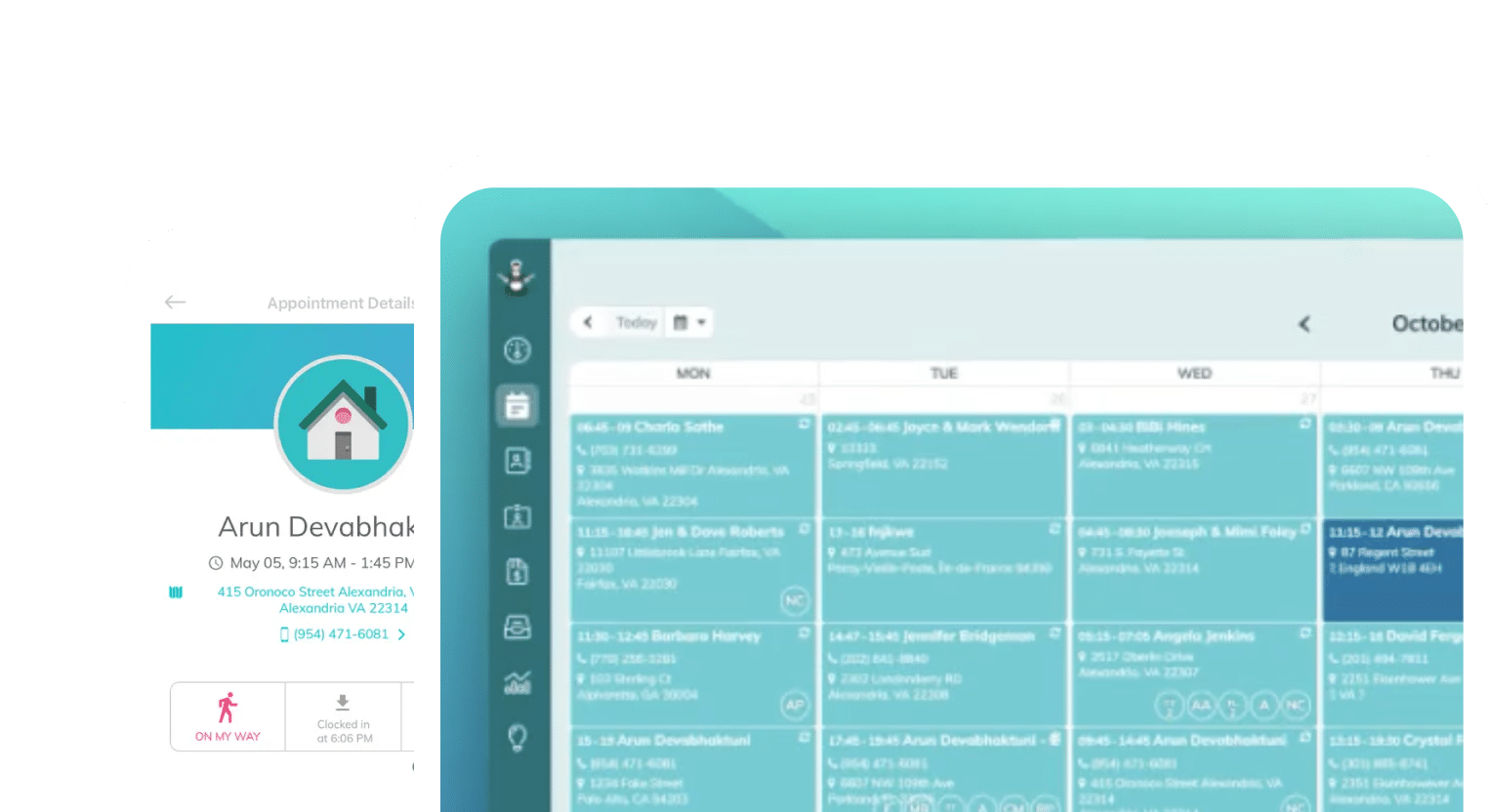
Frustrated with your scheduling? Try the easiest-to-use calendar app, made by and for maid service owners.

Brought to you by expert cleaning business owners

Tips and advice shared here have helped us grow our own maid services. The ZenMaid team currently has 5+ current and former cleaning business owners on our team, including our Founder and CEO, Amar. We’ve been in the maid service industry for 10+ years and counting.
We partner with amazing leaders in the cleaning industry, including Debbie Sardone, Stephanie Pipkin, Angela Brown, Chris Schwab, and many more — all to provide you with the latest industry insights.
We’ve built the easiest-to-use, comprehensive cleaning business software, built specifically for the industry!
Listen on: Apple Podcasts, Spotify, or YouTube
Introduction
Stephanie: Hello, my friends. Welcome or welcome back to the Filthy Rich Cleaners podcast. I am your host, Stephanie from Serene Clean. And in today’s solo episode, I want to do a little story time and lessons learned from the past couple of weeks, specifically relating to bidding a federal contract. I get so many questions about federal contracts and getting government contracts for janitorial purposes, and I want to talk about it a little bit today.
And spoiler alert: we did not get the bid. And I’m very happy that we didn’t, because it would have meant going literally abysmally low on our price. So I want to talk about the process. I also want to talk about posting and interviewing for the job before we even knew if we had the contract or not. We shall get into this.
If this is your first time here and you’re like, “Who is this lady? What is she talking about?” Welcome. I am so happy you have joined us in this fabulous little corner of the internet. I own a cleaning business in Western Wisconsin with three locations, about 30 staff members, around 1.5 million a year in revenue. And I run it completely remotely from Savannah, Georgia. As you can see, I voted. There’s my little Georgia peach. I hope you all voted today. It’s too late now by the time you’re watching this, but I hope you did last Tuesday. If that is interesting to you, if you don’t mind cussing and inappropriate comments occasionally, you are in the right place. We talk honestly and frankly here.
What is that scary shadow? Okay, it’s Bassett, one of my many cats, and it looks like a demon is over there. That’s Jenny. Bassett’s over yonder. Kitty is wandering. And Lily, my border collie, will come in here occasionally. So those are my pets. Bassett’s standing right in front of my pink light. So if you guys see a giant shadow, I’m not about to get devoured by a demon, hopefully. Right? I guess we never have full guarantees of that or anything in this life. So whatever happens, happens, right? All righty. So without further ado, let’s talk about it.
How Federal Cleaning Bids Find You
Stephanie: We got an email or two, even, from contractors looking to receive a bid from us for a government facility. And to give you just a little bit of details about this facility, it was probably, I think, an hour and a half away from our office, our closest office, maybe a little under that. It would be a five-day-a-week account, office spaces, nothing unusual or anything like that. But it is a federal facility, which means we have to go through the bidding process of a federal facility.
So oftentimes, how you’re going to figure out that these jobs are even available is because people from all over the country will start contacting you, wanting you to be their sub, if you will, their subcontractor. Isn’t that right, Bassie? Yeah, they want to get a cut of the money without doing any of the work. Not that I’m against contractors. Everybody get your bag, however it is that you can ethically. But the problem is, is these folks are not from anywhere around here typically, and they’re just looking for a local cleaning company to actually do the physical work. And then they just put a percentage on top of that and take their little cherry-on-top percentage. So that is how that works.
That’s actually how we have our largest account. It’s a federal research facility that we’ve had for years, and we’re the subcontractor on it. We are not the main contractor. So that’s exactly what happens. We bill our contractor. They bill the facility. We get paid through them. They get paid through the next step with just their little markup on top. I don’t know exactly how much they have on top of our current facility, but I do know — I know they’re not listening to this — that we are going to be bidding it directly when the contract is up for renewal, because it was a five-year contract.
So all of that being said, that is how we became alerted to this new opportunity that was coming up for bid. And we then, of course, immediately went on to the sam.gov website to find the opportunity directly so that we could bid directly and cut out the middleman. We did not have any interest in going through a contractor above us for this if we were going to win it. We wanted just to bid directly. There’s no reason for us to go through a contractor for this.
Registering on sam.gov
Stephanie: So I know that there are ways to turn on alerts on the sam.gov website. And if you’re like, “What is this, Stephanie?” We’ll link it below. This is where you can find all of the government bidding opportunities — it’s going to be on sam.gov. Now, you do need to register there. So if this is even something that you have any interest in, just go ahead and do that right now so that you can get these alerts. You are ready to go on bidding. So you’re going to have to do some registration. You’re going to have to get a D&B number, a Dun & Bradstreet number, most likely. And you just got to jump through some hoops to basically register to be eligible to bid on these jobs. So I would suggest just doing it. You never know. It’s not going to hurt you. And that way you are prepared if this is an avenue you ever want to go down.
The Group Walkthrough
Stephanie: So that’s how we found out: we were getting contacted. And so we went and found the job, and we went and saw when the walkthrough date is. And so typically with government facilities, at least this has been our experience, they like to set up one walkthrough with everybody, with all of the people who are interested in bidding. They want them to do the walkthrough all together, so they just have to explain themselves once, and there’s no unfair advantage or anything like that. So that’s what that looks like.
So I had a manager or two go and do the walkthrough, since I am not physically there in the state. Of course, I’m down here in the South, y’all. Up North, they’re taking care of business. So they went and did the walkthrough, and it’s kind of fun because then you can scope out the competition, like who is showing up to bid it.
And I am not throwing shade to anybody, but maybe I am. Holy shit. The people that just show up in sweatpants to do a professional walkthrough. Oh my goodness. Put a polo on, put some real pants on. Okay? This is a government facility, right? Like, this is why people don’t respect the cleaning industry, right? Put some real pants on, please. When you go do a bid — when you’re doing the work, whatever, wear your yoga pants, et cetera, whatever is comfortable. But let’s just, you know, look like we didn’t just roll out of bed. Okay. Salty, bitchy Stephanie over. I’m sure they are lovely people, but perception is everything, and first impressions are a big deal.
Take Notes, Take Video, and Ask About Supplies
Stephanie: All of that being said, they did the walkthrough. You ask your questions — like, everybody’s asking questions about things. You’re hearing the different details. So the goal is to ideally take as many notes as possible. You could take measurements if that is something that your business does. We do not take measurements, but we do take videos on walkthroughs whenever possible. And they did allow us to take walkthrough videos, and that’s very, very helpful in the bidding process, ’cause then you can watch and actually look at it again, because most likely you’re a bit nervous. A lot of times they’re walking through the spaces very quickly as well. So it’s just — it’s kind of a blur.
So if you can take video, be bold, ask. But the worst thing they’re going to say is no. They’re not going to kick you out for asking. I promise you that they will most likely let you do it. And that is super duper useful when you remember what just happened or what I just saw. So that is very useful.
Make sure you’re getting details on specific products or anything that they need. Like, for example, this facility, we had to bid to supply all expendable items like toilet paper, paper towels, soap — all of that stuff was included. And these are the exceptions to our rule, which is we do not provide those things. The only time that we provide expendable products is in these federal bidding situations where that is the only option. Otherwise, we simply won’t do it. It’s too unnecessarily complex, and most places are just fine doing it themselves. A lot of times they’ll ask, but again, you can just say, “No, we don’t do that. We just supply our cleaning supplies, but you need to take care of your toilet paper and tampons and stuff like that.” You know what I’m saying? So this one did require that. So obviously, asking questions about usage and all sorts of things.
Deadlines, RFP Amendments, and the Three-Bid Rule
Stephanie: So what typically happens is then you do the walkthrough, and then there is a deadline for the bid. Folks might still be submitting questions. And anytime somebody submits a question to the contact of the facility, they’re going to post and let everybody know and do, like, an amendment to the request for proposal — RFP is what you’ll see it called oftentimes. And then everybody has access to the same answer and information. So it’s as fair as possible.
So when it comes to government jobs, many of you may be aware of this already, so I’m not attempting to mansplain here. It’s just, I want to make sure I cover as much as I can in this conversation. Typically with government jobs of any flavor, they are required to get three bids every option year or new contracting period, for no favoritism. Like, the goal is to limit favoritism so that somebody doesn’t just give their buddy the job directly. You need to get three quotes minimum.
Pricing the Bid at $60 an Hour
Stephanie: And so we did the walkthrough and put our price together. And actually, I pushed back on the price. I thought it was too high. My managers were very adamant that we go in high on this to make it worth it. And high as in our typical prices that we aim for, which is $60 an hour for commercial.
And I know, I know some of you people listening right now are like, “Stephanie, you can’t get that for commercial. That’s not possible.” It really is. It is. I promise you it is, in different areas of the country. My business is in rural Wisconsin. We are able to get 60 an hour, and we’ve done a lot of work in order to be able to command those types of prices for commercial. I know some people are like, “You can only get 30 for commercial,” but there’s no point in us even going near that type of price, because we can’t make any money and pay our staff and all of the expenses. It just simply does not make sense.
So I was arguing the case of going in more at $50 an hour, because I was like, “We’re not going to be competitive. They’re going to go for somebody cheaper.” And they all argued, “Well, everybody else is bidding through a contractor, right?” So there is going to be a middleman add-on. So whatever the local company — whatever their price is that they give to the contractor who’s actually doing the bid — well, they’re going to have to add some on, right? So we have some wiggle room there. So that was their logic. And in my mind, I’m like, “We’re not going to get this. It’s going to be too expensive,” because they did mention really watching the budget with their decision-making.
Why Price Was the Only Deciding Factor
Stephanie: And it turns out that that truly was the only deciding factor: price. And what I mean by that is, come to find out, they were going to take the cheapest price regardless of any other details. Regardless of if we put a cover letter together explaining our proficiency and our expertise in facilities of this size, and just all of our background information — our reliability, dependability, quality control processes and procedures. None of that fucking mattered, because it all came down to price.
And so the reason I’m telling you guys this is to not get your hopes up that government work and federal work is going to be your guys’s ticket to success in the cleaning business world. In fact, I think that arguably it is one of the most difficult routes to go and actually think you’re going to make the margins that you want to make. They are so price-motivated. They are going to oftentimes take the lowest price.
The only reason that the facility we have — the only reason we got that, because we were not the lowest price — is they had specifically gone out of the norm and said, “This is not about lowest price,” for that facility that we currently have. They were like, “We are so tired of dealing with all of the problems of our current vendor and the constant turnover, the quality issues, et cetera, et cetera,” all of these problems that they were having. And so they were willing to forgo the whole lowest-price thing in order to get quality. And that’s exactly what they’ve gotten with us. They’ve been incredibly happy with us. We have killed it there. I’m very proud of how we’ve handled that facility.
But that comes at a cost, of course, because one of my managers has to be out there every two weeks doing an in-person QC. That is part of the bid and contract: you need to have eyeballs on to make sure it’s getting done correctly. So that costs money. All of that overhead costs money. It’s just — it’s so expensive. All of that to be said, that is an outlier, where the general rule of thumb is they’re going for the lowest price. So I’m not saying this to dissuade you from going after federal contracts, but I just want you to be aware that almost always that is what they’re going to be fighting on.
Losing to a Bid at a Fifth of Our Price
Stephanie: So all of that to be said, we did bid it at the 60 an hour of what we thought it would take. And we did not get it. In fact, we were able to see how much the winning bid got, and it was like a fifth of our price. And we simply have no fucking idea how that company is doing that. Other than maybe they have one individual cleaner that they found locally, and they are willing to work, like, employee wages. There is no, like, business entity. I mean, maybe it’s a cleaning business, but an individual owner, you know what I’m saying? Where it’s like owner-operator, and no shade to that, but there is absolutely no way.
I mean, it was — it was kind of — it made me feel better that it wasn’t even close, because there’s simply no way in any reality that we could become competitive on price and take that job. There’s no way, you know. And I’m saying an hourly rate — it is bid flat rate. So let me just give you guys that caveat. If you’re confused why I’m speaking hourly, I’m talking about our internal hourly, what we were aiming for. We estimated that it was going to take us, I believe, four hours per visit, like three to four hours, ’cause there’s more tasks that would get, like, rotated throughout that were quarterly. So we kind of had to, like, balance all that out. And then you also had all of the supply costs.
I do not understand. I do not think we were off on, like, time or anything like that. So I don’t get it. And I don’t really care to get it, because that person is about to, you know, work their tails off for not a lot of money. If it makes sense for them, that’s awesome. It did not make sense for us. So I’m happy. I don’t feel any sort of remorse. I’m glad we bid it. It was a learning opportunity. We honed our skill at the bidding process. It was just an extra practice. So I see that as valuable. And also, you know, not every job is going to be for us. That’s just simply the case.
And so I just wanted to tell this story, one, to just educate you guys a little bit about commercial federal facilities and what that is going to entail. I just want you to know that it’s not always going to happen, and that’s completely fine.
Whether you have been living under a rock or you’re just here for the cleaning horror stories, it’s time to tell you about ZenMaid. The Filthy Rich Cleaners podcast is brought to you by ZenMaid. I started using ZenMaid seven and a half years ago when I started Serene Clean, before I had a single cleaning tech, and I can’t imagine using any other software. Well, besides QuickBooks and ClickUp, obviously, as you guys know. ZenMaid helps cleaning business owners like you and me run shit efficiently with automated communications, full schedule and cleaner management, and a new data export feature. You can scale your business on the systems you build with ZenMaid. Sign up for a free 14-day trial at zenmaid.com/signup and tour the entire platform. Build a business that supports you, not the other way around, with ZenMaid.
The Short-Notice Reality of Federal Bids
Stephanie: I also want to say that a lot of times when you get reached out to by different contractors, or even sam.gov or whatever — however you find out about these jobs — oftentimes it’s like you need to go now. The walkthrough is, like, tomorrow. That happens so much, where it’s super short notice and you feel very frantic in having to get something done. Because for us, the walkthrough was on, like, a Thursday, and we had to get the bid in by, like, next Tuesday, the Tuesday after or something. So it was, like, very time-sensitive. We had to get it done and, like, block off time to talk about this. So that is something to keep in mind too: just bandwidth now of bidding it.
So I just want you to know all of this before you get disappointed by the reality that is government contract work. Again, I’m so grateful for our facility that we’ve had long-term, but it is the only, like, long-term account that we’ve had that is federal. Because we have had, like, one-off jobs that we have gotten through, like, Fort McCoy, which is our military base. So there have been, like, one-off jobs there. But long-term, this type of contract, meaning directly from the federal government — we have been a subcontractor under contractors at Fort McCoy for a longer-term project, which many of you guys are aware of, that lasted for six months. But as for, like, years of a contract, this is the only one that we have successfully won. We have bid multiple, and it’s just — it’s so price-sensitive, guys. And if they — they are — it is a race to the bottom, truly. And that’s just not a race I want to participate in and win.
Don’t Bid Below What You Need to Make
Stephanie: I’m okay with going for it. Okay? I’m never going to tell you not to bid something, but do not bid below what you know you need to make. Because if you do, that is going to be a hellhole job that you are shackled to for years. So if that’s not something that you want — even if you’re like, “The money would be so good.” Is it so good? If you — if it takes longer than you think it’s going to, when you actually have to hire for it, when you have turnover, when you have to go clean it because you can’t get anybody hired there, is it such good money still? And you got it lower than what you normally would go for. So, like, I get it. It’s steady. I would rather pursue other types of jobs that can get us more internal hourly rate, right? Just more profit in general. So those are my two cents there.
Hiring Before We Knew If We Won the Bid
Stephanie: I did want to talk in the second half of this episode about hiring for this. And I know that this might sound insane, but we literally — as soon as we knew about this job and that we were going to be submitting a bid — we listed a job on Indeed for it. And clearly, we didn’t get it. So you may think that that’s insane, but I want to showcase to you the level of proactive quickness you need to go about when it comes to hiring. Because that is going to be the biggest challenge, especially with these federal facilities, when they have pretty extensive background checks, typically. And you need to make sure that you have time to get those background checks ran, and if that person doesn’t work out, that you can get somebody else in there. So this is exactly what we did.
Another reason — like, well, there’s several reasons. Okay. So reason number one is that this job was going to have to happen very fast. They wanted to start pretty much ASAP, by, like, the end of the month. And so that would be very quick. It might’ve been even within a couple of weeks at the time of the bid. And so we didn’t have time to wait to see if we won the bid and then start hiring. It’s too late.
Why We Couldn’t Pull Our Current Staff
Stephanie: And the main reason why it’d be too late is the location, right? We could have covered it if it was within our typical service area. We could have absolutely covered it just with our current staff and just hired for it as we went on to take off that workload. But it was too far. It would make absolutely zero sense for us to pull any of our current staff and pay them to drive out there, because we would have had to. It’s driving for work purposes, right? And then once we get into the winter and the roads are bad, that is such a far drive that they could just be cleaning normally and not, you know, hazarding long-distance travel during the winter in Wisconsin. So it would not have made sense to pull our current staff. So that means we would have to hire.
So we wanted — the thought process was, let’s put job listings out there to even see what we get. Because it’s a very rural area — you know, all of it is very rural. But this particular area that the job was — it’s called Fountain City, for all of my Wisconsinites who know where that is. It’s Fountain City, right on the Mississippi River. And it’s not a big town. So we’re like, “Can we even hire here? We’ve never attempted.” So we had no idea what kind of market there was for staff for this particular job, right?
And for these government jobs, we do try to pay higher, because we really, really want that consistency. Like, we want to reward consistency. We give good bonuses as well. That’s what we do at our one federal facility, to incentivize heavily perfect attendance and perfect quality, because it’s so much harder to cover if somebody calls out or quits — because, one, of the distance, and two, of the background check requirements. So we were like, “We’re not going to waste any time. Let’s start throwing the line out and seeing what we can catch, and seeing if this is even feasible,” right?
Posting a Transparent Job Listing
Stephanie: So Crystal, my HR director, posted a job listing on Indeed and made it very clear and transparent that this is for a potential position. “We do not have the bid yet. We are doing exploratory interviews in the beginning.” We wanted to make sure that we were not bamboozling anybody or that we were promising that there was anything — we just made it very clear what this was. And we actually got a really good number of applicants and had some really good applicants within the first week or two that we had on standby, ready to go if we did win the bid. And again, it’s just being really open and upfront, if that wasn’t something that made sense for them. But the pay, I know, was enticing. The hours were enticing. It was a good opportunity if we were going to get it.
So I know that that may feel icky to some of you, but to me, that is just being prepared. Because I would rather find a good person and then just communicate, like, “Sorry, we didn’t get the bid,” than wait until after we got it, and now we’re scrambling and maybe make a poor hiring decision because we’re so desperate.
Always Be Interviewing
Stephanie: I’m telling you all of this to implore you to stop waiting to interview people until you have the perfect full-time position available. You should be interviewing all the time, all the time, because you do not know what is coming down the pipeline. You do not know what opportunities are coming. And obviously, in this specific scenario, we had never hired in this area before. It’s totally outside of our normal service area. However, the principle still applies. We still have job listings going for all of our service areas that we currently service — the normal ones — because we need to have options. We need to have options.
And it’s not just negative, like you’re going to fire somebody. It’s positive. A big opportunity comes your way. You have a big influx of leads. There is turnover. Somebody changes their availability on your current staff because they’re going back to school or they’re having a baby. All of these things are going to affect your ability to cover not only future work, but your current work. So if you have a great crew right now and you’re like, “Stephanie, I don’t need to hire. Everybody’s great.” You don’t know what tomorrow brings. You don’t know what diagnosis somebody is going to get. You don’t know what’s happening with their kids. You don’t know what’s happening with their partner that they have to now move for, whatever, right? There are so many things that could happen, just as it is in our life. We can’t control all of that stuff. So all we can do is control what we put into hiring, which is making sure we have active job listings at all times and are doing interviews every single week.
How Our Virtual Group Interviews Work
Stephanie: Obviously, you guys know that we do group interviews on our first interview. We make it very transparent that this is an educational group interview. It is completely virtual. We switched over to completely virtual group interviews a long time ago, and it works swimmingly. So nobody’s having to drive or anything. And we say, “If we want to explore this further, send us your references.” And then we will set up a more traditional individual interview as the second interview, where we can really get to know them.
But this filters out so many people, and you do not waste your time on no-shows. Because I’m going to tell you right now that probably three-quarters of people, if not more, are going to no-show even to a virtual interview. Even to a virtual interview. So we don’t want to waste our time on all of those folks, repeating ourselves a million times every single week. I’d rather just present once. I’d rather have my HR director present once or twice, however many times she’s doing the group interviews each week, and then move on with the people she’s actually interested in who could show up, who follow the directions of sending over their references, and who seemed really attentive and interested in the position.
Hire Part-Time and Keep a Wait List
Stephanie: So all of that to be said, this is a perfect example of why we need to be proactive and not reactive on hiring. This is where so many cleaning business owners go wrong: they wait. They wait to hire until they are so completely overwhelmed, because they’re like, “I don’t know if I can get them the hours that they want.” Well, then don’t hire a full-timer, guys. Hire a part-timer who is flexible. So many of my current staff who have been with me for literally years are still part-time. It does not mean that they’re going to be less dedicated to you. I promise you that. It is going to mean that they are appreciative of the flexibility and are going to be with you for the long term, because they’re not burning out on something that’s not sustainable for them and their family.
So you can always hire part-time and slowly transition your hours onto them, if that is the situation. Or just in general, it’s going to put you in a more powerful position, where you are not being held hostage and not able to get rid of somebody or whatever you need to do in your business because you have nowhere else to put the hours, right? So this is about having options. It’s about not always having your eggs in one basket and just hoping and praying that nobody quits ever, right? Or that your business doesn’t grow ever. You need to always be interviewing.
This is a great example of: we were being proactive, despite the fact we did not know if we were going to get the bid. Turns out we did not get the bid, but we wanted to be prepared to take action as quickly as possible, and also not to be hiring out of desperation because, “Oh shit, the job’s starting, just hire anybody, we’ll figure it out later.” We don’t like to do that anymore. That is certainly how I used to behave in the business, and I definitely had to, it felt like, to survive. But now we would rather wait and have a wait list or say no to work than to have the wrong person on our team, because that’s how poisonous and detrimental that is going to be.
And it’s actually going to be more costly, because of all the time and money and blood, sweat, and tears that you have invested into this person with training and getting all of your clients to trust them and transition. And then if they don’t work out in a month and you saw the fucking red flags, well, guess what? That’s costly. It’s not only costly in your time, it’s also costly in your reputation. It’s costly in your mental health. It’s costly in so many ways outside of just money — but the opportunity costs of just waiting.
Make a wait list, guys. It makes you seem even more tantalizing and delicious when you have a wait list. So that when you do get the right person, now you can put all of those wait-listed clients on them. It’s not a bad thing. It’s not the end of the world. We’ve had to do that many times in the business. And group interviewing and always interviewing every single week, even if you don’t have an opening, is what puts you back into the driver’s seat of your own business, and not being held hostage, making decisions because you don’t got any staff. Okay? Please be interviewing every single week.
The ZenMaid Mastermind and Newsletter
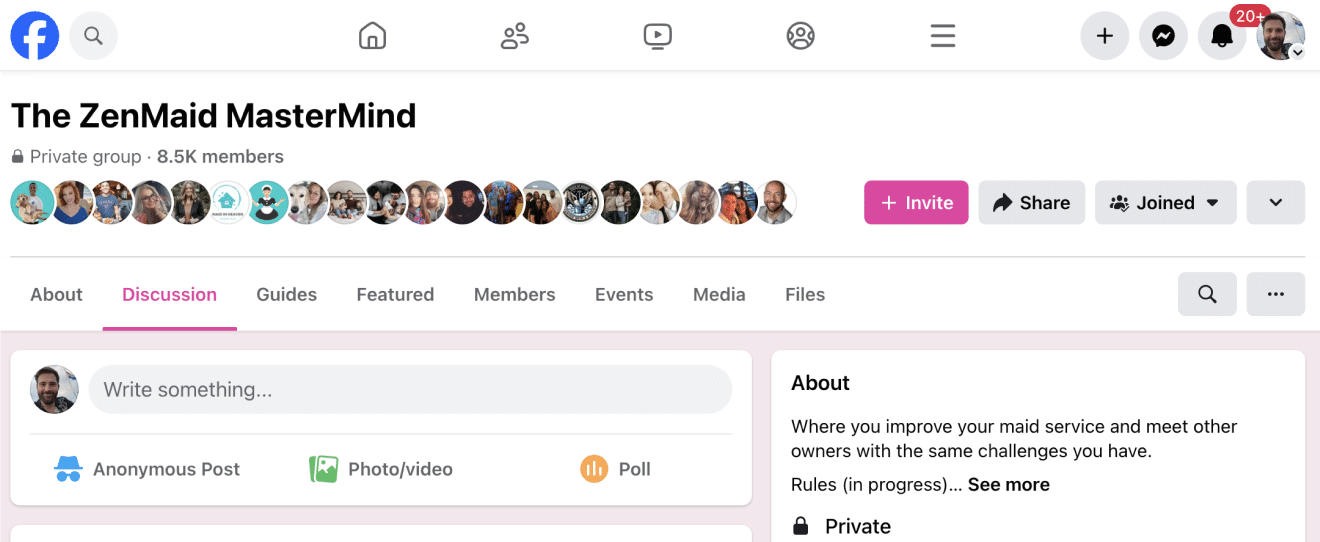
Stephanie: If you want more details on how we do that, I know that we have some articles on the ZenMaid Magazine. I’ve done whole episodes on it. We’ll link that down below. And of course, join the ZenMaid Mastermind, guys. People talk about hiring all the time. Talk about staffing, bidding. You can get help with bids if you’re ever confused, too. People are willing to help. It’s an amazing community. You do not need to be a ZenMaid customer in order to be a member of the ZenMaid Mastermind on Facebook. We would love to have you there. I love recording little exclusive, like, Looms and screen recordings to show you how to do something. I just showed how to, like, connect ZenMaid with Claude the other day in a Loom there, exclusively. That’s not anywhere else. It’s not like it’s something super special — don’t get too excited — but it is, like, I do like to share there and show you guys how to do things when I can. So that’s amazing.
I would also highly recommend that you subscribe to the ZenMaid newsletter. Again, don’t have to be a customer. There are over, I think, like 35,000 subscribers to the newsletter, giving out practical tips every single week, straight to your inbox. Short and sweet, just giving you things to think about that are going to grow you both as a person, a business owner, and a leader. So I really recommend that you guys subscribe. And then you can ask questions directly there. If you respond to any newsletter and you have a question for me that you want me to answer specifically, that is the best way to get my attention, if you will — is to respond back to the newsletter. ‘Cause guys, I just — I get so many notifications. All right. Just ask in the comment section below or answer to the newsletters, and I will be happy to answer it that way.
Of course, guys, please give this a like, hit the subscribe. If you are not subscribed on YouTube, I would so appreciate it. So many of you guys listen and you’re not subscribed. What’s up with that? Or if you’re on Spotify or Apple, whatever the fuck it’s called, please hit that like and leave a review or rating. And that helps other cleaning business owners like you find our sweet little community here. So I would just love if you would do that for me. I really appreciate it.
As for an emoji, leave me a little peach down in the comments if you made it this far, because I’m in Georgia. A little Georgia peach now. Leave that peach down below, guys. And I will see you in the next episode of Filthy Rich Cleaners. Bye-bye.