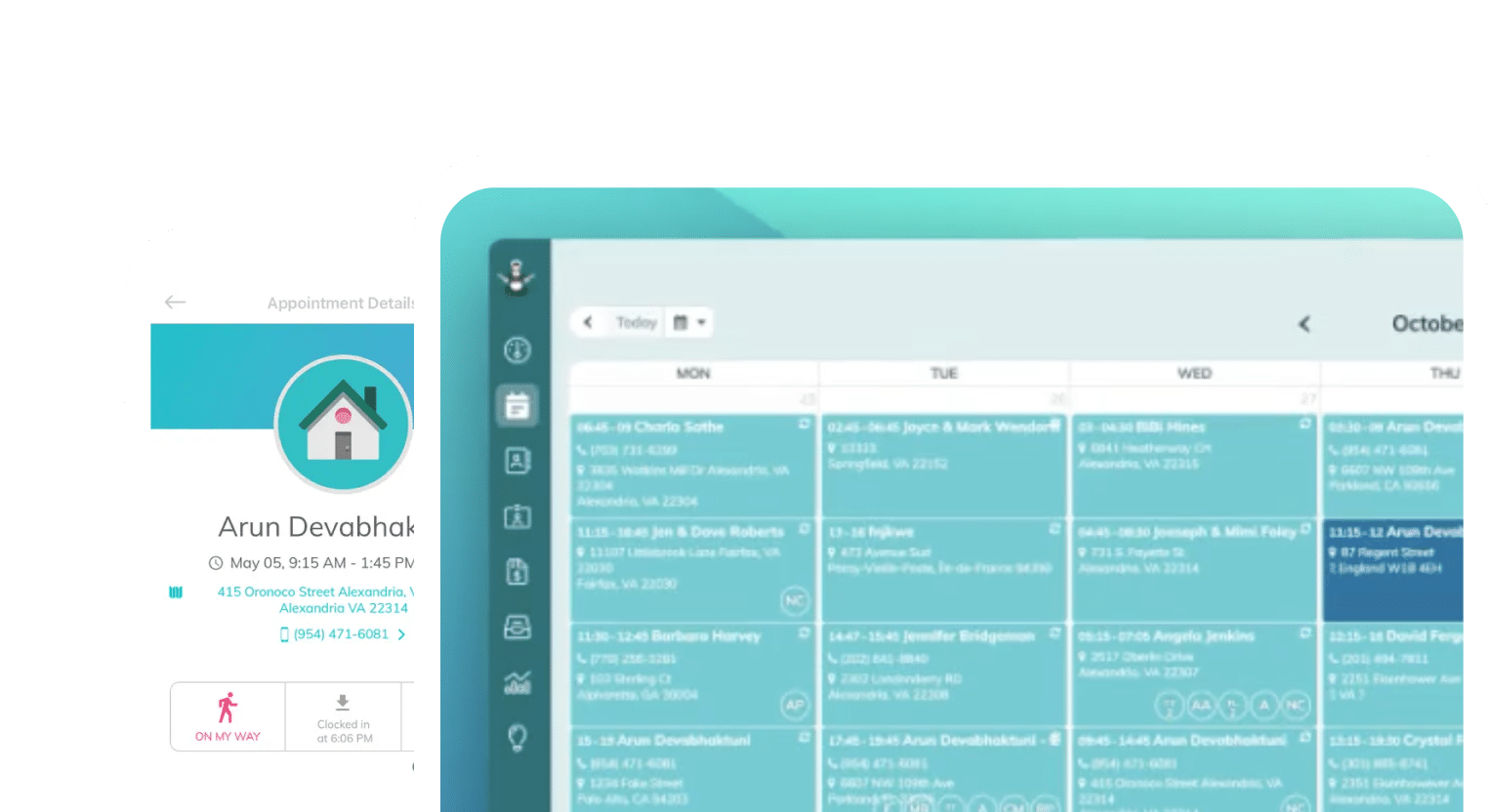
Frustrated with your scheduling? Try the easiest-to-use calendar app, made by and for maid service owners.

Cleaning businesses operate on trust. When a client hires you to clean for them, they are trusting you with access to their homes, children, pets, belongings, keys, and alarm codes. Your ability to guard and protect these things on the job is what makes you a trusted professional.
When you use software to manage your business, the tool you choose has an impact on the trust between you and your clients. They may not realize it, but you also become guardians of their personal and private information, and it’s your responsibility to ensure your tools care about your clients’ data as much as you care about their homes.

As AI changes software engineering and makes it easier for anyone to build apps, we’ve seen a flood of new tools hit our industry. We decided it was time to evaluate these new vibe-coded platforms and look into their data security practices.
Software should support you and your trusted relationships, not put them at risk. This article will help you understand how to gauge a new option’s robustness, reliability, flexibility, and support.
Table of contents
What We Found: Your Business Data is Exposed
There’s a new wave of scheduling apps cropping up and being marketed toward cleaning businesses lately. As you might expect, we monitor the ZenMaid ecosystem online to understand how we compare among our competitors.
We got curious and took a close look at a batch of these newcomers, and it was clear they were built quickly, likely using AI coding tools. In a number of apps, we were able to see client information that should not be publicly available in all of them. And we didn’t have to do anything clever to find it, it was just sitting there.
Any software you use in your business will hold personally identifiable information (PII) about your clients and cleaners — names, addresses, phone numbers, credit card details, access notes, and your team’s personal info. Considering the safety of this information and how the team who builds and manages your software should be top of mind for cleaning business owners.
This is the biggest issue we saw with every vibe-coded software we looked into.
It’s worth repeating: clients’ home addresses, access codes, personal email addresses, and phone numbers were all found sitting out in the open, available for anyone to see and use for any purpose. We didn’t employ hackers, get special credentials, or do anything unusual or nefarious. We truly just browsed the web and found personal information up for grabs.
Let that land for a second. These apps expose sensitive data to everyone, putting your clients at risk of burglaries or worse.
Why This Is Now Your Problem
When a cleaning business’s software leaks, it’s not just your own business data — like revenue or cleaner schedules — that’s at risk. It’s your clients’ data. These are the people who trusted you with their keys.
If their address and payment info are exposed because of the app you picked, they’re not going to blame the developer at a software company they’ve never heard of, or whatever faceless vibe coding platform you tapped to write your code. They’re going to blame you, the company they let into their home, for picking a tool that wasn’t secure.
This is not a security or IT problem. As a cleaning business owner, this is a trust problem. Remember, trust is the whole job.
Why vibe-coded tools are particularly worrisome
Watching an AI take your thoughts and turn them into a working application can be exciting. But writing code is only one small part of building and operating a software platform.
Granted, it’s historically been one of the most expensive parts, but there’s a whole world of project planning, design, maintenance, accessibility, updates, bug fixing, security, and more that AI can’t cover very well without experienced human intervention.
Vibe coding is fantastic for building prototypes and proofs of concept, but without direction and human discretion, AI won’t focus on what’s actually important accurately enough to build and maintain a sustainable product on its own.
For example, let’s take a closer look at security. Experienced software engineers who build with AI tools can closely direct AI, ensuring it maintains features like privacy controls and spam protection.
But if you don’t know what to look for or what needs to be covered, AI can mislead you about what needs securing and what doesn’t. This becomes a problem when sensitive data is exposed, and your software provider isn’t experienced enough to know how to resolve the issue or prompt AI to do it for them.
Where We Draw the Line
Let’s be clear about something — we’re not here to tell you AI is bad, or that “vibe-coding” is going to leave all of your information vulnerable. That’s not true, and we use AI every single day at ZenMaid to make our lives easier.
If you want to vibe-code a tool to solve your own problem, like a way to manage your calendar or to quote jobs quickly, by all means, go for it! That’s you, using a tool on your own stuff. If it breaks, you’re the only one who deals with it, and no one else expects you to fix it because they need to use it immediately.
As soon as you sell your product to someone else, the rules change completely. Now you’re in a world where multiple companies need to use your service simultaneously. They’re signing up, taking trials, canceling their subscriptions, adding employees, managing calendars and appointments, and likely in different time zones.
Maintenance costs to support a growing business will rise, and AI can’t manage or predict those on its own. Moreover, it isn’t likely to predict or build new ways of handling edge cases — would you know how to deal with daylight saving time?
Each of these tasks needs to be robust, secure, and well protected. All it takes is one or two unguarded data sources to bleed data — or worse, control of your data — to any amateur hacker with a spare afternoon.
And the more you advertise your software, and the more hands it gets in, the more chances you take that someone will find these weaknesses and exploit them.
Your clients pay for that shortcut. The trust they put in you as a professional cleaning business is fractured. Building a tool for yourself is one thing, but selling it to hold everyone else’s trust is another thing entirely.
How to Vet Any Software Before You Trust It
You don’t need to be technical to ask good questions. Before you move your clients’ data into any tool, ask the company these questions:
- Who actually built this, and are they still here? Look for proof of a real team you can name and reach when you encounter issues
- Where does my data live, and who can see it? This should be a straight answer you can easily find on the company’s privacy policy webpage. If that webpage looks AI-generated or cribbed from somewhere else, reconsider.
- What happens if there’s a security breach? If they can’t give you a clear answer about the actions they take when a breach happens, you’ve learned what you need to know
- Can I talk to a human when something goes wrong? Test it before you commit, not after your data’s already inside
If a salesperson dodges these questions, that’s not a company you want holding your clients’ credit card information.
How We Handle Security at ZenMaid
Our engineering team has over 50 years of experience in keeping your data secure and where it belongs. For over a decade, our team has provided maid service owners with safe, reliable, secure software for scheduling, so we know what it takes to protect your data as the tech landscape changes.
When something happens across the internet, real people stay up late to make sure that none of our customers’ data is compromised.
This expertise is what you pay for when you pay for ZenMaid. The same holds true for other trusted, reliable players as well.
If you want to see how we think about protecting your business and your clients, [take a look at how we handle your data]. And if you’re weighing a new tool right now, run it through the questions above first.
Your clients trusted you with their keys. You owe it to them to use trustworthy systems.