Frustrated with your scheduling? Try the easiest-to-use calendar app, made by and for maid service owners.

Brought to you by expert cleaning business owners

Tips and advice shared here have helped us grow our own maid services. The ZenMaid team currently has 5+ current and former cleaning business owners on our team, including our Founder and CEO, Amar. We’ve been in the maid service industry for 10+ years and counting.
We partner with amazing leaders in the cleaning industry, including Debbie Sardone, Stephanie Pipkin, Angela Brown, Chris Schwab, and many more — all to provide you with the latest industry insights.
We’ve built the easiest-to-use, comprehensive cleaning business software, built specifically for the industry!
Listen on: Apple Podcasts, Spotify or YouTube
Table of contents
- Lesson 1: Always Be Hiring
- Lesson 2: Raise Your Prices Before You’re Ready
- Lesson 3: Difficult Clients Cost More Than the Business They Bring
- Lesson 4: Your Values Are the Decision Maker Even When You’re Not in the Room
- Lesson 5: The Vacation Test
- Lesson 6: You’re Going to Have Moments — That’s the Point
- Lesson 7: Community Is Not a Nice-to-Have
- Resources Mentioned
Lesson 1: Always Be Hiring
Stephanie: Starting off strong — lesson number one: always be hiring.
The thing that has propelled Serene Clean to the level it’s at now is the fact that we’ve had a hiring system in place for years. Group interviews, which I’ve talked about before — if this is your first episode, I’ll link Episode 42 below, where I walk through the whole process of setting up group interviews for your business.
But regardless of how you go about it, you need to always be hiring. I know that may seem confusing. You might be thinking: I don’t always have openings. The reason we want this mindset is simple — you do not know what tomorrow is going to bring. We simply cannot predict the future. We don’t know what’s going to happen in our staff members’ lives that’s going to change their work situation. They may need to leave, take a leave of absence, or get pregnant. One of my cleaners is about to go on maternity leave — baby’s due in May. Maybe she comes back, maybe she doesn’t. In so many other situations, you just don’t know. Someone could quit tomorrow.
The point is: we always have job listings going. We’re always interviewing, so we have a running list of people we’re interested in even when we don’t have a spot yet. Because maybe next week we do. Maybe next month we do, because leads are flowing in, your close rate is improving, things change. The thing that is going to hold most of us back more than anything else is staffing. Sales can absolutely be a problem too — but the real holdback for most cleaning businesses is turnover. That’s just the reality of our industry. The work is physically demanding, people are unpredictable, life situations change, and sometimes you need to fire somebody.
We cannot allow our staff to hold us hostage. When someone is not behaving with good ethics, not showing up, treating clients poorly — whatever the situation — it feels like you’re trapped in your own business when you don’t have options. That’s what this lesson is really about. Always be hiring so that you have options to deal with the inevitable. The only thing we can predict is that something is going to happen. We just don’t know what or when.
This does not fix everything at all times. In the summer of 2025 we were still dealing with this and could not keep up with everything. But it certainly blunts the effects of turnover and unpredictability.
Looking back, if I had put this into place even earlier — I started group interviews a little over a year into business — doing it within the first year would have helped me so much. As some of you know, my very first staff member ever clocked in at a client’s house, sat in the driveway for four hours playing on her phone, and clocked out. Then at her second appointment that day, she filled out the cleaning checklist, left it on the counter, and walked out. I happened to be nearby, had a hunch things weren’t going well, and stopped in. The house had clearly not been cleaned. Dog hair everywhere. I cleaned the whole thing in about an hour and a half with two rags and a spray bottle from my car.
When I went outside and asked how it went, she said, “Great — I just left about 10 minutes ago.” I sent her a picture of the house I had just cleaned and fired her on the spot. That was Gabby — I’ll say your name, Gabby. That was my very first staff experience. Things like that are going to happen.
If you’re uncomfortable having job listings open when you don’t technically have a formal opening — just communicate to applicants that you’ll most likely be hiring within the next month. Because you probably will be. And even if you don’t call them immediately, people’s situations change. Maybe three months later they’re still interested. The point is you need options, and the only way to continue growing is to always be hiring.
Lesson 2: Raise Your Prices Before You’re Ready
Stephanie: When I opened Serene Clean, I started at $30 an hour and told myself no way is anyone going to pay this. I was broke when I opened. I could not imagine affording a house cleaner at $30 an hour, so I assumed no one else could either.
Something I heard on a recent episode that has really stuck with me: don’t stay out of other people’s pockets. You do not know other people’s money situations. To them, your price could be a steal.
What’s also become clear over time is that the response to the exact same price will be wildly different depending on the person. In the same week, I’ve sent out estimates and gotten back, “Oh my gosh, this is so affordable — let’s get on the schedule.” And in that same week, same pricing, we’ve gotten, “I am offended that you would suggest that pricing is worth it.” Literally those words. So what does that tell us? Pricing is completely subjective. We have to set our prices for what makes sense for us — so we can be a great workplace, make money, grow, and cover the real costs of running a business.
When I opened seven years ago, my dad pushed me from $25 to $30 an hour. We sat down and did the math — if I charge this much and pay the cleaner this much, plus taxes, plus insurance, there was nothing left for me. I begrudgingly started at $30 and immediately started booking clients. Probably still vastly under market value at the time, but to me it felt outrageous. The highest hourly rate I’d ever made before that was $12 an hour waitressing. So $30 felt absurd to charge.
I want you to really sit with this: your money hangups may be negatively affecting your business. I’d highly recommend Thou Shall Prosper for working through your mindset around money, and Profit First by Mike Michalowicz for the management side. Getting to see Mike at CleanCon and thank him in person was a bucket list moment — that book genuinely changed how I run the financial side of this business.
My first price increase was from $30 to $33. Three dollars. Nobody batted an eye. Nobody canceled. I did gradual increases over the years, and then recently we tested $60 an hour for first-time and sporadic cleans. I told myself the story that nobody was going to pay that. Sounds exactly like 22-year-old Stephanie — and here I was at 29 saying the exact same thing. We had our highest number of closed leads that month since mid-last year. It has not affected our close rate whatsoever.
Every single time I’ve raised prices, the only thought I’ve had afterward is: I should have done this sooner. Every time. So please learn from me — you are not going to feel ready, and that’s completely normal. But the thought of losing clients should not hold you back. Every client we lose over price, we’re able to fill that spot with someone willing to pay the higher rate. That’s good for your team, good for your margins, and good for the whole business. I think of it as my duty as the owner to get the highest-paid cleanings in every slot possible for the people who work for me.
We’ve been able to raise wages, add benefits, donate to the community — none of that would be possible without significant price increases over time.
One thing I wish I’d done earlier: set a cadence for increases instead of doing them randomly. Now at Serene Clean, every fall every client gets reviewed — their price either goes up or stays the same. And even if it stays the same, we notify them. We want clients to understand that this is a regular part of doing business with us.
If you’re scared, start small. Take a quarter of your client list and raise those prices. See what happens, then do the next group. You will be surprised how few actually drop. And if you are completely booked with no room to add clients, there is really only one lever to pull — price. If you can’t add clients, you have to adjust price to grow revenue. The ideal is the fewest clients possible making the most money possible. Less to manage, healthier margins, and a team that earns what they deserve.
Lesson 3: Difficult Clients Cost More Than the Business They Bring
Stephanie: There are multiple examples from over the years where I held onto a client far longer than I should have because of the financial ramifications of dropping them. Or I took them on in the first place knowing full well it wasn’t a good fit.
The clearest example: a $5,000-a-month commercial account that was way outside our service area. My gut was screaming no. We already cleaned their other facilities in our town — which remain some of our largest commercial accounts — and they kept asking me to take on this additional location. I said no. They asked again. I caved.
We were there for about four months. I made around $20,000 before I had to cancel because I simply could not staff it. The location made hiring nearly impossible — everyone in the area already worked at the factories. The one staff member I had on-site had an inexplicable obsession with using vinegar. We weren’t supplying it. The client was asking us to stop. We had no idea where he was getting it. Meanwhile, my managers and I were driving an hour and a half one way through snowstorms to cover shifts whenever he called in — which was often.
The evidence was showing me clearly it wasn’t working. The facility people were wonderful. The situation was not. It was a relief to drop them, and I do not miss that money.
$5,000 a month is a significant amount. That does not change the fact that it was the right call. And I think about it often when similar situations come up — all money is not good money.
That doesn’t mean avoid every large account. Our biggest account is over $11,000 a month and has been absolutely worth the initial setup and stress. The location works, staffing is manageable, and it runs smoothly. Size alone is not the problem. Fit is.
So if you’re doing a walkthrough and you can just tell — trust that. If you’re on the phone with a potential client and your gut is raising a flag, don’t take them on. You will regret it.
Your client guidelines can actually serve as a vetting tool here. Do they agree to your terms before the first cleaning? We had a high-end residential client who, when we sent our guidelines, responded that he was not signing them. He took personal offense at a standard clause about insect infestations — as if we were implying his home had bugs. He wanted to control the terms of the relationship. He canceled. We didn’t budge. The fact that a man who sells insurance for a living refused to sign something that is essentially an insurance policy for our business tells you everything you need to know about how that client relationship was going to go.
Trust your gut. Pay attention to the times you go against it — that’s usually where the lesson is.
Lesson 4: Your Values Are the Decision Maker Even When You’re Not in the Room
Stephanie: From day one, I established core values for Serene Clean: family first, integrity, and a grateful and positive attitude. We haven’t added to them since, honestly. They fit me, they fit what I want for the business and the team and our clients. They’re what I stand for.
What core values do — when you choose values that are a real line in the sand — is make the right decision clear, even when executing it is hard. Looking back at so many forks in the road over seven years, it wasn’t difficult to know what to do. It was difficult to do it. That’s the difference.
Here are a few examples, starting with the generous side.
The first involves a manager who went through very severe, life-threatening health issues. We had just come off the Fort McCoy project — a million-dollar contract that helped us reach over $1.5 million by year three — and we were in a solid financial position. She needed time away, and I had the ability to cover her salary. So I did. For eight months, she didn’t work. She came back, and it turned out she wasn’t the right fit for the role anymore. Eventually she was let go. I did not get the financial return.
I do not regret it for a single second. That money helped somebody who genuinely needed it, and I was in a position to do it without hurting the business. Money is a tool. It’s a mechanism to do things. The more you have, the more you can do with it.
Second example: a cleaner’s son needed a specialized wheelchair — around $800. I bought it and sent it to them. That cleaner left within a couple of months. That kid still has a wheelchair. I don’t view that as lost money. I view it as a gift, full stop. When you give with the expectation of return from an employee, you will always be disappointed. Every employee is going to leave eventually — they’ll quit, get fired, or retire. If you wait to be generous until you’re certain they’ll stay, you’ll never be generous.
Now the other side — because core values cut both ways.
A staff member stole at a client’s job site and was caught on camera. This person had been with me for four years. I wanted to forgive it. I wanted to give a second chance. But acting with integrity for the rest of my team meant I could not. My team shows up every day and does not steal. They don’t betray the trust of our clients or each other. Allowing this to slide would have been a direct insult to every one of them.
I said to my managers — and we were all upset about it — if we don’t do this because it’s hard right now, we should close the doors. Anyone can say they have integrity on a good day. The question is whether you’ll live it on a bad one. That’s what core values actually mean.
There was also a situation early on during COVID. We were able to keep working — we weren’t around people, so we could operate safely. But the unemployment payment was attractive, and a team member posted in the group chat that it would be great to be unemployed right now because of the COVID payments. Basically suggesting I should lay everyone off so they could collect. That’s blatant disrespect, and it’s wrong. We could work and work safely.
Firing this person was uncomfortable. We’d become close. But keeping them on would have been wrong on every level — ethically and as a message to my whole team. So they were let go.
Don’t choose core values unless on your worst day in business, you are going to live by them. If you won’t, they’re not your core values. They’re just words on the wall.
Lesson 5: The Vacation Test
Stephanie: For those who don’t know, I’ve operated Serene Clean remotely for over three years. I live in Savannah, Georgia. My business is in rural Western Wisconsin — over 20 hours away by car. The lesson that got me here: take a vacation and see what breaks. Fix those things. Take another vacation. See what breaks. Keep doing that until nothing breaks.
The more control we try to hold, the more we steal the opportunity for other people to prove themselves. The more we micromanage and operate with the mindset of nobody can do it like me, the more we hold back our business growth, our personal growth, and our growth as leaders. The people around me have been showing me, especially in the past year, that they are completely capable. I just need to give them the opportunity.
You don’t have to go from zero to fully delegated overnight — that’s not how this works, and a lot of things would break at once. Start small. Can you take a Friday? Can you take a Monday? Just step away and see what comes up. What breaks tells you exactly what needs a process or a system. It keeps evolving from there.
Now I’m planning more travel this year than I’ve ever done in a single year, including over two weeks in Europe this summer, and I have had not one thought of, what about Serene Clean? Because I know it’s going to run without me. That is, for me, one of the key indicators that a business is successful.
But the vacation test didn’t stop applying once I went remote. The next phase was making sure my managers could do the same. When Crystal, my head of HR and my longest-tenured employee, told me she hadn’t taken a real vacation in years — that when she did, a mountain of work was waiting for her when she got back — that was a wake-up call. It’s not just about whether Stephanie can step away. Can my managers step away too?
That meant cross-training, documentation, SOPs in every role, Slack automations to handle after-hours messages, and clearer boundaries across the board. My managers were burning out answering messages at night, and they were brave enough to tell me. Things had to change.
When something breaks on a vacation, that is not a reason to never take another one. That is an opportunity to learn. What broke? What needs a process? Fix it and go again.
Lesson 6: You’re Going to Have Moments — That’s the Point
Stephanie: I remember every single cleaning I did in the first several months. The nerves, the anxiety, the uncertainty, the full imposter syndrome of I don’t know what I’m doing. But one moment changed everything.
I was at my full-time job while one of my cleaners was at a house doing a cleaning. And I realized — I’m making money off of somebody else physically doing the work right now. I said it out loud. I remember exactly where I was standing.
That was my first real mindset shift. And that’s what this lesson is really about: you are going to have moments that fundamentally change the way you see things, what you think is possible, and what you’re willing to do next. They’re going to keep coming. And you need to recognize them, because they are the point.
They come from trying new things, being exposed to new ideas, putting a process into place and watching it work. Reflect on your own moments — the ones that changed what you thought was possible. They’re worth revisiting.
Right now I’m in the middle of another one. I’m exploring whether to transition Serene Clean from hourly to flat rate pricing for maintenance cleans. None of the companies I’ve seen doing over two million in revenue are running hourly. I can’t ignore that.
I’ve charged hourly since day one because it’s simple, transparent, and easy to explain. But I’m meeting with Molly Moran and my management team to really work through what flat rate could look like — not all the reasons it can’t work, but how it could. And I’ll be honest, my ego was a little tweaked about sharing that with you. Does this make me look like I don’t have it figured out?
Maybe. But it doesn’t mean what I’ve been doing was wrong. It just might mean that to get to the next phase, something has to change. Every phase of Serene Clean has required something to change for us to keep growing. This is not a failure. This is what growth looks like.
You are never the fully evolved version of yourself or your business. It’s never done. And it’s a little arrogant to think it is.
The moments where you feel unsure and a little embarrassed are usually the most useful ones to share. Keep going. Keep learning. Keep experimenting. What’s the worst that happens? You get some pricing wrong on a few appointments. What’s the best? You become more profitable and things get simpler. You’ll never know until you try.
Lesson 7: Community Is Not a Nice-to-Have
Stephanie: This is the thing that is going to keep you from quitting.
As I reflected on these seven lessons, I kept coming back to how many times I’ve felt like the weight of the world was on my shoulders — like it was all on me. But it was never truly all on me. I’ve had great staff and great managers from the start. And leaning into community has been integral to staying in the game.
About a year in, I got coaching. It was really helpful to have someone I could talk through problems with, someone who could help me decide where to focus, what to track, what decision to make. It was comforting to have that direction when everything felt uncertain. I’m not with that coach anymore and wouldn’t recommend them specifically, but the value of having someone in your corner — absolutely real.
Then there’s the ZenMaid Mastermind. If you click on my profile in that group, you can find one of my first posts from 2019 — asking for advice on bidding my first large commercial account. I joined in my first year and have been in there ever since. And just the comfort of knowing you are not alone, that so many other people are dealing with the exact same things, matters more than it sounds like it should.
Community doesn’t mean someone else is going to show up and solve your problems. But it means when you feel like quitting, you have somewhere to go that isn’t the door.
A lot of times we just need to vent. Sometimes we need to cry — literally cry. Crying is how our nervous system regulates. Don’t feel bad for needing that. Go in a room, let it out, and come back. Don’t make it the end of the story.
A lot of business owners isolate when things go wrong. At least, I do. When I feel stupid or ashamed, I pull into my shell. And the problem is, nobody can get in to help. Nobody can encourage you when you’re feeling discouraged. When you get that impulse to isolate, lean in the opposite direction. Be vulnerable. Share what’s happening. When you’re vulnerable, you give other people permission to be too.
Going to CleanCon and being in a room with cleaning business owners two, three, four, five times my size — that was a visceral feeling. Like, this is possible. Their circumstances may be different. Maybe they’re in a big metro market. But that doesn’t mean Serene Clean can’t be bigger than it is right now. And it doesn’t mean your business can’t get where you want it to go.
When you’re at your wit’s end, don’t post “I quit.” Post “what should I do?” Because there are answers. There are people who have figured this out, which means it’s possible, which means you can do it too.
Go to your community. Connect. Learn. And don’t quit. I’ll see you on the next episode of Filthy Rich Cleaners.
Resources Mentioned
- Episode 42: Group Interviews for Your Cleaning Business
- Thou Shall Prosper by Daniel Lapin
- Profit First by Mike Michalowicz
- ZenMaid Mastermind (free to join)
QUICK TIP FROM THE AUTHOR
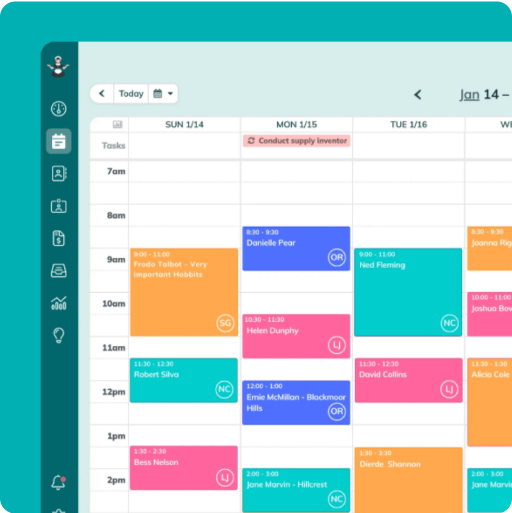
Simplify and enjoy your scheduling with a scheduling software made for maid services
- Have a beautiful calendar that's full but never stressful.
- Make your cleaners happy and provide all the information they need at their fingertips.
- Convert more website visitors into leads and get new cleanings in your inbox with high-converting booking forms.
- Become part of a community of 8000+ cheering maid service owners just like you.
Start your FREE ZenMaid trial today and discover the freedom and clarity that ZenMaid can bring to your maid service! Start your FREE trial today