Frustrated with your scheduling? Try the easiest-to-use calendar app, made by and for maid service owners.

Brought to you by expert cleaning business owners

Tips and advice shared here have helped us grow our own maid services. The ZenMaid team currently has 5+ current and former cleaning business owners on our team, including our Founder and CEO, Amar. We’ve been in the maid service industry for 10+ years and counting.
We partner with amazing leaders in the cleaning industry, including Debbie Sardone, Stephanie Pipkin, Angela Brown, Chris Schwab, and many more — all to provide you with the latest industry insights.
We’ve built the easiest-to-use, comprehensive cleaning business software, built specifically for the industry!
Listen on: Apple Podcasts, Spotify, or YouTube
Introduction
Stephanie: Hello everyone. Welcome or welcome back to the Filthy Rich Cleaners podcast. I’m your host, Stephanie from Serene Clean, and in today’s episode, I am going to give you all three examples of how y’all are doing too much, okay? You’re doing too much.
And all of these examples are from the past week, and I was like, I don’t know if I can make a whole episode on any one of these. Probably I could. You guys know I can rant. But I was like, let’s just do a little compilation of three areas and specific examples where you guys, like, that’s all I can describe it as. You’re doing too much, or you’re trying to make fetch happen when it’s not going to happen, okay?
So I wanna talk about it and let you know how I would handle these situations, or what I would suggest just based on my experience.
And if you don’t know who the heck I am, my name is Stephanie. I own a cleaning business called Serene Clean in rural Western Wisconsin that I operate remotely from Savannah, Georgia. I have anywhere between 25 to 30 staff members depending on the day, literally. I’ve learned a few things over the past seven years, and I like to share those things with our lovely audience and community here.
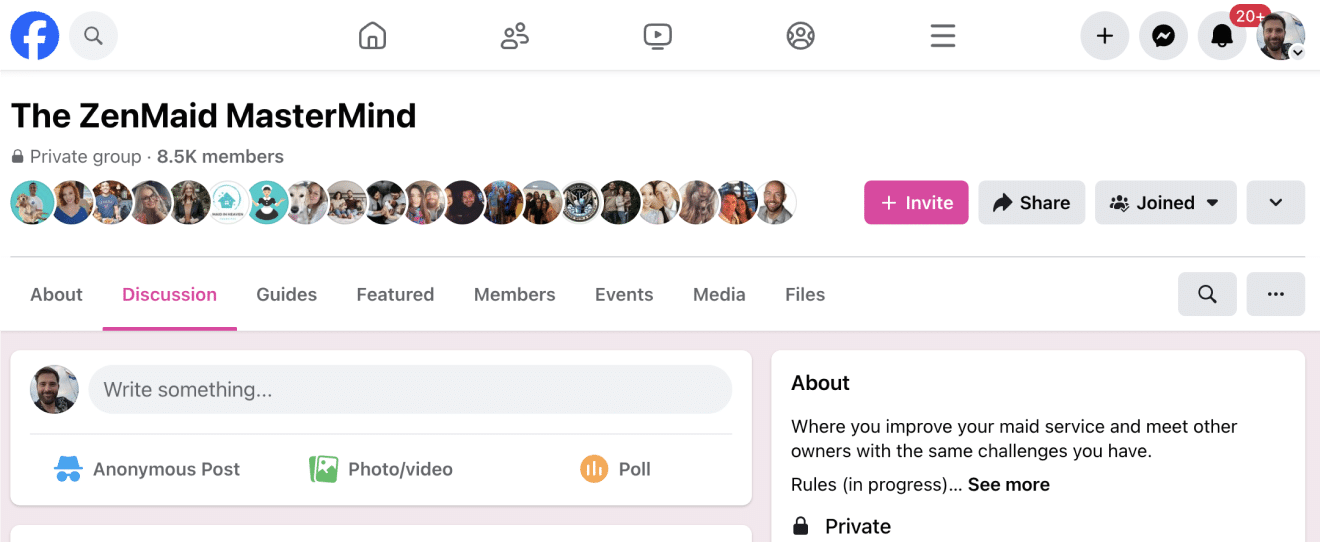
Speaking of community, one of these examples is from the Mastermind on Facebook. So if you are not a member, I highly recommend hopping over there and joining. It’s completely free. It’s just a Facebook group. It’s called the ZenMaid Mastermind. You can join, ask questions, give and get advice. It’s truly fantastic. It is how I started interacting with our community online, which is amazing. So I definitely recommend that you guys become a member of that if you are not. And it sometimes inspires episodes like this, ’cause I’m like, we have to talk about this. We have to talk about this.
A Few Personal Updates
Stephanie: Peep the cool-ass shirt, guys. Cat lady, like retro cat lady, sick, right? Also peep, ooh, what is this? This is, it for our listeners that are watching, working on a new tattoo. I had my first session yesterday. It is going to be full color. And I’m so excited to show you guys what it looks like when it’s completed, but it will probably take another, I have another three sessions scheduled. I usually do between like five to six hours of tattooing at a time, which I know sounds like a lot for this much space, but it’s full color. It’s a full color scene. So we got all of the outline and kind of like initial shading done, but it is truly going to be a spectacular full wrap-around. I’m so excited.
So I am a little stiff in the arm right now, because tattoos are kind of like, the healing process is honestly like sometimes more annoying than getting the actual tattoo, right? And it also is just not a very painful area of the body in my opinion, as somebody who is pretty, I would say, quote unquote, heavily tattooed, whatever your definition of that is, with my back and waist and all of that stuff being tattooed already. So if you’re looking for like a not-so-painful tattoo area, I definitely recommend the forearm, except right here on the wrist and the elbow is a little spicy. So yes, stay tuned. It should be done in the next month actually. So we’re doing every two weeks.
Hello, Jenny. She brought me a little sushi. Speaking of cat lady, one of my cats, Jenny, and she likes to bring me little sushi roll toys and I play fetch with her. She’s adorable. Hello, baby girl.
Example One: Stop Prepping Your Cleaners’ Kits
Stephanie: Okay, onto the topic, guys. And the first example of doing too much. I have seen this time and time again, when having consulting calls or talking and giving advice, is you are all, not all of you, some of you are still preparing all of the kits and doing everything related to supplies yourself, and not putting any of the responsibility onto your cleaners.
And I understand the thought process. I understand the fear of it not being done well, or perhaps theft happening, et cetera, et cetera. But I’m just gonna have to tell you right now, in order for you guys to grow, in order for you to be able to take a vacation and like walk away from the business, even a day, you need to have something set up that’s not you preparing the cleaners’ kits, you running them the kits. Like any of that stuff is just wild, and you should not be doing this. This is something that, actionably speaking, if you are doing this, I would pronto ASAP, like, move towards you not being responsible for this.
And you may be wondering, Stephanie, well, if it’s not going to be me, who’s going to get the kits ready? And I would say, dear listener, your cleaning techs. That’s who, okay? Your cleaners should be responsible for maintaining, prepping their kits, getting the appropriate supplies, and yes, even helping with laundry and maintenance of the vacuums, those types of things.
A lot of you that I talk to are doing all of this. You’re literally running the kits out. You’re preparing them every day before the shift. It’s crazy to me, it’s crazy to me. Or you’re having an office person do that, also feels crazy to me, okay? Like your cleaners can absolutely be held accountable to this. And in order to make this correct and fair, and just by all means right, you just have to pay them for it, okay?
And the way we have solved this is we simply give them some prep time every day that they are scheduled to work. We pay them for 10 minutes of time to prep their kit, to make sure they have the appropriate tools and supplies, that it’s looking tidy and nice. They are maintaining their vacuum, cleaning out the filters, cleaning the vacuum out.
How We Handle Vacuum Maintenance
Stephanie: And the only instance where we are touching their vacuums is if something is not working or a part breaks, then they will bring the vacuum to us and we will take it from there in the office. Meaning my manager, April, is the vacuum wizard. She has her corral, her herd of vacuums. They’re free range, don’t worry, guys. We’re very ethical at our company. These are free range vacuums. And she brings them in, puts together, from her Frankenstein parts, little drawers she pulls from, and she fixes the vacuum and sends it back. Or sends it up upstate to the farm if it needs to be put out of its misery. God, what the fuck is wrong with me? Sorry guys, it’s Friday and I’m a little unhinged today.
So when it comes to vacuum maintenance, that’s how we handle it. But just day-to-day maintenance, absolutely the cleaning techs should be handling that themselves. So it’s just something that I’ve never done ever in the business, is me getting their kits ready.
The only exception to this is when their first day of the business, like when they first start with your company, you need to get a kit ready together for them, of course. Like have a full perfect kit prepared so they know what that looks like. And then the job is that for them to replenish it and to make sure it’s looking nice and clean so it’s not looking all messy. And I’m like the worst at this. Like my kit looks like a war zone after even like a day of cleaning. It’s just like an explosion went out there.
So we will prepare the kits, of course, for their first day. And then in order to make it easier for them, I don’t know if any parents are listening that have done this type of thing of like putting a picture on the wall of how a room or a surface should look. Or I’ve even seen the trick of like printing life-size versions of the things where they’re supposed to go and then like taping them in that spot. It’s kind of like that. We literally print out a visual representation of what an ideal kit should have, as well as explaining what maybe additional or specialized tools are. And we put that up in the office, and we have three office locations that they are replenishing from. So all of the offices have these images so that if they use up all of something and they throw it away and then they go back to the office, they can clearly see, oh, I’m missing a Bar Keepers Friend. I need to add that back to my kit, or whatever the thing is. So make it as easy as possible for them to do the job themselves. You do not need to coddle them in this way.
Paying for Prep Time and Holding Cleaners Accountable
Stephanie: And when it comes to that prep time, 10 minutes might be like, “Oh, can they get it all done?” We literally, in order to come to the conclusion that 10 minutes is indeed fair, what we did was time ourselves, like my managers with time, like, okay, if I had to switch laundry, I’d replenish my kit and to clean up my vacuum filters and wipe down my vacuum and stuff, like how long would that take me? And 10 minutes is more than enough in order to do all of that. And a lot of times it’s less, they don’t need that much time just to grab what they need. But that way it’s fair. And that way you can hold them accountable, right? Because if you are trying to have them do these things, and then they’re like, “Well, you’re not really paying me to do this. And this is work related.” Well, it’s hard to hold somebody accountable, like, when they can make that argument. So make it so that they can’t make that argument, right?
And I will tell you, this will just make your life so much easier. And when it comes to like, you know, if they don’t have their shit together, basically, then you can actually like dock them. That, at that point, they are not doing that part of the job and you can give them a write up. You can hold them accountable or have some type of consequence. Like for us, that’s going to affect their future raise, is if they are not prepared. If we have to constantly run them supplies or tools, then we are going to eventually dock their pay because of that. Meaning dock their future raise potential, ’cause that’s how we have it set up. But if it’s like a recurring problem, yeah, that’s gonna get into like warning territory. This is part of the job, is having the tools and supplies that you need.
The only exception to that is, of course, if we change your schedule last minute, somebody calls out, we have to put a different cleaning tech on a home. Maybe that home requires a special tool or something. And of course, they’re not gonna know that ’cause they didn’t know they’re on that house, right? So it’s not like we’re pigheaded in this and we’re gonna take each situation for what it is. Or if a house is way, way, way worse and we’re going in sight unseen and they need more microfiber cloths ran to them or something like that, okay, that’s totally fine. No big deal. But the goal here is you, the owner and the manager, should not be doing this.
And when it comes to the laundry itself, that’s a team effort. Like my managers work out of one of the offices, the other two, the only time they go there is very infrequently. So the laundry, the washer and dryer, that is completely managed and maintained by the cleaning techs that are working out of that office. They’re switching laundry over, and it’s just this team effort to make sure that that’s going well. Sometimes we do have to gently remind if only one cleaner is handling that, or like, “Oh, nobody ever moved this.” Like we do have to intervene there, but it’s truly the only way. We can’t have a manager doing that. I certainly can’t do that. I’m 20 hours away. So we have to come up with a solution.
So I’ve just talked to so many of you, and I had one particular conversation with a wonderful owner where he was wondering how I handle this. And I’m like, “The cleaners do this. What are you talking about?” And so definitely if you are somebody who will not relinquish control over this for whatever reason, let me tell you, you have to. You cannot be keeping on doing it this way. Just start paying them a small amount of time in order to do this. It’s part of their responsibility. And you might have some hiccups on the transition, but over time, this is going to be such a huge thing for you. And I guess I just did not realize how many people were still preparing all of the kits for their cleaning techs. Like I had no idea until I’ve had this conversation like several times in the past month. And I’m like, “Wow.” Like, it’s just not something I even think to mention because it’s just always been this way in my business of like, that’s the cleaner’s job to do that. So that is why I’m saying it here, because I’m sure somebody listening to this right now is doing too much in this area, okay? So that’s number one.
Example Two: Time Theft and GPS Tracking
Stephanie: Number two area is actually the one inspired by the Mastermind post. And one of the lovely members posted about a situation where her cleaners were intentionally turning off their GPS tracking, or they basically got caught. She realized that they were clocking out at their homes instead of at the client’s homes in order to get paid more. And then when she was like, “Hey, that’s not cool,” they turned their GPS tracking off.
Because if you’re not a ZenMaid user, you don’t use any type of scheduling software, you may not be aware. But one of the best, most important features of any scheduling software is going to be that your cleaners are clocked in and clocked out with GPS tracking. It doesn’t mean it tracks them all over the place, you know, and like from like the whole time, it’s just in that moment where are they, when they clock in and clock out when they press that button. So if your cleaning techs are hesitant because they’re like, “I don’t wanna be tracked.” Well, it only tracks them in that moment, right? But the point is that we know at least in that moment when they say they’re on the job, they are on the job, right?
So at this point, it’s lying, it is time theft, and that’s how we need to take it. And so the owner that was posting was just asking for advice of like, “Am I basically, am I overreacting?” Like what, and it’s, we all were like, the entire comment section was, “This is theft, they need to go.” Right, because now all they’re going to do is just be more sneaky about it. And you know that they are going to be willing to steal.
So it’s very interesting how many staff members, see it, time theft is not actually stealing, but that is stealing. And you have to take it that seriously, because if they’re willing to steal from you, why would they not be willing, if the opportunity arises, to steal from your clients? And if somebody steals, you guys know what a big deal that is. It’s like the worst thing that can happen to your cleaning business. That’s not true. One of the top five worst things is when a staff member legitimately steals. So you’re literally being shown evidence of their morals and values not being aligned whatsoever. And it’s just this giant red flag. And like, it’s total foreshadowing of what is to come. Of, you know, they’re showing you what they’re doing. And then when you call them out on it, now they’re just trying to be sneakier about it, right? And just blatantly disregarding any policy.
So the suggestions that we all had, of course, was these people need to go. But I do wanna add the context for everybody listening. If you do not have anything in your policies about this being a requirement of the job, I would definitely add that and make sure that your cleaners are clocking in, because this should be an offense that if they are repeating it, this is something that you need to escalate. Like if they are blatantly choosing and refusing to not clock in and clock out with GPS tracking, like that’s going against company policy. It is one of the biggest protective mechanisms that we can have. And it also allows us to then say to the client, like, yes, they were there. Here’s the proof of that, right? So it protects the entire company. So it’s so vital that this happens.
Sticking to Your Principles When It’s Hard
Stephanie: So when it’s like doing too much, it was this owner, and I totally understand. And this is what I said in my comment. Like, I understand how painful it is to make this decision, especially it’s like two staff members, like they’re good cleaners, like that’s tough. But those are those kinds of lines in the sand or forks in the road that you need to be very strong on, because it’s only gonna hurt you later. You are literally hurting future, your business, future you, and future all of your employees. If you allow people with no values or morals that align with yours, ’cause clearly they have values and morals. They just are not the ones that we would say are right. If they do not align, you allow those people to stay on. It’s going to hurt you. It will bite you in the ass at some point, and you will be kicking yourself that you did not take the appropriate action when the thing arose, right?
So we need to make sure that we stay strong, even if it’s wildly inconvenient, even if it means we have to go clean or whatever needs to happen, or you need to cancel on some clients temporarily. Like I would prefer that over sending known thieves into the field, right? Like that, it has to be done. And it sucks in the moment for sure. But what it does is that also builds a lot of confidence in yourself when you make those hard but necessary decisions. And I don’t mean it’s hard because, like, we all know, like as soon as we all read it, we’re like, they got to go. That doesn’t, it’s a simple answer. It doesn’t make it less difficult to deal with in the moment, of course.
And so I just want to encourage all of you, with these types of situations that completely go against what aligns with your values, you have to just be really decisive and just let the cards fall where they fall, and you will pick up the pieces and deal with it. But you have to do that, because if you make the slightly more comfortable in the moment decision, it will bite you in the ass. I promise you, promise you, promise you. And you are going to be so mad at current day self, okay? So just make that tough decision, whatever that, or that largely consequential decision, I should say, it’s not tough, it’s easy, simple, but hard to execute sometimes. So I totally understand.
So when I say, like, doing too much, you are trying to find a way to keep them on or try to basically argue with what you know to be true in your heart, because it’s going to be annoying as fuck to deal with the consequences. So I’ve been there so many times where it’s like, please, like, I don’t, why can’t you just act right? Like I, it’s like, you know, when your parents would be like, I hate that you’re making me be a parent right now. Or like, I’ve, you know, I said with my employees, I’m like, I hate that they’re making me be the boss. You know, obviously like I get it, like we’re the bosses and we get many, many wonderful things, but it’s like, please just act right. So I don’t have to, like, we’re two adults. Why should I have to tell you not to steal? Why should I have to tell you, you need to be on work, to work at time? Like, it’s really frustrating sometimes, but alas, that is the lot in life that we have chosen. So sometimes you need to do that, right? And it’s frustrating.
So all of that to be said, just stick to your guns, even when it is very difficult, and don’t try to convince yourself otherwise of a situation you know in your gut is like, this is messed up, they need to go. And I get it, it can be very tough. I mean, I described last year when I had a long-term staff member steal at a church on camera and then she lied to me multiple times straight to my face, right? Like that was a gut punch, and she had to go. She actually wished me a happy birthday last week. Like it’s just, I don’t know, man. But point being, like, I’m so proud of that, Stephanie, for doing the hard thing and the temporary hard thing in the moment, because it made everything else easier of like, okay, like it doesn’t matter. Like on principle, we do not allow thieves at our company. So that’s the principle, you just need to hold to it. And the only time you know if you actually believe in a principle is if it’s being tested.
If we can just say, yeah, hypothetically, I don’t agree with this, but then when push comes to shove, and I’m just saying a bunch of sayings right now. And when it’s that moment, that’s when it’s like, oh, do I actually believe in this? Or do I just say I do because it’s something nice to say, but in the difficult decision moment, I don’t.
And so none of this is to be said about this owner, like that she doesn’t have strong morals or anything like that. She has very strong morals, and you could see how much this was bothering her, but she didn’t know how to deal with it. And I do feel like those cleaners were like manipulating her in a lot of ways. And so I’m so proud that she asked for that feedback. She allowed us to say what we thought of like, you know, listen, you, and a lot of times, that’s one of the things I love about like having an online community, is it’s a good gut check, especially because when you’re the only owner and you’re surrounded by employees, sometimes it’s very hard to like be like, what should I be doing? So that is one thing I love about the Mastermind, is that you can post and really get that gut check of like, what, like, am I fucked up here? Like, and it’s like, no, like this is, you need to do this. This is how serious this is. And I think that’s one of my favorite things, is it allows us to realize like how big of a deal or how not big of a deal something is, right? Because I’ve also had the opposite where people are like freaking out over something. It’s like, no, this is not a big deal, like at all. And you will make it through this just fine, et cetera, et cetera, right?
So all of that to be said, do not forgive any version of theft, and you can’t allow it. And I just, I personally don’t, like, there’s no second chance on that, because you don’t just, that’s not a mistake, right? Like, and if it is, like, I don’t, you can categorize it as that, like, I don’t care. Like that was a choice. That was a choice. You didn’t just stumble, stumble into, and the money fell into your pocket or something, right? Like no matter what that, what that proverbial money is, in any form of theft or lying or deceit, that type of thing, right? So that is number two.
Example Three: Not Everyone Belongs in the Office
Stephanie: And the third and final example for today of doing too much. This is one of my lovely consulting clients. I love her. She’s beautiful. She’s so smart and wonderful. And she is trying to, she’s trying to make fetch happen and when it’s not gonna happen. So, so much.
Okay, and the situation is she has a long-term staff member who her, her partner and her both have known for a long time, and they put her in an office position when truly she does not have particular skills for the office. And in fact, a lot of things and lots of examples that she was giving, I was like, I don’t think this person, like, I don’t know if I would really like trust this person to see the inner workings of the business, frankly. And I don’t know if that’s true or not. That was just my vibe I was getting.
So the overarching topic here is, some people do not belong in the office. They may be a killer cleaner. They may want upwards mobility, but that does not mean that they are made for like administrative work. They could be, but it doesn’t mean they always are just because they’re a killer cleaner or they’re asking for more. Sometimes you still have to say no, or it needs to look a different way than maybe what you thought.
And so there was just so many examples with this owner that the staff member, like they simply did not even have basic really computer savviness, or it wasn’t even that they couldn’t problem solve. That was actually the core issue in my opinion, was it is okay if you don’t know how to do something on a computer, but you need to know how to figure out how to do the thing, right? Meaning Google it, YouTube, AI, ask, like literally I cannot tell you the millions of examples of I don’t know how to do something. And then the internet teaches me how to do the thing. And then I practice and I do the thing before I go and ask somebody, show me how, show me how. Just that, like, almost like learn the helplessness of like, well, you need to show me, I don’t know how to do this. It’s like, can you problem solve?
So I would say when you guys are looking at administrative staff, really all staff, but when we’re specifically talking about this example, they need to be able to problem solve technology, right? They can’t be running to you every time and waiting for like a new assignment or like that, yeah, that helplessness, right? Especially with certain basic things. So that to me was like one of the big red flags.
And so my suggestion was turning her more into kind of a hybrid field manager where she’s not responsible for some of the admin tasks that she was trying to get her to do, and/or have everything documented so thoroughly in a process, meaning with like Looms, SOPs, that she could just execute instead of having to create new things. So for example, she wanted the staff member to start coming up with like an email newsletter and like, ’cause she’s not doing any email marketing and she’s just not doing it. And I’m like, this is not the person who is going to be able to do this, number one. If they do manage to do it, it’s probably going to be something that you are dissatisfied and you’re going to rework it anyway. So I was pretty blunt and said, this person is wasting so much money and time because they are not in the right position in your company.
I’m not suggesting get rid of this person whatsoever. I think she’s a good employee for sure. Based on, again, I just had some weird vibes, but sometimes my gut can be wrong, but usually not. But sometimes it can be wrong. And I think it was just very much like, I don’t think this person should be like an office manager. Like you’re trying to fit a square peg in a round hole. And so could they do all the quality checks? Could they do the training? Could they do drop-offs? Like, you’re telling me you want more commercial. Well, have them work on that process and go do drop-offs and introduce yourself, or maybe free cleanings. They need to be the on-call person, right?
And like, I get it, they’re saying they don’t want to be in the field that much. I understand that, but you want to be in the office. And like, for example, this employee, one of their roles or responsibilities was like getting the kits ready and like doing a bunch of laundry stuff on Friday. So there was specific Friday and Monday tasks that needed to be done. And she was like, I don’t want to do this anymore. Like, so you don’t want to do non-cleaning things, but you don’t want to be in the field. Pray tell, what is left in a business? It’s either administrative work or cleaning, right? So it was just kind of funny to me of like, you don’t get to, you know, beggars can’t be choosers. Like, if you don’t want to be in the field, you’re going to do these things. Like, this is what needs to be done in the office right now.
And it was just so, it was so obvious that like this role was really not helping the owner at all. It was actually stressing the owner out, because it was like, she’s just sitting out there on her phone and she’s not doing things. And you know, there is a certain level of like, okay, there could be more, you know, documentation and like being really explicit. But to me, it’s just like, that’s not, they shouldn’t be in that role. I don’t think, I was like, you could have a VA for half of the time that’s getting way more done. And I’m like, so she can’t answer client emails. She’s not really doing the schedule because, you know, she was, you know, if she was in the field and she saw that there was a cancellation, she’d take herself out of the field, even if that wasn’t the right option for that particular situation, right? So there was some of that going on too. So I just, I was like, no, this ain’t right.
Why My Managers Came Up Through Cleaning
Stephanie: So, you know, I know you guys have heard me talk about how all of my management staff have come from cleaning, right? They all started as cleaners with me. I love that about them. I really do, because one, they know how to clean. So if they need to go in the field, which this week, all of them pretty much are going in the field this week. And additionally, there’s a huge respect level between the management team and the cleaning techs, because they know that push come to shove, the managers will get their hands dirty. And that’s really important to me.
But the reason why all of them that have worked out have worked out is because they all had some type of administrative background before they came and worked for me at Serene Clean in a variety of ways. April, Katie, and Crystal have all had administrative backgrounds, professional backgrounds, whatever we want to call it, ’cause I don’t like to be like our work isn’t professional ’cause it is. But do you know what I mean of like that, like they’re very adept with technology. They learn things very quickly. They’re comfortable with trying out new software as they just are very good with technology. And also they are very good at figuring things out when they don’t know how to do something. So when I say I’ve been able to not have to micromanage, it’s because they are so good at managing themselves and also bringing it to my attention when there is discontent.
And I gave this example to this owner on Tuesday, of my managers came to me when they were feeling very like they unsure of their responsibilities, because everybody’s fingers were in the same pot all day long. It’s like, well, everybody just, ’cause that’s how me and Crystal did it to start, was it’s like, oh, here’s this huge pile of work. You tackle this, I’ll tackle that, right? We’ll both tackle this stuff. And that works in the beginning, but as time goes on, it really doesn’t work. It’s not ideal. I would go back and redo it, but it was okay. But when you start adding more, and especially if you add like virtual assistants or anything, you need to be so explicit over who owns what.
And so what we did is we sat down with all of the administrative responsibilities of the office and we divvied it up. And that has changed several times in a variety of ways of like, okay, Crystal used to do all of the credit card documentation, like basically the bookkeeping of like, okay, here are the credit card charges. And this was marketing, this was a software charge, this is XYZ, right? Like Crystal used to do that, but it made a lot more sense over time for April actually to take that responsibility on, because April does all of the other bills. So it’s like, okay, why is Crystal holding on to this credit card responsibility? Well, it was because she did that from the beginning, pretty much. She was doing that like very early on for me. And it was just one of those things that, it wasn’t like she was emotionally attached to documenting the credit card charges. It’s just like, sometimes you just keep doing things out of habit and you don’t take a step back and be like, okay, is this the right person wearing this hat in this seat?
So, you know, we’ve talked about having org charts, and what that means is basically all the responsibilities of the business, who is doing that thing. And a lot of times it’s gonna be mostly you, but once you start bringing in somebody else administratively to help, you need to take a good hard look at like, what are they able to do? What do you really wanna get off of you? And how can those things fit together?
And so when you have somebody who, okay, they wanna get out of the field, but you see very clearly that, you know, the office side of things, maybe in a full extent of like, they’re not an operations manager, they’re not an office manager, they can do very little administrative work, you know, like, okay, they can answer the phones, that’s great. That’s awesome, right? They can schedule you walkthroughs, cool. But there needs to be so much more, ’cause otherwise it’s just another stressor of like, now you have to manage both. And I’m not saying you’re not gonna have to manage both your managers and the cleaning techs for sure, but having that, another person, especially another full-time person, should be such a lift off of you. So if it is not, there is something going wrong. There is work inefficiencies.
I actually just saw another post in the Mastermind this morning, and Chris Schwab commented a really adept comment, I thought, of somebody asked like, I’m still working around the clock and I have two VAs, like, how is everybody doing this? And Chris said, he’s like, I think there’s some work inefficiencies ’cause this does not make sense. Like how many staff do you, you know, asking follow up questions, that type of thing. And I thought it was so true of like, okay, you’re talking to full-time administrative staff, like that, there should be a lot of stress relief from that if you were the owner doing it all, right? So she was just doing too much of trying to make something happen that I don’t think that that position is right for that person.
How We Document and Hand Off Processes
Stephanie: And in order to make it even potentially work, she’s gonna have to do a shit ton of documentation to make those processes just plug and play for her. And I said, I was like, if you wanna go down that road, and this is like, I’m just giving you your options here. It’s already good to make that documentation. So no matter who is fulfilling those responsibilities, if you outsource that to a virtual assistant or another in-person manager, whatever, it is good to have those things documented because then we can hand it off.
And so when I say documented, like for example, I’ll give you a perfect example. My executive assistant, Veronica, is currently learning how to do everything related to payroll so that when one of my other managers is off, she can step in and do that process so that April, either if April, that’s her responsibility, if April is off, or if one of the other managers is off, April can step into those positions and Veronica can take this off. And so it’s awesome. So how we did that was April just recorded and had Claude write actual SOPs based on those recordings of how to do the thing, the entire process, ’cause there’s a bunch of things that go into running payroll, time and tips, the drive time, reimbursements, PTO, like there’s just so many things, right? Especially at this size.
And so she had all of these recordings and we basically made a duplicate draft payroll for Veronica to practice on. And April’s going to compare her actual correct payroll and compare it to what Veronica’s draft is and see any of the differences and explain what is still a gap in knowledge there based on the documentation. It’s not Veronica’s fault if we haven’t documented it properly, but this is exactly how you find holes in your SOPs and documentation, is you need to run it through somebody who has never done this before, right? This is like the perfect opportunity, and I’m really excited about this ’cause we haven’t done one of our more like complex processes on Veronica of like taking on from a manager because it just hasn’t really had to come up yet. And so we’re like, oh, this is a perfect opportunity ’cause my managers are gonna have time off, they’re on vacations, that type of stuff. So how can we move something onto Veronica so the other managers can work on the other things?
And the reason I chose payroll instead of like customer, like quoting or answering customer emails, is that there is so much context around the customers and it’s going to be much faster for one of the other managers, like say Katie Zoff, who is mostly responsible for that. And April can step in ’cause she knows all the customers, she knows the context. For Veronica, it’s just gonna be a lot less efficient if Veronica was responsible for that, because she needs to know all these things, she’s gonna have a lot of questions and maybe make a decision that we wouldn’t make ’cause she doesn’t have the proper context, where payroll is payroll, like it’s right or wrong, right? So that makes it a lot easier to outsource.
So that’s like kind of a tangent, but I wanted to explain like how we are actively, like this is exactly how we document stuff like that. So all of that to be said, that’s like I said, kind of a tangent, but that’s how we document and move processes and it’s just this gradual thing. So Veronica did her practice round, April reviewed, record a response video and like gradually getting this home so that she knows exactly how to do that and all of the different like instances and exceptions that may come up related to payroll, ’cause it is complex still and it does take a lot of like know-how, and so we wanna make sure that that is properly documented so we know it is accurate when Veronica does have to do that.
So I’m really excited about that, but point being, is you cannot force somebody who is not good at that stuff and who does not want to try to get better at that stuff without you like dragging them along by the wrist in order to make it happen, right? They’re gonna have to take some initiative. And so I just, I think you’re doing too much, hun, and I don’t think that they should be fully in the office personally. But if you are gonna grow a bunch and you’re trying to get commercial and like you’re gonna be training, like it could just be a season two right now where it’s not that busy, but like there’s like nobody should ever have an office person that is just like not doing anything, or that there’s nothing to do, because there is always something to do. It’s just we have to have that clarity and be able to have the space of like, what does that look like?
Like before I brought Veronica on, I had so much, I had so much that I wanted her to take on, but I had to take the time ahead of time and document exactly what that’s going to look like of like I just brain dumped all of my ideas and then I started breaking down and documenting each one of them. So when I did onboard her, I had all of this ready to go of like explaining the business, explaining how I like to do things, explaining the things that she can just take over seamlessly, and other areas where I’m like there isn’t a good system around this right now. It feels messy, but I want you to know that this is an area that I want you to be responsible for. I just need help on that, and we can have conversations around clarity.
So yeah, it’s definitely a process of like getting these types of things off of you when it comes to admin, but it’s not always gonna be a cleaner, you know? And even though I wish it could always be, and sometimes it’s very clear, like with all three of my current managers, they, it was so clear that they should be in the office. Like I could just, I could just tell, right? Like I can’t give you a lot of like clarity around that, but like, and I’m sure I could come up with like certain traits that they portrayed, but I just could tell, and also I knew from their background, I was like, okay, I’m not gonna have to worry about like them using technology, right? But they also are still there to back up clean. So it really is ideal. I got very, very lucky. Like I got so freaking lucky with my three managers. And you know, I did have two managers who did not work out, and you can maybe save those conversations for another day when I actually opened a cleaning business. Let me know if you guys wanna hear that story. Leave it down in the comments. Leave me a vomit emoji down below. ‘Cause that’s funny. And my cat just puked as you guys saw. Leave me a little, maybe a kitty and a vomit. So people have context of like, why is everybody leaving vomit emojis?
Wrapping Up
Stephanie: If you haven’t hit that hype button, please hit that hype button, that helps our content get out and helps us as a small creator channel. Hit the subscribe while you’re at it and like it too. And if you were listening on Spotify or whatever the Apple version is, I am an Android user. So I don’t even know what it’s called. Apple, I play podcasts. I don’t fucking know what it’s called. But if you could leave us a review on whatever platform, that also helps other owners who are out cleaning and need something to listen to, it helps them find us. So that would be much appreciated.
So I’d love to hear what you guys think of this episode. And is there any examples that you can think of, either currently in your business or previous, or maybe you see other owners, where it can fall under the category of y’all doing too much. Okay, I would love to hear what you come up with. That would be really interesting to me. And maybe it could spark another episode, but these were the examples I could think of very easily where that was just like, gosh, it’s just, why are you doing this? Why are you doing this? Right, and I have so many examples I could probably think of in my own history that I was doing way too much, including letting a staff member, you know, live with me and her chihuahua piss all over my apartment. So that’s an example of me doing too much for sure, right? Or doing too much for clients, whatever, right? So trust me, it’s not just everybody else. I have done so much of this, but I wanted to talk about this, so let me know what you guys think.
I hope you’re having a fabulous week so far, and I’ll see you on the next episode of “Filthy Rich Cleaners,” bye-bye.
If you enjoyed this episode of the Filthy Rich Cleaners podcast, please be sure to leave us a five-star review so we can reach more cleaners like you. Until next time, keep your work clean and your business filthy rich.